Results by title
2817 books match the query 'Nature' and 83 start with i
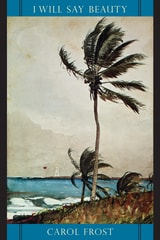
I Will Say Beauty
Carol Frost
Northwestern University Press, 2003
"I will say beauty," Carol Frost boldly says in one of her new lyrical poems, beauty being for her and all of us elusive-in and out of nature. The phrase is meant as a cri de coeur, and the poems are arranged to offer a fresh way to look at--and exist within--nature. For Frost, beauty is a far cry from the decorous and social.
Frost sets many of these poems in Florida's Cedar Keys, amidst the nesting areas of birds, cottonmouth snakes, wetlands, and tidal rhythms. The reader undertakes a journey through a tropical summer, where strange scents and sounds are signs of the transient beauties the imagination may possess for a moment. Drawing brilliantly from nature and from art, from the rhythms of life and the furies of emotion, Frost rejects standard responses and dares to ask: how do we perceive the world? When is beauty not enough? Can we imagine Paradise? And, when nature ordains that death must come, and we weaken, how do we die?
I Would Define the Sun
PoemsStephanie Niu; Foreword by Major Jackson
Vanderbilt University Press, 2025
Finalist for the Kate Tufts Discovery Award, 2026
Stephanie Niu’s I Would Define the Sun, awarded the 2024 Vanderbilt University Literary Prize, is a collection of poems that declare the impossibility of defining something as immense as the sun while striving toward that impossible act. In an era of planetary collapse, filled with bushfires, bleached coral, and burnout, Niu explores what love can do even through estrangement, even through being together at the end of the world. Recycling and folding language through duplexes, sestinas, and echoing couplets, this collection moves across great distances to include Christmas Island, Chinese-American immigration, and the precarity and abundance of the sea through formal and lyric poetry. Refitting the world into a size “made for [her] hands, [her] human tongue,” Niu propels readers into continuous motion as she searches for home.

I Would Define the Sun
PoemsStephanie Niu; Foreword by Major Jackson
Vanderbilt University Press, 2025
Finalist for the Kate Tufts Discovery Award, 2026
Stephanie Niu’s I Would Define the Sun, awarded the 2024 Vanderbilt University Literary Prize, is a collection of poems that declare the impossibility of defining something as immense as the sun while striving toward that impossible act. In an era of planetary collapse, filled with bushfires, bleached coral, and burnout, Niu explores what love can do even through estrangement, even through being together at the end of the world. Recycling and folding language through duplexes, sestinas, and echoing couplets, this collection moves across great distances to include Christmas Island, Chinese-American immigration, and the precarity and abundance of the sea through formal and lyric poetry. Refitting the world into a size “made for [her] hands, [her] human tongue,” Niu propels readers into continuous motion as she searches for home.
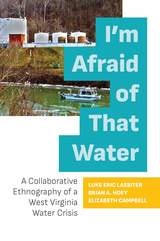
I'm Afraid of That Water
A Collaborative Ethnography of a West Virginia Water CrisisLuke Eric Lassiter
West Virginia University Press, 2020
On January 9, 2014, residents across Charleston, West Virginia, awoke to an unusual licorice smell in the air and a similar taste in the public drinking water. That evening residents were informed the tap water in tens of thousands of homes, hundreds of businesses, and dozens of schools and hospitals—the water made available to as many as 300,000 citizens in a nine-county region—had been contaminated with a chemical used for cleaning crushed coal.
This book tells a particular set of stories about that chemical spill and its aftermath, an unfolding water crisis that would lead to months, even years, of fear and distrust. It is both oral history and collaborative ethnography, jointly conceptualized, researched, and written by people—more than fifty in all—across various positions in academia and local communities. I’m Afraid of That Water foregrounds the ongoing concerns of West Virginians (and people in comparable situations in places like Flint, Michigan) confronted by the problem of contamination, where thresholds for official safety may be crossed, but a genuine return to normality is elusive.
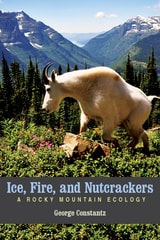
Ice, Fire, and Nutcrackers
A Rocky Mountain EcologyGeorge Constantz
University of Utah Press, 2014
These provocative accounts of birds, insects, rodents, predators, trees, and flowers are sure to stir the reader’s curiosity. Who wouldn’t be intrigued by a rattlesnake’s ability to hunt in total darkness by detecting the infrared radiation emitted by a mouse? Or how white-tailed ptarmigan thrive in their high, treeless alpine environments -- even through the winter? The narratives, often brought home with a counterintuitive twist, invite readers to make new connections and broaden perspectives of a favorite outdoor place.
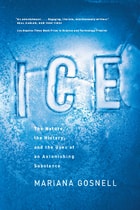
Ice
The Nature, the History, and the Uses of an Astonishing SubstanceMariana Gosnell
University of Chicago Press, 2007
Mariana Gosnell here explores the history and uses of ice in all its complexity, grandeur, and significance. From the freezing of Pleasant Lake in New Hampshire to the breakup of a Vermont river at the onset of spring, from the frozen Antarctic landscape that emperor penguins inhabit to the cold, watery route bowhead whales take between Arctic ice floes, Gosnell examines icebergs, icicles, and frostbite; sea ice and permafrost; ice on Mars and in the rings of Saturn; and several new forms of ice developed in labs. Arecord of the scientific surprises, cultural magnitude, and everyday uses of frozen water, Ice is a sparkling illumination of a substance whose ebbs and flows over time have helped form the world we live in.
“Gosnell travels to the ends of the earth, into the clouds and under the frozen sea to conduct her investigations . . . By the time you finish this remarkable book, you’ll never think about freezing and melting in quite the same way.”—New York Times Book Review
“To read Ice is to discover just how astonishing it is and how necessary.”—San Francisco Chronicle
“A bright, curious, omnidirectional tour that will entrance nature readers.”—Booklist
“An encyclopedic work with surprises on every page . . . . Illustrated with images of ice castles, skaters, and bubble-filled frozen sculpture, Gosnell’s book breathes life into the crystals dubbed ‘glorious spangles’ by Henry David Thoreau.”—Discover
Identification Guide to Grasses and Bamboos in Madagascar
Maria Vorontsova
Royal Botanic Gardens, Kew, 2018
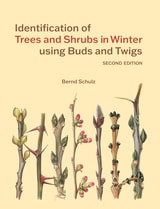
Identification of Trees & Shrubs in Winter Using Buds and Twigs, Second Edition
Bernd Schulz
Royal Botanic Gardens, Kew, 2025
This second edition of the essential reference book for plant identification in winter is updated with new illustrations and fully revised text.
To many plant lovers winter seems like lost time, but a glance at the twigs of trees and shrubs shows that this does not need to be the case. In contrast to other life forms, trees and shrubs do not die above ground but enclose their shoots for the next year in buds, presenting many characters which hardly change over time. Using these bud and twig characters, deciduous trees and shrubs can be classified reliably in winter, which is particularly important during planting time.
Comprehensive and easy to use, Identification of Trees & Shrubs in Winter using Buds and Twigs contains over seven hundred species identifiable via their winter buds and twigs. The illustrated identification keys are easy to use, and a summary set of keys is provided as an appendix. Detailed descriptions are accompanied with 1,900 illustrations.
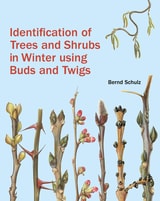
Identification of Trees and Shrubs in Winter Using Buds and Twigs
Bernd Schulz
Royal Botanic Gardens, Kew, 2018
While most books focus on identifying leaves and other seasonal characteristics, this practical guide is one of the few that will allow gardeners to identify trees and shrubs while they are in their dormant state. It covers more than seven hundred species and includes easy-to-use illustrated identification keys. More than 1,400 color images make it even easier to spot the distinctive pieces of these plants.
If You Tame Me
Understanding Our Connection With AnimalsLeslie Irvine, foreword by Marc Bekoff
Temple University Press, 2004
Illinois Insects and Spiders
Paintings by Peggy Macnamara
University of Chicago Press, 2005
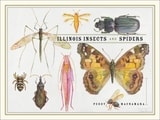
Marrying art and entomology, Illinois Insects and Spiders is a unique introduction to local biodiversity. Artist Peggy Macnamara celebrates the state's burgeoning insect and spider populations with twenty-seven color plates of beautiful renderings of numerous species, organized both taxonomically and thematically. The insects on each plate are depicted true to scale in relation to one another and are displayed approximately ten times larger than life size. Accompanying each plate are lively captions-written by Field Museum curators and collection managers-that identify the species and reveal their interesting behaviors and unique habitats.
Illinois Insects and Spiders encourages readers to explore the biodiversity at their feet-in the shiny beetles on the ground-and in the air-in the glint of a lightning bug in summer. More than a traditional field guide, Illinois Insects and Spiders is the rare book that combines lush artwork with the science of natural history, bringing both closer to the general reader.

Illustrated Guide to the Mountain Stream Insects of Colorado, Second Edition
J. V. Ward
University Press of Colorado, 2002

Images Of Animals
Eileen Crist
Temple University Press, 2000
Images of Animals examines the literature of behavioral science, revealing how works with the common aim of documenting animal lives, habits, and instincts describe "realities that are worlds apart." Whether the writer affirms the Cartesian verdict of an unbridgeable chasm between animals and humans or the Darwinian panorama of evolutionary continuity, the question of animal mind is ever present and problematic in behavioral thought. Comparing the naturalist writings of Charles Darwin, Jean Henri Fabre, and George and Elizabeth Peckham to works of classical ethology by Konrad Lorenz and Nikolaas Tinbergen and of contemporary sociobiology, Crist demonstrates how words matter. She does not attempt to defend any of these constructions as a faithful representation of animal existence, but to show how each internally coherent view molds the reader's understanding of animals. Rejecting the notion that "a neutral language exists, or can be constructed, which yields incontestably objective accounts of animal behavior," Crist argues that "language is not instrumental in the depiction of animals and, in particular, it is never impartial with respect to the question of animal mind."
Imagining Extinction
The Cultural Meanings of Endangered SpeciesUrsula K. Heise
University of Chicago Press, 2016
Ursula K. Heise argues that understanding these stories and symbols is indispensable for any effective advocacy on behalf of endangered species. More than that, she shows how biodiversity conservation, even and especially in its scientific and legal dimensions, is shaped by cultural assumptions about what is valuable in nature and what is not. These assumptions are hardwired into even seemingly neutral tools such as biodiversity databases and laws for the protection of endangered species. Heise shows that the conflicts and convergences of biodiversity conservation with animal welfare advocacy, environmental justice, and discussions about the Anthropocene open up a new vision of multispecies justice. Ultimately, Imagining Extinction demonstrates that biodiversity, endangered species, and extinction are not only scientific questions but issues of histories, cultures, and values.
Imagining the Atacama Desert
A Five-Hundred-Year Journey of DiscoveryRichard V. Francaviglia
University of Utah Press, 2018
Beginning with the indigenous Atacameño peoples at the southern edge of the Incan empire, the volume moves through five hundred years of history, sharing accounts written by Spanish, French, German, Dutch, British, American, and other travelers—pirates, scientists, explorers, and entrepreneurs among them. The Atacama’s austere landscape hides many secrets, including vast mineral wealth, the world's oldest mummies, and the more recent remains of dissidents murdered by the regime of former Chilean dictator Augusto Pinochet in the early 1970s. Today numerous observatories operate under the Atacama’s clear night skies, astronauts train on the rugged desert floor, and tourists flock there for inspiration.
In addition to a rich set of narratives, the book features 115 images—historical maps, photographs, and natural history illustrations, most in full color—to tell a more complete and compelling story. Imagining the Atacama Desert shows how what was once a wilderness at the edges of empire became one of South America's most iconic regions, one that continues to lure those seeking adventure and the unknown.
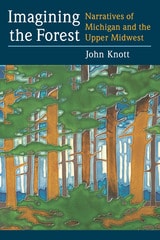
Imagining the Forest
Narratives of Michigan and the Upper MidwestJohn Knott
University of Michigan Press, 2011
Forests have always been more than just their trees. The forests in Michigan (and similar forests in other Great Lakes states such as Wisconsin and Minnesota) played a role in the American cultural imagination from the beginnings of European settlement in the early nineteenth century to the present. Our relationships with those forests have been shaped by the cultural attitudes of the times, and people have invested in them both moral and spiritual meanings.
Author John Knott draws upon such works as Simon Schama's Landscape and Memory and Robert Pogue Harrison's Forests: The Shadow of Civilization in exploring ways in which our
relationships with forests have been shaped, using Michigan---its history of settlement, popular literature, and forest management controversies---as an exemplary case. Knott looks at such well-known figures as William Bradford, James Fenimore Cooper, John Muir, John Burroughs, and Teddy Roosevelt; Ojibwa conceptions of the forest and natural world (including how Longfellow mythologized them); early explorer accounts; and contemporary literature set in the Upper Peninsula, including Jim Harrison's True North and Philip Caputo's Indian Country.
Two competing metaphors evolved over time, Knott shows: the forest as howling wilderness, impeding the progress of civilization and in need of subjugation, and the forest as temple or cathedral, worthy of reverence and protection. Imagining the Forestshows the origin and development of both.
Impasse Poetics at the Nordic Oil Coast
Contemporary Petrofiction from Denmark and NorwayKarl Emil Rosenbaek Reetz
West Virginia University Press, 2026
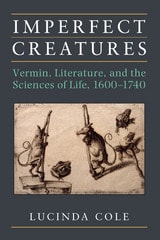
Imperfect Creatures
Vermin, Literature, and the Sciences of Life, 1600-1740Lucinda Cole
University of Michigan Press, 2016
As Cole illustrates, human health and demographic problems—notably those of feeding populations periodically stricken by hunger, disease, and famine—were tied to larger questions about food supplies, property laws, national identity, and the theological imperatives that underwrote humankind’s claim to dominion over the animal kingdom. In this context, Cole’s study indicates, so-called “vermin” occupied liminal spaces between subject and object, nature and animal, animal and the devil, the devil and disease—even reason and madness. This verminous discourse formed a foundational category used to carve out humankind’s relationship to an unpredictable, irrational natural world, but it evolved into a form for thinking about not merely animals but anything that threatened the health of the body politic—humans, animals, and even thoughts.

Imperial Creatures
Humans and Other Animals in Colonial Singapore, 1819-1942Timothy P. Barnard
National University of Singapore Press, 2019
Through a multidisciplinary consideration of fauna, Imperial Creatures weaves together a series of tales to document how animals were cherished, monitored, employed, and slaughtered in a colonial society. All animals, including humans, Barnard shows, have been creatures of imperialism in Singapore. Their stories teach us lessons about the structures that upheld such a society and how it developed over time, lessons of relevance to animal historians, to historians of Singapore, and to urban historians and imperial historians with an interest in environmental themes.
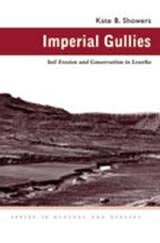
Imperial Gullies
Soil Erosion and Conservation in LesothoKate B. Showers
Ohio University Press, 2005
Once the grain basket for South Africa, much of Lesotho has become a scarred and degraded landscape. The nation’s spectacular erosion and gullying have concerned environmentalists and conservationists for more than half a century. In Imperial Gullies: Soil Erosion and Conservation in Lesotho, Kate B. Showers documents the truth behind this devastation.
Showers reconstructs the history of the landscape, beginning with a history of the soil. She concludes that Lesotho’s distinctive erosion chasms, called dongas—often cited as an example of destructive land-use practices by African farmers—actually were caused by colonial and postcolonial interventions. The residents of Lesotho emerge as victims of a failed technology. Their efforts to mitigate or resist implementation of destructive soil conservation engineering works were thwarted, and they were blamed for the consequences of policies promoted by international soil conservationists since the 1930s.
Imperial Gullies calls for an observational, experimental, and, most important, a fully consultative and participatory approach to address Lesotho’s serious contemporary problems of soil erosion. The first book to bring to center stage the historical practice of colonial soil science—and a cautionary tale of western science in unfamiliar terrain—it will interest a broad, interdisciplinary audience in African and environmental studies, social sciences, and history.
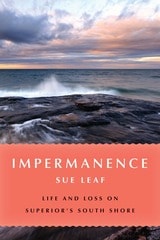
Impermanence
Life and Loss on Superior's South Shoreleaf
University of Minnesota Press, 2024
A personal journey through the ever-changing natural and cultural history of Lake Superior’s South Shore
Lake Superior’s South Shore is as malleable as it is enduring, its red sandstone cliffs, clay bluffs, and golden sand beaches reshaped by winds and water from season to season—and sometimes from one hour to the next. Generations of people have inhabited the South Shore, harvesting the forests and fish, mining copper, altering the land for pleasure and profit, for better or worse. In Impermanence, author Sue Leaf explores the natural and human histories that make the South Shore what it is, from the gritty port city of Superior, Wisconsin, to the shipping locks at Sault Ste. Marie, Michigan.
For Leaf, what began as a bicycling adventure on the coast of Lake Superior in 1977 turned into a lifelong connection with the area, and her experience, not least as owner of a rustic cabin on a rapidly eroding lakeside cliff, imbues these essays with a passionate sense of place and an abiding curiosity about its past and precarious future. As waves slowly consume the shoreline where her family has spent countless summers, Leaf is forced to confront the complexity of loving a place that all too quickly is being reclaimed by the great lake.
Impermanence is a journey through the South Shore’s story, from the early days of the Anishinaabe and fur traders through the heyday of commercial fishing, lumber camps, and copper mining on the Keweenaw Peninsula to the awakening of the Northland to the perils and consequences of plundering its natural splendor. Noting the geological, ecological, and cultural features of each stop on her tour along the South Shore, Leaf writes about the restoration of the heavily touristed Apostle Islands National Lakeshore to its pristine conditions, even as Lake Superior maintains its allure for ice fishers, kayakers, and long-distance swimmers. She describes efforts to protect the endangered piping plover and to preserve the diverse sand dunes on the Michigan coast, and she observes the slough that supports rare intact wild rice beds central to Anishinaabe culture.
Part memoir, part travelogue, part natural and cultural history, Leaf’s love letter to Lake Superior’s South Shore is an invitation to see this liminal world in all its seasons and guises, to appreciate its ageless, ever-changing wonders and intimate charms.
Impersonating Animals
Rhetoric, Ecofeminism, and Animal Rights LawS. Marek Muller
Michigan State University Press, 2020
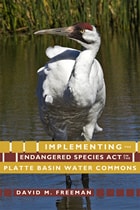
Implementing the Endangered Species Act on the Platte Basin Water Commons
David M. Freeman
University Press of Colorado, 2010
Implementing the Endangered Species Act on the Platte Basin Water Commons tells of the negotiations among the U.S. Department of the Interior, the environmental community, and the states of Wyoming, Colorado, and Nebraska that took place from the mid-1970s to 2006. Ambitious talks among rival water users, environmentalists, state authorities, and the Department of the Interior finally resulted in the Platte River Habitat Recovery Program.
Documenting how organizational interests found remedies within the conditions set by the Endangered Species Act, describing how these interests addressed habitat restoration, and advancing sociological propositions under which water providers transcended self-interest and produced an agreement benefiting the environment, this book details the messy process that took place over more than thirty years. Presenting important implications for the future of water management in arid and semi-arid environments, this book will be of interest to anyone involved in water management, as well as academics interested in the social organization of common property.
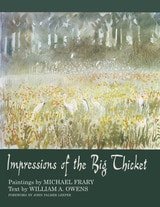
Impressions of the Big Thicket
Michael Frary
University of Texas Press, 1973
Before the establishment of the Big Thicket Nature Preserve, the Big Thicket of Texas became a symbol of nature's last stand against encroaching civilization. Here, in a mingling of ecological zones, come together plants, animals, and birds—many of them rare—the flora and fauna of north and south, east and west. Northern maples and beeches stand not too great a distance from cypresses and Southern magnolias. American hollies grow large and orchids bloom among Northern ferns. Mesquite and tumbleweed, plants of the Western desert, survive where the annual rainfall averages sixty inches. On a major flyway, the Big Thicket is a stopping place for many birds in passage as well as home to a wide variety. Beavers build their dams there, and an occasional coyote yips in the night.
Because of its great beauty and rich natural resources, use of the Big Thicket was the object of a forty-year struggle involving financiers, politicians, conservationists, and countless Thicket lovers. Each group viewed the Thicket from a different perspective and foresaw its future in different terms.
This book records the impressions of two Thicket lovers. Michael Frary's paintings and drawings of woods and water, of birds in flight and strange plants growing close to the moist earth are pictures of a place, a time, a mood caught today—and not the same if left until tomorrow. The qualities of gentleness and violence are constant, but often hidden—there to be brought out by human need or human greed.
William Owens writes of the people who have lived their lives in the Big Thicket, who have stirred its stillness with whoop and holler across the waters, who have taken in its stillness and explosive beauty until they themselves are made up of gentleness and violence.
Together the impressions show what the Big Thicket was and is. What it will be—that is the chief concern of the book.
In Defense of Nature
John Hay
University of Iowa Press, 1969
Wendell Berry has called John Hay a “carrier of light and wisdom.” In Defense of Nature reveals why this is true. In it Hay has written an extended meditation on the environment and our place in it. Its lessons never more important, In Defense of Nature eerily presages the tenuous state of our environment and our place in it. As our technical abilities have moved forward, our judgment has not kept pace. “What we call natural resources cannot be limited to gas, oil, pulpwood, or uranium,we are starving the natural resources in ourselves. The soul needs to stretch; being needs to exercise.”
In Defense of Public Lands
The Case against Privatization and TransferSteven Davis
Temple University Press, 2018
Debates continue to rage over the merits or flaws of public land and whether or not it should be privatized—or at least, radically reconfigured in some way. In Defense of Public Lands offers a comprehensive refutation of the market-oriented arguments. Steven Davis passionately advocates that public land ought to remain firmly in the public’s hands. He reviews empirical data and theoretical arguments from biological, economic, and political perspectives in order to build a case for why our public lands are an invaluable and irreplaceable asset for the American people.
In Defense of Public Lands briefly lays out the history and characteristics of public lands at the local, state, and federal levels while examining the numerous policy prescriptions for their privatization or, in the case of federal lands, transfer. He considers the dimensions of environmental health; markets and valuation of public land, the tensions between collective values and individual preferences, the nature and performance of bureaucratic management, and the legitimacy of interest groups and community decision-making. Offering a fair, good faith overview of the privatizers’ best arguments before refuting them, this timely book contemplates both the immediate and long-term future of our public lands.
In Earshot of Water
Notes from the Columbia PlateauPaul Lindholdt
University of Iowa Press, 2011
p.MsoNormal, li.MsoNormal, div.MsoNormal { margin: 0in 0in 0.0001pt; font-size: 12pt; font-family: "Times New Roman"; }div.Section1 { page: Section1; }
Whether the subject is the plants that grow there, the animals that live there, the rivers that run there, or the people he has known there, Paul Lindholdt’s In Earshot of Water illuminates the Pacific Northwest in vivid detail. Lindholdt writes with the precision of a naturalist, the critical eye of an ecologist, the affection of an apologist, and the self-revelation and self-awareness of a personal essayist in the manner of Annie Dillard, Loren Eiseley, Derrick Jensen, John McPhee, Robert Michael Pyle, and Kathleen Dean Moore.
Exploring both the literal and literary sense of place, with particular emphasis on environmental issues and politics in the far Northwest, Lindholdt weds passages from the journals of Lewis and Clark, the log of Captain James Cook, the novelized memoir of Theodore Winthrop, and Bureau of Reclamation records growing from the paintings that the agency commissioned to publicize its dams in the 1960s and 1970s, to tell ecological and personal histories of the region he knows and loves.
In Lindholdt’s beautiful prose, America’s environmental legacies—those inherited from his blood relatives as well as those from the influences of mass culture—and illuminations of the hazards of neglecting nature’s warning signs blur and merge and reemerge in new forms. Themes of fathers and sons layer the book, as well—the narrator as father and as son—interwoven with a call to responsible social activism with appeals to reason and emotion. Like water itself, In Earshot of Water cascades across boundaries and blends genres, at once learned and literary.
In Human Scale
Victorian Literature and the Planetary ImaginationBenjamin Morgan
University of Chicago Press, 2027
An innovative account of how literature has helped bridge the gap between ordinary human experience and the vast scale of the natural world.
Is it possible to connect our lived experience of time to the vast eons of the planet’s history? This question has perplexed writers and scientists for more than two hundred years, from Darwin’s account of natural selection through contemporary writing about climate change. Benjamin Morgan’s insightful study shows how literature of the nineteenth century helped readers leap from their everyday sense of time and space to the vast, inhuman scales of the natural world.
Exploring writings that range from Arctic voyage narratives to Thomas Hardy’s novels, utopian fiction of the 1880s, H. G. Wells’s The Time Machine, and beyond, Morgan situates scalar incommensurability in its deeper intellectual and cultural contexts. Victorians struggled to grasp senses of proportion not only through time scales but also through scales of aesthetic magnitude, of relative value, of social totality, and of the planet’s future. Morgan argues that a scale is not just a timeline; it is a way of finding order and proportion through many kinds of comparative measurement. His literary history of scale illuminates both the challenge of imagining the vastness of planetary time and the history of creating a human sense of proportion.
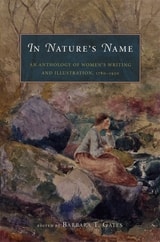
In Nature's Name
An Anthology of Women's Writing and Illustration, 1780-1930Edited by Barbara T. Gates
University of Chicago Press, 2002
The works contained in this volume are as varied as the women who produced them. They include passionate essays on the protection of animals, vivid accounts of travel and adventure from the English seashore to the Indian Alps, poetry and fiction, and marvelous tales of nature for children. Special features of the book include a detailed chronology placing each selection in its historical and literary context; biographical sketches of each author's life and works; a comprehensive bibliography of primary and secondary literature; and over sixty illustrations.
An ideal introduction to women's powerful and diverse responses to the natural world, In Nature's Name will be treasured by anyone interested in natural history, women, or Victorian and Edwardian Britain.
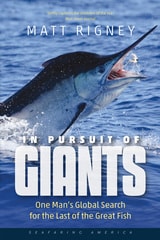
In Pursuit of Giants
One Man's Global Search for the Last of the Great FishMatt Rigney
University Press of New England, 2017
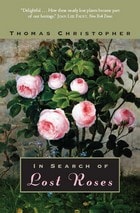
In Search of Lost Roses
Thomas Christopher
University of Chicago Press, 2002
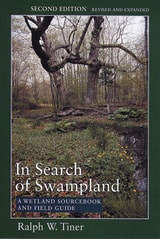
In Search of Swampland
A Wetland Sourcebook and Field GuideRalph W. Tiner
Rutgers University Press, 2005
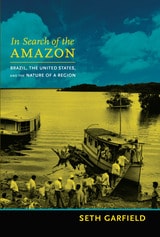
In Search of the Amazon
Brazil, the United States, and the Nature of a RegionSeth Garfield
Duke University Press, 2013

In Search of the Golden Frog
Marty Crump
University of Chicago Press, 2000
The book is a detailed and fascinating chronicle of Crump's adventures as a field biologist—and as a wife and mother—in South and Central America. Following Crump on her research trips through Costa Rica, Ecuador, Brazil, Argentina, and Chile, we learn of amazingly diverse landscapes, equally diverse national traditions and customs, and the natural history of her subject of study, the frog. In leading us through rain forests and onto windswept coasts, Crump introduces us to such compelling creatures as female harlequin frogs, who pounce on males and pound their heads against the ground, and also sounds an alarm about the precipitous decline in amphibian populations around the globe.
Crump's perspectives as both a scientist and a mother, juggling the demands of family and professional life, make this highly readable account of fieldwork simultaneously close to home and wildly exotic. A combination of nature writing and travel writing, the richly illustrated In Search of the Golden Frog will whet travelers' appetites, affirm the experiences of seasoned field biologists, and offer the armchair naturalist vivid descriptions of amphibians and their habitats.
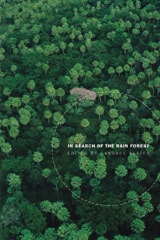
In Search of the Rain Forest
Candace Slater, ed.
Duke University Press, 2004
From diverse disciplines—history, archaeology, sociology, literature, law, and cultural anthropology—the contributors provide case studies from Latin America, Asia, and Africa. They point the way toward a search for a rain forest that is both a natural entity and a social history, an inhabited place and a shifting set of ideas. The essayists demonstrate how the single image of a wild and yet fragile forest became fixed in the popular mind in the late twentieth century, thereby influencing the policies of corporations, environmental groups, and governments. Such simplistic conceptions, In Search of the Rain Forest shows, might lead companies to tout their “green” technologies even as they try to downplay the dissenting voices of native populations. Or they might cause a government to create a tiger reserve that displaces peaceful peasants while opening the doors to poachers and bandits. By encouraging a nuanced understanding of distinctive, constantly evolving forests with different social and natural histories, this volume provides an important impetus for protection efforts that take into account the rain forest in all of its complexity.
Contributors. Scott Fedick, Alex Greene, Paul Greenough, Nancy Peluso, Suzana Sawyer, Candace Slater, Charles Zerner
In The Nature Of Things
Language, Politics, and the EnvironmentJane Bennett
University of Minnesota Press, 1993
Informed by recent developments in literary criticism and social theory, In the Nature of Things addresses the presumption that nature exists independent of culture and, in particular, of language. The theoretical approaches of the contributors represent both modernist and postmodernist positions, including feminist theory, critical theory, Marxism, science fiction, theology, and botany. They demonstrate how the concept of nature is invoked and constituted in a wide range of cultural projects—from the Bible to science fiction movies, from hunting to green consumerism. Ultimately, it weeks to link the work of theorists concerned with nature and the environment to nontheorists who share similar concerns.
Contributors include R. McGreggor Cawley, Romand Coles, William E. Connolly, Jan E. Dizard, Valerie Hartouni, Cheri Lucas Jennings, Bruce H. Jennings, Timothy W. Luke, Shane Phelan, John Rodman, Michael J. Shapiro, and Wade Sikorski.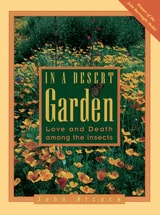
In a Desert Garden
Love and Death among the InsectsJohn Alcock
University of Arizona Press, 1999
As Alcock studies the plants in his yard, he shares thoughts on planting, weeding, and pruning that any gardener will appreciate. And when commenting on the mating rituals of spiders and beetles or marveling at the camouflage of grasshoppers and caterpillars, he uses humor and insight to detail the lives of the insects that live in his patch of desert. Celebrating the virtues of even aphids and mosquitoes, Alcock draws the reader into the intricacies of desert life to reveal the complex interactions found in this unique ecosystem. In a Desert Garden combines meticulous science with contemplations of nature and reminds us that a world of wonder lies just outside our own doors.
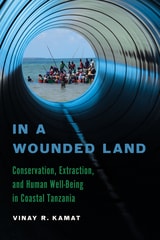
In a Wounded Land
Conservation, Extraction, and Human Well-Being in Coastal TanzaniaVinay R. Kamat
University of Arizona Press, 2024
Focusing on the human element of marine conservation and the extractive industry in Tanzania, this volume illuminates what happens when impoverished people living in underdeveloped regions of Africa are suddenly subjected to state-directed conservation and natural resource extraction projects, implemented in their landscapes of subsistence. In a Wounded Land draws on ethnographically rich case studies and vignettes collected over a ten-year period in several coastal villages on Tanzania’s southeastern border with Mozambique. In seven chapters, the book demonstrates how state power, processes of displacement and dispossession, forms of local resistance and acquiescence, environmental and social justice, and human well-being become interconnected.
Written in lucid, accessible language, this is the first book that reveals the social implications of the co-presence of a marine park and a gas project at a time when internationally funded conservation initiatives and extraction projects among rural African populations are engendering rapid social transformation.
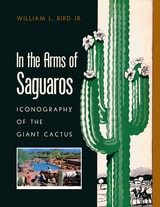
In the Arms of Saguaros
Iconography of the Giant CactusWilliam L. Bird Jr.
University of Arizona Press, 2023
In the Arms of the Saguaros shows how, from the botanical explorers of the nineteenth century to the tourism boosters in our own time, saguaros and their images have fulfilled attention-getting needs and expectations. Through text and lavish images, this work explores the saguaro’s growth into a western icon from the early days of the American railroad to the years bracketing World War II, when Sun Belt boosterism hit its zenith and proponents of tourism succeed in moving the saguaro to the center of the promotional frame.
This book explores how the growth of tourism brought the saguaro to ever-larger audiences through the proliferation of western-themed imagery on the American roadside. The history of the saguaro’s popular and highly imaginative range points to the current moment in which the saguaro touches us as a global icon in art, fashion, and entertainment.
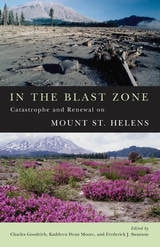
In the Blast Zone
Catastrophe and Renewal on Mt. St. HelensCharles Goodrich
Oregon State University Press, 2008
In the Blast Zone is the first book to present a cross-pollination of literary and scientific perspectives on the mountain's history of cataclysm and renewal. Most of the contributors to this volume camped together on Mount St. Helens for four days, hiking, observing, and sharing ideas. They asked the question: What can this radically altered landscape tell us about nature and how to live our lives? In the Blast Zone collects some of their answers. While introducing ecological and geological insights, it also tells compelling stories about how science and literature inform our lives and our relationship to nature.
These writings will startle readers with new recognition of the matchless gifts of Mount St. Helens: the gifts of beauty, of illumination, of hope. The Contributors Gary Braasch, John Calderazzo, Christine Colasurdo, Charlie Crisafulli, John Daniel, Jerry Franklin, Charles Goodrich, Robin Kimmerer, Ursula K. LeGuin, Tim McNulty, Kathleen Dean Moore, Nalini Nadkarni, Robert Michael Pyle, Scott Russell Sanders, James Sedell, Gary Snyder, Kim Stafford, Frederick J. Swanson, Tony Vogt, Ann Zwinger, Susan Zwinger
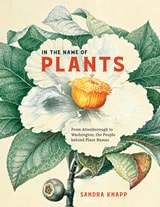
In the Name of Plants
From Attenborough to Washington, the People behind Plant NamesSandra Knapp
University of Chicago Press, 2022
Shakespeare famously asserted that “a rose by any other name would smell as sweet,” and that’s as true for common garden roses as it is for the Megacorax, a genus of evening primroses. Though it may not sound like it, the Megacorax was actually christened in honor of famed American botanist Peter Raven, its name a play on the Latin words for “great raven.”
In this lush and lively book, celebrated botanist Sandra Knapp explores the people whose names have been immortalized in plant genera, presenting little-known stories about both the featured plants and their eponyms alongside photographs and botanical drawings from the collections of London’s Natural History Museum. Readers will see familiar plants in a new light after learning the tales of heroism, inspiration, and notoriety that led to their naming. Take, for example, nineteenth-century American botanist Alice Eastwood, after whom the yellow aster—Eastwoodia elegans—is named. Eastwood was a pioneering plant collector who also singlehandedly saved irreplaceable specimens from the California Academy of Sciences during the 1906 San Francisco earthquake. Or more recently, the fern genus Gaga, named for the pop star and actress Lady Gaga, whose verdant heart-shaped ensemble at the 2010 Grammy Awards bore a striking resemblance to a giant fern gametophyte. Knapp’s subjects range from Charles Darwin’s grandfather, Erasmus Darwin (Darwinia), and legendary French botanist Pierre Magnol—who lends his name to the magnolia tree—to US founding figures like George Washington (Washingtonia) and Benjamin Franklin (Franklinia). Including granular details on the taxonomy and habitats for thirty plants alongside its vibrant illustrations, this book is sure to entertain and enlighten any plant fan.
In the Path of the Storms
Bayou La Batre, Coden, and the Alabama CoastFrye Gaillard
University of Alabama Press, 2008
A Powerful Portrait of Resilience, Heritage, and Change on Alabama's Gulf Coast.
The Gulf Coast villages of Bayou La Batre and Coden are two of Alabama’s most distinctive, with roots going back to the French settlements of the 18th century. For generations, the proud inhabitants of these communities have extracted their modest livings from the sea, sustained by a lesson handed down over time— that providing for the needs of one’s family is the only true measure of success. But the world has changed drastically for them. A global economy of higher gas prices and cheap imported seafood has threatened the lifeblood of the area. And in recent years a rash of hurricanes, culminating with Hurricane Katrina, has battered the hopes and dreams of these Bayou towns.
But they have known hard times and massive changes before. In the 1970s, refugees from Vietnam, Cambodia, and Laos flooded into the area and within a few years made up a third of the local population. Three Buddhist temples soon took their places among the Catholic, Baptist, and Pentecostal churches that predominated, and for a time the different ethnic groups coexisted in a kind of uneasy peace. But now they are learning to pull together in an uncertain struggle to rebuild their communities.
In the Path of the Storms is a powerful portrait in words and photographs of a unique and unforgettable place. It is a story of tradition, and forces of change, and the epic struggle of these Gulf Coast communities to survive and thrive.
In the Rainforest
Report from a Strange, Beautiful, Imperiled WorldCatherine Caufield
University of Chicago Press, 1986
"I recommend In the Rainforest as scientific journalism at its best, and [Caufield's] book as the one to read to become informed about the tropical crisis. Caufield traveled the world, went to the difficult places, sometimes beautiful and often dispiriting, mastered the important ideas, and talked to an impressive number of people on all sides of the issues. . . . There are villains in abundance: corrupt government agents who aid in the destruction of native tribes, greedy caballero landowners, and even the governmental planners who with the best of intentions rush heedlessly toward the environmental degradation of their own countries."—E. O. Wilson, Science
"The whole book is filled with amazing facts. . . . Moving and informative."—Ellen W. Chu, New York Times Book Review
In the Spirit of Wetlands
Reviving Habitat in the Illinois River WatershedText by Clare Howard. Photographs by David Zalaznik
University of Illinois Press, 2022
An inspiring document of passion and advocacy, In the Spirit of Wetlands reveals the transformative power of restoration.
In the Time of Trees and Sorrows
Nature, Power, and Memory in RajasthanAnn Grodzins Gold and Bhoju Ram Gujar
Duke University Press, 2002
Based on testimonies from the 1990s, this book stands as a polyvocal account of the radical political and environmental changes the region and its people have faced in the twentieth century. Not just the story of modernity from the perspective of a rural village, these interviews and author commentaries narrate this small rural community’s relatively sudden transformation from subjection to a local despot and to a remote colonial power to citizenship in a modern postcolonial democracy. Unlike other recent studies of Rajasthan, the current study gives voice exclusively to former subjects who endured the double oppression of colonial and regional rulers. Gold and Gujar thus place subjective subaltern experiences of daily routines, manifestations of power relations, and sweeping changes to the environment (after the fall of kings) that turned lush forests into a barren landscape on equal footing with historical “fact” and archival sources. Ambiguous, complex, and culturally laden as it is in Western thought, the concept of nature is queried in this ethnographic text. For persons in Sawar the environment is not only a means of sustenance, its deterioration is linked to human morality and to power, both royal and divine. The framing questions of this South Asian history revealed through memories are: what was it like in the time of kings and what happened to the trees?
Indians, Fire, and the Land in the Pacific Northwest
Robert Boyd
Oregon State University Press, 2021
Instead of discovering a land blanketed by dense forests, early explorers of the Pacific Northwest encountered a varied landscape including open woods, meadows, and prairies. Far from a pristine wilderness, much of the Northwest was actively managed and shaped by the hands of its Native American inhabitants. Their primary tool was fire.
This volume takes an interdisciplinary approach to one of the most important issues concerning Native Americans and their relationship to the land. Over more than 10,000 years, Native Americans in the Northwest learned the intricacies of their local environments and how to use fire to create desired effects, mostly in the quest for food.
Drawing on historical journals, Native American informants, and ethnobotanical and forestry studies, this book’s contributors describe local patterns of fire use in eight ecoregions, representing all parts of the Native Northwest, from southwest Oregon to British Columbia and from Puget Sound to the Northern Rockies. Their essays provide glimpses into a unique understanding of the environment, one that draws on traditional ecological knowledge. Together, these writings also offer historical perspective on the contemporary debate over “prescribed burning” and management of public lands.
This updated edition includes a foreword by Frank K. Lake and a new epilogue by editor Robert T. Boyd. Contributors include Stephen Arno, Stephen Barrett, Theresa Ferguson, David French, Eugene Hunn, Leslie Johnson, Jeff LaLande, Estella Leopold, Henry Lewis, Helen H. Norton, Reg Pullen, William Robbins, John Ross, Nancy Turner, and Richard White.
Indigenizing Philosophy through the Land
A Trickster Methodology for Decolonizing Environmental Ethics and Indigenous FuturesBrian Burkhart
Michigan State University Press, 2019
Indigenous Cultural and Environmental Heritage
Social Action and Solidarity for Indigenous RightsEdited by Paulette Steeves and Ranjan Datta
University of Arizona Press, 2027
This volume brings together a powerful chorus of Indigenous scholars and settler allies to illuminate the enduring connections between cultural heritage, environmental stewardship, and Indigenous sovereignty. With cases from communities across the Americas, Asia, Africa, and the Arctic, this interdisciplinary volume centers Indigenous knowledge systems and lived experiences. Contributors challenge colonial narratives that have long obscured or erased Indigenous histories, practices, and rights. Contributors also demonstrate how cultural and environmental heritage functions not only as a site of memory but also as a vital framework for resilience, governance, and sustainable futures.
From land-based knowledge and oral traditions to climate adaptation and sacred ecological stewardship, the essays highlight Indigenous-led pathways toward justice and renewal in the face of ongoing environmental and cultural dispossession. Urgent and forward-looking, this volume offers essential insights for scholars, students, and practitioners committed to centering Indigenous voices, supporting community-led action, and reimagining more just and inclusive approaches to heritage and environmental care.
Contributors
Ranjan Datta
Tom Dooley
Esther Jónsdóttir
Matias Kachepa Elisa
Jean Kayira
Malidadi Langa
Makoto Mochida
Paul Edward Montgomery Ramirez
Jairo Saw Munduruku
Rani Muthukrishnan
George Nicholas
Sandra Oseguera
Masaki Sashima
Yuka Shichiza
William Singer III
Rajmoni Singha
Paulette Steeves
Patiphol Yodsurang
Indigenous Economics
Sustaining Peoples and Their LandsRonald L. Trosper
University of Arizona Press, 2022
What does “development” mean for Indigenous peoples? Indigenous Economics lays out an alternative path showing that conscious attention to relationships among humans and the natural world creates flourishing social-ecological economies.
Economist Ronald L. Trosper draws on examples from North and South America, Aotearoa/New Zealand, and Australia to argue that Indigenous worldviews centering care and good relationships provide critical and sustainable economic models in a world under increasing pressure from biodiversity loss and climate change. He explains the structure of relational Indigenous economic theory, providing principles based on his own and others’ work with tribal nations and Indigenous communities. Trosper explains how sustainability is created at every level when relational Indigenous economic theory is applied—micro, meso, and macro.
Good relationships support personal and community autonomy, replacing the individualism/collectivism dichotomy with relational leadership and entrepreneurship. Basing economies on relationships requires changing governance from the top-down approaches of nation-states and international corporations; instead, each community creates its own territorial relationships, creating plurinational relational states. This book offers an important alternative to classic economic theory. In Indigenous Economics, support for Indigenous communities’ development and Indigenous peoples’ well-being go hand-in-hand.
Publication of this book is made possible in part by the Alfred P. Sloan Foundation Program in Public Understanding of Science.
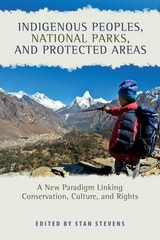
Indigenous Peoples, National Parks, and Protected Areas
A New Paradigm Linking Conservation, Culture, and RightsEdited by Stan Stevens
University of Arizona Press, 2014
Indigenous Peoples, National Parks, and Protected Areas integrates wide-ranging, multidisciplinary intellectual perspectives with detailed analyses of new kinds of protected areas in diverse parts of the world. Eleven geographers and anthropologists contribute nine substantive fieldwork-based case studies. Their contributions offer insights into experience with new conservation approaches in an array of countries, including Australia, Canada, Guatemala, Honduras, Nepal, Nicaragua, Peru, South Africa, and the United States.
This book breaks new ground with its in-depth exploration of changes in conservation policies and practices—and their profound ramifications for Indigenous peoples, protected areas, and social reconciliation.