Results by title
143 books match the query 'Midwest' and 12 start with a
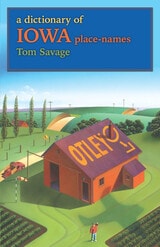
A Dictionary of Iowa Place-Names
Tom Savage
University of Iowa Press, 2007
Savage includes information on the place-names of all 1,188 incorporated and unincorporated communities in Iowa that meet at least two of the following qualifications: twenty-five or more residents; a retail business; an annual celebration or festival; a school; church, or cemetery; a building on the National Register of Historic Places; a zip-coded post office; or an association with a public recreation site. If a town’s name has changed over the years, he provides information about each name; if a name’s provenance is unclear, he provides possible explanations. He also includes information about the state’s name and about each of its ninety-nine counties as well as a list of ghost towns. The entries range from the counties of Adair to Wright and from the towns of Abingdon to Zwingle; from Iowa’s oldest town, Dubuque, starting as a mining camp in the 1780s and incorporated in 1841, to its newest, Maharishi Vedic City, incorporated in 2001.
The imaginations and experiences of its citizens played a role in the naming of Iowa’s communities, as did the hopes of the huge influx of immigrants who settled the state in the 1800s. Tom Savage’s dictionary of place-names provides an appealing genealogical and historical background to today’s map of Iowa.
“It is one of the beauties of Iowa that travel across the state brings a person into contact with so many wonderful names, some of which a traveler may understand immediately, but others may require a bit of investigation. Like the poet Stephen Vincent Benét, we have fallen in love with American names. They are part of our soul, be they family names, town names, or artifact names. We identify with them and are identified with them, and we cannot live without them. This book will help us learn more about them and integrate them into our beings.”—from the foreword by Loren N. Horton
“Primghar, O’Brien County. Primghar was established by W. C. Green and James Roberts on November 8, 1872. The name of the town comes from the initials of the eight men who were instrumental in developing it. A short poem memorializes the men and their names:
Pumphrey, the treasurer, drives the first nail;
Roberts, the donor, is quick on his trail;
Inman dips slyly his first letter in;
McCormack adds M, which makes the full Prim;
Green, thinking of groceries, gives them the G;
Hayes drops them an H, without asking a fee;
Albright, the joker, with his jokes all at par;
Rerick brings up the rear and crowns all ‘Primghar.’
Primghar was incorporated on February 15, 1888.”

A Dog Lover's Guide to Hiking Wisconsin's State Parks
Danielle St. Louis
University of Wisconsin Press, 2022
A Dog Lover’s Guide to Hiking Wisconsin’s State Parks divides Wisconsin into five regions and further details specific trails, graded for dog reactivity as well as the fitness level of human and canine alike. St. Louis also helpfully notes the availability of nearby facilities such as bathrooms, water stations, trashcans, designated dog swimming areas, and veterinarians. Truly one of a kind, this book is a must have for any Wisconsin dog lover looking to go out into nature with their pup.
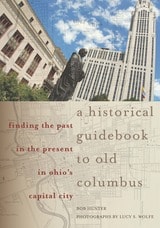
A Historical Guidebook to Old Columbus
Finding the Past in the Present in Ohio’s Capital CityBob Hunter
Ohio University Press, 2012
Ever look at a modern skyscraper or a vacant lot and wonder what was there before? Or maybe you have passed an old house and been curious about who lived there long ago. This richly illustrated new book celebrates Columbus, Ohio’s, two-hundred-year history and supplies intriguing stories about the city’s buildings and celebrated citizens, stopping at individual addresses, street corners, parks, and riverbanks where history was made. As Columbus celebrates its bicentennial in 2012, a guide to local history is very relevant.
Like Columbus itself, the city’s history is underrated. Some events are of national importance; no one would deny that Abraham Lincoln’s funeral procession down High Street was a historical highlight. But the authors have also included a wealth of social and entertainment history from Columbus’s colorful history as state capital and destination for musicians, artists, and sports teams.
The book is divided into seventeen chapters, each representing a section of the city, including Statehouse Square, German Village, and Franklinton, the city’s original settlement in 1797. Each chapter opens with an entertaining story that precedes the site listings. Sites are clearly numbered on maps in each section to make it easy for readers to visit the places that pique their interest. Many rare and historic photos are reproduced along with stunning contemporary images that offer insight into the ways Columbus has changed over the years.
A Historical Guidebook to Old Columbus invites Columbus’s families to rediscover their city with a treasure trove of stories from its past and suggests to visitors and new residents many interesting places that they might not otherwise find. This new book is certain to amuse and inform for years to come.

A Lakeside Companion
Ted J. Rulseh
University of Wisconsin Press, 2018
You'll discover the interconnected worlds of a lake: the water; the sand, gravel, rocks, and muck of the bottom; the surface of the lake; the air above; and the shoreline, a belt of land incredibly rich in flora and fauna. Explained, too, are the physical, biological, and chemical processes that determine how many and what kinds of fish live in the lake, which plants grow there, the color and clarity of the water, how ice forms in winter and melts in spring, and much more. Useful advice will help you look out for your lake and advocate for its protection.
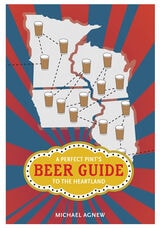
A Perfect Pint's Beer Guide to the Heartland
Michael Agnew
University of Illinois Press, 2014
- Agnew's exclusive choices on which beers to try at each location
- Entries on every brewery's history and philosophy
- Information on tours, tasting rooms and attached pubs, and dining options and other amenities
- A survey of each brewery's brands, including its flagship beer plus seasonal brews and special releases
- Brewery equipment and capacity
- Nearby attractions
In addition, Agnew sets the stage with a history of Midwestern beer spanning the origins of the immigrant brewers who arrived in the 1800s to the homebrewers-made-good who have built a new kind of brewing culture founded on creativity, dedication to quality, and attention to customer feedback.
Informed and unique, A Perfect Pint's Beer Guide to the Heartland is the essential companion for beer aficionados and curious others determined to drink the best the Midwest has to offer.
Includes more than 150 full color images, including the region's most distinctive beer labels, trademarks, and company logos.
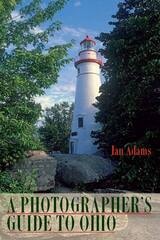
A Photographer’s Guide to Ohio
Ian Adams
Ohio University Press, 2011
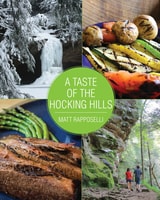
A Taste of the Hocking Hills
Matt Rapposelli
Ohio University Press, 2018
When chef Matt Rapposelli left the National Park Service to attend culinary school in New England, he was moving from one passion to another. What later brought those passions together was a job in the Hocking Hills, southeast Ohio’s stunning, wild landscape, where the restaurants he helmed—at Hocking Hills Lodge and Lake Hope Lodge—gained a resounding reputation for classic dishes that, driven by the regional vernacular and the natural seasonal abundance of Appalachia, were impeccably fresh and flavorful.
A Taste of the Hocking Hills intermingles delicious recipes with striking photographs of a region to which thousands trek each year. Rapposelli presents dishes by the season, noting the specialties that appear on his menus in a given time of year. Whether enjoying a winter evening or a summer morning, cooks will be able to bring a bit of the Hocking Hills home.
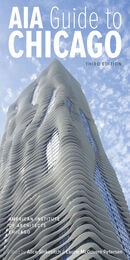
AIA Guide to Chicago
American Institute of Architects Chicago; Edited by Alice Sinkevitch and Laurie McGovern Petersen; Preface by Geoffrey Baer; Introduction by Perry Duis
University of Illinois Press, 2014
Four hundred photos and thirty-four specially commissioned maps make it easy to find each of the one thousand-plus featured buildings, while a comprehensive index organizes buildings by name and architect. This edition also features an introduction providing an indispensable overview of Chicago's architectural history.
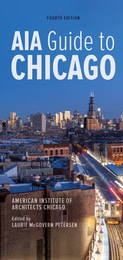
AIA Guide to Chicago
American Institute of Architects Chicago; Edited by Laurie McGovern Petersen
University of Illinois Press, 2022
Sumptuously detailed and user friendly, the AIA Guide to Chicago encourages travelers and residents alike to explore the many diverse neighborhoods of one of the world’s great architectural destinations.
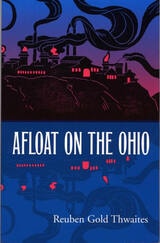
Afloat on the Ohio
An Historical Pilgrimage of a Thousand Miles in a Skiff, from Redstone to CairoReuben Gold Thwaites
Southern Illinois University Press, 1999
This edition is a reprinting of the original 1897 edition.
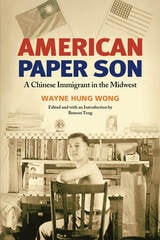
American Paper Son
A Chinese Immigrant in the MidwestWayne Hung Wong
University of Illinois Press, 2005
In the early and mid-twentieth century, Chinese migrants evaded draconian anti-immigrant laws by entering the US under false papers that identified them as the sons of people who had returned to China to marry. Wayne Hung Wong tells the story of his life after emigrating to Wichita, Kansas, as a thirteen-year-old paper son. After working in his father’s restaurant as a teen, Wong served in an all-Chinese Air Force unit stationed in China during World War II. His account traces the impact of race and segregation on his service experience and follows his postwar life from finding a wife in Taishan through his involvement in the government’s amnesty program for Chinese immigrants and career in real estate. Throughout, Wong describes the realities of life as part of a small Chinese American community in a midwestern town.
Vivid and rich with poignant insights, American Paper Son explores twentieth-century Asian American history through one person’s experiences.
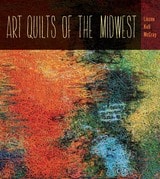
Art Quilts the Midwest
Linzee Kull McCray
University of Iowa Press, 2015
As a writer covering textiles, art, and craft, Linzee Kull McCray wondered just how deeply fiber artists were influenced by their surroundings. Focusing on midwestern art quilters in particular, she put out a call for entries and nearly 100 artists responded; they were free to define those aspects of midwesterness that most affected their work. The artists selected for inclusion in this book embrace the Midwest’s climate, land, people, and culture, and if they don’t always embrace it wholeheartedly, then they use their art to react to it. The proof can be seen in the varied, powerful quilts in this energizing book.
Enlivened by the Midwest’s landscapes and seasons, Sally Bowker paints her fabrics with acrylics, creating marks and meaning with layers of hand stitching and appliqued bits of fabric. Shin-hee Chin uses sketchlike stitching for its ability to penetrate fabric and create depth; living in the Midwest helps her stay balanced between eastern philosophy and western culture. The metals and mesh that Diane Núñez incorporates into her quilts connect to her days as a jeweler as well as to the topography of her home state of Michigan. Pat Owoc prepares papers with disperse dyes, then selects from as many as 150 to create her fabrics; her art-quilt series honors midwestern pioneers. Martha Warshaw photographs old fabrics, tweaks the images in Photoshop, and prints the results for her pieces, which connect her to the legacy of quilting in past generations.
The Midwest has always had strong textile communities. Now the twenty artists featured in this beautifully illustrated book have created a new community of original art forms that bring new life to an old tradition.
The Artists
Marilyn Ampe, St. Paul, Minnesota
Gail Baar, Buffalo Grove, Illinois
Sally Bowker, Cornucopia, Wisconsin
Peggy Brown, Nashville, Indiana
Shelly Burge, Lincoln, Nebraska
Shin-hee Chin, McPherson, Kansas
Sandra Palmer Ciolino, Cincinnati, Ohio
Jacquelyn Gering, Chicago, Illinois
Kate Gorman, Westerville, Ohio
Donna Katz, Chicago, Illinois
Beth Markel, Rochester Hills, Michigan
Diane Núñez, Southfield, Michigan
Pat Owoc, St. Louis, Missouri
BJ Parady, Batavia, Illinois
Bonnie Peterson, Houghton, Michigan
Luanne Rimel, St. Louis, Missouri
Barbara Schneider, Woodstock, Illinois
Susan Shie, Wooster, Ohio
Martha Warshaw, Cincinnati, Ohio
Erick Wolfmeyer, Iowa City, Iowa