Results by title
105 books match the query 'Mind' and 14 start with a

A Clearing in the Forest
Law, Life, and MindSteven L. Winter
University of Chicago Press, 2001
Drawing on work in philosophy, psychology, anthropology, linguistics, and literary theory, Steven L. Winter has created nothing less than a tour de force of interdisciplinary analysis. A Clearing in the Forest rests on the simple notion that the better we understand the workings of the mind, the better we will understand all its products-especially law. Legal studies today focus on analytic skills and grand normative theories. But, to understand how real-world, legal actors reason and decide, we need a different set of tools. Cognitive science provides those tools, opening a window on the imaginative, yet orderly mental processes that animate thinking and decisionmaking among lawyers, judges, and lay persons alike. Recent findings about how humans actually categorize and reason make it possible to explain legal reasoning in new, more cogent, more productive ways.
A Clearing in the Forest is a compelling meditation on both how the law works and what it all means. In uncovering the irrepressibly imaginative, creative quality of human reason, Winter shows how what we are learning about the mind changes not only our understanding of law, but ultimately of ourselves. He charts a unique course to understanding the world we inhabit, showing us the way to the clearing in the forest.
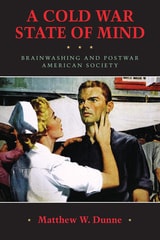
A Cold War State of Mind
Brainwashing and Postwar American SocietyMatthew W. Dunne
University of Massachusetts Press, 2013
First popularized during the 1950s, the concept of “brainwashing” is often viewed as an example of Cold War paranoia, an amusing relic of a bygone era. Yet as Matthew W. Dunne shows in this study, over time brainwashing came to connote much more than a sinister form of Communist mind control, taking on broader cultural and political meanings.
Moving beyond well-known debates over Korean War POWs and iconic cultural texts like The Manchurian Candidate, Dunne explores the impact of the idea of brainwashing on popular concerns about freedom, individualism, loyalty, and trust in authority. By the late 1950s the concept had been appropriated into critiques of various aspects of American life such as an insistence on conformity, the alleged “softening” of American men, and rampant consumerism fueled by corporate advertising that used “hidden” or “subliminal” forms of persuasion. Because of these associations and growing anxieties about the potential misuse of psychology, concerns about brainwashing contributed to a new emphasis on individuality and skepticism toward authority in the 1960s. The notion even played an unusual role in the 1968 presidential race, when Republican frontrunner George Romney's claim that he had been “brainwashed” about the Vietnam War by the Johnson administration effectively destroyed his campaign.
In addition to analyzing the evolving meaning of brainwashing over an extended period of time, A Cold War State of Mind explores the class and gender implications of the idea, such as the assumption that working-class POWs were more susceptible to mind control and that women were more easily taken in by the manipulations of advertisers.

A Greenhouse for the Mind
Jacquelyn Seevak Sanders
University of Chicago Press, 1989
A Greenhouse for the Mind continues the story of the school, focusing on how its teachers and counselors create an educational environment in which children will want and be able to learn. Jacquelyn Seevak Sanders worked closely with Bettelheim for thirteen years as a counselor and assistant principal and since 1973 has been director of the Orthogenic School. She offers her interpretation of Bettelheim's vision of a healing world for children, as well as her own ideas and new perspectives from the last decade.
In a warm and anecdotal style, Sanders relates the experiences and overarching theoretical principles that have shaped the school and its curriculum. She describes how the staff, schedules, and physical appearance of the school have been developed to create a stable and safe place to learn; how teachers confront their own emotional vulnerability; how the staff accepts the children themselves while disciplining unacceptable behavior; and how the attention of the inattentive can be gained. She chronicles the successes and setbacks of the staff in developing a curriculum that includes reading, science, and physical education, and she exemplifies the school's principles and practices through a story of an imaginary student's educational development.
In addition to her experience at the Orthogenic School, Sanders has worked with teachers at all levels from nursery schools to universities, and in A Greenhouse for the Mind she passes on what she has learned about educating difficult children—principles that have been helpful to both disturbed children in a unique setting and more typical children in ordinary settings. Her attention to the role of emotions in the learning process adds an often neglected dimension to traditional cognitive and instructional approaches.

A Mexican State of Mind
New York City and the New Borderlands of CultureMelissa Castillo-Garsow
Rutgers University Press, 2020
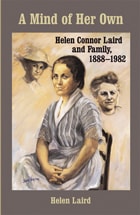
A Mind of Her Own
Helen Connor Laird and Family, 1888–1982Helen L. Laird
University of Wisconsin Press, 2006
A Mind of Her Own: Helen Connor Laird and Family 1888–1982 captures the public achievement and private pain of a remarkable Wisconsin woman and her family, whose interests and influence extended well beyond the borders of the state. Spanning almost a century, the history speaks to the way we were and are: a stridently materialistic nation with a deep and persistent spiritual component.
Acts of Mind
Conversations with Contemporary PoetsRichard Jackson
University of Alabama Press, 1984
Acts of Mind grew out of interviews conducted by the author for Poetry Miscellany. The aim of which was to help develop a method for talking about the work of contemporary poets.
The poets whose views appear in this volume represent a fair cross-section of the more important tendencies and impulses to be found in contemporary poetry and poetics.
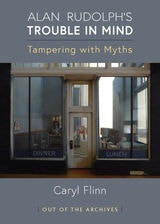
Alan Rudolph's Trouble in Mind
Tampering with MythsCaryl Flinn
University of Michigan Press, 2023
Despite a career spanning over forty years, filmmaker Alan Rudolph has flown largely under the radar of independent film scholars and enthusiasts, often remembered as Robert Altman’s protégé. Through a reading of his 1985 film Trouble in Mind, Caryl Flinn demonstrates that Rudolph is long overdue for critical re-evaluation.
Exploring Trouble in Mind’s influence on indie filmmaking, Rudolph’s dream-like style, and the external political influences of the Reagan era, Flinn effectively conveys the originality of Rudolph’s work through this multifaceted film. Utilizing archival materials and interviews with Rudolph himself and his collaborators, Flinn argues for this career-defining film’s relevance to American independent cinema and the decade of the 1980s. Amply illustrated with frame enlargements and set photographs, this book uncovers new production stories and reception contexts of a film that Flinn argues deserves a place in the limelight.
Alleluias of the Mind
The Songs of AquinasDakin Matthews
St. Augustine's Press, 2024
Matthews' particular attention is given to "Lauda Sion," and he breaks it down, verse by verse, providing an analysis of the Latin text and commentary on its poetic structure, but also illuminates the doctrinal references to Aquinas' other scholarly works and Scripture. His approach is both technical and intermittently personal, and as such this book might serve as a two-week source of daily meditations.
The Alleluias of the Mind is a wonderful contribution to the body of Thomistic commentary and will appear before the close of the 750th anniversary of the death of Thomas Aquinas. It is also a wonderful complement to the year devoted to Eucharistic revival in the American Catholic Church.

Animals, Mind, and Matter
The Inside StoryJosephine Donovan
Michigan State University Press, 2022
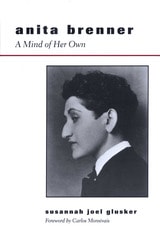
Anita Brenner
A Mind of Her OwnBy Susannah Joel Glusker
University of Texas Press, 1998
Journalist, historian, anthropologist, art critic, and creative writer, Anita Brenner was one of Mexico's most discerning interpreters. Born to a Jewish immigrant family in Mexico a few years before the Revolution of 1910, she matured into an independent liberal who defended Mexico, workers, and all those who were treated unfairly, whatever their origin or nationality.
In this book, her daughter, Susannah Glusker, traces Brenner's intellectual growth and achievements from the 1920s through the 1940s. Drawing on Brenner's unpublished journals and autobiographical novel, as well as on her published writing, Glusker describes the origin and impact of Brenner's three major books, Idols Behind Altars,Your Mexican Holiday, and The Wind That Swept Mexico.
Along the way, Glusker traces Brenner's support of many liberal causes, including her championship of Mexico as a haven for Jewish immigrants in the early 1920s. This intellectual biography brings to light a complex, fascinating woman who bridged many worlds—the United States and Mexico, art and politics, professional work and family life.
Art and Imagination
A Study in the Philosophy of MindRoger Scruton
St. Augustine's Press, 2015
Scruton examines and rejects various attempts made by recent philosophers to demarcate the realm of aesthetic judgment. He argues that the logic of aesthetic judgment does not suffice to distinguish what is “aesthetic” from what is not, for aesthetic judgments must be explained in terms of the conditions for their acceptance rather than the conditions for their truth. These “acceptance conditions” can be understood only if we first know what is meant by aesthetic experience. This theory attempts to show how aesthetic experience can be regarded as autonomous, even though it is intimately connected with ordinary experience, and is indeed dependent on ordinary experience for its full description.
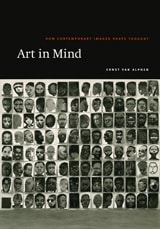
Art in Mind
How Contemporary Images Shape ThoughtErnst van Alphen
University of Chicago Press, 2005
Examining a broad range of works, van Alphen—a renowned art historian and cultural theorist—demonstrates how art serves a socially constructive function by actually experimenting with the parameters of thought. Employing work from artists as diverse as Picasso, Watteau, Francis Bacon, Marlene Dumas, and Matthew Barney, he shows how art confronts its viewers with the "pain points" of cultural experience-genocide, sexuality, diaspora, and transcultural identity-and thereby transforms the ways in which human existence is conceived. Van Alphen analyzes how art visually "thinks" about these difficult cultural issues, tapping into an understudied interpretation of art as the realm where ideas and values are actively created, given form, and mobilized. In this way, van Alphen's book is a work of art in itself as it educates us in a new mode of thought that will forge equally new approaches and responses to the world.

Ashes of the Mind
War and Memory in Northern Literature, 1865-1900Martin Griffin
University of Massachusetts Press, 2009
The memory of the American Civil War took many forms over the decades after the conflict ended: personal, social, religious, and political. It was also remembered and commemorated by poets and fiction writers who understood that the war had bequeathed both historical and symbolic meanings to American culture. Although the defeated Confederacy became best known for producing a literature of nostalgia and an ideological defensiveness intended to protect the South's own version of history, authors loyal to the Union also confronted the question of what the memory of the war signified, and how to shape the literary response to that individual and collective experience.
In Ashes of the Mind, Martin Griffin examines the work of five Northerners—three poets and two fiction writers—who over a period of four decades tried to understand and articulate the landscape of memory in postwar America, and in particular in that part of the nation that could, with most justification, claim the victory of its beliefs and values. The book begins with an examination of the rhetorical grandeur of James Russell Lowell's Harvard Commemoration Ode, ranges across Herman Melville's ironic war poetry, Henry James's novel of North-South reconciliation, The Bostonians, and Ambrose Bierce's short stories, and ends with the bitter meditation on race and nation presented by Paul Laurence Dunbar's elegy “Robert Gould Shaw.” Together these texts reveal how a group of representative Northern writers were haunted in different ways by the memory of the
conflict and its fraught legacy.
Griffin traces a concern with individual and community loss, ambivalence toward victory, and a changing politics of commemoration in the writings of Lowell, Melville, James, Bierce, and Dunbar. What links these very different authors is a Northern memory of the war that became more complex and more compromised as the century went on, often replacing a sense of justification and achievement with a perception of irony and failed promise.

Atrocities of the Mind
Essays on Violence and Politics in the American CenturyDwight Macdonald
University of Chicago Press, 2026
An essential collection of Dwight Macdonald’s prophetic essays on politics, art, and violence in twentieth-century America.
What does extreme violence do to human values? Does the concept of collective guilt make sense in assessing responsibility for genocide? Has modern mechanized society forever destroyed the possibility of peaceful resistance through art and civil disobedience? Atrocities of the Mind presents anew Dwight Macdonald, one of America’s foremost literary journalists and political activists, grappling with the hard questions of his time—and ours.
In this collection, Macdonald writes about major events—the Holocaust, the atomic bombing of Hiroshima, Gandhi’s assassination, the Vietnam War, and social phenomena such as mass shootings, campus protests, and police brutality—with clear-sighted and buoyant prose. He writes incisively about the cinema of Alfred Hitchcock and Roman Polanski, praises Dorothy Day’s pacifism, and reports circulating an antiwar petition in the White House Rose Garden. And not without effect: his essay “Our Invisible Poor” is said to have spurred the Johnson administration’s War on Poverty.
Norman Mailer memorably called Macdonald “a man with whom one might seldom agree but could never disrespect because he always told the truth as he saw the truth—a man therefore of the most incorruptible integrity.” In our America, reeling from political violence, Macdonald’s truth-telling reminds us how we got here and who we might still become.