Results by title
227 books match the query 'New England (CT, MA, ME, NH, RI, VT)' and 12 start with i

I Believe I'll Go Back Home
Roots and Revival in New England Folk MusicThomas S. Curren
University of Massachusetts Press, 2021
Fueled by interviews with key players from the folk music scene, I Believe I'll Go Back Home traces a direct line from Yankee revolutionaries, up-country dancers, and nineteenth-century pacifists to the emergence of blues and rock 'n' roll, ultimately landing at the period of the folk revival. Thomas S. Curren presents the richness and diversity of the New England folk tradition, which continues to provide perspective, inspiration, and healing in the present day.
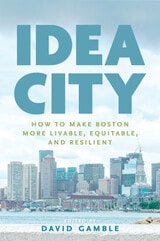
Idea City
How to Make Boston More Livable, Equitable, and ResilientEdited by David Gamble, Foreword by Renée Loth
University of Massachusetts Press, 2023
Racial strife, increased social and economic discrimination, amplified political friction, and growing uncertainty around the impacts of the COVID-19 pandemic and climate change have laid bare many inequalities within the city of Boston. How will these disruptions and inequities influence the city’s future, especially as Boston celebrates its quadricentennial in 2030?
This collection of original essays addresses the many challenges Boston contends with in the twenty-first century and considers ways to improve the city for everyone. Presenting a range of perspectives written by area experts—academics, reflective practitioners, and policymakers—these essays tackle issues of resiliency, mobility, affordable housing, health outcomes, social equity, economic equality, zoning, regionalism, and more. Reflecting the diversity of the city and the challenges and opportunities Boston currently faces, Idea City will help readers think differently about their own areas of expertise and draw conclusions from urban regeneration work in other fields.
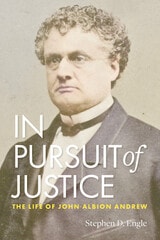
In Pursuit of Justice
The Life of John Albion AndrewStephen D. Engle
University of Massachusetts Press, 2023
Widely known as the “poor man’s lawyer” in antebellum Boston, John Albion Andrew (1818–1867) was involved in nearly every cause and case that advanced social and racial justice in Boston in the years preceding the Civil War. Inspired by the legacies of John Quincy Adams and Ralph Waldo Emerson, and mentored by Charles Sumner, Andrew devoted himself to the battle for equality. By day, he fought to protect those condemned to the death penalty, women seeking divorce, and fugitives ensnared by the Fugitive Slave Law. By night, he coordinated logistics and funding for the Underground Railroad as it ferried enslaved African Americans northward.
In this revealing and accessible biography, Stephen D. Engle traces Andrew’s life and legacy, giving this important, but largely forgotten, figure his due. Rising to national prominence during the Civil War years as the governor of Massachusetts, Andrew raised the African American regiment known as the Glorious 54th and rallied thousands of soldiers to the Union cause. Upon his sudden death in 1867, a correspondent for Harper’s Weekly wrote, “Not since the news came of Abraham Lincoln’s death were so many hearts truly smitten.”
In Search of New England's Native Past
Selected Essays by Gordon M. DayGordon M. Day
University of Massachusetts Press, 1998
This volume highlights the work of the late Gordon M. Day, renowned for his groundbreaking research on the history and culture of the Western Abenakis and their Indian neighbors. Where previous historians had tended to portray northern New England as an area largely devoid of aboriginal peoples, Day established beyond all doubt the presence of Abenaki settlements along the eastern shore of Lake Champlain as well as the upper reaches of the Connecticut and Merrimack rivers.
For nearly three decades, Day focused his work on the community of Saint Francis, or Odanak, in Quebec, to which Abenaki refugees from interior New England had fled, beginning in the mid-seventeenth century and continuing into the nineteenth. Drawing on the methods of several disciplines, including ethnology, linguistics, and ethnohistory, he synthesized data from fragmentary historical records, oral traditions, and place names to reconstruct a world assumed to be lost.

In a Closet Hidden
The Life and Work of Mary E. Wilkins FreemanLeah Blatt Glasser
University of Massachusetts Press, 1996
The first literary biography of a much-neglected American writer, this book explores the multiple tensions at the core of Mary E. Wilkins Freeman's life and work. A prolific short story writer and novelist, Freeman (1852–1930) developed a reputation as a local colorist who depicted the peculiarities of her native New England. Yet as Leah Blatt Glasser shows, Freeman was one of the first American authors to write extensively about the relationships women form outside of marriage and motherhood, the role of work in women's lives, the complexity of women's sexuality, and the interior lives of women who rebel rather than conform to patriarchal strictures.
In a Closet Hidden traces Freeman's evolution as a writer, showing how her own inner conflicts repeatedly found expression in her art. As Glasser demonstrates, Freeman's work examined the competing claims of creativity and convention, self-fulfillment and self-sacrifice, spinsterhood and marriage, lesbianism and heterosexuality.

In the Evil Day
Violence Comes to One Small TownRichard Adams Carey
University Press of New England, 2015
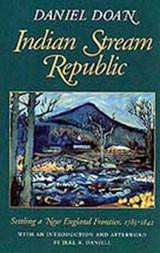
Indian Stream Republic
Settling a New England Frontier, 1785-1842Daniel Doan
Brandeis University Press, 1996
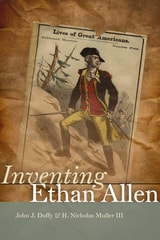
Inventing Ethan Allen
John J. Duffy and H. Nicholas Muller
University Press of New England, 2014
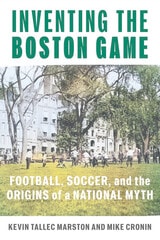
Inventing the Boston Game
Football, Soccer, and the Origins of a National MythKevin Tallec Marston and Mike Cronin
University of Massachusetts Press, 2024
Honorable Mention, 2025 North American Society for Sport History Book Award
On Boston Common stands a monument dedicated to the Oneida Football Club. It honors the site where, in the 1860s, sixteen boys played what was then called the “Boston game”—an early version of football in the United States. The boys were largely the sons of upper-class Boston Brahmins, and they lived through the transformative periods of the Civil War, Reconstruction, and the Gilded Age. Later as they grew old, in the 1920s, a handful of them orchestrated a series of commemorative events about their boyhood game. Benefitting from elite networks developed through the city’s social and educational institutions, including Harvard University, they donated artifacts (such as an oddly shaped, battered black ball) to museums, deposited self-penned histories into libraries and archives, and erected bronze and stone memorials, all to elevate themselves as the inventors of American football (and later, by extension, soccer). But was this origin story of what, by then, had become one of America’s favorite games as straightforward as they made it seem or a myth-making hoax?
In Inventing the Boston Game, Kevin Tallec Marston and Mike Cronin investigate the history of the Oneida Football Club and reveal what really happened. In a compelling, well told narrative that is informed by sports history, Boston history, and the study of memory, they posit that these men engaged in self-memorialization to reinforce their elite cultural status during a period of tremendous social and economic change, and particularly increased immigration. This exploration of the Club’s history provides fascinating insight into how and why origin stories are created in the first place.
Investment Management in Boston
A HistoryDavid Grayson Allen
University of Massachusetts Press, 2015
Presented here for the first time is the history of Boston's evolution as a center of American money management from early settlement to the twenty-first century. Within a few decades after the Revolution, Bostonians built up an impressive mercantile and industrial economy, and used wealth accrued from the China trade, New England mills, and other ventures to establish the most important stock exchange in America. They also created the “Boston trustee,” a unique professional who managed private fortunes over generations. During the late nineteenth century, Boston financial institutions were renowned as bastions of stability and conservatism in an era of recurrent economic panics and frequent failures.
It was not until the twentieth century that Boston became better known for its role in investment management. In 1924, local financiers created the first mutual fund, an innovation almost a century in the making. After World War II, Boston originated venture capital with the founding of American Research & Development. This was soon followed by the development of private equity, the growth of the mutual fund industry, the pension “revolution” that changed and strengthened money management, the evolution in management of institutional endowments, and the rise of new family offices and hedge funds. The contributions of fiduciaries and investment managers have played an important part in the rise of the “New Boston” and made the city one of the most vibrant financial capitals in the world.
Investment Management in Boston is published in association with Massachusetts Historical Society.
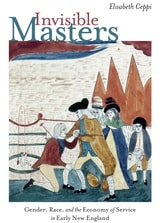
Invisible Masters
Gender, Race, and the Economy of Service in Early New EnglandElisabeth Ceppi
Dartmouth College Press, 2018
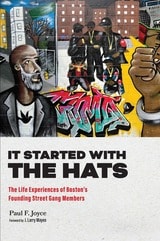
It Started with the Hats
The Life Experiences of Boston’s Founding Street Gang MembersPaul F. Joyce, with a foreword by J. Larry Mayes
Southern Illinois University Press, 2024
In the late 1980s, the introduction of crack cocaine and easy access to guns led to the emergence of the street gang culture and an explosion of gun violence in Boston. Black and Latino youth were both perpetrators and victims of firearm violence as the city grappled with a staggering number of shootings and homicides. Officers within the Boston Police Department struggled to find new and creative ways to combat the growing violence and neutralize gang influence. Paul Joyce was one of those officers.
Throughout his extensive career with the Boston Police, Joyce was at the forefront of the Department’s anti-gang and youth violence initiatives, including during the height of gang and gun violence in the late 1980s through early 1990s. Later in his career, after thirty-one years in policing, Joyce transitioned to academia as a criminologist, seeking to better understand the lives of the gang members he had encountered during his time as an officer. He interviewed thirty Black and Latino men who witnessed and led the emergence of the street gang phenomenon in Boston. Joyce’s strong relationship with community leaders led to the recruitment of the men, who ultimately entrusted him with their life stories and their inner worlds. Using the men’s own words to describe the tragedies they endured, the crimes they committed, and the penalties they paid, Joyce now shares their stories of life before, during, and after gang membership.
Joyce examines the influences that motivated the men toward joining gangs, their gang experiences, and the turning points that shaped their paths later in life, whether leading to desistance from or continued persistence in criminal behavior. Joyce explores their lives from childhood into adulthood, providing a deep analysis of the factors that influenced the entire trajectory of gang members’ lives. By utilizing this life-course approach, Joyce adds to the discourse regarding what influences a gang member’s ability or inability to transition out of criminality and the gang life.
This uniquely candid look at gang membership, humanized by the perspectives of the men who experienced it, provides invaluable insight into the complex interplay of the social, cultural, and personal factors that shape individuals’ life courses. This, in turn, has important implications regarding the types of outside interventions that would be the most effective in making a positive difference in the lives of current and former gang members.