Results by title
1066 books match the query 'Political' and 34 start with i
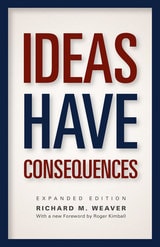
Ideas Have Consequences
Expanded EditionRichard M. Weaver
University of Chicago Press, 2013
In its pages, Richard M. Weaver argues that the decline of Western civilization resulted from the rising acceptance of relativism over absolute reality. In spite of increased knowledge, this retreat from the realist intellectual tradition has weakened the Western capacity to reason, with catastrophic consequences for social order and individual rights. But Weaver also offers a realistic remedy. These difficulties are the product not of necessity, but of intelligent choice. And, today, as decades ago, the remedy lies in the renewed acceptance of absolute reality and the recognition that ideas—like actions—have consequences.
This expanded edition of the classic work contains a foreword by New Criterion editor Roger Kimball that offers insight into the rich intellectual and historical contexts of Weaver and his work and an afterword by Ted J. Smith III that relates the remarkable story of the book’s writing and publication.
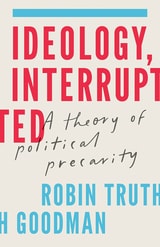
Ideology, Interrupted
A Theory of Political PrecarityRobin Truth Goodman
University of Minnesota Press, 2026
A powerful argument that the failure of ideology has created political disconnection and apathy
Political institutions increasingly fail to provide representations where citizens can recognize, identify, and imagine themselves as part of the institutions’ democratic project. Robin Truth Goodman argues that this disconnection is because ideology itself has gotten interrupted. Reversing Louis Althusser’s famous formulation of ideology as “calling” to citizens who, in response, turn toward the call, she argues that citizens now believe that ideology has turned away from them and stopped calling, endangering the most basic processes of modern democracies.
Deconstructing the widespread failure of democratic institutions to connect with individuals, Goodman examines recent works by authors such as Claire Vaye Watkins, Colson Whitehead, Ling Ma, Han Kang, and Ruth Ozeki that interrogate subjective agency within three different sites of social struggle: eco-catastrophe, pandemic, and food insecurity. She shows the themes that emerge from the novels reflecting and extending how the privatization and technologization of political decision-making have effectively cut off politicians and political institutions from the people they are supposed to serve.
Basing her study in the political philosophy of Judith Butler, Hannah Arendt, Julia Kristeva, and other prominent feminists, Goodman draws parallels with gender theory and argues that precarity in democratic societies has prevented citizens from finding points of engagement within politics. Diagnosing this widespread inability to translate private struggles into collective responses, Ideology, Interrupted is a powerful and inspiring call for new forms of societal bonds and political engagement to rejuvenate our democratic systems.
Retail e-book files for this title are screen-reader friendly.

Idiotism
Capitalism and the Privatisation of LifeNeal Curtis
Pluto Press, 2012
Constructing a new vocabulary with which to understand contemporary society, Curtis examines 'idiotism' across the spheres of economics, politics and culture, drawing on the philosophy and political theories of Martin Heidegger, Louis Althusser, Franco Berardi, Jacques Rancière and Cornelius Castoriadis.
Idiotism recasts our conception of the new neoliberal 'common sense', presenting it as not simply a case of false consciousness, but an ontological problem related to our being-in-the-world.
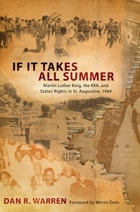
If It Takes All Summer
Martin Luther King, the KKK, and States' Rights in St. Augustine, 1964Dan R. Warren, with foreword by Morris Dees
University of Alabama Press, 2008
An insider’s record of the St. Augustine Civil Rights drama.
This memoir recounts the struggle against segregation in St. Augustine, Florida, in the early and mid-1960s. In the summer of 1964 the nation’s oldest city became the center of the civil rights movement as Martin Luther King Jr., encouraged by President Johnson, a southerner, who made the civil rights bill the center piece of his domestic policy, chose this tourism-driven community as an ideal location to demonstrate the injustice of discrimination and the complicity of southern leaders in its enforcement.
St. Augustine was planning an elaborate celebration of its founding, and expected generous federal and state support. But when the kick-off dinner was announced only whites were invited, and local black leaders protested. The affair alerted the national civil rights leadership to the St. Augustine situation as well as fueling local black resentment.
Ferment in the city grew, convincing King to bring his influence to the leadership of the local struggle. As King and his allies fought for the right to demonstrate, a locally powerful Ku Klux Klan counter-demonstrated. Conflict ensued between civil rights activists, local and from out-of-town, and segregationists, also home-grown and imported. The escalating violence of the Klan led Florida’s Governor to appoint State Attorney Dan Warren as his personal representative in St. Augustine. Warren’s crack down on the Klan and his innovative use of the Grand Jury to appoint a bi-racial committee against the intransigence of the Mayor and other officials, is a fascinating story of moral courage. This is an insider view of a sympathetic middleman in the difficult position of attempting to bring reason and dialog into a volatile situation.
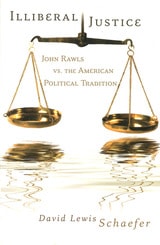
Illiberal Justice
John Rawls vs. the American Political TraditionDavid Lewis Schaefer
University of Missouri Press, 2007

Imagining America in 2033
How the Country Put Itself Together after BushHerbert J. Gans
University of Michigan Press, 2008
At the heart of Herbert J. Gans's utopian narrative is the vision of progress with fairness on which the best of American idealism has been built. Part utopia, part realism, Imagining America in 2033 is also a liberal's dream of life after Bush and a set of progressive yet practical guidelines for restoring sanity and intelligence to nearly every aspect of public and political life post-Bush.
Herbert J. Gans, one of the most influential and prolific sociologists and social commentators of our time, achieves a realistic utopia set mostly in the second and third decades of the century. In Gans's imagined future, elected officials, policymakers, activists, and citizens have transformed America into a much more humane and effective democracy. The book features three Democratic presidents; the major new domestic, foreign, and social policies their administrations pursue; and the political battles they fight.
Gans provides chapters on an exhaustive list of social, political, and economic policy issues: jobs; war; tax reform; global warming; economic, racial, gender, and religious equality; family policies; the creation of affordable housing and energy saving communities; education reform; and more. While hopeful and idealistic, many of Gans's proposals---such as the concept of the nurse-doctor, in which nurses increasingly take on tasks previously handled only by medical doctors within a framework of national health care---are ideas innovative enough that they should be taken seriously by actual policymakers.
Imagining America in 2033 is lively and accessible, with an appeal for general readers, policy hounds, and the politically savvy alike.

Improper Life
Technology and Biopolitics from Heidegger to AgambenTimothy C. Campbell
University of Minnesota Press, 2011
Has biopolitics actually become thanatopolitics, a field of study obsessed with death? Is there something about the nature of biopolitical thought today that makes it impossible to deploy affirmatively? If this is true, what can life-minded thinkers put forward as the merits of biopolitical reflection? These questions drive Improper Life, Timothy C. Campbell’s dexterous inquiry-as-intervention.
Campbell argues that a “crypto-thanatopolitics” can be teased out of Heidegger’s critique of technology and that some of the leading scholars of biopolitics—including Michel Foucault, Giorgio Agamben, and Peter Sloterdijk—have been substantively influenced by Heidegger’s thought, particularly his reading of proper and improper writing. In fact, Campbell shows how all of these philosophers have pointed toward a tragic, thanatopolitical destination as somehow an inevitable result of technology. But in Improper Life he articulates a corrective biopolitics that can begin with rereadings of Foucault (especially his late work regarding the care and technologies of the self), Freud (notably his writings on the drives and negation), and Gilles Deleuze (particularly in the relation of attention to aesthetics).
Throughout Improper Life, Campbell insists that biopolitics can become more positive and productively asserts an affirmative technē not thought through thanatos but rather practiced through bíos.
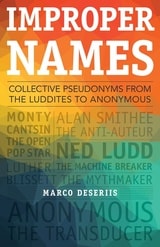
Improper Names
Collective Pseudonyms from the Luddites to AnonymousMarco Deseriis
University of Minnesota Press, 2015
Improper Names offers a genealogy and theory of the “improper name,” which author Marco Deseriis defines as the adoption of the same pseudonym by organized collectives, affinity groups, and individual authors. Although such names are often invented to pursue a specific social or political agenda, they are soon appropriated for different and sometimes diverging purposes. This book examines the tension arising from struggles for control of a pseudonym’s symbolic power.
Deseriis provides five fascinating and widely varying case studies. Ned Ludd was the legendary and eponymous leader of the English Luddites, textile workers who threatened the destruction of industrial machinery and then advanced a variety of economic and political demands. Alan Smithee—an alias coined by Hollywood film directors in 1969 in order to disown films that were recut by producers—became a contested signature and was therefore no longer effective to signal prevarication to Hollywood insiders. Monty Cantsin was an “open pop star” created by U.S. and Canadian artists in the late 1970s to critique bourgeois notions of authorship, but its communal character was compromised by excessive identification with individual users of the name. The Italian media activists calling themselves Luther Blissett, aware of the Cantsin experience, implemented measures to prevent individuals from assuming the alias, which was used to author media pranks, sell apocryphal manuscripts to publishers, fabricate artists and artworks, and author best-selling novels. The longest chapter here is devoted to the contemporary “hacktivist” group known as Anonymous, which protests censorship and restricted access to information and information technologies.
After delving into a rich philosophical debate on community among those who have nothing in common, the book concludes with a reflection on how the politics of improper names affects present-day anticapitalist social movements such as Occupy and 15-M.

In Defense of Politics in Public Administration
A Value Pluralist PerspectiveMichael W. Spicer
University of Alabama Press, 2009
Where values collide, politics guides the way.
Scholars of public administration have historically too often been disdainful towards politics in the field, viewing political activities and interests as opportunities for corruption, mismanagement, and skewed priorities. Supporters of this anti-political stance have become even more strident in recent years, many of them advancing scientific models for the study and practice of public administration and governance.
Michael Spicer argues that politics deserves to be defended as a vital facet of public administration on the grounds that it can promote moral conduct in government and in public administration, principally by bringing to the foreground the role of values in administrative practice. Politics can facilitate the resolution of conflicts that naturally arise from competing values, or conceptions of the good, while minimizing the use of force or violence. Drawing on the writings of Isaiah Berlin, Bernard Crick, and Stuart Hampshire, In Defense of Politics in Public Administration argues that value conflict is an integral part of our moral experience, both in making our own moral choices and in dealing with those whose values conflict with our own. This book is a spirited declaration of principles and a timely contribution to a dialogue that is redefining public administration, both in theory and in practice.

In Pursuit of Justice
The Life of John Albion AndrewStephen D. Engle
University of Massachusetts Press, 2023
Widely known as the “poor man’s lawyer” in antebellum Boston, John Albion Andrew (1818–1867) was involved in nearly every cause and case that advanced social and racial justice in Boston in the years preceding the Civil War. Inspired by the legacies of John Quincy Adams and Ralph Waldo Emerson, and mentored by Charles Sumner, Andrew devoted himself to the battle for equality. By day, he fought to protect those condemned to the death penalty, women seeking divorce, and fugitives ensnared by the Fugitive Slave Law. By night, he coordinated logistics and funding for the Underground Railroad as it ferried enslaved African Americans northward.
In this revealing and accessible biography, Stephen D. Engle traces Andrew’s life and legacy, giving this important, but largely forgotten, figure his due. Rising to national prominence during the Civil War years as the governor of Massachusetts, Andrew raised the African American regiment known as the Glorious 54th and rallied thousands of soldiers to the Union cause. Upon his sudden death in 1867, a correspondent for Harper’s Weekly wrote, “Not since the news came of Abraham Lincoln’s death were so many hearts truly smitten.”

In Search of Goodness
Edited by Ruth W. Grant
University of Chicago Press, 2011
The recent spate of books and articles reflecting on the question of evil might make one forget that the question of just what constitutes goodness is no less urgent or perplexing. Everyone wants to think of him- or herself as good. But what does a good life look like? And how do people become good? Are there multiple, competing possibilities for what counts as a good life, all equally worthy? Or, is there a unified and transcendent conception of the good that should guide our judgment of the possibilities? What does a good life look like when it is guided by God? How is a good life involved with the lives of others? And, finally, how good is good enough?
These questions are the focus of In Search of Goodness, the product of a year-long conversation about goodness. The eight essays in this volume challenge the dichotomies that usually govern how goodness has been discussed in the past: altruism versus egoism; reason versus emotion; or moral choice versus moral character. Instead, the contributors seek to expand the terms of the discussion by coming at goodness from a variety of perspectives: psychological, philosophic, literary, religious, and political. In each case, they emphasize the lived realities and particulars of moral phenomena, taking up examples and illustrations from life, literature, and film. From Achilles and Billy Budd, to Oskar Schindler and Shel Silverstein’s The Giving Tree, to Iris Murdoch and the citizens of Flagstaff, Arizona, readers will find a wealth of thought-provoking insights to help them better understand this most basic, but complex, element of human life and happiness.

In Search of Schopenhauer's Cat
Arthur Schopenhauer's Quantum-Mystical Theory of JusticeRaymond B. Marcin
Catholic University of America Press, 2006

In the Name of History
Joan Wallach Scott
Central European University Press, 2020
In this book Joan Wallach Scott discusses the role history has played as an arbiter of right and wrong and of those who claim to act in its name—"in the name of history." Scott investigates three different instances in which repudiation of the past was conceived as a way to a better future: the International Military Tribunal at Nuremberg in 1946, the South African Truth and Reconciliation Commission in 1996, and the ongoing movement for reparations for slavery in the United States.
Scott shows how in these cases history was not only used to explain the past but to produce a particular future. Yet both past and future were subject to the political realities of their time and defined in terms of moral absolutes, often leading to deep contradictions. These three instances demonstrate that history is not an impartial truth, rather its very meaning is constructed by those who act in its name.
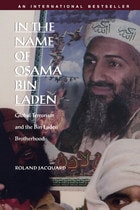
In the Name of Osama Bin Laden
Global Terrorism and the Bin Laden BrotherhoodRoland Jacquard
Duke University Press, 2002
International terrorism expert Roland Jacquard’s In the Name of Osama bin Laden presents a dramatic portrait of the world's most wanted terrorist and his extensive brotherhood--the network of people who operate “in his name.” Published originally in France the very week of September 11, as events in the United States shook the world, the book has become an international bestseller.
Jacquard details how bin Laden became an international emblem of fundamentalist, pan-Islamic, anti-U.S. fervor and the leader of a brotherhood so passionate that devotees who have never met him will act autonomously in his name. The author explains the global character of bin Laden’s organization, elaborating the extent of his sphere of influence in Europe and Asia. Jacquard reveals the construction of bin Laden’s networks—including a profile of his inner circle—and their collaboration with overlapping webs of banking, drug trafficking, religious, and terrorist organizations. He considers the brotherhood’s access to biological, chemical, and nuclear weapons and warns that, with or without bin Laden, this global terrorist force will remain a threat.
Now in English, this edition has been substantially updated in light of recent world events and expanded to include previously unpublished materials, featuring a new introduction and afterword. New documents include an April 2001 interview by the author with bin Laden; a September 24 proclamation by bin Laden to Muslims in Pakistan; and a key page from Dr. Ayman al-Zawahiri’s book justifying eternal jihad, which was smuggled out of Afghanistan in October 2001.

In the Skin of a Beast
Sovereignty and Animality in Medieval FrancePeggy McCracken
University of Chicago Press, 2017
Peggy McCracken discusses a range of literary texts and images from medieval France, including romances in which animal skins appear in symbolic displays of power, fictional explorations of the wolf’s desire for human domestication, and tales of women and snakes converging in a representation of territorial claims and noble status. These works reveal that the qualities traditionally used to define sovereignty—lineage and gender among them—are in fact mobile and contingent. In medieval literary texts, as McCracken demonstrates, human dominion over animals is a disputed model for sovereign relations among people: it justifies exploitation even as it mandates protection and care, and it depends on reiterations of human-animal difference that paradoxically expose the tenuous nature of human exceptionalism.

In-House Weddings
Bohumil Hrabal
Northwestern University Press, 2007
The task, taken up by such a rogue comic talent, could be nothing other than strangely delightful; and in In-House Weddings, the first of the trilogy that Hrabal produced, we meet the author through the eyes of his wife Eliska. She narrates his life from his upbringing in Nymburk through his work as a dispatcher in a train station and then in a scrap paper plant, his first publication, his trouble with the authorities, and his association with notable artists and authors such as Jiri Kolar, Vladimir Boudnik, and Arnost Lustig. Hrabal’s bohemian life was itself a source of great interest to the Czech public; transmuted here, it is even more compelling, a wry portrait of artistic life in postwar Eastern Europe and a telling reflection on how such a life might be recast in the light of literary brilliance.
Indiana Political Heroes
Geoff Paddock
Indiana Historical Society Press, 2008
Influx and Efflux
Writing Up with Walt WhitmanJane Bennett
Duke University Press, 2020
Insecurity
Richard Grusin
University of Minnesota Press, 2022
Investigating insecurity as the predominant logic of life in the present moment
Challenging several key concepts of the twenty-first century, including precarity, securitization, and resilience, this collection explores the concept of insecurity as a predominant logic governing recent cultural, economic, political, and social life in the West. The essays illuminate how attempts to make human and nonhuman systems secure and resilient end up having the opposite effect, making insecurity the default state of life today.
Unique in its wide disciplinary breadth and variety of topics and methodological approaches—from intellectual history and cultural critique to case studies, qualitative ethnography, and personal narrative—Insecurity is written predominantly from the viewpoint of the United States. The contributors’ analyses include the securitization of nongovernmental aid to Palestine, Bangladeshi climate refugees, and the privatization of U.S. military forces; the history of the concept of insecurity and the securitization of finance; racialized urban development in Augusta, Georgia; Amazon’s Mechanical Turk and the consequences of the Marie Kondo method; and the intricate politics of sexual harassment in the U.S. academy.
Contributors: Neel Ahuja, U of California, Santa Cruz; Aneesh Aneesh, U of Wisconsin, Milwaukee; Lisa Bhungalia, Kent State U; Jennifer Doyle, U of California, Riverside; Annie McClanahan, U of California, Irvine; Andrea Miller, Florida Atlantic U; Mark Neocleous, Brunel U London; A. Naomi Paik, U of Illinois, Chicago; Maureen Ryan, U of South Carolina; Saskia Sassen, Columbia U.

Inside the Ropes with Jesse Ventura
Tom Hauser
University of Minnesota Press, 2002
A firsthand account of the remarkable rise of Minnesota’s unconventional governor.
Jesse Ventura burst into national consciousness-and late-night punch lines-when the former professional wrestler was unexpectedly elected governor of Minnesota in 1998. An overnight political sensation whose only previous relevant experience was a brief period as mayor of a Minneapolis suburb, Ventura became a lightning rod for the media, combining the bravado of a Navy SEAL, the showmanship of a movie actor, and the blunt speech and bluff humor of a talk-radio host with a surprising passion for public policy and legislative reform.
In this revealing chronicle of Jesse Ventura’s campaign, election, and time in office, political reporter Tom Hauser tells us what he saw as one of the "media jackals" covering the governor for local television station KSTP. In a saga full of drama, hi-jinks, and controversy, Hauser offers the inside story of the hubbub surrounding Ventura-from his triumphal tour of the late-night talk shows upon his election, to his outspoken and outrageous revelations in Playboy, to his stints as referee for the World Wrestling Federation and commentator for the failed XFL, to his ongoing battles with the state legislature. Hauser also provides insight into Ventura’s popularity, character, and motivations-his impatience with conventional wisdom, his distrust of traditional politics, and his combative relationship with the media. Though to many Ventura seemed to come out of nowhere, Hauser has been following him since the day he filed to run for governor, when he was the underdog in a race against two well-established career politicians, backed by major parties. Hauser offers the only detailed account available of Ventura’s amazing rise and reign, providing an evenhanded look at a political story that will leave readers feeling that truth really is stranger than fiction.
Institutions in American Society
Essays in Market, Political, and Social OrganizationsJohn E. Jackson, Editor
University of Michigan Press, 1990
Insurgencies
Constituent Power And The Modern StateAntonio Negri
University of Minnesota Press, 1999
Insurgencies
Constituent Power and the Modern StateAntonio Negri
University of Minnesota Press, 2009
New Edition
In the ten years since the initial publication of Insurgencies, Antonio Negri's reputation as one of the world's foremost political philosophers has grown dramatically. An invigorating appraisal of revolutionary thought, Insurgencies is both the precursor to and the historical basis for Antonio Negri and Michael Hardt's masterwork, Empire.
At the center of this book is the conflict between "constituent power," the democratic force of revolutionary innovation, and "constituted power," the fixed power of formal constitutions and central authority. This conflict, Negri argues, defines the drama of modern rebellions. Now with a foreword by Michael Hardt, Insurgencies leads to a new notion of how power and action must be understood if we are to achieve a democratic future.
Insurgent Encounters
Transnational Activism, Ethnography, and the PoliticalJeffrey S. Juris and Alex Khasnabish, eds.
Duke University Press, 2013
Contributors. Giuseppe Caruso, Maribel Casas-Cortés, Janet Conway, Stéphane Couture, Vinci Daro, Manisha Desai, Sylvia Escárcega, David Hess, Jeffrey S. Juris, Alex Khasnabish, Lorenzo Mosca, Michal Osterweil, Geoffrey Pleyers, Dana E. Powell, Paul Routledge, M. K. Sterpka, Tish Stringer

Intelligence Is the Art of Remaining Faithful under Shifting Circumstances
Alexander Kluge and Anselm Kiefer
Seagull Books, 2026
What holds us together in times of uncertainty? For decades, artist Anselm Kiefer and filmmaker-writer Alexander Kluge have explored this question—both as friends and collaborators. This latest volume is a bold and poetic exchange of images and texts in which they delve into the idea of reliability and its relationship to the four great forces that shape our lives: power, love, truth, and money.
Moving across history, myth, and the present day, Kiefer and Kluge ask: What is time? In a world of endless change, how do we hold on to what endures? Inspired by Hölderlin’s call “to remain faithful under shifting circumstances,” they use art to keep memory alive, invite the past into the present, and welcome the future before it arrives. Layered, provocative, and profoundly human, this new collaboration is a powerful meditation on what connects us—and what makes us endure.
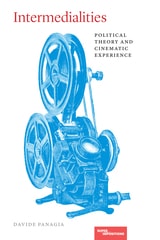
Intermedialities
Political Theory and Cinematic ExperienceDavide Panagia
Northwestern University Press, 2024
Shining new light on our understanding of cinema’s ways of political thinking, Intermedialities: Political Theory and Cinematic Experience puts modern political theory in conversation with the philosophy of film. Davide Panagia argues that there are no natural laws of association that can guarantee a template for democratic participation, as democracy is predicated not on stabilizing foundations but rather on the formation of expansive collectivities and institutions that are responsive to alterability. Instead, democracy requires a relational ontology, one that he elucidates by turning to philosophers of film like Stanley Cavell, Gilles Deleuze, Miriam Hansen, and Jean-Luc Godard—all of whom have articulated a political aesthetic of cinematic experience that is at once aspectual and compositional. Panagia reads these thinkers alongside a countertradition of modern political thought, represented by David Hume, Ludwig Wittgenstein, and Gilbert Simondon. His articulation of cinematic experience thus allows for a political aesthetic that is rooted in the migratory realities of undetermined relations.

Intolerable
Writings from Michel Foucault and the Prisons Information Group (1970–1980)Michel Foucault
University of Minnesota Press, 2020
A groundbreaking collection of writings by Michel Foucault and the Prisons Information Group documenting their efforts to expose France’s inhumane treatment of prisoners
Founded by Michel Foucault and others in 1970–71, the Prisons Information Group (GIP) circulated information about the inhumane conditions within the French prison system. Intolerable makes available for the first time in English a fully annotated compilation of materials produced by the GIP during its brief but influential existence, including an exclusive new interview with GIP member Hélène Cixous and writings by Gilles Deleuze and Jean Genet.
These archival documents—public announcements, manifestos, reports, pamphlets, interventions, press conference statements, interviews, and round table discussions—trace the GIP’s establishment in post-1968 political turmoil, the new models of social activism it pioneered, the prison revolts it supported across France, and the retrospective assessments that followed its denouement. At the same time, Intolerable offers a rich, concrete exploration of Foucault’s concept of resistance, providing a new understanding of the arc of his intellectual development and the genesis of his most influential book, Discipline and Punish.
Presenting the account of France’s most vibrant prison resistance movement in its own words and on its own terms, this significant and relevant collection also connects the approach and activities of the GIP to radical prison resistance movements today.

Introduction to Non-Marxism
François Laruelle
University of Minnesota Press, 2014
Following the collapse of the communist states it was assumed that Marxist philosophy had collapsed with it. In Introduction to Non-Marxism, François Laruelle aims to recover Marxism along with its failure by asking the question “What is to be done with Marxism itself?”
To answer, Laruelle resists the temptation to make Marxism more palatable after the death of metaphysics by transforming Marxism into a mere social science or by simply embracing with evangelical fervor the idea of communism. Instead Laruelle proposes a heretical science of Marxism that will investigate Marxism in both its failure and power so as to fashion new theoretical tools.
In the course of engaging with the material of Marxism, Laruelle takes on the philosophy of Marx along with important philosophers who have extended that philosophy including Althusser, Balibar, Negri as well as the attempt at a phenomenological Marxism found in the work of Michel Henry. Through this engagement Laruelle develops with great precision the history and function of his concept of determination-in-the-last-instance. In the midst of the assumed failure of Marxism and the defections and resentment that followed, Laruelle’s non-Marxism responds with the bold declaration: “Do not give up on theory!”

Islam against the West
Shakib Arslan and the Campaign for Islamic NationalismBy William L. Cleveland
University of Texas Press, 1985
This book gives a unique perspective on the interwar history of the Middle East. By telling the life story of one man, it illuminates the political and cultural struggles of an era. Shakib Arslan (1869–1946) was a leading member of the generation of Ottoman Arabs who came to professional maturity just before the final defeat of the Ottoman Empire. Born to a powerful Lebanese Druze family, Arslan grew up perfectly suited to his time and place in history. He was one of the leading writers of his day and a dexterous, ambitious politician. But, by the end of World War I, Arslan and others of his generation found themselves adrift in a world no longer of their choosing, as the once great Ottoman state lay broken before the West.
Rather than retreating from public life in those dark days, however, Arslan emerged militant in his opposition to Western encroachment on Islamic lands and tireless in his crusade to bring the organizing principles of a universalist Islam to the age of emerging nation-states. Organizer, pamphleteer, diplomat, spokesman, and symbol, Arslan became one of the dominant, and most controversial, Muslim political figures in the two decades between the wars. His involvements were so varied and intense that to study his life is to bring into focus all the major political issues and intellectual currents of the era. By the end of his career he was both praised and vilified, but he was arguably the most widely read Arab author of his day.
Curiously, Arslan has received relatively little attention in English-language research. This may well be due less to his contemporary importance than to the perspective from which Western scholarship has viewed Middle Eastern intellectual history. Arslan was not one of the winners. For many his evocation of the old imperial ideal and his insistence on the strategic importance of Islamic ideals seemed to be simply archaic protest in a secular age. But this impeccably researched and beautifully written biography demonstrates the power and importance of Arslan’s activist heritage, reinterpreting it for its own time and showing its importance for ours.

Islam and Secularity
The Future of Europe's Public SphereNilüfer Göle
Duke University Press, 2015
Islam and the Political
Theory, Governance and International RelationsAmr G. E. Sabet
Pluto Press, 2008
This book compares Islamic and Western political formulations, highlighting areas of agreement and disparity. Building on this analysis, the author goes on to show that political Islam offers a serious alternative to the dominant political system and ideology of the West.
Sabet argues that rather than leading to a "Clash of Civlizations" or the assimilation of Islam into the Western system, a positive process of interactive self-reflection between Islam and liberal democracy is the best way forward.
Beginning this process, Sabet highlights key concepts of Islamic political thought and brings them into dialogue with Western modernity. The resulting synthesis is essential reading for advanced undergraduate and graduate students of Islamic and Middle Eastern politics, political theory, comparative politics and international relations.

Islam
Between Divine Message and HistoryAbdelmajid Sharfi
Central European University Press, 2005

Islamists in a Zionist Coalition
The Political and Religious OriginsUriya Shavit
Rutgers University Press, 2025
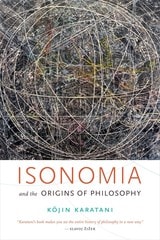
Isonomia and the Origins of Philosophy
Kojin Karatani
Duke University Press, 2017