Results by title
1148 books match the query 'Political Ideologies' and 44 start with i

I Hate It Here, Please Vote for Me
Essays on Rural Political DecayMatthew Ferrence
West Virginia University Press, 2024
The Best Narrative & Biography Books of 2024, Selected by Porchlight
When a progressive college professor runs for the Pennsylvania House of Representatives in a deeply conservative rural district, he loses. That’s no surprise. But the story of how Ferrence loses and, more importantly, how American political narratives refuse to recognize the existence and value of nonconservative rural Americans offers insight into the political morass of our nation.
In essays focused on showing goats at the county fair, planting native grasses in the front lawn, the political power of poetry, and getting wiped out in an election, Ferrence offers a counter-narrative to stereotypes of monolithic rural American voters and emphasizes the way stories told about rural America are a source for the bitter divide between Red America and Blue America.
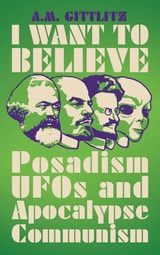
I Want to Believe
Posadism, UFOs and Apocalypse CommunismA.M. Gittlitz
Pluto Press, 2020
Advocating nuclear war, attempting communication with dolphins, and taking an interest in the paranormal and UFOs, there is perhaps no greater (or stranger) cautionary tale for the Left than that of Posadism. Named after the Argentine Trotskyist J. Posadas, the movement’s journey through the fractious and sectarian world of mid-20th century revolutionary socialism was unique. This book is a “dumpster dive” into the weird and wonderful world of the Posadists.
Although at times significant, Posadas' movement was ultimately a failure. As it disintegrated, it increasingly grew to resemble a bizarre cult, detached from the working class it sought to liberate. The renewed interest in Posadism today, especially for its more outlandish fixations, speaks to both a cynicism towards the past and nostalgia for the earnest belief that a better world is possible. Chapters include:
*Revolutionary Youth or Patriotic Youth
*The Death Throes of Capitalism
*The Origins of Posadism
*Flying Saucers, the Process of Matter and Energy, Science, the Revolutionary and Working-Class Stuggle, and the Socialist Future of Mankind
*What Exists Cannot be True
*Why Don’t Extraterrestrials Make Public Contact
*UFOs to the People
In the Introduction, A.M. Gittlitz writes, “Insurrection or first contact could come any day, Marxists and ufologists both tell us, but both are far more likely if we desire them, embracing a sentiment enigmatically expressed in a meme come before its time, a poster on the wall of rouge FBI agent Fox Mulder in the ‘90s sci-fi noir The X-Files: hovering alongside a granny image of a comically unconvincingly flying saucer and the words I WANT TO BELIEVE".
Drawing on considerable archival research, and numerous interviews with ex- and current Posadists, I Want to Believe tells the fascinating story of this most unusual socialist movement and considers why it continues to capture the imaginations of leftists today.
I the People
The Rhetoric of Conservative Populism in the United StatesPaul Elliott Johnson
University of Alabama Press, 2022
WINNER OF THE NATIONAL COMMUNICATION ASSOCIATION'S 2023 HOCHMUTH-NICHOLS AWARD
A definitive rhetorical history of conservative populism, exposing how identity, victimhood, and populist appeals have shaped—and constrained—modern American conservatism.
I The People: The Rhetoric of Conservative Populism in the United States examines a variety of texts—ranging from speeches and campaign advertisements to news reports and political pamphlets—to outline the populist character of conservatism in the United States. Paul Elliott Johnson focuses on key inflection points in the development of populist conservatism, including its manifestation in the racially charged presidential election of 1964, its consolidation at the height of Ronald Reagan’s reelection campaign in 1984, and its character in successive moments that saw its fortunes wax and wane, including 1994, the Obama era, and the rise of Donald J. Trump. theorizing conservative populism as a rhetorical form, Johnson advances scholarship about populism away from a binary ideological framework while offering a useful lens for contextualizing scholarship on American conservatism. I The People emphasizes that the populist roots of conservative hegemony exercise a powerful constraining force on conservative intellectuals, whose power to shape and control the movement to which they belong is circumscribed by the form of its public-facing appeals.
The study also reframes scholarly understandings of the conservative tradition’s seeming multiplicity, especially the tendency to suggest an abiding conservative unease regarding capitalism, showing how racist hostility underwrote a compromise with an increasingly economized understanding of humanity. Johnson also contests the narrative that conservatives learned to practice identity politics from social progressives. From the beginning, conservatism’s public vernacular was a white and masculine identity politics reliant on a rhetoric of victimhood, whether critiquing the liberal Cold War consensus or President Barack Obama.

Icons of the Left
Benjamin and Eisenstein, Picasso and Kafka after the Fall of CommunismOtto Karl Werckmeister
University of Chicago Press, 1999
Focusing on some of the most celebrated instances of traditional "Western Marxism," Werckmeister shows how such "icons of the Left" have been progressively detached from their political roots in communist activism to the safe distance of utopian or revolutionary speculations. He assesses some recent critiques of "Western Marxism" in popular culture such as Soderbergh's film Kafka, pointing out the historic fallacies that underlie such wholesale repudiations. With this analysis, Werckmeister seeks to clear the ground for a coherent cultural policy of the Left that responds to the continuing crisis of society.
Ideas Have Consequences
Expanded EditionRichard M. Weaver
University of Chicago Press, 2013
In its pages, Richard M. Weaver argues that the decline of Western civilization resulted from the rising acceptance of relativism over absolute reality. In spite of increased knowledge, this retreat from the realist intellectual tradition has weakened the Western capacity to reason, with catastrophic consequences for social order and individual rights. But Weaver also offers a realistic remedy. These difficulties are the product not of necessity, but of intelligent choice. And, today, as decades ago, the remedy lies in the renewed acceptance of absolute reality and the recognition that ideas—like actions—have consequences.
This expanded edition of the classic work contains a foreword by New Criterion editor Roger Kimball that offers insight into the rich intellectual and historical contexts of Weaver and his work and an afterword by Ted J. Smith III that relates the remarkable story of the book’s writing and publication.
Ideological Storms
Intellectuals, Dictators, and the Totalitarian TemptationBogdan C. Iacob
Central European University Press, 2019
This volume gathers authors who wrote important works in the fields of the history of ideologies, the comparative study of dictatorships, and intellectual history. The book is a state of the art reassessment and analysis of the ideological commitments of intellectuals and their relationships with dictatorships during the twentieth century. The contributions focus on turning points or moments of breakage as well as on the continuities. Though its focus is on an East–West comparison in Europe, there are texts also dealing with Latin America, China, and the Middle East giving the book a global outlook.
The first part of the book deals with intellectuals' involvement with communist regimes or parties; the second looks at the persistence of utopianism in the trajectory of intellectuals who had been associated earlier in their lives with either communism or fascism; the third tackles intellectuals' role in national imaginations from either the left or the right; and, the fourth ties late twentieth century phenomena to current phenomena such as the persistence of anti-Semitism in the West, the slow erosion of the values upon which the EU is built, the quagmire in Iraq, and China's rise in the post-Cold War era. The collection provides a comprehensive big-picture of intellectual genealogies and dictatorial developments.
Ideologies and National Identities
The Case of Twentieth-Century Southeastern EuropeMark Mazower
Central European University Press, 2004

Ideologies in the Age of Extremes
Liberalism, Conservatism, Communism, Fascism 1914-1991Willie Thompson
Pluto Press, 2010
This is a history of political ideologies during the period famously described by Eric Hobsbawn as ‘The Age of Extremes’ - from the First World War to the collapse of the Soviet Union.
Ideologies in the Age of Extremes introduces the key ideologies of the age; liberalism, conservatism, communism and fascism. Willie Thompson identifies the political influence of mass movements as a key feature. He uses a powerful approach that considers the different ideologies in relation to each other. This allows him to shows that they often emerged from a common root or merged into a common future, stealing each other’s clothes and reinventing themselves as the stark opposite of a competing ideology.
This sophisticated yet accessible analysis will be of great interest to students of 20th century history and political theory.
Ideology and Superstructure in Historical Materialism
Franz Jakubowski
Pluto Press, 2002
In the same period, only Lukacs and Korsch attempted to deal systemically with these problems, and it is they who are generally recognised as the main inspiration behind what is called Western Marxism, yet Franz Jakubowski is a key figure in the development of Marxist thought. And, unlike the others, Jakubowski was also an activist, and for this reason avoids the unnecessarily dense language of his fellow theoreticians.
Ideology and Superstructure is rare in that it successfully conveys complex problems in a simple and straightforward form. At a time when the literature on Marx has become excessively obscuranist, Jakubowski's work serves as a useful antidote, and is an ideal text for introducing novices to the basics of Marxist theory.
Idiotism
Capitalism and the Privatisation of LifeNeal Curtis
Pluto Press, 2012
Constructing a new vocabulary with which to understand contemporary society, Curtis examines 'idiotism' across the spheres of economics, politics and culture, drawing on the philosophy and political theories of Martin Heidegger, Louis Althusser, Franco Berardi, Jacques Rancière and Cornelius Castoriadis.
Idiotism recasts our conception of the new neoliberal 'common sense', presenting it as not simply a case of false consciousness, but an ontological problem related to our being-in-the-world.
Illiberal Vanguard
Populist Elitism in the United States and RussiaAlexandar Mihailovic
University of Wisconsin Press, 2023
Mihailovic investigates notable right-wing actors like Steve Bannon and Alexander Dugin and targets of right-wing ire such as globalization, LGBTQ+ activism, and mobilizations to remove controversial statues (that honor Confederate generals and Soviet leaders, for instance), but the argument extends beyond the specifics. How and why are radical right-wing movements developing along such similar trajectories in two nominally oppositional countries? How do religious sectarianism, the construction of whiteness, and institutionalized homophobia support each other in this transnational, informal, but powerful allegiance? Despite their appeals to populism and flamboyant theatrics, Mihailovic argues, much of the answer can be found in the mutual desire to justify and organize an illiberal vanguard of elite intellectuals, one that supports and advocates for a new authoritarianism.
Illusive Utopia
Theater, Film, and Everyday Performance in North KoreaSuk-Young Kim
University of Michigan Press, 2010
"North Korea is not just a security or human rights problem (although it is those things) but a real society. This book gets us closer to understanding North Korea beyond the usual headlines, and does so in a richly detailed, well-researched, and theoretically contextualized way."
---Charles K. Armstrong, Director, Center for Korean Research, Columbia University
"One of this book's strengths is how it deals at the same time with historical, geographical, political, artistic, and cultural materials. Film and theatre are not the only arts Kim studies---she also offers an excellent analysis of paintings, fashion, and what she calls 'everyday performance.' Her analysis is brilliant, her insights amazing, and her discoveries and conclusions always illuminating."
---Patrice Pavis, University of Kent, Canterbury
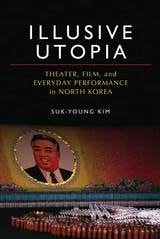
No nation stages massive parades and collective performances on the scale of North Korea. Even amid a series of intense political/economic crises and international conflicts, the financially troubled country continues to invest massive amounts of resources to sponsor unflinching displays of patriotism, glorifying its leaders and revolutionary history through state rituals that can involve hundreds of thousands of performers. Author Suk-Young Kim explores how sixty years of state-sponsored propaganda performances---including public spectacles, theater, film, and other visual media such as posters---shape everyday practice such as education, the mobilization of labor, the gendering of social interactions, the organization of national space, tourism, and transnational human rights. Equal parts fascinating and disturbing, Illusive Utopia shows how the country's visual culture and performing arts set the course for the illusionary formation of a distinctive national identity and state legitimacy, illuminating deep-rooted cultural explanations as to why socialism has survived in North Korea despite the fall of the Berlin Wall, the collapse of the Soviet Union, and China's continuing march toward economic prosperity. With over fifty striking color illustrations, Illusive Utopia captures the spectacular illusion within a country where the arts are not only a means of entertainment but also a forceful institution used to regulate, educate, and mobilize the population.
Suk-Young Kim is Associate Professor in the Department of Theater and Dance at the University of California, Santa Barbara, and coauthor with Kim Yong of Long Road Home: A Testimony of a North Korean Camp Survivor.

Imagining Indonesia
Cultural Politics and Political CultureJim Schiller
Ohio University Press, 1997
The contributions presented here represent a wide range of disciplines, points of view, and ideological orientations. Taken together they convey the notion that much might be gained if the idea were abandoned that a single understanding of what constitutes Indonesian culture is possible or desirable.
Imagining Interest in Political Thought
Origins of Economic RationalityStephen G. Engelmann
Duke University Press, 2003
Tracing the development of monistic interest from its origins in Reformation political theory and theology through late-twentieth-century neoliberalism, Engelmann reconceptualizes the history of liberalism as consisting of phases in the history of monistic interest or economic government. He describes how monistic interest, as formulated by Bentham, is made up of the individual’s imagined expectations, which are constructed by the very regime that maximizes them. He asserts that this construction of interests is not the work of a self-serving manipulative state. Rather, the state, which is itself subject to strict economic regulation, is only one cluster of myriad "public" and "private" agencies that produce and coordinate expectations. In place of a liberal vision in which government appears only as a protector of the free pursuit of interest, Engelmann posits that the free pursuit of interest is itself a mode of government, one that deploys individual imagination and choice as its agents.
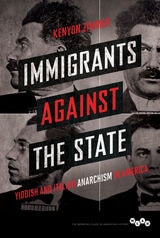
Immigrants against the State
Yiddish and Italian Anarchism in AmericaKenyon Zimmer
University of Illinois Press, 2015
Zimmer focuses on Italians and Eastern European Jews in San Francisco, New York City, and Paterson, New Jersey. Tracing the movement's changing fortunes from the pre–World War I era through the Spanish Civil War, Zimmer argues that anarchists, opposed to both American and Old World nationalism, severed all attachments to their nations of origin but also resisted assimilation into their host society. Their radical cosmopolitan outlook and identity instead embraced diversity and extended solidarity across national, ethnic, and racial divides. Though ultimately unable to withstand the onslaught of Americanism and other nationalisms, the anarchist movement nonetheless provided a shining example of a transnational collective identity delinked from the nation-state and racial hierarchies.

Immigrants, Evangelicals, and Politics in an Era of Demographic Change
Janelle S. Wong
Russell Sage Foundation, 2018
Asian Americans and Latinos currently constitute 13 percent of evangelicals, and their churches are among the largest, fastest growing organizations in their communities. While evangelical identity is associated with conservative politics, Wong draws from national surveys and interviews to show that non-white evangelicals express political attitudes that are significantly less conservative than those of their white counterparts. Black, Asian American, and Latino evangelicals are much more likely to support policies such as expanded immigration rights, increased taxation of the wealthy, and government interventions to slow climate change. As Wong argues, non-white evangelicals’ experiences as members of racial or ethnic minority groups often lead them to adopt more progressive political views compared to their white counterparts.
However, despite their growth in numbers, non-white evangelicals—particularly Asian Americans and Latinos—are concentrated outside of swing states, have lower levels of political participation than white evangelicals, and are less likely to be targeted by political campaigns. As a result, white evangelicals dominate the evangelical policy agenda and are overrepresented at the polls. Also, many white evangelicals have adopted even more conservative political views in response to rapid demographic change, perceiving, for example, that discrimination against Christians now rivals discrimination against racial and ethnic minorities.
Wong demonstrates that immigrant evangelicals are neither “natural” Republicans nor “natural” Democrats. By examining the changing demographics of the evangelical movement, Immigrants, Evangelicals, and Politics in an Era of Demographic Change sheds light on an understudied constituency that has yet to find its political home.
Imperial Rule
Alfred J. Rieber
Central European University Press, 2004
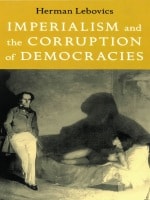
Imperialism and the Corruption of Democracies
Herman Lebovics
Duke University Press, 2006
Some essays explore why modern Western democratic societies needed colonialism. Among these is an examination of the seventeenth-century philosopher John Locke’s prescient conclusion that liberalism could only control democratic forces with the promise of greater wealth enabled by empire. In other essays Lebovics considers the relation between overseas rule and domestic life. Discussing George Orwell’s tale “Shooting an Elephant” and the careers of two colonial officers (one British and one French), he contemplates the ruinous authoritarianism that develops among the administrators of empire. Lebovics considers Pierre Bourdieu’s thinking about how colonialism affected metropolitan French life, and he reflects on the split between sociology and ethnology, which was partly based on a desire among intellectuals to think one way about metropolitan populations and another about colonial subjects. Turning to the arts, Lebovics traces how modernists used the colonial “exotic” to escape the politicized and contested modernity of the urban West. Imperialism and the Corruption of Democracies is a compelling case for cultural history as a key tool for understanding the injurious effects of imperialism and its present-day manifestations within globalization.
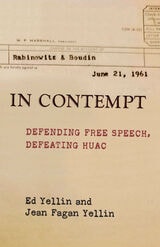
In Contempt
Defending Free Speech, Defeating HUACEd Yellin and Jean Fagan Yellin
University of Michigan Press, 2022
So began a decade of hardship for Ed and Jean Yellin and their three young children as the repressive weight of the U.S. government, caught up in the throes of McCarthyism, crashed down upon their careers, their daily household budget, and their relationships to colleagues, neighbors, and their country. In Contempt is a faithful, factual testament to the enduring quality of patriotic dissent in our evolving democracy—and a loving reconstruction of what it meant to be labeled “unAmerican” for defending the Constitution.
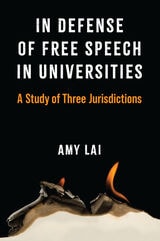
In Defense of Free Speech in Universities
A Study of Three JurisdictionsAmy Lai
University of Michigan Press, 2023
In this book, Amy Lai examines the current free speech crisis in Western universities. She studies the origin, history, and importance of freedom of speech in the university setting, and addresses the relevance and pitfalls of political correctness and microaggressions on campuses, where laws on harassment, discrimination, and hate speech are already in place, along with other concepts that have gained currency in the free speech debate, including deplatforming, trigger warning, and safe space. Looking at numerous free speech disputes in the United Kingdom, the United States, and Canada, the book argues for the equal application of the free speech principle to all expressions to facilitate respectful debates. All in all, it affirms that the right to free expression is a natural right essential to the pursuit of truth, democratic governance, and self-development, and this right is nowhere more important than in the university.
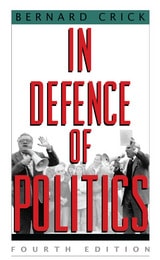
In Defense of Politics
Bernard Crick
University of Chicago Press, 1993
It's hard to get excited about politics these days. Polarization is high, getting things done seems all but impossible, and at times it seems like no one is willing to listen to anyone they disagree with. Surely there's a better way.
In Defense of Politics says, loud and proud: Absolutely not. In this classic but still timely work, which recently drew strong praise from Ezra Klein, Bernard Crick argues that politics, with its compromises and frustrations aand power struggles, remains the only tested alternative to government by coercion, making both freedom and order possible in heterogeneous societies. For Crick, politics is messy and complex, and his book defends it against those who would identify it with (and reduce it to) ideology, democracy, nationalism, or technology. “Politics," Crick explains, "involves genuine relationships with people who are genuinely other people, not tasks set for our redemption or objects for our philanthropy.”
Clear-eyed and frank yet still capable of inspiring, In Defense of Politics is a rousing call to recommit to the hard work of bringing people together and moving society forward.
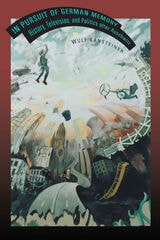
In Pursuit of German Memory
History, Television, and Politics after AuschwitzWulf Kansteiner
Ohio University Press, 2006
The collective memories of Nazism that developed in postwar Germany have helped define a new paradigm of memory politics. From Europe to South Africa and from Latin America to Iraq, scholars have studied the German case to learn how to overcome internal division and regain international recognition.
In Pursuit of German Memory: History, Television, and Politics after Auschwitz examines three arenas of German memory politics—professional historiography, national politics, and national public television—that have played key roles in the reinvention of the Nazi past in the last sixty years. Wulf Kansteiner shows that the interpretations of the past proposed by historians, politicians, and television producers reflect political and generational divisions and an extraordinary concern for Germany's image abroad. At the same time, each of these theaters of memory has developed its own dynamics and formats of historical reflection.
Kansteiner’s analysis of the German scene reveals a complex social geography of collective memory. In Pursuit of German Memory underscores the fact that German memories of Nazism, like many other collective memories, combine two seemingly contradictory qualities: They are highly mediated and part of a global exchange of images and story fragments but, at the same time, they can be reproduced only locally, in narrowly circumscribed networks of communication.
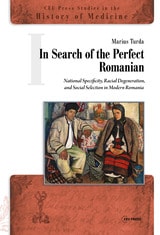
In Search of the Perfect Romanian
National Specificity, Racial Degeneration, and Social Selection in Modern RomaniaMarius Turda
Central European University Press, 2026
The book centers on debates about the Romanian national character and race between 1880s and 1950s. It also argues that during the early 1940s anti-Semitism and anti-Roma racism contributed directly to the programme of ethnic purification pursued by the Antonescu regime. Racism and eugenics explain not just the deportation and murder of the Jews but also the deportation and murder of the Roma. The Holocaust in Romania should therefore be understood as the result not just of anti-Semitism but also of biopolitical nationalism. Finally, the book suggests that the eugenic ideal of the ‘perfect’ Romanian did not disappear in 1945 but was embedded in the socialist definitions of the ‘new man’ and ‘perfect’ society emerging under communism.
In and Against the State
London Edinburgh Weekend Return Group
Pluto Press, 2021
Originally published as a pamphlet in 1979 and again by Pluto in 1980, In and Against the State brought together questions of working-class struggle and state power, exploring how revolutionary socialists might reconcile working in the public sector with their radical politics. Informed by autonomist political ideas and practices that were central to the protests of 1968, the book’s authors spoke to a generation of activists wrestling with the question of where to place their energies.
Forty years have passed, yet the questions it posed are still to be answered. As the eclipse of Corbynism and the onslaught of the global pandemic have demonstrated with brutal clarity, a renewed socialist strategy is needed more urgently than ever.
This edition includes a new introduction by Seth Wheeler and an interview with John McDonnell that reflect on the continuing relevance of In and Against the State and the questions it raises.
In the Lurch
Verbatim Theater and the Crisis of Democratic DeliberationRyan Claycomb
University of Michigan Press, 2023
But this is not just a disinterested history—Claycomb reflects on his own participation in that political fantasy, including earlier scholarly writing that articulated with breathless hopefulness the potential of verbatim theater, and on his own theatrical attendance, imbued with a belief that witnessing this idealized public sphere was a substitute for actual public participation. In the Lurch also recounts the bumpy path towards its completion, two years marked by presidential impeachments, an insurrection, a national reckoning with racism, and a global pandemic. At the heart of the book is a central question: is verbatim theater any longer an effective cultural response to what can look like the possible end of democracy?

In the Shadow of Violence
The Politics of Armed GroupsKlaus Schlichte
Campus Verlag, 2009
As civil wars and insurgencies rage around the globe, Klaus Schlichte’s In the Shadow of Violence addresses a crucial question: why do some groups succeed in violently seizing and holding power while others fail? What makes for a successful non-state armed force? Arguing that success rests on the ability of these groups to transform the power of violence into legitimate domination, both inside their ranks and in the larger society, Schlichte explores the techniques and strategies they employ—and the long shadow of violence they must overcome along the way.
India’s New Middle Class
Democratic Politics in an Era of Economic ReformLeela Fernandes
University of Minnesota Press, 2006

Indigenous Christianity
Missionaries, Modernity, and Marginality in the Siberian TundraTatiana Vagramenko
Central European University Press, 2026
Nenets nomads, long shaped by Russian colonialism and Soviet modernization, experienced sweeping conversions in the mid-1990s, culminating in the creation of a tundra church tied to a radical evangelical movement. Amid Putin’s tightening control—when indigenous peoples and minority faiths faced renewed surveillance and harassment—the book follows Nenets and missionaries whose encounters across the tundra sparked tensions between converts and non-converts, faith and state. Through stories of hope, loss, and resilience, it reveals how global evangelical Christianity intersects with local traditions, reshaping kinship, belonging, and modernity in the Siberian tundra.
Indigenous Revolution in Ecuador and Bolivia, 1990–2005
Jeffery M. Paige
University of Arizona Press, 2020
Uprisings by indigenous peoples of Ecuador and Bolivia between 1990 and 2005 overthrew the five-hundred-year-old racial and class order inherited from the Spanish Empire. It started in Ecuador with the Great Indigenous Uprising, which was fought for cultural and economic rights. A few years later massive indigenous mobilizations began in Bolivia, culminating in 2005 with the election of Evo Morales, the first indigenous president.
Jeffrey M. Paige, an internationally recognized authority on the sociology of revolutionary movements, interviewed forty-five indigenous leaders who were actively involved in the uprisings. The leaders recount how peaceful protest and electoral democracy paved the path to power. Through the interviews, we learn how new ideologies of indigenous socialism drew on the deep commonalities between the communal dreams of their ancestors and the modern ideology of democratic socialism. This new discourse spoke to the people most oppressed by both withering racism and neoliberal capitalism.
Emphasizing mutual respect among ethnic groups (including the dominant Hispanic group), the new revolutionary dynamic proposes a communal worldview similar to but more inclusive than Western socialism because it adds indigenous cultures and nature in a spiritual whole. Although absent in the major revolutions of the past century, the themes of indigenous revolution—democracy, indigeneity, spirituality, community, and ecology—are critically important.
Paige’s interviews present the powerful personal experiences and emotional intensity of the revolutionary leadership. They share the stories of mass mobilization, elections, and indigenous socialism that created a new form of twenty-first-century revolution with far-reaching applications beyond the Andes.

Information and Democratic Processes
Edited by John A. Ferejohn and James H. Kuklinski
University of Illinois Press, 1990
The golden democratic tradition of an informed and involved electorate freely and rationally choosing its public officials seems to be at odds with American political reality. Thus the questions: On what basis do people vote and form opinions? How does the lack of information at the individual level affect system performance?
In this collection twenty-six distinguished political scientists discuss, debate, and define the relationship between information and the democracy it supposedly serves. The contributors address both the empirical and normative aspects of governing in the United States, employing psychological, sociological, and economic perspectives.
Inside Al-Qaeda and the Taliban
Beyond Bin Laden and 9/11Syed Saleem Shahzad
Pluto Press, 2011
President Obama may have delivered on his campaign promise to kill Osama bin Laden, but as an Al-Qaeda strategist bin Laden has been dead for years. This book introduces and examines the new generation of Al-Qaeda leaders who have been behind the most recent attacks.
Investigative journalist Syed Saleem Shahzad dedicated his life to revealing the strategies and inner workings of Al-Qaeda and the Taliban. He had access to top-level commanders in both movements, as well as within the ISI, Pakistan's intelligence service. Shahzad's work was praised by US Secretary of State Hillary Clinton for 'bringing to light the troubles extremism poses to Pakistan's stability.' Inside Al-Qaeda and the Taliban explains the wider aims of both organisations and provides an essential analysis of major terrorist incidents, including the 2008 Mumbai attacks.
In May 2011, Shahzad was abducted and killed in Pakistan, days after writing an article suggesting that insiders in the Pakistani navy had colluded with Al-Qaeda in an attack on a naval air station. This book is a testament to his fearless reporting and analytical rigour. It will provide readers worldwide with an invaluable introduction to a new phase of the ongoing struggle against terrorism which threatens lives in so many countries.
Institutional trust and economic policy Lessons from the history of the Euro
Lessons from the history of the EuroDóra Gyorffy
Central European University Press, 2013
Intellectual Foundations of the Nicaraguan Revolution
By Donald C. Hodges
University of Texas Press, 1986
In this critical study of the thought of Augusto Cesar Sandino and his followers, Donald C. Hodges has discovered a coherent ideological thread and political program, which he succeeds in tracing to Mexican and Spanish sources. Sandino's strong religious inclination in combination with his anarchosyndicalist political ideology established him as a religious seer and moral reformer as well as a political thinker and is the prototype of the curious blend of Marxism and Christianity of the late twentieth-century Nicaraguan government, the Frente Sandinista de Liberación Nacional.
Intellectual Populism
Democracy, Inquiry, and the PeoplePaul Stob
Michigan State University Press, 2020

Intellectuals and Politics in Central Europe
Ivan Bernik
Central European University Press, 1999
Internal Frontiers
African Nationalism and the Indian Diaspora in Twentieth-Century South AfricaJon Soske
Ohio University Press, 2017
In this ambitious new history of the antiapartheid struggle, Jon Soske places India and the Indian diaspora at the center of the African National Congress’s development of an inclusive philosophy of nationalism. In so doing, Soske combines intellectual, political, religious, urban, and gender history to tell a story that is global in reach while remaining grounded in the everyday materiality of life under apartheid.
Even as Indian independence provided black South African intellectuals with new models of conceptualizing sovereignty, debates over the place of the Indian diaspora in Africa (the “also-colonized other”) forced a reconsideration of the nation’s internal and external boundaries. In response to the traumas of Partition and the 1949 Durban Riots, a group of thinkers in the ANC, centered in the Indian Ocean city of Durban and led by ANC president and Nobel Peace Prize winner Albert Luthuli, developed a new philosophy of nationhood that affirmed South Africa’s simultaneously heterogeneous and fundamentally African character.
Internal Frontiers is a major contribution to postcolonial and Indian Ocean studies and charts new ways of writing about African nationalism.
International Perspectives on Contemporary Democracy
Edited by Peter F. Nardulli
University of Illinois Press, 2007
Democracy enjoys unparalleled prestige at the beginning of the twenty-first century as a form of government. Some of the world's most prosperous nations are democracies, and an array of nations in Europe, Africa, and South America have adopted the system. This globalization has also met resistance and provoked concerns about international power exerted by institutions and elites that are beyond the control of existing democratic institutions. In this volume, leading scholars of democracy engage the key questions about how far and how fast democracy can spread, and how international agencies and international cooperation uneasily affect national democracies. At first glance, the efforts of intergovernmental organizations to intervene in a nation's governance seem anything but democratic to that nation. The contributors demonstrate why democracy has been so attractive and so successful, but are also candid about what limits it may reach, and why.
Contributors are Lisa Anderson, Larry Diamond, Zachary Elkins, John R. Freeman, Brian J. Gaines, James H. Kuklinski, Peter F. Nardulli, Melissa A. Orlie, Buddy Peyton, Paul J. Quirk, Wendy Rahn, Bruce Russett, and Beth Simmons.

International Trotskyism, 1929-1985
A Documented Analysis of the MovementRobert J. Alexander
Duke University Press, 1991
Renowned scholar Robert J. Alexander has amassed, from disparate sources, an unprecedented amount of primary and secondary material to provide a documentary history of the origins, development, and nature of the Trotskyist movement around the world. Drawing on interviews and correspondence with Trotskyists, newspaper reports and pamphlets, historical writings including the annotated writings of Trotsky in both English and French, historical memoirs of Trotskyist leaders, and documents of the Fourth International, Alexander recounts the history of the movement since Trotsky’s exile from the Soviet Union in 1929.
Organized alphabetically in a double-column, country-by-country format this book charts the formation and growth of Trotskyism in more than sixty-five countries, providing biographic information about its most influential leaders, detailed accounts of Trotsky’s personal involvement in the development of the movement in each country, and thorough reports of its various factions and splits. Multiple chapters are reserved for countries where the movement was more active or fully developed and various chapters are organized around crucial thematic issues, such as the Fourth International. The chapters are followed by extensive name, organization, publication, and subject indexes, which provide optimal access to the wealth of information contained in the main body of the work.
Interrogating Cultural Studies
Theory, Politics and PracticeEdited by Paul Bowman
Pluto Press, 2003

Intimate Radicals
East European Jewish Women and Progressive American DesiresAshley Walters
Rutgers University Press, 2027
In the early 1900s, a handful of unconventional couples emerged within the American radical Left. In Intimate Radicals, Ashley Walters tells the story of a group of young, East European Jewish women and white, Anglo-Saxon Protestant men— such as Jack London, Sinclair Lewis, and William English Walling, among other notable figures in American literature, domestic and international affairs, and early Hollywood—and how they imbued their romances with revolutionary principles. The relationships captivated the public and became a source of intrigue, largely driven by the growth of human-interest journalism. Through individual biographies, historical narrative, and literary analysis, Walters reveals the cultural and political contingencies of desire.
As Progressive Era radicals rebelled against the constraints of an earlier era, East European Jews—and Jewish women in particular— came to embody a new cosmopolitan ideal and European revolutionary spirit. Drawing on letters, newspapers, literature, and film, Walters shows how the public reception of these patrician-immigrant relationships lent credence to a new cultural mythology of Jewish womanhood. The men’s desire for East European Jewish women, she also points out, can be viewed as a form of “radical tourism,” in which men who enjoy a degree of privilege pursue an alluring Other in the hope of obtaining a more worldly identity.
This book is published with the support of the Jordan Schnitzer First Book Publication Award, administered by the Association for Jewish Studies.
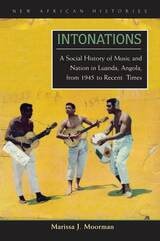
Intonations
A Social History of Music and Nation in Luanda, Angola, from 1945 to Recent TimesMarissa J. Moorman
Ohio University Press, 2008
Intonations tells the story of how Angola’s urban residents in the late colonial period (roughly 1945–74) used music to talk back to their colonial oppressors and, more importantly, to define what it meant to be Angolan and what they hoped to gain from independence. A compilation of Angolan music is included in CD format.
Marissa J. Moorman presents a social and cultural history of the relationship between Angolan culture and politics. She argues that it was in and through popular urban music, produced mainly in the musseques (urban shantytowns) of the capital city, Luanda, that Angolans forged the nation and developed expectations about nationalism. Through careful archival work and extensive interviews with musicians and those who attended performances in bars, community centers, and cinemas, Moorman explores the ways in which the urban poor imagined the nation.
The spread of radio technology and the establishment of a recording industry in the early 1970s reterritorialized an urban-produced sound and cultural ethos by transporting music throughout the country. When the formerly exiled independent movements returned to Angola in 1975, they found a population receptive to their nationalist message but with different expectations about the promises of independence. In producing and consuming music, Angolans formed a new image of independence and nationalist politics.
Islam, Postmodernism and Other Futures
A Ziauddin Sardar ReaderEdited by Sohail Inayatullah and Gail Boxwell
Pluto Press, 2003
Ziauddin Sardar is a prolific writer and an insightful cultural commentator. His latest book, Why Do People Hate America?, has been a regular feature in bestseller lists in several countries. In the UK, he is known as a leading intellectual and his regular contributions to the Observer, the Independent and the New Statesman have brought his writings to a wide audience. As one of our most high-profile Muslim intellectuals, he has also become an increasingly important voice in the media since the events of September 11th 2001.
This is the first collection of his writings that offers a comprehensive introduction to his thought. Starting with his analysis of his own position as a British Muslim and a writer, it goes on to explore issues of Islam and cultural change, education, identity, post-modernism and the future. Drawn from a broad range of his work in scholarly journals as well as from his many books on aspects of culture and society, it includes his most frequently cited papers and makes an ideal introduction to the immense scope of his work in cultural studies.
Ziaddin Sardar is currently the editor of Third Text and Visiting Professor of Cultural Studies at City University, London. His books for Pluto Press include Postmodernism and the Other and Aliens R Us.
Isonomia and the Origins of Philosophy
Kojin Karatani
Duke University Press, 2017