Results by title
137 books match the query 'Poverty' and 9 start with i

I'm Neither Here nor There
Mexicans' Quotidian Struggles with Migration and PovertyPatricia Zavella
Duke University Press, 2011
Drawing on close interactions with Mexicans on both sides of the border, Zavella examines migrant journeys to and within the United States, gendered racialization, and exploitation at workplaces, and the challenges that migrants face in forming and maintaining families. As she demonstrates, the desires of migrants to express their identities publicly and to establish a sense of cultural memory are realized partly through Latin American and Chicano protest music, and Mexican and indigenous folks songs played by musicians and cultural activists.

Ice-Out
Mary Casanova
University of Minnesota Press, 2016
Walking on thin ice: on Rainy Lake, in the northern reaches of Minnesota, it’s more than a saying. And for Owen Jensen, nineteen and suddenly responsible for keeping his mother and five brothers alive, the ice is thin indeed.
Ice-Out returns to the frigid and often brutal Prohibition-era borderland of Mary Casanova’s beloved novel Frozen, and to the characters who made it a favorite among readers of all ages. Owen, smitten with Frozen’s Sadie Rose, is struggling to make something of himself at a time when no one seems to hold the moral high ground. Bootlegging is rife, corruption is rampant, and lumber barons run roughshod over the people and the land. As hard as things seem when his father dies, stranding his impoverished family, they get considerably tougher—and more complicated—when Owen gets caught up in the suspicious deaths of a sheriff and deputy on the border.
Inspired by real events in early 1920s Minnesota, and by Mary Casanova’s own family history, Ice-Out is at once a story of young romance against terrible odds and true grit on the border between license and responsibility, rich and poor, and right and wrong in early twentieth-century America.
Immigration, Poverty, and Socioeconomic Inequality
David Card
Russell Sage Foundation, 2013

In Levittown’s Shadow
Poverty in America's Wealthiest Postwar SuburbTim Keogh
University of Chicago Press, 2023
Highlights how low-wage residents have struggled to live and work in a place usually thought of as affluent: suburbia.
There is a familiar narrative about American suburbs: after 1945, white residents left cities for leafy, affluent subdivisions and the prosperity they seemed to embody. In Levittown’s Shadow tells us there’s more to this story, offering an eye-opening account of diverse, poor residents living and working in those same neighborhoods. Tim Keogh shows how public policies produced both suburban plenty and deprivation—and why ignoring suburban poverty doomed efforts to reduce inequality.
Keogh focuses on the suburbs of Long Island, home to Levittown, often considered the archetypal suburb. Here military contracts subsidized well-paid employment welding airplanes or filing paperwork, while weak labor laws impoverished suburbanites who mowed lawns, built houses, scrubbed kitchen floors, and stocked supermarket shelves. Federal mortgage programs helped some families buy orderly single-family homes and enter the middle class but also underwrote landlord efforts to cram poor families into suburban attics, basements, and sheds. Keogh explores how policymakers ignored suburban inequality, addressing housing segregation between cities and suburbs rather than suburbanites’ demands for decent jobs, housing, and schools.
By turning our attention to the suburban poor, Keogh reveals poverty wasn’t just an urban problem but a suburban one, too. In Levittown’s Shadow deepens our understanding of suburbia’s history—and points us toward more effective ways to combat poverty today.
In Levittown’s Shadow
Poverty in America’s Wealthiest Postwar SuburbTim Keogh
University of Chicago Press, 2023
There is a familiar narrative about American suburbs: after 1945, white residents left cities for leafy, affluent subdivisions and the prosperity they seemed to embody. In Levittown’s Shadow tells us there’s more to this story, offering an eye-opening account of diverse, poor residents living and working in those same neighborhoods. Tim Keogh shows how public policies produced both suburban plenty and deprivation—and why ignoring suburban poverty doomed efforts to reduce inequality.
Keogh focuses on the suburbs of Long Island, home to Levittown, often considered the archetypal suburb. Here military contracts subsidized well-paid employment welding airplanes or filing paperwork, while weak labor laws impoverished suburbanites who mowed lawns, built houses, scrubbed kitchen floors, and stocked supermarket shelves. Federal mortgage programs helped some families buy orderly single-family homes and enter the middle class but also underwrote landlord efforts to cram poor families into suburban attics, basements, and sheds. Keogh explores how policymakers ignored suburban inequality, addressing housing segregation between cities and suburbs rather than suburbanites’ demands for decent jobs, housing, and schools.
By turning our attention to the suburban poor, Keogh reveals poverty wasn’t just an urban problem but a suburban one, too. In Levittown’s Shadow deepens our understanding of suburbia’s history—and points us toward more effective ways to combat poverty today.
In the River They Swim
Essays from Around the World on Enterprise Solutions to PovertyMichael Fairbanks
Templeton Press, 2009
The sociologist Thomas Sowell writes, "We need to confront the most blatant fact that has persisted across centuries of social history—vast ddifferences in productivity among peoples, and the economic and other consequences of such differences." Poverty demeans dignity, shrinks the soul, wastes potential, and inflicts suffering on three billion people on our planet. We must also acknowledge that, during the past fifty yyears, the record in international assistance to the least developed countries has been disappointing; the economics-based abstractions developed in the think tanks of Europe and North America are insufficient.
In the River They Swim is the antithesis to that search for solutions the next big theory of global poverty. From the fresh perspective of advisors on the frontlines of development to the insight of leaders like President Paul Kagame of Rwanda and Pastor Rick Warren, it tells the story of change in the microcosms of emerging businesses, industries, and governments. These essays display a personal nature to their work that rigorous analysis alone cannot explain.
We learn that a Sufi master can teach us about the different levels of knowledge, the "different ways to know a river." These practitioners could have written about its length, its source, its depth, its width, the power of its current, and the life it contains. They could have invested time and money to travel to that river so that they could sit on its shores and look at it, feel the sand that borders it, and watch the birds at play over it. Instead, they dove in to swim in the river, felt its current along their bodies, and tasted something of it. They wondered, briefly, if they had the strength to swim its length, and now they share the answer.
If human development is a river, the authors in this volume, and perhaps some readers, will no longer be satisfied to stand along its banks.

Inequality and the Global Economic Crisis
Douglas Dowd
Pluto Press, 2009
Inequality, per se, has been with us for millennia. With the creation, growth and deepening of Capitalism across the globe, inequalities take on new dimensions, unknown in previous eras. As Capitalism has spread its wings across the globe over the last 200 or so years, so inequalities have deepened and widened, both inside Nation Sates, between nation States. These inequalities are of income, wealth and of power.
This book, written by the widely respected economic historian Douglas Dowd at the age of 90, is notable for his own experience and vivid memory, of the 1929-31 recession. Since the 1980s, and the predominance of the present neo-liberal ideology, all of the inequalities that the book presents have grown rapidly. Written as a critique of the counter-productivity of growing economic inequality and vindicated by the present world banking crisis, Dowd presents a strong argument against capitalist expansion, exploitation and oligarchic rule.
Dowd's conclusions, that the globalization and growth of the financial sector will impact painfully upon hundreds of millions of people, unknown to most of us in our lifetime, Dowd's book deals with these issues from the unique perspective of inequality. Presenting both a history of the current crisis and an overview of it's, Inequality will appeal to both a broad general readership, and provides an extremely useful reference point for students of political economy, economic history, contemporary economics and global politics.
Intersectional Inequality
Race, Class, Test Scores, and PovertyCharles C. Ragin and Peer C. Fiss
University of Chicago Press, 2016
Ragin and Fiss begin by taking up the controversy regarding the relative importance of test scores versus socioeconomic background on life chances, a debate that has raged since the 1994 publication of Richard Herrnstein and Charles Murray’s TheBell Curve. In contrast to prior work, Ragin and Fiss bring an intersectional approach to the evidence, analyzing the different ways that advantages and disadvantages combine in their impact on life chances. Moving beyond controversy and fixed policy positions, the authors propose sophisticated new methods of analysis to underscore the importance of attending to configurations of race, gender, family background, educational achievement, and related conditions when addressing social inequality in America today.
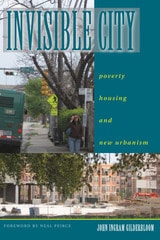
Invisible City
Poverty, Housing, and New UrbanismBy John Ingram Gilderbloom
University of Texas Press, 2008