Results by title
1066 books match the query 'Political' and 118 start with a

A Basic Christian Theology
A. J. Conyers
St. Augustine's Press, 2019
A. J. Conyers was an evangelical, Baptist theologian who helped found Truett Seminary at Baylor university. Conyers’s theology drank deeply from the wells of the Christian tradition. In this volume, he provides what he found to be the most basic elements of Christian theology and demonstrates a methodology that is biblically informed, traditionally grounded, and contextually aware. this revised edition makes this excellent work available again, with some modified study questions, additional unpublished material from Conyers’s archives, and helpful reflection and tributes from two of Conyers’s best students—Brian Brewer and Brad Green—who carry on his legacy
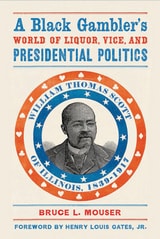
A Black Gambler’s World of Liquor, Vice, and Presidential Politics
William Thomas Scott of Illinois, 1839–1917Bruce L. Mouser
University of Wisconsin Press, 2014
Scott helped build the National Negro Liberty Party to forward economic, political, and legal rights for his race. But the hustling that had brought him business success proved his undoing as a national political figure. He was the NNLP's initial presidential nominee, only to be replaced by a better-educated and more socially acceptable candidate, George Edwin Taylor.
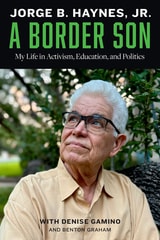
A Border Son
My Life in Activism, Education, and PoliticsJorge B. Haynes, Jr.with Denise Gamino and Benton Graham
University of Texas Press, 2026
Behind the success of every great politician, inspiring activist, or business titan, there is a staffer; Jorge B. Haynes was that staffer for some of the most influential leaders in Texas, Florida, and California.
Jorge B. Haynes had a knack for finding his way into the rooms where history was being made. From his work boycotting farmworker conditions alongside Cesar Chavez and Dolores Huerta as a young man in California to his role in President Bill Clinton’s NAFTA war room in the 1990s, he was the man advising some of the country’s most influential leaders and he left an imprint on the monumental moments that defined their time. His career spanned almost five decades, beginning with his decision to leave home in Laredo to serve in the US Air Force. But his service to the country took many different forms. Haynes worked for the Bureau of the Census the first year Latinos were allowed to declare their Hispanic heritage. He wrote speeches and orchestrated pivotal meetings for top political leadership in Texas and later Florida. In the final years of his career, he fought to make college a more accessible path for under-represented students in California.
As his paternal grandmother used to say, “Cuando vas a un lugar donde nunca has estado, finge que has estado allí,” which means, “When you go somewhere that you've never been, pretend like you've been there before.” By the end of his career, there weren’t many places that Haynes hadn’t been.
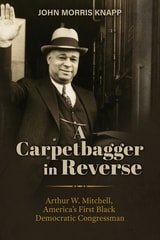
A Carpetbagger in Reverse
Arthur W. Mitchell, America's First Black Democratic CongressmanJohn Morris Knapp
University of Alabama Press, 2025
From Alabama to Congress—Arthur W. Mitchell’s fight for justice rewrote the rules of Black political power.
A Carpetbagger in Reverse offers a landmark reassessment of the life, career, and accomplishments of groundbreaking Congressman Arthur W. Mitchell, the first Black Democrat elected to Congress and the only Black member of Congress during his four terms of service from 1935 to 1943.
Born to former enslaved people in Alabama in 1883, Mitchell studied with Booker T. Washington at Tuskegee Institute and later moved to Washington DC and became a lawyer. He continued his career in Chicago, where the Great Migration had helped transform the city’s South Side into a vibrant, multiracial enclave.
As a congressman, Mitchell helped to create an enduring alliance between Black Americans and the Democratic party. Seeing his primary role as representing the South’s disempowered Black population, his belief that solutions to the region’s racial problems should arise from a new cadre of locally trained leaders brought him into frequent, vituperative conflict with the NAACP, the Republican Party, and the Black press. The first Black lawyer to argue successfully before the Supreme Court, his unanimous victory in Mitchell v. United States would have long-term consequences for the Civil Rights Movement.
A Carpetbagger in Reverse is the first publication significantly based on Mitchell’s papers, an essential and often overlooked source of insights about the development of Black political and culture life in the 1930s and 1940s.
A Commentary on Jean-Paul Sartre's Critique of Dialectical Reason, Volume 1, Theory of Practical Ensembles
Joseph S. Catalano
University of Chicago Press, 1986
A Common Human Ground
Universality and Particularity in a Multicultural WorldClaes G. Ryn
University of Missouri Press, 2019
A Communist Odyssey
The life of József Pogány/John PepperThomas Sakmyster
Central European University Press, 2012
A Conspiratorial Life
Robert Welch, the John Birch Society, and the Revolution of American ConservatismEdward H. Miller
University of Chicago Press, 2021
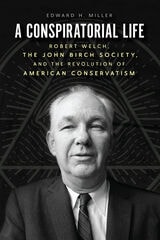
Though you may not know his name, Robert Welch (1899-1985)—founder of the John Birch Society—is easily one of the most significant architects of our current political moment. In A Conspiratorial Life, the first full-scale biography of Welch, Edward H. Miller delves deep into the life of an overlooked figure whose ideas nevertheless reshaped the American right.
A child prodigy who entered college at age 12, Welch became an unlikely candy magnate, founding the company that created Sugar Daddies, Junior Mints, and other famed confections. In 1958, he funneled his wealth into establishing the organization that would define his legacy and change the face of American politics: the John Birch Society. Though the group’s paranoiac right-wing nativism was dismissed by conservative thinkers like William F. Buckley, its ideas gradually moved from the far-right fringe into the mainstream. By exploring the development of Welch’s political worldview, A Conspiratorial Life shows how the John Birch Society’s rabid libertarianism—and its highly effective grassroots networking—became a profound, yet often ignored or derided influence on the modern Republican Party. Miller convincingly connects the accusatory conservatism of the midcentury John Birch Society to the inflammatory rhetoric of the Tea Party, the Trump administration, Q, and more. As this book makes clear, whether or not you know his name or what he accomplished, it’s hard to deny that we’re living in Robert Welch’s America.
A Conspiratorial Life
Robert Welch, the John Birch Society, and the Revolution of American ConservatismEdward H. Miller
University of Chicago Press, 2021
This is an auto-narrated audiobook edition of this book.
The first full-scale biography of Robert Welch, who founded the John Birch Society and planted some of modern conservatism’s most insidious seeds.
Though you may not know his name, Robert Welch (1899-1985)—founder of the John Birch Society—is easily one of the most significant architects of our current political moment. In A Conspiratorial Life, the first full-scale biography of Welch, Edward H. Miller delves deep into the life of an overlooked figure whose ideas nevertheless reshaped the American right.
A child prodigy who entered college at age 12, Welch became an unlikely candy magnate, founding the company that created Sugar Daddies, Junior Mints, and other famed confections. In 1958, he funneled his wealth into establishing the organization that would define his legacy and change the face of American politics: the John Birch Society. Though the group’s paranoiac right-wing nativism was dismissed by conservative thinkers like William F. Buckley, its ideas gradually moved from the far-right fringe into the mainstream. By exploring the development of Welch’s political worldview, A Conspiratorial Life shows how the John Birch Society’s rabid libertarianism—and its highly effective grassroots networking—became a profound, yet often ignored or derided influence on the modern Republican Party. Miller convincingly connects the accusatory conservatism of the midcentury John Birch Society to the inflammatory rhetoric of the Tea Party, the Trump administration, Q, and more. As this book makes clear, whether or not you know his name or what he accomplished, it’s hard to deny that we’re living in Robert Welch’s America.
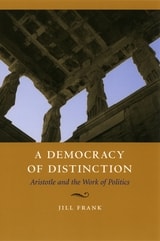
A Democracy of Distinction
Aristotle and the Work of PoliticsJill Frank
University of Chicago Press, 2004
Moving back and forth between Aristotle's writings and contemporary legal and political theory, Frank breathes new life into our conceptions of property, justice, and law by viewing them not only as institutions but as dynamic activities as well. Frank's innovative approach to Aristotle stresses his appreciation of the tensions and complexities of politics so that we might rethink and reorganize our own political ideas and practices. A Democracy of Distinction will be of enormous value to classicists, political scientists, and anyone interested in revitalizing democratic theory and practice.
A Democratic Theory of Judgment
Linda M. G. Zerilli
University of Chicago Press, 2016
Zerilli deftly outlines the limitations of existing debates, both those that concern themselves with the impossibility of judging across cultures and those that try to find transcendental, rational values to anchor judgment. Looking at Kant through the lens of Arendt, Zerilli develops the notion of a public conception of truth, and from there she explores relativism, historicism, and universalism as they shape feminist approaches to judgment. Following Arendt even further, Zerilli arrives at a hopeful new pathway—seeing the collapse of philosophical criteria for judgment not as a problem but a way to practice judgment anew as a world-building activity of democratic citizens. The result is an astonishing theoretical argument that travels through—and goes beyond—some of the most important political thought of the modern period.
A Democratic Theory of Truth
Linda M. G. Zerilli
University of Chicago Press, 2025
We say that we live in a “post-truth” era because disinformation threatens our confidence in the existence of a shared public world. Affirming objective truth may, therefore, seem necessary to save democracy. According to political theorist Linda M. G. Zerilli, such affirmation can stifle political debate and silence dissent. In fact, Zerilli argues that the unqualified insistence on objective truth is as dangerous for democracy as denying it.
Drawing on Arendt, Foucault, and Wittgenstein, A Democratic Theory of Truth challenges the concept of truth presupposed by the post-truth debate. It argues that we, the people, have an essential role in discovering and evaluating any truth relevant to the political realm. The result is a striking defense of plurality, dissent, and opinion in contemporary democratic societies.

A Dialogue between a Philosopher and a Student of the Common Laws of England
Thomas Hobbes
University of Chicago Press, 1997
"Hobbes students are indebted to Professor Cropsey for this scholarly and accessible edition of Dialogue."—J. Roland Pennock, American Political Science Review
"An invaluable aid to the study of Hobbes."—Review of Metaphysics
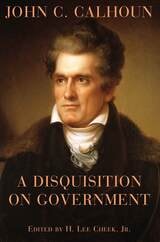
A Disquisition on Government
John C. Calhoun
St. Augustine's Press, 2007
This volume provides the most economical and textually accurate version of Calhoun’s Disquisition available today. As a treatise, the Disquisition is one of the greatest and most enduring works of American politial thought, and a text of seminal importance to all students of American politics, history, philosophy, and law. In the Disquisition, Calhoun believed he had laid a “solid foundation for political science” through revitalizing popular rule. To complete his theoretical and practical mission, Calhoun attempts to explain the best example of the diffusion of authority and cultivation of liberty: the American Constitution. The fundamental law of the American republic provided, after all, the “interior structure” for regulating the shape and scope of government. As a guide for the states and the general government, the Constitution was also part of the “organism” that limited the centralization of authority and allowed for genuine popular rule; and it was Calhoun’s exposition of the connection between the moral demands of a properly constituted concept of popular rule and the need for practical ordering principles that is articulated in this book.
Calhoun presents a theory of politics that is both original and in accord with the mainstream of the American political tradition. More than any other thinker of his period, Calhoun sought to explain the enduring qualities of American political thought in light of the troubled world of the mid-nineteenth century. Unlike other theorists who had preceded and would follow Calhoun, both American and European, he did not seek to invent a new mode of philosophical speculation or a “grand theory” for the human sciences. Instead, he attempted to offer a refinement of classical, medieval, and modern notions regarding the relationship between government and the social order. As an effort in philosophical retrenchment, the Disquisition strengthened many pre-existing conceptions regarding political liberty and popular rule within the American regime, while offering such insight with a view toward the future that awaited America. Calhoun’s attempt in the Disquisition to reconcile the good of popular rule with ethical requirements have singular relevance to the many nations in the twenty-first century now engaged, despite the ethnic animosities threatening their destruction, in building post-ideological, civilized political and social orders, especially the peoples of Central and Eastern Europe, Russia, and Africa.

A Doctor in Galilee
The Life and Struggle of a Palestinian in IsraelHatim Kanaaneh
Pluto Press, 2008
Hatim Kanaaneh is a Palestinian doctor who has struggled for over 35 years to bring medical care to Palestinians in Galilee, against a culture of anti-Arab discrimination. This is the story of how he fought for the human rights of his patients and overcame the Israeli authorities' cruel indifference to their suffering.
Kanaaneh is a native of Galilee, born before the creation of Israel. He left to study medicine at Harvard, before returning to work as a public health physician with the intention of helping his own people. He discovered a shocking level of disease and malnutrition in his community and a shameful lack of support from the Israeli authorities. After doing all he could for his patients by working from inside the system, Kanaaneh set up The Galilee Society, an NGO working for equitable health, environmental and socio-economic conditions for Palestinian Arabs in Israel.
This is a brilliant memoir that shows how grass roots organisations can loosen the Zionist grip upon Palestinian lives.
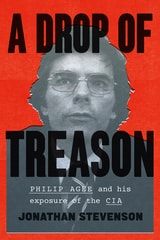
A Drop of Treason
Philip Agee and His Exposure of the CIAJonathan Stevenson
University of Chicago Press, 2021
The first biography of this contentious, legendary man, Jonathan Stevenson’s A Drop of Treason is a thorough portrait of Agee and his place in the history of American foreign policy and the intelligence community during the Cold War and beyond. Unlike mere whistleblowers, Agee exposed American spies by publicly blowing their covers. And he didn’t stop there—his was a lifelong political struggle that firmly allied him with the social movements of the global left and against the American project itself from the early 1970s on. Stevenson examines Agee’s decision to turn, how he sustained it, and how his actions intersected with world events.
Having made profound betrayals and questionable decisions, Agee lived a rollicking, existentially fraught life filled with risk. He traveled the world, enlisted Gabriel García Márquez in his cause, married a ballerina, and fought for what he believed was right. Raised a conservative Jesuit in Tampa, he died a socialist expat in Havana. In A Drop of Treason, Stevenson reveals what made Agee tick—and what made him run.
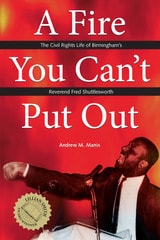
A Fire You Can't Put Out
The Civil Rights Life of Birmingham's Reverend Fred ShuttlesworthAndrew M. Manis
University of Alabama Press, 2001
WINNER, LILLIAN SMITH AWARD
WINNER, JAMES F. SULZBY, JR. AWARD
The fire of freedom that changed Birmingham—and America.
When Fred Shuttlesworth suffered only a bump on the head in the 1956 bombing of his home, members of his church called it a miracle. Shuttlesworth took it as a sign that God would protect him on the mission that had made him a target that night. Standing in front of his demolished home, Shuttlesworth vigorously renewed his commitment to integrate Birmingham's buses, lunch counters, police force, and parks. The incident transformed him, in the eyes of Birmingham's blacks, from an up-and-coming young minister to a virtual folk hero and, in the view of white Birmingham, from obscurity to rabble-rouser extraordinaire.
From his 1956 founding of the Alabama Christian Movement for Human Rights through the historic demonstrations of 1963, driven by a sense of divine mission, Shuttlesworth pressured Jim Crow restrictions in Birmingham with radically confrontational acts of courage. His intensive campaign pitted him against the staunchly segregationist police commissioner Eugene "Bull" Connor and ultimately brought him to the side of Martin Luther King Jr. and to the inner chambers of the Kennedy White House.
First published in 1999, Andrew Manis's award-winning biography of "one of the nation's most courageous freedom fighters" demonstrates compellingly that Shuttleworth's brand of fiery, outspoken confrontation derived from his prophetic understanding of the pastoral role. Civil rights activism was tantamount to salvation in his understanding of the role of Christian minister.
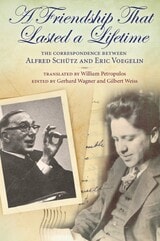
A Friendship That Lasted a Lifetime
The Correspondence Between Alfred Schutz and Eric VoegelinEdited by Gerhard Wagner and Gilbert Weiss, Translated by William Petropulos
University of Missouri Press, 2011
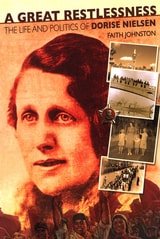
A Great Restlessness
The Life and Politics of Dorise NielsenFaith Johnston
University of Manitoba Press, 2006

A Guerrilla Guide to Refusal
Andrew Culp
University of Minnesota Press, 2022
A field guide to a nonfascist life at the end of the world as we know it
A Guerrilla Guide to Refusal is an unexpected approach to philosophy from a guerrilla-logic point of view. Harnessing critical theory to creatively reimagine counterinsurgency, guerrilla warfare, and interventions beyond the political mainstream, it takes us on a journey through anarchist infowar, queer outlaws, and black insurgency—through a subterranean network of communiques, military documents, contemporary art, political slogans, adversarial blogs, and captive media. In doing so, it provides powerful new insight into contemporary political movements that pose no demands, refuse labels, and offer no solutions.
Written to both inspire and provoke, A Guerrilla Guide to Refusal urges us to think through the refusal to participate in politics as usual. Author Andrew Culp demonstrates how evasion can combatively deny the existing order its power. Focusing on punk cinema, anarchist pamphlets, feminist art projects, hacker manifestos, and guerrilla manuals, he foregrounds invisibility as a novel force of disruption. He draws on concepts of criminality, fugitivity, and anonymity to bring a more nuanced understanding of how power makes things—and people—visible.
The book’s unique format is that of a theoretical manual, comprising freestanding segments instead of blueprints. Poised to reach beyond the academy into activist circles, this potent theory-in-action intervention forces us to reconsider the terrain upon which our struggles against patriarchy, anti-Blackness, capitalism, and the state operate.
A Guide to Eric Voegelin's Political Reality
Montgomery Erfourth
St. Augustine's Press, 2014

A Leftist Ontology
Beyond Relativism and Identity PoliticsCarsten Strathausen
University of Minnesota Press, 2009
A new ontology for a globalized world
Rich with analyses of concepts from deconstruction, systems theory, and post-Marxism, with critiques of fundamentalist thought and the war on terror, this volume argues for developing a philosophy of being in order to overcome the quandary of postmodern relativism. Undergirding the contributions are the premises that ontology is a vital concept for philosophy today, that an acceptable leftist ontology must avoid the kind of identity politics that has dominated recent cultural studies, and that a new ontology must be situated within global capitalism.
A Leftist Ontology offers a timely intervention in political philosophy, featuring some of the leading voices of our time.Contributors: Bruno Bosteels, Cornell U; Christopher Breu, Illinois State U; Nicholas Brown, U of Illinois at Chicago; Sorin Radu Cucu, Manhattan College; George Edmondson, Dartmouth College; Eva Geulen, U of Bonn; Philip Goldstein, U of Delaware; Klaus Mladek, Dartmouth College; Alberto Moreiras, U of Aberdeen; Jeffrey T. Nealon, Pennsylvania State U; William Rasch, Indiana U; Ben Robinson, Indiana U; Imre Szeman, McMaster U; Roland Vegso, U of Tennessee, Knoxville.
A Life
Simone Veil
Haus Publishing, 2009
Veil was one of France’s most beloved public figures, most admired for her personal and political courage. Her memoir, published here in English for the first time, is a sincere and candid account of an extraordinary life and career, reflecting both her humanity and her determination to improve social standards at home and maintain economic and political stability in Europe. In the wake of her passing in 2017, this translation of her memoir stands as a fitting tribute to an unparalleled life of survival, selflessness, and unwavering public service.
A Little Hungarian Pornography
Peter Esterhazy
Northwestern University Press, 1997
In a state where the lack of democracy was called socialist democracy, economic chaos a socialist economy, and revolution an anti-revolution, the notion of speech and obscenity becomes equally distorted and skewed. Under these circumstances, the author considers the shackles inherent in the vocabulary of oppression and contrasts this with the freedom of the body in sex. A kaleidoscopic digression on perversion and politics, A Little Hungarian Pornography is both satire and critique, trifle and tract, and further support for Esterházy's status as one of the best writers in Europe today.
A Man for All Seasons
Monroe Sweetland and the Liberal ParadoxWilliam Robbins
Oregon State University Press, 2015
Historian William G. Robbins illuminates the wrenching transformation of American political culture in A Man for All Seasons: Monroe Sweetland and the Liberal Paradox. Racial and economic inequalities motivated much of Sweetland’s civic life, including his lifelong memberships in the American Civil Liberties Committee, the National Association for the Advancement of Colored People, the Urban League, the Japanese American Citizens League, and the Red Cross, where Sweetland worked repatriating American prisoners of war after Japan’s surrender.
Robbins’ portrait is holistic, exploring Sweetland’s socialist beginnings, inconsistencies in his politics—especially during the Cold War—and his regional legacy. He was the most important person in the resurgence of the modern, liberal Oregon Democratic Party from the late 1940s to the 1960s. He joined the National Education Association in 1964 and became the driving force behind the Bilingual Education Act of 1968 and the fight for the age-18 vote, achieved in the ratification of the 26th amendment in 1971. Monroe Sweetland was a nationally prominent figure, whose fights bequeathed to modern America important legislation that shaped its political landscape.
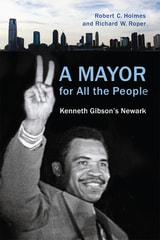
A Mayor for All the People
Kenneth Gibson's NewarkRobert C. Holmes
Rutgers University Press, 2020
In 1970, Kenneth Gibson was elected as Newark, New Jersey’s first African-American mayor, a position he held for an impressive sixteen years. Yet even as Gibson served as a trailblazer for black politicians, he presided over a troubled time in the city’s history, as Newark’s industries declined and its crime and unemployment rates soared.
This book offers a balanced assessment of Gibson’s leadership and his legacy, from the perspectives of the people most deeply immersed in 1970s and 1980s Newark politics: city employees, politicians, activists, journalists, educators, and even fellow big-city mayors like David Dinkins. The contributors include many of Gibson’s harshest critics, as well as some of his closest supporters, friends, and family members—culminating in an exclusive interview with Gibson himself, reflecting on his time in office.
Together, these accounts provide readers with a compelling inside look at a city in crisis, a city that had been rocked by riots three years before Gibson took office and one that Harper’s magazine named “America’s worst city” at the start of his second term. At its heart, it raises a question that is still relevant today: how should we evaluate a leader who faced major structural and economic challenges, but never delivered all the hope and change he promised voters?
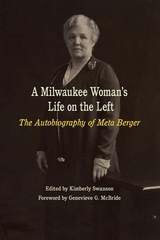
A Milwaukee Woman's Life on the Left
The Autobiography of Meta BergerMeta Berger
Wisconsin Historical Society Press, 2001
A Monument to Deceit
Sam Adams and the Vietnam Intelligence WarsC. Michael Hiam
University Press of New England, 2014
A More Conservative Place
Intellectual Culture in the Bush EraPaul A. Bové
Dartmouth College Press, 2013
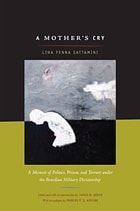
A Mother's Cry
A Memoir of Politics, Prison, and Torture under the Brazilian Military DictatorshipLina Penna Sattamini
Duke University Press, 2010
Lina Penna Sattamini describes her son’s tribulations through letters exchanged among family members, including Marcos, during the year that he was imprisoned. Her narrative is enhanced by Marcos’s account of his arrest, imprisonment, and torture. James N. Green’s introduction provides an overview of the political situation in Brazil, and Latin America more broadly, during that tumultuous era. In the 1990s, some Brazilians began to suggest that it would be best to forget the trauma of that era and move on. Lina Penna Sattamini wrote her memoir as a protest against historical amnesia. First published in Brazil in 2000, A Mother’s Cry is testimonial literature at its best. It conveys the experiences of a family united by love and determination during years of political repression.
A New Constitutionalism
Designing Political Institutions for a Good SocietyEdited by Stephen L. Elkin and Karol Edward Soltan
University of Chicago Press, 1993
Believing that constitutionalism needs to go beyond the classical goal of limiting the arbitrary exercise of political power, the contributors argue that it should—and can—be designed to achieve economic efficiency, informed democratic control, and other valued political ends. More broadly, they believe that political and social theory needs to turn away from the negativism of critical theory to consider how a good society should be "constituted" and to direct the work of designing institutions that can constitute a "good polity," in both the economic and civic senses.
Stephen L. Elkin and Karol Edward Soltan begin with an overview of constitutionalist theory and a discussion of the new constitutionalism within the broader intellectual and historical context of political and social thought. Charles Anderson, James Ceaser, and the editors then offer different interpretations of the central issues regarding institutional design in a constitutionalist social science, consider various ways of performing the task, and discuss the inadequacy of recent political science to the job it ought to be doing. The book concludes with essays by Ted Lowi, Cass Sunstein and Edwin Haefele which apply these themes to the American regime.
A Philosophy of Crisis
Miguel de Beistegui
University of Chicago Press, 2024
Crises abound—so many that it can be easy to lose perspective. In A Philosophy of Crisis, Miguel de Beistegui traces the intellectual development of ideas about crisis and identifies four distinct forms a crisis might take: crises of deviation, exception, contradiction, and extinction. Drawing on a range of examples (from economic crises to social uprisings, pandemics, and ecological devastation) and discourses (from ancient medicine to legal theory, political economy, philosophy, the earth sciences, and ecocriticism), A Philosophy of Crisis offers new conceptual tools for both understanding and avoiding the dangers of our crisis-saturated time.
A Political Economy of Justice
Edited by Danielle Allen, Yochai Benkler, Leah Downey, Rebecca Henderson, and Josh Simons
University of Chicago Press, 2022
If we can agree that our current social-political moment is tenuous and unsustainable—and indeed, that may be the only thing we can agree on right now—then how do markets, governments, and people interact in this next era of the world? A Political Economy of Justice considers the strained state of our political economy in terms of where it can go from here. The contributors to this timely and essential volume look squarely at how normative and positive questions about political economy interact with each other—and from that beginning, how to chart a way forward to a just economy.
A Political Economy of Justice collects fourteen essays from prominent scholars across the social sciences, each writing in one of three lanes: the measures of a just political economy; the role of firms; and the roles of institutions and governments. The result is a wholly original and urgent new benchmark for the next stage of our democracy.
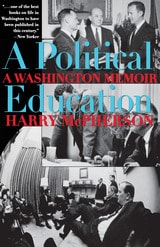
A Political Education
A Washington MemoirBy Harry McPherson
University of Texas Press, 1995
This insider's view of Washington in the 1950s and 1960s, of the tumultuous presidency of Lyndon Johnson, and of the conflicts and factions of the president's staff has become a political classic since its original publication in 1972. In this reissue, Harry McPherson adds a new preface in which he reflects on changes in Washington since the Johnson era and on the lessons Bill Clinton could learn from the presidency of Lyndon Johnson.

A Pragmatism of Beginnings
Governing Crises in the AnthropocenePol Bargués
University of Michigan Press, 2027
As climate change, pandemics, disasters, migrations, and conflicts increasingly overlap, crises are becoming more complex and difficult to address. The Anthropocene is an era characterized by uncertainty and contestation, in which traditional approaches to crisis management are no longer working. This book examines the ideas that have emerged to help societies move forward, including resilience, navigation, adaptation, precaution, and slow peacebuilding. While these approaches promise hope and progress, A Pragmatism of Beginnings critically highlights their limitations, showing how they often focus on coping with crises in ways that merely preserve and reproduce a decaying status quo.
Drawing on philosophical pragmatism, the book places these imaginaries that drive crisis management today in dialogue with the work of the classical pragmatists William James, John Dewey, and Jane Addams, as well as contemporary philosophers Bruno Latour, Graham Harman, and Elizabeth Grosz, to assess both their promises and their limitations. Across a series of case studies covering disaster response, peacebuilding, global health, climate governance, migration management, and the Women, Peace and Security agenda, the book shows how contemporary crisis governance often seeks to preserve the status quo by managing risks and avoiding breakdown rather than pursue transformative change. A Pragmatism of Beginnings argues that responding to today’s crises requires more; it also demands the courage and imagination to seize new beginnings.

A Pryor Commitment
David Pryor
Butler Center for Arkansas Studies, 2009
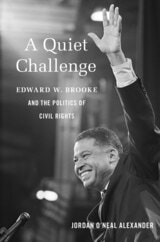
A Quiet Challenge
Edward W. Brooke and the Politics of Civil RightsJordan O'Neal Alexander
University of Massachusetts Press, 2026
The first full-length biography of a consequential figure in twentieth-century American politics
In 1962, Edward W. Brooke (1919–2015) upended political convention by becoming the first popularly elected African American attorney general of Massachusetts. His victory was striking not only because Massachusetts was an overwhelmingly white state with a small Black population, but also because Brooke was a Republican and an Episcopalian in a deeply Democratic, Irish Catholic political culture. Navigating these contradictions, Brooke crafted a distinctive political style—measured, pragmatic, and quietly transformative—that reshaped civil rights politics in the North. In A Quiet Challenge, Jordan O’Neal Alexander offers the first full-length biography of Brooke, revealing him as a Black Republican whose carefully calibrated approach to race, law, and governance won broad white support while often distancing him from Boston’s Black community.
As attorney general, Brooke sought to uphold the rule of law while advancing principles of fairness, equality, and public safety, an approach that reflected both political constraint and moral resolve. Brooke again defied expectations in 1966 when he won election to the United States Senate, becoming the first popularly elected African American senator since Reconstruction. Serving two terms during the height of the civil rights movement, he emerged as a powerful national voice on issues of racial justice. He played a key role in blocking two Supreme Court nominees aligned with President Richard Nixon’s “southern strategy,” even as his support for school desegregation and busing during the Boston Busing Crisis contributed to his eventual political decline. Throughout his career, Brooke remained committed to building a society in which Black Americans—and all Americans—could fully participate and prosper. This volume demonstrates how Brooke’s restrained, yet persistent political strategy helped expand the possibilities for Black leadership within mainstream American politics.
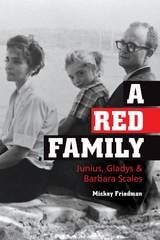
A Red Family
Junius, Gladys, and Barbara ScalesMickey Friedman. Afterword by Barbara Scales. Historical Essay by Gail O'Brien.
University of Illinois Press, 2008
Through the distinct perspectives of Junius, his wife Gladys, and his daughter Barbara, this book deepens and personalizes the story of American radicalism. Conversational, intimate, and exceptionally accessible, A Red Family offers a unique look at the American communist experience from the inside out.

A Singing Army
Zilphia Horton and the Highlander Folk SchoolBy Kim Ruehl
University of Texas Press, 2021
Zilphia Horton was a pioneer of cultural organizing, an activist and musician who taught people how to use the arts as a tool for social change, and a catalyst for anthems of empowerment such as “We Shall Overcome” and “We Shall Not Be Moved.” Her contributions to the Highlander Folk School, a pivotal center of the labor and civil rights movements in the mid-twentieth century, and her work creating the songbook of the labor movement influenced countless figures, from Woody Guthrie to Eleanor Roosevelt to Rosa Parks. Despite her outsized impact, Horton’s story is little known. A Singing Army introduces this overlooked figure to the world.
Drawing on extensive archival and oral history research, as well as numerous interviews with Horton's family and friends, Kim Ruehl chronicles her life from her childhood in Arkansas coal country, through her formative travels and friendship with radical Presbyterian minister Claude C. Williams, and into her instrumental work in desegregation and fostering the music of the civil rights era. Revealing these experiences—as well as her unconventional marriage and controversial death by poisoning—A Singing Army tells the story of an all-but-forgotten woman who inspired thousands of working-class people to stand up and sing for freedom and equality.

A Small Door Set in Concrete
One Woman's Story of Challenging Borders in Israel/PalestineIlana Hammerman
University of Chicago Press, 2019
For years, renowned activist and scholar Ilana Hammerman has given the world remarkable translations of Kafka. With A Small Door Set in Concrete, she turns to the actual surreal existence that is life in the West Bank after decades of occupation.
After losing her husband and her sister, Hammerman set out to travel to the end of the world. She began her trip with the hope that it would reveal the right path to take in life. But she soon realized that finding answers was less important than experiencing the freedom to move from place to place without restriction. Hammerman returned to the West Bank with a renewed joie de vivre and a resolution: she would become a regular visitor to the men, women, and children who were on the other side of the wall, unable to move or act freely. She would listen to their dreams and fight to bring some justice into their lives.
A Small Door Set in Concrete is a moving picture of lives filled with destruction and frustration but also infusions of joy. Whether joining Palestinian laborers lining up behind checkpoints hours before the crack of dawn in the hope of crossing into Israel for a day’s work, accompanying a family to military court for their loved one’s hearing, or smuggling Palestinian children across borders for a day at the beach, Hammerman fearlessly ventures into territories where few Israelis dare set foot and challenges her readers not to avert their eyes in the face of injustice.
Hammerman neither preaches nor politicks. Instead, she engages in a much more personal, everyday kind of activism. Hammerman is adept at revealing the absurdities of a land where people are stripped of their humanity. And she is equally skilled at illuminating the humanity of those caught in this political web. To those who have become simply statistics or targets to those in Israel and around the world, she gives names, faces, dreams, desires.
This is not a book that allows us to sit passively. It is a slap in the face, a necessary splash of cold water that will reawaken the humanity inside all of us.
A Stranger's Knowledge
Statesmanship, Philosophy, and Law in Plato's StatesmanXavier Márquez
Parmenides Publishing, 2012
Marquez shows how this impasse is the key to understanding the ambiguous reevaluation of the rule of law that is the most striking feature of the political philosophy of the Statesman. The law appears here as a mere approximation of the expertise of the inevitably absent statesman, dim images and static snapshots of the clear and dynamic expertise required to steer the ship of state across the storms of the political world. Yet such laws, even when they are not created by genuine statesmen, can often provide the city with a limited form of cognitive capital that enables it to preserve itself in the long run, so long as citizens, and especially leaders, retain a “philosophical” attitude towards them. It is only when rulers know that they do not know better than the laws what is just or good (and yet want to know what is just and good) that the city can be preserved. The dialogue is thus, in a sense, the vindication of the philosopher-king in the absence of genuine political knowledge.
A Theory of Regret
Brian Price
Duke University Press, 2017
A Time to Speak
The Story of a Young American Lawyer's Struggle for His City—and HimselfCharles Morgan Jr., With a New Foreword by Senator Doug Jones
University of Alabama Press, 2022
Brings back into print a classic account of courage and calamity in the long march toward racial justice in the South, and the nation
On September 15, 1963, a bomb exploded at the Sixteenth Street Baptist Church in Birmingham, Alabama, killing four young Black girls. The very next day, a prominent white lawyer named Charles Morgan Jr. was scheduled to speak at a luncheon held by the Young Men’s Business Club of Birmingham. A well-regarded figure in the city’s legal and business establishment, Morgan had been mentioned frequently as a candidate for political office. To the shock of his longtime friends and associates, Morgan deviated from his planned remarks, instead using his platform to place the blame for the murder of the four young girls squarely on the shoulders of the city’s white middle-class establishment, those seated before him.
As much as his stand was admired nationally, in Birmingham the results were destructive for him personally. Threats against his life and the lives of his family poured in daily by phone and mail, his political career was finished, and he was faced with financial ruin. Within weeks, he moved his family out of the state, and thenceforward committed himself to legal action in the name of racial justice. In 1964, he established the regional office of the ACLU in Atlanta. In the 1964 Supreme Court case Reynolds v. Sims, Morgan successfully argued that districts in state legislatures needed to be of nearly equal size, establishing the principle of “one man, one vote” to effectively end the use of gerrymandering.
A Time to Speak was originally published in 1964, a mere year after Morgan and his family fled Birmingham. The memoir recounts not only his speech, but his entire upbringing and the political, cultural, and social milieus in which he was raised and which gave rise to the cowardice, institutional silence, fear, and hate that those conditions nursed. This new edition features a foreword from US Senator Doug Jones.
A Very Private Public Citizen
The Life of Grenville ClarkNancy Peterson Hill
University of Missouri Press, 2016

A Woman in the Crossfire
Diaries of the Syrian RevolutionSamar Yazbek
Haus Publishing, 2012
Aaron Henry of Mississippi
Inside AgitatorMinion K. C. Morrison
University of Arkansas Press, 2015
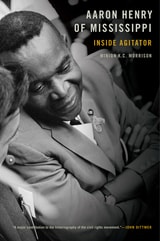
When Aaron Henry returned home to Mississippi from World War II service in 1946, he was part of wave of black servicemen who challenged the racial status quo. He became a pharmacist through the GI Bill, and as a prominent citizen, he organized a hometown chapter of the NAACP and relatively quickly became leader of the state chapter.
From that launching pad he joined and helped lead an ensemble of activists who fundamentally challenged the system of segregation and the almost total exclusion of African Americans from the political structure. These efforts were most clearly evident in his leadership of the integrated Mississippi Freedom Democratic Party delegation, which, after an unsuccessful effort to unseat the lily-white Democratic delegation at the Democratic National Convention in 1964, won recognition from the national party in 1968.
The man who the New York Times described as being “at the forefront of every significant boycott, sit-in, protest march, rally, voter registration drive and court case” eventually became a rare example of a social-movement leader who successfully moved into political office. Aaron Henry of Mississippi covers the life of this remarkable leader, from his humble beginnings in a sharecropping family to his election to the Mississippi house of representatives in 1979, all the while maintaining the social-change ideology that prompted him to improve his native state, and thereby the nation.
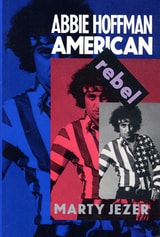
Abbie Hoffman
American RebelJezer, Marty
Rutgers University Press, 1993
"... Abbie, more than any other radical, showed potheads how to demonstrate and radicals how to dance." -- Chicago Tribune
"... deeply sympathetic and scrupulously detached-a triumph of judicious empathy." -- MARTIN DUBERMAN, Distinguished Professor of History, Lehman/The Graduate School, C.U.N.Y.
"... details Hoffman's humor, manic energy, depressive spells, political skills, and above all, his Incurable and still contagious optimism." -- Entertainment Weekly
"Here's the Abbie I knew and loved! Marty Jezer has captured him in all his complexity, dedication, humor, and heart." -- ANITA HOFFMAN
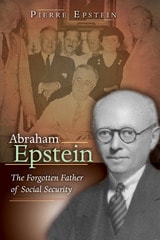
Abraham Epstein
The Forgotten Father of Social SecurityPierre Epstein
University of Missouri Press, 2006
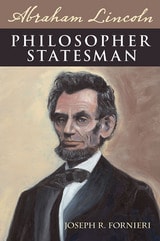
Abraham Lincoln, Philosopher Statesman
Joseph R. Fornieri
Southern Illinois University Press, 2014
2015 ISHS Superior Achievement Award
What constitutes Lincoln’s political greatness as a statesman? As a great leader, he saved the Union, presided over the end of slavery, and helped to pave the way for an interracial democracy. His great speeches provide enduring wisdom about human equality, democracy, free labor, and free society. Joseph R. Fornieri contends that Lincoln’s political genius is best understood in terms of a philosophical statesmanship that united greatness of thought and action, one that combined theory and practice. This philosophical statesmanship, Fornieri argues, can best be understood in terms of six dimensions of political leadership: wisdom, prudence, duty, magnanimity, rhetoric, and patriotism. Drawing on insights from history, politics, and philosophy, Fornieri tackles the question of how Lincoln’s statesmanship displayed each of these crucial elements.
Providing an accessible framework for understanding Lincoln’s statesmanship, this thoughtful study examines the sixteenth president’s political leadership in terms of the traditional moral vision of statecraft as understood by epic political philosophers such as Aristotle and St. Thomas Aquinas. Fornieri contends that Lincoln’s character is best understood in terms of Aquinas’s understanding of magnanimity or greatness of soul, the crowning virtue of statesmanship. True political greatness, as embodied by Lincoln, involves both humility and sacrificial service for the common good. The enduring wisdom and timeless teachings of these great thinkers, Fornieri shows, can lead to a deeper appreciation of statesmanship and of its embodiment in Abraham Lincoln.
With the great philosophers and books of western civilization as his guide, Fornieri demonstrates the important contribution of normative political philosophy to an understanding of our sixteenth president. Informed by political theory that draws on the classics in revealing the timelessness of Lincoln’s example, his interdisciplinary study offers profound insights for anyone interested in the nature of leadership, statesmanship, political philosophy, political ethics, political history, and constitutional law.
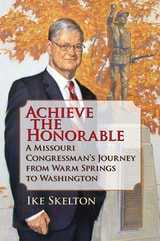
Achieve the Honorable
A Missouri Congressman's Journey from Warm Springs to WashingtonIke Skelton
Southern Illinois University Press, 2013
During his years in the U.S. House of Representatives, Skelton became known as a bipartisan negotiator and a champion of the Armed Services. Throughout the decades, he helped steer the nation through its most dangerous challenges, from Communism to terrorism; took a leading role in the reform of the Department of Defense; dedicated himself to fulfilling the interests of his constituents; and eventually rose to become chair of the House Armed Services Committee during such pivotal events as the wars in Iraq and Afghanistan. In addition to detailing Skelton’s political career and its accompanying challenges and triumphs, Achieve the Honorable provides inside glimpses into the lives of political titans like Harry Truman, Richard Nixon, and Bill Clinton. Along the way, we are treated to Skelton’s engaging humor and shrewd insight into twentieth- and twenty-first-century U.S. politics.