Results by title
322 books match the query 'Regional' and 14 start with i

Illinois Trails & Traces
Portraits and Stories along the State’s Historic RoutesText by Gary Marx and photographs by Daniel Overturf, with a foreword by Dick Durbin
Southern Illinois University Press, 2022
FINALIST, 2023 Society of Midland Authors Award in Adult Nonfiction!
Exploring Illinois history through the paths we travel
Illinois Trails & Traces partners the deft writing of Gary Marx with vivid photography by Daniel Overturf to illuminate ever evolving patterns of travel and settlement. Taking the reader on a journey down early buffalo traces and Native American trails, this book shows how these paths evolved into wagon roads and paved highways. Marx and Overturf explore historic routes ranging from Route 66 to the Underground Railroad, all the way back to post-Ice Age animal migration trails followed by Paleo-Indian people. The authors also examine how rivers, canals, and railroads spurred the rapid rise of Illinois as a modern state.
Marx and Overturf bring history into the present by including over forty photographic portraits and written profiles of individuals who live along these routes today. Many of the people you will meet on these pages work to preserve and honor the history of these passages. Others profiled here embody the spirit of the old roads and provide a vivid link between past and present. Through this journey, we discover that we’ve all been traveling the same road all along.
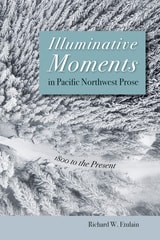
Illuminative Moments in Pacific Northwest Prose
1800 to the PresentRichard W. Etulain
University of Nevada Press, 2024
Etulain provides extensive coverage of the writings of notable authors, including novelists Frederic Homer Balch and Mary Hallock Foote, offering an understanding of frontier romantic and Local Color Writers. He also explores the works of H. G. Merriam and novelist H. L. Davis, illustrating regional prose writings. Finally, Etulain includes a panoply of writers who exemplify an emphasis on gender, race and ethnicity, and environmental texts from the post-WWII period.
Illuminative Moments in Pacific Northwest Prose delivers a first-time overview of the region’s literary contributions that will interest both scholars and general readers alike.
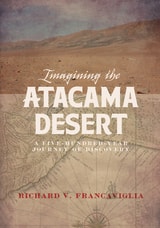
Imagining the Atacama Desert
A Five-Hundred-Year Journey of DiscoveryRichard V. Francaviglia
University of Utah Press, 2018
Beginning with the indigenous Atacameño peoples at the southern edge of the Incan empire, the volume moves through five hundred years of history, sharing accounts written by Spanish, French, German, Dutch, British, American, and other travelers—pirates, scientists, explorers, and entrepreneurs among them. The Atacama’s austere landscape hides many secrets, including vast mineral wealth, the world's oldest mummies, and the more recent remains of dissidents murdered by the regime of former Chilean dictator Augusto Pinochet in the early 1970s. Today numerous observatories operate under the Atacama’s clear night skies, astronauts train on the rugged desert floor, and tourists flock there for inspiration.
In addition to a rich set of narratives, the book features 115 images—historical maps, photographs, and natural history illustrations, most in full color—to tell a more complete and compelling story. Imagining the Atacama Desert shows how what was once a wilderness at the edges of empire became one of South America's most iconic regions, one that continues to lure those seeking adventure and the unknown.

Impermanence
Life and Loss on Superior's South Shoreleaf
University of Minnesota Press, 2024
A personal journey through the ever-changing natural and cultural history of Lake Superior’s South Shore
Lake Superior’s South Shore is as malleable as it is enduring, its red sandstone cliffs, clay bluffs, and golden sand beaches reshaped by winds and water from season to season—and sometimes from one hour to the next. Generations of people have inhabited the South Shore, harvesting the forests and fish, mining copper, altering the land for pleasure and profit, for better or worse. In Impermanence, author Sue Leaf explores the natural and human histories that make the South Shore what it is, from the gritty port city of Superior, Wisconsin, to the shipping locks at Sault Ste. Marie, Michigan.
For Leaf, what began as a bicycling adventure on the coast of Lake Superior in 1977 turned into a lifelong connection with the area, and her experience, not least as owner of a rustic cabin on a rapidly eroding lakeside cliff, imbues these essays with a passionate sense of place and an abiding curiosity about its past and precarious future. As waves slowly consume the shoreline where her family has spent countless summers, Leaf is forced to confront the complexity of loving a place that all too quickly is being reclaimed by the great lake.
Impermanence is a journey through the South Shore’s story, from the early days of the Anishinaabe and fur traders through the heyday of commercial fishing, lumber camps, and copper mining on the Keweenaw Peninsula to the awakening of the Northland to the perils and consequences of plundering its natural splendor. Noting the geological, ecological, and cultural features of each stop on her tour along the South Shore, Leaf writes about the restoration of the heavily touristed Apostle Islands National Lakeshore to its pristine conditions, even as Lake Superior maintains its allure for ice fishers, kayakers, and long-distance swimmers. She describes efforts to protect the endangered piping plover and to preserve the diverse sand dunes on the Michigan coast, and she observes the slough that supports rare intact wild rice beds central to Anishinaabe culture.
Part memoir, part travelogue, part natural and cultural history, Leaf’s love letter to Lake Superior’s South Shore is an invitation to see this liminal world in all its seasons and guises, to appreciate its ageless, ever-changing wonders and intimate charms.
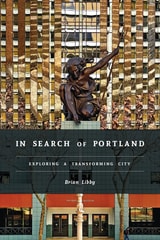
In Search of Portland
Exploring a Transforming CityBrian Libby
Oregon State University Press, 2026
“A good walking tour is not just about individual stops but the total experience of moving along a city’s streets, taking in a variety of neighborhoods, buildings, shops, parks, public art, and bridges: a chance to be the grand marshal in your own parade,” writes Brian Libby in the introduction of In Search of Portland. Starting from his 1997 home, the Empire Apartments at Southwest Eleventh Avenue and Jefferson Street, Libby shares one hundred fascinating points of interest through personal reflection, interviews, and anecdotal history.
The six excursions exploring Portland’s downtown, Old Town, and Pearl District not only focus on the city’s important landmarks and hidden gems but showcase an evolving city’s resilience and heart. Alongside his own experiences, Libby reveals how luminaries like Humphrey Bogart, Mark Rothko, Gus Van Sant, Vera Katz, and Bill Walton appreciated the City of Roses. From Pioneer Courthouse Square to the Crystal Ballroom, each location in the book celebrates the spirit of place in addition to its architecture.
More than a book about buildings, In Search of Portland reveals the stories behind the built landscape, the people, and the history that have created modern Portland.

In Search of Swampland
A Wetland Sourcebook and Field GuideRalph W. Tiner
Rutgers University Press, 2005

Influenza and Inequality
One Town's Tragic Response to the Great Epidemic of 1918Patricia J. Fanning
University of Massachusetts Press, 2010
By 1918, Norwood was a small, ethnically diverse, industrialized, and stratified community. Ink, printing, and tanning factories were owned by wealthy families who lived privileged lives. These industries attracted immigrant laborers who made their homes in several ethnic neighborhoods and endured prejudice and discrimination at the hands of native residents. When the epidemic struck, the immigrant neighborhoods were most affected; a fact that played a significant role in the town's response—with tragic results.
This close analysis of one town's struggle illuminates how even well-intentioned elite groups may adopt and implement strategies that can exacerbate rather than relieve a medical crisis. It is a cautionary tale that demonstrates how social behavior can be a fundamental predictor of the epidemic curve, a community's response to crisis, and the consequences of those actions.
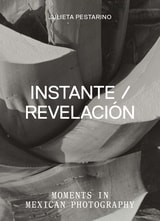
Instante/revelacion
Moments in Mexican PhotographyJulieta Pestarino
J. Paul Getty Trust, The, 2026
Presenting nearly 150 pictures made between 1920 and 2017, Instante/revelación highlights the work of thirteen renowned photographers who feature prominently in the history of the medium in Mexico, including Lola and Manuel Álvarez Bravo, Graciela Iturbide, and Pablo Ortiz Monasterio.
Through a dynamic selection of images, the publication explores some of the intertwined sociocultural forces that shape life and art in Mexico. Among the photographs are stunning presentations of landscapes, architecture, and flora and fauna from across the country; depictions of daily life; and portraits of esteemed Mexican artists and writers such as Diego Rivera, Frida Kahlo, and Octavio Paz. An illustrated essay examines the significant role photobooks and periodicals played in disseminating these images.
The photographers featured in this volume are linked by friendship, influence, and collaboration. Their works, when viewed together as a collective narrative, reveal the spirit of fruitful exchange that characterizes this exciting chapter in Mexico's photographic history.
This volume is published to accompany an exhibition on view at the J. Paul Getty Museum at the Getty Center from September 1, 2026, to January 3, 2027.
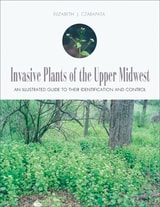
Invasive Plants of the Upper Midwest
An Illustrated Guide to Their Identification and ControlElizabeth J. Czarapata
University of Wisconsin Press, 2005
Invasive plants are a growing threat to ecosystems everywhere. Often originating in distant climes, they spread to woodlands, wetlands, prairies, roadsides, and backyards that lack the biological controls which kept these plant populations in check in their homelands.
Invasive Plants of the Upper Midwest includes more than 250 color photos that will help anyone identify problem trees, shrubs, vines, grasses, sedges, and herbaceous plants (including aquatic invaders). The text offers further details of plant identification; manual, mechanical, biological, and chemical control techniques; information and advice about herbicides; and suggestions for related ecological restoration and community education efforts. Also included are literature references, a glossary, a matrix of existing and potential invasive species in the Upper Midwest, an index with both scientific and common plant names, advice on state agencies to contact with invasive plant questions, and other helpful resources.
The information in this book has been carefully reviewed by staffs of the Wisconsin Department of Natural Resources Bureau of Endangered Resources and the University of Wisconsin-Madison Arboretum and other invasive plant experts.
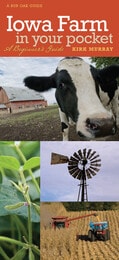
Iowa Farm in Your Pocket
A Beginner's GuideKirk Murray
University of Iowa Press, 2010
Newcomers to Iowa are always amazed at the yearly changes in the heights of fields. The landscape expands from ground level to ten feet tall and back again every year: from frozen bare ground in winter to light green sprouts in late spring to dark green corn in late summer to acre upon acre of dry cornstalks at harvest time. Slow and unwieldy machines take up more than their share of the roads, clouds of black or yellow dust cover the fields in spring and fall, pigs (or are they hogs?) in various colors look out from fences, huge tractors with complicated add-ons lumber through the fields, shiny silos linked with tentacles tower above tidy white farmhouses dwarfed by huge red barns. What are the names of all these animals and crops and buildings and machines? As an introduction to the practical magic of Iowa farmscapes, Iowa Farm in Your Pocket won’t tell you everything you should know to be a true Iowan, but it will tell you enough that you can survive a day at the state fair without embarrassing yourself.
Iowa ranks first in the U.S. in the number of hogs, egg layers, and pullets and in the production of corn and soybeans. Yes, the number of farms is shrinking, and their size is increasing. Yes, most Iowans now live in towns, compared to a hundred years ago, when the majority lived on farms. But despite urbanization and the rise of corporate farming, the family farm—more than 77,000 of them at last count—is still a vital part of Iowa’s identity. Fly over the state in summertime or drive across it in fall, when the headlights of tractors shine from the fields at night and golden mountains of corn are stacked around elevators, and it’s easy to see that an enormous percentage is farmland—more than 85 percent, in fact.
Kirk Murray’s loving and endearing photographs make this guide the perfect companion for drives in the countryside in all seasons. They celebrate the rich activities and varied beauties of each season on the farm, from the starkness of winter whites to the pale and rich greens of spring and summer to the rust-reds and golds of fall. Murray’s photos of sprouting corn at dawn, a summer sun shining on a farm pond, and a full moon over a silver silo echo Grant Wood and Vincent Van Gogh; his photos of tilling, planting, and harvesting are bright and energizing; his scenes of barnyards and fields and farmsteads are colorful and luminous; and his photos of farm animals are just plain fun.
With eighty full-color photographs of the most common animals, activities, crops, and buildings that you can expect to see whenever you pass a family farmstead, Iowa Farm in Your Pocket will be a treat for all newcomers to a state where corn and beans and hogs rule, for both urban and rural children and their parents, and for all those who want to revisit memories of growing up on a farm.
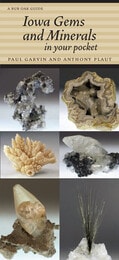
Iowa Gems and Minerals in Your Pocket
Paul Garvin and Anthony Plaut
University of Iowa Press, 2012
Most, if not all, of Iowa’s gems and minerals are products of crystallization in underground cavities that filled with water containing dissolved chemicals. The famed Iowa geodes (Iowa’s state rock) are products of a complex process of replacement and cavity-filling in the Warsaw Shale. Armored by a rind of tough chalcedonic quartz, these spheroidal masses, which range up to more than a meter across, weather out of the host rock and accumulate along streams in the southeastern part of the state. During the Pleistocene Epoch, large masses of glacial ice rafted the ultra-fine-grained variety of quartz called Lake Superior agates, which had previously weathered out of their host rocks, southward into Iowa. They can be found in the gravels that have accumulated along major streams in the eastern half of the state.
Iowa’s long record of mining lead, coal, gypsum, and limestone contains a rich history; the forty-seven mineral specimens inIowa Gems and Minerals in Your Pocketmake up a fascinating illustrated guide to that history. Carefully lit and photographed to reveal both maximum detail and maximum beauty, each specimen becomes a work of art.
Iowa State Parks
A Century of Stewardship, 1920-2020Rebecca Conard, Angela Corio, and Jim Scheffler
University of Iowa Press, 2020
The photo essays at the heart of this book feature the artistry of well-known nature photographers such as Carl Kurtz, Brian Gibbs, Don Poggensee, and Larry Stone. The images help tell the stories of Iowa’s state parks, recreation areas, preserves, and forests. A historical overview sets the stage, followed by essays on key aspects of our park system.
Iowa's Changing Wildlife
Three Decades of Gain and LossJames J. Dinsmore
University of Iowa Press, 2023
Iowa's Remarkable Soils
The Story of Our Most Vital Resource and How We Can Save ItKathleen Woida
University of Iowa Press, 2021
Its soils are what make Iowa a premier agricultural state, both in terms of acres planted and bushels harvested. But in the last hundred years, large-scale intensive agriculture and urban development have severely degraded most of our soils. However, as Woida documents, some innovative Iowans are beginning to repair and regenerate their soils by treating them as the living ecosystem and vast carbon store that they are. To paraphrase Aldo Leopold, these new pioneers are beginning to see their soils as part of a community to which they and their descendants belong, rather than commodities belonging to them.