Results by title
598 books match the query 'Religious' and 21 start with i
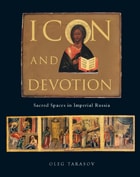
Icon and Devotion
Sacred Spaces in Imperial RussiaOleg Tarasov
Reaktion Books, 2002
By tracing the artistic vocabulary, techniques and working methods of icon painters, Tarasov shows how icons have been integral to the history of Russian art, influenced by folk and mainstream currents alike. As well as articulating the specifically Russian piety they invoke, he analyzes the significance of icons in the cultural life of modern Russia in the context of popular prints and poster design.
If No Moon
Moira Linehan
Southern Illinois University Press, 2007
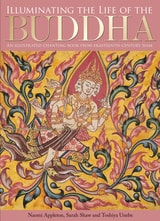
Illuminating the Life of the Buddha
An Illustrated Chanting Book from Eighteenth-Century SiamNaomi Appleton, Sarah Shaw, and Toshiya Unebe
Bodleian Library Publishing, 2013
Affording readers immense insight into a spectacular eighteenth-century manuscript, and Thai Buddhist manuscripts and temple culture as a whole, this book will be of great interest to art historians and scholars of Buddhism and Southeast Asia.
Image
Three Inquiries in Technology and ImaginationMark C. Taylor, Mary-Jane Rubenstein, and Thomas A. Carlson
University of Chicago Press, 2021
Modern life is steeped in images, image-making, and attempts to control the world through vision. Mastery of images has been advanced by technologies that expand and reshape vision and enable us to create, store, transmit, and display images. The three essays in Image, written by leading philosophers of religion Mark C. Taylor, Mary-Jane Rubenstein, and Thomas A. Carlson, explore the power of the visual at the intersection of the human and the technological. Building on Heidegger’s notion that modern humanity aims to master the world by picturing or representing the real, they investigate the contemporary culture of the image in its philosophical, religious, economic, political, imperial, and military dimensions, challenging the abstraction, anonymity, and dangerous disconnection of contemporary images.
Taylor traces a history of capitalism, focusing on its lack of humility, particularly in the face of mortality, and he considers art as a possible way to reconnect us to the earth. Through a genealogy of iconic views from space, Rubenstein exposes the delusions of conquest associated with extraterrestrial travel. Starting with the pressing issues of surveillance capitalism and facial recognition technology, Carlson extends Heidegger’s analysis through a meditation on the telematic elimination of the individual brought about by totalizing technologies. Together, these essays call for a consideration of how we can act responsibly toward the past in a way that preserves the earth for future generations. Attending to the fragility of material things and to our own mortality, they propose new practices of imagination grounded in love and humility.
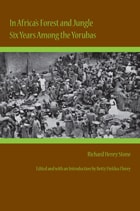
In Africa's Forest and Jungle
Six Years Among the YorubasRichard Henry Stone, edited by Betty Finklea Florey
University of Alabama Press, 2009
Stone served in Africa with his wife and successfully learned the Yoruba language. He was an intelligent, self-reflective, and reliable observer, making his works important sources of information on Yoruba society before the intervention of European colonialism. In Africa's Forest and Jungle is a rare account of West African culture, made all the more complete by the additional journal entries, letters, and photographs collected in this edition.
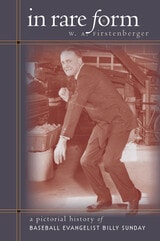
In Rare Form
A Pictorial History of Baseball Evangelist Billy SundayW. A. Firstenberger
University of Iowa Press, 2005
Through an organizational scheme that incorporates memorabilia from childhood (samplers, Civil War badges), baseball (Billy’s 1891 Philadelphia contract, scorecards), evangelism (cartoons, books such as Monkeys and Missing Links), social issues (KKK ads endorsing Sunday, his Women's Christian Temperance life membership certificate), life style (Arts and Crafts decorative pieces, extensive photos of the family's Mount Hood bungalow), and family relations (his personal possessions and those of his wife, Nell, and their children), In Rare Form brings together the inconsistencies between Sunday’s material world and his spiritual world.
Since Sunday might have objected to a materialistic analysis of his life, Firstenberger has allowed him a say: each section of the book begins with an apt quote from Sunday’s sermons and writings. Firstenberger also includes appendixes providing detailed information on Sunday’s revivals and speaking appearances, his 870,075 documented converts, the members of his evangelistic team, the overall structure of his family, and an extensive bibliography. Acknowledging Sunday’s faults and contradictions alongside his heroic accomplishments, the author presents a wryly insightful and innovative perspective on this larger-than-life figure.
In Reasonable Hope
Philosophical Reflections on Ultimate MeaningPatrick Masterson
Catholic University of America Press, 2021
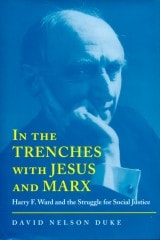
In the Trenches with Jesus and Marx
Harry F. Ward and the Struggle for Social JusticeDavid Duke
University of Alabama Press, 2006
The story of a Social Gospel leader who brought faith, activism, and social justice into the heart of modern American politics.
Radical religious and political leader Harry F. Ward started life quietly enough in a family of Methodist shopkeepers and butchers in London. But his relentless pursuit of social justice would lead him to the United States and a long career of religious activism. Ward served as professor of Christian ethics at the Union Theological Seminary and chairman of the board of the American Civil Liberties Union for two decades. He also became a leader in labor groups, Protestant activist organizations, and New York intellectual circles.
David Duke builds his comprehensive story of this fiery leader from extensive archival sources, including FBI files and private correspondence, sermons, class notes, and other unpublished material. Duke skillfully charts Ward's rise from an idealistic Methodist minister in a Chicago stockyard parish to a prominent national religious leader and influential political figure. Ultimately, Ward's lifelong attempt to synthesize the beliefs of Jesus and Marx and his role as an admirer of the Soviet Union put him on a collision course with McCarthyism in Cold War America. Viewed by some as a prophet and by others as a heretic, traitor, and communist, Ward became increasingly marginalized as he stubbornly maintained his radical positions. Even in his own circle, he went from being a figure of unquestioned integrity who eloquently spoke his convictions to a tragically short-sighted idealogue whose unwavering pro-Soviet agenda blinded him to the horrors of Stalinist oppression.
Harry Ward's long, colorful career intersected nearly every intellectual current in American culture for more than a half century. This biography will be important for scholars of American religious history, students of liberalism and politics, social Christians, and general readers who enjoy a compelling tour into the private and public lives of notable figures of history.
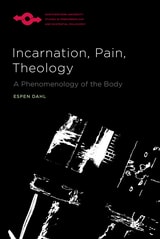
Incarnation, Pain, Theology
A Phenomenology of the BodyEspen Dahl
Northwestern University Press, 2024
While the phenomenological tradition has carefully treated both the objective and the lived body, Espen Dahl explores a dimension of the body that does not fall neatly into either category, suggesting that philosophers should take account of the inner density of our organic, material body. By integrating the dimension of “flesh-and-blood” into the phenomenological notion of the body, Dahl argues that it is possible to reach a more adequate notion of human incarnation. The author explores the body in its subjectivity and its resistance, in activity founded on passivity, and in the ambiguous limits of its skin. The phenomenon of pain is given particular attention in this investigation, since pain is, as Dahl argues, what makes the body inescapably manifest in its otherwise hidden dimensions, including its ambiguity and vulnerability. Related to this focus, Dahl also engages with the Christian theological concerns of incarnation, pain, and hope. Phenomenologists have long drawn on this religious inheritance, particularly in what has been dubbed the French “theological turn.” In a similar manner, Incarnation, Pain, Theology: A Phenomenology of the Body draws on these theological sources while firmly holding to its philosophical commitments in methodological approach and analytic aims.

Indonesian Buddhist Bronzes in the Making of Maritime Asia
Mathilde Mechling
National University of Singapore Press, 2027
Studies bronze icons of Hindu and Buddhist deities to better understand the flow of ideas across the sea routes of Maritime Asia in the first millennium.
While the great temples of Southeast Asia have inspired research in the past, the careful study of their smaller and more portable counterparts—bronze icons of Hindu and Buddhist deities—gives us a more dynamic understanding of the movement of beliefs and practices across Asia. These sacred images—found across Java, Sumatra, Kalimantan, and Sulawesi—rank alongside monumental temple complexes like Borobudur as among the most significant artistic and religious achievements of the region. Yet they have too often been treated as mere antiquities, prized for their beauty but stripped of their deeper historical meaning.
Mechling recovers what these bronzes can actually tell us. By tracing their distribution patterns alongside their artistic style, iconography, fabrication techniques, and metal compositions, she reconstructs the shared cults, ritual practices, and technological relationships that linked communities across the western Indonesian archipelago and beyond from the sixth to the tenth century. The picture that emerges overturns a long-held scholarly paradigm—inherited from the colonial era—of passive Southeast Asian reception of Indian cultural influence. In its place, Indonesian Buddhist Bronzes in the Making of Maritime Asia reveals a world of multi-directional exchange among active, cosmopolitan participants whose networks of creativity and devotion shaped one of history's most dynamic cultural crossroads.
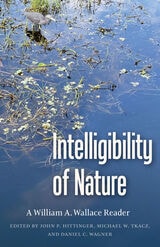
Intelligibility of Nature
A William A. Wallace ReaderWilliam A. Wallace
Catholic University of America Press, 2022
Interpretations
Reading the Present in Light of the PastJude P. Dougherty
Catholic University of America Press, 2018
The first part of Interpretations is an attempt to understand modernity’s break with the past, the repudiation of Scholasticism and the classical tradition. Dougherty does this by referencing the dominant preoccupations of the Middle Ages, of the Renaissance, of the Reformation, of eighteenth-century British empiricism, and of nineteenth-century German philosophy, drawing upon the readings of Remi Brague, Pierre Manent, and others. What unifies these reflections is the role of religion (both in Christianity and Islam) in society and its impact on the culture, as well as looking at what is called “modernity” where this role becomes reduced or absent.
The second part of the volume examines selected addresses by Pope Emeritus Benedict XVI from a philosophical point of view. Benedict, like others through the course of history, has recognized the role of religion in producing cultural unity. These essays are an appreciation primarily of the subtlety of the former pontiff’s thought.
The third part of Interpretations collects essays and addresses on the practice and nature of philosophy that Dean Dougherty has given throughout his career at The Catholic University of America, and reflects the trajectory of his career and the development of his thought.
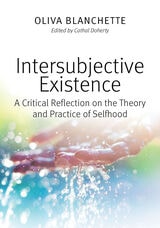
Intersubjective Existence
A Critical Reflection on the Theory and the Practice of SelfhoodOliva Blanchette
Catholic University of America Press, 2021
Intrepid Lover of Perfect Grace
The Life and Thought of Prosper of AquitaineAlexander Y. Hwang
Catholic University of America Press, 2009

Intro Summa Theologiae Thomas Aquinas
John Of St. ThomasJohn Of St. Thomas
St. Augustine's Press, 2004
Is Ultimate Reality Unlimited Love?
Stephen G. Post
Templeton Press, 2014
Isaac Harby of Charleston, 1788-1828
Jewish Reformer and IntellectualGary Phillip Zola
University of Alabama Press, 1994
The visionary voice who helped shape American Judaism—and Charleston’s cultural soul.
Isaac Harby of Charleston, 1788–1828 is a richly detailed biography that brings to life one of early America’s most fascinating and underappreciated Jewish intellectuals. Gary Phillip Zola offers a compelling portrait of Harby—a playwright, newspaper editor, drama critic, educator, and religious reformer—who emerged as a central figure in Charleston’s vibrant cultural scene during the early 19th century. At a time when Charleston was experiencing both economic prosperity and cultural efflorescence, Harby stood at the crossroads of literary ambition and religious innovation.
A descendant of Sephardic Jews, Harby was deeply engaged in the intellectual and civic life of his city. He founded a literary journal at just eighteen, established a private academy, and wrote prolifically on politics, education, and religion. But his most enduring legacy lies in his role as a pioneer of Reform Judaism in America. As a founding member of the Reformed Society of Israelites in 1825, Harby advocated for a rational, modernized approach to Jewish worship—one that emphasized universal ethics and intellectual engagement over ritual formalism. His efforts, though controversial in his time, laid the groundwork for the broader Reform movement that would flourish later in the century.
Drawing on newly uncovered archival materials, including Harby’s personal library and writings, Zola’s biography not only illuminates Harby’s life and thought but also offers a window into the broader cultural, religious, and political transformations of the early American republic. This book is essential reading for anyone interested in American Jewish history, Southern intellectual life, and the roots of religious reform in the United States.
Isaac Israeli
A Neoplatonic Philosopher of the Early Tenth CenturyIsaac Israeli
University of Chicago Press, 2009
Recognized as one of the earliest Jewish neo-Platonist writers, Isaac ben Solomon Israeli (ca. 855–955) influenced Muslim, Jewish, and Christian scholars through the Middle Ages. A native of Egypt who wrote in Arabic, Israeli explored definitions of such terms as imagination, sense-perception, desire, love, creation, and “coming-to-be” in his writings.
This classic volume contains English translations of Israeli’s philosophical writings, including the Book of Definitions, the Book of Substances, and the Book on Spirit and Soul. Additionally, Isaac Israeli features a biographical sketch of the philosopher and extensive notes and comments on the texts, as well as a survey and appraisal of his philosophy. Restored to print for the first time in decades, Isaac Israeli will be essential reading for students and scholars of medieval philosophy and Jewish studies.
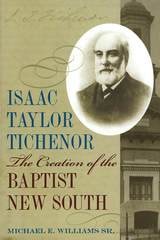
Isaac Taylor Tichenor
The Creation of the Baptist New SouthMichael E. Williams Sr.
University of Alabama Press, 2005
The influential role Tichenor played in shaping both the Baptist denomination and southern culture
Isaac Taylor Tichenor worked as a Confederate chaplain, a mining executive, and as president of the Agricultural and Mechanical College of Alabama (now Auburn University). He also served as corresponding secretary for the Home Mission Board of the Southern Baptist Convention in Atlanta from 1882 until 1899. In these capacities Tichenor developed the New South ideas that were incorporated into every aspect of his work and ultimately influenced many areas of southern life, including business, education, religion, and culture.
In Isaac Taylor Tichenor: The Creation of the Baptist New South, Michael E. Williams Sr. provides a comprehensive analysis of Tichenor’s life, examining the overall impact of his life and work. This volume also documents the methodologies Tichenor used to rally Southern Baptist support around its struggling Home Mission Board, which defined the makeup of the Southern Baptist Convention and defended the territory of the convention.
Tichenor was highly influential in forming a uniquely southern mindset prior to and at the turn of the century. Williams contends that Tichenor’s role in shaping Southern Baptists as they became the largest denomination in the South was crucial in determining their identity both the identities of the region and the SBC.
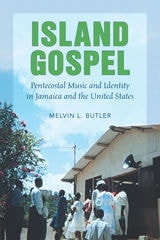
Island Gospel
Pentecostal Music and Identity in Jamaica and the United StatesMelvin L. Butler
University of Illinois Press, 2019
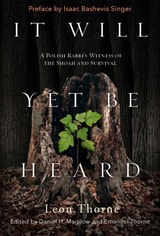
It Will Yet Be Heard
A Polish Rabbi's Witness of the Shoah and SurvivalIsaac Bashevis Singer
Rutgers University Press, 2019
Rabbi Thorne composed his memoir under extraordinary conditions, confined to a small underground bunker below a Polish peasant’s pigsty. But, It Will Yet Be Heard is remarkable not only for the story of its composition, but also for its moral clarity and complexity. A deeply religious man, Rabbi Thorne bore witness to forced labor camps, human degradation, and the murders of entire communities. And once he emerged from hiding, he grappled not only with survivor’s guilt, but also with the lingering antisemitism and anti-Jewish violence in Poland even after the war ended. Harrowing, moving, and deeply insightful, Rabbi Thorne’s firsthand account offers a rediscovered perspective on the twentieth century’s greatest tragedy.