Results by title
36 books match the query 'Classroom'
A Casebook for Second Language Teacher Education
Reflecting on the Language ClassroomAmy B. Gooden and Maria N. Zlateva
University of Michigan Press, 2018
The cases represent a range of classroom contexts: K–12 ESL/sheltered English immersion, modern foreign language, and post-secondary EAP; private, charter, and public schools; and urban and suburban settings. The book is ideally suited to College/School of Education and MA TESOL courses but will also be useful in professional development workshops for all types of language teachers.
Appalachia in the Classroom
Teaching the RegionTheresa L. Burriss
Ohio University Press, 2013
Appalachia in the Classroom contributes to the twenty-first century dialogue about Appalachia by offering topics and teaching strategies that represent the diversity found within the region. Appalachia is a distinctive region with various cultural characteristics that can’t be essentialized or summed up by a single text.
Appalachia in the Classroom offers chapters on teaching Appalachian poetry and fiction as well as discussions of nonfiction, films, and folklore. Educators will find teaching strategies that they can readily implement in their own classrooms; they’ll also be inspired to employ creative ways of teaching marginalized voices and to bring those voices to the fore. In the growing national movement toward place-based education, Appalachia in the Classroom offers a critical resource and model for engaging place in various disciplines and at several different levels in a thoughtful and inspiring way.
Contributors: Emily Satterwhite, Elizabeth S. D. Engelhardt, John C. Inscoe, Erica Abrams Locklear, Jeff Mann, Linda Tate, Tina L. Hanlon, Patricia M. Gantt, Ricky L. Cox, Felicia Mitchell, R. Parks Lanier, Jr., Theresa L. Burriss, Grace Toney Edwards, and Robert M. West.

Becoming an Embedded Librarian
Making Connections in the ClassroomMichelle Reale
American Library Association, 2015
Beyond the Classroom
Essays on American AuthorsMerton M. Sealts, Jr.
University of Missouri Press, 1996
Merton M. Sealts, Jr., a long-respected scholar and teacher of Emerson and Melville, has written, "I shall never tire of such writers, nor absorb all that they have to teach." This new collection of Sealts's essays reflects his many years of classroom experience and ongoing scholarship since his retirement in 1982. Most of these essays were originally delivered as public lectures before diverse audiences beyond the classroom; others first appeared in study pamphlets and as chapters of books.
These lucid essays, though varied in subject, have the commonality of an emphasis on teaching. The first essay, entitled "Emerson as Teacher," demonstrates how Emerson "provoked and inspired and educated his students--and his students' students."
In the most recently written essays Sealts deals with four of Emerson's contemporaries--Whitman, Thoreau, Hawthorne, and Melville--who responded variously to Emerson's teachings. A common thread among these four essays is each author's distinctive use of first-person narration.
Teachers of literature at every level will greatly benefit from these highly readable discussions, which illustrate practical strategies for reading and teaching literary works. Included in the appendixes are questions for the study of Melville's Bartleby, Benito Cereno, and Billy Budd, Sailor, which are also treated in individual essays.
Conflict Resolution Training for the Classroom
What Every ESL Teacher Needs to KnowBarrie J. Roberts
University of Michigan Press, 2020

Creativity in the Classroom
Case Studies in Using the Arts in Teaching and Learning in Higher EducationEdited by Paul McIntosh and Digby Warren
Intellect Books, 2013
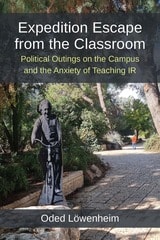
Expedition Escape from the Classroom
Political Outings on the Campus and the Anxiety of Teaching IROded Löwenheim
University of Michigan Press, 2024
Expedition Escape from the Classroom offers a unique narrative where teaching and its inherent challenges intersect with the intricacies of global politics, history, and identity. While recounting his academic experiment, Löwenheim grapples with the changing landscape of academia in a neoliberal age, while illustrating how personal vulnerabilities can transform into powerful tools for growth, exploration, and enlightenment. Whether you’re an educator, student, or just a curious reader, Expedition Escape from the Classroom promises a journey of reflection, critical thinking, and profound revelations.
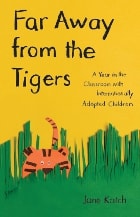
Far Away from the Tigers
A Year in the Classroom with Internationally Adopted ChildrenJane Katch
University of Chicago Press, 2011
Over the past three decades, more than a quarter of a million children have become citizens of the United States through international adoption. Kindergarten teacher Jane Katch recently found herself with three such children in her class: Katya, born in Russia, Jasper, from Cambodia, and Caleb, from Romania. Each child had spent early years in an orphanage, and each had unique educational and emotional needs. How Katch came to recognize and respond to those needs makes up the journey of discovery in this moving and insightful book.
Interspersing vignettes from the classroom and conversations with the children’s parents, Far Away from the Tigers first explores Katch’s misunderstandings and mistakes as she struggles to help the children adjust to school. As Katch learns more about each child’s preadoption past, she gradually realizes that they were deprived of some basic learning experiences and she needs to find ways to fill those gaps. Before Caleb can learn to read or write, he must improve his verbal skills by learning nursery rhymes, stories, and songs. Katya, who came from an overcrowded orphanage, now needs to be the center of attention; before learning how to form real friendships, she first must gain control over more basic functions such as eating and sleeping. And the youngest, Jasper, needs steady encouragement to play with classmates instead of sitting alone practicing his handwriting.
Slowly, through trial and error and by drawing on the deep understanding and intense commitment of the children’s parents, Katch discovers the importance—and joy—of allowing each child time to develop in his or her own way. Beautifully told, wise, and candid, Far Away from the Tigers is a gift for parents, teachers, and anyone who cares for children growing up in a new home.
Flipping the Classroom
What Every ESL Teacher Should KnowRobyn Brinks Lockwood
University of Michigan Press, 2018

From the Capitol to the Classroom
Standards-Based Reform in the StatesEdited by Susan Fuhrman
University of Chicago Press, 2001
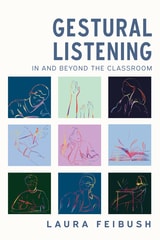
Gestural Listening In and Beyond the Classroom
Laura Feibush
Utah State University Press, 2026
Attuned to the subtle choreographies of the classroom, Gestural Listening In and Beyond the Classroom investigates how students and instructors show that they are listening to each other—and, sometimes, that they are not. While rhetorical scholarship traditionally focuses on speaking and writing, listening can also be understood as a rhetorical force that makes things happen. Listening has the power to move, bring about, cause, and catalyze. This conductive aspect of listening is its embodied manifestation—termed “gestural listening.”
Laura Feibush first traces the roots of embodied listening through cultural and rhetorical history and then uses findings from a classroom study to inform an insightful discussion of respect, resistance, and self-regulation as the key dynamics that characterize listening in contemporary educational spaces. She reveals how the gestures of listening refract across identity categories in ways that have surprising effects on how classroom participants respond to one another. This accessibly written book attends to hands and faces, nodding and note-taking, and the presence of phones and laptops, as well as other forms of nonverbal backchanneling, such as where people sit, when they interrupt, and when they engage in impactful quietness.
The power of gestural listening is not limited to the classroom. Its quiet yet profound influence can elucidate many sites of interaction: in-person and virtual academic settings as well as those far beyond the educational space, such as scenes of protest, worship, and performance. Gestural Listening In and Beyond the Classroom shows how, when understood as possessing its own repertoire of impressive and expressive capacities, listening emerges as a fascinating site of study and offers exercises, activities, and other materials to help educators, counselors, and all those engaging in communicative work enact a new awareness of gestural listening as a rhetorical force.

History and the Climate Crisis
Environmental History in the ClassroomKate Hawkey
University College London, 2023
History education has a key contribution to make in developing a deeper understanding of the current environmental crisis, but its role is too often overlooked. When embedded in the school curriculum, environmental history adds crucial layers of knowledge to the learning from other subjects and can enable students to make their own informed contributions to one of the most pressing concerns of the twenty-first century.
History and the Climate Crisis provides much-needed environmental knowledge, an area that is new for most history teachers. The author considers the disciplinary and pedagogical challenges and demonstrates how including an environmental focus can strengthen students’ disciplinary knowledge. She also builds her argument through many examples and offers practical strategies for use in classrooms, including developed inquiries suitable for the secondary history curriculum. The book focuses on environmental history within a strong subject-bound curriculum and will be relevant to teachers, academics, and policymakers in the United Kingdom and internationally.
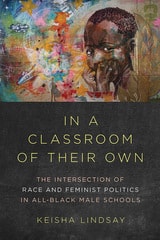
In a Classroom of Their Own
The Intersection of Race and Feminist Politics in All-Black Male SchoolsKeisha Lindsay
University of Illinois Press, 2018
Keisha Lindsay explains the complex politics of ABMSs by situating these schools within broader efforts at neoliberal education reform and within specific conversations about both "endangered” black males and a “boy crisis” in education. Lindsay also demonstrates that intersectionality, long considered feminist, is in fact a politically fluid framework. As such, it represents a potent tool for advancing many political agendas, including those of ABMSs supporters who champion antiracist education for black boys while obscuring black girls’ own race and gender-based oppression in school. Finally, Lindsay theorizes a particular means by which black men and other groups can form antiracist and feminist coalitions even when they make claims about their experiences that threaten bridge building. The way forward, Lindsay shows, allows disadvantaged groups to navigate the racial and gendered politics that divide them in pursuit of productive—and progressive—solutions.
Far-thinking and boldly argued, In a Classroom of Their Own explores the dilemmas faced by professionals and parents in search of equitable schooling for all students—black boys and otherwise.
Inside the Classroom (And Out)
How We Learn through FolkloreKenneth L. Untiedt
University of North Texas Press, 2005
Jamming the Classroom
Musical Improvisation and Pedagogical PracticeAjay Heble and Jesse Stewart
University of Michigan Press, 2023
Jane Addams in the Classroom
Edited by David Schaafsma
University of Illinois Press, 2014
Balancing theoretical and practical considerations, the collection examines Addams's emphasis on listening to and learning from those around her and encourages contemporary educators to connect with students through innovative projects and teaching methods. In the first essays, Addams scholars lay out how her narratives drew on experience, history, and story to explicate theories she intended as guides to practice. Six teacher-scholars then establish Addams's ongoing relevance by connecting her principles to exciting events in their own classrooms. An examination of the Jane Addams Children's Book Award and a fictional essay on Addams's work and ideas round out the volume.
Accessible and wide-ranging, Jane Addams in the Classroom offers inspiration for educators while adding to the ongoing reconsideration of Addams's contributions to American thought.
Contributors include Todd DeStigter, Lanette Grate, Susan Griffith, Lisa Junkin, Jennifer Krikava, Lisa Lee, Petra Munro, Bridget O'Rourke, David Schaafsma, Beth Steffen, Darren Tuggle, Erin Vail, and Ruth Vinz.
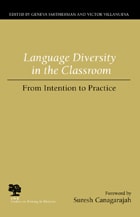
Language Diversity in the Classroom
From Intention to PracticeEdited by Geneva Smitherman and Victor Villanueva. Foreword by Suresh Canagarajah
Southern Illinois University Press, 2003
It’s no secret that, in most American classrooms, students are expected to master standardized American English and the conventions of Edited American English if they wish to succeed. Language Diversity in the Classroom: From Intention to Practice works to realign these conceptions through a series of provocative yet evenhanded essays that explore the ways we have enacted and continue to enact our beliefs in the integrity of the many languages and Englishes that arise both in the classroom and in professional communities.
Edited by Geneva Smitherman and Victor Villanueva, the collection was motivated by a survey project on language awareness commissioned by the National Council of Teachers of English and the Conference on College Composition and Communication.
All actively involved in supporting diversity in education, the contributors address the major issues inherent in linguistically diverse classrooms: language and racism, language and nationalism, and the challenges in teaching writing while respecting and celebrating students’ own languages. Offering historical and pedagogical perspectives on language awareness and language diversity, the essays reveal the nationalism implicit in the concept of a “standard English,” advocate alternative training and teaching practices for instructors at all levels, and promote the respect and importance of the country’s diverse dialects, languages, and literatures.
Contributors include Geneva Smitherman, Victor Villanueva, Elaine Richardson, Victoria Cliett, Arnetha F. Ball, Rashidah Jammi` Muhammad, Kim Brian Lovejoy, Gail Y. Okawa, Jan Swearingen, and Dave Pruett.
The volume also includes a foreword by Suresh Canagarajah and a substantial bibliography of resources about bilingualism and language diversity.
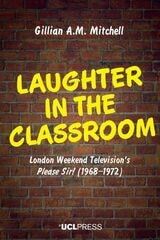
Laughter in the Classroom
London Weekend Television’s Please Sir! (1968–1972)Gillian A.M. Mitchell
University College London, 2026
The first academic study dedicated to Please Sir!, a program that provides valuable insights into British society, television culture, education, and youth culture during the late 1960s and early 1970s.
The situation comedy Please Sir! was televised from 1968 to 1972. This book explores its background, comedic style, cast of characters, its depictions of contemporary issues, and the impact of crises faced by its production company. It argues that Please Sir! reveals much about the social, cultural, and televisual era in which it was produced.

Learning Beyond The Classroom
Engaging Stud In Info LiteracySilvia Vong
Assoc of College & Research Libraries, 2020
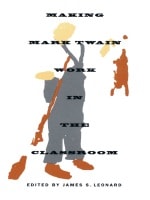
Making Mark Twain Work in the Classroom
James S. Leonard, ed.
Duke University Press, 1999
The essays in Making Mark Twain Work in the Classroom reaffirm the importance of Twain in the American literature curriculum from high school through graduate study. Addressing slavery and race, gender, class, religion, language and ebonics, Americanism, and textual issues of interest to instructors and their students, the contributors offer guidance derived from their own demographically diverse classroom experiences. Although some essays focus on such works as A Connecticut Yankee in King Arthur’s Court and The Innocents Abroad, most discuss the hotly debated Adventures of Huckleberry Finn, viewed alternately in this volume as a comic masterpiece or as evidence of Twain’s growing pessimism—but always as an effective teaching tool.
By placing Twain’s work within the context of nineteenth-century American literature and culture, Making Mark Twain Work in the Classroom will interest all instructors of American literature. It will also provoke debate among Americanists and those concerned with issues of race, class, and gender as they are represented in literature.
Contributors. Joseph A. Alvarez, Lawrence I. Berkove, Anthony J. Berret, S.J., Wesley Britton, Louis J. Budd, James E. Caron, Everett Carter, Jocelyn Chadwick-Joshua, Pascal Covici Jr., Beverly R. David, Victor Doyno, Dennis W. Eddings, Shelley Fisher Fishkin, S. D. Kapoor, Michael J. Kiskis, James S. Leonard, Victoria Thorpe Miller, Stan Poole, Tom Reigstad, David E. E. Sloane, David Tomlinson

Margins in the Classroom
Teaching LiteratureKostas Myrsiades and Linda S. Myrsiades, Editors
University of Minnesota Press, 1994
Margins in the Classroom was first published in 1994. Minnesota Archive Editions uses digital technology to make long-unavailable books once again accessible, and are published unaltered from the original University of Minnesota Press editions.
For today's teacher of literature, facing a minefield of politics and theory, this book arrives as a much needed guide through the multiplying cultural anxieties of the college classroom. Margins in the Classroom brings together established scholars and emerging voices from diverse backgrounds to show how politics and theory can and do affect the most pressing problems confronting the contemporary teacher of literature. The essays in this volume go beyond questioning and examining existing practices to suggest fresh approaches to teaching the expanding literary canon within the context of the politics of the educational institution.
Grounded in literary criticism, psychoanalysis, feminist theory, political economy, sociology, and philosophy, these essays apply new theoretical models to the traditional canon, identify new bodies of literature, and show how theory can be used to analyze these new literatures. Focusing on the politics of teaching and theory in the classroom, the authors explore the present practice and future implications of changing textual analysis, literary theory, and pedagogy. Their essays address the politics of literature as it affects the classroom, the design of courses, and the creation of new courses. They mold theory to the variety of classroom populations and materials the teacher of literature encounters today. The resulting volume bridges the differences between the languages of the classroom instructor and the contemporary theorist. Margins in the Classroom is unique in both the breadth and the depth of its concern over the disturbing, if electric, impact of changes in criticism, theory, and pedagogy in college literature classes as we approach the next century of academic instruction.Kostas Myrsiades is professor of comparative literature, and Linda S. Myrsiades is professor of English, both at West Chester University. Kostas Myrsiades is editor of College Literature, where Linda S. Myrsiades is an associate editor.
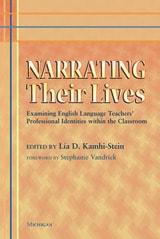
Narrating Their Lives
Examining English Language Teachers' Professional Identities within the ClassroomEdited by Lia Kamhi-Stein
University of Michigan Press, 2013
“…a groundbreaking book that will…engage, inform, and connect with present and future teachers and teacher educators.”
---Stephanie Vandrick, Foreword to Narrating Their Lives
The field of TESOL has called attention to the ways that the issues of race and ethnicity, language status and power, and cultural background affect second language learners’ identities and, to some degree, those of teachers. In Narrating Their Lives, Kamhi-Stein examines the process of identity construction of classroom teachers so as to make connections between their personal and professional identities and their instructional practices. To do that, she has selected six autobiographical narratives from teachers who were once part of her TESL 570 (Educational Sociolinguistics) class in the MA TESOL program at California State University, Los Angeles. These six narratives cover a surprisingly wide range of identity issues but also touch on broader instructional themes that are part of teacher education programs.
Because of the reflective nature of the narratives—with the teachers using their stories to better understand how their experiences shape what they do in the classroom—this volume includes provocative chapter-opening and reflective chapter-closing questions. An informative discussion of the autobiographical narrative assignment and the TESL 570 course (including supplemental course readings and assessment criteria) is also included.
Netprov
Networked Improvised Literature for the Classroom and BeyondRob Wittig
Amherst College Press, 2021
“Jargon-free and ambitious in scope, Netprov meets the needs of several types of readers. Casual readers will be met with straightforward and easy-to-follow definitions and examples. Scholars will find deep wells of in- formation about networked roleplay games. Teachers and students will find instructions for how-to play, and a ready-made academic context to make their play meaningful and memorable.” —Kathi Inman Berens, Portland State University
Philosophy in the Classroom
Matthew Lipman, Ann Margaret Sharp and Frederick S. Oscanyan
Temple University Press, 1980
This is a textbook for teachers that demonstrates how philosophical thinking can be used in teaching children. It begins with the assumption that what is taught in schools is not (and should not be) subject matter but rather ways of thinking. The main point is that the classroom should be converted into a community of inquiry, and that one can begin doing that with children. Based on the curriculum that Matt Lipman has developed at the Institute for the Advancement of Philosophy for Children, which he heads, this book describes the curriculum and explains its use. The text is self-contained, however.
This revision is thorough-going and incorporates new chapters, as well as new material in old chapters. Part One focuses on the need of educational change and the importance of philosophical inquiry in developing new approaches. Part Two discusses curriculum and teaching methodology, including teacher behavior conducive to helping children. Part Three deals with developing logic skills and moral judgment. It concludes with a chapter on the sorts of philosophical themes pertinent to ethical inquiry for children: the right and the fair, perfect and right, free will and determinism, change and growth, truth, caring, standards and rules, thinking and thinking for oneself. Education, in this sense, is not a matter of dispensing information; it is the process of assisting in the growth of the whole individual.
Privacy Matters
Conversations about Surveillance within and beyond the ClassroomEstee Beck
Utah State University Press, 2020
This collection offers practical analyses of surveillance and privacy as they occur within classrooms and communities. Organized by themes—surveillance and classrooms, surveillance and bodies, surveillance and culture—Privacy Matters provides writing, rhetoric, and communication scholars and teachers with specific approaches, methods, inquiries, and examinations into the impact tracking and monitoring has upon people’s habits, bodies, and lived experiences.
While each chapter contributes a new perspective in the discipline and beyond, Privacy Matters affirms that these analyses remain inconclusive. This collection is a call for scholars, researchers, activists, and educators within rhetoric and composition to continue the scholarly conversation because privacy matters to all of us.
Contributors: Christina Cedillo, Jenae Cohn, Dànielle Nicole DeVoss, Dustin Edwards, Norah Fahim, Ann Hill Duin, Gavin P. Johnson, John Peterson, Santos Ramos, Colleen A. Reilly, Jennifer Roth Miller, Jason Tham, Stephanie Vie
Race and Biblical Studies
Antiracism Pedagogy for the ClassroomTat-siong Benny Liew
SBL Press, 2022
Classrooms as communities are temporary, but the racial effects can be long term.
The biblical studies classroom can be a site of personal and social transformation. To make it a space for positive change, the contributors to this volume question and reevaluate traditional teaching practices and assessment tools that foreground white, Western scholarship in order to offer practical guidance for an antiracist pedagogy. The introduction and fifteen essays provide tools for engaging issues of social context and scriptural authority, nationalism and religious identities, critical race theory, and how race, gender, and class can be addressed empathetically. Contributors Sonja Anderson, Randall C. Bailey, Eric D. Barreto, Denise Kimber Buell, Greg Carey, Haley Gabrielle, Wilda C. Gafney, Julián Andrés González Holguín, Sharon Jacob, Tat-siong Benny Liew, Francisco Lozada Jr., Shelly Matthews, Roger S. Nam, Wongi Park, Jean-Pierre Ruiz, Abraham Smith, and Kay Higuera Smith share their experience creating classrooms that are spaces that enable the production of new knowledge without reproducing a white subject of the geopolitical West.
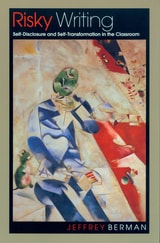
Risky Writing
Self-Disclosure and Self-Transformation in the ClassroomJeffrey Berman
University of Massachusetts Press, 2001
This is the final volume in a trilogy of works that examine the impact of writing and reading about traumatic subjects. Diaries to an English Professor (1994) explores the ways in which undergraduate students use psychoanalytic diaries to probe conflicted issues in their lives. Surviving Literary Suicide (1999) investigates how graduate students respond to suicidal literature—novels and poems that portray and sometimes glorify self-inflicted death.
In Risky Writing, Jeffrey Berman builds on those earlier studies, describing ways teachers can encourage college students to write safely on a wide range of subjects often deemed too personal or too dangerous for the classroom: grieving the loss of a beloved relative or friend, falling into depression, coping with the breakup of one's family, confronting sexual abuse, depicting a drug or alcohol problem, encountering racial prejudice. Berman points out that nearly everyone has difficulty talking or writing about such issues because they arouse shame and tend to be enshrouded in secrecy and silence. This is especially true for college students, who are just emerging from adolescence and find themselves at institutions that rarely promote self-disclosure.
Recognizing the controversial nature of his subject, Berman confronts academic opposition to personal writing head on. He also discusses the similarities between the “writing cure” and the “talking cure,” the role of the teacher and audience in the self-disclosing classroom, and the pedagogical strategies necessary to minimize risk, including the importance of empathy and other befriending skills.
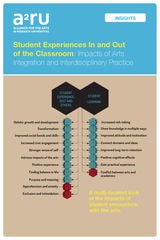
Student Experiences In and Out of the Classroom
Impacts of Arts Integration and Interdisciplinary PracticeGabriel Harp
A2RU Intervals, 2020
Taking It Personally
Racism In Classroom From Kinderg To CollegeAnn Berlak
Temple University Press, 2001
The "encounter" -- as it was called -- was an expression of Moyenda's anger at the institutionalized racism of our educational system, a system whose foundations are reinforced and whose assumptions about race are reproduced in the graduate school classroom. Forcing everyone involved to rethink their own race consciousness, Taking it Personally is a chronicle of two teachers and their own educational progress. In processing their own responses to the encounter, along with their students', Berlak and Moyenda meditate not only on their own ideas on teaching and learning, but also redefine the obligation a teacher has to his or her students.
Personal in its approach, yet grounded in significant currents of educational thought, Taking it Personally will be a must-read for any educator or educator-to-be who is committed to teaching in our diverse classrooms.
Teaching U.S.-Educated Multilingual Writers
Pedagogical Practices from and for the ClassroomMark Roberge, Kay M. Losey, Margi Wald
University of Michigan Press, 2015
All of the contributors are teachers who are writing about and reflecting on their own experiences and outcomes and interweaving those experiences and outcomes with current theory and research in the field. The volume thus portrays teachers as active, reflective participants engaged in critical inquiry. Contributors represent community college, college, and university contexts; academic ESL, developmental writing, and first-year composition classes; and face-to-face, hybrid, and online contexts.
This book was developed primarily to meet the needs of practicing writing teachers in college-level ESL, basic writing, and college composition classrooms, but will also be useful to pre-service teachers in TESOL, Composition, and Education graduate programs.
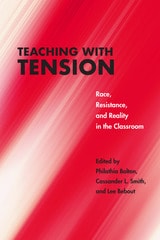
Teaching with Tension
Race, Resistance, and Reality in the ClassroomEdited by Philathia Bolton, Cassander L. Smith, and Lee Bebout
Northwestern University Press, 2019
Drawing together personal reflection, pedagogical strategies, and critical theory, Teaching with Tension offers concrete examinations that will foster student learning. The essays are organized into three thematic sections: "Teaching in Times and Places of Struggle" examines the dynamics of teaching race during the current moment, marked by neoconservative politics and twenty-first century freedom struggles. "Teaching in the Neoliberal University" focuses on how pressures and exigencies of neoliberalism (such as individualism, customer-service models of education, and online courses) impact the way in which race is taught and conceptualized in college classes. The final section, "Teaching How to Read Race and (Counter)Narratives," homes in on direct strategies used to historicize race in classrooms comprised of millennials who grapple with race neutral ideologies. Taken together, these sections and their constitutive essays offer rich and fruitful insight into the complex dynamics of contemporary race and ethnic studies education.
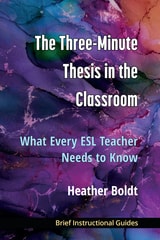
The Three Minute Thesis in the Classroom
What Every ESL Teacher Needs to KnowHeather Boldt
University of Michigan Press, 2019
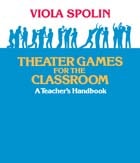
Theater Games for the Classroom
A Teacher's HandbookViola Spolin
Northwestern University Press, 1986
The most comprehensive theater instruction guide for all types of students
This best-selling book by Viola Spolin offers the most comprehensive theater instruction for all types of students, from small children to young adults. It includes over 130 theater games, plus exercises and instructional strategies. First developed by Spolin, the originator of modern improvisational theater techniques, these games have been tried and tested for over fifty years.
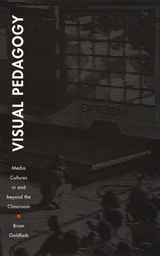
Visual Pedagogy
Media Cultures in and beyond the ClassroomBrian Goldfarb
Duke University Press, 2002
Looking beyond the popular media texts and mainstream classroom technologies that are the objects of most analyses of media and education, Goldfarb encourages readers to see a range of media subcultures as pedagogical tools. The projects he analyzes include media produced by AIDS/HIV advocacy groups and social services agencies for classroom use in the 1990s; documentary and fictional cinemas of West Africa used by the French government and then by those resisting it; museum exhibitions; and TV Anhembi, a municipally sponsored collaboration between the television industry and community-based videographers in São Paolo, Brazil.
Combining media studies, pedagogical theory, and art history, and including an appendix of visual media resources and ideas about the most productive ways to utilize visual technologies for educational purposes, Visual Pedagogy will be useful to educators, administrators, and activists.

What We Teach When We Teach DH
Digital Humanities in the ClassroomBrian Croxall
University of Minnesota Press, 2023
Exploring how DH shapes and is in turn shaped by the classroom
How has the field of digital humanities (DH) changed as it has moved from the corners of academic research into the classroom? And how has our DH praxis evolved through interactions with our students? This timely volume explores how DH is taught and what that reveals about the field of DH. While institutions are formally integrating DH into the curriculum and granting degrees, many instructors are still almost as new to DH as their students. As colleagues continue to ask what digital humanities is, we have the opportunity to answer them in terms of how we teach DH.
The contributors to What We Teach When We Teach DH represent a wide range of disciplines, including literary and cultural studies, history, art history, philosophy, and library science. Their essays are organized around four critical topics at the heart of DH pedagogy: teachers, students, classrooms, and collaborations. This book highlights how DH can transform learning across a vast array of curricular structures, institutions, and education levels, from high schools and small liberal arts colleges to research-intensive institutions and postgraduate professional development programs.
Contributors: Kathi Inman Berens, Portland State U; Jing Chen, Nanjing U; Lauren Coats, Louisiana State U; Scott Cohen, Stonehill College; Laquana Cooke, West Chester U; Rebecca Frost Davis, St. Edward’s U; Catherine DeRose; Quinn Dombrowski, Stanford U; Andrew Famiglietti, West Chester U; Jonathan D. Fitzgerald, Regis College; Emily Gilliland Grover, Notre Dame de Sion High School; Gabriel Hankins, Clemson U; Katherine D. Harris, San José State U; Jacob Heil, Davidson College; Elizabeth Hopwood, Loyola U Chicago; Hannah L. Jacobs, Duke U; Alix Keener, Stanford U; Alison Langmead, U of Pittsburgh; Sheila Liming, Champlain College; Emily McGinn, Princeton U; Nirmala Menon, Indian Institute of Technology; James O’Sullivan, U College Cork; Harvey Quamen, U of Alberta; Lisa Marie Rhody, CUNY Graduate Center; Kyle Roberts, Congregational Library and Archives; W. Russell Robinson, Alabama State U; Chelcie Juliet Rowell, Tufts U; Dibyadyuti Roy, U of Leeds; Asiel Sepúlveda, Simmons U; Andie Silva, York College, CUNY; Victoria Szabo, Duke U; Lik Hang Tsui, City U of Hong Kong; Annette Vee, U of Pittsburgh; Brandon Walsh, U of Virginia; Kalle Westerling, The British Library; Kathryn Wymer, North Carolina Central U; Claudia E. Zapata, UCLA; Benjun Zhu, Peking U.
Retail e-book files for this title are screen-reader friendly.
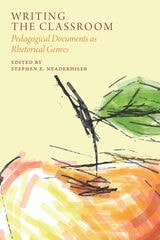
Writing the Classroom
Pedagogical Documents as Rhetorical Genresedited by Stephen E. Neaderhiser
Utah State University Press, 2022
The contributors to this unique collection employ a wide range of methodological frameworks to demonstrate how pedagogical genres—even ones as seemingly straightforward as the class syllabus—have lives extending well beyond the classroom as they become part of how college teachers represent their own academic identities, advocate for pedagogical values, and negotiate the many external forces that influence the act of teaching. Writing the Classroom shines a light on genres that are often treated as two-dimensional, with purely functional purposes, arguing instead that genres like assignment prompts, course proposals, teaching statements, and policy documents play a fundamental role in constructing the classroom and the broader pedagogical enterprise within academia.
Writing the Classroom calls on experienced teachers and faculty administrators to critically consider their own engagement with pedagogical genres and offers graduate students and newer faculty insight into the genres that they may only now be learning to inhabit as they seek to establish their personal teacherly identities. It showcases the rhetorical complexity of the genres written in the service of pedagogy not only for students but also for the many other audiences within academia that have a role in shaping the experience of teaching.
Contributors: Michael Albright, Lora Arduser, Lesley Erin Bartlett, Logan Bearden, Lindsay Clark, Dana Comi, Zack K. De Piero, Matt Dowell, Amy Ferdinandt Stolley, Mark A. Hannah, Megan Knight, Laura R. Micciche, Cindy Mooty, Dustin Morris, Kate Navickas, Kate Nesbit, Jim Nugent, Lori A. Ostergaard, Cynthia Pengilly, Jessica Rivera-Mueller, Christina Saidy, Megan Schoen, Virginia Schwarz, Christopher Toth