Results by title
131 books match the query 'Republic of South Africa' and 4 start with i
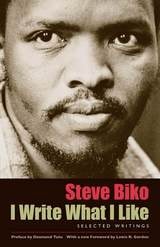
I Write What I Like
Selected WritingsSteve Biko
University of Chicago Press, 2002
I Write What I Like contains a selection of Biko's writings from 1969, when he became the president of the South African Students' Organization, to 1972, when he was prohibited from publishing. The collection also includes a preface by Archbishop Desmond Tutu; an introduction by Malusi and Thoko Mpumlwana, who were both involved with Biko in the Black Consciousness movement; a memoir of Biko by Father Aelred Stubbs, his longtime pastor and friend; and a new foreword by Professor Lewis Gordon.
Biko's writings will inspire and educate anyone concerned with issues of racism, postcolonialism, and black nationalism.
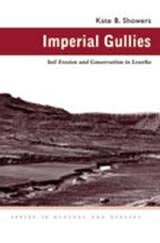
Imperial Gullies
Soil Erosion and Conservation in LesothoKate B. Showers
Ohio University Press, 2005
Once the grain basket for South Africa, much of Lesotho has become a scarred and degraded landscape. The nation’s spectacular erosion and gullying have concerned environmentalists and conservationists for more than half a century. In Imperial Gullies: Soil Erosion and Conservation in Lesotho, Kate B. Showers documents the truth behind this devastation.
Showers reconstructs the history of the landscape, beginning with a history of the soil. She concludes that Lesotho’s distinctive erosion chasms, called dongas—often cited as an example of destructive land-use practices by African farmers—actually were caused by colonial and postcolonial interventions. The residents of Lesotho emerge as victims of a failed technology. Their efforts to mitigate or resist implementation of destructive soil conservation engineering works were thwarted, and they were blamed for the consequences of policies promoted by international soil conservationists since the 1930s.
Imperial Gullies calls for an observational, experimental, and, most important, a fully consultative and participatory approach to address Lesotho’s serious contemporary problems of soil erosion. The first book to bring to center stage the historical practice of colonial soil science—and a cautionary tale of western science in unfamiliar terrain—it will interest a broad, interdisciplinary audience in African and environmental studies, social sciences, and history.
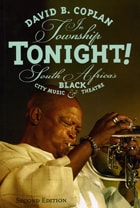
In Township Tonight!
South Africa's Black City Music and Theatre, Second EditionDavid B. Coplan
University of Chicago Press, 2008
In vivid detail, Coplan comprehensively explores more than three centuries of the diverse history of South Africa’s black popular culture, taking readers from indigenous musical traditions into the world of slave orchestras, pennywhistlers, clergyman-composers, the gumboot dances of mineworkers, and touring minstrelsy and vaudeville acts. This up-to-date edition of a landmark work will be welcomed by scholars of ethnomusicology and African studies, world music fans, and anyone concerned with South Africa and its development.
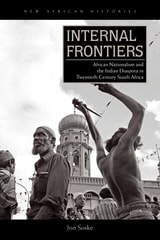
Internal Frontiers
African Nationalism and the Indian Diaspora in Twentieth-Century South AfricaJon Soske
Ohio University Press, 2017
In this ambitious new history of the antiapartheid struggle, Jon Soske places India and the Indian diaspora at the center of the African National Congress’s development of an inclusive philosophy of nationalism. In so doing, Soske combines intellectual, political, religious, urban, and gender history to tell a story that is global in reach while remaining grounded in the everyday materiality of life under apartheid.
Even as Indian independence provided black South African intellectuals with new models of conceptualizing sovereignty, debates over the place of the Indian diaspora in Africa (the “also-colonized other”) forced a reconsideration of the nation’s internal and external boundaries. In response to the traumas of Partition and the 1949 Durban Riots, a group of thinkers in the ANC, centered in the Indian Ocean city of Durban and led by ANC president and Nobel Peace Prize winner Albert Luthuli, developed a new philosophy of nationhood that affirmed South Africa’s simultaneously heterogeneous and fundamentally African character.
Internal Frontiers is a major contribution to postcolonial and Indian Ocean studies and charts new ways of writing about African nationalism.