Results by title
87 books match the query 'Search' and 47 start with i

IN SEARCH OF WORKING CLASS
ESSAYS IN AMERICAN LABOR HISTORY AND POLITICAL CULTURELeon Fink
University of Illinois Press, 1994
"Fink places American labor history in the broader context of American political historiography better than any other historian I can think of." -- James R. Barrett, author of Work and Community in the Jungle: Chicago's Packinghouse Workers, 1894-1922

In Search Of Parenthood
Coping with Infertility and High-Tech ConceptionJudith N. Lasker and Susan Borg
Temple University Press, 1994

In Search of "Aryan Blood"
Serology in Interwar and National Socialist GermanyRachel E. Boaz
Central European University Press, 2012

In Search of Admiration and Respect
Chinese Cultural Diplomacy in the United States, 1875–1974Yanqui Zheng
University of Michigan Press, 2024
In Search of Admiration and Respect uses the Chinese case to underscore what Zheng calls “infrastructure of persuasion,” in which American philanthropy, museums, exhibitions, and show business had disproportionate power in setting the agenda of unequal intercultural encounters. This volume also provides historical insights into China’s ongoing quest for international recognition. Drawing upon diverse archival sources, Zheng expands the contours of cultural diplomacy beyond established powers and sheds light on the limited agency of peripheral nations in their self-representation.
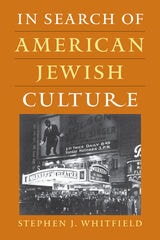
In Search of American Jewish Culture
Stephen J. Whitfield
Brandeis University Press, 2001

In Search of Ancient North Africa
A History in Six LivesBarnaby Rogerson
Haus Publishing, 2019
In Search of Ancient North Africa sheds new light on a time and place at the crossroads of numerous histories and cultures. It offers the first history of ancient North Africa told through the lives of North Africans themselves.
In Search of Authenticity
The Formation of Folklore StudiesRegina Bendix
University of Wisconsin Press, 1997
Searches for authenticity, Bendix contends, have been a constant companion to the feelings of loss inherent in modernization, forever upholding a belief in a pristine yet endangered cultural essence and fueling cultural nationalism worldwide. Beginning with precursors of Herder and Emerson and the “discovery” of the authentic in expressive culture and literature, she traces the different, albeit intertwined, histories of German Volkskunde and American folklore studies. A Swiss native educated in American folklore programs, Bendix moves effortlessly between the two traditions, demonstrating how the notion of authenticity was used not only to foster national causes, but also to lay the foundations for categories of documentation and analysis within the nascent field of folklore studies.
Bendix shows that, in an increasingly transcultural world, where Zulu singers back up Paul Simon and where indigenous artists seek copyright for their traditional crafts, the politics of authenticity mingles with the forces of the market. Arguing against the dichotomies implied in the very idea of authenticity, she underscores the emptiness of efforts to distinguish between folklore and fakelore, between echt and ersatz.
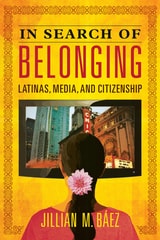
In Search of Belonging
Latinas, Media, and CitizenshipJillian M Baez
University of Illinois Press, 2018
Innovative and informed by a wealth of new evidence, In Search of Belonging answers important questions about the ways Latinas perform citizenship in today’s America.

In Search of Cell History
The Evolution of Life's Building BlocksFranklin M. Harold
University of Chicago Press, 2014
Written in accessible language and complemented by a glossary for easy reference, this book investigates the full scope of cellular history. Assuming only a basic knowledge of cell biology, Harold examines such pivotal subjects as the relationship between cells and genes; the central role of bioenergetics in the origin of life; the status of the universal tree of life with its three stems and viral outliers; and the controversies surrounding the last universal common ancestor. He also delves deeply into the evolution of cellular organization, the origin of complex cells, and the incorporation of symbiotic organelles, and considers the fossil evidence for the earliest life on earth. In Search of Cell History shows us just how far we have come in understanding cell evolution—and the evolution of life in general—and how far we still have to go.

In Search of Divine Reality
Science as a Source of InspirationLothar Schäfer
University of Arkansas Press, 1997

In Search of Donna Reed
Jay Fultz
University of Iowa Press, 2001
But who was Donna Reed? Perhaps no celebrity of her symbolic importance is so little known. Moving from the backroads of Iowa to the mansions of Bel Air, Jay Fultz goes in search of the woman behind the image.
In Search of Donna Reed reveals a woman whose intelligence and force of character often put her at odds with the roles she portrayed both on and off screen. Reed, always angered by the treatment of women in Hollywood, turned political activist in middle age, confronting for the first time the arrogance of power. She was, said writer Barbara Avedon, a feminist before there was a feminist vocabulary. But she eludes any label.
This first biography of Donna Reed also contains the first extended discussion of her television show. The personal richness that Reed brought to her television role has been filtered out in the caricature perpetuated by pop critics. In the media "Donna Reed" is Donna Stone distorted as a female-manqué who wears pearls and high heels around the house. But Donna Reed's long hold on viewers depends on irreducible qualities that have nothing to do with this fixed image, as Fultz suggests.
He follows her development from Iowa farm girl to apprentice in Hollywood to mature juggler of the demands of family and career to antiwar activist. Drawing on Reed's letters and on interviews, Fultz looks for what was real in a very private person without discarding what is romantic in any pursuit of a public one. He shows why the rich and principled life of Donna Reed matters in this more cynical time.
In Search of Dreamtime
The Quest for the Origin of ReligionTomoko Masuzawa
University of Chicago Press, 1993
This ambivalence of contemporary scholars echoes their ambivalence toward the ancestral "giants" of the discipline: Durkheim, Müller, and Freud. Masuzawa shows that the speculations of these three men on the origins of religion render the very notion of time and history problematic and contain powerful instruments for dislodging the position of "Western man" as the keeper of knowledge. Her critical rereading of these forefathers is framed by a compelling discussion of the postmodernist subversion of absolute origins in the works of Walter Benjamin and Rosalind Krauss and a comparison of Mircea Eliade and Nancy Munn's accounts of the Australian aboriginal "dreamtime." Engaging a number of critical issues within the burgeoning field of cultural studies, Masuzawa's book will have far-reaching implications not only for religious studies but throughout the human sciences.

In Search of First Contact
The Vikings of Vinland, the Peoples of the Dawnland, and the Anglo-American Anxiety of DiscoveryAnnette Kolodny
Duke University Press, 2012
Kolodny considers what the sagas reveal about the Native peoples encountered by the Norse in Vinland around the year A.D. 1000, and she recovers Native American stories of first contacts with Europeans, including one that has never before been shared outside of Native communities. These stories contradict the dominant narrative of "first contact" between Europeans and the New World. Kolodny rethinks the lingering power of a mythic American Viking heritage and the long-standing debate over whether Leif Eiriksson or Christopher Columbus should be credited as the first discoverer. With this paradigm-shattering work, Kolodny shows what literary criticism can bring to historical and social scientific endeavors.

In Search of Goodness
Edited by Ruth W. Grant
University of Chicago Press, 2011
The recent spate of books and articles reflecting on the question of evil might make one forget that the question of just what constitutes goodness is no less urgent or perplexing. Everyone wants to think of him- or herself as good. But what does a good life look like? And how do people become good? Are there multiple, competing possibilities for what counts as a good life, all equally worthy? Or, is there a unified and transcendent conception of the good that should guide our judgment of the possibilities? What does a good life look like when it is guided by God? How is a good life involved with the lives of others? And, finally, how good is good enough?
These questions are the focus of In Search of Goodness, the product of a year-long conversation about goodness. The eight essays in this volume challenge the dichotomies that usually govern how goodness has been discussed in the past: altruism versus egoism; reason versus emotion; or moral choice versus moral character. Instead, the contributors seek to expand the terms of the discussion by coming at goodness from a variety of perspectives: psychological, philosophic, literary, religious, and political. In each case, they emphasize the lived realities and particulars of moral phenomena, taking up examples and illustrations from life, literature, and film. From Achilles and Billy Budd, to Oskar Schindler and Shel Silverstein’s The Giving Tree, to Iris Murdoch and the citizens of Flagstaff, Arizona, readers will find a wealth of thought-provoking insights to help them better understand this most basic, but complex, element of human life and happiness.

In Search of Identity
The Japanese Overseas Scholar in America and JapanJohn Bennett
University of Minnesota Press, 1958
In Search of Lost Roses
Thomas Christopher
University of Chicago Press, 2002
In Search of Lost Time
Mahler after ProustNicolas Mahler
Seagull Books, 2022
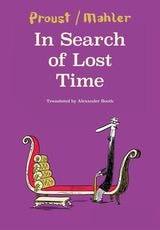
Marcel Proust’s In Search of Lost Time is one of the most important works of French literature—if not the most important. Reading it can be life-changing. Nicolas Mahler’s comic is not a retelling of this classic, nor a shortened version of Proust’s monumental work. Rather, it is a surprisingly funny graphic novel, comically disrespectful of the celebrated work yet completely permeated by Proustian spirit. Complemented by his clear and sparse illustrations, Mahler’s minimal nature of text use is easy on the eye, even for those uninitiated into graphic novels. For long-time fans of graphic novels, it is a perfect entry into a beloved literary classic.
A compact picture stream through time and space, Mahler’s In Search of Lost Time is a brilliantly complex house of mirrors replete with Proustian motives and perceptions.
In Search of Mechanisms
Discoveries across the Life SciencesCarl F. Craver and Lindley Darden
University of Chicago Press, 2013
In Search of Music Education
Estelle R. Jorgensen
University of Illinois Press, 1997
and inadequate conceptions of the field, Estelle Jorgensen raises the
possibility of alternative views that can dignify the teacher's task,
enrich and enliven the profession, and validate an exciting range of additional
ways in which music education can be undertaken in the contemporary world.
One of the most respected leaders in music education, Jorgensen emphasizes
world music and ethnomusicology as equal partners alongside the more conventional
sounds and styles that have dominated the classroom. Exemplifying sound
scholarship, thorough research, and compelling argument, In Search
of Music Education will be especially welcome wherever teachers strive
to deal with requirements for responsible music education.
In Search of New England's Native Past
Selected Essays by Gordon M. DayGordon M. Day
University of Massachusetts Press, 1998
This volume highlights the work of the late Gordon M. Day, renowned for his groundbreaking research on the history and culture of the Western Abenakis and their Indian neighbors. Where previous historians had tended to portray northern New England as an area largely devoid of aboriginal peoples, Day established beyond all doubt the presence of Abenaki settlements along the eastern shore of Lake Champlain as well as the upper reaches of the Connecticut and Merrimack rivers.
For nearly three decades, Day focused his work on the community of Saint Francis, or Odanak, in Quebec, to which Abenaki refugees from interior New England had fled, beginning in the mid-seventeenth century and continuing into the nineteenth. Drawing on the methods of several disciplines, including ethnology, linguistics, and ethnohistory, he synthesized data from fragmentary historical records, oral traditions, and place names to reconstruct a world assumed to be lost.

In Search of Our Warrior Mothers
Women Dramatists of the Black Arts MovementLa Donna L. Forsgren
Northwestern University Press, 2018
The Black Arts Movement (1965–76) consisted of artists across the United States deeply concerned with the relationship between politics and the black aesthetic. In Search of Our Warrior Mothers examines the ways in which black women playwrights in the movement advanced feminist and womanist perspectives from within black nationalist discourses. La Donna L. Forsgren recuperates the careers, artistic theories, and dramatic contributions of four leading playwrights: Martie Evans-Charles, J.e. Franklin, Sonia Sanchez, and Barbara Ann Teer. Using original interviews, production recordings, playbills, and unpublished manuscripts, she investigates how these women, despite operating within a context that equated the collective well-being of black people with black male agency, created works that validated black women's aspirations for autonomy and explored women's roles in the struggle for black liberation.
In Search of Our Warrior Mothers demonstrates the powerful contributions of women to the creation, interpretation, and dissemination of black aesthetic theory, thus opening an interdisciplinary conversation at the intersections of theater, performance, feminist, and African American studies and identifying and critiquing the gaps and silences within these fields.
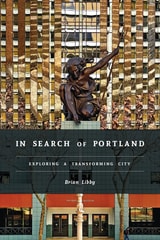
In Search of Portland
Exploring a Transforming CityBrian Libby
Oregon State University Press, 2026
“A good walking tour is not just about individual stops but the total experience of moving along a city’s streets, taking in a variety of neighborhoods, buildings, shops, parks, public art, and bridges: a chance to be the grand marshal in your own parade,” writes Brian Libby in the introduction of In Search of Portland. Starting from his 1997 home, the Empire Apartments at Southwest Eleventh Avenue and Jefferson Street, Libby shares one hundred fascinating points of interest through personal reflection, interviews, and anecdotal history.
The six excursions exploring Portland’s downtown, Old Town, and Pearl District not only focus on the city’s important landmarks and hidden gems but showcase an evolving city’s resilience and heart. Alongside his own experiences, Libby reveals how luminaries like Humphrey Bogart, Mark Rothko, Gus Van Sant, Vera Katz, and Bill Walton appreciated the City of Roses. From Pioneer Courthouse Square to the Crystal Ballroom, each location in the book celebrates the spirit of place in addition to its architecture.
More than a book about buildings, In Search of Portland reveals the stories behind the built landscape, the people, and the history that have created modern Portland.
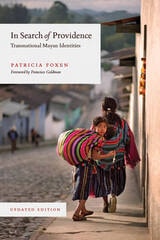
In Search of Providence
Transnational Mayan Identities, Updated EditionPatricia Foxen
Vanderbilt University Press, 2020
In the mid-1990s, Patricia Foxen traveled back and forth between the Guatemalan highlands and Providence, Rhode Island, to understand the migration paths of K'iche' Mayan Indians who had fled the Guatemalan civil war to work in the factories and fisheries of New England. More than two decades later, many Mayans are still migrating to the US. As Foxen argues, the recent surge in Mayan border crossings must be contextualized within both the longer history of violence, marginality, and exclusion that has long led Guatemala's Indigenous populations to be "survivors on the move," as well as contemporary push factors such as climate change and growing inequality that have forced people from their communities.
And yet one of the most significant drivers of continued emigration today, ironically, is the very culture of migration (described in the book) that has accelerated social change within many Indigenous communities, setting in motion a complex series of economic and cultural shifts that have compelled a continuous movement of people and generations to the US. Reading this story in 2020—at a time of massive growth in flows of irregular migrations around the world—can help us better understand the highly complex set of factors that propel long-term migrations and that shape transnational communities on both sides of the border.
In Search of Providence offers a layered, historically grounded perspective that speaks to the local specificity behind the migration experience in order to point to the universal themes and contradictions of contemporary global displacements.

In Search of Schopenhauer's Cat
Arthur Schopenhauer's Quantum-Mystical Theory of JusticeRaymond B. Marcin
Catholic University of America Press, 2006

In Search of Snow
Luis Alberto Urrea
University of Arizona Press, 1999
In Search of Snow is an explosive coming-of-age adventure, full of hilarious episodes and still, poignant moments. Like a blue-collar Don Quixote, Mike must blow up his windmills before he can set off to find the things he lacks, especially the snow that will temper the passion he has just set aflame.

In Search of Susanna
Suzanne L. Bunkers
University of Iowa Press, 1996
On a summer day in 1980 in Niederfeulen, Luxembourg, Suzanne Bunkers pored over parish records of her maternal ancestors, immigrants to the rural American Midwest in the mid 1800s. Suddenly, chance led her to the name Simmerl and to the missing piece in the genealogical puzzle that had brought her so far: Susanna Simmerl, Bunkers' paternal great-great-grandmother, who had given birth to an illegitimate daughter in 1856 before coming to America. Finding Susanna was the catalyst for Bunkers' intensely personal book, which blends history, memory, and imagination into a drama of two women's lives within their multigenerational family.
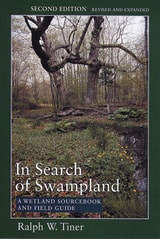
In Search of Swampland
A Wetland Sourcebook and Field GuideRalph W. Tiner
Rutgers University Press, 2005
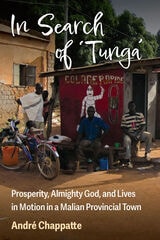
In Search of Tunga
Prosperity, Almighty God, and Lives in Motion in a Malian Provincial TownAndré Chappatte
University of Michigan Press, 2022
In the context of the current global war on terrorism, most studies of Muslim life have focused on the politics of piety of reformist movements, their leaders, and members. By contrast, In Search of “Tunga” takes a perspective from below. It opens piety up to “simply Muslims,” although the religious elites have always claimed authority and legitimacy over piety. Is piety an exclusive field of experiences for those who claim to strive for it? What does piety involve for the majority of Muslims, the non-elite and unaffiliated Muslims? This volume “democratizes” piety by documenting its practice as going beyond sharply defined religious affiliations and Islamic scholarship, and by showing it is both alive and normative, existential and prescriptive. As opposed to studies that build on the classic historical connections between the Maghreb and the Sahel, the southbound migration from the Sahel documented in this book stresses the overlooked historical connections between the southern shores of the Sahara and the lands south of those shores. It demonstrates how the Malian savanna, this former buffer-zone between ancient Mande kingdoms and thereafter remote areas of French Sudan, is increasingly becoming central in today’s Sahel contexts of desiccation and insecurity.
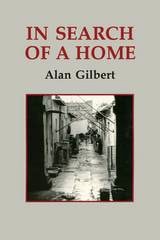
In Search of a Home
Rental and Shared Housing in Latin AmericaAlan Gilbert
University of Arizona Press, 1993
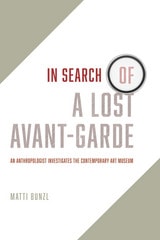
In Search of a Lost Avant-Garde
An Anthropologist Investigates the Contemporary Art MuseumMatti Bunzl
University of Chicago Press, 2014
Bunzl’s ethnography is designed to show how a commitment to the avant-garde can come into conflict with an imperative for growth, leading to the abandonment of the new and difficult in favor of the entertaining and profitable. Jeff Koons, whose massive retrospective debuted during Bunzl's research, occupies a central place in his book and exposes the anxieties caused by such seemingly pornographic work as the infamous Made in Heaven series. Featuring cameos by other leading artists, including Liam Gillick, Jenny Holzer, Karen Kilimnik, and Tino Sehgal, the drama Bunzl narrates is palpable and entertaining and sheds an altogether new light on the contemporary art boom.
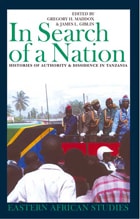
In Search of a Nation
Histories of Authority & Dissidence in TanzaniaGregory H. Maddox
Ohio University Press, 2005
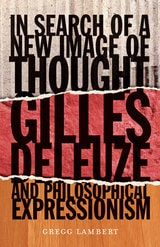
In Search of a New Image of Thought
Gilles Deleuze and Philosophical ExpressionismGregg Lambert
University of Minnesota Press, 2012
Gregg Lambert demonstrates that since the publication of Proust and Signs in 1964 Gilles Deleuze’s search for a new means of philosophical expression became a central theme of all of his oeuvre, including those written with psychoanalyst Félix Guattari. Lambert, like Deleuze, calls this “the image of thought.”
Lambert’s exploration begins with Deleuze’s earliest exposition of the Proustian image of thought and then follows the “tangled history” of the image that runs through subsequent works, such as Kafka: Toward a Minor Literature, The Rhizome (which serves as an introduction to Deleuze’s A Thousand Plateaus), and several later writings from the 1980s collected in Essays Critical and Clinical. Lambert shows how this topic underlies Deleuze’s studies of modern cinema, where the image of thought is predominant in the analysis of the cinematic image—particularly in The Time-Image. Lambert finds it to be the fundamental concern of the brain proposed by Deleuze in the conclusion of What Is Philosophy?
By connecting the various appearances of the image of thought that permeate Deleuze’s entire corpus, Lambert reveals how thinking first assumes an image, how the images of thought become identified with the problem of expression early in the works, and how this issue turns into a primary motive for the more experimental works of philosophy written with Guattari. The study traces a distinctly modern relationship between philosophy and non-philosophy (literature and cinema especially) that has developed into a hallmark of the term “Deleuzian.” However, Lambert argues, this aspect of the philosopher’s vision has not been fully appreciated in terms of its significance for philosophy: “not only ‘for today’ but, to quote Nietzsche, meaning also ‘for tomorrow, and for the day after tomorrow.’”
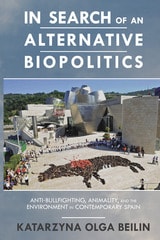
In Search of an Alternative Biopolitics
Anti-Bullfighting, Animality, and the Environment in Contemporary SpainKatarzyna Olga Beilin
The Ohio State University Press, 2015
Analyses of the synergy of press debates on bullfighting and the War on Terror, as well as media debates on King Juan Carlos’s hunt in Botswana and his resignation, reveal how the concepts structuring human/animal relations condition national biopolitics. Beilin traces a main principle, where sacrifice of some lives is deemed necessary for the sake of others, from bullfighting, through environmental destruction and immigration policies, to bioeconomy. Ultimately, In Search of an Alternative Biopolitics argues that to address ever-increasing threats of global warming and future catastrophes, we urgently need to redefine concepts structuring the human and the nonhuman realms.

In Search of the Amazon
Brazil, the United States, and the Nature of a RegionSeth Garfield
Duke University Press, 2013

In Search of the Black Panther Party
New Perspectives on a Revolutionary MovementJama Lazerow and Yohuru Williams, eds.
Duke University Press, 2006
One contributor evaluates the legal basis of the Panthers’ revolutionary struggle, explaining how they utilized and critiqued the language of the Constitution. Others explore the roles of individuals, looking at a one-time Panther imprisoned for a murder he did not commit and an FBI agent who monitored the activities of the Panthers’ Oakland branch. Contributors assess the Panthers’ relations with Students for a Democratic Society, the Young Lords, the Brown Berets, and the Peace and Freedom Party. They discuss the Party’s use of revolutionary aesthetics, and they show how the Panthers manipulated and were manipulated by the media. Illuminating some of the complexities involved in placing the Panthers in historical context, this collection demonstrates that the scholarly search for the Black Panthers has only just begun.
Contributors. Bridgette Baldwin, Davarian L. Baldwin, David Barber, Rod Bush, James T. Campbell, Tim Lake, Jama Lazerow, Edward P. Morgan, Jeffrey O. G. Ogbar, Roz Payne, Robert O. Self, Yohuru Williams, Joel Wilson
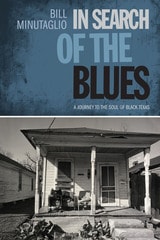
In Search of the Blues
A Journey to the Soul of Black TexasBy Bill Minutaglio
University of Texas Press, 2010
The rich, complex lives of African Americans in Texas were often neglected by the mainstream media, which historically seldom ventured into Houston's Fourth Ward, San Antonio's East Side, South Dallas, or the black neighborhoods in smaller cities. When Bill Minutaglio began writing for Texas newspapers in the 1970s, few large publications had more than a token number of African American journalists, and they barely acknowledged the things of lasting importance to the African American community. Though hardly the most likely reporter—as a white, Italian American transplant from New York City—for the black Texas beat, Minutaglio was drawn to the African American heritage, seeking its soul in churches, on front porches, at juke joints, and anywhere else that people would allow him into their lives. His nationally award-winning writing offered many Americans their first deeper understanding of Texas's singular, complicated African American history.
This eclectic collection gathers the best of Minutaglio's writing about the soul of black Texas. He profiles individuals both unknown and famous, including blues legends Lightnin' Hopkins, Amos Milburn, Robert Shaw, and Dr. Hepcat. He looks at neglected, even intentionally hidden, communities. And he wades into the musical undercurrent that touches on African Americans' joys, longings, and frustrations, and the passing of generations. Minutaglio's stories offer an understanding of the sweeping evolution of music, race, and justice in Texas. Moved forward by the musical heartbeat of the blues and defined by the long shadow of racism, the stories measure how far Texas has come . . . or still has to go.

In Search of the Golden Frog
Marty Crump
University of Chicago Press, 2000
The book is a detailed and fascinating chronicle of Crump's adventures as a field biologist—and as a wife and mother—in South and Central America. Following Crump on her research trips through Costa Rica, Ecuador, Brazil, Argentina, and Chile, we learn of amazingly diverse landscapes, equally diverse national traditions and customs, and the natural history of her subject of study, the frog. In leading us through rain forests and onto windswept coasts, Crump introduces us to such compelling creatures as female harlequin frogs, who pounce on males and pound their heads against the ground, and also sounds an alarm about the precipitous decline in amphibian populations around the globe.
Crump's perspectives as both a scientist and a mother, juggling the demands of family and professional life, make this highly readable account of fieldwork simultaneously close to home and wildly exotic. A combination of nature writing and travel writing, the richly illustrated In Search of the Golden Frog will whet travelers' appetites, affirm the experiences of seasoned field biologists, and offer the armchair naturalist vivid descriptions of amphibians and their habitats.
In Search of the Great Dead
Richard Cecil
Southern Illinois University Press, 1999
With grim humor and humorous grimness, In Search of the Great Dead engages the great themes of poetry: death and fame.
The title poem of this collection records Richard Cecil's quest for the tombs of the famous dead. At first the search leads him on a tour of famous European tombstones—the grave of Chateaubriand in St. Malo, the shared tomb of Gertrude Stein and Alice B. Toklas in Pere-Lachaise cemetery in Paris, Yeats's old Celtic cross in Sligo—but gradually it expands into areas where all the tombs have been erased by time or vandalism—the tombs of Seneca and Lucan, and all of the great dead poets whose names have been lost. These once famous, now unknown poets lead Cecil to consider those graveyards full of anonymous dead—the civil war soldiers buried under tiny stones with numbers instead of names inscribed on them. Are they more anonymous than the once famous, now forgotten "great" dead?
Though Cecil is wryly aware of his own obscurity, his poems are strangely optimistic and life-affirming. His reply to Emily Dickinson's question: "I'm Nobody—are you / Nobody, too?" is an enthusiastic yes! In Search of the Great Dead conveys the joy of being Nobody and the shy, almost buried hope that someday (after death), he might become Somebody.
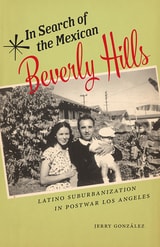
In Search of the Mexican Beverly Hills
Latino Suburbanization in Postwar Los AngelesGonzález, Jerry
Rutgers University Press, 2018
In Search of the Modern Hippocrates
Roger J. Bulger
University of Iowa Press, 1987
The ancient Hippocratic oath that every doctor pledges upon graduation from medical school is a code based on genuine devotion to people and a desire to serve them. It is also a code in urgent need of updating to reflect the technological and moral changes of modern society and the complicated dilemmas facing every practicing physician.
This collection of essays by some of the wisest observers of modern medicine probes the various forces affecting health care today: the power of the new technology in diagnosing and treating illnesses, the growing appreciation of mind/body interactions, the emergence of corporate hospitals and health care centers, and, most importantly, the essence of physicianhood—what makes a doctor want to practice medicine.
In considering these issues, the essayists question whether the medical-industrial complex will destroy physicians as we know them, making doctors employees of large profit-making institutions and more responsible to their companies than to their patients. Will increasing versatility in technological medicine remove doctors even further from the patient's bedside, weakening the diminishing bond between patient and doctor? Are there points of contact between western "scientific" medicine and holistic practices? Is there a place in modern medicine for work therapy and the placebo effect?
Each of these issues prevalent in medicine today has, in its own particular way, an effect upon the core relationship between doctor and patient. In Search of the Modern Hippocrates is dedicated to the premise that current changes in medicine can produce an altered and strengthened medical profession resolved to preserve the inextricable link between commitment and care. Ending with the development of a modern oath of ethics, it provides an important guide to medicine in the complex world we now face.

In Search of the Paper Tiger
A Sociological Perspective of Myth, Formula, and the Mystery Genre in the Entertainment Print Mass MediumGary Hoppenstand
University of Wisconsin Press, 1987
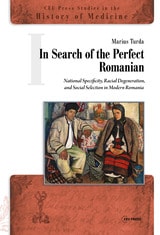
In Search of the Perfect Romanian
National Specificity, Racial Degeneration, and Social Selection in Modern RomaniaMarius Turda
Central European University Press, 2026
The book centers on debates about the Romanian national character and race between 1880s and 1950s. It also argues that during the early 1940s anti-Semitism and anti-Roma racism contributed directly to the programme of ethnic purification pursued by the Antonescu regime. Racism and eugenics explain not just the deportation and murder of the Jews but also the deportation and murder of the Roma. The Holocaust in Romania should therefore be understood as the result not just of anti-Semitism but also of biopolitical nationalism. Finally, the book suggests that the eugenic ideal of the ‘perfect’ Romanian did not disappear in 1945 but was embedded in the socialist definitions of the ‘new man’ and ‘perfect’ society emerging under communism.
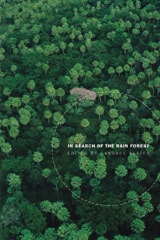
In Search of the Rain Forest
Candace Slater, ed.
Duke University Press, 2004
From diverse disciplines—history, archaeology, sociology, literature, law, and cultural anthropology—the contributors provide case studies from Latin America, Asia, and Africa. They point the way toward a search for a rain forest that is both a natural entity and a social history, an inhabited place and a shifting set of ideas. The essayists demonstrate how the single image of a wild and yet fragile forest became fixed in the popular mind in the late twentieth century, thereby influencing the policies of corporations, environmental groups, and governments. Such simplistic conceptions, In Search of the Rain Forest shows, might lead companies to tout their “green” technologies even as they try to downplay the dissenting voices of native populations. Or they might cause a government to create a tiger reserve that displaces peaceful peasants while opening the doors to poachers and bandits. By encouraging a nuanced understanding of distinctive, constantly evolving forests with different social and natural histories, this volume provides an important impetus for protection efforts that take into account the rain forest in all of its complexity.
Contributors. Scott Fedick, Alex Greene, Paul Greenough, Nancy Peluso, Suzana Sawyer, Candace Slater, Charles Zerner

In Search of the Talented Tenth
Howard University Public Intellectuals and the Dilemmas of Race, 1926-1970Zachery R. Williams
University of Missouri Press, 2009
In Search of the Talented Tenth tells how individuals like Rayford Logan, E. Franklin Frazier, John Hope Franklin, Merze Tate, Charles Wesley, and Dorothy Porter left an indelible imprint on academia and black communities alike through their impact on civil rights, anticolonialism, and women’s rights. Zachery Williams explores W. E. B. Du Bois’s Talented Tenth by describing the role of public intellectuals from the Harlem Renaissance to the Black Power movement, in times as trying as the Jim Crow and Cold War eras.
Williams first describes how the years 1890 to 1926 laid the foundation for Howard’s emergence as the “capstone of Negro education” during the administration of university president Mordecai Johnson. He offers a wide-ranging discussion of how the African American community of Washington, D.C., contributed to the dynamism and intellectual life of the university, and he delineates the ties that linked many faculty members to one another in ways that energized their intellectual growth and productivity as scholars. He also discusses the interaction of Howard’s intellectual community with those of the West Indies, Africa, and other places, showing the international impact of Howard’s intellectuals and the ways in which black and brown elites outside the United States stimulated the thought and scholarship of the Howard intellectuals.
In Search of the Talented Tenth marks the first in-depth study of the intellectual activity of this community of scholars and further attests to the historic role of women faculty in shaping the university. It testifies to the impact of this group as a model against which the twenty-first century’s black public intellectuals can be measured.
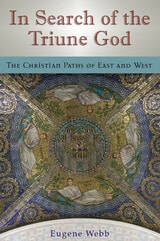
In Search of the Triune God
The Christian Paths of East and WestEugene Webb
University of Missouri Press, 2013
Under the broad umbrella of the Christian religion, there exists a great divide between two fundamentally different ways of thinking about key aspects of the Christian faith. Eugene Webb explores the sources of that divide, looking at how the Eastern and Western Christian worlds drifted apart due both to the different ways they interpreted their symbols and to the different roles political power played in their histories. Previous studies have focused on historical events or on the history of theological ideas. In Search of the Triune God delves deeper by exploring how the Christian East and the Christian West have conceived the relation between symbol and experience.
Webb demonstrates that whereas for Western Christianity discussion of the doctrine of the Trinity has tended toward speculation about the internal structure of the Godhead, in the Eastern tradition the symbolism of the Triune God has always been closely connected to religious experience. In their approaches to theology, Western Christianity has tended toward a speculative theology, and Eastern Christianity toward a mystical theology.
This difference of focus has led to a large range of fundamental differences in many areas not only of theology but also of religious life. Webb traces the history of the pertinent symbols (God as Father, Son of God, Spirit of God, Messiah, King, etc.) from the Hebrew Bible and New Testament through patristic thinkers and the councils that eventually defined orthodoxy. In addition, he shows how the symbols, interpreted through the different cultural lenses of the East and the West, gradually took on meanings that became the material of very different worldviews, especially as the respective histories of the Eastern and Western Christian worlds led them into different kinds of entanglement with ambition and power.
Through this incisive exploration, Webb offers a dramatic and provocative new picture of the history of Christianity.

In Search of the True Russia
The Provinces in Contemporary Nationalist DiscourseLyudmila Parts
University of Wisconsin Press, 2020
Surveying a largely unexplored body of Russian journalism, literature, and film from the late twentieth and early twenty-first centuries, Parts finds that the harshest portrayals of the provinces arise within "high" culture. Popular culture, however, has increasingly turned from the newly prosperous, multiethnic, and westernized Moscow to celebrate the hinterlands as repositories of national traditions and moral strength. This change, she argues, has directed debate about Russia's identity away from its loss of imperial might and global prestige and toward a hermetic national identity based on the opposition of "us vs. us" rather than "us vs. them." She offers an intriguing analysis of the contemporary debate over what it means to be Russian and where "true" Russians reside.
Inspired Journeys
Travel Writers in Search of the MuseEdited by Brian Bouldrey
University of Wisconsin Press, 2016