Results by title
158 books match the query 'Social justice' and 9 start with i
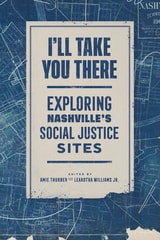
I'll Take You There
Exploring Nashville's Social Justice SitesAmie Thurber
Vanderbilt University Press, 2021
I'll Take You There is written by and with the people who most intimately know Nashville, foregrounding the struggles and achievements of people's movements toward social justice. The colloquial use of "I'll take you there" has long been a response to the call of a stranger: for recommendations of safe passage through unfamiliar territory, a decent meal and place to lay one's head, or perhaps a watering hole or juke joint.
In this book, more than one hundred Nashvillians "take us there," guiding us to places we might not otherwise encounter. Their collective entries bear witness to the ways that power has been used by social, political, and economic elites to tell or omit certain stories, while celebrating the power of counternarratives as a tool to resist injustice. Indeed, each entry is simultaneously a story about place, power, and the historic and ongoing struggle toward a more just city for all. The result is akin to the experience of asking for directions in an unfamiliar place and receiving a warm offer from a local to lead you on, accompanied by a tale or two.

Identity and the Failure of America
From Thomas Jefferson to the War on TerrorJohn Michael
University of Minnesota Press, 2008
From Thomas Jefferson to John Rawls, justice has been at the center of America’s self-image and national creed. At the same time, for many of its peoples-from African slaves and European immigrants to women and the poor-the American experience has been defined by injustice: oppression, disenfranchisement, violence, and prejudice.
In Identity and the Failure of America, John Michael explores the contradictions between a mythic national identity promising justice to all and the realities of a divided, hierarchical, and frequently iniquitous history and social order. Through a series of insightful readings, Michael analyzes such cultural moments as the epic dramatization of the tension between individual ambition and communal complicity in Moby-Dick, attempts to effect social change through sympathy in the novels of Lydia Marie Child and Harriet Beecher Stowe, Ralph Waldo Emerson’s antislavery activism and Frederick Douglass’s long fight for racial equity, and the divisive figures of John Brown and Nat Turner in American letters and memory.
Focusing on exemplary instances when the nature of the United States as an essentially conflicted nation turned to force, Michael ultimately posits the development of a more cosmopolitan American identity, one that is more fully and justly imagined in response to the nation’s ethical failings at home and abroad.
John Michael is professor of English and of visual and cultural studies at the University of Rochester. He is the author of Anxious Intellects: Academic Professionals, Public Intellectuals, and Enlightenment Values and Emerson and Skepticism: The Cipher of the World.

Inclusive STEM
Transforming Disciplinary Writing Instruction for a Socially Just FutureHeather M. Falconer
University Press of Colorado, 2025
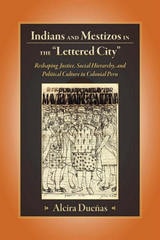
Indians and Mestizos in the "Lettered City"
Reshaping Justice, Social Hierarchy, and Political Culture in Colonial PeruAlcira Duenas
University Press of Colorado, 2010
Scholars have long assumed that Spanish rule remained largely undisputed in Peru between the 1570s and 1780s, but educated elite Indians and mestizos challenged the legitimacy of Spanish rule, criticized colonial injustice and exclusion, and articulated the ideas that would later be embraced in the Great Rebellion in 1781. Their movement extended across the Atlantic as the scholars visited the seat of the Spanish empire to negotiate with the king and his advisors for social reform, lobbied diverse networks of supporters in Madrid and Peru, and struggled for admission to religious orders, schools and universities, and positions in ecclesiastic and civil administration.
Indians and Mestizos in the "Lettered City" explores how scholars contributed to social change and transformation of colonial culture through legal, cultural, and political activism, and how, ultimately, their significant colonial critiques and campaigns redefined colonial public life and discourse. It will be of interest to scholars and students of colonial history, colonial literature, Hispanic studies, and Latin American studies.
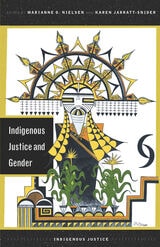
Indigenous Justice and Gender
Edited by Marianne O. Nielsen and Karen Jarratt-Snider
University of Arizona Press, 2023
This new volume offers a broad overview of topics pertaining to gender-related health, violence, and healing. Employing a strength-based approach (as opposed to a deficit model), the chapters address the resiliency of Indigenous women and two-spirit people in the face of colonial violence and structural racism.
The book centers the concept of “rematriation”—the concerted effort to place power, peace, and decision making back into the female space, land, body, and sovereignty—as a decolonial practice to combat injustice. Chapters include such topics as reproductive health, diabetes, missing and murdered Indigenous women, Indigenous women in the academy, and Indigenous women and food sovereignty.
As part of the Indigenous Justice series, this book provides an overview of the topic, geared toward undergraduate and graduate classes.
Contributors
Alisse Ali-Joseph
Michèle Companion
Mary Jo Tippeconnic Fox
Brooke de Heer
Lomayumtewa K. Ishii
Karen Jarratt-Snider
Lynn C. Jones
Anne Luna-Gordinier
Kelly McCue
Marianne O. Nielsen
Linda M. Robyn
Melinda S. Smith
Jamie Wilson

Indirect Action
Schizophrenia, Epilepsy, AIDS, and the Course of Health ActivismLisa Diedrich
University of Minnesota Press, 2016
The experience of illness (both mental and physical) figures prominently in the critical thought and activism of the 1960s and 1970s, though it is largely overshadowed by practices of sexuality. Lisa Diedrich explores how and why illness was indeed so significant to the social, political, and institutional transformation beginning in the 1960s through the emergence of AIDS in the United States. A rich intervention—both theoretical and methodological, political and therapeutic—Indirect Action illuminates the intersection of illness, thought, and politics.
Not merely a revision of the history of this time period, Indirect Action expands the historiographical boundaries through which illness and health activism in the United States have been viewed. Diedrich explores the multiplicity illness–thought–politics through an array of subjects: queering the origin story of AIDS activism by recalling its feminist history; exploring health activism and the medical experience; analyzing psychiatry and self-help movements; thinking ecologically about counterpractices of generalism in science and medicine; and considering the experience and event of epilepsy and the witnessing of schizophrenia.
Indirect Action places illness in the leading role in the production of thought during the emergence of AIDS, ultimately showing the critical interconnectedness of illness and political and critical thought.
Information Services to Diverse Populations
Competent Humility for Library ProfessionalsNicole A. Cooke
American Library Association, 2026
Foreword by Cynthia Sturgis Landrum
The development of cultural competency skills and social awareness benefits LIS students, their future employers, and the library profession at large―not to mention library customers and society as a whole. Cooke's freshly updated text introduces readers to the contexts and situations that promote the development of empathy and build cultural competence. It marshals cutting edge research and relevant best practices to give readers a strong grasp of the political, social, economic, and technological divides among library patrons. It also covers outreach and library services to diverse populations, how to evaluate such services, and many other key topics. Complete with an updated syllabus, lesson plans, and exercises ready-made for course use, Cooke’s text
- demonstrates why social responsibility is a foundational value of librarianship;
- considers library services to members of marginalized racial or ethnic groups, older adults, people with mental health or physical disabilities, neurodiverse library users, refugees and immigrants, people experiencing homelessness or hunger, those growing up in or experiencing poverty, members of the LGBTQIA+ communities, and people who are incarcerated;
- features a myriad of testimonials drawn from a wide variety of settings that highlight the experiences of library and museum practitioners who are working with diverse populations;
- introduces a new model of cultural competence and cultural humility;
- authoritatively covers such essential concepts as intersectionality, privilege, marginalization, cultural competence, cultural humility, and counter-storytelling along with discussions of how they interplay in the communities that libraries serve;
- explores the impact of overwhelming whiteness of the library profession and what can be done to recruit, welcome, mentor, and retain racially and ethnically diverse library workers; and
- identifies potential employment and networking opportunities related to diversity and social justice in librarianship.

Insubordinate Spaces
Improvisation and Accompaniment for Social JusticeBarbara Tomlinson
Temple University Press, 2019
Insubordinate spaces are places of possibility, products of acts of accompaniment and improvisation that deepen capacities for democratic social change. Barbara Tomlinson and George Lipsitz’s Insubordinate Spaces explores the challenges facing people committed to social justice in an era when social institutions have increasingly been reconfigured to conform to the imperatives of a market society.
In their book, the authors argue that education, the arts, and activism are key terrains of political and ideological conflict. They explore and analyze exemplary projects responding to current social justice issues and crises, from the Idle No More movement launched by Indigenous people in Canada to the performance art of Chingo Bling, Fandango convenings, the installation art of Ramiro Gomez, and the mass protests proclaiming “Black Lives Matter" in Ferguson, MO. Tomlinson and Lipsitz draw on key concepts from struggles to advance ideas about reciprocal recognition and co-creation as components in the construction of new egalitarian and democratic social relations, practices, and institutions.
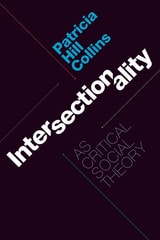
Intersectionality as Critical Social Theory
Patricia Hill Collins
Duke University Press, 2019