Results by title
95 books match the query 'Social media' and 5 start with i

I Love My Selfie
Essay by Ilan Stavans / Auto-Portraits by ADÁL
Duke University Press, 2017
What explains our current obsession with selfies? In I Love My Selfie noted cultural critic Ilan Stavans explores the selfie's historical and cultural roots by discussing everything from Greek mythology and Shakespeare to Andy Warhol, James Franco, and Pope Francis. He sees selfies as tools people use to disguise or present themselves as spontaneous and casual. This collaboration includes a portfolio of fifty autoportraits by the artist ADÁL; he and Stavans use them as a way to question the notion of the self and to engage with artists, celebrities, technology, identity, and politics. Provocative and engaging, I Love My Selfie will change the way readers think about this unavoidable phenomenon of twenty-first-century life.
[more]
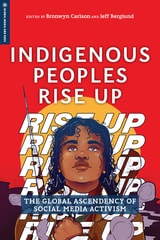
Indigenous Peoples Rise Up
The Global Ascendency of Social Media ActivismBronwyn Carlson
Rutgers University Press, 2021
Indigenous Peoples Rise Up: The Global Ascendency of Social Media Activism illustrates the impact of social media in expanding the nature of Indigenous communities and social movements. Social media has bridged distance, time, and nation states to mobilize Indigenous peoples to build coalitions across the globe and to stand in solidarity with one another. These movements have succeeded and gained momentum and traction precisely because of the strategic use of social media. Social media—Twitter and Facebook in particular—has also served as a platform for fostering health, well-being, and resilience, recognizing Indigenous strength and talent, and sustaining and transforming cultural practices when great distances divide members of the same community.
Including a range of international indigenous voices from the US, Canada, Australia, Aotearoa (New Zealand) and Africa, the book takes an interdisciplinary approach, bridging Indigenous studies, media studies, and social justice studies. Including examples like Idle No More in Canada, Australian Recognise!, and social media campaigns to maintain Maori language, Indigenous Peoples Rise Up serves as one of the first studies of Indigenous social media use and activism.
Including a range of international indigenous voices from the US, Canada, Australia, Aotearoa (New Zealand) and Africa, the book takes an interdisciplinary approach, bridging Indigenous studies, media studies, and social justice studies. Including examples like Idle No More in Canada, Australian Recognise!, and social media campaigns to maintain Maori language, Indigenous Peoples Rise Up serves as one of the first studies of Indigenous social media use and activism.
[more]
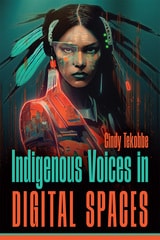
Indigenous Voices in Digital Spaces
Cindy Tekobbe
Utah State University Press, 2024
Indigenous Voices in Digital Spaces applies Indigenous frameworks and epistemologies to online cultural movements through four case studies, including hashtags, memes, cryptocurrency, and digital artistry, and develops decolonizing practices for digital rhetoric, online identity work, and digital literacy practices.
Tekobbe’s methods for analyzing and understanding Indigenous knowledges online center Indigenous storytelling and “thick” (broad, deep, and complex) Indigenous meaning-making. Employing this thickness to interpret Indigenous knowledge ways resists the settler-colonial logics that tend to flatten complex Indigenous concepts into one-note representations of racial stereotypes. Native Americans’ use of social media and digital platforms to support social movements uniquely constructs Indigenous identities as living, producing, and culture-making people, which confronts the commonplace, one-dimensional narrative that Indigenous North Americans either live in isolation or are people of history resigned to the long-forgotten past. Tekobbe’s methods are applicable to additional online research to break through Western paradigms of oppositional critique, the colonial power matrix embedded in hierarchical and taxonomical classification systems, and participant objectification.
Indigenous Voices in Digital Spaces offers new methodological and epistemological opportunities to explore digital communities and technologies, problematizing conventional Western critique. This book is useful to instructors in Indigenous studies, internet studies, digital literacies, cultural studies, and communications, as well as Indigenous and internet studies researchers.
[more]
Information Literacy and Social Media
Empowered Student Engagement with the ACRL FrameworkMichele Santamaria
Assoc of College & Research Libraries, 2024
Teaching our students how to become flexible and accurate evaluators of information requires teaching them adaptable processes and not static heuristics. Our conventional information literacy teaching and learning tools are simply not up to tackling the life-long, real-world challenges and transferable applications required by today’s evolving information landscape.
Information Literacy and Social Media: Empowered Student Engagement with the ACRL Framework provides librarians and non-librarian practitioners with ways to teach and learn with social media. It addresses how to broadly conceptualize information literacy teaching with social media and allay any student reluctance to using social media for academic purposes. It proposes how to map some of the ACRL threshold concepts onto specific social media platforms, including Facebook, X, Instagram, and TikTok, while providing general guidance for if and when those platforms change. There are eight concrete, cross-disciplinary lesson plans that factor in design, assessment, and student engagement. Finally, the book considers how up-and-coming platforms might empower students to be critical content creators and encourage librarians and faculty to support and create new information literacy initiatives on their campuses.
Information Literacy and Social Media demonstrates how to engage students with and through social media platforms and teach them to embrace their role as information creators through engagement with the ACRL Framework for Information Literacy for Higher Education. This is the step that they must take to truly be metaliterate in the creative and ethical ways that make information literacy an essential college competency.
[more]
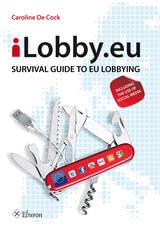
iLobby.eu
Survival Guide to EU Lobbying, Including the Use of Social MediaCaroline de Cock
Eburon Academic Publishers, 2010
With iLobby.eu, Caroline De Cock draws on extensive firsthand experience to present a thorough guide to lobbying the European Union using both traditional methods and social media tools. This practical handbook includes an introduction to lobbying, with tips and anecdotes, recommendations for the use of social media, comprehensive indices, and detailed examples of best and worst practices.
[more]