Results by title
74 books match the query 'Sociology, Urban' and 2 start with i
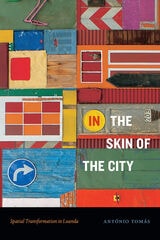
In the Skin of the City
Spatial Transformation in LuandaAntónio Tomás
Duke University Press, 2022
With In the Skin of the City, António Tomás traces the history and transformation of Luanda, Angola, the nation’s capital as well as one of the oldest settlements founded by the European colonial powers in the Southern Hemisphere. Drawing on ethnographic and archival research alongside his own experiences growing up in Luanda, Tomás shows how the city’s physical and social boundaries—its skin—constitute porous and shifting interfaces between center and margins, settler and Native, enslaver and enslaved, formal and informal, and the powerful and the powerless. He focuses on Luanda’s “asphalt frontier”—the (colonial) line between the planned urban center and the ad hoc shantytowns that surround it—and the ways squatters are central to Luanda’s historical urban process. In their relationship with the state and their struggle to gain rights to the city, squatters embody the process of negotiating Luanda’s divisions and the sociopolitical forces that shape them. By illustrating how Luanda emerges out of the continual redefinition of its skin, Tomás offers new ways to understand the logic of urbanization in cities across the global South.
[more]
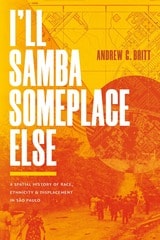
I’ll Samba Someplace Else
A Spatial History of Race, Ethnicity, and Displacement in São PauloAndrew G. Britt
Duke University Press, 2026
In I’ll Samba Someplace Else, Andrew G. Britt maps the interwoven histories of three of the city of São Paulo’s most iconic ethnoracialized neighborhoods, popularly known as “African” Brasilândia, “Japanese” Liberdade, and “Italian” Bexiga. Following these spaces over the mid-twentieth century through inventive methods of spatial history, archival research, and sustained engagement with African-descendent cultural organizations, Britt shows that these ethnoracialized neighborhoods did not accrue naturally over time. Instead, they were planned, produced, and contested by an array of individuals, from powerful urbanist-politicians and neighborhood businessowners to celebrated samba composers and historic preservationists. The ethnoracialization of these neighborhoods, Britt argues, served paradoxical ends: it reproduced consequential racialized inequities while, simultaneously, bolstering discourses of multicultural harmony. By untangling the paradoxes of ethnoracial space in Brazil’s most populous, diverse, and unequal city, I’ll Samba Someplace Else elucidates how popular ideologies of multiculturalism endure despite persistently high levels of racialized inequity and anti-Black violence in both Brazil and beyond.
[more]