Results by title

23 books match the query 'Sensors'
cover of Antenna Solutions for Next Generation Enhanced Wireless Sensing Systems

Antenna Solutions for Next Generation Enhanced Wireless Sensing Systems

Masood Ur-Rehman

The Institution of Engineering and Technology, 2026

Antennas have evolved beyond telecommunications to support sensing, wireless power transfer, and energy-harvesting electronic systems. As wireless technologies move toward intelligent and interconnected infrastructures, electromagnetic and radio-frequency sensing are becoming essential components of next-generation healthcare monitoring and smart environments, as well as industrial inspection and autonomous systems. To fully leverage these opportunities, such systems require interdisciplinary expertise ranging from fundamental antennas and propagation research to active antennas and applied radio-frequency technologies, as well as circuits and systems, advanced materials, and AI and machine learning.
[more]
cover of CMOS-Based Sensors and Actuators for Life Science Applications

CMOS-Based Sensors and Actuators for Life Science Applications

Ebrahim Ghafar-Zadeh

The Institution of Engineering and Technology, 2024

Emerging complementary metal-oxide semiconductor (CMOS) technologies and their ongoing downscaling trend have opened an avenue to developing integrated systems for life sciences. They offer great advantages for the monolithic integration of several active elements, and the implementation of millions of biosensors along with their transducers and readout circuits on a single chip. Benefits include the ability to make highly dense systems with high signal-to-noise ratios (SNRs), good accessibility and reliability. Moreover, the huge investment in CMOS foundries and the possibility of the batch production of various devices using CMOS have established it as an economical technology appropriate for the fabrication of affordable platforms for end-users. All these features make CMOS electronics a valuable technology for the implementation of integrated bio-systems such as lab-on-chips (LoCs) and point-of-care (PoC) devices.
[more]
cover of Cognitive Sensing Technologies and Applications

Cognitive Sensing Technologies and Applications

G.R. Sinha

The Institution of Engineering and Technology, 2023
Cognitive sensing systems combined with IoTs and smart technologies are used in countless applications such as industrial robotics, computer-aided diagnosis, brain-computer interface (BCI), human-computer interaction (HCI), telemedicine, driverless cars and smart energy systems.
[more]
cover of Data Fusion in Wireless Sensor Networks: A statistical signal processing perspective

Data Fusion in Wireless Sensor Networks

A statistical signal processing perspective

Domenico Ciuonzo

The Institution of Engineering and Technology, 2019

The role of data fusion has been expanding in recent years through the incorporation of pervasive applications, where the physical infrastructure is coupled with information and communication technologies, such as wireless sensor networks for the internet of things (IoT), e-health and Industry 4.0. In this edited reference, the authors provide advanced tools for the design, analysis and implementation of inference algorithms in wireless sensor networks.
[more]
cover of Electrical Capacitance Tomography (ECT): Principles, systems and industrial applications

Electrical Capacitance Tomography (ECT)

Principles, systems and industrial applications

Wuqiang Yang

The Institution of Engineering and Technology, 2026

Electrical capacitance tomography (ECT) is a non-intrusive and non-invasive imaging technique that creates a cross-sectional image of the distribution of dielectric materials inside a pipe or vessel. ECT measures the capacitance between pairs of electrodes mounted on the outside of the pipe, and reconstructs a cross-sectional image using the measured capacitance data and a suitable algorithm, to reflect the inside permittivity distribution. ECT is particularly useful for visualising the multiphase flow of non-conductive substances in industrial processes.
[more]
cover of Emerging CMOS Capacitive Sensors for Biomedical Applications: A multidisciplinary approach

Emerging CMOS Capacitive Sensors for Biomedical Applications

A multidisciplinary approach

Ebrahim Ghafar-Zadeh

The Institution of Engineering and Technology, 2021

CMOS-based sensors offer significant advantages to life science applications, such as non-invasive long-term recordings, fast responses and label-free processes. They have been widely applied in many biological and medical fields for the study of living cell samples such as neural cell recording and stimulation, monitoring metabolic activity, cell manipulation, and extracellular pH monitoring. Compared to other sensing techniques, capacitive sensors are low-complexity, high-precision, label-free sensing methods for monitoring cellular activities such as cell viability, proliferation and morphology.
[more]
cover of How to Do Things with Sensors

How to Do Things with Sensors

Jennifer Gabrys

University of Minnesota Press, 2019

An investigation of how-to guides for sensor technologies

Sensors are increasingly common within citizen-sensing and DIY projects, but these devices often require the use of a how-to guide. From online instructional videos for troubleshooting sensor installations to handbooks for using and abusing the Internet of Things, the how-to genres and formats of digital instruction continue to expand and develop. As the how-to proliferates, and instructions unfold through multiple aspects of technoscientific practices, Jennifer Gabrys asks why the how-to has become one of the prevailing genres of the digital. How to Do Things with Sensors explores the ways in which things are made do-able with and through sensors and further considers how worlds are made sense-able and actionable through the instructional mode of citizen-sensing projects.

Forerunners: Ideas First
Short books of thought-in-process scholarship, where intense analysis, questioning, and speculation take the lead

[more]
cover of Imaging Sensor Technologies and Applications

Imaging Sensor Technologies and Applications

Wuqiang Yang

The Institution of Engineering and Technology, 2020

Imaging sensors are crucial for electronic imaging systems, including digital cameras, camera modules, medical imaging equipment, night vision equipment, radar and sonar, drones, and many others. This contributed book covers a wide range of frequency, sensing modalities and applications, including x-ray beam imaging sensors, optical scattering sensors, smart visual sensors in robotic systems, tuneable diode Laser absorption spectroscopy (TDLAS) sensors, light detection and ranging (LiDAR) sensors, microwave imaging sensors, electro-magnetic imaging with ultra-wideband (UWB) sensors, synthetic aperture radar (SAR), electrical resistance tomography (ERT) sensors, electrical tomography for medical applications, electro-magnetic tomography (EMT) sensors, micro sensors for cell and blood imaging, and ultrasound imaging sensors.
[more]
cover of Imaging and Sensing for Unmanned Aircraft Systems: Control and Performance, Volume 1

Imaging and Sensing for Unmanned Aircraft Systems

Control and Performance, Volume 1

Vania V. Estrela

The Institution of Engineering and Technology, 2020

This two-volume book set explores how sensors and computer vision technologies are used for the navigation, control, stability, reliability, guidance, fault detection, self-maintenance, strategic re-planning and reconfiguration of unmanned aircraft systems (UAS).
[more]
cover of Imaging and Sensing for Unmanned Aircraft Systems: Deployment and Applications, Volume 2

Imaging and Sensing for Unmanned Aircraft Systems

Deployment and Applications, Volume 2

Vania V. Estrela

The Institution of Engineering and Technology, 2020

This two-volume book set explores how sensors and computer vision technologies are used for the navigation, control, stability, reliability, guidance, fault detection, self-maintenance, strategic re-planning and reconfiguration of unmanned aircraft systems (UAS).
[more]
cover of IoT Technologies in Smart-Cities: From sensors to big data, security and trust

IoT Technologies in Smart-Cities

From sensors to big data, security and trust

Fadi Al-Turjman

The Institution of Engineering and Technology, 2020

Smart City and sensing platforms are considered some of the most significant topics in the Internet of Things (IoT). Sensors are at the heart of the IoT, and their development is a key issue if such concepts are to achieve their full potential.
[more]
cover of Multidimensional Magnetic-Field Microsensors

Multidimensional Magnetic-Field Microsensors

Chavdar Roumenin

The Institution of Engineering and Technology, 2017

Magnetic field sensors have made significant advances over the past decade, and have found commercial importance in ubiquitous systems with navigation needs such as mobile phones - every mobile phone now contains a vectorial magnetic field sensor. This book provides a comprehensive introduction to the underlying theory of magnetic-field microsensors, their construction, and current and future applications. Written by leading experts in the development of these sensors, this book is essential reading for academics and advanced students working in sensor design and application.
[more]
cover of Organic Sensors: Materials and applications

Organic Sensors

Materials and applications

Eduardo Garcia-Breijo

The Institution of Engineering and Technology, 2017
This book reviews the state of the art in the use of organic materals as physical, chemical and biomedical sensors in a variety of application settings.
[more]
cover of Sensors in the Age of the Internet of Things: Technologies and applications

Sensors in the Age of the Internet of Things

Technologies and applications

Octavian Adrian Postolache

The Institution of Engineering and Technology, 2019
The IoT is the inter-networking of connected and smart devices, buildings, vehicles and other items which are embedded with electronics, software, sensors, actuators, and network connectivity that enable these objects to collect and exchange data. A sensor is a detection device that measures, records, or responds to a physical property. Sensors represent the front end of information processing. Progress in communication technologies is part of the multi-factorial advances in electronics, sensors, embedded computing, signal processing and machine learning methods that has led to the development of new capabilities in the IoT.
[more]
cover of Sensors, Actuators, and Their Interfaces: A multidisciplinary introduction

Sensors, Actuators, and Their Interfaces

A multidisciplinary introduction

Nathan Ida

The Institution of Engineering and Technology, 2020
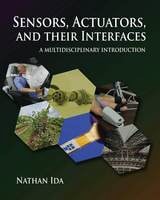
Sensors and actuators are used daily in countless applications to ensure more accurate and reliable workflows and safer environments. Many students and young engineers with engineering and science backgrounds often come prepared with circuits and programming skills but have little knowledge of sensors and sensing strategies and their interfacing.
[more]
cover of Sensors, Actuators, and their Interfaces: A multidisciplinary introduction

Sensors, Actuators, and their Interfaces

A multidisciplinary introduction

Nathan Ida

The Institution of Engineering and Technology, 2014
As sensors and actuators are normally not (and have not been) treated in academic curricula as a subject in its own right; many students and current professionals often find themselves limited in their knowledge and dealing with topics and issues based on material they may have never encountered. Until now.
[more]
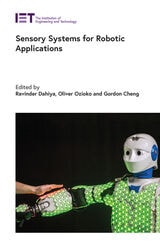
cover of Sensory Systems for Robotic Applications

Sensory Systems for Robotic Applications

Ravinder Dahiya

The Institution of Engineering and Technology, 2022

Robots have come a long way thanks to advances in sensing and computer vision technologies and can be found today in healthcare, medicine and industry. Researchers have been looking at providing them with senses such as the ability to see, smell, hear and perceive touch in order to mimic and interact with humans and their surrounding environments.
[more]
cover of Short-Range Micro-Motion Sensing with Radar Technology

Short-Range Micro-Motion Sensing with Radar Technology

Changzhan Gu

The Institution of Engineering and Technology, 2019
Human hands are natural tools for performing actions and gestures that interact with the physical world. Radar technology allows for touchless wireless gesture sensing by transmitting radio frequency (RF) signals to the target, analyzing the backscattering reflections to extract the target's movements, and thereby accurately detecting gestures for Human Computer Interaction (HCI). A key advantage of this technology is that it allows interaction with machines without any need to attach a sensing device to the hands. Led by researchers from Google's Project Soli, the authors introduce the concept and underpinning technology, cover all design phases, and provide researchers and professionals with the latest advances and innovations in microwave and millimeter wave radar sensing to capture relative movements such as micro gestures.
[more]
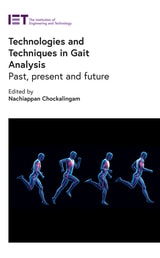
cover of Technologies and Techniques in Gait Analysis: Past, present and future

Technologies and Techniques in Gait Analysis

Past, present and future

Nachiappan Chockalingam

The Institution of Engineering and Technology, 2022
Gait analysis is the study of the walking or running pattern of an individual. This can include spatial and temporal measurements such as step length, stride length and speed along with angular measurements of various joints and the interplay between various parts like the foot, hip, pelvis or spine when walking. Gait analysis can be used to assess clinical conditions and design effective rehabilitation; for example, following limb injury or amputation, or other disorders such as a stroke or Parkinson's diagnosis. It can be used to influence intervention decisions, such as whether a patient should undergo surgery, further physiotherapy, or begin a particular treatment regime. Gait analysis can also be used in sports science to monitor and review performance and technique.
[more]
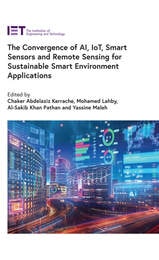
cover of The Convergence of AI, IoT, Smart Sensors and Remote Sensing for Sustainable Smart Environment Applications

The Convergence of AI, IoT, Smart Sensors and Remote Sensing for Sustainable Smart Environment Applications

Chaker Abdelaziz Kerrache

The Institution of Engineering and Technology, 2026

AI and data-driven methods, particularly machine and deep learning models, have revolutionized image processing tasks such as object detection and segmentation, as well as inverse sensing tasks such as atmospheric condition monitoring. These models enable highly accurate predictions from large, labelled datasets. However, one of the key challenges with current AI systems is their opacity. While they deliver precise results, they often fail to provide clear insights into the underlying mechanisms driving these predictions. The lack of interpretability, especially in the context of sensing data, complicates the understanding of how internal features are represented and utilized. This issue is particularly pronounced in smart environment applications, where artificial intelligence techniques are increasingly employed, yet their internal workings remain largely opaque.
[more]
cover of Theory and Methods for Distributed Data Fusion Applications

Theory and Methods for Distributed Data Fusion Applications

Felix Govaers

The Institution of Engineering and Technology, 2023

With the rise of digitalization, AI and modern data communication, engineering is increasingly challenged by the complexity of systems-of-systems, in which perception sensors have their own processing mechanism, information is merged at some centric entity, and cross-platform exchange of data is conceptualized in a holistic approach. Therefore, distributed architectures for data fusion, state estimation, and multi target tracking have been becoming increasingly important. The use of multiple sensors to perceive and compute the situational awareness picture leads to the generation of vast amounts of data, which need to be filtered, enriched, interpreted, and evaluated. This becomes infeasible without the notion of distributed algorithms.
[more]
cover of Wearable Technologies and Wireless Body Sensor Networks for Healthcare

Wearable Technologies and Wireless Body Sensor Networks for Healthcare

Fernando José Velez

The Institution of Engineering and Technology, 2019

Continuous advances in wearables, sensors and smart Wireless Body Area Network technologies have precipitated the development of new applications for on-, in- and body-to-body wearable communications for healthcare and sport monitoring. Progress in this cross-disciplinary field is further influenced by developments in radio communication, protocols, synchronization aspects, energy harvesting and storage solutions, and efficient processing techniques for smart antennas.
[more]
cover of Wireless Medical Sensor Networks for IoT-based eHealth

Wireless Medical Sensor Networks for IoT-based eHealth

Fadi Al-Turjman

The Institution of Engineering and Technology, 2020

Internet of Things (IoT) enabled technology is evolving healthcare from conventional hub-based systems to more personalized eHealth systems, enabling faster and safer preventive care, lower overall cost, improved patient-centric practice and enhanced sustainability. Efficient IoT-enabled eHealth systems can be realized by providing highly customized access to rich medical information and efficient clinical decisions to each individual with unobtrusive monitoring. Wireless medical sensor networks (WMSNs) are at the heart of this concept, and their development is a key issue if such a concept is to achieve its potential.
[more]