Results by title
479 books match the query 'Sources' and 23 start with i
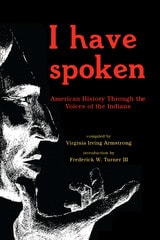
I Have Spoken
American History Through The Voices Of The IndiansVirginia I. Armstrong
Ohio University Press, 1971
I Have Spoken is a collection of American Indian oratory from the 17th to the 20th century, concentrating on speeches focusing around Indian-white relationships, especially treaty-making negotiations. A few letters and other writings are also included.
Here, in their own words, is the Indian’s story told with integrity, with drama, with caustic wit, with statesmanship, with poetic impact; a story of proffered friendship, of broken promises, of hope, of disillusionment, of pride, of a whole land and life gone sour.
Iberville's Gulf Journals
Pierre Le Moyne d'Iberville, translated by Richebourg Gaillard McWilliams
University of Alabama Press, 1991
Europe's expansion into the New World during the 16th, 17th, and 18th centuries was a story of power alignment and cultural transmission as well as dramatic individual effort. Spain had her conquistadores, France her coureurs de bois, and England her sea dogs. Isolated from the authority of home governments, tempted by the abundance of gold, fur, and fish in the New World, these adventurers so vital to national policies of expansion developed their own personal creeds of conquest and colonization. Their individual exploits not only represent a humanistic theme essential in Europe's movement westward but heighten the analyses of cultural institutions of the era. It is within such a multidisciplinary light that one can experience the Gulf Coast adventures of Pierre LeMoyne d'Iberville.
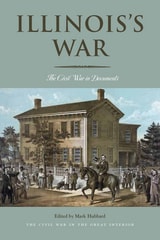
Illinois’s War
The Civil War in DocumentsMark Hubbard
Ohio University Press, 2013
On the eve of the Civil War and after, Illinois was one of the most significant states in the Union. Its history is, in many respects, the history of the Union writ large: its political leaders figured centrally in the war’s origins, progress, and legacies; and its diverse residents made sacrifices and contributions—both on the battlefield and on the home front—that proved essential to Union victory.
The documents in Illinois’s War reveal how the state and its people came to assume such a prominent role in this nation’s greatest conflict. In these crucial decades Illinois experienced its astonishing rise from rural frontier to economic and political powerhouse. But also in these years Illinois was, like the nation itself, a “house divided” over the expansion of slavery, the place of blacks in society, and the policies of the federal government both during and after the Civil War. Illinois’s War illuminates these conflicts in sharp relief, as well as the ways in which Illinoisans united in both saving the Union and transforming their state. Through the firsthand accounts of men and women who experienced these tumultuous decades, Illinois’s War presents the dramatic story of the Prairie State’s pivotal role in the sectional crisis, as well as the many ways in which the Civil War era altered the destiny of Illinois and its citizens.
Illinois’s War is the first book-length history of the state during the Civil War years since Victor Hicken’s Illinois in the Civil War, first published in 1966. Mark Hubbard has compiled a rich collection of letters, editorials, speeches, organizational records, diaries, and memoirs from farmers and workers, men and women, free blacks and runaway slaves, native-born and foreign-born, common soldiers and decorated generals, state and nationally recognized political leaders. The book presents fresh details of Illinois’s history during the Civil War era, and reflects the latest interpretations and evidence on the state’s social and political development.
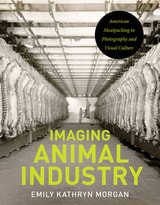
Imaging Animal Industry
American Meatpacking in Photography and Visual CultureEmily Kathryn Morgan
University of Iowa Press, 2024
Drawing on archival collections across the American Midwest, this book relates a history of the meatpacking industry’s use of images in the early to mid-twentieth century. In the process, it reveals the key role that images, particularly photographs, have played in assisting with the rise of industrial meat production.
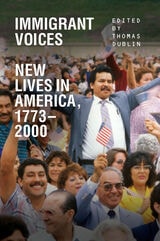
Immigrant Voices
New Lives in America, 1773-2000Edited by Thomas Dublin
University of Illinois Press, 2014
A classroom staple, Immigrant Voices: New Lives in America, 1773-2000 has been updated with writings that reflect trends in immigration to the United States through the turn of the twenty-first century. New chapters include a selection of letters from Irish immigrants fleeing the famine of the 1840s, writings from an immigrant who escaped the civil war in Liberia during the 1980s, and letters that crossed the U.S.-Mexico border during the late 1980s and early '90s. With each addition editor Thomas Dublin has kept to his original goals, which was to show the commonalities of the U.S. immigrant experience across lines of gender, nation of origin, race, and even time.
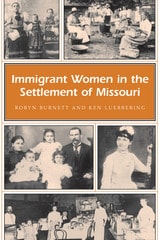
Immigrant Women in the Settlement of Missouri
Robyn Burnett & Ken Luebbering
University of Missouri Press, 2005
Because it examines the lives of women from many social classes and ethnic backgrounds, Immigrant Women in the Settlement of Missouri does much to explain the rich cultural diversity Missouri enjoys today. The photographs and narratives relating to Czech, French, German, Hungarian, Irish, Italian, and Polish life will remind descendants of immigrants that many customs and traditions they grew up practicing have roots in their home countries and will also promote understanding of the customs of other cultures. In addition to the ethnic and class differences that affected these women’s lives, the book also notes the impact of the various eras in which they lived, their education, the circumstances of their migrations, and their destinations across Missouri.
With their engaging and straightforward narrative, Burnett and Luebbering take the reader chronologically through the history of the state from the colonial period to the Civil War and industrialization. Like all Missouri Heritage Readers, this one is presented in an accessible format with abundant illustrations, and it is sure to please both general readers and those engaged in immigrant and women’s studies.
Imperial Transformations in Sixteenth-Century Yucay, Peru
Transcribed and edited by R. Alan Covey and Donato Amado González
University of Michigan Press, 2008
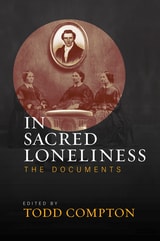
In Sacred Loneliness
The DocumentsTodd Compton
Signature Books, 2022
This volume includes many autobiographical writings, diaries, and letters, with Compton providing annotations and introductory material that illuminates these crucial primary sources. This allows readers to take their understanding of this unique group of women to a new level and to drive home that fact that their lives go far beyond the Nauvoo experiment that forever links them to Mormonism’s founding prophet.
In Search of New England's Native Past
Selected Essays by Gordon M. DayGordon M. Day
University of Massachusetts Press, 1998
This volume highlights the work of the late Gordon M. Day, renowned for his groundbreaking research on the history and culture of the Western Abenakis and their Indian neighbors. Where previous historians had tended to portray northern New England as an area largely devoid of aboriginal peoples, Day established beyond all doubt the presence of Abenaki settlements along the eastern shore of Lake Champlain as well as the upper reaches of the Connecticut and Merrimack rivers.
For nearly three decades, Day focused his work on the community of Saint Francis, or Odanak, in Quebec, to which Abenaki refugees from interior New England had fled, beginning in the mid-seventeenth century and continuing into the nineteenth. Drawing on the methods of several disciplines, including ethnology, linguistics, and ethnohistory, he synthesized data from fragmentary historical records, oral traditions, and place names to reconstruct a world assumed to be lost.
In the Palace of Nezahualcoyotl
Painting Manuscripts, Writing the Pre-Hispanic Past in Early Colonial Period Tetzcoco, MexicoBy Eduardo de J. Douglas
University of Texas Press, 2010
Around 1542, descendants of the Aztec rulers of Mexico created accounts of the pre-Hispanic history of the city of Tetzcoco, Mexico, one of the imperial capitals of the Aztec Empire. Painted in iconic script ("picture writing"), the Codex Xolotl, the Quinatzin Map, and the Tlohtzin Map appear to retain and emphasize both pre-Hispanic content and also pre-Hispanic form, despite being produced almost a generation after the Aztecs surrendered to Hernán Cortés in 1521. Yet, as this pioneering study makes plain, the reality is far more complex.
Eduardo de J. Douglas offers a detailed critical analysis and historical contextualization of the manuscripts to argue that colonial economic, political, and social concerns affected both the content of the three Tetzcocan pictorial histories and their archaizing pictorial form. As documents composed by indigenous people to assert their standing as legitimate heirs of the Aztec rulers as well as loyal subjects of the Spanish Crown and good Catholics, the Tetzcocan manuscripts qualify as subtle yet shrewd negotiations between indigenous and Spanish systems of signification and between indigenous and Spanish concepts of real property and political rights. By reading the Tetzcocan manuscripts as calculated responses to the changes and challenges posed by Spanish colonization and Christian evangelization, Douglas's study significantly contributes to and expands upon the scholarship on central Mexican manuscript painting and recent critical investigations of art and political ideology in colonial Latin America.
Indiana’s War
The Civil War in DocumentsRichard F. Nation
Ohio University Press, 2009
Indiana’s War is a primary source collection featuring the writings of Indiana’s citizens during the Civil War era. Using private letters, official records, newspaper articles, and other original sources, the volume presents the varied experiences of Indiana’s participants in the war both on the battlefield and on the home front. Starting in the 1850s, the documents show the sharp political divisions over issues such as slavery, race, and secession in Indiana, divisions that boiled over into extraordinary strife and violence in the state during the rebellion. This conflict touched all levels and members of society, including men, women, and children, whites and African Americans, native-born citizens and immigrants, farmers and city and town dwellers.
Collecting the writings of Indiana’s peoples on a wide range of issues, chapters focus on the politics of race prior to the war, the secession crisis, war fever in 1861, the experiences of soldiers at the front, homefront hardships, political conflict between partisan foes and civil and military authorities, reactions to the Emancipation Proclamation, and antiwar dissent, violence, and conspiracy.
Indiana’s War is an excellent accompanying primary source text for undergraduate and graduate courses on the American Civil War. It documents the experiences of Indiana’s citizens, from the African American soldier to the antiwar dissenter, from the prewar politician to the postwar veteran, from the battle-scarred soldier to the impoverished soldier’s wife, all showing the harsh realities of the war.
Indigenous Writings from the Convent
Negotiating Ethnic Autonomy in Colonial MexicoMónica Díaz
University of Arizona Press, 2010
While colonial sources that refer to indigenous women are not scant, documents in which women emerge as agents who actively participate in shaping their own identity are rare. Looking at this minority agency—or subaltern voice—in various religious discourses exposes some central themes. It shows that an indigenous identity recast in Catholic terms was able to be effectively recorded and that the religious participation of these women at a time when indigenous parishes were increasingly secularized lent cohesion to that identity.
Indigenous Writings from the Convent examines ways in which indigenous women participated in one of the most prominent institutions in colonial times—the Catholic Church—and what they made of their experience with convent life. This book will appeal to scholars of literary criticism, women’s studies, and colonial history, and to anyone interested in the ways that class, race, and gender intersected in the colonial world.
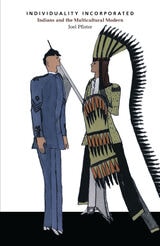
Individuality Incorporated
Indians and the Multicultural ModernJoel Pfister
Duke University Press, 2004
Inside the Klavern
The Secret History of a Ku Klux Klan of the 1920sEdited by David A. Horowitz
Southern Illinois University Press, 1999
Inside the Klavern is an annotated collection of the minutes of a thriving Ku Klux Klan in La Grande, Oregon, between 1922 and 1924. The most complete set of Klan minutes ever uncovered, these documents illustrate the inner workings of a Klan chapter of more than three hundred members at a time when the national membership reached into the millions and the Invisible Empire was at the peak of its power. Through an extensive introduction and conclusion as well as brief notes previewing each installment of the minutes, David A. Horowitz places these unique documents in historical perspective.
The La Grande minutes demonstrate Klan hostility to Roman Catholics, Jews, blacks, and "hyphenated" Americans. But they also explain how the chapter exercised requirements for admission, how officers were selected, and how Klansmen encountered difficulties enforcing the moral standards of their order. Because the Klan kligrapp (recording secretary) Harold R. Fosner recorded not only the official proceedings but also volunteered extemporaneous comments and gossip, readers get a genuine feeling for what it was like to attend the meetings. Through his own obvious excitement and commitment to the cause, Fosner re-creates the flavor, tone, and atmosphere of these meetings: "Tis beyond my power of expression to relate the harmony and fellowship which reigned supreme. . . . Suffice to say that these were the golden moments of our lives."
His evaluation of Klan propaganda, too, is telling: "The weekly newsletter from Atlanta, Georgia, contained a little book, the official message of our emperor, one Col. William Joseph Simmons, read before the most noble band of men ever assembled and for the noblest cause in the world. To my firm belief this book is the leading masterpiece of our day and age."
Horowitz concludes that "although it is tempting to judge Jazz Age Klansmen by the standards of later generations, the story provided by the minutes is a complex one—a chronicle of both compassion and complicity in cruelty, of positive social accomplishment and arbitrary and dysfunctional divisiveness."
Insignificant Things
Amulets and the Art of Survival in the Early Black AtlanticMatthew Francis Rarey
Duke University Press, 2023

Interacting with History
Teaching with Primary SourcesKatharine Lehman
American Library Association, 2014
Interrogation Of Joan Of Arc
Karen Sullivan
University of Minnesota Press, 1999
A radical reassessment of the trial of Joan of Arc that gives a new sense of Joan in her time.
The transcripts of Joan of Arc’s trial for heresy at Rouen in 1431 and the minutes of her interrogation have long been recognized as our best source of information about the Maid of Orleans. Historians generally view these legal texts as a precise account of Joan’s words and, by extension, her beliefs. Focusing on the minutes recorded by clerics, however, Karen Sullivan challenges the accuracy of the transcript. In The Interrogation of Joan of Arc, she re-reads the record not as a perfect reflection of a historical personality’s words, but as a literary text resulting from the collaboration between Joan and her interrogators.
Sullivan provides an illuminating and innovative account of Joan’s trial and interrogation, placing them in historical, social, and religious context. In the fifteenth century, interrogation was a method of truth-gathering identified not with people like Joan, who was uneducated, but with clerics, like those who tried her. When these clerics questioned Joan, they did so as scholastics educated at the University of Paris, as judges and assistants to judges, and as pastors trained in hearing confessions.The Interrogation of Joan of Arc traces Joan’s conflicts with her interrogators not to differing political allegiances, but to fundamental differences between clerical and lay cultures. Sullivan demonstrates that the figure depicted in the transcripts as Joan of Arc is a complex, multifaceted persona that results largely from these cultural differences. Discerning and innovative, this study suggests a powerful new interpretive model and redefines our sense of Joan and her time.
Into the Archive
Writing and Power in Colonial PeruKathryn Burns
Duke University Press, 2010
Kathryn Burns argues that the archive itself must be historicized. Using the case of colonial Cuzco, she examines the practices that shaped document-making. Notaries were businessmen, selling clients a product that conformed to local “custom” as well as Spanish templates. Clients, for their part, were knowledgeable consumers, with strategies of their own for getting what they wanted. In this inside story of the early modern archive, Burns offers a wealth of possibilities for seeing sources in fresh perspective.
Ireland and the Classical World
By Philip Freeman
University of Texas Press, 2000
On the boundary of what the ancient Greeks and Romans considered the habitable world, Ireland was a land of myth and mystery in classical times. Classical authors frequently portrayed its people as savages—even as cannibals and devotees of incest—and evinced occasional uncertainty as to the island's shape, size, and actual location. Unlike neighboring Britain, Ireland never knew Roman occupation, yet literary and archaeological evidence prove that Iuverna was more than simply terra incognita in classical antiquity.
In this book, Philip Freeman explores the relations between ancient Ireland and the classical world through a comprehensive survey of all Greek and Latin literary sources that mention Ireland. He analyzes passages (given in both the original language and English) from over thirty authors, including Julius Caesar, Strabo, Tacitus, Ptolemy, and St. Jerome. To amplify the literary sources, he also briefly reviews the archaeological and linguistic evidence for contact between Ireland and the Mediterranean world.
Freeman's analysis of all these sources reveals that Ireland was known to the Greeks and Romans for hundreds of years and that Mediterranean goods and even travelers found their way to Ireland, while the Irish at least occasionally visited, traded, and raided in Roman lands. Everyone interested in ancient Irish history or Classics, whether scholar or enthusiast, will learn much from this pioneering book.
Isaeus
Translated with an introduction by Michael Edwards
University of Texas Press, 2007
This is the eleventh volume in the Oratory of Classical Greece. This series presents all of the surviving speeches from the late fifth and fourth centuries BC in new translations prepared by classical scholars who are at the forefront of the discipline. These translations are especially designed for the needs and interests of today's undergraduates, Greekless scholars in other disciplines, and the general public.
Classical oratory is an invaluable resource for the study of ancient Greek life and culture. The speeches offer evidence on Greek moral views, social and economic conditions, political and social ideology, law and legal procedure, and other aspects of Athenian culture that have recently been attracting particular interest: women and family life, slavery, and religion, to name just a few.
The orator Isaeus lived during the fourth century BC and was said to be the teacher of Demosthenes, Athens' most famous orator. Of the fifty or more speeches he is believed to have written, eleven survive in whole, one as a large fragment, and others as smaller fragments. This volume presents all the surviving works of Isaeus. The speeches mainly deal with inheritances and are a vital source of information regarding Greek law in this important area. In addition to translating the speeches, Michael Edwards provides a general introduction to Isaeus and Athenian inheritance law, as well as specific introductions and notes for each speech.
Israel in the Middle East
Documents and Readings on Society, Politics, and Foreign Relations, Pre-1948 to the PresentEdited by Itamar Rabinovich and Jehuda Reinharz
Brandeis University Press, 2007
Italian Art 1400-1500
Sources and DocumentsCreighton Gilbert
Northwestern University Press, 1980
Italian Art 1500–1600
Sources and DocumentsRobert Klein and Henri Zerner
Northwestern University Press, 1966