Results by title
149 books match the query 'Spanish & Portuguese' and 6 start with i
Ideologies of Hispanism
Mabel Moraña
Vanderbilt University Press, 2005
Bringing together contributions from top specialists in Hispanic studies - both Peninsular and Latin American - this volume explores a variety of critical issues related to the historical, political, and ideological configuration of the field. Dealing with Hispanism in both Latin America and the United States, the book's multidisciplinary essays range from historical studies of the hegemonic status of Castillian language in Spain and America to the analysis of otherness and the uses of memory and oblivion in various nationalist discourses on both sides of the Atlantic.
[more]
Idle Fictions
The Hispanic Vanguard Novel, 1926-1934, Expanded editionGustavo Pérez Firmat
Duke University Press, 1982
The "idle fictions" of the vanguard novel of the 1920s and 1930s in Spain and Spanish America represented a kind of interlude of playfulness--a vacation or parenthetical insertion--in what was perceived as the established course of the modern Hispanic novel's development. Yet, as Pérez Firmat argues, though this genre saw itself as recreative and interstitial, it deliberately precipitated "a class war not between social classes but between literary classes." Concentrating on source material not widely available, Pérez Firmat reconstructs the reception these novels received at the time of their publication, then develops a reading of them based on the intellectual context of this reception. A new preface and an appendix on vanguard biographies have been added to this paperback edition.
[more]
Imagining Iberia in English and Castilian Medieval Romance
Emily Houlik-Ritchey
University of Michigan Press, 2023
Imagining Iberia in English and Castilian Medieval Romance offers a broad disciplinary, linguistic, and national focus by analyzing the literary depiction of Iberia in two European vernaculars that have rarely been studied together. Emily Houlik-Ritchey employs an innovative comparative methodology that integrates the understudied Castilian literary tradition with English literature. Intentionally departing from the standard “influence and transmission” approach, Imagining Iberia challenges that standard discourse with modes drawn from Neighbor Theory to reveal and navigate the relationships among three selected medieval romance traditions. This welcome volume uncovers an overemphasis in prior scholarship on the relevance of “crusading” agendas in medieval romance, and highlights the shared investments of Christians and Muslims in Iberia’s political, creedal, cultural, and mercantile networks in the Mediterranean world.
[more]
In Search of an Alternative Biopolitics
Anti-Bullfighting, Animality, and the Environment in Contemporary SpainKatarzyna Olga Beilin
The Ohio State University Press, 2015
In Search of an Alternative Biopolitics: Anti-Bullfighting, Animality, and the Environment in Contemporary Spain by Katarzyna Olga Beilin takes readers on a journey through the history of alternative thought that challenges mainstream understandings of the relations between the human and nonhuman realms. Weaving through the works of Mariano José de Larra, Eugenio Noel, Luis Buñuel, Luis Martín-Santos, Pedro Almodóvar, Pablo Bérguer, Juan Mayorga, and Rosa Montero, Beilin convincingly demonstrates that “the question of the animal” has long been of particular significance for Spanish culture.
Analyses of the synergy of press debates on bullfighting and the War on Terror, as well as media debates on King Juan Carlos’s hunt in Botswana and his resignation, reveal how the concepts structuring human/animal relations condition national biopolitics. Beilin traces a main principle, where sacrifice of some lives is deemed necessary for the sake of others, from bullfighting, through environmental destruction and immigration policies, to bioeconomy. Ultimately, In Search of an Alternative Biopolitics argues that to address ever-increasing threats of global warming and future catastrophes, we urgently need to redefine concepts structuring the human and the nonhuman realms.
Analyses of the synergy of press debates on bullfighting and the War on Terror, as well as media debates on King Juan Carlos’s hunt in Botswana and his resignation, reveal how the concepts structuring human/animal relations condition national biopolitics. Beilin traces a main principle, where sacrifice of some lives is deemed necessary for the sake of others, from bullfighting, through environmental destruction and immigration policies, to bioeconomy. Ultimately, In Search of an Alternative Biopolitics argues that to address ever-increasing threats of global warming and future catastrophes, we urgently need to redefine concepts structuring the human and the nonhuman realms.
[more]
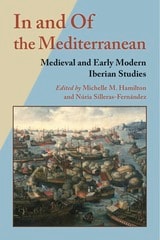
In and Of the Mediterranean
Medieval and Early Modern Iberian StudiesMichelle M. Hamilton
Vanderbilt University Press, 2014
The Iberian Peninsula has always been an integral part of the Mediterranean world, from the age of Tartessos and the Phoenicians to our own era and the Union for the Mediterranean. The cutting-edge essays in this volume examine what it means for medieval and early modern Iberia and its people to be considered as part of the Mediterranean.
[more]
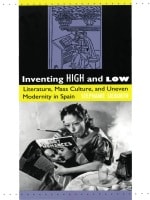
Inventing High and Low
Literature, Mass Culture, and Uneven Modernity in SpainStephanie Sieburth
Duke University Press, 1994
Dire word of the cultural threat of the lowbrow goes back at least to the ancient Greeks, and yet, Stephanie Sieburth suggests, no division between "high" and "low" culture will stand up to logical scrutiny. Why, then, does the opposition persist? In this book Sieburth questions the terms of this perennial debate and uncovers the deep cultural, economic, and psychological tensions that lead each generation to reinvent the distinction between high and low. She focuses on Spain, where this opposition plays a special role in notions of cultural development and where leading writers have often made the relation of literature to mass culture the theme of their novels.
Choosing two historical moments of sweeping material and cultural change in Spanish history, Sieburth reads two novels from the 1880s (by Benito Pérez Galdós) and two from the 1970s (by Juan Goytisolo and Carmen Martín Gaite) as fictional theories about the impact of modernity on culture and politics. Her analysis reveals that the high/low division in the cultural sphere reinforces other kinds of separations—between social classes or between men and women—dear to the elite but endangered by progress. This tension, she shows, is particularly evident in Spain, where modernization has been a contradictory and uneven process, rarely accompanied by political freedom, and where consumerism and mass culture coexist uneasily with older ways of life.
Weaving together a wide spectrum of diverse material, her work will be of interest to readers concerned with Spanish history and literature, literary theory, popular culture, and the relations between politics, economics, gender, and the novel.
[more]