Results by title
206 books match the query 'Study & Teaching' and 8 start with i
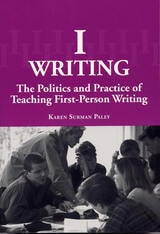
I-Writing
The Politics and Practice of Teaching First-Person WritingKaren Surman Paley
Southern Illinois University Press, 2001
In this ethnographic study of the teaching of writing, Karen Surman Paley reveals the social significance of first-person writing and the limitations of a popular taxonomy of composition studies. Paley looks critically at the way social constructionists have created an “Other” in the field of composition studies and named it “expressivist.”
Paley demonstrates the complexity of approaches to teaching writing through an ethnographic study of two composition faculty at Boston College, a programthat some would say is “expressivist.” She prompts her colleagues to consider how family experiences shape the way students feel about and treat people of races, religions, genders, and sexual preferences other than their own. Finally, she suggests to the field of composition that practitioners spend less time shoring up taxonomies of the field and more time sharing pedagogies.

If a Chimpanzee Could Talk and Other Reflections on Language Acquisition
Jerry H. Gill
University of Arizona Press, 1997
In this book, a philosopher combines these famous cases with a lifetime of study to examine the threshold of language--that point "between speech and not quite speech." He provides fascinating accounts of the deaf and blind Helen Keller, of chimpanzees like Washoe, and of feral children such as Victor, the "wild boy of Aveyron," putting a new spin on their stories. When does it start, he asks, that miracle most of us take for granted? Where does it come from, that uniquely human power to transform perception and action into thought and the singular activity we call speech?
Here is evidence that, for chimp or child, the crucial factors in acquiring language have less to do with intellect and everything to do with social interaction. Here is confirmation that the "give-and-take, push-and-pull" of daily life forces virtually all of us to acquire language simply to live and work together. Author Jerry Gill offers no pat answers. Rather, he emphasizes imitation and reciprocity—for example, playing pat-a-cake with a baby—as essential to becoming part of a speaking community "and thereby becoming a human being." In addition, Gill gives dozens of examples to show how gesture and facial expression both create and change the meaning of language. In compelling fashion, he underscores the point that language acquisition can be fully understood only in terms of such physical and social activity. The author exposes the flaws of research focused mainly on mental processes and gives little credit to findings based upon artificially contrived experiments.
With vigor, compassion, and a broad-minded humanism, these pages invite the reader to think again about how we say what we mean, how we mean what we say, and where it all starts in the first place. Valuable to students of psychology, linguistics, philosophy, and anthropology, the book will also appeal to general readers who welcome an opportunity to explore familiar things in a new and entirely enjoyable way.

Improving Science Education
International PerspectivesEdited by Barry J. Fraser and Herbert J. Walberg
University of Chicago Press, 1995
This volume offers educators and researchers a glimpse at what peers from around the world have done to help science students achieve high levels of success. The introduction is a concise account of worldwide reform movements, from modernizations in the 1950s that dramatically improved the teaching of chemistry and physics to such changes in the 1980s as the emphasis on the learning-to-learn approach and the trend toward using social issues as a vehicle for teaching science.
The nine essays survey topics that include teaching inquiry skills and other techniques to foster a joy of science; creating an understanding of real-world applications of science; managing course instruction with computers; encouraging teachers to adopt new styles of teaching; cross-national comparisons of science achievement; and the differences between boys and girls in attitude, learning, and degree of participation.
Inclusion, Diversity and Innovation in Translation Education
Edited by Alejandro Bolaños García-Escribano and Mazal Oaknín
University College London, 2024
In Inclusion, Diversity and Innovation in Translation Education, editors Alejandro Bolaños, García-Escribano, and Mazal Oaknín, emphasize the latest developments in literary and audiovisual translation education and teaching foreign languages while exploring the relevance of equality, diversity, and inclusion. They propose best practices and pieces of training, inviting readers to incorporate social issues affecting marginalized groups in their language and translation teaching practices.

Innovations in Teaching History
Eighteenth-Century Studies in Higher EducationEdited by Ruth Larsen, Alice Marples, and Matthew McCormack
University of London Press, 2024
The eighteenth century has been a notable recent growth area in historical studies and related disciplines and is key in university research and teaching. Although widely taught in history departments, the eighteenth century also presents challenges, including new students’ unfamiliarity with the period, the theoretical and interdisciplinary nature of the critical writings, and extensive online source material requiring digital skills for its evaluation.
Focusing on pedagogical innovation and current developments in the discipline, this collection of essays reflects on how we teach the history of the long eighteenth century, exploring current subfields such as histories of material culture, the senses, gender, crime, race, empire, and colonialism. It presents practical case studies showcasing how novel teaching methods can be employed in the classroom that promote active learning and invite students to think critically about the nature of their discipline. Methods covered include decolonizing the curriculum, digital history, transferable skills, engaging with objects, working in non-classroom settings, and multisensory approaches.
Grounded in real academic practice, this is a valuable guide for all history educators, whether specializing in the eighteenth century or beyond.
Internal Rhetorics
Toward a History and Theory of Self-PersuasionJean Nienkamp
Southern Illinois University Press, 2001
Since its early history in Greek culture, traditional rhetorical study has focused primarily on persuasive language used in the public sphere. There has been little study, however, of what Jean Nienkamp calls internal rhetoric, which “occurs between one aspect of the self and another” inside one’s mind. Nienkamp opens the study of internal rhetoric by discussing how the concept developed alongside traditional classical and modern rhetorical theory.
Nienkamp shows how we talk to ourselves, or more specifically, how we talk ourselves into things: justifications, actions, opinions, theories. She explains that just because we see ourselves as divided, as torn in different directions by conflicting desires, duties, and social mores, it does not mean that we are fragmented, nor does it mean that we are split into discrete identities that neither interrelate nor interact.
In this groundbreaking study, Nienkamp identifies two major aspects of internal rhetoric: “the conscious ‘art’ of cultivated internal rhetoric” and “the unconscious ‘nature’ of primary internal rhetoric.” Selecting a small number of figures from the history of rhetoric—including Isocrates, Plato, Aristotle, Francis Bacon, Lord Shaftesbury, Richard Whately, Kenneth Burke, Chaim Perelman and Lucie Olbrechts-Tyteca, George Herbert Mead, and Lev Vygotsky—Nienkamp argues for a “version of the rhetorical self that takes into account both the ways we are formed by and formulate internal and external rhetorics and the ways our physical bodies act as a contributing scene—an agora—for internal rhetoric.”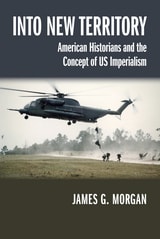
Into New Territory
American Historians and the Concept of US ImperialismJames G. Morgan
University of Wisconsin Press, 2014
Tracing the emergence of the concept of US imperialism, James G. Morgan shows how radical and revisionist scholars in the 1950s and 1960s first challenged the paradigm of denying an American empire. As the Vietnam War created a critical flashpoint, bringing the idea of American imperialism into the US mainstream, radical students of the New Left turned toward Marxist critiques, admiring revolutionaries like Che Guevara. Simultaneously, a small school of revisionist scholars, led by historian William Appleman Williams at the University of Wisconsin, put forward a progressive, nuanced critique of American empire grounded in psychology, economics, and broader historical context. It is this more sophisticated strand of thinking, Morgan argues, which demonstrated that empire can be an effective analytical framework for studying US foreign policy, thus convincing American scholars to engage with the subject seriously for the first time.
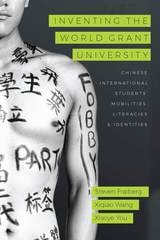
Inventing the World Grant University
Chinese International Students’ Mobilities, Literacies, and IdentitiesSteven Fraiberg
Utah State University Press, 2017
Through an exploration of the literacy practices of undergraduate Chinese international students in the United States and China, Inventing the World Grant University demonstrates the ways in which literacies, mobilities, and transnational identities are constructed and enacted across institutional and geographic borders.
Steven Fraiberg, Xiqiao Wang, and Xiaoye You develop a mobile literacies framework for studying undergraduate Chinese international students enrolling at Western institutions, whose numbers have increased in recent years. Focusing on the literacy practices of these students at Michigan State University and at Sinoway International Education Summer School in China, Fraiberg, Wang, and You draw on a range of mobile methods to map the travel of languages, identities, ideologies, pedagogies, literacies, and underground economies across continents. Case studies of administrators’, teachers’, and students’ everyday literacy practices provide insight into the material and social structures shaping and shaped by a globalizing educational landscape.
Advocating an expansion of focus from translingualism to transliteracy and from single-site analyses to multi-site approaches, this volume situates local classroom practices in the context of the world grant university. Inventing the World Grant University contributes to scholarship in mobility, literacy, spatial theory, transnationalism, and disciplinary enculturation. It further offers insight into the opportunities and challenges of enacting culturally relevant pedagogies.