Results by title
828 books match the query 'Study and teaching' and 38 start with i

I Found It on the Internet
Coming of Age OnlineFrances Jacobson Harris
American Library Association, 2011
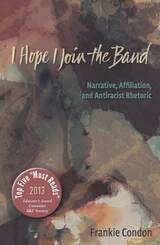
I Hope I Join the Band
Narrative, Affiliation, and Antiraciset RhetoricFrankie Condon
Utah State University Press, 2012
"Both from the Right and from the Left, we are stymied in talking well with one another about race and racism, by intransigent beliefs in our own goodness as well as by our conviction that such talk is useless. . . . White antiracist epistemology needs to begin not with our beliefs, but with our individual and collective awakening to that which we do not know."
Drawing on scholarship across disciplines ranging from writing and rhetoric studies to critical race theory to philosophy, I Hope I Join the Band examines the limits and the possibilities for performative engagement in antiracist activism. Focusing particularly on the challenges posed by raced-white identity to performativity, and moving between narrative and theoretical engagement, thebook names and argues for critical shifts in the understandings and rhetorical practices that attend antiracist activism.
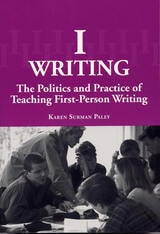
I-Writing
The Politics and Practice of Teaching First-Person WritingKaren Surman Paley
Southern Illinois University Press, 2001
In this ethnographic study of the teaching of writing, Karen Surman Paley reveals the social significance of first-person writing and the limitations of a popular taxonomy of composition studies. Paley looks critically at the way social constructionists have created an “Other” in the field of composition studies and named it “expressivist.”
Paley demonstrates the complexity of approaches to teaching writing through an ethnographic study of two composition faculty at Boston College, a programthat some would say is “expressivist.” She prompts her colleagues to consider how family experiences shape the way students feel about and treat people of races, religions, genders, and sexual preferences other than their own. Finally, she suggests to the field of composition that practitioners spend less time shoring up taxonomies of the field and more time sharing pedagogies.

INTERROGATING ORIENTALISM
Contextual Approaches and Pedagogical PracticesEdited by Diane Long Hoeveler and Jeffrey Cass
The Ohio State University Press, 2006
If at First You Don't Succeed?
Writing, Rhetoric, and the Question of FailureSteven J. Corbett
University Press of Colorado, 2025
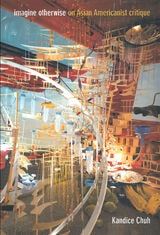
Imagine Otherwise
On Asian Americanist CritiqueKandice Chuh
Duke University Press, 2003
Drawing on the insights of poststructuralist theory, postcolonial studies, and investigations of transnationalism, Imagine Otherwise conceives of Asian American literature and U.S. legal discourse as theoretical texts to be examined for the normative claims about race, gender, and sexuality that they put forth. Reading government and legal documents, novels including Carlos Bulosan's America Is in the Heart, John Okada's No-No Boy, Chang-rae Lee's A Gesture Life, Ronyoung Kim's Clay Walls, and Lois Ann Yamanaka's Blu's Hanging, and the short stories "Immigration Blues" by Bienvenido Santos and "High-Heeled Shoes" by Hisaye Yamamoto, Chuh works through Filipino American and Korean American identity formation and Japanese American internment during World War II as she negotiates the complex and sometimes tense differences that constitute 'Asian America' and Asian American studies.

Improving Library Services in Support of International Students and English as a Second Language Learners
Leila June Rod-Welch
Assoc of College & Research Libraries, 2019

Improving Science Education
International PerspectivesEdited by Barry J. Fraser and Herbert J. Walberg
University of Chicago Press, 1995
This volume offers educators and researchers a glimpse at what peers from around the world have done to help science students achieve high levels of success. The introduction is a concise account of worldwide reform movements, from modernizations in the 1950s that dramatically improved the teaching of chemistry and physics to such changes in the 1980s as the emphasis on the learning-to-learn approach and the trend toward using social issues as a vehicle for teaching science.
The nine essays survey topics that include teaching inquiry skills and other techniques to foster a joy of science; creating an understanding of real-world applications of science; managing course instruction with computers; encouraging teachers to adopt new styles of teaching; cross-national comparisons of science achievement; and the differences between boys and girls in attitude, learning, and degree of participation.
Improvisations
Methods and Methodologies in Lifespan Writing ResearchRyan J. Dippre
University Press of Colorado, 2025
In Praise of the Impure
Poetry and the Ethical Imagination: Essays, 1980-1991Alan Shapiro
Northwestern University Press, 1993
Incidental Racialization
Performative Assimilation in Law SchoolYung-Yi Diana Pan
Temple University Press, 2017
Despite the growing number ofAsian American and Latino/a law students, many panethnic students still feel as if they do not belong in this elite microcosm, which reflects the racial inequalities in mainstream American society. While in law school, these students—often from immigrant families, and often the first to go to college—have to fight against racialized and gendered stereotypes. In Incidental Racialization, Diana Pan rigorously explores how systemic inequalities are produced and sustained in law schools.
Through interviews with more than 100 law students and participant observations at two law schools, Pan examines how racialization happens alongside professional socialization. She investigates how panethnic students negotiate their identities, race, and gender in an institutional context. She also considers how their lived experiences factor into their student organization association choices and career paths.
Incidental Racialization sheds light on how race operates in a law school setting for both students of color and in the minds of white students. It also provides broader insights regarding racial inequalities in society in general.
Inclusion, Diversity and Innovation in Translation Education
Edited by Alejandro Bolaños García-Escribano and Mazal Oaknín
University College London, 2024
In Inclusion, Diversity and Innovation in Translation Education, editors Alejandro Bolaños, García-Escribano, and Mazal Oaknín, emphasize the latest developments in literary and audiovisual translation education and teaching foreign languages while exploring the relevance of equality, diversity, and inclusion. They propose best practices and pieces of training, inviting readers to incorporate social issues affecting marginalized groups in their language and translation teaching practices.
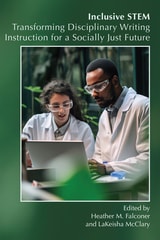
Inclusive STEM
Transforming Disciplinary Writing Instruction for a Socially Just FutureHeather M. Falconer
University Press of Colorado, 2025
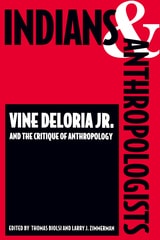
Indians and Anthropologists
Vine Deloria, Jr., and the Critique of AnthropologyThomas Biolsi
University of Arizona Press, 1997
CONTENTS
Introduction: What's Changed, What Hasn't, Thomas Biolsi & Larry J. Zimmerman
Part One--Deloria Writes Back
Vine Deloria, Jr., in American Historiography, Herbert T. Hoover
Growing Up on Deloria: The Impact of His Work on a New Generation of Anthropologists, Elizabeth S. Grobsmith
Educating an Anthro: The Influence of Vine Deloria, Jr., Murray L. Wax
Part Two--Archaeology and American Indians
Why Have Archaeologists Thought That the Real Indians Were Dead and What Can We Do about It?, Randall H. McGuire
Anthropology and Responses to the Reburial Issue, Larry J. Zimmerman
Part Three-Ethnography and Colonialism
Here Come the Anthros, Cecil King
Beyond Ethics: Science, Friendship and Privacy, Marilyn Bentz
The Anthropological Construction of Indians: Haviland Scudder Mekeel and the Search for the Primitive in Lakota Country, Thomas Biolsi
Informant as Critic: Conducting Research on a Dispute between Iroquoianist Scholars and Traditional Iroquois, Gail Landsman
The End of Anthropology (at Hopi)?, Peter Whiteley
Conclusion: Anthros, Indians and Planetary Reality, Vine Deloria, Jr.
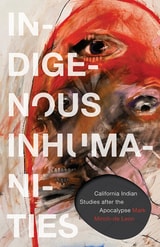
Indigenous Inhumanities
California Indian Studies after the ApocalypseMark Minch-de Leon
University of Minnesota Press, 2025
Reclaiming power and prophecy through California Indian intellectual resurgence and anticolonial resistance
Mark Minch-de Leon explores the anticolonial dimensions of California Indian intellectual and cultural resurgence in the aftermath of apocalypse in this compelling reexamination of Indigenous art, literature, and theory. Centering on a reinterpretation of the Ghost Dance, a ceremony first practiced in the nineteenth century, as a collective demonstration of prophecy and resilience, Indigenous Inhumanities envisions an expanded poetics of resistance through a reconfigured relationship to death and the dead. By dismantling the colonial frameworks of inclusion, recognition, and representation that reinforce settler-state power, Minch-de Leon shows how storytelling can be reclaimed as both research and as a tool for decolonization.
Taking up critical issues that the state has used to discipline California Indian relations to ancestors, such as the politics of human remains repatriation and the discourse around California Indian genocide, Minch-de Leon centers Indigenous knowledge and social systems while challenging legal and political definitions of violence, power, and the human. Rich case studies showcase the evocative art of Frank Day, the poetry of Tommy Pico, and the writings of Deborah Miranda, highlighting how these creators advance Indigenous theory and disrupt settler categories.
By refusing reconciliation and embracing Indigenous frameworks of radical relationality and the “inhuman” (what lies outside of human control), Minch-de Leon presents a bold vision of Indigenous antihumanist survival and resurgence. Indigenous Inhumanities illuminates the path toward decolonial futures by following the radical turn the ancestors made toward the powers of the dead to bring an end to the colonial world.
Retail e-book files for this title are screen-reader friendly with images accompanied by short alt text and/or extended descriptions.
Information Literacy Instruction Handbook
Christopher N. Cox
Assoc of College & Research Libraries, 2008
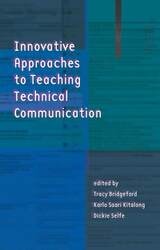
Innovative Approaches to Teaching Technical Communication
edited by Tracy Bridgeford, Karla Saari Kitalong, and Dickie Selfe
Utah State University Press, 2004
Programs in technical writing, technical communication, and/or professional communication have recently grown in enrollment as the demand among employers for formally prepared technical writers and editors has grown. In response, scholarly treatments of the subject and the teaching of technical writing are also burgeoning, and the body of research and theory being published in this field is many times larger and more accessible than it was even a decade ago.
Although many theoretical and disciplinary perspectives can potentially inform technical communication teaching, administration, and curriculum development, the actual influences on the field's canonical texts have traditionally come from a rather limited range of disciplines. Innovative Approaches to Teaching Technical Communication brings together a wide range of scholars/teachers to expand the existing canon.
Innovative Practices for Teaching Sign Language Interpreters
Cynthia B. Roy
Gallaudet University Press, 2000
Researchers now understand interpreting as an active process between two languages and cultures, with social interaction, sociolinguistics, and discourse analysis as more appropriate theoretical frameworks. Roy’s penetrating new book acts upon these new insights by presenting six dynamic teaching practices to help interpreters achieve the highest level of skill.
Jeffrey Davis illustrates the translation skills that form the basis for teaching consecutive and simultaneous interpreting to help students understand the intended meaning of the source message, and also the manner in which listeners understand it. Rico Peterson demonstrates the use of recall protocols, which can be used to teach metacognitive skills and to assess the student’s sign language comprehension. Finally, Janice Humphrey details the use of graduation portfolios, a valuable assessment tool used by faculty to determine a student’s level of competency. These imaginative techniques in Innovative Practices promise gains in sign language interpreting that will benefit teachers, students, and clients alike in the very near future.
Inspiring Teens, Tweens, and Families to Make a Difference in the World
Programming to Advance the Sustainable Development GoalsAmanda Moss Struckmeyer
American Library Association, 2025
- programs and activities related to such topics as good health and well-being, ending poverty, peace and justice, responsible consumption and production, decent work, and clean water and sanitation;
- ideas perfect for multi-age audiences (families), tweens, and teens that can be tailored for different group sizes, programming spaces, budgets, and time frames;
- a plethora of flexible, cost-effective passive programs that patrons can engage in at any time;
- guidance on outreach opportunities for fostering partnerships with local experts and guest speakers; and
- pointers on additional and supporting resources including books, videos, and websites.
Institutional Ethnography as Writing Studies Practice
Michelle LaFrance
University Press of Colorado, 2024
Instructional Design for Librarians and Information Professionals
American Library Association, 2011

Instruments of Music Theory
Alexander Rehding
University of Chicago Press, 2027
Shows how musical instruments and the sounds they produce are not incidental, but an integral part of music theory.
Many musicians dread music theory: Its rules and diagrams can feel stern and lifeless, far removed from the sounds that make music so thrilling. In this book, Alexander Rehding looks at music theory from a different angle. He argues that the sounds of the instruments on which music theory is demonstrated—starting with the piano in the music classroom—play a much more active role than we usually notice. They are “instruments” in a double sense: musical noisemakers, but also tools in a kind of scientific experiment. Rehding strips these devices down to their sound-generating mechanisms to show us how to read musical instruments for their theoretical content.
Instruments of Music Theory turns our attention to instruments such as multiphonic sirens, tuning forks, Chladni plates, Aeolian harps, and Wheatstone concertinas—these devices generate sounds that call for new ways of listening, measuring, and thinking about music. Bringing together music theory, critical organology, and media theory, this book can be read as a user’s manual for how to put sound back into music theory. Rehding shows us how instruments do not only produce sound—they produce knowledge about music. Through the lens of these new instruments, Instruments of Music Theory recasts fundamental musical ideas such as pitch, harmony, form, and scale from the ground up to give new meaning to the stuff we call music.
Inter/Nationalism
Decolonizing Native America and PalestineSteven Salaita
University of Minnesota Press, 2016
“The age of transnational humanities has arrived.” According to Steven Salaita, the seemingly disparate fields of Palestinian Studses and American Indian studies have more in common than one may think. In Inter/Nationalism, Salaita argues that American Indian and Indigenous studies must be more central to the scholarship and activism focusing on Palestine.
Salaita offers a fascinating inside account of the Boycott, Divestment, and Sanctions (BDS) movement—which, among other things, aims to end Israel’s occupation of Palestinian land. In doing so, he emphasizes BDS’s significant potential as an organizing entity as well as its importance in the creation of intellectual and political communities that put Natives and other colonized peoples such as Palestinians into conversation. His discussion includes readings of a wide range of Native poetry that invokes Palestine as a theme or symbol; the speeches of U.S. President Andrew Jackson and early Zionist thinker Ze’ev Jabotinsky; and the discourses of “shared values” between the United States and Israel.
Inter/Nationalism seeks to lay conceptual ground between American Indian and Indigenous studies and Palestinian studies through concepts of settler colonialism, indigeneity, and state violence. By establishing Palestine as an indigenous nation under colonial occupation, this book draws crucial connections between the scholarship and activism of Indigenous America and Palestine.
Interacting with History
Teaching with Primary SourcesKatharine Lehman
American Library Association, 2014
Interchangeable Parts
Acting, Industry, and Technology in US TheaterVictor Holtcamp
University of Michigan Press, 2019
Victor Holtcamp explores the invocations of scientific and industrial rhetoric and philosophy in the founding of the first schools of acting, and echoes of that rhetoric in playwriting, production, and the cinema, as Hollywood in particular embraced this industrially infected model of acting. In their divergent approaches to performance, the major US acting teachers (Lee Strasberg, Stella Adler, and Sanford Meisner) demonstrated strong rhetorical affinities for the language of industry, illustrating the pervasive presence of these industrial roots. The book narrates the story of how actors learned to learn to act, and what that process, for both stage and screen, owed to the interchangeable parts and mass production revolutions.
Intermediate Conversational Sign Language
Willard J Madsen
Gallaudet University Press, 1982
This fully illustrated text offers a unique approach to using American Sign Language (ASL) and English in a bilingual setting. Each of the 25 lessons involve sign language conversation using colloquialisms that are prevalent in informal conversations. Each lesson includes equivalent expressions in English, plus:
- Glossed Vocabulary Review
- Translation Exercises from ASL to English to ASL
- Grammatical Notes
- Substitution Drills
- Suggested Activities
The text also includes practice tests, a bibliography, and a glossed alphabetical index.
International Organizations and Research Methods
An IntroductionFanny Badache, Leah R. Kimber and Lucile Maertens, Editors
University of Michigan Press, 2023
Scholars have studied international organizations (IOs) in many disciplines, thus generating important theoretical developments. Yet a proper assessment and a broad discussion of the methods used to research these organizations are lacking. Which methods are being used to study IOs and in what ways? Do we need a specific methodology applied to the case of IOs? What are the concrete methodological challenges when doing research on IOs? International Organizations and Research Methods: An Introduction compiles an inventory of the methods developed in the study of IOs under the five headings of Observing, Interviewing, Documenting, Measuring, and Combining. It does not reconcile diverging views on the purpose and meaning of IO scholarship, but creates a space for scholars and students embedded in different academic traditions to reflect on methodological choices and the way they impact knowledge production on IOs.
International Students in First-Year Writing
A Journey Through Socio-Academic SpaceMegan M. Siczek
University of Michigan Press, 2018
This study raises questions about how to support international students:
- In what ways can it inform our practices and policies relative to the internationalization of education and the development of global perspectives and competencies?
- What does it reveal that could impact daily instruction of L2 writing, particularly when it comes to international students’ need to meet the expectations of “university-level writing” in U.S. institutions of higher education?
- On an individual level, what can we learn from these students and about ourselves as a result of our interactions?
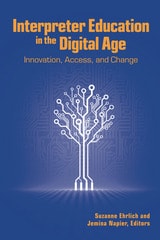
Interpreter Education in the Digital Age
Innovation, Access, and ChangeSuzanne Ehrlich
Gallaudet University Press, 2015
Initiatives described in this collection range from the implementation of on-demand interpreting using iPad technology to create personalized, small-group, multidimensional models suited to digital media for 160 languages; introducing students to interpreting in a 3D world through an IVY virtual environment; applying gaming principles to interpreter education; assessing the amenability of the digital pen in the hybrid mode of interpreting; developing multimedia content for both open access and structured interpreter education environments; to preparing interpreting students for interactions in social media forums, and more. Interpreter Education in the Digital Age provides a context for the application of technologies in interpreter education from an international viewpoint across languages and modalities.
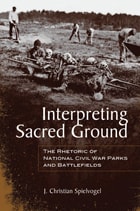
Interpreting Sacred Ground
The Rhetoric of National Civil War Parks and BattlefieldsJ. Christian Spielvogel
University of Alabama Press, 2013
A rhetorical analysis of Civil War battlefields and parks, and the ways various commemorative traditions—and their ideologies of race, reconciliation, emancipation, and masculinity—compete for dominance.
The National Park Service (NPS) is known for its role in the preservation of public sites deemed to have historic, cultural, and natural significance. In Interpreting Sacred Ground, J. Christian Spielvogel studies the NPS’s secondary role as an interpreter or creator of meaning at such sites, specifically Gettysburg National Military Park, Harpers Ferry National Historical Park, and Cold Harbor Visitor Center.
Spielvogel studies in detail the museums, films, publications, tours, signage, and other media at these sites, and he studies and analyzes how they shape the meanings that visitors are invited to construct. Though the NPS began developing interpretive exhibits in the 1990s that highlighted slavery and emancipation as central facets to understanding the war, Spielvogel argues that the NPS in some instances preserves outmoded narratives of white reconciliation and heroic masculinity, obscuring the race-related causes and consequences of the war as well as the war’s savagery.
The challenges the NPS faces in addressing these issues are many, from avoiding unbalanced criticism of either the Union or the Confederacy, to foregrounding race and violence as central issues, preserving clear and accurate renderingsof battlefield movements and strategies, and contending with the various public constituencies with their own interpretive stakes in the battle for public memory.
Spielvogel concludes by arguing for the National Park Service’s crucial role as a critical voice in shaping twentieth-first-century Civil War public memory and highlights the issues the agency faces as it strives to maintain historical integrity while contending with antiquated renderings of the past.

Interrogating Cultural Studies
Theory, Politics and PracticeEdited by Paul Bowman
Pluto Press, 2003
Interrogating Privilege
Reflections of a Second Language EducatorStephanie Vandrick
University of Michigan Press, 2013
Interrogating Privilege is a welcome combination of personal essays and academic research, blending theory, analysis, and narrative to explore the function and consequences of privilege in second language education.
While teachers’ focus on the learning process and class goals are quite important, there is not enough attention paid to the types of privilege—or lack thereof—that individuals bring to the classroom. Through chapters that can either stand alone or be read together, with topics such as gender, age, and colonialism (the author is the daughter of missionary parents) in second language teaching, this book seeks to address the experiences of teachers, scholars, and students as “whole persons” and to observe the workings of identity and privilege in the educational setting.
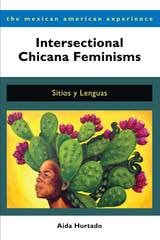
Intersectional Chicana Feminisms
Sitios y LenguasAída Hurtado
University of Arizona Press, 2020
Aída Hurtado, a leading Chicana feminist and scholar, traces the origins of Chicanas’ efforts to bring attention to the effects of gender in Chicana and Chicano studies. Highlighting the innovative and pathbreaking methodologies developed within the field of Chicana feminisms—such as testimonio, conocimiento, and autohistoria—this book offers an accessible introduction to Chicana theory, methodology, art, and activism. Hurtado also looks at the newest developments in the field and the future of Chicana feminisms.
The book includes short biographies of key Chicana feminists, additional suggested readings, and exercises with each chapter to extend opportunities for engagement in classroom and workshop settings.

Inventing Chemistry
Herman Boerhaave and the Reform of the Chemical ArtsJohn C. Powers
University of Chicago Press, 2012
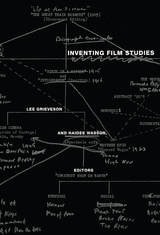
Inventing Film Studies
Lee Grieveson and Haidee Wasson, eds.
Duke University Press, 2008
Inventing Film Studies shows how the study of cinema has developed in relation to a constellation of institutions, technologies, practices, individuals, films, books, government agencies, pedagogies, and theories. Contributors illuminate the connections between early cinema and the social sciences, between film programs and nation-building efforts, and between universities and U.S. avant-garde filmmakers. They analyze the evolution of film studies in relation to the Museum of Modern Art, the American Film Council movement of the 1940s and 1950s, the British Film Institute, influential journals, cinephilia, and technological innovations past and present. Taken together, the essays in this collection reveal the rich history and contemporary vitality of film studies.
Contributors: Charles R. Acland, Mark Lynn Anderson, Mark Betz, Zoë Druick, Lee Grieveson, Stephen Groening, Haden Guest, Amelie Hastie, Lynne Joyrich, Laura Mulvey, Dana Polan,
D. N. Rodowick, Philip Rosen, Alison Trope, Haidee Wasson, Patricia White, Sharon Willis,
Peter Wollen, Michael Zryd
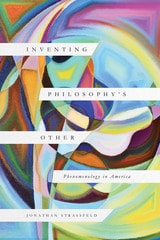
Inventing Philosophy's Other
Phenomenology in AmericaJonathan Strassfeld
University of Chicago Press, 2022
Phenomenology and so-called “continental philosophy” receive scant attention in most American philosophy departments, despite their foundational influence on intellectual movements such as existentialism, post-structuralism, and deconstruction. In Inventing Philosophy’s Other, Jonathan Strassfeld explores this absence, revealing how everyday institutional practices played a determinative role in the development of twentieth-century academic discourse.
Conventional wisdom holds that phenomenology’s absence from the philosophical mainstream in the United States reflects its obscurity or even irrelevance to America’s philosophical traditions. Strassfeld refutes this story as he traces phenomenology’s reception in America, delivering the first systematic historical study of the movement in the United States. He examines the lives and works of Marjorie Grene, Alfred Schütz, Hubert Dreyfus, and Iris Marion Young, among others, while also providing a fresh introduction to phenomenological philosophy.
Invention as a Social Act
Karen Burke LevFevre. Foreword by Frank D'Angelo
Southern Illinois University Press, 1986
The act of inventing relates to the process of inquiry, to creativity, to poetic and aesthetic invention.
Building on the work of rhetoricians, philosophers, linguists, and theorists in other disciplines, Karen Burke LeFevre challenges a widely-held view of rhetorical invention as the act of an atomistic individual. She proposes that invention be viewed as a social act, in which individuals interact dialectically with society and culture in distinctive ways.
Even when the primary agent of invention is an individual, invention is pervasively affected by relationships of that individual to others through language and other socially shared symbol systems. LeFevre draws implications of a view of invention as a social act for writers, researchers, and teachers of writing.
Invention, Copyright, and Digital Writing
Martine Courant Rife
Southern Illinois University Press, 2013
This is the first empirical, mixed-methods study of copyright issues that speaks to writing specialists and legal scholars about the complicated intersections of rhetoric, technology, copyright law, and writing for the Internet. Martine Courant Rife opens up new conversations about how invention and copyright work together in the composing process for digital writers and how this relationship is central to contemporary issues in composition pedagogy and curriculum.
In this era of digital writing and publishing, composition and legal scholars have identified various problems with writers’ processes and the law’s construction of textual ownership, such as issues of appropriation, infringement, and fair use within academic and online contexts. Invention, Copyright, and Digital Writing unpacks digital writers’ complex perceptions of copyright, revealing how it influences what they choose to write and how it complicates their work. Rife uses quantitative and qualitative approaches and focuses on writing as a tool and a technology-mediated activity, arguing the copyright problem is about not law but invention and the attendant issues of authorship.
Looking at copyright and writing through a rhetorical lens, Rife leverages the tools and history of rhetoric to offer insights into how some of our most ancient concepts inform our understanding of the problems copyright law creates for writers. In this innovative study that will be of interest to professional and technical writers, scholars and students of writing and rhetoric, and legal professionals, Rife offers possibilities for future research, teaching, curriculum design, and public advocacy in regard to composition and changing copyright laws.