Results by title
1214 books match the query 'Subjects & Themes' and 58 start with i
I Live in the Country & other dirty poems
Arielle Greenberg
Four Way Books, 2020
I Love You But I Don't Speak Your Language
PoemsJason Bredle
University of Massachusetts Press, 2026
Poems that question the world with tenderness and restless introspection
In I Love You But I Don’t Speak Your Language, brushes with the profound may lead to brushes with the mundane, or vice versa. Cause and effect become unreasoned and transcendent, at times lifting the arbitrary into the sublime or the sublime into happenstance. Intuitive leaps pull us through oscillations between humor, introspection, and the surreal. These poems don’t follow a straight path; instead, they capture the way thoughts shift, contradict, and collide.
Inspired by the poet’s dreams, as well as travels throughout central Europe, the West Indies, and Central and South America, the poems are alive in voice and detail, yet the speaker’s connections, and more so, disconnections, turn toward isolationism, solitude, and loneliness. At times, the collection leans into restless emotion: “I want to cry / when I think of how / I’ll look back at this moment someday / and cry.” Other moments pull the reader to “a far away place / of limitless palm trees and sunsets.” This is poetry that doesn’t try to fit into a traditional form. It questions, observes, and rethinks the world around it. Some moments might seem absurd, others deeply reflective, but all of them work together to create a book that is both thought-provoking and unpredictable.

I Make Jokes When I'm Devastated
Luisa Muradyan
Bridwell Press, 2024
I Will Mix Your Blood with Coal
Snapshots from the East of UkraineOleksandr Mykhed, Tanya Savchynska, and David Mossop
Northwestern University Press, 2025
In 2014, the Russian army, with support from local militants, occupied parts of Ukraine’s two easternmost regions—once the beating industrial heart of the Soviet Union—where coal extraction has since exhausted both the human population and the natural resources. In late 2016, Oleksandr Mykhed set out on a research trip to explore the deep history and contested present of the area from the perspective of a fellow countryman who’d never been there.
Mykhed brings us on a painful yet hopeful journey across the Ukrainian east, sharing conversations with locals, snippets from archival documents, and the complicated perspectives of prominent cultural figures, such as writer Serhiy Zhadan, historian Olena Stiazhkina, and philosopher Ihor Kozlovsky, who was imprisoned and tortured for nearly two years.
I Will Mix Your Blood with Coal invites us to meet generations of coal miners. To learn about the Belgian and British investors who founded the east’s industrial cities. To remember the harrowing events of the First and Second World Wars and the incalculable brutality of Soviet history. To see the activists who are even now working to improve the country. To hear sweet memories of a lost utopia that never existed. Mykhed provides a unique portrait of life in the east during the war, before the full-scale invasion that would change everything.
I Will Take to the Water
An Anthology of African Americans and the SeaDavid R. Anderson
University of Chicago Press, 2026
A landmark survey of African American literature about Black experiences of the maritime environment.
The ocean is foundational to the story of Africans in America, beginning with the searing Middle Passage. Initially evoking terror, pain, and death, the ocean also became associated with escape, empowerment, freedom, and home, as over time, African Americans in seaport towns found work, built communities, and gained knowledge from travelers. David R. Anderson shows in this groundbreaking collection of memoir, fiction, poetry, and more that African American maritime literature summons many of the traditional themes—survival in the face of overwhelming natural force, sublimity, demonstration of skill and merit, and self-discovery—but often with an eye on legacies of imperialism, slavery, discrimination, and cultural erasure.
Divided thematically across ten sections that address peril, labor, recreation, and more, the book gathers work by influential writers and intellectuals from the eighteenth century to the present, including: Lucille Clifton, Edwidge Danticat, Frederick Douglass, Alice Dunbar-Nelson, W. E. B. DuBois, Camille T. Dungy, Marcus Garvey, Robert Hayden, Zora Neale Hurston, Major Jackson, Harriet Jacobs, John S. Jacobs, Nella Larsen, Claude McKay, Toni Morrison, Walter Mosley, Natasha Trethewey, Phillis Wheatley, Colson Whitehead, and Kevin Young.
I Woke a Lake
Susan McCabe
University Press of Colorado, 2025
I Would Define the Sun
PoemsStephanie Niu; Foreword by Major Jackson
Vanderbilt University Press, 2025
Finalist for the Kate Tufts Discovery Award, 2026
Stephanie Niu’s I Would Define the Sun, awarded the 2024 Vanderbilt University Literary Prize, is a collection of poems that declare the impossibility of defining something as immense as the sun while striving toward that impossible act. In an era of planetary collapse, filled with bushfires, bleached coral, and burnout, Niu explores what love can do even through estrangement, even through being together at the end of the world. Recycling and folding language through duplexes, sestinas, and echoing couplets, this collection moves across great distances to include Christmas Island, Chinese-American immigration, and the precarity and abundance of the sea through formal and lyric poetry. Refitting the world into a size “made for [her] hands, [her] human tongue,” Niu propels readers into continuous motion as she searches for home.
I Would Define the Sun
PoemsStephanie Niu; Foreword by Major Jackson
Vanderbilt University Press, 2025
Finalist for the Kate Tufts Discovery Award, 2026
Stephanie Niu’s I Would Define the Sun, awarded the 2024 Vanderbilt University Literary Prize, is a collection of poems that declare the impossibility of defining something as immense as the sun while striving toward that impossible act. In an era of planetary collapse, filled with bushfires, bleached coral, and burnout, Niu explores what love can do even through estrangement, even through being together at the end of the world. Recycling and folding language through duplexes, sestinas, and echoing couplets, this collection moves across great distances to include Christmas Island, Chinese-American immigration, and the precarity and abundance of the sea through formal and lyric poetry. Refitting the world into a size “made for [her] hands, [her] human tongue,” Niu propels readers into continuous motion as she searches for home.

Ice Hours
Marion Starling Boyer
Michigan State University Press, 2023
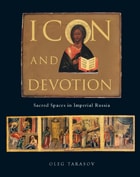
Icon and Devotion
Sacred Spaces in Imperial RussiaOleg Tarasov
Reaktion Books, 2002
By tracing the artistic vocabulary, techniques and working methods of icon painters, Tarasov shows how icons have been integral to the history of Russian art, influenced by folk and mainstream currents alike. As well as articulating the specifically Russian piety they invoke, he analyzes the significance of icons in the cultural life of modern Russia in the context of popular prints and poster design.
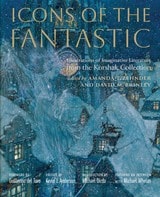
Icons of the Fantastic
Illustrations of Imaginative Literature from The Korshak CollectionAmanda T. Zehnder
University of Delaware Press, 2025
Winner of the 2026 PIA MidAmerica GraphEx Award for Best of Category, Hardcover Book Binding
Finalist for the 2026 Locus Awards in the Illustrated and Art Books category
"The Korshak Collection is a portrait and biography of a man and his family, who once looked upon the dark skies and saw Immortals, gods hunting in the storm clouds. Stephen Korshak decided to dedicate his life to tell us all how the thunder sounded and preserve the outlines of the cosmos for the awe of us all. Enjoy, believe—be amazed." —Guillermo del Toro, from the Foreword
Icons of the Fantastic: Illustrations of Imaginative Literature from the Korshak Collection features artwork by pioneering artists from over 160 years of published works of science fiction and fantasy. The illustrations in the collection appeared on the covers of timeless novels such as the Tarzan series by Edgar Rice Burroughs and classic pulp magazines from the 1930s through 1960s, such as Amazing Stories and Weird Tales. They accompany images of mischievous satyrs, ethereal mermaids, and spell-casting witches for texts ranging from The Tempest, Don Quixote, and Alice's Adventures in Wonderland to works by Edgar Allan Poe and H. G. Wells. Alongside essays about famous illustrators such as Arthur Rackham and Aubrey Beardsley, contributors engage in a critical reassessment of understudied artists such as José Segrelles, Wladyslaw Benda, Margaret Brundage, and Hannes Bok. The book includes a foreword by Guillermo del Toro, a preface by Kevin J. Anderson, an introduction by Michael Dirda, and an interview with renowned contemporary illustration artist Michael Whelan.
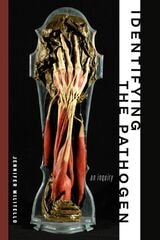
Identifying the Pathogen
Jennifer Militello
Tupelo Press, 2026
Composed as a lab notebook recording various surgeries, autopsies, and experiments, Identifying the Pathogen tells the story of a scientist on an obsessive quest to document an ailment that resists classification. The book considers the body in response to the COVID-19 pandemic, woven through with the story of Anna Morandi Manzolini—an eighteenth-century Italian anatomist and artist who struggled to support a husband suffering from depression—as well as several essays detailing accounts of a ruptured appendix, a splintered cello, and an ill-fated rock climbing excursion.
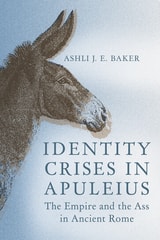
Identity Crises in Apuleius
The Empire and the Ass in Ancient RomeAshli J. E. Baker
University of Wisconsin Press, 2026
In the second century CE, the multiethnic, multilingual, and religiously diverse Roman Empire grew to its greatest extent. To maintain order, Rome relied heavily on strict social hierarchies, established not only through legal frameworks like citizenship, but also through cultural markers (such as clothing and language) and personal traits (such as educational achievement). Even as Rome grew into one of the world’s most powerful empires, however, its social systems strained under the stresses caused by that very growth, which encouraged cultural interaction, long-distance travel, and social mobility—all of which threatened the hierarchies that underpinned Roman order.
It was during this time that the North African–born, Latin-speaking, Greek-educated Apuleius—whose own background showcases the multiplicity of identities available then to Roman individuals—flourished. He remains one of the ancient world’s best-known authors today, thanks particularly to his famous novel, Metamorphoses, known also as The Golden Ass. Taking a bird’s-eye view of his work, Ashli J. E. Baker proffers a bold new reading of Apuleius, proposing that across his writings there is a consistent focus on the theme of identity and its instability. By placing close readings in conversation with sociocultural and material contexts, she shows that because the structures of Roman power depended on inherently unreliable markers of identity, Apuleius’ work can be read as a biting critique of the fraught relationship between the individual, society, and the state in his contemporary Rome.
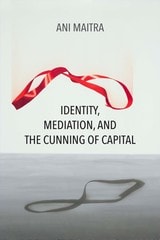
Identity, Mediation, and the Cunning of Capital
Ani Maitra
Northwestern University Press, 2020
Maitra’s archive is transnational and multimodal. Moving from anticolonial polemics to psychoanalysis to diasporic experimental literature to postcolonial feminist and queer media, he lays bare the cunning by which capitalism produces and fragments identity through an intermedial “aesthetic dissonance” with the commodity form. Maitra’s novel contribution to theories of identity and to the concept of mediation will interest a wide range of scholars in media studies, critical race and postcolonial studies, and critical aesthetics.
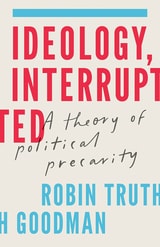
Ideology, Interrupted
A Theory of Political PrecarityRobin Truth Goodman
University of Minnesota Press, 2026
A powerful argument that the failure of ideology has created political disconnection and apathy
Political institutions increasingly fail to provide representations where citizens can recognize, identify, and imagine themselves as part of the institutions’ democratic project. Robin Truth Goodman argues that this disconnection is because ideology itself has gotten interrupted. Reversing Louis Althusser’s famous formulation of ideology as “calling” to citizens who, in response, turn toward the call, she argues that citizens now believe that ideology has turned away from them and stopped calling, endangering the most basic processes of modern democracies.
Deconstructing the widespread failure of democratic institutions to connect with individuals, Goodman examines recent works by authors such as Claire Vaye Watkins, Colson Whitehead, Ling Ma, Han Kang, and Ruth Ozeki that interrogate subjective agency within three different sites of social struggle: eco-catastrophe, pandemic, and food insecurity. She shows the themes that emerge from the novels reflecting and extending how the privatization and technologization of political decision-making have effectively cut off politicians and political institutions from the people they are supposed to serve.
Basing her study in the political philosophy of Judith Butler, Hannah Arendt, Julia Kristeva, and other prominent feminists, Goodman draws parallels with gender theory and argues that precarity in democratic societies has prevented citizens from finding points of engagement within politics. Diagnosing this widespread inability to translate private struggles into collective responses, Ideology, Interrupted is a powerful and inspiring call for new forms of societal bonds and political engagement to rejuvenate our democratic systems.
Retail e-book files for this title are screen-reader friendly.
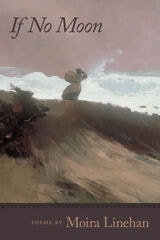
If No Moon
Moira Linehan
Southern Illinois University Press, 2007

If Some God Shakes Your House
Jennifer Franklin
Four Way Books, 2023
Jennifer Franklin reimagines an Antigone for our times in her third collection, If Some God Shakes Your House, where filial devotion and ossified roles of gendered labor become the engine of her defiance. Franklin’s Antigone is ferocious, feeling, and unafraid of the consequences of speaking the truth to power about the political atrocities she has witnessed and personal traumas she has withstood. With a sensitivity that equally elevates the quotidian and the classical, and an attention that moves from the ancient ruins of Pompeii to the right of bodily autonomy and agency stripped away by our own Supreme Court, Franklin reveals the high stakes of our moment where “the one who does the judging judges things all wrong.” Franklin’s Antigone has embraced the sacrifice of self for something greater—a dual devotion to her disabled daughter and to her art. “For twenty years, I have been disappearing,” she writes in the book’s final poem, yet she continues to sing.
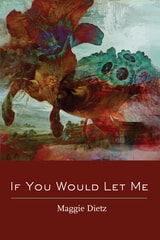
If You Would Let Me
Maggie Dietz
Four Way Books, 2026
If You Would Let Me uses the myth of Persephone and Demeter to explore, in an utterly contemporary idiom, the hellish descents and unequivocal love of a mother and an adolescent child. The old story is reimagined in new terms—a present-day Persephone’s cycles of psychic affliction giving rise to botched facial piercings, social media ghostings, and squalls of physical fury—and revoiced in poems that sing Demeter’s rage, the depths of maternal grief, the seasons of erasure and renewal. In an electric transposition of classic lore onto modern descriptive modes, Dietz casts the imperiling pubescence and anxiety of middle school as canonically significant and dangerously chimerical: “Persephone and her friends brought / Waxed paper cups of ice cream / To the meadow by the river,” where “Their laughter made ripples a heron / Mistook for alewives underwater” while “Under some of their shirts” grew “The first hiccups of puffy nipples.” Throughout these teenage transformations and the distances they grow, Dietz remains as constant as a lodestar, offering unwavering light for her child to see by in order to return. “You must know what I mean even if / You do not know you know: Child, // When you called my name I heard you / Though your cries could find no wind.” Formally meticulous and sonically intricate, these poems hear as much as they make themselves heard, harnessing ancient energies to create a picture of our recycled world—a story for our own times, one not only familiar but perennially, timelessly true.

Illinois Trails & Traces
Portraits and Stories along the State’s Historic RoutesText by Gary Marx and photographs by Daniel Overturf, with a foreword by Dick Durbin
Southern Illinois University Press, 2022
FINALIST, 2023 Society of Midland Authors Award in Adult Nonfiction!
Exploring Illinois history through the paths we travel
Illinois Trails & Traces partners the deft writing of Gary Marx with vivid photography by Daniel Overturf to illuminate ever evolving patterns of travel and settlement. Taking the reader on a journey down early buffalo traces and Native American trails, this book shows how these paths evolved into wagon roads and paved highways. Marx and Overturf explore historic routes ranging from Route 66 to the Underground Railroad, all the way back to post-Ice Age animal migration trails followed by Paleo-Indian people. The authors also examine how rivers, canals, and railroads spurred the rapid rise of Illinois as a modern state.
Marx and Overturf bring history into the present by including over forty photographic portraits and written profiles of individuals who live along these routes today. Many of the people you will meet on these pages work to preserve and honor the history of these passages. Others profiled here embody the spirit of the old roads and provide a vivid link between past and present. Through this journey, we discover that we’ve all been traveling the same road all along.
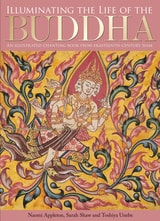
Illuminating the Life of the Buddha
An Illustrated Chanting Book from Eighteenth-Century SiamNaomi Appleton, Sarah Shaw, and Toshiya Unebe
Bodleian Library Publishing, 2013
Affording readers immense insight into a spectacular eighteenth-century manuscript, and Thai Buddhist manuscripts and temple culture as a whole, this book will be of great interest to art historians and scholars of Buddhism and Southeast Asia.
Illuminating the Particular
Photographs of Milwaukee's Polish South SideChristel T. Maass
Wisconsin Historical Society Press, 2003
While Kwasniewski's camera captured the sights and sounds of Milwaukee at the turn of the century from the perspective of a single ethnic group in a single neighborhood, his photographs resonate far beyond Milwaukee's Polish South Side. They illuminate the particulars of American life during the early decades of the twentieth century. "What we see, reflected in the distant mirror," says John Gurda, "is ourselves."
Imaginary Royalty
Miranda Field
Four Way Books, 2017

Imagining Mary Tudor, Queen of France
JoAnn DellaNeva
University of Delaware Press, 2027
This book examines early modern texts that portray Mary Tudor’s girlhood and betrothal to a foreign prince, her brief marriage to the aging king of France, and her untimely widowhood, as well as retrospective accounts that depict her life in France, her relationships with her husband and his heir apparent, and her surreptitious romance and clandestine marriage to an English duke. Here, texts from England are put into conversation with a significant body of work that was written in French, Spanish, Italian, and Latin, culminating in an examination of a novel from North America that passed itself off as a genuine sixteenth-century memoir. Author JoAnn DellaNeva also examines a spectrum of extra-literary texts—such as dialogues, popular songs, letters, speeches, portraiture, tapestries, fashion, jewelry, and book illuminations—for the ways they too helped shape Mary’s image. In so doing, she analyzes the intersection of history and literature, demonstrating how porous the borders between these disciplines can be. Through a series of close readings that are informed by an examination of the cultural context behind these texts, Imagining Mary Tudor, Queen of France seeks to explain how Mary’s fictional biography proved to be so slippery, vacillating between portrayals of her as a virtuous, generally powerless woman and as a wily and wicked minx.
Immaterial Archives
An African Diaspora Poetics of LossJenny Sharpe
Northwestern University Press, 2020
Impasse Poetics at the Nordic Oil Coast
Contemporary Petrofiction from Denmark and NorwayKarl Emil Rosenbaek Reetz
West Virginia University Press, 2026

Impastoral
Brandan Griffin
Omnidawn, 2022
The expansive reworking of language in Impastoral flies through the possible voices of outsides and insides—slug, probe, horse carriage, sewer, potted plant, lab rat, vampire, bot fly, giant cow. Language, in Brandan Griffin’s poetry, is neither human nor nonhuman, and it undoes that very idea of these distinctions, so beings—slugprobe, pottedhorsesewer, telepathybarcode, mammaltexts—morph and change in between boundaries.
Each of these poems is an organism, a collection of living connections, looped interiorities strung together in worlds tunneling through worlds. The poems’ composition becomes a decomposition of budding, breeding, and fluctuating. Reading this collection is an experience of becoming deformed and merged into the experiences of other beings; you are sea vent, microprocessor, cell gel, bug, a greenly translucent leaf typed half a sound at a time. Griffin invites us to imagine all possible beings and to hatch into a fresh world.
Impastoral won the Omnidawn Open Book contest, selected by Brian Teare.
Imperfect Solidarities
Tagore, Gandhi, Du Bois, and the Global AnglophoneMadhumita Lahiri
Northwestern University Press, 2021
A century ago, activists confronting racism and colonialism—in India, South Africa, and Black America—used print media to connect with one another. Then, as now, the most effective medium for their undertakings was the English language. Imperfect Solidarities: Tagore, Gandhi, Du Bois, and the Global Anglophone tells the story of this interconnected Anglophone world. Through Rabindranath Tagore’s writings on China, Mahatma Gandhi’s recollections of South Africa, and W. E. B. Du Bois’s invocations of India, Madhumita Lahiri theorizes print internationalism. This methodology requires new terms within the worldwide hegemony of the English language (“the global Anglophone”) in order to encourage alternate geographies (such as the Global South) and new collectivities (such as people of color).
The women of print internationalism feature prominently in this account. Sonja Schlesin, born in Moscow, worked with Indians in South Africa. Sister Nivedita, an Irish woman in India, collaborated with a Japanese historian. Jessie Redmon Fauset, an African American, brought the world home to young readers through her work as an author and editor.
Reading across races and regions, genres and genders, Imperfect Solidarities demonstrates the utility of the neologism for postcolonial literary studies.
Imperial Decay
Literature, Autonomy, and the End of Modernization in the AmericasEmilio Sauri
Northwestern University Press, 2027
Demonstrating how art and literature remain vital to alternative imaginaries beyond the power of imperialism and modernization
Imperial Decay: Literature, Autonomy, and the End of Modernization in the Americas employs a dynamic, comparative approach to contemporary literature and visual art, showing how fiction, photography, poetry, and film from Latin America and the United States vividly illuminate the present. Focusing on the period from the end of the Cold War to the financial crisis of the late 2000s, Emilio Sauri contends that what brings these media together is not just the history of hemispheric connections but also, and more strikingly, the question of the artwork’s autonomy.
Elaborating on influential accounts that reveal how US hegemony in Latin America and the resistance it inspired throughout the region are bound up with the promise of modernization, Imperial Decay offers unique insights into the hollowing out of this promise at the end of the so-called American Century. Tracing this commitment back to the modernisms of the last century and forward to more recent works, this book casts canonical figures such as Ernest Hemingway, Walker Evans, and Gabriel García Márquez in a new and necessary light while developing a compelling interpretive framework for contemporary writers and artists from across the region, including Roberto Bolaño and Benjamin Kunkel, Alejandro Cartagena and Yvonne Venegas, and Kleber Mendonça Filho. Ultimately, Sauri shows why the work of art remains vital to the task of envisioning alternatives to the immiserations, ecological devastation, and degraded forms of life wrought by imperial decay.
Improbable Libraries
A Visual Journey to the World's Most Unusual LibrariesAlex Johnson
University of Chicago Press, 2015
Public libraries are a cornerstone of modern civilization, yet like the books in them, libraries face an uncertain future in an increasingly digital world. Undaunted, librarians around the globe are thinking up astonishing ways of reaching those in reading need, whether by bike in Chicago, boat in Laos, or donkey in Colombia. Improbable Libraries showcases a wide range of unforgettable, never-before-seen images and interviews with librarians who are overcoming geographic, economic, and political difficulties to bring the written word to an eager audience. Alex Johnson charts the changing face of library architecture, as temporary pop-ups rub shoulders with monumental brick-and-mortar structures, and many libraries expand their mission to function as true community centers. To take just one example: the open-air Garden Library in Tel Aviv, located in a park near the city’s main bus station, supports asylum seekers and migrant workers with a stock of 3,500 volumes in sixteen different languages.
Beautifully illustrated with two hundred and fifty color photographs, Improbable Libraries offers a breathtaking tour of the places that bring us together and provide education, entertainment, culture, and so much more. From the rise of the egalitarian Little Free Library movement to the growth in luxury hotel libraries, the communal book revolution means you’ll never be far from the perfect next read.
In American Waters
The Sea in American PaintingDaniel Finamore
University of Arkansas Press, 2021
In American Waters is the catalog of an exhibition co-organized by Crystal Bridges Museum of American Art in Bentonville, Arkansas, and Peabody Essex Museum in Salem, Massachusetts.
The exhibition and this associated catalog invite visitors to discover the sea as an expansive way to reflect on American culture and environment, learn how coastal and maritime symbols moved inland across the United States, and question what it means to be “in American waters.” Work by Georgia O’Keeffe, Amy Sherald, Kay WalkingStick, Norman Rockwell, Hale Woodruff, Paul Cadmus, Thomas Hart Benton, Jacob Lawrence, Valerie Hegarty, Stuart Davis, and many others is included, along with essays from scholars, critics, and the curators.
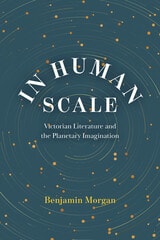
In Human Scale
Victorian Literature and the Planetary ImaginationBenjamin Morgan
University of Chicago Press, 2027
An innovative account of how literature has helped bridge the gap between ordinary human experience and the vast scale of the natural world.
Is it possible to connect our lived experience of time to the vast eons of the planet’s history? This question has perplexed writers and scientists for more than two hundred years, from Darwin’s account of natural selection through contemporary writing about climate change. Benjamin Morgan’s insightful study shows how literature of the nineteenth century helped readers leap from their everyday sense of time and space to the vast, inhuman scales of the natural world.
Exploring writings that range from Arctic voyage narratives to Thomas Hardy’s novels, utopian fiction of the 1880s, H. G. Wells’s The Time Machine, and beyond, Morgan situates scalar incommensurability in its deeper intellectual and cultural contexts. Victorians struggled to grasp senses of proportion not only through time scales but also through scales of aesthetic magnitude, of relative value, of social totality, and of the planet’s future. Morgan argues that a scale is not just a timeline; it is a way of finding order and proportion through many kinds of comparative measurement. His literary history of scale illuminates both the challenge of imagining the vastness of planetary time and the history of creating a human sense of proportion.

In the Arms of Saguaros
Iconography of the Giant CactusWilliam L. Bird Jr.
University of Arizona Press, 2023
In the Arms of the Saguaros shows how, from the botanical explorers of the nineteenth century to the tourism boosters in our own time, saguaros and their images have fulfilled attention-getting needs and expectations. Through text and lavish images, this work explores the saguaro’s growth into a western icon from the early days of the American railroad to the years bracketing World War II, when Sun Belt boosterism hit its zenith and proponents of tourism succeed in moving the saguaro to the center of the promotional frame.
This book explores how the growth of tourism brought the saguaro to ever-larger audiences through the proliferation of western-themed imagery on the American roadside. The history of the saguaro’s popular and highly imaginative range points to the current moment in which the saguaro touches us as a global icon in art, fashion, and entertainment.
In the Good Years
Laura Cresté
Four Way Books, 2025
In the Kingdom of the Ditch
Todd Davis
Michigan State University Press, 2013

In the Spirit of Wetlands
Reviving Habitat in the Illinois River WatershedText by Clare Howard. Photographs by David Zalaznik
University of Illinois Press, 2022
An inspiring document of passion and advocacy, In the Spirit of Wetlands reveals the transformative power of restoration.
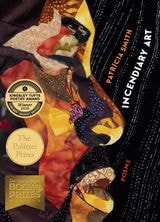
Incendiary Art
PoemsPatricia Smith
Northwestern University Press, 2017
From National Book Award winner Patricia Smith
One of the most magnetic and esteemed poets in today’s literary landscape, Patricia Smith fearlessly confronts the tyranny against the black male body and the tenacious grief of mothers in her compelling new collection, Incendiary Art. She writes an exhaustive lament for mothers of the "dark magicians," and revisits the devastating murder of Emmett Till. These dynamic sequences serve as a backdrop for present-day racial calamities and calls for resistance. Smith embraces elaborate and eloquent language— "her gorgeous fallen son a horrid hidden / rot. Her tiny hand starts crushing roses—one by one / by one she wrecks the casket’s spray. It’s how she / mourns—a mother, still, despite the roar of thorns"— as she sharpens her unerring focus on incidents of national mayhem and mourning. Smith envisions, reenvisions, and ultimately reinvents the role of witness with an incendiary fusion of forms, including prose poems, ghazals, sestinas, and sonnets. With poems impossible to turn away from, one of America’s most electrifying writers reveals what is frightening, and what is revelatory, about history.
Winner, 2017 Los Angeles Times Book Prize
Finalist, 2018 Pulitzer Prize for Poetry
Winner, NAACP Image Award for Outstanding Literary Work in the Poetry category
Winner, 2018 Kingsley Tufts Poetry Award
Winner, 2018 BCALA Best Poetry Award
Winner, Abel Meeropol Award for Social Justice
Finalist, Neustadt International Prize for Literature
Winner, 2021 Ruth Lilly Poetry Prize

Indianapolis
The Bass Photo Company CollectionSusan Sutton
Indiana Historical Society Press, 2008
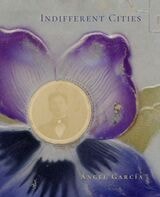
Indifferent Cities
Ángel García
Tupelo Press, 2025
Through one state to another, from one country to the next Indifferent Cities traverses both distance and time to reconcile the most confounding reality of family: our people, sometimes, are the people we know least. Utilizing forms such as ekphrasis and epistolary, the collection sources photographs, postcards, and official documents as well as rumor, suspicion, and supposition to uncover the consequences, by choice or circumstance, of migration and immigration between Mexico and the United States across four generations.
Surveying the terrain of what one knows and does not know, what one inherits and disinherits, Indifferent Cities wrestles with every departure, each arrival, and the author’s inevitable return to determine where and to who he belongs.

Indirect Light
Malachi Black
Four Way Books, 2024
Reliving the overdoses of beloved friends, Malachi Black closes this book’s opening poem with a resuscitating command: “Doctor, / turn back. One of us lives.” Indirect Light is a testament to and apologia for this assertion of vitality, each eponymous poem an elegy dedicated to one of Black’s dearly departed. Though this book mourns an irretrievable past, it wages war against amnesia, refusing to let death erase the vibrancy of their lives. These poems preserve “the breath we left beside us on the train tracks,” “the watery inscriptions of nearby dogwood branches / dipped in shade,” “our bookbags’ mouths / pouting open on our laps,” “our street-scabbed bodies / briefly tinseled in the sun.”
Insofar as this collection returns to friends and kin to honor them by the indirect light of memory, it also seeks to memorialize the author’s personal experience of adolescence and addiction amidst the opioid epidemic. It is a lament for all that’s lost and a paean to the near misses and the just enough: a dim glow you can see by, a cup of coffee passed during NA, a prayer during detox to “be // as empty / as the sky” if floating means survival.

Indonesian Buddhist Bronzes in the Making of Maritime Asia
Mathilde Mechling
National University of Singapore Press, 2027
Studies bronze icons of Hindu and Buddhist deities to better understand the flow of ideas across the sea routes of Maritime Asia in the first millennium.
While the great temples of Southeast Asia have inspired research in the past, the careful study of their smaller and more portable counterparts—bronze icons of Hindu and Buddhist deities—gives us a more dynamic understanding of the movement of beliefs and practices across Asia. These sacred images—found across Java, Sumatra, Kalimantan, and Sulawesi—rank alongside monumental temple complexes like Borobudur as among the most significant artistic and religious achievements of the region. Yet they have too often been treated as mere antiquities, prized for their beauty but stripped of their deeper historical meaning.
Mechling recovers what these bronzes can actually tell us. By tracing their distribution patterns alongside their artistic style, iconography, fabrication techniques, and metal compositions, she reconstructs the shared cults, ritual practices, and technological relationships that linked communities across the western Indonesian archipelago and beyond from the sixth to the tenth century. The picture that emerges overturns a long-held scholarly paradigm—inherited from the colonial era—of passive Southeast Asian reception of Indian cultural influence. In its place, Indonesian Buddhist Bronzes in the Making of Maritime Asia reveals a world of multi-directional exchange among active, cosmopolitan participants whose networks of creativity and devotion shaped one of history's most dynamic cultural crossroads.

Infinity Pool
Jonathan Thirkield
University of Chicago Press, 2024
Diving through illusions and phantoms of virtual realms and into the human desire for boundless possibility, Infinity Pool charts the ways technologies have become embedded in our minds, bodies, and lives. Immersed in a world of data streams, neural nets, spider algorithms, and electronic terminals, Jonathan Thirkield’s poems plumb the dissonances and shrinking distances between ourselves and digital technologies, imagining what becomes of the fragile machinery of the human body amid a rapidly transforming world.
Thirkield turns to language as a mediator and explores infinity as a mathematical concept, a multiverse conceit, and a driver of the computational imagination. Traveling across the full spectrum of digital experience—from satellites crossing the edges of our solar system to microscopic bytes that operate beneath our perception—this collection is a testament to the future we imagine ourselves to be living through and to what happens when our escapist desires give way to the realities of birth, loss, parenthood, and sickness.
Through lyrical, narrative, and formal mutations, these poems cut through a decade of exponential technological growth, landing in the reality of our corporeal experiences: the isolation of chronic illness, the daunting journeys of children growing up today, and the hope that we can remain connected to each other no matter how tenuous the ties.
Inhabitants of the Deep
The Blueness of BlacknessJonathan Howard
Duke University Press, 2025
Inscribing the Daily
Critical Essays on Women's DiariesSuzanne L. Bunkers
University of Massachusetts Press, 1996
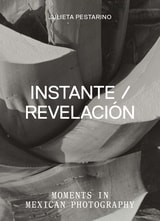
Instante/revelacion
Moments in Mexican PhotographyJulieta Pestarino
J. Paul Getty Trust, The, 2026
Presenting nearly 150 pictures made between 1920 and 2017, Instante/revelación highlights the work of thirteen renowned photographers who feature prominently in the history of the medium in Mexico, including Lola and Manuel Álvarez Bravo, Graciela Iturbide, and Pablo Ortiz Monasterio.
Through a dynamic selection of images, the publication explores some of the intertwined sociocultural forces that shape life and art in Mexico. Among the photographs are stunning presentations of landscapes, architecture, and flora and fauna from across the country; depictions of daily life; and portraits of esteemed Mexican artists and writers such as Diego Rivera, Frida Kahlo, and Octavio Paz. An illustrated essay examines the significant role photobooks and periodicals played in disseminating these images.
The photographers featured in this volume are linked by friendship, influence, and collaboration. Their works, when viewed together as a collective narrative, reveal the spirit of fruitful exchange that characterizes this exciting chapter in Mexico's photographic history.
This volume is published to accompany an exhibition on view at the J. Paul Getty Museum at the Getty Center from September 1, 2026, to January 3, 2027.
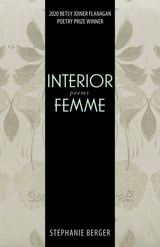
Interior Femme
PoemsStephanie Berger
University of Nevada Press, 2022
The poems offer layered perspectives fused with multiple versions of female representation, as if to underscore the burden of responsibility, inherited shame, and awesome power that comes with the position women have occupied throughout history. Berger reveals a woman critically wounded—representing the totality of the Western feminine imaginary. Lyrically complex, sometimes surreal, and often ekphrastic in style and content, Interior Femme simultaneously offers heartbreak, laughter, comfort, and empowerment.
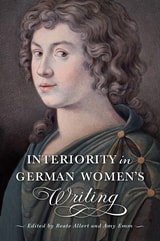
Interiority in German Women's Writing
Beate Allert
University of Delaware Press, 2026
Interiority in German Women’s Writing for the first time systematically gathers and engages with contributions of German women authors to the discourse on interiority (Innerlichkeit) from 1750 to 1850. This volume shifts the recent focus on abstract theoretical and medical discourses on inwardness to the origins of interiority in literature and philosophy as written and experienced by women from the Age of Sensibility (Empfindsamkeit) to the Romantic era. At the same time, it makes a claim for and explores the ramifications of understanding interiority as a feminine discourse. Contributors investigate the works of women authors who searched to find rescue from their cultural and personal entrapment via creative spaces and various modes of interiority in theatrical performances, poetic writings, letters, biographical narratives, prose, and fairy tales. From the case studies and literary analyses in the volume, interiority emerges as a spectrum of approaches to defining, resisting, and transforming the innermost self.

Intimate Radicals
East European Jewish Women and Progressive American DesiresAshley Walters
Rutgers University Press, 2027
In the early 1900s, a handful of unconventional couples emerged within the American radical Left. In Intimate Radicals, Ashley Walters tells the story of a group of young, East European Jewish women and white, Anglo-Saxon Protestant men— such as Jack London, Sinclair Lewis, and William English Walling, among other notable figures in American literature, domestic and international affairs, and early Hollywood—and how they imbued their romances with revolutionary principles. The relationships captivated the public and became a source of intrigue, largely driven by the growth of human-interest journalism. Through individual biographies, historical narrative, and literary analysis, Walters reveals the cultural and political contingencies of desire.
As Progressive Era radicals rebelled against the constraints of an earlier era, East European Jews—and Jewish women in particular— came to embody a new cosmopolitan ideal and European revolutionary spirit. Drawing on letters, newspapers, literature, and film, Walters shows how the public reception of these patrician-immigrant relationships lent credence to a new cultural mythology of Jewish womanhood. The men’s desire for East European Jewish women, she also points out, can be viewed as a form of “radical tourism,” in which men who enjoy a degree of privilege pursue an alluring Other in the hope of obtaining a more worldly identity.
This book is published with the support of the Jordan Schnitzer First Book Publication Award, administered by the Association for Jewish Studies.
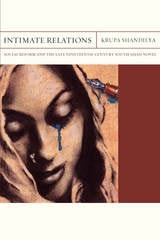
Intimate Relations
Social Reform and the Late Nineteenth-Century South Asian NovelKrupa Shandilya
Northwestern University Press, 2017

Intimate
An American Family Photo AlbumPaisley Rekdal
Tupelo Press, 2012
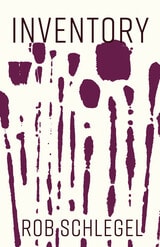
Inventory
Rob Schlegel
University of Chicago Press, 0
A book-length poem serving as a son’s elegy for his late father, an artist and forest steward.
Rob Schlegel’s long poem Inventory emerges from three discrete inventories the poet must catalog in the aftermath of a sudden loss: a selection of his father’s art to be organized for a posthumous exhibition, two hundred acres of trees in a forest stewarded by his father in western Oregon, and his own emotional landscape in the aftermath of his father’s death. As Schlegel moves through these collections of objects and emotions, he learns how to navigate grief. His father’s paintings act as an inventory of the poet’s own life, with each landscape recalling a moment in time, each sketch holding a story. Celebrating a close relationship while mourning its loss, Schlegel reflects on the ties between art and grief, parents and children, people and trees.
At the time of his father’s death, an extreme heatwave was moving across the region, broadening the scope of grief from the personal and familial to encompass tragedies on a larger scale. Social disintegration and climate disaster weave through the lives of a family in mourning as they navigate the complexity of how to sit with loss, change, love, and art. Through quiet, measured verse and arresting simplicity, Inventory extends the ekphrastic tradition into a contemporary elegy rich in both profound sadness and optimism for the future.