Results by title
146 books match the query 'Terrorism' and 6 start with i
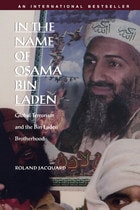
In the Name of Osama Bin Laden
Global Terrorism and the Bin Laden BrotherhoodRoland Jacquard
Duke University Press, 2002
International terrorism expert Roland Jacquard’s In the Name of Osama bin Laden presents a dramatic portrait of the world's most wanted terrorist and his extensive brotherhood--the network of people who operate “in his name.” Published originally in France the very week of September 11, as events in the United States shook the world, the book has become an international bestseller.
Jacquard details how bin Laden became an international emblem of fundamentalist, pan-Islamic, anti-U.S. fervor and the leader of a brotherhood so passionate that devotees who have never met him will act autonomously in his name. The author explains the global character of bin Laden’s organization, elaborating the extent of his sphere of influence in Europe and Asia. Jacquard reveals the construction of bin Laden’s networks—including a profile of his inner circle—and their collaboration with overlapping webs of banking, drug trafficking, religious, and terrorist organizations. He considers the brotherhood’s access to biological, chemical, and nuclear weapons and warns that, with or without bin Laden, this global terrorist force will remain a threat.
Now in English, this edition has been substantially updated in light of recent world events and expanded to include previously unpublished materials, featuring a new introduction and afterword. New documents include an April 2001 interview by the author with bin Laden; a September 24 proclamation by bin Laden to Muslims in Pakistan; and a key page from Dr. Ayman al-Zawahiri’s book justifying eternal jihad, which was smuggled out of Afghanistan in October 2001.
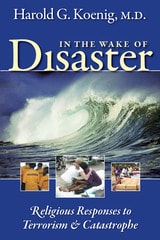
In the Wake of Disaster
Religious Responses to Terrorism and CatastropheHarold G Koenig
Templeton Press, 2006
In a timely book with a powerful and persuasive message, Dr. Harold G. Koenig addresses federal, state, and local government policy leaders, urging them to more fully integrate religious organizations into the formal disaster response system, and he then provides recommendations on how this can effectively be done. Koenig also advocates faith communities and organizations to learn more about the role they can play in responding to disasters and terrorism.

Inferno in Chechnya
The Russian-Chechen Wars, the Al Qaeda Myth, and the Boston Marathon BombingsBrian Glyn Williams
University Press of New England, 2015

Inside Al-Qaeda and the Taliban
Beyond Bin Laden and 9/11Syed Saleem Shahzad
Pluto Press, 2011
President Obama may have delivered on his campaign promise to kill Osama bin Laden, but as an Al-Qaeda strategist bin Laden has been dead for years. This book introduces and examines the new generation of Al-Qaeda leaders who have been behind the most recent attacks.
Investigative journalist Syed Saleem Shahzad dedicated his life to revealing the strategies and inner workings of Al-Qaeda and the Taliban. He had access to top-level commanders in both movements, as well as within the ISI, Pakistan's intelligence service. Shahzad's work was praised by US Secretary of State Hillary Clinton for 'bringing to light the troubles extremism poses to Pakistan's stability.' Inside Al-Qaeda and the Taliban explains the wider aims of both organisations and provides an essential analysis of major terrorist incidents, including the 2008 Mumbai attacks.
In May 2011, Shahzad was abducted and killed in Pakistan, days after writing an article suggesting that insiders in the Pakistani navy had colluded with Al-Qaeda in an attack on a naval air station. This book is a testament to his fearless reporting and analytical rigour. It will provide readers worldwide with an invaluable introduction to a new phase of the ongoing struggle against terrorism which threatens lives in so many countries.
International Security in a World of Fragile States
Islamic States and Islamist OrganizationsS. Yaqub Ibrahimi
University of Michigan Press, 2022
Following the 9/11 attacks on New York and Washington, DC, there has been an increasing interest among scholars, students, and the interested public to study and learn about the Islamist-oriented terrorist organizations called Jihadi Salafi Groups (JSGs). Considering that these organizations emerged in highly fragile states, S. Yaqub Ibrahimi asks: how and why is state fragility linked to the emergence of JSGs?
Ibrahimi bases his study on three events: the establishment of al-Qaeda in Afghanistan in 1998, the rise of Islamic State in the post-Saddam Hussein Iraq, and the failed al-Qaeda effort to establish a base in Saudi Arabia in 2003. These case studies contain major aspects and features of the rise of JSGs and, together, explain the contribution of state fragility to the process of the formation and expansion of these terrorist organizations.
International Security in a World of Fragile States stands out as a pivotal work on the interconnection between the root causes of JSGs and state fragility conditions and their amalgamated role in the formation and evolution of these organizations. It contributes to IR and international security debates by developing a comprehensive but readily understandable narrative of the rise of JSGs in Islamic countries, and examining them in an analytical framework in which their root causes are categorized on individual, group, and international levels.
Islamism in the Shadow of al-Qaeda
By François Burgat
University of Texas Press, 2008
A renowned authority on Islamic movements, François Burgat lived for eighteen years in the Arab world, including his time as director of the French Center for Archaeology and Social Sciences at Yemen. He also dedicated many months to fieldwork in North Africa. Bringing Burgat's decades of expertise to the complex dialogues that have marked the post-9/11 world, Islamism in the Shadow of al-Qaeda delivers much-needed clarity and historical perspective.
In Burgat's eyes, most of the West's political and media rhetoric has only fueled al-Qaeda's case, revealing a woeful lack of comprehension regarding the violent authoritarianism that divides the Middle East and creates a breeding ground for terrorism. Islamism in the Shadow of al-Qaeda provides a primer of the three eras of political Islam, from the 1928 founding of the Muslim Brothers to the rise of post-colonial dictatorships and the current radicalization of "Generation al-Qaeda." Offering a new roadmap for stability, Burgat bridges the ideologies—political, religious, and cultural—that must be traversed if the deadly sectarianism is to be superseded.