Results by title
1185 books match the query 'Travel' and 32 start with i
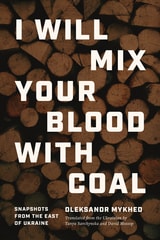
I Will Mix Your Blood with Coal
Snapshots from the East of UkraineOleksandr Mykhed, Tanya Savchynska, and David Mossop
Northwestern University Press, 2025
In 2014, the Russian army, with support from local militants, occupied parts of Ukraine’s two easternmost regions—once the beating industrial heart of the Soviet Union—where coal extraction has since exhausted both the human population and the natural resources. In late 2016, Oleksandr Mykhed set out on a research trip to explore the deep history and contested present of the area from the perspective of a fellow countryman who’d never been there.
Mykhed brings us on a painful yet hopeful journey across the Ukrainian east, sharing conversations with locals, snippets from archival documents, and the complicated perspectives of prominent cultural figures, such as writer Serhiy Zhadan, historian Olena Stiazhkina, and philosopher Ihor Kozlovsky, who was imprisoned and tortured for nearly two years.
I Will Mix Your Blood with Coal invites us to meet generations of coal miners. To learn about the Belgian and British investors who founded the east’s industrial cities. To remember the harrowing events of the First and Second World Wars and the incalculable brutality of Soviet history. To see the activists who are even now working to improve the country. To hear sweet memories of a lost utopia that never existed. Mykhed provides a unique portrait of life in the east during the war, before the full-scale invasion that would change everything.
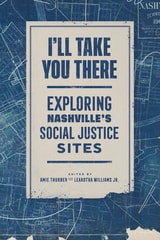
I'll Take You There
Exploring Nashville's Social Justice SitesAmie Thurber
Vanderbilt University Press, 2021
I'll Take You There is written by and with the people who most intimately know Nashville, foregrounding the struggles and achievements of people's movements toward social justice. The colloquial use of "I'll take you there" has long been a response to the call of a stranger: for recommendations of safe passage through unfamiliar territory, a decent meal and place to lay one's head, or perhaps a watering hole or juke joint.
In this book, more than one hundred Nashvillians "take us there," guiding us to places we might not otherwise encounter. Their collective entries bear witness to the ways that power has been used by social, political, and economic elites to tell or omit certain stories, while celebrating the power of counternarratives as a tool to resist injustice. Indeed, each entry is simultaneously a story about place, power, and the historic and ongoing struggle toward a more just city for all. The result is akin to the experience of asking for directions in an unfamiliar place and receiving a warm offer from a local to lead you on, accompanied by a tale or two.

Ideology of Adventure
Studies in Modern Consciousness, 1100-1750Michael Nerlich
University of Minnesota Press, 1988
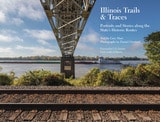
Illinois Trails & Traces
Portraits and Stories along the State’s Historic RoutesText by Gary Marx and photographs by Daniel Overturf, with a foreword by Dick Durbin
Southern Illinois University Press, 2022
FINALIST, 2023 Society of Midland Authors Award in Adult Nonfiction!
Exploring Illinois history through the paths we travel
Illinois Trails & Traces partners the deft writing of Gary Marx with vivid photography by Daniel Overturf to illuminate ever evolving patterns of travel and settlement. Taking the reader on a journey down early buffalo traces and Native American trails, this book shows how these paths evolved into wagon roads and paved highways. Marx and Overturf explore historic routes ranging from Route 66 to the Underground Railroad, all the way back to post-Ice Age animal migration trails followed by Paleo-Indian people. The authors also examine how rivers, canals, and railroads spurred the rapid rise of Illinois as a modern state.
Marx and Overturf bring history into the present by including over forty photographic portraits and written profiles of individuals who live along these routes today. Many of the people you will meet on these pages work to preserve and honor the history of these passages. Others profiled here embody the spirit of the old roads and provide a vivid link between past and present. Through this journey, we discover that we’ve all been traveling the same road all along.
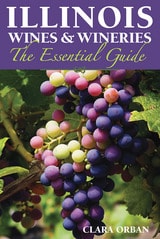
Illinois Wines and Wineries
The Essential GuideClara Orban
Southern Illinois University Press, 2014
For more than a century, Illinois has been home to a blossoming wine culture, yet winemaking in the state has not received the attention it deserves. Now, Clara Orban has created the ultimate companion to Illinois wines and wineries. This illustrated volume is a comprehensive yet user-friendly guide for both experienced wine lovers and amateur oenophiles.
Orban, a certified sommelier, begins with the history of Illinois wine production and wineries. She then enlightens readers on such wine basics as the most common grapes grown in Illinois, optimal food and wine pairings, the tenets of wine tasting, and provides an overview of the world of labels, bottles, and corks. The fascinating science of wine also is discussed, including the particulars of Illinois soil and climate and their effect on the industry. Orban then provides a guide to all the wineries listed by the Illinois Grape Growers and Vintners’ Association. For each winery, she offers a succinct history, information regarding the variety of grapes used, hours of operation, location, and contact information.
In addition to providing readers with a background of the state’s industry and snapshots of individual wineries, Illinois Wines and Wineries provides a glossary of key wine terms, including those specific to the state of Illinois, as well as color photos and a map to each location visited in the book. This sophisticated yet practical guidebook is an essential resource for connoisseurs and casual enthusiasts alike who are interested in exploring Illinois’s rich winemaking legacy.
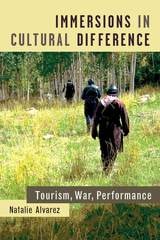
Immersions in Cultural Difference
Tourism, War, PerformanceNatalie Alvarez
University of Michigan Press, 2018
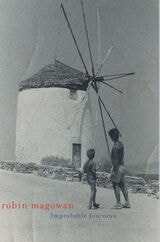
Improbable Journeys
Robin Magowan
Northwestern University Press, 2002
For more than four decades, poet Robin Magowan has journeyed in search of ecstatic spiritual experiences. Hitchhiking and walking, by bus or boat or when necessary by horse, he has explored lands as exotic as Nepal and New Guinea, as classic as Italy or France, and as forgotten as Persia and pre-Castro Cuba. All the while he has submerged himself, whether in the mysteries of Haitian voodoo or the simples pleasures of Burgundian peasant life. Known for the beauty, wit, and expressive power of his prose, Magowan's writing vibrates with the intensity of an outsider who crawls into the skin of a country--and emerges transformed.

In Byron's Footsteps
Tessa de Loo
Haus Publishing, 2010
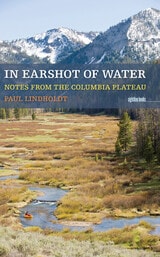
In Earshot of Water
Notes from the Columbia PlateauPaul Lindholdt
University of Iowa Press, 2011
p.MsoNormal, li.MsoNormal, div.MsoNormal { margin: 0in 0in 0.0001pt; font-size: 12pt; font-family: "Times New Roman"; }div.Section1 { page: Section1; }
Whether the subject is the plants that grow there, the animals that live there, the rivers that run there, or the people he has known there, Paul Lindholdt’s In Earshot of Water illuminates the Pacific Northwest in vivid detail. Lindholdt writes with the precision of a naturalist, the critical eye of an ecologist, the affection of an apologist, and the self-revelation and self-awareness of a personal essayist in the manner of Annie Dillard, Loren Eiseley, Derrick Jensen, John McPhee, Robert Michael Pyle, and Kathleen Dean Moore.
Exploring both the literal and literary sense of place, with particular emphasis on environmental issues and politics in the far Northwest, Lindholdt weds passages from the journals of Lewis and Clark, the log of Captain James Cook, the novelized memoir of Theodore Winthrop, and Bureau of Reclamation records growing from the paintings that the agency commissioned to publicize its dams in the 1960s and 1970s, to tell ecological and personal histories of the region he knows and loves.
In Lindholdt’s beautiful prose, America’s environmental legacies—those inherited from his blood relatives as well as those from the influences of mass culture—and illuminations of the hazards of neglecting nature’s warning signs blur and merge and reemerge in new forms. Themes of fathers and sons layer the book, as well—the narrator as father and as son—interwoven with a call to responsible social activism with appeals to reason and emotion. Like water itself, In Earshot of Water cascades across boundaries and blends genres, at once learned and literary.
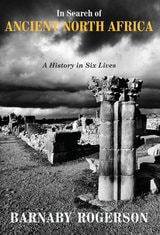
In Search of Ancient North Africa
A History in Six LivesBarnaby Rogerson
Haus Publishing, 2019
In Search of Ancient North Africa sheds new light on a time and place at the crossroads of numerous histories and cultures. It offers the first history of ancient North Africa told through the lives of North Africans themselves.
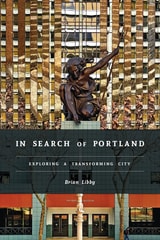
In Search of Portland
Exploring a Transforming CityBrian Libby
Oregon State University Press, 2026
“A good walking tour is not just about individual stops but the total experience of moving along a city’s streets, taking in a variety of neighborhoods, buildings, shops, parks, public art, and bridges: a chance to be the grand marshal in your own parade,” writes Brian Libby in the introduction of In Search of Portland. Starting from his 1997 home, the Empire Apartments at Southwest Eleventh Avenue and Jefferson Street, Libby shares one hundred fascinating points of interest through personal reflection, interviews, and anecdotal history.
The six excursions exploring Portland’s downtown, Old Town, and Pearl District not only focus on the city’s important landmarks and hidden gems but showcase an evolving city’s resilience and heart. Alongside his own experiences, Libby reveals how luminaries like Humphrey Bogart, Mark Rothko, Gus Van Sant, Vera Katz, and Bill Walton appreciated the City of Roses. From Pioneer Courthouse Square to the Crystal Ballroom, each location in the book celebrates the spirit of place in addition to its architecture.
More than a book about buildings, In Search of Portland reveals the stories behind the built landscape, the people, and the history that have created modern Portland.
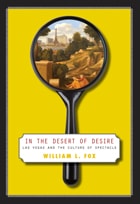
In the Desert of Desire
Las Vegas and the Culture of SpectacleWilliam L. Fox
University of Nevada Press, 2007
Las Vegas, says William Fox, is a pay-as-you-play paradise that succeeds in satisfying our fantasies of wealth and the excesses of pleasure and consumption that go with it. In this context, Fox examines how Las Vegas’s culture of spectacle has obscured the boundaries between high art and entertainment extravaganza, nature and fantasy, for-profit and nonprofit enterprises. His purview ranges from casino art galleries—including Steve Wynn’s private collection and a branch of the famed Guggenheim Museum—to the underfunded Las Vegas Art Museum; from spectacular casino animal collections like those of magicians Siegfried and Roy and Mandalay Bay’s Shark Reef exhibit to the city’s lack of support for a viable public zoo; from the environmental and psychological impact of lavish water displays in the arid desert to the artistic ambiguities intrinsic to Las Vegas’s floating world of showgirls, lapdancers, and ballet divas. That Las Vegas represents one of the world’s most opulent displays of private material wealth in all its forms, while providing miserly funding for local public amenities like museums and zoos, is no accident, Fox maintains. Nor is it unintentional that the city’s most important collections of art and exotic fauna are presented in the context of casino entertainment, part of the feast of sensation and excitement that seduces millions of visitors each year. Instead, this phenomenon shows how our insatiable modern appetite for extravagance and spectacle has diminished the power of unembellished nature and the arts to teach and inspire us, and demonstrates the way our society privileges private benefit over public good. Given that Las Vegas has been a harbinger of national cultural trends, Fox’s commentary offers prescient insight into the increasing commercialization of nature and culture across America.
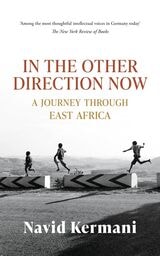
In the Other Direction Now
Dispatches from East AfricaNavid Kermani
Haus Publishing, 2026
More than a travelogue: a work of human depth and understanding that has much to teach those interested in contemporary global affairs and postcolonial realities.
Navid Kermani is an acclaimed writer already well known in the English-speaking world for his books Upheaval: The Refugee Trekthrough Europe and Along the Trenches: A Journey through Eastern Europe to Isfahan. His new book, In the Other Direction Now, continues his thoughtful documentation of global peripheries. Visiting southern Madagascar, the Comoros, Mozambique, Tanzania, Kenya, Ethiopia, and Sudan, Kermani examines how global fault lines converge, from postcolonial neglect and the devastating impact of climate change to the rising and often nefarious influence of China and the consequences of the Ukraine War.
Reflective, astute, and intellectually rigorous, Kermani’s empathetic yet unflinching perspective does not aim to interpret Africa for us, but to learn from it in all its variousness and multiplicity. Music emerges as a unifying thread—Christian hymns, Sufi dances, and Sudanese jazz become symbols of resilience and transformation, providing cultural links that bind communities across conflict, faith, and history and offering a counterpoint to colonial clichés and Western ignorance. These specific, grounded accounts of people and places contextualize global inequalities not as a product of some intrinsic African deficiency but as part of interconnected systems shaped by the Global North as much as by local governance and the legacy of colonialism.
In the Province of the Gods
Kenny Fries
University of Wisconsin Press, 2021
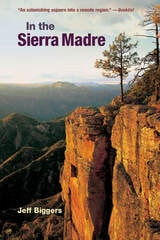
In the Sierra Madre
Jeff Biggers
University of Illinois Press, 2006
A stunning history of legendary treasure seekers and enigmatic natives in Mexico's Copper Canyon
Based on his one-year sojourn in Copper Canyon among the Raramuri/Tarahumara, award-winning journalist Jeff Biggers offers a rare look into the ways of the most resilient indigenous culture in the Americas, the exploits of Mexican mountaineers, and the fascinating parade of argonauts and accidental travelers who have journeyed into the Sierra Madre over centuries. From African explorers, Bohemian friars, Confederate and Irish war deserters, French poets, Boer and Russian commandos, Apache and Mennonite communities, bewildered archaeologists, addled writers, and legendary characters including Antonin Artaud, Henry Flipper, B. Traven, Sergei Eisenstein, George Patton, Geronimo, and Pancho Villa, Biggers uncovers the remarkable treasures of the Sierra Madre.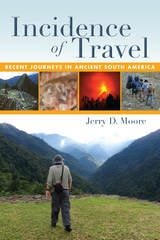
Incidence of Travel
Recent Journeys in Ancient South AmericaJerry D. Moore
University Press of Colorado, 2017
In Incidence of Travel, archaeologist Jerry Moore draws on his personal experiences and historical and archaeological studies throughout South America to explore and understand the ways traditional peoples created cultural landscapes in the region. Using new narrative structures, Moore introduces readers to numerous archaeological sites and remains, describing what it is like to be in the field and sparking further reflection on what these places might have been like in the past.
From the snow-capped mountains of Colombia to the arid deserts of Peru and Chile, ancient peoples of South America built cities, formed earthen mounds, created rock art, and measured the cosmos—literally inscribing their presence and passage throughout the continent. Including experiences ranging from the terrifying to the amusing, Moore’s travels intersect with the material traces of traditional cultures. He refers to this intersection as "the incidence of travel." Braiding the tales of his own journeys with explanations of the places he visits through archaeological, anthropological, and historical contexts, Moore conveys the marvelous and intriguing complexities of prehistoric and historic peoples of South America and the ways they marked their presence on the land.
Combining travel narrative and archaeology in a series of essays—accounts of discoveries, mishaps of travel, and encounters with modern people living in ancient places—Incidence of Travel will engage any general reader, student, or scholar with interest in archaeology, anthropology, Latin American history, or storytelling.
Indonesian Notebook
A Sourcebook on Richard Wright and the Bandung ConferenceBrian Russell Roberts and Keith Foulcher, editors
Duke University Press, 2016
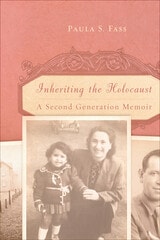
Inheriting the Holocaust
A Second-Generation MemoirPaula S. Fass
Rutgers University Press, 2011
Fass begins her journey through time and relationships when she travels to Poland and locates birth certificates of the murdered siblings she never knew. That journey to recover her family's story provides her with ever more evidence for the perplexing reliability of memory and its winding path toward historical reconstruction. In the end, Fass recovers parts of her family's history only to discover that Poland is rapidly re-imagining the role Jews played in the nation's past.
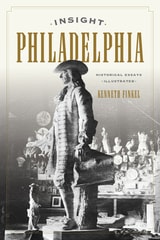
Insight Philadelphia
Historical Essays IllustratedFinkel, Kenneth
Rutgers University Press, 2018
Illustrated with scores of rare archival images, Insight Philadelphia will give readers a new appreciation for the people and places that make the City of Brotherly Love so unique.
Inspired Journeys
Travel Writers in Search of the MuseEdited by Brian Bouldrey
University of Wisconsin Press, 2016
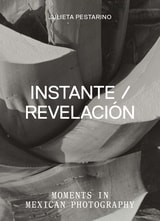
Instante/revelacion
Moments in Mexican PhotographyJulieta Pestarino
J. Paul Getty Trust, The, 2026
Presenting nearly 150 pictures made between 1920 and 2017, Instante/revelación highlights the work of thirteen renowned photographers who feature prominently in the history of the medium in Mexico, including Lola and Manuel Álvarez Bravo, Graciela Iturbide, and Pablo Ortiz Monasterio.
Through a dynamic selection of images, the publication explores some of the intertwined sociocultural forces that shape life and art in Mexico. Among the photographs are stunning presentations of landscapes, architecture, and flora and fauna from across the country; depictions of daily life; and portraits of esteemed Mexican artists and writers such as Diego Rivera, Frida Kahlo, and Octavio Paz. An illustrated essay examines the significant role photobooks and periodicals played in disseminating these images.
The photographers featured in this volume are linked by friendship, influence, and collaboration. Their works, when viewed together as a collective narrative, reveal the spirit of fruitful exchange that characterizes this exciting chapter in Mexico's photographic history.
This volume is published to accompany an exhibition on view at the J. Paul Getty Museum at the Getty Center from September 1, 2026, to January 3, 2027.
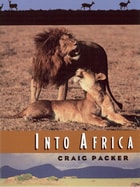
Into Africa
Craig Packer
University of Chicago Press, 1994
As in the works of George Schaller and Cynthia Moss, Packer transports us to life in the field. He is addicted to this land—to the beauty of a male lion striding across the Serengeti plains, to the calls of a baboon troop through the rain forests of Gombe—and to understanding the animals that inhabit it. Through his vivid narration, we feel the dust and the bumps of the Arusha Road, smell the rosemary in the air at lunchtime on a Serengeti verandah, and hear the lyrics of the Grateful Dead playing off bootlegged tapes.
Into Africa also explores the social lives of the animals and the threats to their survival. Packer grapples with questions he has passionately tried to answer for more than two decades. Why do female lions raise their young in crèches? Why do male baboons move from troop to troop while male chimps band together? How can humans and animals continue to coexist in a world of diminishing resources? Immediate demands—logistical nightmares, political upheavals, physical exhaustion—yield to the larger inescapable issues of the interdependence of the land, the animals, and the people who inhabit it.
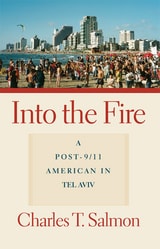
Into the Fire
A Post-9/11 American in Tel AvivCharles T. Salmon
Michigan State University Press, 2003
In the fall of 2001 Charles Salmon had a Fulbright fellowship in Israel. He was due to depart on September 12. Arriving in Israel a few weeks later, speaking no Hebrew and largely unfamiliar with Judaism and Israeli customs, he immersed himself in Israeli culture.
This collection of correspondence began as a weekly report to friends and was designed to offer an alternative to mainstream media. With the excitement of a tourist and the eagerness of an anthropologist, Salmon emerges as a modern Candide. He describes historical sites and a supermarket in Tel Aviv, discusses the differences between university students in Israel and America, and negotiates the purchase of food and the vagaries of the weather with humor and passion. The letters also discuss Israeli–Palestinian relations, and details terrorist events and responses to them.
This unique book focuses on how everyday hopes and fears transcend geopolitical boundaries and provides valuable lessons on how to thrive in these new and uncertain times.
Inventing Paradise
The Greek Journey, 1937-47Edmund Keeley
Northwestern University Press, 2002
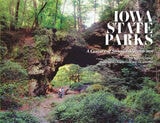
Iowa State Parks
A Century of Stewardship, 1920-2020Rebecca Conard, Angela Corio, and Jim Scheffler
University of Iowa Press, 2020
The photo essays at the heart of this book feature the artistry of well-known nature photographers such as Carl Kurtz, Brian Gibbs, Don Poggensee, and Larry Stone. The images help tell the stories of Iowa’s state parks, recreation areas, preserves, and forests. A historical overview sets the stage, followed by essays on key aspects of our park system.
Irish Journal
Heinrich Boll
Northwestern University Press, 1998
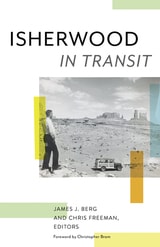
Isherwood in Transit
James J. Berg
University of Minnesota Press, 2020
New perspectives on Christopher Isherwood as a searching and transnational writer
“Perhaps I had traveled too much, left my heart in too many places,” muses the narrator of Christopher Isherwood’s novel Prater Violet (1945), which he wrote in his adopted home of Los Angeles after years of dislocation and desperation. In Isherwood in Transit, James J.Berg and Chris Freeman bring together diverse Isherwood scholars to understand the challenges this writer faced as a consequence of his travel.
Based on a conference at the Huntington Library, where Isherwood’s recently opened papers are held, Isherwood in Transit considers the writer not as an English, continental, or American writer but as a transnational one, whose identity, politics, and beliefs were constantly transformed by global connections and engagements arising from journeys to Germany, Japan, China, and Argentina; his migration to the United States; and his conversion to Vedanta Hinduism in the 1940s.
Approaching Isherwood’s rootlessness and restlessness from various perspectives, these essays show that long after he made a new home in California and became an American citizen, Christopher Isherwood remained unsettled, although his wanderings became spiritual and personal rather than geographic.
Contributors: Barrie Jean Borich, DePaul U; Jamie Carr, Niagara U; Robert L. Caserio, Penn State U, University Park; Lisa Colletta, American U of Rome; Lois Cucullu, U of Minnesota; Jaime Harker, U of Mississippi; Carola M. Kaplan, California State U, Pomona; Calvin W. Keogh, Central European U, Budapest; Victor Marsh; Wendy Moffat, Dickinson College; Xenobe Purvis; Bidhan Roy, California State U, Los Angeles; Katharine Stevenson, U of Texas at Austin; Edmund White.
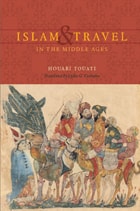
Islam and Travel in the Middle Ages
Houari Touati
University of Chicago Press, 2010
In the Middle Ages, Muslim travelers embarked on a rihla, or world tour, as surveyors, emissaries, and educators. On these journeys, voyagers not only interacted with foreign cultures—touring Greek civilization, exploring the Middle East and North Africa, and seeing parts of Europe—they also established both philosophical and geographic boundaries between the faithful and the heathen. These voyages thus gave the Islamic world, which at the time extended from the Maghreb to the Indus Valley, a coherent identity.
Islam and Travel in the Middle Ages assesses both the religious and philosophical aspects of travel, as well as the economic and cultural conditions that made the rihla possible. Houari Touati tracks the compilers of the hadith who culled oral traditions linked to the prophet, the linguists and lexicologists who journeyed to the desert to learn Bedouin Arabic, the geographers who mapped the Muslim world, and the students who ventured to study with holy men and scholars. Travel, with its costs, discomforts, and dangers, emerges in this study as both a means of spiritual growth and a metaphor for progress. Touati’s book will interest a broad range of scholars in history, literature, and anthropology.
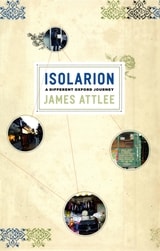
Isolarion
A Different Oxford JourneyJames Attlee
University of Chicago Press, 2007
Through the centuries, people from all walks of life have heard the siren call of a pilgrimage, the lure to journey away from the familiar in search of understanding. But is a pilgrimage even possible these days for city-dwellers enmeshed in the pressures of work and family life? Or is there a way to be a pilgrim without leaving one’s life behind? James Attlee answers these questions with Isolarion, a thoughtful, streetwise, and personal account of his pilgrimage to a place he thought he already knew—the Cowley Road in Oxford, right outside his door.
Isolarion takes its title from a type of fifteenth-century map that isolates an area in order to present it in detail, and that’s what Attlee, sharp-eyed and armed with tape recorder and notebook, provides for Cowley Road. The former site of a leper hospital, a workhouse, and a medieval well said to have miraculous healing powers, Cowley Road has little to do with the dreaming spires of the tourist’s or student’s Oxford. What Attlee presents instead is a thoroughly modern, impressively cosmopolitan, and utterly organic collection of shops, restaurants, pubs, and religious establishments teeming with life and reflecting the multicultural makeup of the surrounding neighborhood.
From a sojourn in a sensory-deprivation tank to a furtive visit to an unmarked pornography emporium, Attlee investigates every aspect of the Cowley Road’s appealingly eclectic culture, where halal shops jostle with craft jewelers and reggae clubs pulsate alongside quiet churchyards. But the very diversity that is, for Attlee, the essence of Cowley Road’s appeal is under attack from well-meaning city planners and predatory developers. His pilgrimage is thus invested with melancholy: will the messy glories of the Cowley Road be lost to creeping homogenization?
Drawing inspiration from sources ranging from Robert Burton’s The Anatomy of Melancholy to contemporary art, Attlee is a charming and companionable guide who revels in the extraordinary embedded in the everyday. Isolarion is at once a road movie, a quixotic stand against uniformity, and a rousing hymn in praise of the complex, invigorating nature of the twenty-first-century city.
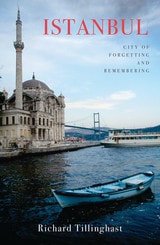
Istanbul
City of Forgetting and RememberingRichard Tillinghast
Haus Publishing, 2017
Istanbul was known in Byzantine times as the “Queen of Cities” and to the Ottoman Turks as the “Abode of Felicity.” Steeped in Istanbul’s history, Tillinghast takes his readers on a voyage of discovery through this storied cultural hub, and he is as comfortable talking about Byzantine mosaics and dervish ceremonies as Iznik ceramics and the imperial mosques. His lyrical writing brings Istanbul alive on the page as he accompanies readers to cafés, palaces, and taverns, perfectly conjuring the atmospheric delights, sounds, and senses of the city. Illuminating Istanbul’s great buildings with tales that bring Ottoman and Byzantine history to life, Tillinghast is adept at discovering both what the city remembers and what it chooses to forget.

It's a Living
Work and Life in Vietnam TodayEdited by Gerard Sasges
National University of Singapore Press, 2013
Based on frank and freewheeling interviews conducted by students, the book engages a broad range of Vietnamese, both living in Vietnam and abroad, on their feelings about work, life and getting ahead. By providing a ground-level view of the texture of daily working life in the midst of rapid and unsettling change, the book reveals Vietnam today as a place where ordinary people are leveraging whatever assets they have, not just to survive, but to make a better life for themselves.
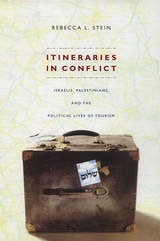
Itineraries in Conflict
Israelis, Palestinians, and the Political Lives of TourismRebecca L. Stein
Duke University Press, 2008
Combining vivid ethnographic detail, postcolonial theory, and readings of Israeli and Palestinian popular texts, Stein considers a broad range of Israeli leisure cultures of the Oslo period with a focus on the Jewish desires for Arab things, landscapes, and people that regional diplomacy catalyzed. Moving beyond conventional accounts, she situates tourism within a broader field of “discrepant mobility,” foregrounding the relationship between histories of mobility and immobility, leisure and exile, consumption and militarism. She contends that the study of Israeli tourism must open into broader interrogations of the Israeli occupation, the history of Palestinian dispossession, and Israel’s future in the Arab Middle East. Itineraries in Conflict is both a cultural history of the Oslo process and a call to fellow scholars to rethink the contours of the Arab-Israeli conflict by considering the politics of popular culture in everyday Israeli and Palestinian lives.