Results by title
111 books match the query 'Trials, litigation, etc' and 2 start with i
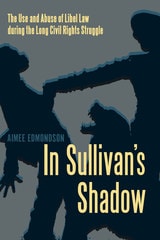
In Sullivan's Shadow
The Use and Abuse of Libel Law during the Long Civil Rights StruggleAimee Edmondson
University of Massachusetts Press, 2019
Drawing on archival research and scholarship in journalism, legal history, and African American studies, Edmondson offers a new narrative of brave activists, bold journalists and publishers, and hardheaded southern officials. These little-known courtroom dramas at the intersection of race, libel, and journalism go beyond the activism of the 1960s and span much of the country's history, beginning with lawsuits filed against abolitionist William Lloyd Garrison and concluding with a suit spawned by the 1988 film Mississippi Burning.
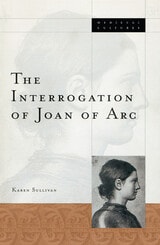
Interrogation Of Joan Of Arc
Karen Sullivan
University of Minnesota Press, 1999
A radical reassessment of the trial of Joan of Arc that gives a new sense of Joan in her time.
The transcripts of Joan of Arc’s trial for heresy at Rouen in 1431 and the minutes of her interrogation have long been recognized as our best source of information about the Maid of Orleans. Historians generally view these legal texts as a precise account of Joan’s words and, by extension, her beliefs. Focusing on the minutes recorded by clerics, however, Karen Sullivan challenges the accuracy of the transcript. In The Interrogation of Joan of Arc, she re-reads the record not as a perfect reflection of a historical personality’s words, but as a literary text resulting from the collaboration between Joan and her interrogators.
Sullivan provides an illuminating and innovative account of Joan’s trial and interrogation, placing them in historical, social, and religious context. In the fifteenth century, interrogation was a method of truth-gathering identified not with people like Joan, who was uneducated, but with clerics, like those who tried her. When these clerics questioned Joan, they did so as scholastics educated at the University of Paris, as judges and assistants to judges, and as pastors trained in hearing confessions.The Interrogation of Joan of Arc traces Joan’s conflicts with her interrogators not to differing political allegiances, but to fundamental differences between clerical and lay cultures. Sullivan demonstrates that the figure depicted in the transcripts as Joan of Arc is a complex, multifaceted persona that results largely from these cultural differences. Discerning and innovative, this study suggests a powerful new interpretive model and redefines our sense of Joan and her time.