Results by title
18284 books match the query 'United States' and 636 start with i
I Acted from Principle
The Civil War Diary of Dr. William M. McPheeters, Confederate Surgeon in the Trans-MississippiCynthia DeHaven Pitcock
University of Arkansas Press, 2000

I Am Fighting for the Union
The Civil War Letters of Naval Officer Henry Willis WellsHenry Willis Wells, edited and introduced by Robert M. Browning Jr.
University of Alabama Press, 2023
A young officer’s insightful, detailed and steadfast devotion to the Union Navy—told in his own words.
On May 18, 1862, Henry Willis Wells wrote a letter to his mother telling her in clear terms, “I am fighting for the Union.” Since August 1861, when he joined the US Navy as a master’s mate he never wavered in his loyalty. He wrote to his family frequently that he considered military service a necessary and patriotic duty, and the career that ensued was a dramatic one, astutely and articulately documented by Wells in more than 200 letters home, leaving an invaluable account of daily life in the Union Navy.
Wells joined the navy shortly after the war began, initially on board the Cambridge, attached to the North Atlantic Blockading Squadron, which patrolled the waters of the Chesapeake Bay. He witnessed the Battle of Hampton Roads and the fight between the ironclads CSS Virginia and the USS Monitor. Next, the Cambridge assisted in the blockade of Wilmington, North Carolina. In one instance, the warship chased the schooner J. W. Pindar ashore during her attempt to run the blockade, and Confederate forces captured Henry’s boarding party. After a short prison stay in the infamous Libby Prison in Richmond, his Confederate captors paroled Henry. He travelled back to Brookline, and soon thereafter the Navy Department assigned him to the gunboat Ceres, which operated on the sounds and rivers of North Carolina, protecting army positions ashore. Henry was on board during the Confederate attempt to capture Washington, North Carolina. During this April 1863 attack, Henry was instrumental in the town’s defense, commanding a naval battery ashore during the latter part of the fight.
His exceptional service gained him a transfer to a larger warship, the USS Montgomery, again on the blockade of Wilmington. Later the service assigned him to the Gem of the Sea, part of the East Gulf Blockading Squadron. Through his hard work and professionalism, he finally earned his first command. In September 1864, he became the commanding officer of the Rosalie, a sloop used as a tender to the local warships. Later he commanded the schooner Annie, also a tender. At the end of December 1864, however, the Annie suffered a massive explosion, killing all hands, including Wells. He was twenty-three years old when his life and career ended tragically. Wells’s letters document both his considerable achievements and his frustrations. His challenges, triumphs, and disappointments are rendered with candor. I Am Fighting for the Union is a vital and deeply personal account of a momentous chapter in the history of the Civil War and its navies.

I Am Here You Are Not I Love You
Andrew Topolski, Cindy Suffoletto, and Their Life in the ArtsAidan Ryan
University of Iowa Press, 2025
The book presents a critical reexamination of Andrew Topolski, an overlooked luminary of intermedia and postminimalism. In repositioning Topolski’s legacy and vast body of work, Ryan makes compelling findings about the interplay of talent, luck, and community support in the making or breaking of artistic careers. At the same time, the story shares the significant and never-before-seen body of work by Cindy Suffoletto, a talented and inventive artist little shown and never cataloged during her short life. Ultimately, Ryan argues that the time is right for both to take up a privileged place among the great artists of their generation.
I Am Looking to the North for My Life
Sitting Bull 1876 - 1881Joseph Manzione
University of Utah Press, 1991
What happened to the Sioux after Little Bighorn? In the winter of 1877, many escaped with Sitting Bull to Canada, precipitating an international incident and setting three governments at each other for five years. Resolution came only in 1881 with the demise of the buffalo herds in the Northwest Territories. Faced with starvation, the Sioux returned to the United States.
Relying upon primary source documents in both the United States and Canada, Manzione skillfully illustrates how two countries struggled to control a potentially explosive border situation while steadfastly looking the other way as a valiant culture came to its bitter fate.

I Believe I'll Go Back Home
Roots and Revival in New England Folk MusicThomas S. Curren
University of Massachusetts Press, 2021
Fueled by interviews with key players from the folk music scene, I Believe I'll Go Back Home traces a direct line from Yankee revolutionaries, up-country dancers, and nineteenth-century pacifists to the emergence of blues and rock 'n' roll, ultimately landing at the period of the folk revival. Thomas S. Curren presents the richness and diversity of the New England folk tradition, which continues to provide perspective, inspiration, and healing in the present day.

I Belong to This Band, Hallelujah!
Community, Spirituality, and Tradition among Sacred Harp SingersLaura Clawson
University of Chicago Press, 2011
The Sacred Harp choral singing tradition originated in the American South in the mid-nineteenth century, spread widely across the country, and continues to thrive today. Sacred Harp isn’t performed but participated in, ideally in large gatherings where, as the a cappella singers face each other around a hollow square, the massed voices take on a moving and almost physical power. I Belong to This Band, Hallelujah! is a vivid portrait of several Sacred Harp groups and an insightful exploration of how they manage to maintain a sense of community despite their members’ often profound differences.
Laura Clawson’s research took her to Alabama and Georgia, to Chicago and Minneapolis, and to Hollywood for a Sacred Harp performance at the Academy Awards, a potent symbol of the conflicting forces at play in the twenty-first-century incarnation of this old genre. Clawson finds that in order for Sacred Harp singers to maintain the bond forged by their love of music, they must grapple with a host of difficult issues, including how to maintain the authenticity of their tradition and how to carefully negotiate the tensions created by their disparate cultural, religious, and political beliefs.
I Came a Stranger
The Story of a Hull-House GirlHilda Satt Polacheck
University of Illinois Press, 1989
I Died a Million Times
Gangster Noir in Midcentury AmericaRobert Miklitsch
University of Illinois Press, 2020
With the Senate's organized crime hearings and the brighter-than-bright myth of the American Dream as a backdrop, Miklitsch examines the style and history, and the production and cultural politics, of classic pictures from The Big Heat and The Asphalt Jungle to lesser-known gems like 711 Ocean Drive and post-Fifties movies like Ocean’s Eleven. Miklitsch pays particular attention to trademark leitmotifs including the individual versus the collective, the family as a locus of dissension and rapport, the real-world roots of the heist picture, and the syndicate as an octopus with its tentacles deep into law enforcement, corporate America, and government. If the memes of gangster noir remain prototypically dark, the look of the films becomes lighter and flatter, reflecting the influence of television and the realization that, under the cover of respectability, crime had moved from the underworld into the mainstream of contemporary everyday life.

I Do Wish This Cruel War Was Over
First-Person Accounts of Civil War Arkansas from the Arkansas Historical QuarterlyMark K. Christ
University of Arkansas Press, 2014
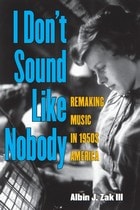
I Don't Sound Like Nobody
Remaking Music in 1950s AmericaAlbin J. Zak III
University of Michigan Press, 2012
"In Albin J. Zak III's highly original study, phonograph records are not just the medium for disseminating songs but musical works unto themselves. Fashioned from a mix of copyright law, recording studios and techniques, the talent of musicians and disc jockeys, the ingenuity and avarice of producers, and the appetites of record buyers, the all-powerful marketplace Zak describes is an unruly zone where music of, by, and for the people is made and anointed."
---Richard Crawford, author of America's Musical Life: A History
"Wrestling clarity from the exuberant chaos of early rock 'n' roll, Albin Zak's I Don't Sound Like Nobody redefines our understanding of the record in the shaping of the post–World War II soundscape. Zak tracks the story which extends from Bing Crosby and Frank Sinatra through Elvis and Buddy Holly to the Beatles and Bob Dylan with excursions into dozens of lesser known, but crucial, players in a game with few established rules. A crucial addition to the bookshelf."
---Craig Werner, author of A Change Is Gonna Come: Music, Race & the Soul of America
"I Don't Sound Like Nobody is a superb account of the transformation of American popular music in the 1950s. Albin Zak insightfully explores what recording actually means in terms of the process of making and consuming music. His discussion of the legal, aesthetic, and industrial ramifications of changes in the recording process over the course of the 1950s will make popular music scholars and record collectors reconsider what they think they know about the period."
---Rob Bowman, author of Soulsville, U.S.A.: The Story of Stax Records
"Informative, original, and entertaining. Through a narrative that is not only enlightening but also compelling, I Don't Sound Like Nobody probes the sources and mechanisms of change within post-war American popular music, shedding a cultural and historical light on the convergence of musical idioms that created '50s rock and roll."
---Stan Hawkins, author of Settling the Pop Score
"From the birth of the record industry through the legacy of Presley, the development of rock and roll, and the Beatles 'stunning arrival on the world's stage,' Albin Zak takes us on a journey of exceptional scholarship. The breadth of coverage and deep examination of recordings and repertoire reveal the author's reverence and sensitivity to the many dimensions and origins of this complex musical soundscape."
---William Moylan, author of Understanding and Crafting the Mix: The Art of Recording
The 1950s marked a radical transformation in American popular music as the nation drifted away from its love affair with big band swing to embrace the unschooled and unruly new sounds of rock 'n' roll.
The sudden flood of records from the margins of the music industry left impressions on the pop soundscape that would eventually reshape long-established listening habits and expectations, as well as conventions of songwriting, performance, and recording. When Elvis Presley claimed, "I don't sound like nobody," a year before he made his first commercial record, he unwittingly articulated the era's musical Zeitgeist.
The central story line of I Don't Sound Like Nobody is change itself. The book's characters include not just performers but engineers, producers, songwriters, label owners, radio personalities, and fans---all of them key players in the decade's musical transformation.
Written in engaging, accessible prose, Albin Zak's I Don't Sound Like Nobody approaches musical and historical issues of the 1950s through the lens of recordings and fashions a compelling story of the birth of a new musical language. The book belongs on the shelf of every modern music aficionado and every scholar of rock 'n' roll.
Albin J. Zak III is Professor of Music at the University at Albany, State University of New York. He is the editor of The Velvet Underground Companion and the author of The Poetics of Rock: Cutting Tracks, Making Records, a groundbreaking study of rock music production. Zak is also a record producer, songwriter, singer, and guitarist.Jacket design by Paula Newcomb
Jacket photograph © Eve Arnold/Magnum Photos
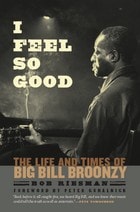
I Feel So Good
The Life and Times of Big Bill BroonzyBob Riesman
University of Chicago Press, 2011
A major figure in American blues and folk music, Big Bill Broonzy (1903–1958) left his Arkansas Delta home after World War I, headed north, and became the leading Chicago bluesman of the 1930s. His success came as he fused traditional rural blues with the electrified sound that was beginning to emerge in Chicago. This, however, was just one step in his remarkable journey: Big Bill was constantly reinventing himself, both in reality and in his retellings of it. Bob Riesman’s groundbreaking biography tells the compelling life story of a lost figure from the annals of music history.
I Feel So Good traces Big Bill’s career from his rise as a nationally prominent blues star, including his historic 1938 appearance at Carnegie Hall, to his influential role in the post-World War II folk revival, when he sang about racial injustice alongside Pete Seeger and Studs Terkel. Riesman’s account brings the reader into the jazz clubs and concert halls of Europe, as Big Bill's overseas tours in the 1950s ignited the British blues-rock explosion of the 1960s. Interviews with Eric Clapton, Pete Townshend, and Ray Davies reveal Broonzy’s profound impact on the British rockers who would follow him and change the course of popular music.
Along the way, Riesman details Big Bill’s complicated and poignant personal saga: he was married three times and became a father at the very end of his life to a child half a world away. He also brings to light Big Bill’s final years, when he first lost his voice, then his life, to cancer, just as his international reputation was reaching its peak. Featuring many rarely seen photos, I Feel So Good will be the definitive account of Big Bill Broonzy’s life and music.
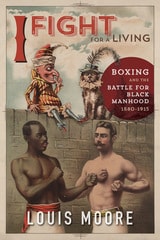
I Fight for a Living
Boxing and the Battle for Black Manhood, 1880-1915Louis Moore
University of Illinois Press, 2017
Louis Moore draws on the life stories of African American fighters active from 1880 to 1915 to explore working-class black manhood. As he details, boxers bought into American ideas about masculinity and free enterprise to prove their equality while using their bodies to become self-made men. The African American middle class, meanwhile, grappled with an expression of public black maleness they saw related to disreputable leisure rather than respectable labor. Moore shows how each fighter conformed to middle-class ideas of masculinity based on his own judgment of what culture would accept. Finally, he argues that African American success in the ring shattered the myth of black inferiority despite media and government efforts to defend white privilege.
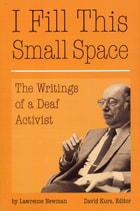
I Fill This Small Space
The Writings of a Deaf ActivistLawrence Newman
Gallaudet University Press, 2009
Lawrence Newman became deaf at the age of five in 1930, and saw his father fight back tears knowing that his son would never hear again. The next time he saw his father cry was in 1978, when Newman received an honorary doctorate from Gallaudet University, his alma mater. Newman was recognized for his achievements as a life-long advocate for deaf education, including receiving California’s Teacher of the Year award in 1968. Perhaps his greatest influence, however, stemmed from his many articles and columns that appeared in various publications, the best of which are featured in I Fill This Small Space: The Writings of a Deaf Activist.
Editor David Kurs has organized Newman’s writings around his passions — deaf education, communication and language, miscellaneous columns and poems on Deaf life, and humorous insights on his activism. His articles excel both as seamless arguments supporting his positions and as windows on the historical conflicts that he fought: against the Least Restrictive Environment in favor of residential deaf schools; for sign language, Total Communication, and bilingual education; and as a deaf teacher addressing parents of deaf children. A gifted writer in all genres, Newman amuses with ease (“On Mini and Midi-Skirts”), and moves readers with his heartfelt verse (“Girl with a Whirligig”). Newman ranges wide in his ability, but he always maintains his focus on equal tights for deaf people, as he demonstrates in his title poem “I Fill This Small Space:”
I fill this small space, this time
Who is to say yours is better
Than mine or mine yours
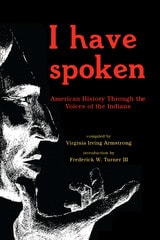
I Have Spoken
American History Through The Voices Of The IndiansVirginia I. Armstrong
Ohio University Press, 1971
I Have Spoken is a collection of American Indian oratory from the 17th to the 20th century, concentrating on speeches focusing around Indian-white relationships, especially treaty-making negotiations. A few letters and other writings are also included.
Here, in their own words, is the Indian’s story told with integrity, with drama, with caustic wit, with statesmanship, with poetic impact; a story of proffered friendship, of broken promises, of hope, of disillusionment, of pride, of a whole land and life gone sour.
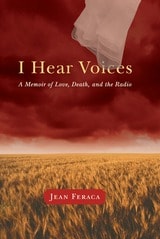
I Hear Voices
A Memoir of Love, Death, and the RadioJean Feraca
University of Wisconsin Press, 2007
Jean Feraca’s road to self-fulfillment has been as quirky and demanding as the characters in her incredible memoir. A veteran of several decades of public radio broadcasting, Feraca is also a writer and a poet. She is a talk show host beloved for her unique mixture of the humanities, poetry, and journalism, and is the creator of the pioneering international cultural affairs radio program Here on Earth: Radio without Borders.
In this searing memoir, Feraca traces her own emergence. She pulls back the curtain on her private life, revealing unforgettable portraits of the characters in her brawling Italian-American family: Jenny, the grandmother, the devil woman who threw Casey Stengel down an excavation pit; Dolly, the mother, a cross between Long John Silver and the Wife of Bath, who in battling mental illness becomes the scourge of a Lutheran nursing home; and Stephen, the brilliant but troubled older brother, an anthropologist adopted by a Sioux tribe. In a new chapter that reinforces and ties together the book’s exploration of the multiple forms of love, Jean introduces us to Roger, a Wildman and her husband’s best friend with whom she, too, develops an extraordinary intimacy. A selection of fifteen of Feraca’s poems add counterpoint to her engaging prose.

I Heart Obama
Erin Aubry Kaplan
University Press of New England, 2016

I Hid It under the Sheets
Growing Up with RadioGerald Eskenazi
University of Missouri Press, 2005
Imagine that there was a time in America when a child sat next to a radio and simply listened. But didn’t just listen, was enthralled and knew that this time was his alone, that he was part of the vortex of drama unfolding inside the radio’s innards. . . . I never saw a punch thrown, or a glass shatter, or a blood-smeared shirt as I listened to the radio. Nor did I know Barbara Stanwyck’s hairstyle as she overacted in Sorry, Wrong Number on the Lux Radio Theatre. And I had no idea how corpulent Happy Felton was as he dropped ten silver dollars that jangled into a Sheffield’s Milk bottle on Guess Who. (Yes, ten bucks was what you won on that show.) Instead, I imagined it all.
I Hid It under the Sheets captures a bygone era—the late 1930s, 1940s, and early 1950s—through the reminiscences of award-winning New York Times reporter Gerald Eskenazi. This first-person recollection shows radio’s broad impact on his generation and explains how and why it became such a major factor in shaping America and Americans.

I Know It’s Dangerous
Why Mexicans Risk Their Lives to Cross the BorderLynnaire M. Sheridan
University of Arizona Press, 2009
As an Australian national, Lynnaire Sheridan brings a refreshingly neutral voice to this hot-button topic. With data gathered over two years of living in Baja California, Mexico, Sheridan draws out individual stories, motivations, and conceptions of risk that ultimately allow us a deeper understanding of migration. Sheridan enriches the migrants’ stories with examinations of popular songs, graffiti art on the border, analyses of newspaper articles, and in-depth interviews with migrants. Together these narratives show us that risk has become a strong motivating factor for migrants and that stricter border policies have not necessarily stemmed the rates of migration; they have merely changed how people migrate.
Sheridan’s findings have broad implications for both those interested in migration from Mexico to the United States and international migration scholars. This book will appeal to a range of disciplines in the humanities, from anthropology and criminology to art and ethnic studies. It will also resonate among legal professionals, policy makers, and social workers.
While numerous books have focused on the act of migration and its ripples across both the United States and Mexico, this book is unique in its attention to migrants in Mexico and its ability to draw out their individual stories.
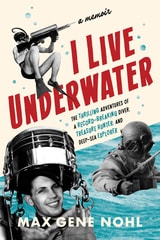
I Live Underwater
The Thrilling Adventures of a Record-Breaking Diver, Treasure Hunter, and Deep-Sea ExplorerMax Nohl
Wisconsin Historical Society Press, 2025
I Live Underwater is the highly anticipated posthumous memoir of Max Nohl, a larger-than-life thrill seeker and treasure hunter who revolutionized deep-sea diving. Recounting harrowing experiences with tangled air-hoses, hungry sharks, untested scientific theories, and painful cases of the bends, Nohl’s vivid narrative shows how his unquenchable thirst for adventure propelled him to transcend fear and become one of the field’s great innovators—shattering the diving record in 1937 as the first person to dive deeper than 400 feet.
Beginning with the disquieting childhood experiences that inspired his obsession with the underwater world, Nohl goes on to discuss his innovative work on the first self-contained diving suit as a student at MIT and his risky experiments in breathing helium to achieve deeper dives. In addition to making vital contributions to the commercial diving industry, Nohl was a pioneer in underwater filming, developing equipment and techniques that were employed in many Hollywood film and television productions.
After Nohl’s sudden death in 1960 in a car accident, his nearly complete memoir sat in the Milwaukee Public Library Archives—unpublished, until now. Accompanying this page-turning text is a dynamic assortment of images, including Nohl’s original pen-and-ink sketches and historic photos of Nohl and his collaborators. A foreword by Wisconsin Historical Society maritime archaeologist Tamara Thomsen provides insights into Nohl’s many important contributions to the diving world and to Wisconsin history and culture.
Includes stories of dives in Lake Michigan (near Milwaukee), the North Atlantic (near Marblehead and Martha’s Vineyard), Walden Pond, the Gulf Coast (near Morgan City, Louisiana, and Panama City, Apalachicola, Wakulla Springs, and Tarpon Springs in Florida), and the Caribbean (near Haiti and the Dominican Republic).
I Lived to Tell the World
Stories from Survivors of Holocaust, Genocide, and the Atrocities of WarElizabeth Mehren
Oregon State University Press, 2024
The 2025 Oregon Center for the Book Adult Readers' Selection
The 2025 NYC BIG BOOK AWARD Distinguished Favorite in the category of Cultural and Social Issues
Foreword INDIES 2024 Book of the Year Award Finalist - Multiculturalism & Regional
As Americans increasingly question how each of us fits into our nation's cultural tapestry, I Lived to Tell the World presents thirteen inspiring profiles of refugees who have settled in Oregon. They come from Rwanda, Myanmar, Bosnia, Syria, and more-different stories, different conflicts, but similar paths through loss and violence to a new, not always easy, life in the United States. The in-depth profiles are drawn from hours of interviews and oral histories; journalist Elizabeth Mehren worked collaboratively with the survivors to honor the complexity of their experiences and to ensure that the stories are told with, and not just about, them. Mehren also weaves in historical, cultural, and political context alongside these personal stories of resilience.
In the face of global cruelty and hatred, the courage and fortitude of these individuals illuminate the darkness. Their stories inspire readers to reflect on their own experiences and to view newcomers to America with renewed respect. As more states adopt Holocaust and genocide education curricula and as issues around refugees, immigration, and racial justice gain attention, I Lived to Tell the World highlights the purposeful lives led by these Oregonians despite their painful pasts. Their experiences not only humanize the atrocities often seen in headlines, but also convey a universal message of hope.

I Love My Selfie
Essay by Ilan Stavans / Auto-Portraits by ADÁL
Duke University Press, 2017
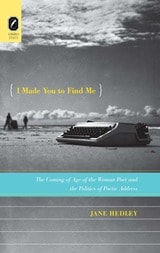
I Made You to Find Me
The Coming of Age of the Woman Poet and the Politics of Poetic AddressJane Hedley
The Ohio State University Press, 2009

I Must Not Think Bad Thoughts
Drive-by Essays on American Dread, American DreamsMark Dery
University of Minnesota Press, 2014
From the cultural critic Wired called “provocative and cuttingly humorous” comes a viciously funny, joltingly insightful collection of drive-by critiques of contemporary America where chaos is the new normal. Exploring the darkest corners of the national psyche and the nethermost regions of the self—the gothic, the grotesque, and the carnivalesque—Mark Dery makes sense of the cultural dynamics of the American madhouse early in the twenty-first century.
Here are essays on the pornographic fantasies of Star Trek fans, Facebook as Limbo of the Lost, George W. Bush’s fear of his inner queer, the theme-parking of the Holocaust, the homoerotic subtext of the Super Bowl, the hidden agendas of IQ tests, Santa’s secret kinship with Satan, the sadism of dentists, Hitler’s afterlife on YouTube, the sexual identity of 2001’s HAL, the suicide note considered as a literary genre, the surrealist poetry of robot spam, the zombie apocalypse, Lady Gaga, the Church of Euthanasia, toy guns in the dream lives of American boys, and the polymorphous perversity of Madonna’s big toe.
Dery casts a critical eye on the accepted order of things, boldly crossing into the intellectual no-fly zones demarcated by cultural warriors on both sides of America’s ideological divide: controversy-phobic corporate media, blinkered academic elites, and middlebrow tastemakers. Intellectually omnivorous and promiscuously interdisciplinary, Dery’s writing is a generalist’s guilty pleasure in an age of nanospecialization and niche marketing. From Menckenesque polemics on American society and deft deconstructions of pop culture to unflinching personal essays in which Dery turns his scalpel-sharp wit on himself, I Must Not Think Bad Thoughts is a head-spinning intellectual ride through American dreams and American nightmares.
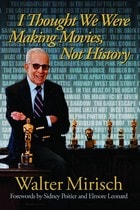
I Thought We Were Making Movies, Not History
Walter Mirisch
University of Wisconsin Press, 2008
This is a moving, star-filled account of one of Hollywood’s true golden ages as told by a man in the middle of it all. Walter Mirisch’s company has produced some of the most entertaining and enduring classics in film history, including West Side Story, Some Like It Hot, In the Heat of the Night, and The Magnificent Seven. His work has led to 87 Academy Award nominations and 28 Oscars. Richly illustrated with rare photographs from his personal collection, I Thought We Were Making Movies, Not History reveals Mirisch’s own experience of Hollywood and tells the stories of the stars—emerging and established—who appeared in his films, including Natalie Wood, John Wayne, Peter Sellers, Sidney Poitier, Steve McQueen, Marilyn Monroe, and many others.
With hard-won insight and gentle humor, Mirisch recounts how he witnessed the end of the studio system, the development of independent production, and the rise and fall of some of Hollywood’s most gifted (and notorious) cultural icons. A producer with a passion for creative excellence, he offers insights into his innovative filmmaking process, revealing a rare ingenuity for placating the demands of auteur directors, weak-kneed studio executives, and troubled screen sirens.
From his early start as a movie theater usher to the presentation of such masterpieces as The Apartment, Fiddler on the Roof, and The Great Escape, Mirisch tells the inspiring life story of his climb to the highest echelon of the American film industry. This book assures Mirisch’s legacy—as Elmore Leonard puts it—as “one of the good guys.”
Best Books for Special Interests, selected by the American Association of School Librarians, and Best Books for General Audiences, selected by the Public Library Association
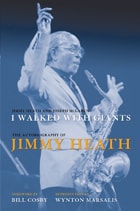
I Walked With Giants
The Autobiography of Jimmy HeathJimmy Heath and Joseph McLaren, foreword by Bill Cosby, introduction by Wynton Marsalis
Temple University Press, 2010
In this extraordinary autobiography, the legendary Heath creates a “dialogue” with musicians and family members. As in jazz, where improvisation by one performer prompts another to riff on the same theme, I Walked with Giants juxtaposes Heath’s account of his life and career with recollections from jazz giants about life on the road and making music on the world’s stages. His memories of playing with his equally legendary brothers Percy and Albert (aka “Tootie”) dovetail with their recollections.
Heath reminisces about a South Philadelphia home filled with music and a close-knit family that hosted musicians performing in the city’s then thriving jazz scene. Milt Jackson recalls, “I went to their house for dinner…Jimmy’s father put Charlie Parker records on and told everybody that we had to be quiet till dinner because he had Bird on…. When I [went] to Philly, I’d always go to their house.” Today Heath performs, composes, and works as a music educator and arranger. By turns funny, poignant, and extremely candid, Heath’s story captures the rhythms of a life in jazz.

I Wonder U
How Prince Went beyond Race and BackAdilifu Nama
Rutgers University Press, 2020
In 1993, Prince infamously changed his name to a unique, unpronounceable symbol. Yet this was only one of a long string of self-reinventions orchestrated by Prince as he refused to be typecast by the music industry’s limiting definitions of masculinity and femininity, of straightness and queerness, of authenticity and artifice, or of black music and white music.
Revealing how he continually subverted cultural expectations, I Wonder U examines the entirety of Prince’s diverse career as a singer, multi-instrumentalist, songwriter, producer, record label mogul, movie star, and director. It shows how, by blending elements of R&B, rock, and new wave into an extremely videogenic package, Prince was able to overcome the color barrier that kept black artists off of MTV. Yet even at his greatest crossover success, he still worked hard to retain his credibility among black music fans. In this way, Adilifu Nama suggests, Prince was able to assert a distinctly black political sensibility while still being perceived as a unique musical genius whose appeal transcended racial boundaries.
I the People
The Rhetoric of Conservative Populism in the United StatesPaul Elliott Johnson
University of Alabama Press, 2022
WINNER OF THE NATIONAL COMMUNICATION ASSOCIATION'S 2023 HOCHMUTH-NICHOLS AWARD
A definitive rhetorical history of conservative populism, exposing how identity, victimhood, and populist appeals have shaped—and constrained—modern American conservatism.
I The People: The Rhetoric of Conservative Populism in the United States examines a variety of texts—ranging from speeches and campaign advertisements to news reports and political pamphlets—to outline the populist character of conservatism in the United States. Paul Elliott Johnson focuses on key inflection points in the development of populist conservatism, including its manifestation in the racially charged presidential election of 1964, its consolidation at the height of Ronald Reagan’s reelection campaign in 1984, and its character in successive moments that saw its fortunes wax and wane, including 1994, the Obama era, and the rise of Donald J. Trump. theorizing conservative populism as a rhetorical form, Johnson advances scholarship about populism away from a binary ideological framework while offering a useful lens for contextualizing scholarship on American conservatism. I The People emphasizes that the populist roots of conservative hegemony exercise a powerful constraining force on conservative intellectuals, whose power to shape and control the movement to which they belong is circumscribed by the form of its public-facing appeals.
The study also reframes scholarly understandings of the conservative tradition’s seeming multiplicity, especially the tendency to suggest an abiding conservative unease regarding capitalism, showing how racist hostility underwrote a compromise with an increasingly economized understanding of humanity. Johnson also contests the narrative that conservatives learned to practice identity politics from social progressives. From the beginning, conservatism’s public vernacular was a white and masculine identity politics reliant on a rhetoric of victimhood, whether critiquing the liberal Cold War consensus or President Barack Obama.
I'd Fight the World
A Political History of Old-Time, Hillbilly, and Country MusicPeter La Chapelle
University of Chicago Press, 2019

I'd Just as Soon Kiss a Wookiee
Uncovering Racialized Desire in the Star Wars GalaxyGreg Carter
University of Texas Press, 2025
How the Star Wars trilogies and their fandoms have engaged with and mirrored American beliefs about race and gender.
2026 Award for Best Single Work, Popular Culture Association (MPCA)
The Star Wars saga takes place in a galaxy far, far away, but its social structures—in particular its racial realities—are thoroughly American. So argues Greg Carter in this thought-provoking analysis, which blends historical and theoretical treatments of science fiction cinema and Star Wars fandom to explore the subtle mirroring between fantasy and the communities that create and consume it.
I’d Just as Soon Kiss a Wookiee draws on insights from prominent scholars to examine fictional relationships between groups perceived to be biologically different. Three areas of commonality between the United States and Star Wars arise: stiff regulation of racial mixture; racialized servitude, with nonhumans placed in positions of bondage; and the presumption of white male supremacy. None of these are functions of the of the Star Wars story; rather, they index the expectations of US society. But expectations have also shifted since Star Wars launched in 1977, and the franchise with it. Carter gauges minority and mainstream fan reactions, finding that, while science fiction enthusiasts have a reputation for progressiveness, the truth turns out to be as complicated as US racism itself.

I'll Fly Away
A World War II Pilot's Lifetime of Adventures From Biplanes to Jumbo JetsWilliam Hallstead and Jack Race
University of Scranton Press, 2006
From his adventures flying for the Allies in World War II to his work as head pilot trainer for Ariana Afghan Airlines, Race has logged more than six decades in the air. I’ll Fly Away tracks his travels around the globe, encompassing his post-war job as crop duster and bush pilot, his thirty-four years as a commercial airline pilot for Pan American World Airways, his consultancy to King Hussein for Royal Jordanian Airlines, and the eight years in which he served as lead pilot for Orbis, an eye hospital on wings that served thirty-one countries. In 1989 Race notably retraced Charles Lindbergh’s 1927 20,000-mile goodwill tour, flying his Spirit of Orbis biplane to all forty-eight of the continental U.S. states.
A remarkable and wholly readable biography of an American original, I’ll Fly Away will be essential for the bookshelf of every aviation enthusiast.

I'll Take You There
Exploring Nashville's Social Justice SitesAmie Thurber
Vanderbilt University Press, 2021
I'll Take You There is written by and with the people who most intimately know Nashville, foregrounding the struggles and achievements of people's movements toward social justice. The colloquial use of "I'll take you there" has long been a response to the call of a stranger: for recommendations of safe passage through unfamiliar territory, a decent meal and place to lay one's head, or perhaps a watering hole or juke joint.
In this book, more than one hundred Nashvillians "take us there," guiding us to places we might not otherwise encounter. Their collective entries bear witness to the ways that power has been used by social, political, and economic elites to tell or omit certain stories, while celebrating the power of counternarratives as a tool to resist injustice. Indeed, each entry is simultaneously a story about place, power, and the historic and ongoing struggle toward a more just city for all. The result is akin to the experience of asking for directions in an unfamiliar place and receiving a warm offer from a local to lead you on, accompanied by a tale or two.

I'm Alive
A Young Fighter Pilot’s Diary of the US Navy Air War in Vietnam, 1964–1965Errol F. Reilly
University of North Texas Press, 2026

I'm Neither Here nor There
Mexicans' Quotidian Struggles with Migration and PovertyPatricia Zavella
Duke University Press, 2011
Drawing on close interactions with Mexicans on both sides of the border, Zavella examines migrant journeys to and within the United States, gendered racialization, and exploitation at workplaces, and the challenges that migrants face in forming and maintaining families. As she demonstrates, the desires of migrants to express their identities publicly and to establish a sense of cultural memory are realized partly through Latin American and Chicano protest music, and Mexican and indigenous folks songs played by musicians and cultural activists.
I've Got to Make My Livin'
Black Women's Sex Work in Turn-of-the-Century ChicagoCynthia M. Blair
University of Chicago Press, 2010
For many years, the interrelated histories of prostitution and cities have perked the ears of urban scholars, but until now the history of urban sex work has dealt only in passing with questions of race. In I’ve Got to Make My Livin’, Cynthia Blair explores African American women’s sex work in Chicago during the decades of some of the city’s most explosive growth, expanding not just our view of prostitution, but also of black women’s labor, the Great Migration, black and white reform movements, and the emergence of modern sexuality.
Focusing on the notorious sex districts of the city’s south side, Blair paints a complex portrait of black prostitutes as conscious actors and historical agents; prostitution, she argues here, was both an arena of exploitation and abuse, as well as a means of resisting middle-class sexual and economic norms. Blair ultimately illustrates just how powerful these norms were, offering stories about the struggles that emerged among black and white urbanites in response to black women’s increasing visibility in the city’s sex economy. Through these powerful narratives, I’ve Got to Make My Livin’ reveals the intersecting racial struggles and sexual anxieties that underpinned the celebration of Chicago as the quintessentially modern twentieth-century city.

IN SEARCH OF WORKING CLASS
ESSAYS IN AMERICAN LABOR HISTORY AND POLITICAL CULTURELeon Fink
University of Illinois Press, 1994
"Fink places American labor history in the broader context of American political historiography better than any other historian I can think of." -- James R. Barrett, author of Work and Community in the Jungle: Chicago's Packinghouse Workers, 1894-1922
Iberville's Gulf Journals
Pierre Le Moyne d'Iberville, translated by Richebourg Gaillard McWilliams
University of Alabama Press, 1991
Europe's expansion into the New World during the 16th, 17th, and 18th centuries was a story of power alignment and cultural transmission as well as dramatic individual effort. Spain had her conquistadores, France her coureurs de bois, and England her sea dogs. Isolated from the authority of home governments, tempted by the abundance of gold, fur, and fish in the New World, these adventurers so vital to national policies of expansion developed their own personal creeds of conquest and colonization. Their individual exploits not only represent a humanistic theme essential in Europe's movement westward but heighten the analyses of cultural institutions of the era. It is within such a multidisciplinary light that one can experience the Gulf Coast adventures of Pierre LeMoyne d'Iberville.

Ice-Out
Mary Casanova
University of Minnesota Press, 2016
Walking on thin ice: on Rainy Lake, in the northern reaches of Minnesota, it’s more than a saying. And for Owen Jensen, nineteen and suddenly responsible for keeping his mother and five brothers alive, the ice is thin indeed.
Ice-Out returns to the frigid and often brutal Prohibition-era borderland of Mary Casanova’s beloved novel Frozen, and to the characters who made it a favorite among readers of all ages. Owen, smitten with Frozen’s Sadie Rose, is struggling to make something of himself at a time when no one seems to hold the moral high ground. Bootlegging is rife, corruption is rampant, and lumber barons run roughshod over the people and the land. As hard as things seem when his father dies, stranding his impoverished family, they get considerably tougher—and more complicated—when Owen gets caught up in the suspicious deaths of a sheriff and deputy on the border.
Inspired by real events in early 1920s Minnesota, and by Mary Casanova’s own family history, Ice-Out is at once a story of young romance against terrible odds and true grit on the border between license and responsibility, rich and poor, and right and wrong in early twentieth-century America.
Icons of the Fantastic
Illustrations of Imaginative Literature from The Korshak CollectionAmanda T. Zehnder
University of Delaware Press, 2025
Winner of the 2026 PIA MidAmerica GraphEx Award for Best of Category, Hardcover Book Binding
Finalist for the 2026 Locus Awards in the Illustrated and Art Books category
"The Korshak Collection is a portrait and biography of a man and his family, who once looked upon the dark skies and saw Immortals, gods hunting in the storm clouds. Stephen Korshak decided to dedicate his life to tell us all how the thunder sounded and preserve the outlines of the cosmos for the awe of us all. Enjoy, believe—be amazed." —Guillermo del Toro, from the Foreword
Icons of the Fantastic: Illustrations of Imaginative Literature from the Korshak Collection features artwork by pioneering artists from over 160 years of published works of science fiction and fantasy. The illustrations in the collection appeared on the covers of timeless novels such as the Tarzan series by Edgar Rice Burroughs and classic pulp magazines from the 1930s through 1960s, such as Amazing Stories and Weird Tales. They accompany images of mischievous satyrs, ethereal mermaids, and spell-casting witches for texts ranging from The Tempest, Don Quixote, and Alice's Adventures in Wonderland to works by Edgar Allan Poe and H. G. Wells. Alongside essays about famous illustrators such as Arthur Rackham and Aubrey Beardsley, contributors engage in a critical reassessment of understudied artists such as José Segrelles, Wladyslaw Benda, Margaret Brundage, and Hannes Bok. The book includes a foreword by Guillermo del Toro, a preface by Kevin J. Anderson, an introduction by Michael Dirda, and an interview with renowned contemporary illustration artist Michael Whelan.

Ida Lupino, Forgotten Auteur
From Film Noir to the Director's ChairAlexandra Seros
University of Texas Press, 2024
An archival study of Ida Lupino’s work in film and television directing, writing, producing, and acting from the 1940s to the 1970s.
Though her acting career is well known, Ida Lupino was, until very recently, either unknown or overlooked as an influential director. One of the few female directors in Classical Hollywood, Lupino was the only woman with membership in the Directors Guild of America between 1948 and 1971. Her films were about women without power in society and engaged with highly controversial topics despite Hollywood’s strict production code. Working in a male-dominated field, Lupino was forced to manage her public persona carefully, resisting attempts by the press to paint her solely as a dutiful wife and mother—a continual feminization—just so that she could continue directing.
Filmmaker Alexandra Seros retells the story of Ida Lupino’s career, from actor to director, first in film, then in television, using archival materials from collections housed around the world. The result provides rich insights into three of Lupino’s independently directed films and a number of episodes from her vast television oeuvre. Seros contextualizes this analysis with discussions of gendered labor in the film industry, the rise of consumerism in the United States after World War II, and the expectations put on women in their family lives during the postwar era. Seros’s portrait of Lupino ultimately paints her life and career as an exemplar of collaborative auteurship.
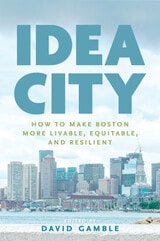
Idea City
How to Make Boston More Livable, Equitable, and ResilientEdited by David Gamble, Foreword by Renée Loth
University of Massachusetts Press, 2023
Racial strife, increased social and economic discrimination, amplified political friction, and growing uncertainty around the impacts of the COVID-19 pandemic and climate change have laid bare many inequalities within the city of Boston. How will these disruptions and inequities influence the city’s future, especially as Boston celebrates its quadricentennial in 2030?
This collection of original essays addresses the many challenges Boston contends with in the twenty-first century and considers ways to improve the city for everyone. Presenting a range of perspectives written by area experts—academics, reflective practitioners, and policymakers—these essays tackle issues of resiliency, mobility, affordable housing, health outcomes, social equity, economic equality, zoning, regionalism, and more. Reflecting the diversity of the city and the challenges and opportunities Boston currently faces, Idea City will help readers think differently about their own areas of expertise and draw conclusions from urban regeneration work in other fields.
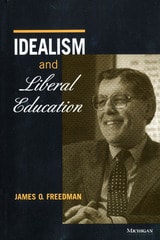
Idealism and Liberal Education
James O. Freedman
University of Michigan Press, 2001

Identifying Talent, Institutionalizing Diversity
Race and Philanthropy in Post-Civil Rights AmericaJiannbin Lee Shiao
Duke University Press, 2005
Based on three years of research on the racial and ethnic priorities of the San Francisco Foundation and the Cleveland Foundation, Shiao demonstrates the geographically uneven impact of the national transition to diversification. The demographics of the regions served by the foundations in San Francisco and Cleveland are quite different, and paradoxically, the foundation in Cleveland—which serves an area with substantially fewer immigrants—has had greater institutional opportunities for implementing diversity policies. Shiao connects these regional histories with the national philanthropic field by underscoring the prominent role of the Ford Foundation, the third largest private foundation in the country, in shaping diversity policies. Identifying Talent, Institutionalizing Diversity reveals philanthropic diversity policy as a lens through which to focus on U.S. race relations and the role of the private sector in racial politics.

Identity Complex
Making the Case for MultiplicityMichael Hames-García
University of Minnesota Press, 2011
In seemingly exhaustive arguments about identity as a category of analysis, we have made a critical error—one that Michael Hames-García sets out to correct in this revisionary look at the making and meaning of social identities. We have asked how separate identities—of race, class, ethnicity, gender, and sexuality—come to intersect. Instead, Hames-García proposes, we should begin by understanding such social identities as mutually constituting one another.
Grounded in both theoretical and political practices—in the lived realities of people’s experience—Identity Complex reinvigorates identity as a key concept and as a tool for the pursuit of social justice. Hames-García draws on a wide range of examples to show that social identities are central to how exploitation works, such as debates about the desirability of sexual minority identities in postcolonial contexts, questions about the reality of race, and the nature of the U.S. prison crisis.
Unless we understand precisely how identities take shape in relation to each other and within contexts of oppression, he contends, we will never be able to eradicate discrimination and social inequality. By analyzing the social interdependence of identities, Hames-García seeks to enable the creation of deep connections of solidarity across differences.

Identity Papers
Literacy and Power in Higher Educationedited by Bronwyn T. Williams
Utah State University Press, 2006
How do definitions of literacy in the academy, and the pedagogies that reinforce such definitions, influence and shape our identities as teachers, scholars, and students? The contributors gathered here reflect on those moments when the dominant cultural and institutional definitions of our identities conflict with our other identities, shaped by class, race, gender, sexual orientation, location, or other cultural factors.
These writers explore the struggle, identify the sources of conflict, and discuss how they respond personally to such tensions in their scholarship, teaching, and administration. They also illustrate how writing helps them and their students compose alternative identities that may allow the connection of professional identities with internal desires and senses of self. They emphasize how identity comes into play in education and literacy and how institutional and cultural power is reinforced in the pedagogies and values of the writing classroom and writing profession.
Identity Politics of Difference
The Mixed-Race American Indian ExperienceMichelle Montgomery
University Press of Colorado, 2021
In Identity Politics of Difference, author Michelle R. Montgomery uses a multidisciplinary approach to examine questions of identity construction and multiracialism through the experiences of mixed-race Native American students at a tribal school in New Mexico. She explores the multiple ways in which these students navigate, experience, and understand their racial status and how this status affects their educational success and social interactions.
Montgomery contextualizes students’ representations of their racial identity choices through the compounded race politics of blood quantum and stereotypes of physical features, showing how varying degrees of "Indianness" are determined by peer groups. Based on in-depth interviews with nine students who identify as mixed-race (Native American–White, Native American–Black, and Native American–Hispanic), Montgomery challenges us to scrutinize how the category of “mixed-race” bears different meanings for those who fall under it based on their outward perceptions, including their ability to "pass" as one race or another.
Identity Politics of Difference includes an arsenal of policy implications for advancing equity and social justice in tribal colleges and beyond and actively engages readers to reflect on how they have experienced the identity politics of race throughout their own lives. The book will be a valuable resource to scholars, policy makers, teachers, and school administrators, as well as to students and their families.

Identity and the Case for Gay Rights
Race, Gender, Religion as AnalogiesDavid A. J. Richards
University of Chicago Press, 1999
Richards argues that racial and gender struggles are informative but partial models. As in these movements, achieving gay rights requires eliminating unjust stereotypes and allowing one's identity to develop free from intolerant views. Richards stresses, however, that gay identity is an ethical choice based on gender equality. Thus the right to religious freedom offers the most compelling analogy for a gay rights movement because gay identity should be protected legally as an ethical decision of conscience.
A thoughtful and highly original voice in the struggle for gay rights, David Richards is the first to argue that discrimination is like religious intolerance-denial of full humanity to individuals because of their identity and moral commitments to gender equality.
Identity and the Failure of America
From Thomas Jefferson to the War on TerrorJohn Michael
University of Minnesota Press, 2008
From Thomas Jefferson to John Rawls, justice has been at the center of America’s self-image and national creed. At the same time, for many of its peoples-from African slaves and European immigrants to women and the poor-the American experience has been defined by injustice: oppression, disenfranchisement, violence, and prejudice.
In Identity and the Failure of America, John Michael explores the contradictions between a mythic national identity promising justice to all and the realities of a divided, hierarchical, and frequently iniquitous history and social order. Through a series of insightful readings, Michael analyzes such cultural moments as the epic dramatization of the tension between individual ambition and communal complicity in Moby-Dick, attempts to effect social change through sympathy in the novels of Lydia Marie Child and Harriet Beecher Stowe, Ralph Waldo Emerson’s antislavery activism and Frederick Douglass’s long fight for racial equity, and the divisive figures of John Brown and Nat Turner in American letters and memory.
Focusing on exemplary instances when the nature of the United States as an essentially conflicted nation turned to force, Michael ultimately posits the development of a more cosmopolitan American identity, one that is more fully and justly imagined in response to the nation’s ethical failings at home and abroad.
John Michael is professor of English and of visual and cultural studies at the University of Rochester. He is the author of Anxious Intellects: Academic Professionals, Public Intellectuals, and Enlightenment Values and Emerson and Skepticism: The Cipher of the World.
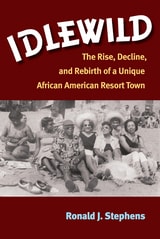
Idlewild
The Rise, Decline, and Rebirth of a Unique African American Resort TownRonald J. Stephens
University of Michigan Press, 2013
In 1912, white land developers founded Idlewild, an African American resort community in western Michigan. Over the following decades, the town became one of the country’s foremost vacation destinations for the black middle class, during its peak drawing tens of thousands of visitors annually and hosting the era’s premier entertainers, such as The Four Tops, Della Reese, Brook Benton, and George Kirby. With the civil rights movement and the resulting expansion of recreation options available to African Americans, Idlewild suffered a sharp social and economic decline, and by the early 1980s the town had become a struggling retirement community in the midst of financial and political crises.
Meticulously researched and unearthing never-before-seen historical material, Ronald J. Stephens’s book examines the rapid rise and decline of this pivotal landmark in African American and leisure history, in the process exploring intersections among race, class, tourism, entertainment, and historic preservation in the United States. Featuring a wealth of fieldwork on contemporary Idlewild, the book also takes a candid look at recent revitalization efforts and analyzes the possibilities for a future resurgence of this national treasure.
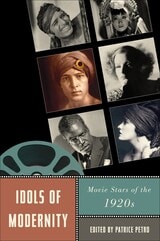
Idols of Modernity
Movie Stars of the 1920sPetro, Patrice
Rutgers University Press, 2010
Bringing together the best new work oncinemaand stardom in the 1920s, this illustrated collection showcases the range of complex social, institutional, and aesthetic issues at work in American cinema of this time. Attentive to stardom as an ensemble of texts, contexts, and social phenomena stretching beyond the cinema, major scholars provide careful analysis of the careers of both well-known and now forgotten stars of the silent and early sound era—Douglas Fairbanks, Buster Keaton, the Talmadge sisters, Rudolph Valentino, Gloria Swanson, Clara Bow, Colleen Moore, Greta Garbo, Anna May Wong, Emil Jannings, Al Jolson, Ernest Morrison, Noble Johnson, Evelyn Preer, Lincoln Perry, and Marie Dressler.
If Beale Street Could Talk
Music, Community, CultureRobert Cantwell
University of Illinois Press, 2008