Results by title
18284 books match the query 'United States' and 636 start with i
Intellectual Populism
Democracy, Inquiry, and the PeoplePaul Stob
Michigan State University Press, 2020
Intellectual Property on Campus
Students' Rights and ResponsibilitiesTyAnna K. Herrington
Southern Illinois University Press, 2010
What issues arise when students’ uses of intellectual materials are legally challenged, and how does the academic context affect them? What happens when users of intellectual property, either within or outside the academic structure, violate students’ rights to their intellectual products? In Intellectual Property on Campus, TyAnna K. Herrington addresses these concerns and more, clearing up the confusion often surrounding intellectual property law and its application in an academic setting. Filled with practical information and simple yet thorough explanations, this enlightening volume provides educators and students with a solid basis for understanding the broader impacts of legal and ethical dilemmas involving intellectual materials.
Herrington provides insight for students into how complex concepts such as patent, trademark, copyright, fair use, and plagiarism affect their work. She outlines the potential effects of the choices students make, as well as the benefits and limitations of legal protection for intellectual property, including the thorny issues of authorship and authority under the 1976 Copyright Act. Herrington also explores the topic of student collaboration—now very common on college campuses—and how it affects intellectual property issues and legal relationships, as well as the impact of new technologies, such as blogs, on student work in educational environments.
Intellectual Property on Campus also provides useful information for administrators and educators. In particular, Herrington investigates the possible ramifications of their pedagogical and policy choices, and examines in depth the responsibility of instructors to treat students’ intellectual property legally, ethically, and conscientiously. Cautioning educators about the limitations on their control over intellectual materials in an academic setting, Herrington encourages teachers to minimize their influence over student works, instead giving pupils more freedom to control their own creations.
The volume also investigates the rights, responsibilities, and limitations for users of intellectual property, as opposed to creators, especially as related to student or instructor use of copyrighted materials. Discussed in detail are such issues as fair use and the TEACH Act, as well as the often-intertwined areas of plagiarism, authorship, and copyright. In addition, Herrington addresses recent cultural developments regarding the use and creation of intellectual property by students and instructors.
Written in a jargon-free style that is easy to understand, Intellectual Property on Campus gives students, instructors, and administrators the information they need to navigate the intricate landscape of law and integrity in the realm of academic creation.

Intellectual Property
Everything the Digital-Age Librarian Needs to KnowTimothy Lee American Library Association
American Library Association, 2008
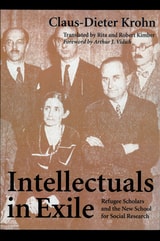
Intellectuals in Exile
Refugee Scholars and the New School for Social ResearchClaus-Dieter Krohn
University of Massachusetts Press, 1993
In the 1930s, with the rise of the Third Reich, thousands of European intellectuals sought refuge in the United States. Through the tireless efforts of Alvin Johnson, director of the New School for Social Research, nearly two hundred of these scholars came to be affiliated with the University in Exile, later known as the Graduate Faculty of Political and Social Science. This book presents an intellectual history of that remarkable group of social and political scientists, documenting their experiences and their influence on both European and American thought.
Johnson was one of the first to recognize the need for action to prevent Hitler’s destruction of the German intellectual tradition. He sought out many of the best European scholars of the day and brought them to the newly created University in Exile in New York. There, the refugees framed as intellectual problems the social and political experiences that had so disrupted their lives and careers. They examined the cultural roots of fascism, the bureaucratization of Western societies, and the prerequisites for a historically and morally informed social science. In the field of economics, the exiles developed theoretical concepts and models that came to be instrumental in the formation of New Deal policies and that remain relevant today.
Intellectuals
Aesthetics, Politics, AcademicsBruce Robbins
University of Minnesota Press, 1990
Intelligent Action
A History of Artistic Research, Aesthetic Experience, and Artists in AcademiaTimothy Ridlen
Rutgers University Press, 2024
Intelligently Designed
How Creationists Built the Campaign against EvolutionEdward Caudill
University of Illinois Press, 2013
Inter/Nationalism
Decolonizing Native America and PalestineSteven Salaita
University of Minnesota Press, 2016
“The age of transnational humanities has arrived.” According to Steven Salaita, the seemingly disparate fields of Palestinian Studses and American Indian studies have more in common than one may think. In Inter/Nationalism, Salaita argues that American Indian and Indigenous studies must be more central to the scholarship and activism focusing on Palestine.
Salaita offers a fascinating inside account of the Boycott, Divestment, and Sanctions (BDS) movement—which, among other things, aims to end Israel’s occupation of Palestinian land. In doing so, he emphasizes BDS’s significant potential as an organizing entity as well as its importance in the creation of intellectual and political communities that put Natives and other colonized peoples such as Palestinians into conversation. His discussion includes readings of a wide range of Native poetry that invokes Palestine as a theme or symbol; the speeches of U.S. President Andrew Jackson and early Zionist thinker Ze’ev Jabotinsky; and the discourses of “shared values” between the United States and Israel.
Inter/Nationalism seeks to lay conceptual ground between American Indian and Indigenous studies and Palestinian studies through concepts of settler colonialism, indigeneity, and state violence. By establishing Palestine as an indigenous nation under colonial occupation, this book draws crucial connections between the scholarship and activism of Indigenous America and Palestine.
Interacting with History
Teaching with Primary SourcesKatharine Lehman
American Library Association, 2014
Interchangeable Parts
Acting, Industry, and Technology in US TheaterVictor Holtcamp
University of Michigan Press, 2019
Victor Holtcamp explores the invocations of scientific and industrial rhetoric and philosophy in the founding of the first schools of acting, and echoes of that rhetoric in playwriting, production, and the cinema, as Hollywood in particular embraced this industrially infected model of acting. In their divergent approaches to performance, the major US acting teachers (Lee Strasberg, Stella Adler, and Sanford Meisner) demonstrated strong rhetorical affinities for the language of industry, illustrating the pervasive presence of these industrial roots. The book narrates the story of how actors learned to learn to act, and what that process, for both stage and screen, owed to the interchangeable parts and mass production revolutions.
Intercollegiate Athletics and the American University
A University President's PerspectiveJames J. Duderstadt
University of Michigan Press, 2003
Interest Groups and Campaign Finance Reform in the United States and Canada
Robert G. Boatright
University of Michigan Press, 2011
In the early 2000s, the United States and Canada implemented new campaign finance laws restricting the ability of interest groups to make political contributions and to engage in political advertising. Whereas both nations' legislative reforms sought to reduce the role of interest groups in campaigns, these laws have had opposite results in the two nations. In the United States, interest groups remained influential by developing broad coalitions aimed at mobilizing individual voters and contributors. In Canada, interest groups largely withdrew from election campaigns, and, thus, important voices in elections have gone silent. Robert G. Boatright explains such disparate results by placing campaign finance reforms in the context of ongoing political and technological changes.
Robert G. Boatright is Associate Professor of Political Science at Clark University.
Cover photo: © iStockphoto.com / alfabravoalpharomeo
Interfaith Encounters in America
McCarthy, Kate
Rutgers University Press, 2007
From its most cosmopolitan urban centers to the rural Midwest, the United States is experiencing a rising tide of religious interest. While terrorist attacks keep Americans fixed on an abhorrent vision of militant Islam, popular films such as The Passion of the Christ and The Da Vinci Code make blockbuster material of the origins of Christianity. The 2004 presidential election, we are told, was decided on the basis of religiously driven moral values. A majority of Americans are reported to believe that religious differences are the biggest obstacle to world peace.
Beneath the superficial banter of the media and popular culture, however, are quieter conversations about what it means to be religious in America today—conversations among recent immigrants about how to adapt their practices to life in new land, conversations among young people who are finding new meaning in religions rejected by their parents, conversations among the religiously unaffiliated about eclectic new spiritualities encountered in magazines, book groups, or online. Interfaith Encounters in America takes a compelling look at these seldom acknowledged exchanges, showing how, despite their incompatibilities, Buddhist, Muslim, Christian, Jewish, and Hindu Americans, among others, are using their beliefs to commit to the values of a pluralistic society rather than to widen existing divisions.
Chapters survey the intellectual exchanges among scholars of philosophy, religion, and theology about how to make sense of conflicting claims, as well as the relevance and applicability of these ideas “on the ground” where real people with different religious identities intentionally unite for shared purposes that range from national public policy initiatives to small town community interfaith groups, from couples negotiating interfaith marriages to those exploring religious issues with strangers in online interfaith discussion groups.
Written in engaging and accessible prose, this book provides an important reassessment of the problems, values, and goals of contemporary religion in the United States. It is essential reading for scholars of religion, sociology, and American studies, as well as anyone who is concerned with the purported impossibility of religious pluralism.
Intergovernmental Relations in the American Administrative State
The Johnson PresidencyBy David M. Welborn and Jesse Burkhead
University of Texas Press, 1989
During the 1960s, President Lyndon Johnson and his administration substantially altered the structure of the American administrative state. Creating intergovernmental programs to forward the goal of the Great Society, they changed the contours of national-state-local relationships, and these changes largely have remained, despite the attempts of later administrations to reverse them. Intergovernmental Relations in the American Administrative State is the first comprehensive study of how and why these changes occurred.
Drawn from a wealth of primary material in the Lyndon Baines Johnson Library, the study probes the objectives of the president and other framers of new policies and programs, within the institutional and political context of the time. The authors give special attention to the inherent incongruities that arise when intergovernmental programs are used to address problems defined in national terms. In addition, they reveal how certain programs actually challenged the power of established national bureaucracies. They conclude with a thoughtful overview of the Johnson legacy in intergovernmental relations during subsequent administrations.
Intergroup Dialogue
Deliberative Democracy in School, College, Community, and WorkplaceDavid Schoem and Sylvia Hurtado, Editors
University of Michigan Press, 2001
Intergroup Dialogue is the most comprehensive study of intergroup dialogue to date, showcasing twelve in-depth case studies, offering critical perspectives, and exploring the foundation of such dialogue in democratic theory. The case studies are drawn from leading American organizations offering intergroup dialogue, including the Anti-Defamation League and the National Conference for Community and Justice, as well as several major universities and consultants to corporate America. Each case study presents a particular program's rationale, its details, an account of its successes, and evaluation data.
The pieces collected by David Schoem and Sylvia Hurtado will be of interest to community leaders, teachers, human resources managers, student affairs deans, and intergroup dialogue practitioners in the United States and abroad; particularly as the 2024 presidential election draws near.
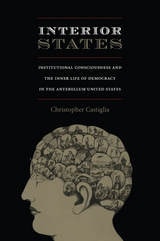
Interior States
Institutional Consciousness and the Inner Life of Democracy in the Antebellum United StatesChristopher Castiglia
Duke University Press, 2008
In the late eighteenth century and early nineteenth, as discourses of interiority gained prominence, so did powerful counter-narratives. Castiglia reveals the flamboyant pages of antebellum popular fiction to be an archive of unruly democratic aspirations. Through close readings of works by Maria Monk and George Lippard, Walt Whitman and Timothy Shay Arthur, Hannah Webster Foster and Hannah Crafts, and Nathaniel Hawthorne and Herman Melville, Castiglia highlights a refusal to be reformed or self-contained. In antebellum authors’ representations of nervousness, desire, appetite, fantasy, and imagination, he finds democratic strivings that refused to disappear. Taking inspiration from those writers and turning to the present, Castiglia advocates a humanism-without-humans that, denied the adjudicative power of interiority, promises to release democracy from its inner life and to return it to the public sphere where U.S. citizens may yet create unprecedented possibilities for social action.
Interlibrary Loan Practices Handbook
Cherié L. Weible
American Library Association, 2011
Interlibrary Loan Practices Handbook
American Library Association, 1997
Interlochen
A Home for the ArtsDean Boal
University of Michigan Press, 1998
Intermediate Sanctions in Corrections
Gail Caputo
University of North Texas Press, 2004

International Students And Academic Libraries Initiatives
Pamela Jackson
Assoc of College & Research Libraries, 2011
International Students and Academic Libraries
Initiatives for SuccessPamela A. Jackson
Assoc of College & Research Libraries, 2011
International and Language Education for a Global Future
Fifty Years of U.S. Title VI and Fulbright-Hays ProgramsDavid S. Wiley
Michigan State University Press, 2010
The contributions to this book address the role that the U.S. Department of Education Title VI and Fulbright-Hays programs have played in building the largest and highest quality infrastructure in the world for training in languages and other aspects of foreign area knowledge. The volume celebrates the 50th anniversary of the Title VI and associated Fulbright-Hays programs, which have established more than 150 centers of excellence for modern foreign language and area studies and international business education in more than 60 U.S. universities.
The authors review the history of the programs, including their founding and their cumulative impacts on internationalizing the American university at the graduate and undergraduate levels. They review how programs for foreign research, technology for foreign information access, and undergraduate programs have built the foundations of U.S. language-learning materials for use in college courses and government with improved language-learning pedagogies, erected the most distinguished library holdings on foreign countries, supported in-depth research abroad in virtually every nation, and created capacity to teach more than 200 less commonly taught languages.
Internationalization of US Writing Programs
Shirley K Rose
Utah State University Press, 2018
The Internationalization of US Writing Programs illuminates the role writing programs and WPAs play in defining goals, curriculum, placement, assessment, faculty development, and instruction for international student populations. The volume offers multiple theoretical approaches to the work of writing programs and illustrates a wide range of well-planned writing program–based empirical research projects.
As of 2016, over 425,000 international students were enrolled as undergraduates in US colleges and universities, part of a decade-long trend of increasing numbers of international students coming to the United States for both undergraduate and graduate degrees. Writing program administrators and writing teachers across the country are beginning to recognize this changing demographic as a useful catalyst for change in writing programs, which are tasked with preparing all students, regardless of initial level of English proficiency, for academic and professional writing.
The Internationalization of US Writing Programs is the first collection to focus specifically on this crucial aspect of the roles and responsibilities of WPAs, who are leading efforts to provide all students on their campuses, regardless of nationality or first language, with competencies in writing that will serve them in the academy and beyond.
Contributors: Jonathan Benda, Michael Dedek, Christiane Donahue, Chris W. Gallagher, Kristi Girdharry, Tarez Samra Graban, Jennifer E. Haan, Paula Harrington, Yu-Kyung Kang, Neal Lerner, David S. Martins, Paul Kei Matsuda, Heidi A. McKee, Libby Miles, Susan Miller-Cochran, Matt Noonan, Katherine Daily O’Meara, Carolina Pelaez-Morales, Stacey Sheriff, Gail Shuck, Christine M. Tardy, Stanley Van Horn, Daniel Wilber, Margaret Willard-Traub
Interplay of Things
Religion, Art, and Presence TogetherAnthony B. Pinn
Duke University Press, 2021
Interpretations of American History
Francis G. Couvares
University of Massachusetts Press, 2025
Without a doubt, the teaching of American history has changed since George Billias and Gerald Grob first issued Interpretations of American History, a comprehensive introduction to the major debates and schools of thought within the field of American history. For this ninth edition, Francis G. Couvares has thoroughly updated the text to include both developments in scholarly debate and changes in the format. He has consolidated two chapters on the revolutionary era into one, and he has also merged formerly separate chapters on profit and commerce in the trading of human beings and the complex and resilient culture that enslaved people sustained. Additionally, he has written a completely new chapter on environmental history and updated the final chapters of the text to include recent scholarship that connects the history of the Civil Rights Movement to the Black Lives Matter Movement; scholarship that discusses intersectionality within feminism, and recent work on political realignment and fragmentation.
In a major revision to the format, Couvares has omitted excerpts of scholarly articles. However, for curious students or research assignments, he includes ample current references. Further, this updated edition anticipates electronic reading of discrete chapters rather than the entire book, and each chapter stands alone well enough to be assigned individually.
Interpreting Law and Literature
A Hermeneutic ReaderSanford Levinson and Steven Mailloux
Northwestern University Press, 1988
"Contemporary theory has usefully analyzed how alternative modes of interpretation produce different meanings, how reading itself is constituted by the variable perspectives of readers, and how these perspectives are in turn defined by prejudices, ideologies, interests, and so forth. Some theorists gave argued persuasively that textual meaning, in literature and in literary interpretation, is structured by repression and forgetting, by what the literary or critical text does not say as much as by what it does. All these claims are directly relevant to legal hermeneutics, and thus it is no surprise that legal theorists have recently been turning to literary theory for potential insight into the interpretation of law. This collection of essays is designed to represent the especially rich interactive that has taken place between legal and literary hermeneutics during the past ten years."
Interpreting Sacred Ground
The Rhetoric of National Civil War Parks and BattlefieldsJ. Christian Spielvogel
University of Alabama Press, 2013
A rhetorical analysis of Civil War battlefields and parks, and the ways various commemorative traditions—and their ideologies of race, reconciliation, emancipation, and masculinity—compete for dominance.
The National Park Service (NPS) is known for its role in the preservation of public sites deemed to have historic, cultural, and natural significance. In Interpreting Sacred Ground, J. Christian Spielvogel studies the NPS’s secondary role as an interpreter or creator of meaning at such sites, specifically Gettysburg National Military Park, Harpers Ferry National Historical Park, and Cold Harbor Visitor Center.
Spielvogel studies in detail the museums, films, publications, tours, signage, and other media at these sites, and he studies and analyzes how they shape the meanings that visitors are invited to construct. Though the NPS began developing interpretive exhibits in the 1990s that highlighted slavery and emancipation as central facets to understanding the war, Spielvogel argues that the NPS in some instances preserves outmoded narratives of white reconciliation and heroic masculinity, obscuring the race-related causes and consequences of the war as well as the war’s savagery.
The challenges the NPS faces in addressing these issues are many, from avoiding unbalanced criticism of either the Union or the Confederacy, to foregrounding race and violence as central issues, preserving clear and accurate renderingsof battlefield movements and strategies, and contending with the various public constituencies with their own interpretive stakes in the battle for public memory.
Spielvogel concludes by arguing for the National Park Service’s crucial role as a critical voice in shaping twentieth-first-century Civil War public memory and highlights the issues the agency faces as it strives to maintain historical integrity while contending with antiquated renderings of the past.
Interpreting State Constitutions
A Jurisprudence of Function in a Federal SystemJames A. Gardner
University of Chicago Press, 2005
With the Supreme Court's retreat from the aggressive protection of individual rights, state courts have begun to interpret state constitutions to provide broader protection of liberties. This development has reversed the polarity of constitutional politics, as liberals advocate unimpeded state power while conservatives lobby for state subordination to a constitutional law controlled centrally by the Supreme Court.
James A. Gardner here lays out the first fully developed theory of subnational constitutional interpretation. He argues that states are integral components of a national system of overlapping and mutually checking authority and that the purpose of this system is to protect liberty and defend against federal domination. The resulting account provides valuable prescriptive advice to state courts, showing them how to fulfill their responsibilities to the federal system in a way that strengthens American constitutional discourse.
Interpreting the Self
Two Hundred Years of American AutobiographyDiane Bjorklund
University of Chicago Press, 1998
"A refreshingly welcome approach to this intriguing topic. . . . [Bjorklund's] extensive and systematic approach to her source material is impressive and enriches our understanding of this essential subject."—Virginia Quarterly Review
"Bjorklund studies both famous and obscure writers, and her clear prose style and copious quotations provide insight into the many aspects of the changing American self." —Library Journal
Interracial Intimacy
The Regulation of Race and RomanceRachel F. Moran
University of Chicago Press, 2003
"A good introduction to an issue too often overlooked. . . . The writing is clear and accessible, the evidence is evocative, and the ideas are challenging."—Beth Kiyoko Jamieson, Law and Politics Book Review
"U. S. government bodies have tried to regulate interracial intimacy from the day Pocahontas married John Rolfe up through Loving v. Virginia, which found antimiscegentation laws unconstitutional in 1967. . . . The weirder anecdotes from our racial history enliven this study, which is likely to become a classic in its field."—Publishers Weekly
"Moran examines the history of U. S. regulation of cross-racial romance, considering the impact of that regulation on the autonomy of individuals and families as well as on racial identity and equality. . . . She is attuned to the nuances of race in this polyglot nation, and supplies thoughtful analysis of these nuances."—Booklist
Interrogating Privilege
Reflections of a Second Language EducatorStephanie Vandrick
University of Michigan Press, 2013
Interrogating Privilege is a welcome combination of personal essays and academic research, blending theory, analysis, and narrative to explore the function and consequences of privilege in second language education.
While teachers’ focus on the learning process and class goals are quite important, there is not enough attention paid to the types of privilege—or lack thereof—that individuals bring to the classroom. Through chapters that can either stand alone or be read together, with topics such as gender, age, and colonialism (the author is the daughter of missionary parents) in second language teaching, this book seeks to address the experiences of teachers, scholars, and students as “whole persons” and to observe the workings of identity and privilege in the educational setting.
Interrogating the Future of Puerto Rican Studies
Aurora Santiago Ortiz and Jorell A. Meléndez-Badillo, editors
Duke University Press, 2026
Contributors. José Atiles, Bárbara Abadía Rexach, Yarimar Bonilla, daniela crespo-miró, Marie Cruz Soto, Yomaira Figueroa-Vásquez, Marcela Guerrero, Gustavo García López, Mónica Jiménez, Lawrence LaFountain Stokes, Marisol LeBrón, Pedro Lebrón Ortiz, Beatriz Llenín Figueroa, Jorell Meléndez-Badillo, Sarah Molinari, Marisel Moreno, Daniel Nevárez Araújo, Aurora Santiago Ortiz, Karrieann Soto Vega, Daniel Vázquez Sanabria, Roberto Vélez-Vélez, Joaquín Villanueva, Jacqueline Villarrubia-Mendoza
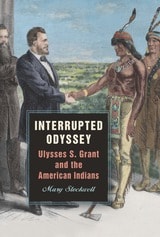
Interrupted Odyssey
Ulysses S. Grant and the American IndiansMary Stockwell
Southern Illinois University Press, 2018
In the late 1860s, before becoming president, Grant collaborated with Ely Parker, a Seneca Indian who became his first commissioner of Indian affairs, on a plan to rescue the tribes from certain destruction. Grant hoped to save the Indians from extermination by moving them to reservations, where they would be guarded by the U.S. Army, and welcoming them into the nation as American citizens. By so doing, he would restore the executive branch’s traditional authority over Indian policy that had been upended by Jackson.
In Interrupted Odyssey, Stockwell rejects the common claim in previous Grant scholarship that he handed the reservations over to Christian missionaries as part of his original policy. In part because Grant’s plan ended political patronage, Congress overturned his policy by disallowing Army officers from serving in civil posts, abandoning the treaty system, and making the new Board of Indian Commissioners the supervisors of the Indian service. Only after Congress banned Army officers from the Indian service did Grant place missionaries in charge of the reservations, and only after the board falsely accused Parker of fraud before Congress did Grant lose faith in his original policy.
Stockwell explores in depth the ousting of Parker, revealing the deep-seated prejudices that fueled opposition to him, and details Grant’s stunned disappointment when the Modoc murdered his peace commissioners and several tribes—the Comanche, Kiowa, Cheyenne, and Sioux—rose up against his plans for them.
Though his dreams were interrupted through the opposition of Congress, reformers, and the tribes themselves, Grant set his country firmly toward making Indians full participants in the national experience. In setting Grant’s contributions against the wider story of the American Indians, Stockwell’s bold, thoughtful reappraisal reverses the general dismissal of Grant’s approach to the Indians as a complete failure and highlights the courage of his policies during a time of great prejudice.
Intersectional Chicana Feminisms
Sitios y LenguasAída Hurtado
University of Arizona Press, 2020
Aída Hurtado, a leading Chicana feminist and scholar, traces the origins of Chicanas’ efforts to bring attention to the effects of gender in Chicana and Chicano studies. Highlighting the innovative and pathbreaking methodologies developed within the field of Chicana feminisms—such as testimonio, conocimiento, and autohistoria—this book offers an accessible introduction to Chicana theory, methodology, art, and activism. Hurtado also looks at the newest developments in the field and the future of Chicana feminisms.
The book includes short biographies of key Chicana feminists, additional suggested readings, and exercises with each chapter to extend opportunities for engagement in classroom and workshop settings.
Intersectional Inequality
Race, Class, Test Scores, and PovertyCharles C. Ragin and Peer C. Fiss
University of Chicago Press, 2016
Ragin and Fiss begin by taking up the controversy regarding the relative importance of test scores versus socioeconomic background on life chances, a debate that has raged since the 1994 publication of Richard Herrnstein and Charles Murray’s TheBell Curve. In contrast to prior work, Ragin and Fiss bring an intersectional approach to the evidence, analyzing the different ways that advantages and disadvantages combine in their impact on life chances. Moving beyond controversy and fixed policy positions, the authors propose sophisticated new methods of analysis to underscore the importance of attending to configurations of race, gender, family background, educational achievement, and related conditions when addressing social inequality in America today.
Intersectionality and Higher Education
Identity and Inequality on College CampusesW. Carson Byrd
Rutgers University Press, 2019
Interspecies Politics
Nature, Borders, StatesRafi Youatt
University of Michigan Press, 2020
This book explores the ways that international politics is a form of interspecies politics, one that involves the interactions, ideas, and practices of multiple species, both human and nonhuman, to generate differences and create commonalities. While we frequently think of having an international politics “of” the environment, a deep and thoroughgoing anthropocentrism guides our idea of what political life can be, which prevents us from thinking about a politics “with” the environment. This anthropocentric assumption about politics drives both ecological degradation and deep forms of interhuman injustice and hierarchy.
Interspecies Politics challenges that assumption, arguing that a truly ecological account of interstate life requires us to think about politics as an activity that crosses species lines. It therefore explores a postanthropocentric account of international politics, focusing on a series of cases and interspecies practices in the American borderlands, ranging from the US-Mexico border in southern Texas, to Guantánamo Bay in Cuba, to Isle Royale, near the US-Canadian border. The book draws on international relations, environmental political theory, anthropology, and animal studies, to show how key international dimensions of states—sovereignty, territory, security, rights—are better understood as forms of interspecies assemblage that both generate new forms of multispecies inclusion, and structure forms of violence and hierarchy against human and nonhuman alike.

Interstate '85
The Royals, The Cardinals, and the Show-Me World SeriesMarshall Garvey
University of Missouri Press, 2025
In this blend of baseball and cultural history, Garvey defines the “I-70 Showdown Series” not only by the literal highway that links the two teams’ home cities but the individual and collective roads travelled by the players and others who took part in the event, both before the Series began and well after the last cheers faded.
In addition to gripping human stories and vivid descriptions of on-field action long overshadowed by Denkinger’s monumental blunder, Garvey’s work captures the provincial spectacle of the “Show-Me Series” throughout the state of Missouri. Featuring 27 new interviews conducted by the author, including with George Brett, Ozzie Smith, Don Denkinger, Bud Black, Andy Van Slyke, Ricky Horton, and Mark Gubicza, Interstate ’85 is baseball history writing at its deepest and most captivating.

Intertextual Encounters in American Fiction, Film, and Popular Culture
Michael Dunne
University of Wisconsin Press, 2001
Intertextuality and the 24-Hour News Cycle
A Day in the Rhetorical Life of Colin Powell's U.N. AddressJohn Oddo
Michigan State University Press, 2014
Intervention Narratives
Afghanistan, the United States, and the Global War on TerrorPurnima Bose
Rutgers University Press, 2020
Interventions into Modernist Cultures
Poetry from Beyond the Empty ScreenAmie Elizabeth Parry
Duke University Press, 2007
Reading various works by US expatriates Ezra Pound and Gertrude Stein, Parry compares the cultural politics of U.S. canonical modernism with alternative representations of temporality, hybridity, erasure, and sexuality in the work of the Taiwanese writers Yü Kwang-chung and Hsia Yü and the Asian American immigrant author Theresa Hak Kyung Cha. Juxtaposing poems by Pound and Yü Kwang-chung, Parry shows how Yü’s fragmented, ambivalent modernist form reveals the effects of neocolonialism while Pound denies and obscures U.S. imperialism in Asia, asserting a form of nondevelopmental universalism through both form and theme. Stein appropriates discourses of American modernity and identity to represent nonnormative desire and sexuality, and Parry contrasts this tendency with representations of sexuality in the contemporary experimental poetry of Hsia Yü. Finally, Parry highlights the different uses of modernist forms by Pound in his Cantos—which incorporate a multiplicity of decontextualized and ahistorical voices—and by Cha in her 1982 novel Dictee, a historicized, multilingual work. Parry’s sophisticated readings provide a useful critical framework for apprehending how “minor modernisms” illuminate the histories erased by certain canonical modernist texts.
Interviews with American Composers
Barney Childs in ConversationBarney Childs. Edited by Virginia Anderson
University of Illinois Press, 2022
Virginia Anderson edits the first published collection of these conversations. She pairs each interview with a contextual essay by a contemporary expert that shows how the composer's discussion with Childs fits into his life and work. Together, the interviewees cover a broad range of ideas and concerns around topics like education, notation, developments in electronic music, changing demands on performers, and tonal music.
Innovative and revealing, Interviews with American Composers is an artistic and historical snapshot of American music at an important crossroads.

Intestine Enemies
Robert Emmett Curran
Catholic University of America Press, 2017
Intimacy Across Borders
Race, Religion, and Migration in the U.S. MidwestJane Juffer
Temple University Press, 2013
Examining how encounters produced by migration lead to intimacies-ranging from sexual, spiritual, and neighborly to hateful and violent, Jane Juffer considers the significant changes that have occurred in small towns following an influx of Latinos to the Midwest.
Intimacy across Borders situates the story of the Dutch Reformed Church in Iowa and South Africa within a larger analysis of race, religion, and globalization. Drawing on personal narrative, ethnography, and sociopolitical critique, Juffer shows how migration to rural areas can disrupt even the most thoroughly entrenched religious beliefs and transform the schools, churches, and businesses that form the heart of small-town America. Conversely, such face-to-face encounters can also generate hatred, as illustrated in the increasing number of hate crimes against Latinos and the passage of numerous anti-immigrant ordinances.
Juffer demonstrates how Latino migration to new areas of the U.S. threatens certain groups because it creates the potential for new kinds of families—mixed race, mixed legal status, and transnational—that challenge the conservative definition of community based on the racially homogeneous, coupled, citizen family.
Intimacy in America
Dreams of Affiliation in Antebellum LiteraturePeter Coviello
University of Minnesota Press, 2005
Intimate Associations
The Law and Culture of American FamiliesJ. Herbie DiFonzo and Ruth C. Stern
University of Michigan Press, 2013
The rise in divorce, cohabitation, single parenthood, and same-sex partnerships, along with an increase in surrogacy, adoption, and assisted reproductive technologies, has led to many diverse configurations of families, or intimate associations. J. Herbie DiFonzo and Ruth C. Stern chart these trends over the past several decades and investigate their social, legal, and economic implications.
Drawing upon a wealth of social science data, they show that, by a number of measures, children of married parents fare better than children in a household formed by cohabiting adults. This is not to condemn nontraditional families, but to point out that society and the law do not yet adequately provide for their needs. The authors applaud the ways in which courts and legislatures are beginning to replace rigid concepts of marriage and parenthood with the more flexible concept of “functional” family roles. In the conclusion, they call for a legal system that can adapt to the continually changing reality of family life.
Intimate Communities
Representation and Social Transformation in Women's College Fiction, 1895–1910Sherrie A. Inness
University of Wisconsin Press, 1995
While other scholars have argued that the Progressive Era was the “golden age” for women’s single-sex education, pointing to the many positive depictions of the women’s college student, Inness suggests that these representations actually helped to perpetuate the status quo and did little to advance women’s social rights.

Intimate Inequalities
Millennials' Romantic Relationships in Contemporary TimesCristen Dalessandro
Rutgers University Press, 2021