Results by title
22279 books match the query 'Social Science' and 851 start with i

Insatiable City
Food and Race in New OrleansTheresa McCulla
University of Chicago Press, 2024
A history of food in the Crescent City that explores race, power, social status, and labor.
In Insatiable City, Theresa McCulla probes the overt and covert ways that the production of food and the discourse about it both created and reinforced many strains of inequality in New Orleans, a city significantly defined by its foodways. Tracking the city’s economy from nineteenth-century chattel slavery to twentieth-century tourism, McCulla uses menus, cookbooks, newspapers, postcards, photography, and other material culture to limn the interplay among the production and reception of food, the inscription and reiteration of racial hierarchies, and the constant diminishment and exploitation of working-class people. The consumption of food and people, she shows, was mutually reinforced and deeply intertwined. Yet she also details how enslaved and free people of color in New Orleans used food and drink to carve paths of mobility, stability, autonomy, freedom, profit, and joy. A story of pain and pleasure, labor and leisure, Insatiable City goes far beyond the task of tracing New Orleans's culinary history to focus on how food suffuses culture and our understandings and constructions of race and power.

Inscribing the Daily
Critical Essays on Women's DiariesSuzanne L. Bunkers
University of Massachusetts Press, 1996

Inscrutable Eating
Asian Appetites and the Rhetorics of Racial ConsumptionJennifer Lin LeMesurier
The Ohio State University Press, 2023
“You are what you eat,” but what if you’re seen as a rat eater, bat lover, or MSG user? In Inscrutable Eating, Jennifer Lin LeMesurier considers how everyday assumptions about Asian food influence the perception of Asian and Asian American identity within the US racial landscape, demonstrating that beliefs about how certain people eat are inseparable from attitudes that support hierarchies around race, gender, and sexuality. Drawing on rhetorical theory, affect theory, and Asian American studies, LeMesurier analyzes messages in US popular culture about Asian eating to develop the concept of gut orientations: rhetorically dominant ways of interacting with food that scale upward to feelings of desire and disgust toward social groups. Looking at examples from fears around MSG to uproar over wet markets as the source of COVID-19, she argues that these “gut” reactions establish certain racial views as common-sense truths rather than cultural biases, reinforcing dominant norms about what belongs on whose plate, or who belongs at what table. In demystifying marginalizing discourse around food and eating, LeMesurier shows how exposing the tacit, felt ideas of consumption is necessary to contest broader forms of discrimination.

Insect Media
An Archaeology of Animals and TechnologyJussi Parikka
University of Minnesota Press, 2010
Through close engagement with the pioneering work of insect ethologists, including Jakob von Uexküll and Karl von Frisch, posthumanist philosophers, media theorists, and contemporary filmmakers and artists, Parikka develops an insect theory of media, one that conceptualizes modern media as more than the products of individual human actors, social interests, or technological determinants. They are, rather, profoundly nonhuman phenomena that both draw on and mimic the alien lifeworlds of insects.

Insecurities of Expulsion
Afro-Asian Entanglements in Transcontinental UgandaAnneeth Kaur Hundle
Duke University Press, 2025
Insecurity
Richard Grusin
University of Minnesota Press, 2022
Investigating insecurity as the predominant logic of life in the present moment
Challenging several key concepts of the twenty-first century, including precarity, securitization, and resilience, this collection explores the concept of insecurity as a predominant logic governing recent cultural, economic, political, and social life in the West. The essays illuminate how attempts to make human and nonhuman systems secure and resilient end up having the opposite effect, making insecurity the default state of life today.
Unique in its wide disciplinary breadth and variety of topics and methodological approaches—from intellectual history and cultural critique to case studies, qualitative ethnography, and personal narrative—Insecurity is written predominantly from the viewpoint of the United States. The contributors’ analyses include the securitization of nongovernmental aid to Palestine, Bangladeshi climate refugees, and the privatization of U.S. military forces; the history of the concept of insecurity and the securitization of finance; racialized urban development in Augusta, Georgia; Amazon’s Mechanical Turk and the consequences of the Marie Kondo method; and the intricate politics of sexual harassment in the U.S. academy.
Contributors: Neel Ahuja, U of California, Santa Cruz; Aneesh Aneesh, U of Wisconsin, Milwaukee; Lisa Bhungalia, Kent State U; Jennifer Doyle, U of California, Riverside; Annie McClanahan, U of California, Irvine; Andrea Miller, Florida Atlantic U; Mark Neocleous, Brunel U London; A. Naomi Paik, U of Illinois, Chicago; Maureen Ryan, U of South Carolina; Saskia Sassen, Columbia U.

Inside Ancient Kitchens
New Directions in the Study of Daily Meals and FeastsElizabeth A. Klarich
University Press of Colorado, 2010

Inside Chinese Theater
Community and Artistry in Nineteenth-Century California and BeyondNancy Yunhwa Rao
University of Illinois Press, 2025
In the mid-nineteenth century, Chinese opera theater arrived as one of the significant performing art forms in California. Nancy Yunhwa Rao excavates and contextualizes the important history of Chinese Opera Theater, bringing to light the ways it became woven into the financial, political, social, and family life in California and beyond.
Chinese opera theater found brick-and-mortar homes with San Francisco theaters like the Hing Chuen Yuen and the Donn Qui Yuen. But troupes had already followed Chinese immigrants to mining and railroad towns, and across the American West. As Chinese theater became part of California and San Francisco culture, popular Chinese actors advocated for their art alongside appeals for civil rights. Rao draws on personal diaries, newspapers and artifacts to place Chinese theater within the everyday lives of San Francisco. She also examines the costumes, singing, staging, and storytelling that impacted mainstream reception and influenced how Chinese communities saw themselves.
Illustrated with seventy photographs, Inside Chinese Theater is an expert and eloquent journey into the early decades of Chinese opera in America.

Inside Colombia
Drugs, Democracy, and WarLivingstone, Grace
Rutgers University Press, 2004
The South American nation of Colombia has seen more than forty years of unrest, conflict, and civil war. It is a country in which social violence and warfare are intricately intertwined. Colombia is also notorious for its drug trade, being one of the leading producers of cocaine in the world, and for its central role as a staging ground for the U.S. “war on drugs.” Since 9/11 the Bush administration has sought to draw political links between the Colombian drug trade, guerrilla organizations, and terrorism.
Inside Colombia offers a valuable introduction and quick reference guide to this complex nation. With chapters devoted to history, human rights issues, the economy, drugs, the controversial antidrug intervention known as Plan Colombia, and relations with the United States, the book offers an easily accessible and comprehensive overview. Readers will learn about the major players in the conflicts, significant political figures, how Colombia’s economy has fared in the twentieth century, how the country’s geography influences its politics and economy, and how U.S. intervention shapes Colombia’s political scene.
Inside Culture
Art and Class in the American HomeDavid Halle
University of Chicago Press, 1993
"This is a first-class addition to what we know about culture in the specific rather than the abstract."—Howard S. Becker, Contemporary Sociology
"This book is well worth reading, especially in your own home."—Eugene Halton, American Journal of Sociology
"David Halle's researches earned him a license amateur voyeurs would kill for. . . . Refreshing for readers outside his discipline."—Peter Campbell, London Review of Books
"[This book] tells us interesting things about ourselves. . . . It affords us a birds-eye view of American culture from which we can see . . . unsuspected patterns of tastes and acquisitions."—James Gardner, Washington Times
"[A] voyeuristic thrill. . . . Lucid and entertaining. . . . A fascinating book that will open the eyes of anyone who's ever glibly said about art, 'I know what I like.' After reading Inside Culture, they'll also know a little bit more about why."—Maureen Corrigan, New York Observer
Inside Greenwich Village
A New York City Neighborhood, 1898-1918Gerald W. McFarland
University of Massachusetts Press, 2001
McFarland examines how these Villagers, so divided along class and ethnic lines, interacted with one another. He shows how clashing expectations about what constituted proper behavior in the neighborhood's public spaces—especially streets, parks, and saloons—often led to intergroup conflict, political rivalries, and campaigns by the more privileged Villagers to impose middle-class mores on their working-class neighbors. Occasionally, however, a crisis or common problem led residents to overlook their differences and cooperate across class and ethnic lines. Throughout the book, McFarland connects the evolution of Village life to the profound transformations taking place in American society at large during the same years.

Inside Jobs
Prison Work in the Making of the American Labor Marketreich
Russell Sage Foundation, 2026
From the stone quarries of Sing Sing that supplied marble for early New York City landmarks, to twenty-first-century construction projects staffed by formerly incarcerated workers, Inside Jobs traces the relationship between prison work and the labor market over the past two hundred years. Sociologist Adam Reich demonstrates how prison labor has repeatedly been used to solve economic problems—disciplining workers, lowering labor costs, managing unemployment—revealing unexpected connections that challenge our assumptions about freedom, coercion, and labor itself.
Reich examines the history of work in prisons to understand how it has related to the free labor market. He finds that the organization of prison work, and debates over it, have changed dramatically over time. In the mid to late nineteenth century, prisons helped shape the emerging factory system as the apprentice-based labor market gave way to industrial production. Labor unions opposed prison labor as immoral, and in the early to mid-twentieth century, the moral character of the workforce became central to economic life within the prison and without. Therapeutic professionals worked in prisons to rehabilitate the incarcerated and determine what motivated them to work. Following prison uprisings in the late twentieth century, prison work became a tool of population control. Yet, paradoxically, work programs were remodeled to mirror the free labor market, requiring applications and hiring processes.
Blending archival research, political economy, and sociological theory, Inside Jobs offers a powerful new framework for understanding mass incarceration and reentry today. Reich examines how the dynamics of mass incarceration have begun to shift. He explores how the "mark of a criminal record"—the stigma traditionally associated with felony convictions—has given way to a "market" for criminal records, as employers discover advantages in hiring disadvantaged, dependent, and disciplined workers recently released from prison. Looking toward the future, Reich focuses on promising efforts to transform this system.
Inside Jobs is an illuminating examination of prison work's history, its relationship to work outside prison walls, and how the criminal justice system disempowers workers both behind bars and beyond.

Inside Science
Stories from the Field in Human and Animal ScienceRobert E. Kohler
University of Chicago Press, 2019
Resident observing takes place across a range of sciences, from anthropology and sociology to primatology, wildlife ecology, and beyond. What makes it special, Kohler argues, is the direct access it affords scientists to the contexts in which their subjects live and act. These scientists understand their subjects not by keeping their distance but by living among them and engaging with them in ways large and small. This approach also demonstrates how science and everyday life—often assumed to be different and separate ways of knowing—are in fact overlapping aspects of the human experience. This story-driven exploration is perfect for historians, sociologists, and philosophers who want to know how scientists go about making robust knowledge of nature and society.

Inside Separate Worlds
Life Stories of Young Blacks, Jews, and LatinosDavid Schoem, Editor
University of Michigan Press, 1991

Inside Tenement Time
Suss, Spirit, and SurveillanceKezia Page
Rutgers University Press, 2025
Inside Tenement Time is the first comprehensive treatment of literary and cultural texts on surveillance in the Caribbean. Covering the long historical arc of the twentieth to the twenty-first centuries, Inside Tenement Time uses Jamaica as a case study to examine moments of crisis and particular spaces, especially urban yard enclaves and their environs, in the Caribbean encounter with surveillance. Making the argument that the Caribbean situation reveals flexible hegemonies rather than provinces of exclusive control, the book demonstrates the countervailing force of sussveillance and spiritveillance, Afro-Indigenous variations on surveillance. Sussveillance and spiritveillance are exemplars of vernacular arts and sciences that operate at and within the frangible borders of state power, exposing the unique dynamics of surveillance in the region and marshalling the acts of imagination with which it contends. For example, the Smile Jamaica concert of 1976, headlined by reggae Superstar Bob Marley, and the reputedly US government-backed 2010 Tivoli Gardens incursion in West Kingston, both moments that have dramatic, even mythic residue in Caribbean and global memory, are among the real-life events brought into conversation with literary representations of this history.

Inside the Antisemitic Mind
The Language of Jew-Hatred in Contemporary GermanyMonika Schwarz-Friesel and Jehuda Reinharz
Brandeis University Press, 2017
Inside the Body of Black Feminism
Science, Race, CultureSamantha Pinto
Duke University Press, 2026
Inside the Body of Black Feminism charts a cultural genealogy of antiracist and feminist engagement with some of the most objectified internal “parts” of racist medical and scientific inquiry: bones and blood, brains and hearts, guts and wombs. In a move counterintuitive to Black feminism’s emphasis on externalized representations of the body, Samantha Pinto reinterprets the relationship between embodiment, health, and race through cultural archives that reimagine the inside of the Black body. Working through materials such as medical textbooks, memoirs, data visualizations, museum displays, speculative fiction, and horror films, Pinto explores how a visually inaccessible corporeal interior becomes discernible and racialized in the public sphere. Inside the Body of Black Feminism engages expressive cultural work to ask how we might know the inside of the Black body differently through Black feminist theory and how scientific and medical inquiry might enable us to understand political subjectivity anew.
Inside the Circle
Queer Culture and Activism in Northwest ChinaCasey James Miller
Rutgers University Press, 2023

Inside the Eagle's Head
An American Indian CollegeAngelle A. Khachadoorian
University of Alabama Press, 2010
Where tradition meets bureaucracy—Native students redefine education on their own terms.
Inside the Eagle’s Head offers a compelling and deeply human portrait of the Southwestern Indian Polytechnic Institute (SIPI), a federally operated college serving Native American students from across the United States. In it, anthropologist Angelle Khachadoorian draws on years of teaching experience and extensive student interviews to illuminate the challenges and successes of life at SIPI. Far more than an institutional history, this book captures the voices of students navigating a complex educational landscape shaped by federal oversight, tribal identity, and personal ambition.
Through vivid metaphors—SIPI as a family, a prison, a reservation—students articulate their struggles and resilience within a system that is at once empowering and restrictive. Khachadoorian’s analysis reveals how SIPI’s hybrid nature—part community college, part BIA legacy—creates both opportunities and obstacles for its students. With empathy and insight, she explores how young Native Americans forge identity, community, and purpose in a setting few outsiders understand. Inside the Eagle’s Head is essential reading for educators, policymakers, and anyone interested in the intersection of Indigenous education, federal institutions, and student agency. It is a powerful testament to the transformative potential of listening to students’ stories.

Inside the Klavern
The Secret History of a Ku Klux Klan of the 1920sEdited by David A. Horowitz
Southern Illinois University Press, 1999
Inside the Klavern is an annotated collection of the minutes of a thriving Ku Klux Klan in La Grande, Oregon, between 1922 and 1924. The most complete set of Klan minutes ever uncovered, these documents illustrate the inner workings of a Klan chapter of more than three hundred members at a time when the national membership reached into the millions and the Invisible Empire was at the peak of its power. Through an extensive introduction and conclusion as well as brief notes previewing each installment of the minutes, David A. Horowitz places these unique documents in historical perspective.
The La Grande minutes demonstrate Klan hostility to Roman Catholics, Jews, blacks, and "hyphenated" Americans. But they also explain how the chapter exercised requirements for admission, how officers were selected, and how Klansmen encountered difficulties enforcing the moral standards of their order. Because the Klan kligrapp (recording secretary) Harold R. Fosner recorded not only the official proceedings but also volunteered extemporaneous comments and gossip, readers get a genuine feeling for what it was like to attend the meetings. Through his own obvious excitement and commitment to the cause, Fosner re-creates the flavor, tone, and atmosphere of these meetings: "Tis beyond my power of expression to relate the harmony and fellowship which reigned supreme. . . . Suffice to say that these were the golden moments of our lives."
His evaluation of Klan propaganda, too, is telling: "The weekly newsletter from Atlanta, Georgia, contained a little book, the official message of our emperor, one Col. William Joseph Simmons, read before the most noble band of men ever assembled and for the noblest cause in the world. To my firm belief this book is the leading masterpiece of our day and age."
Horowitz concludes that "although it is tempting to judge Jazz Age Klansmen by the standards of later generations, the story provided by the minutes is a complex one—a chronicle of both compassion and complicity in cruelty, of positive social accomplishment and arbitrary and dysfunctional divisiveness."
Inside the Mouse
Work and Play at Disney WorldProject on Disney
Duke University Press, 1995
Turning away from the programmed entertainment that Disney presents, the authors take a peek behind the scenes of everyday experience at Disney World. In their consideration of the park as both private corporate enterprise and public urban environment, the authors focus on questions concerning the production and consumption of leisure. Featuring over fifty photographs and interviews with workers that strip "cast members" of their cartoon costumes, this captivating work illustrates the high-pressure dynamics of the typical family vacation as well as a tour of Disney World that looks beyond the controlled facade of themed attractions.
As projects like EuroDisney and the proposed Disney America test the strength of the Disney cultural monolith, Inside the Mouse provides a timely assessment of the serious business of supplying pleasure in contemporary U.S. culture. Written for the general reader interested in the many worlds of Disney, this engrossing volume will also find fans among students and scholars of cultural studies.
Inside the Presidential Debates
Their Improbable Past and Promising FutureNewton N. Minow and Craig L. LaMay
University of Chicago Press, 2008

Inside the TV Newsroom
Profession Under PressureLine Hassall Thomsen
Intellect Books, 2018
This book, built on years of unique access to the newsrooms of BBC News and ITV News in the United Kingdom and DR TV Avisen and TV2 Nyhedeme in Denmark, answers those questions and more. Exploring the shared professional ideals of journalists, the study analyzes how they conceive of stories as important, and how their ideals relating to their work are expressed and aspired to in everyday practice.

Insiders and Outsiders in the History of Law
Edited by Gwen Seabourne and Joanna McCunn
University of London Press, 2026
Writing the history of law involves choices: whose stories are to be told, and how?
While earlier scholarship centered on judges, lawyers, and legislators, recent work increasingly examines the experiences of women, colonial subjects, and gender-nonconforming people, using new sources and methods. Insiders and Outsiders in the History of Lawpresents research on the boundaries between legal insiders and outsiders across seven centuries of British legal history.
Drawing on underused records from contexts ranging from medieval Wales to twentieth-century British India, the chapters explore how individuals became insiders or outsiders, how the law treated them, and how they used legal processes. This book highlights the fluidity of this divide and calls for a more representative legal history.

Insiders, Outliers
Centering Adult Student Writers at an HBCUCollie Fulford
Rutgers University Press, 2025
Winner of the 2026 Outstanding Book Award in the Monograph category from the Conference on College Composition and Communication
Insiders, Outliers invites readers into the lives of adult HBCU students for whom college is one meaningful activity among many. Although adults over the age of twenty-four comprise a quarter of all undergraduates, they are institutionally segregated and only partially served by a US higher education system that remains organized around traditional-aged learners. Even as such students are regarded as a market for postsecondary institutions, they are routinely marginalized by institutional barriers. Students’ stories of their personal, professional, community, and academic writing experiences illuminate a critical need for more age-inclusive practices across academia. Their cases also offer new conceptual models of writing as an ethical and emotional practice that fuels changes for individuals and the people and institutions that they care about—including higher education. What adult students reveal about writing across their life domains has powerful implications for conceptualizing writing as a complex form of agency and for teaching writing across the curriculum.

Insight Philadelphia
Historical Essays IllustratedFinkel, Kenneth
Rutgers University Press, 2018
Illustrated with scores of rare archival images, Insight Philadelphia will give readers a new appreciation for the people and places that make the City of Brotherly Love so unique.

Insignia of Rank in the Nahua World
From the Fifteenth to the Seventeenth CenturyJustyna Olko
University Press of Colorado, 2014
This significant work reconstructs the repertory of insignia of rank and the contexts and symbolic meanings of their use, along with their original terminology, among the Nahuatl-speaking communities of Mesoamerica from the fifteenth through the seventeenth centuries. Attributes of rank carried profound symbolic meaning, encoding subtle messages about political and social status, ethnic and gender identity, regional origin, individual and community history, and claims to privilege.
Olko engages with and builds upon extensive worldwide scholarship and skillfully illuminates this complex topic, creating a vital contribution to the fields of pre-Columbian and colonial Mexican studies. It is the first book to integrate pre- and post-contact perspectives, uniting concepts and epochs usually studied separately. A wealth of illustrations accompanies the contextual analysis and provides essential depth to this critical work. Insignia of Rank in the Nahua World substantially expands and elaborates on the themes of Olko's Turquoise Diadems and Staffs of Office, originally published in Poland and never released in North America.

Insignificant Things
Amulets and the Art of Survival in the Early Black AtlanticMatthew Francis Rarey
Duke University Press, 2023

Inspecting Jews
American Jewish Detective StoriesRoth, Laurence
Rutgers University Press, 2003
Inthis book, Laurence Roth argues that the popular genre of Jewish detective stories offers new insights into the construction of ethnic and religious identity. Roth frames his study with the concept of “kosher hybridity” to look at the complex process of mediation between Jewish and American culture in which Jewish writers voice the desire to be both different from and yet the same as other Americans. He argues that the detective story, located at the intersection of narrative and popular culture in modern America, examines the need for order in a disorderly society, and thus offers a window into the negotiation of Jewish identity differing from that of literary fiction. The writers of these popular cultural texts, which are informed by contradiction and which thrive on intended and unintended ironies, formulate idioms for American Jewish identities that intentionally and unintentionally create social, ethnic, and religious syntheses in American Jewish life. Roth examines stories about American Jewish detectives—including Harry Kemelman’s Rabbi Small, Faye Kellerman’s Peter Decker and Rina Lazarus, Stuart Kaminsky’s Abe Lieberman, and Rochelle Krich’s Jessica Drake—not only as a genre of literature but also as a reflection of contemporary acculturation in the American Jewish popular arts.

Inspectors-General
Junkyard Dogs or Man's Best Friend?Mark Moore
Russell Sage Foundation, 1986

Instability in the Middle East
Structural Causes and Uneven Modernisation 1950–2015Karel Cerný
Karolinum Press, 2017
Instafame
Graffiti and Street Art in the Instagram EraLachlan MacDowall
Intellect Books, 2019
Institution Building in Urban Education
Morris Janowitz
Russell Sage Foundation, 1968

Institutional Sexual Abuse in the #MeToo Era
Edited by Jason D. Spraitz and Kendra N. Bowen
Southern Illinois University Press, 2021
Examining the evolving reach of the #MeToo Movement
In this timely and important collection, editors Jason D. Spraitz and Kendra N. Bowen bring together the work of contributors in the fields of criminal justice and criminology, sociology, journalism, and communications. These chapters show #MeToo is not only a support network of victims’ voices and testimonies but also a revolutionary interrogation of policies, power imbalances, and ethical failures that resulted in decades-long cover-ups and institutions structured to ensure continued abuse. This book reveals #MeToo as so much more than a hashtag.
Contributors discuss how #MeToo has altered the landscape of higher education; detail a political history of sexual abuse in the United States and the UK; discuss a recent grand jury report about religious institutions; and address the foster care and correctional systems. Hollywood instances are noted for their fear of retaliation among victims and continued accolades for alleged abusers. In sports, contributors examine the Jerry Sandusky scandal and the abuse by Larry Nassar. Advertising and journalism are scrutinized for covering the #MeToo disclosures while dealing with their own scandals. Finally, social media platforms are investigated for harassment and threats of violent victimization.
Drawing on the general framework of the #MeToo Movement, contributors look at complex and very different institutions—athletics, academia, religion, politics, justice, childcare, social media, and entertainment. Contributors include revelatory case studies to ensure we hear the victims’ voices; bring to light the complicity and negligence of social institutions; and advocate for systemic solutions to institutional sexual abuse, violence, and harassment.

Institutions and Innovation
Voters, Parties, and Interest Groups in the Consolidation of Democracy - France and Germany, 1870-1939Marcus Kreuzer
University of Michigan Press, 2001
Institutions and Innovations analyzes the troubled history of French and German parties between 1870 and 1939 to develop a general explanation of how the development of responsive parties constitutes a key element for the consolidation of democracies, past and present. It explains why French parties responded more swiftly than German ones to very similar changes in their economic and political environments. The book demonstrates that the national differences in party responsiveness played a key role in the collapse of the German Weimar Republic (1918ñ1933) and in the survival of the French Third Republic (1870ñ1939). It addresses the general fates of French and German democracy by asking three specific questions: Why did German socialists reject Keynesianism while their French counterparts swiftly embraced it? Why did German liberals, compared to French ones, fail to modernize their logistical infrastructure and electioneering methods? Why were German conservatives less effective than French ones in fending off the challenge posed by fascist and peasant insurgent movements that arose in the 1920s and 1930s?
In answering these questions, the book engages new institutional theories and longstanding party literature to demonstrate that the electoral conduct of parties is structured in equal parts by socioeconomic and institutional constraints. The book's interdisciplinary focus sheds a critical light on the exceptionalism of purely historical accounts and reductionist and universal claims of ahistorical political science theories.
Marcus Kreuzer is Assistant Professor of Political Science, Villanova University.

Institutions and Investments
Foreign Direct Investment in China during an Era of ReformsJun Fu
University of Michigan Press, 2000

Institutions in American Society
Essays in Market, Political, and Social OrganizationsJohn E. Jackson, Editor
University of Michigan Press, 1990
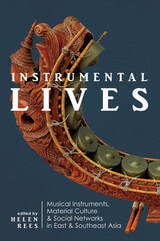
Instrumental Lives
Musical Instruments, Material Culture, and Social Networks in East and Southeast AsiaEdited by Helen Rees
University of Illinois Press, 2024
Original and expert, Instrumental Lives brings a new understanding of how musical instruments interact with their environments and societies. Contributors: Supeena Insee Adler, Marie-Pierre Lissoir, Terauchi Naoko, Jennifer C. Post, Helen Rees, Xiao Mei, Tyler Yamin, and Bell Yung

Insubordinate Spaces
Improvisation and Accompaniment for Social JusticeBarbara Tomlinson
Temple University Press, 2019
Insubordinate spaces are places of possibility, products of acts of accompaniment and improvisation that deepen capacities for democratic social change. Barbara Tomlinson and George Lipsitz’s Insubordinate Spaces explores the challenges facing people committed to social justice in an era when social institutions have increasingly been reconfigured to conform to the imperatives of a market society.
In their book, the authors argue that education, the arts, and activism are key terrains of political and ideological conflict. They explore and analyze exemplary projects responding to current social justice issues and crises, from the Idle No More movement launched by Indigenous people in Canada to the performance art of Chingo Bling, Fandango convenings, the installation art of Ramiro Gomez, and the mass protests proclaiming “Black Lives Matter" in Ferguson, MO. Tomlinson and Lipsitz draw on key concepts from struggles to advance ideas about reciprocal recognition and co-creation as components in the construction of new egalitarian and democratic social relations, practices, and institutions.

Insufferable Tools
Feminism Against Big TechSarah Sharma
Duke University Press, 2026
Insufficient Funds
Savings, Assets, Credit, and Banking Among Low-Income HouseholdsRebecca M. Blank
Russell Sage Foundation, 2009
Insult and the Making of the Gay Self
Didier Eribon
Duke University Press, 2004
Eribon describes the emergence of homosexual literature in Britain and France at the turn of the last century and traces this new gay discourse from Oscar Wilde and the literary circles of late-Victorian Oxford to André Gide and Marcel Proust. He asserts that Foucault should be placed in a long line of authors—including Wilde, Gide, and Proust—who from the nineteenth century onward have tried to create spaces in which to resist subjection and reformulate oneself. Drawing on his unrivaled knowledge of Foucault’s oeuvre, Eribon presents a masterful new interpretation of Foucault. He calls attention to a particular passage from Madness and Civilization that has never been translated into English. Written some fifteen years before The History of Sexuality, this passage seems to contradict Foucault’s famous idea that homosexuality was a late-nineteenth-century construction. Including an argument for the use of Hannah Arendt’s thought in gay rights advocacy, Insult and the Making of the Gay Self is an impassioned call for critical, active engagement with the question of how gay life is shaped both from without and within.

Insurgent Aesthetics
Security and the Queer Life of the Forever WarRonak K. Kapadia
Duke University Press, 2019
Insurgent Communities
How Protests Create a Filipino DiasporaSharon M. Quinsaat
University of Chicago Press, 2024
When people migrate and settle in other countries, do they automatically form a diaspora? In Insurgent Communities, Sharon M. Quinsaat explains the dynamic process through which a diaspora is strategically constructed. Quinsaat looks to Filipinos in the United States and the Netherlands—examining their resistance against the dictatorship of Ferdinand Marcos, their mobilization for migrants’ rights, and the construction of a collective memory of the Marcos regime—to argue that diasporas emerge through political activism. Social movements provide an essential space for addressing migrants’ diverse experiences and relationships with their homeland and its history. A significant contribution to the interdisciplinary field of migration and social movements studies, Insurgent Communities illuminates how people develop collective identities in times of social upheaval.
Insurgent Encounters
Transnational Activism, Ethnography, and the PoliticalJeffrey S. Juris and Alex Khasnabish, eds.
Duke University Press, 2013
Contributors. Giuseppe Caruso, Maribel Casas-Cortés, Janet Conway, Stéphane Couture, Vinci Daro, Manisha Desai, Sylvia Escárcega, David Hess, Jeffrey S. Juris, Alex Khasnabish, Lorenzo Mosca, Michal Osterweil, Geoffrey Pleyers, Dana E. Powell, Paul Routledge, M. K. Sterpka, Tish Stringer

Insurgent Identities
Class, Community, and Protest in Paris from 1848 to the CommuneRoger V. Gould
University of Chicago Press, 1995
The difference was due to Baron Haussmann's massive urban renovation projects between 1852 and 1868, which dispersed workers from Paris's center to newly annexed districts on the outskirts of the city. In these areas, residence rather than occupation structured social relations. Drawing on evidence from trail documents, marriage records, reports of police spies, and the popular press, Gould demonstrates that this fundamental rearrangement in the patterns of social life made possible a neighborhood insurgent movement; whereas the insurgents of 1848 fought and died in defense of their status as workers, those in 1871 did so as members of a besieged urban community.
A valuable resource for historians and scholars of social movements, this work shows that collective identities vary with political circumstances but are nevertheless constrained by social networks. Gould extends this argument to make sense of other protest movements and to offer predictions about the dimensions of future social conflict.

Insurgent Visions
Feminism, Justice, SolidarityChandra Talpade Mohanty
Duke University Press, 2025

Insuring Inequality
Administrative Leadership in Social Security, 1935-54Jerry R. Cates
University of Michigan Press, 1983

Integrating Food into Urban Planning
Edited by Yves Cabannes and Cecilia Marocchino
University College London, 2018
Despite a growing body of literature on food and cities, the issue of planning cities in such a way that they will increase food security and nutrition not only for the affluent segments of society but also the poor, is much less discussed and much informed by practice. This volume fills this gap by putting more than twenty cities’ experiences in perspective: Toronto, New York, Providence, and Portland; Cape Town and Ghana in Africa; Milan in Europe; Lima and Belo Horizonte in South America; and, in Asia, Tokyo and Bangkok, Solo, and Yogyakarta in Indonesia.

Integrating the Gridiron
Black Civil Rights and American College FootballDemas, Lane
Rutgers University Press, 2011
Integrating the Gridiron, the first book devoted to exploring the racial politics of college athletics, examines the history of African Americans on predominantly white college football teams from the nineteenth century through today. Lane Demas compares the acceptance and treatment of black student athletes by presenting compelling stories of those who integrated teams nationwide, and illuminates race relations in a number of regions, including the South, Midwest, West Coast, and Northeast. Focused case studies examine the University of California, Los Angeles in the late 1930s; integrated football in the Midwest and the 1951 Johnny Bright incident; the southern response to black players and the 1955 integration of the Sugar Bowl; and black protest in college football and the 1969 University of Wyoming "Black 14." Each of these issues drew national media attention and transcended the world of sports, revealing how fans—and non-fans—used college football to shape their understanding of the larger civil rights movement.