Results by title
18284 books match the query 'United States' and 636 start with i
Issues in Law and Economics
Harold Winter
University of Chicago Press, 2017

Issues in Librarianship
Presented Papers at the ALA 2008 Annual ConferenceAmerican Library Association, 2008

Issues in Pension Economics
Edited by Zvi Bodie, John B. Shoven, and David A. Wise
University of Chicago Press, 1987
The papers in this volume cover such issues as the interaction of pension-funding decisions and corporate finances; the role of pensions in providing adequate and secure retirement income, including the integration of pension plans with social security and significant drops in the U.S. saving rate; and the incentive effects of pension plans on labor market behavior and the implications of plans on labor market behavior and the implications of plans for different demographic groups.
Issues in Pension Economics offers important empirical studies and makes valuable theoretical contributions to current thinking in an area that will most likely continue to be a source of controversy and debate for some time to come. The volume should prove useful to academics and policymakers, as well as to members of the business and labor communities.
Issues in US-EC Trade Relations
Edited by Robert E. Baldwin, Carl B. Hamilton, and André Sapir
University of Chicago Press, 1988
Issues in US-EC Trade Relations presents the results of a conference organized by the NBER and the Centre for European Policy Studies. In it, North American and European trade specialists offer theoretical, empirical, and historical analyses of some of the major issues on which American and Community officials disagree and also formulate realistic policies for settling present disputes. Contributors consider such topics as the legal aspects of trade between the two regions, agricultural policy, different ways the United States and members of the European Community use embargoes to attempt to induce foreign countries to change particular political actions, the growing trend toward protectionism and responses to this policy, international trade in services, and trade policy in oligopolistic environments. In most cases, each general subject is approached from both an American and a European perspective.
Issues in the Economics of Aging
Edited by David A. Wise
University of Chicago Press, 1990

It
Joseph Roach
University of Michigan Press, 2011
A consumer’s guide to iconic celebrity and ageless glamour
“Strikingly original, wickedly witty, and thoroughly learned, Roach’s anatomy of abnormally interesting people and the vicarious pleasure we take in our modern equivalents to gods and royals will captivate its readers from the first page. I dare you to read just one chapter!”
—Felicity Nussbaum, University of California, Los Angeles
“It considers the effect that arises when spectacularly compelling performers and cultural fantasy converge, as in the outpouring of public grief over the death of Princess Diana. . . . An important work of cultural history, full of metaphysical wit . . . It gives us a fresh vocabulary for interpreting how after-images endure in cultural memory.”
—Andrew Sofer, Boston College
“Joseph Roach’s enormous erudition, sharp wit, engaging style, and gift for finding the most telling historical detail or literary quote are here delightfully applied to the intriguing subject of why certain historical and theatrical figures have possessed a special power to fascinate their public.”
—Marvin Carlson, Graduate Center, City University of New York
That mysterious characteristic “It”—“the easily perceived but hard-to-define quality possessed by abnormally interesting people”—is the subject of Joseph Roach’s engrossing new book, which crisscrosses centuries and continents with a deep playfulness that entertains while it enlightens.
Roach traces the origins of “It” back to the period following the Restoration, persuasively linking the sex appeal of today’s celebrity figures with the attraction of those who lived centuries before. The book includes guest appearances by King Charles II, Samuel Pepys, Flo Ziegfeld, Johnny Depp, Elinor Glyn, Clara Bow, the Second Duke of Buckingham, John Dryden, Michael Jackson, and Lady Diana, among others.
It Happened in Southern Illinois
John W. Allen
Southern Illinois University Press, 1968
In this collection of articles describing the people, places, and folkways of southern Illinois, John W. Allen provides entertaining and informative glimpses into the region’s past. Included here are sketches of the early pioneering days when wolves were literally chased from the door, stories about the many Indian artifacts discovered among the rolling hills and valleys of the area, and articles pertaining to the strategic role the region played during the Civil War. Allen also describes the activities of such infamous outlaws as Samuel Mason and the Harpe brothers as well as the famous Illinois-born heroes “Bat” Masterson, “Wild Bill” Hickok, and Wyatt Earp.
In his warm and friendly style, Allen reminisces about the self-sufficient and satisfying rural life of a previous generation with its oxcarts, pie suppers, threshing machines, kerosene lamps, and blacksmith shops. Any reader interested in southern Illinois and its history will delight in this collection of stories from John W. Allen’s popular newspaper column, “It Happened in Southern Illinois.”

It Never Goes Away
Gender Transition at a Mature AgeAnne L. Koch, D.M.D.
Rutgers University Press, 2019
Ken Koch was one of those people. Married twice, a veteran, and a world traveler, a health scare when he was sixty-three prompted him to acknowledge the feelings that had plagued him since he was a small child. By undergoing a host of procedures, he radically changed his appearance and became Anne Koch. In the process though, Anne lost everything that Ken had accomplished. She had to remake herself from the ground up. Hoping to help other people in her age bracket who may be considering transitioning, Anne describes the step by step procedures that she underwent, and shares the cost to her personal life, in order to show seniors that although it is never too late to become the person you always knew you were, it is better to go into that new life prepared for some serious challenges. Both a fascinating memoir of a well-educated man growing up trans yet repressed in the mid-twentieth century, and a guidebook to navigating the tricky waters of gender reassignment as a senior, It Never Goes Away shows how what we see in the television world of Transparent translates in real life.
It Seemed Like Nothing Happened
America in the 1970sPeter N. Carroll
Rutgers University Press, 1990
"This is the single best book on the 1970s." -- Leo Ribuffo, George Washington University

It Shouldn't Be This Way
The Failure of Long-Term CareRobert L. Kane
Vanderbilt University Press, 2005
Part memoir, part practical guide, part prescription for change, It Shouldn't Be This Way is a unique look at the problems of long-term care. Robert L. Kane, a highly experienced physician and gerontologist, and his sister, Joan C. West, tell the painful story of what happened to their mother after she suffered a debilitating stroke and spent the last years of her life in rehabilitation, assisted-living facilities, and finally a nursing home. Along the way, her adult children encountered some professionals who were kind and considerate but also many frustrations—inadequate care and the need to hire private duty aides, as well as poor communication and lack of coordination throughout the system. The situation, they found, proved far more difficult than it needed to be.
As the authors recount their mother's story, they impart various lessons they learned from each phase of the experience. They alert those who are confronting such situations for the first time about what they will likely face and how to approach the problems. Closing with a broader look at why long-term care is the way it is, they propose steps to make necessary reforms, including the development of national organizations to work for change. Their message to families, care professionals, and policy-makers could not be more urgent.
It Started with the Hats
The Life Experiences of Boston’s Founding Street Gang MembersPaul F. Joyce, with a foreword by J. Larry Mayes
Southern Illinois University Press, 2024
In the late 1980s, the introduction of crack cocaine and easy access to guns led to the emergence of the street gang culture and an explosion of gun violence in Boston. Black and Latino youth were both perpetrators and victims of firearm violence as the city grappled with a staggering number of shootings and homicides. Officers within the Boston Police Department struggled to find new and creative ways to combat the growing violence and neutralize gang influence. Paul Joyce was one of those officers.
Throughout his extensive career with the Boston Police, Joyce was at the forefront of the Department’s anti-gang and youth violence initiatives, including during the height of gang and gun violence in the late 1980s through early 1990s. Later in his career, after thirty-one years in policing, Joyce transitioned to academia as a criminologist, seeking to better understand the lives of the gang members he had encountered during his time as an officer. He interviewed thirty Black and Latino men who witnessed and led the emergence of the street gang phenomenon in Boston. Joyce’s strong relationship with community leaders led to the recruitment of the men, who ultimately entrusted him with their life stories and their inner worlds. Using the men’s own words to describe the tragedies they endured, the crimes they committed, and the penalties they paid, Joyce now shares their stories of life before, during, and after gang membership.
Joyce examines the influences that motivated the men toward joining gangs, their gang experiences, and the turning points that shaped their paths later in life, whether leading to desistance from or continued persistence in criminal behavior. Joyce explores their lives from childhood into adulthood, providing a deep analysis of the factors that influenced the entire trajectory of gang members’ lives. By utilizing this life-course approach, Joyce adds to the discourse regarding what influences a gang member’s ability or inability to transition out of criminality and the gang life.
This uniquely candid look at gang membership, humanized by the perspectives of the men who experienced it, provides invaluable insight into the complex interplay of the social, cultural, and personal factors that shape individuals’ life courses. This, in turn, has important implications regarding the types of outside interventions that would be the most effective in making a positive difference in the lives of current and former gang members.

It Was Always a Choice
Picking Up the Baton of Athlete ActivismDavid Steele
Temple University Press, 2022
The recent flashpoint of Colin Kaepernick taking a knee renews a long tradition of athlete-activists speaking out against racism, injustice, and oppression. Like Kaepernick, Jackie Robinson, Paul Robeson, Muhammad Ali, Bill Russell, Tommie Smith, and John Carlos—among many others, of all races, male and female, pro and amateur—all made the choice to take a side to command public awareness and attention rather than “shut up and play,” as O. J. Simpson, Michael Jordan, and Tiger Woods did. Using their celebrity to demand change, these activists inspired fans but faced great personal and professional risks in doing so. It Was Always a Choice traces the history and impact of these decisive moments throughout the history of U.S. sports.
David Steele identifies the resonances and antecedents throughout the twentieth century of the choices faced by athletes in the post-Kaepernick era, including the advance of athletes’ political organizing in the era of activism following the death of George Floyd. He shows which athletes chose silence instead of action—“dropping the baton,” as it were—in the movement to end racial inequities and violence against Black Americans. The examples of courageous athletes multiply as LeBron James, Megan Rapinoe and the activist-athletes of the NBA, WNBA, and NFL remain committed to fighting daily and vibrantly for social change.
It Was Like a Fever
Storytelling in Protest and PoliticsFrancesca Polletta
University of Chicago Press, 2006
Francesca Polletta’s It Was Like a Fever sets out to account for the power of storytelling in mobilizing political and social movements. Drawing on cases ranging from sixteenth-century tax revolts to contemporary debates about the future of the World Trade Center site, Polletta argues that stories are politically effective not when they have clear moral messages, but when they have complex, often ambiguous ones. The openness of stories to interpretation has allowed disadvantaged groups, in particular, to gain a hearing for new needs and to forge surprising political alliances. But popular beliefs in America about storytelling as a genre have also hurt those challenging the status quo.
A rich analysis of storytelling in courtrooms, newsrooms, public forums, and the United States Congress, It Was Like a Fever offers provocative new insights into the dynamics of culture and contention.

It is Union and Liberty
Alabama Coal Miners, 1898-1998Edwin L. Brown
University of Alabama Press, 1999
One union, many voices—Alabama coal miners and the century-long fight for justice.
Much of Alabama's labor history is written in its coal fields. This book records the critical contribution that District 20 of the United Mine Workers of America played in the state's labor movement through its strong stands on such issues as child labor, public education, and inter-racial unions.
Standing at the cutting edge of social and political history, these essays cover five periods over a century of union activity: the emergence of a militant labor force during mining's formative years; the World War I era, when mine operators tried to divide black and white labor; the increasing role of the state in labor relations during the interwar years; rapid changes in the union between 1942 and 1975; and the 1977-79 strike, the largest in the United Mine Workers' history.
Through historic photographs and depictions of living and working conditions, contributors Edwin L. Brown, Colin J. Davis, Daniel Letwin, Brian M. Kelly, Peter Alexander, Glenn Feldman, and Robert H. Woodrum portray the world that miners, both black and white, made. In a state where racial segregation was the norm,even the earliest District 20 contract proposals demanded equal pay for equal work regardless of color. It Is Union and Liberty shows that the UMW in Alabama stands apart from perceptions of southern trade unionism as exclusionary and racially fragmented. It sheds light on an important segment of the state's labor history and is a testament to District 20 on its centennial celebration.
It's About Time
A History of Archaeological Dating in North AmericaStephen E Nash
University of Utah Press, 2008

It's About Time
The Dave Brubeck StoryFred Hall
University of Arkansas Press, 1996
A much-revered icon of jazz, Dave Brubeck is, as Doug Ramsey calls him, “one of the most celebrated and successful jazz musicians of all time.”
It’s About Time, Fred Hall’s biography, explores the many influences on Brubeck’s life and music: his youth on a cattle ranch in the foothills of the Sierras; a stint in Europe with Patton’s army during World War II; the development of the West Coast jazz scene and the rise of the Dave Brubeck Quartet; musical relationships with Paul Desmond, Eugene Wright, Joe Morello, and many more jazz greats; his phenomenal experiments with polytonality and polyrhythm; his fifty-three-year marriage to Iola, manager, collaborator, and mother of their six children; and important career breakthroughs, such as the first-ever million-selling jazz single, “Take Five.”
Including an annotated discography, It’s About Time is much more than an upbeat examination of the Brubeck phenomenon. It is also a penetrating view of the culture, the music, the musicians, the recording industry, and race relations of the country and the century that gave birth to jazz.
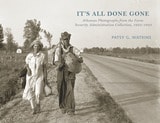
It's All Done Gone
Arkansas Photographs from the Farm Security Administration Collection, 1935-1943Patsy Watkins
University of Arkansas Press, 2018
Of the roughly one thousand FSA photographs taken in Arkansas, approximately two hundred have been selected for inclusion in this volume. Portraying workers picking cotton for five cents an hour, families evicted from homes for their connection with the Southern Tenant Farmers Union, and the effects of flood and drought that cruelly exacerbated the impact of economic disaster, these remarkable black-and-white images from Ben Shahn, Arthur Rothstein, Dorothea Lange, Walker Evans, Russell Lee, and other acclaimed photographers illustrate the extreme hardships that so many Arkansans endured throughout this era.
These powerful photographs continue to resonate, providing a glimpse of life in Arkansas that will captivate readers as they connect to a shared past.

It's All in the Delivery
Pregnancy in American Film and Television ComedyVictoria Sturtevant
University of Texas Press, 2024
2025 John G. Cawelti Award for the Best Textbook/Primer, Popular Culture Association/American Culture Association (PCA/ACA)
2025 Longlist, Kraszna-Krausz Moving Image Book Award
How changing depictions of pregnancy in comedy from the start of the twentieth century to the present show an evolution in attitudes toward women’s reproductive roles and rights.
Some of the most groundbreaking moments in American film and TV comedy have centered on pregnancy, from Lucille Ball’s real-life pregnancy on I Love Lucy, to the abortion plot on Maude; Murphy Brown’s controversial single motherhood; Arnold Schwarzenegger’s pregnancy in Junior; or the third-trimester stand-up special Ali Wong: Baby Cobra.
In the first book-length study of pregnancy in popular comedy, Victoria Sturtevant examines the slow evolution of pregnancy tropes during the years of the Production Code; the sexual revolution and changing norms around nonmarital pregnancy in the 1960s and ‘70s; and the emphasis on biological clocks, infertility, adoption, and abortion from the 1980s to now.
Across this history, popular media have offered polite evasions and sentimentality instead of real candor about the physical and social complexities of pregnancy. But comedy has often led the way in puncturing these clichés, pointing an irreverent and satiric lens at the messy and sometimes absurd work of gestation. Ultimately, Sturtevant argues that comedy can reveal the distortions and lies that treat pregnancy as simple and natural “women’s work,” misrepresentations that rest at the heart of contemporary attacks on reproductive rights in the US.
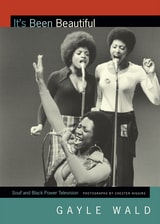
It's Been Beautiful
Soul! and Black Power TelevisionGayle Wald
Duke University Press, 2015
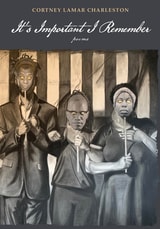
It's Important I Remember
PoemsCortney Lamar Charleston
Northwestern University Press, 2026
An incantation of strength and solace for persisting in twenty-first-century America
“History doesn’t repeat, it rhymes.” In his sweeping third collection, Charleston brings a poet’s ear for echo and rhythm to bear on American history and life after 2016. For Charleston, these rhymes cut two ways: the long tradition of American racism and fascism, and the steady pulse of Black persistence. The collection’s titular invocation frames each poem, at times an oratory to rally a crowd, in other moments a private prayer whispered as the speaker gathers himself to face another day. Charleston insists that should we cede memory of our national biography—whether to repression or indifference—we will witness the country’s dissolution into something unrecognizable to many, yet all too familiar to its most marginalized people. But with each reiteration and riff, he also invokes a tenuous hope—that if we summon an American history of Black resistance, we might still make a more perfect union.
It's Just the Normal Noises
Marcus, Guralnick, No Depression, and the Mystery of Americana MusicTimothy Gray
University of Iowa Press, 2017
In It’s Just the Normal Noises, Timothy Gray examines a wide array of writing about roots music from the 1960s to the 2000s. In addition to chapters on the genre-defining work of Guralnick and Marcus, he explores the influential writings of Grant Alden and Peter Blackstock, the editors of No Depression magazine, and the writers who contributed to its pages, Bill Friskicks-Warren, Ed Ward, David Cantwell, and Allison Stewart among them. A host of memoirists and novelists, from Patti Smith and Ann Powers to Eleanor Henderson and Dana Spiotta, shed light on the social effects and personal attachments of the music’s many manifestations, from punk to alt country to hardcore. The ambivalent attitudes of rock musicians toward success and failure, the meaning of soul, the formation of alternative communities through magazine readership, and the obsession of Generation X scenes with DIY production values wend through these works.
Taking a personal approach to the subject matter, Gray reads criticism and listens to music as though rock ‘n’ roll not only explains American culture, but also shores up his life. This book is for everyone who’s heard in roots rock the sound of an individual and a nation singing themselves into being.

It's Legal but It Ain't Right
Harmful Social Consequences of Legal IndustriesNikos Passas and Neva Goodwin
University of Michigan Press, 2005
--William S. Laufer, Professor, The Wharton School of Business
"This delightful and serious book involves a matter I have long felt of first importance. That is our tendency to make social truth and acceptance conform to personal or larger corporate interests. On this I have written , but gladly yield to this persuasive parallel. No one concerned with literate, informed, and relevant---as distinct from self-serving---truth should miss It's Legal but It Ain't Right."
--John Kenneth Galbraith
"This absorbing and well-written book of essays on the harmful consequences of legal industries skillfully illuminates the ways in which some corporate harms fail to be transformed into criminal law-making and enforcement, and offers cogent suggestions for better regulation in the public interest."
--Dr. Michael Levi, Professor of Criminology, Cardiff University
Many U.S. corporations and the goods they produce negatively impact our society without breaking any laws. We are all too familiar with the tobacco industry's effect on public health and health care costs for smokers and nonsmokers, as well as the role of profit in the pharmaceutical industry's research priorities. It's Legal but It Ain't Right tackles these issues, plus the ethical ambiguities of legalized gambling, the firearms trade, the fast food industry, the pesticide industry, private security companies, and more. Aiming to identify industries and goods that undermine our societal values and to hold them accountable for their actions, this collection makes a valuable contribution to the ongoing discussion of ethics in our time.
This accessible exploration of corporate legitimacy and crime will be important reading for advocates, journalists, students, and anyone interested in the dichotomy between law and legitimacy.

It's Not Personal
Politics and Policy in Lower Court Confirmation HearingsLogan Dancey, Kjersten R. Nelson, and Eve M. Ringsmuth
University of Michigan Press, 2020
In order to be confirmed to a lifetime appointment on the federal bench, all district and circuit court nominees must appear before the Senate Judiciary Committee for a confirmation hearing. Despite their relatively low profile, these lower court judges make up 99 percent of permanent federal judgeships and decide cases that relate to a wide variety of policy areas. To uncover why senators hold confirmation hearings for lower federal court nominees and the value of these proceedings more generally, the authors analyzed transcripts for all district and circuit court confirmation hearings between 1993 and 2012, the largest systematic analysis of lower court confirmation hearings to date. The book finds that the time-consuming practice of confirmation hearings for district and circuit court nominees provides an important venue for senators to advocate on behalf of their policy preferences and bolster their chances of being re-elected. The wide variation in lower court nominees’ experiences before the Judiciary Committee exists because senators pursue these goals in different ways, depending on the level of controversy surrounding a nominee. Ultimately, the findings inform a (re)assessment of the role hearings play in ensuring quality judges, providing advice and consent, and advancing the democratic values of transparency and accountability.
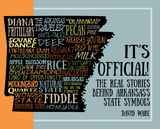
It's Official!
The Real Stories behind Arkansas’s State SymbolsDavid Ware
Butler Center for Arkansas Studies, 2015

It's Our Military Too
Women and the U.S Militaryedited by Judith Hicks Stiehm
Temple University Press, 1996
In the last twenty-five years the U.S. military has seen the abolition of women's separate corps, the appointment of women generals, and an unprecedented increase in the ratio of women to men. Also, women are now permitted to serve on combat planes and ships. Despite these developments, most civilians know very little about women in the military.
This collection includes unusual accounts by women on active duty, retired officers, women who have worked for the armed forces in a civilian capacity, and civilian academics. The book offers insights on a variety of pressing issues including minority women, lesbians, combat, the role of gender in weapons design, and the changing mission of the military.
Through personal accounts and commentaries, this book dispels many of the myths about women and the military and explores the reasons for the persistence of misconceptions in the face of increased female participation. This comprehensive effort will be of interest to anyone who wants to know the truth about women in the armed forces and will be a wake-up call to women who feel that the military is irrelevant to them.
Contributors: Rhonda Cornum, Virginia Solms, Billie Mitchell, Connie L. Reeves, Brenda L. Moore, Nina Richman-Loo, Rachel Weber, Lucinda Joy Peach, M. C. Devilbiss, Carol Burke, Susan Jeffords, Miriam Cooke.
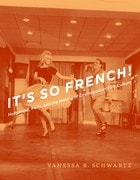
It's So French!
Hollywood, Paris, and the Making of Cosmopolitan Film CultureVanessa R. Schwartz
University of Chicago Press, 2007
Hollywood was once enamored with everything French and this infatuation blossomed in a wildly popular series of films including An American in Paris, Gigi,and Funny Face. Schwartz here examines the visual appeal of such films, and then broadens her analysis to explore their production and distribution, probing the profitable influences that Hollywood and Paris exerted on each other. This exchange moved beyond individual films with the sensational spectacle of the Cannes Film Festival and the meteoric career of Brigitte Bardot. And in turn, their success led to a new kind of film that celebrated internationalism and cultural hybridity. Ultimately, Schwartz uncovers an intriguing paradox: that the road to globalization was paved with nationalist clichés, and thus, films beloved for being so French were in fact the first signs of a nascent cosmopolitan culture.
Packed with an array of colorful film stills, publicity photographs, paparazzi shots, ads, and never before seen archival images, It’s So French! is an incisive account of the fertile collaboration between France and the United States that expanded the geographic horizons of both filmmaking and filmgoing, forever changing what the world saw and dreamed of when they went to the movies.
It's a New Day
Race and Gender in the Modern Charismatic MovementScott Billingsley
University of Alabama Press, 2008

Italian Immigration in the American West
1870-1940Kenneth Scambray
University of Nevada Press, 2021
The lives of immigrants in the West differed greatly from those of their counterparts on the East Coast in many ways. The development of the West—with its cheap land and mining, forestry, and agriculture industries\--created a demand for labor that enabled newcomers to achieve stability and success. Moreover, female immigrants had many more opportunities to contribute materially to their family’s well-being, either by overseeing new revenue streams for their farms and small businesses, or as paid workers outside the home.
Despite this success, Italian immigrants in the West could not escape the era’s xenophobia. Scambray also discusses the ways that Italians, perceived by many as non-White, interacted with other Euro-Americans, other immigrant groups, and Native Americans and African Americans.
By placing the Italian immigrant experience within the context of other immigrant narratives, Italian Immigration in the American West provides rich insights into the lives and contributions of individuals and families who sought to build new lives in the West. This unique study reveals the impact of Italian immigration and the immense diversity of the immigrant experience outside the East’s urban centers.
Italian Irish Filmmakers
Lee Lourdeaux
Temple University Press, 1993
Italians Then, Mexicans Now
Immigrant Origins and the Second-Generation Progress, 1890-2000Joel Perlmann
Russell Sage Foundation, 2005

Italians in Michigan
Russell M. Magnaghi
Michigan State University Press, 2001
For more than 350 years, Italian immigrants have played important roles in the opening and development of the land that is now Michigan, from their participation in the French fur trade up to the present day. Through an emphasis on the family as the essential institution in ethnic group success, Russell M. Magnaghi celebrates the accomplishments of Michigan's famous and not-so-famous Italian sons and daughters as he documents their struggles and achievements. Through the tenacity and hard work of the immigrants and their descendants, Italians in Michigan have progressed from unskilled laborers to some of the highest positions in business, politics, culture, and education.
It’s All a Kind of Magic
The Young Ken KeseyRick Dodgson
University of Wisconsin Press, 2013
“Rick Dodgson has pored over Kesey’s published and unpublished writings, interviews, and historical records to write a colorful biography of this charismatic American character. The resulting portrayal challenges assumptions about Kesey’s place in the counterculture.”—Journal of American History
“Dodgson’s painstaking research unearths hidden gems of Kesey’s life that marked him as a fascinating figure.”—H-Net
Ivory Towers and Nationalist Minds
Universities, Leadership, and the Development of the American StateMark R. Nemec
University of Michigan Press, 2006
"A wonderful, learned, and original work, full of present-day relevance. Essential reading for anyone interested in the history of higher education and its relation to professionalism and the growth of the modern state."
--Geoffrey Kabaservice, author of The Guardians: Kingman Brewster, His Circle, and the Rise of the Liberal Establishment
"Ivory Towers and Nationalist Minds contributes greatly to our understanding of the influence of the American university on public life, including the development of the modern American state. Nemec focuses on the universities working in concert to enhance their own influence and that of the state. This is not only a historical issue of interest-it has contemporary resonance. Institutions today compete intensely while cooperating regularly. And public universities like Michigan and California are expected, perhaps more than ever before, to contribute directly to the welfare of their states, especially in economic development."
--J. Douglas Toma, Associate Professor, Institute of Higher Education, University of Georgia
"Ivory Towers and Nationalist Minds fills an important void in the study of American political development and its relationship to the evolution of American higher education. Numerous historical case studies provide vivid evidence of how universities emerged as sources of national expertise and state-building at a critical juncture in our nation's history. Nemec demonstrates that such contributions were not historical inevitabilities, but the product of strategic actors seeking to simultaneously strengthen universities and serve a greater national purpose."
--Scott W. Allard, Brown University
Mark R. Nemec is a Vice President with Forrester Research in Cambridge, Massachusetts. He holds a BA from Yale, and both an MA in Education and a PhD in Political Science from the University of Michigan. He has served on the faculty of Davidson College and as a Senior Director of the Advisory Board Company in Washington, DC.
Ivy and Industry
Business and the Making of the American University, 1880-1980Christopher Newfield
Duke University Press, 2003
Newfield views management as neither inherently good nor bad, but rather as a challenge to and tool for negotiating modern life. In Ivy and Industry he integrates business and managerial philosophies from Taylorism through Tom Peters’s “culture of excellence” with the speeches and writings of leading university administrators and federal and state education and science policies. He discusses the financial dependence on industry and government that was established in the university’s early years and the equal influence of liberal arts traditions on faculty and administrators. He describes the arrival of a managerial ethos on campus well before World War II, showing how managerial strategies shaped even fields seemingly isolated from commerce, like literary studies. Demonstrating that business and the humanities have each had a far stronger impact on higher education in the United States than is commonly thought, Ivy and Industry is the dramatic story of how universities have approached their dual mission of expanding the mind of the individual while stimulating economic growth.

Izzy
A Biography of I. E. StoneCottrell, Robert
Rutgers University Press, 1993
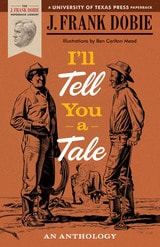
I’ll Tell You a Tale
An AnthologyBy J. Frank Dobie
University of Texas Press, 1981
I'll Tell You a Tale is a garland of some of Frank Dobie's best writing, put together by Isabel Gaddis, one of his former students at the University of Texas. The tales included are those the author himself liked best, and he even rewrote some of them especially for this anthology. Ben Carlton Mead has contributed 32 original line drawings to illustrate the stories.
These tales spring from the soil and folklore of our land; but more than this, they make the readers contemporary with the times, filling us with the wonder of something past and yet still with us. They are arranged topically into sections whose titles speak for them: "The Longhorn Breed," "Mustangs and Mustangers," "The Saga of the Saddle," "Characters and Happenings of Long Ago," "Animals of the Wild," "In Realms of Gold," and "Ironies."