Results by title
22279 books match the query 'Social Science' and 851 start with i
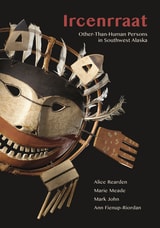
Ircenrraat
Other-Than-Human Persons in Southwest AlaskaAlice Rearden
University of Alaska Press, 2021

Ireland in the World Order
A History of Uneven DevelopmentMaurice Coakley
Pluto Press, 2012
Ireland in the World Order examines Ireland’s development from the medieval to the modern era, comparing its unique trajectory with that of England, Scotland and Wales.
Maurice Coakley focuses on key elements that contributed to Ireland’s development, examining its bloody and violent incorporation into the British state, its refusal to embrace the Protestant Reformation and failure to industrialise in the 19th century. Coakley considers the crucial question of why Ireland’s national identity has come to rest on a mass movement for independence.
Cutting through many of the myths – imperialist and nationalist – which have obscured the real reasons for Ireland's course of development, Ireland in the World Order provides a new perspective for students and academics of Irish history.
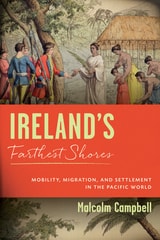
Ireland's Farthest Shores
Mobility, Migration, and Settlement in the Pacific WorldMalcolm Campbell
University of Wisconsin Press, 2022
Malcolm Campbell examines the rich history of Irish experiences on land and at sea, offering new perspectives on migration and mobility in the Pacific world and of the Irish role in the establishment and maintenance of the British Empire. This volume investigates the extensive transnational connections that developed among Irish immigrants and their descendants across this vast and unique oceanic space, ties that illuminate how the Irish participated in the making of the Pacific world and how the Pacific world made them.
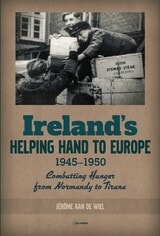
Ireland's Helping Hand to Europe
Combatting Hunger from Normandy to Tirana, 1945–1950Jérôme aan de Wiel
Central European University Press, 2021
Post-war Marshall Plan aid to Europe and indeed Ireland is well documented, but practically nothing is known about simultaneous Irish aid to Europe. This book provides a full record of the aid – mainly food but also clothes, blankets, medicines, etc. – that Ireland donated to continental Europe, including France, the Netherlands, Hungary, the Balkans, Italy, and zones of occupied Germany.
Starting with Ireland’s neutral wartime record, often wrongly presented as pro-German when Ireland in fact unofficially favoured the western Allies, Jerome aan de Wiel explains why Éamon de Valera’s government sent humanitarian aid to the devastated continent. His book analyses the logistics of collection and distribution of supplies sent abroad as far as the Greek islands.
Despite some alleged Cold-War hijacking of Irish relief – and this humanitarianism was not above the politics of that East-West confrontation – it became mostly a story of hope, generosity and European Christian solidarity. Rich archival records from Ireland and the European beneficiary countries, as well as contemporary local and national newspapers across Europe, allow the author to measure and describe not only the official but also the popular response to Irish relief schemes. This work is illustrated with contemporary photographs and some key graphs and tables that show the extent of the aid programme.
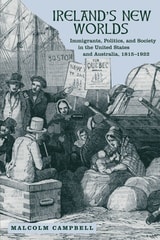
Ireland's New Worlds
Immigrants, Politics, and Society in the United States and Australia, 1815–1922Malcolm Campbell
University of Wisconsin Press, 2007
Ireland’s New Worlds is the first book to compare Irish immigrants in the United States and Australia. In a profound challenge to the national histories that frame most accounts of the Irish diaspora, Malcolm Campbell highlights the ways that economic, social, and cultural conditions shaped distinct experiences for Irish immigrants in each country, and sometimes in different parts of the same country. From differences in the level of hostility that Irish immigrants faced to the contrasting economies of the United States and Australia, Campbell finds that there was much more to the experiences of Irish immigrants than their essential “Irishness.” America’s Irish, for example, were primarily drawn into the population of unskilled laborers congregating in cities, while Australia’s Irish, like their fellow colonialists, were more likely to engage in farming. Campbell shows how local conditions intersected with immigrants’ Irish backgrounds and traditions to create surprisingly varied experiences in Ireland’s new worlds.
“Well conceived and thoroughly researched . . . . This clearly written, thought-provoking work fulfills the considerable ambitions of comparative migration studies.”—Choice
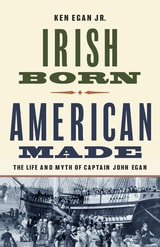
Irish Born, American Made
The Life and Myth of Captain John EganKen Egan Jr.
University of Wisconsin Press, 2026
Born to poverty in the Irish county of Tipperary, John Egan participated in some of the most dramatic events of the nineteenth century, including mass migration to the United States during a catastrophic famine, the “opening” of Japan via gunboat diplomacy, Sherman’s March to the Sea, and homesteading in the Upper Midwest. In Irish Born, American Made, his great-grandson examines the processes by which a scorned British subject became a proud American citizen.
Although Egan’s life was filled with epic drama, the author does not shy away from unsavory truths, such as his ancestor’s doubts about the virtues of abolition or his enthusiastic participation in settling land appropriated from Indigenous peoples. Equally, Egan recognizes the real hardships his ancestor faced in assimilating to American society, from the prejudices of the ascendant Know-Nothing movement to the condescending caricatures of Irish soldiers by his Union compatriots during and after the Civil War. The result is both a moving reminder of the hardships of immigration and a timely reckoning with the imperfections of our forebears.

Irish Families and Globalization
Conversations about Belonging and Identity across Space and Time: Groves Monographs on Marriage and Family (Volume 3)Christine A. Readdick
Michigan Publishing Services, 0
Groves Monographs on Marriage and Family is an edited book series based on the annual meetings of the Groves Conference on Marriage and Family, an interdisciplinary, interprofessional organization of limited invited membership founded in 1934. Groves Monographs publishes work on the leading edges of theory development and empirical research in the field of family studies. Individual volumes are edited by the chairs of the annual Groves Conferences and include peer-reviewed chapters by the conference presenters and invited authors. Topics are timely and provocative with diverse themes.
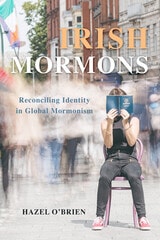
Irish Mormons
Reconciling Identity in Global MormonismHazel O'Brien
University of Illinois Press, 2023
Examining the Latter-day Saint experience against one nation’s rapid social and religious changes, Irish Mormons blends participant observation and interviews with analysis to offer a rare view of the Latter-day Saints in contemporary Ireland.
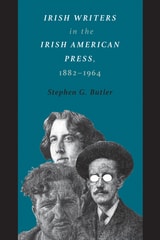
Irish Writers in the Irish American Press, 1882-1964
Stephen G. Butler
University of Massachusetts Press, 2018
Irish Writers in the Irish American Press spans the period from Oscar Wilde's 1882 American lecture tour to the months following JFK's assassination and covers the century in which Irish American identity was shaped by immigration, religion, politics, and economic advancement. Through a close engagement with Irish American periodicals, Butler offers a more nuanced understanding of the connections between Irish literary studies and Irish American culture during this period.
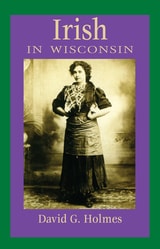
Irish in Wisconsin
David G. Holmes
Wisconsin Historical Society Press, 2004

Iron Dads
Managing Family, Work, and Endurance Sport IdentitiesDiana Tracy Cohen
Rutgers University Press, 2016
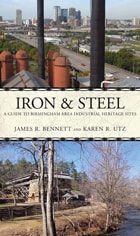
Iron and Steel
A Driving Guide to the Birmingham Area Industrial HeritageJames R. Bennett and Karen R. Utz
University of Alabama Press, 2010
This guidebook of historic iron-production sites is designed to give the reader a factual and illuminating look at the people and events that shaped Birmingham into one of America’s leading steel centers. Iron & Steel is heavily illustrated with both color and historical black-and-white photographs. It can be used while visiting parks or read as a coherent volume before or after a visit.
The book contains chapters devoted to the larger preserved sites open to the public, such as Sloss Furnaces National Historic Landmark and Tannehill Ironworks Historical State Park. It also highlights lesser-known, yet still accessible, sites such as Blocton Coke Ovens Park. The work provides easy-to-follow maps for every site as well as driving directions to the more remote locations, giving visitors easy access to all the notable iron and steel sites in Jefferson, Shelby, Tuscaloosa, and Bibb counties. Each chapter also includes a variety of historical information, with accompanying photographs, in order to present the reader with a detailed and comprehensive account of the Birmingham Iron and Steel District.
Featured sites include: Tannehill Ironworks Historical State Park; Shelby Ironworks Park; Billy Gould Coke Ovens Park; Brierfield Ironworks Historical State Park; Oxmoor Furnace Site; Irondale Furnace Park; Helena Rolling Mill Site; Red Mountain Park, Iron Ore Mines; Lewisburg Coke Ovens Park; Sloss Furnaces National Historic Landmark; Ruffner Mountain Nature Center; Blocton Coke Ovens Park; and Vulcan Park and Museum.
Irony in Action
Anthropology, Practice, and the Moral ImaginationEdited by James Fernandez and Mary Taylor Huber
University of Chicago Press, 2001
The first group of essays explores the limits to irony's liberating qualities from the constrained use of irony in congressional hearings to its reactive presence amid widening disparities of wealth despite decades of world development. The second section presents irony's more positive dimensions through an array of examples such as the use of irony by Chinese writers and Irish humorists. Framed by the editors' theoretical introduction to the issues posed by irony and responses to the essays by two literary scholars, Irony in Action is a timely contribution in the contemporary reinvention of anthropology.
Iroquois Culture History in the Niagara Frontier Area of New York State
Marian E. White
University of Michigan Press, 1961
Irrational Together
The Social Forces That Invisibly Shape Our Economic BehaviorAdam S. Hayes
University of Chicago Press, 2025
In Irrational Together, economic sociologist Adam S. Hayes takes readers on a fascinating journey to uncover the often-unseen social forces that shape our financial behavior. Drawing on original research and engaging real-world examples, Hayes challenges not only the notion that economic decisions are purely rational but also the prevailing behavioral economics view that irrational choices stem primarily from individual beliefs. Instead, he argues that our economic choices and actions are deeply embedded in our social and cultural contexts and that understanding these influences is crucial to fully grasp the complexities of financial decision-making.
From the impact of social class and cultural capital on risk-taking and the role of social networks and group identities in shaping consumer choices to the gendered dimensions of financial advice and literacy, this book weaves together insights from sociology, behavioral economics, and cultural studies to paint a nuanced picture of how we navigate the economic landscape as inherently social beings. Why, for example, would someone choose to continue paying 20% interest on a large credit card debt rather than taking out a low-interest mortgage on their home to pay off the card? As Hayes makes clear through rigorous analysis, cultural values—like those related to home ownership—hold as much or more sway over us than financial best practices.
Bridging the gap between behavioral economics and sociology, this groundbreaking work paves the way for a more holistic understanding of the social and cultural influences on economic behavior. Hayes also looks to the future and argues that to correct major disparities in our social understanding of wealth and money, we need to construct financial systems that consider a diversity of social backgrounds.
With its accessible language and thought-provoking insights, Irrational Together is an essential guide for anyone seeking to understand the intersection of money, society, and human behavior.
Irrevocable
A Philosophy of MortalityAlphonso Lingis
University of Chicago Press, 2018
Whether describing religious art and ritual, suffering, war and disease, the pleasures of love, the wonders of nature, archaeological findings, surfing, volcanoes, or jellyfish, Lingis writes with equal measures of rigor and abandon about the vicissitudes of our practices and beliefs. Knowing that birth, the essential encounters in our lives, crippling diseases and accidents, and even death are all determined by chance, how do we recognize and understand such chance? After facing tragedies, what makes it possible to live on while recognizing our irrevocable losses?
Lingis’s investigations are accompanied by his own vivid photographs from around the world. Balancing the local and the global, and ranging across vast expanses of culture and time, Irrevocable sounds the depths of both our passions and our impassioned bodies and minds.

Irrigation and the Cuicatec Ecosystem
A Study of Agriculture and Civilization in North Central OaxacaJoseph W. Hopkins III
University of Michigan Press, 1984
Irrigation's Impact on Society
Edited by Theodore E. Downing and McGuire Gibson
University of Arizona Press, 1974

Irvin S. Cobb
Anita Lawson
University of Wisconsin Press, 0
The story of Irvin S. Cobb is a fascinating one for many reasons. His life was not unusual at the time: a Horatio Alger rise from poor boy to world authority through hard work. Associate of celebrities of all kinds for two decades, he died in Hollywood virtually forgotten, having outlived the world he grew up in and which appreciated him.
Is It Good for the Jews?
More Stories from the Old Country and the NewAdam Biro
University of Chicago Press, 2009
“Jewish stories,” writes Adam Biro, “resemble every people’s stories.” Yet at the same time there is no better way to understand the soul, history, millennial suffering, or, crucially, the joys of the Jewish people than through such tales—“There’s nothing,” writes Biro, “more revelatory of the Jewish being.”
With Is It Good for the Jews? Biro offers a sequel to his acclaimed collection of stories Two Jews on a Train. Through twenty-nine tales—some new, some old, but all finely wrought and rich in humor—Biro spins stories of characters coping with the vicissitudes and reverses of daily life, while simultaneously painting a poignant portrait of a world of unassimilated Jewish life that has largely been lost to the years. From rabbis competing to see who is the most humble, to the father who uses suicide threats to pressure his children into visiting, to three men berated by the Almighty himself for playing poker, Biro populates his stories with memorable characters and absurd—yet familiar—situations, all related with a dry wit and spry prose style redolent of the long tradition of Jewish storytelling.
A collection simultaneously of foibles and fables, adversity and affection, Is It Good for the Jews? reminds us that if in the beginning was the word, then we can surely be forgiven for expecting a punch line to follow one of these days.
Is Rational Choice Theory All of Social Science?
Mark I. Lichbach
University of Michigan Press, 2003

Is There a Measure on Earth?
Foundations for a Nonmetaphysical EthicsWerner Marx
University of Chicago Press, 1987
The poet Hölderlin posed the question, "Is there a measure on earth?" His own answer was emphatic, "There is none," for he was convinced that the measure for man was to be found only in the domain of the heavenly beings. Such metaphysical assumptions, as well as the attempt to found ethical conduct in the nature of man as a rational being, have been rejected by many contemporary thinkers, particularly Heidegger. Yet these thinkers have not been able to provide a satisfactory alternative to metaphysical foundations of the standards for responsible human conduct.
Marx, therefore, goes beyond Heidegger in demonstrating how several of his most basic notions could be relevant to a secular morality in our age. It is death, Marx claims, that unsettles man and transforms his conduct toward his fellow man. the common experience of mortality nourishes ethical life—and leads to the measures of compassion, love, and recognition of one's fellow human beings.
"It is only on the basis of these 'traditional virtues,'" Marx writes, "that we can find a motive for averting the impending dangers which have often enough been described so vividly and convincingly."
Is This America?
Katrina as Cultural TraumaBy Ron Eyerman
University of Texas Press, 2015
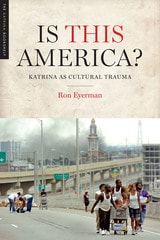
From police on the street, to the mayor of New Orleans and FEMA administrators, government officials monumentally failed to protect the most vulnerable residents of New Orleans and the Gulf Coast during the Katrina disaster. This violation of the social contract undermined the foundational narratives and myths of the American nation and spawned a profound, often contentious public debate over the meaning of Katrina’s devastation. A wide range of voices and images attempted to clarify what happened, name those responsible, identify the victims, and decide what should be done. This debate took place in forums ranging from mass media and the political arena to the arts and popular culture, as various narratives emerged and competed to tell the story of Katrina.
Is This America? explores how Katrina has been constructed as a cultural trauma in print media, the arts and popular culture, and television coverage. Using stories told by the New York Times, New Orleans Times-Picayune, Time, Newsweek, NBC, and CNN, as well as the works of artists, writers, musicians, filmmakers, and graphic designers, Ron Eyerman analyzes how these narratives publicly articulated collective pain and loss. He demonstrates that, by exposing a foundational racial cleavage in American society, these expressions of cultural trauma turned individual experiences of suffering during Katrina into a national debate about the failure of the white majority in the United States to care about the black minority.
Is William Martinez Not Our Brother?
Twenty Years of the Prison Creative Arts ProjectBuzz Alexander
University of Michigan Press, 2010
Praise for the Prison Creative Arts Project:
"I cannot overstate how profoundly my experience with the Prison Creative Arts Project has shaped my life. It began my engagement with prison issues, developed both my passion and my understanding of them, and I continue to draw on both as I seek to contribute to a more rational, humane and just criminal justice system. PCAP prepared me to adapt to any situation, to take risks, to collaborate with people very different from myself in a manner infused with total respect."
---Jesse Jannetta, researcher, Justice Policy Center, the Urban Institute
"PCAP provided me with an emotional education that I would not have received otherwise. PCAP continually opens the doors to the stark reality of our criminal justice system as well as our society's ability to right the wrongs of that system and provide justice to millions of men, women, and children . . . PCAP showed me the power I, and the individuals around me, have to make a difference."
---Anne Bowles, Policy and Outreach Associate, Institute for Higher Education Policy
"PCAP looks beyond past mistakes and personal shortcomings to find the beauty and creative energies that help to heal the hurts we've done to others. They have not forgotten that we are human too! . . . Their program has given me a way to reach people that I would otherwise never reach. For that, I owe PCAP everything. They are my lifeline that I cling to."
---Bryan Picken, incarcerated artist
Prisons are an invisible, but dominant, part of American society: the United States incarcerates more people than any other nation in the world. In Michigan, the number of prisoners rose from 3,000 in 1970 to more than 50,000 by 2008, a shift that Buzz Alexander witnessed firsthand when he came to teach at the University of Michigan.
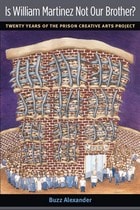
Is William Martinez Not Our Brother? describes the University of Michigan's Prison Creative Arts Project (PCAP), a pioneering program founded in 1990 that provides university courses, a nonprofit organization, and a national network for incarcerated youth and adults in Michigan juvenile facilities and prisons.
By giving incarcerated individuals an opportunity to participate in the arts, PCAP enables them to withstand and often overcome the conditions and culture of prison, the policies of an incarcerating state, and the consequences of mass incarceration.
Buzz Alexander is Arthur F. Thurnau Professor of English Language and Literature, College of Literature, Science, and the Arts, at the University of Michigan and was Carnegie National Professor of the Year in 2005.
Cover image: Overcrowded by Ronald Rohn
Is the Cemetery Dead?
David Charles Sloane
University of Chicago Press, 2018
Is the Cemetery Dead? gets to the heart of the tragedy of death, chronicling how Americans are inventing new or adapting old traditions, burial places, and memorials. In illustrative prose, David Charles Sloane shows how people are taking control of their grief by bringing their relatives home to die, interring them in natural burial grounds, mourning them online, or memorializing them streetside with a shrine, ghost bike, or RIP mural. Today’s mourners are increasingly breaking free of conventions to better embrace the person they want to remember. As Sloane shows, these changes threaten the future of the cemetery, causing cemeteries to seek to become more responsive institutions.
A trained historian, Sloane is also descendent from multiple generations of cemetery managers and he grew up in Syracuse’s Oakwood Cemetery. Enriched by these experiences, as well as his personal struggles with overwhelming grief, Sloane presents a remarkable and accessible tour of our new American way of death.
Is the Rectum a Grave?
and Other EssaysLeo Bersani
University of Chicago Press, 2009
Over the course of a distinguished career, critic Leo Bersani has tackled a range of issues in his writing, and this collection gathers together some of his finest work. Beginning with one of the foundations of queer theory—his famous meditation on how sex leads to a shattering of the self, “Is the Rectum a Grave?”—this volume charts the inspired connections Bersani has made between sexuality, psychoanalysis, and aesthetics.
Over the course of these essays, Bersani grapples with thinkers ranging from Plato to Descartes to Georg Simmel. Foucault and Freud recur as key figures, and although Foucault rejected psychoanalysis, Bersani contends that by considering his ideas alongside Freud’s, one gains a clearer understanding of human identity and how we relate to one another. For Bersani, art represents a crucial guide for conceiving new ways of connecting to the world, and so, in many of these essays, he stresses the importance of aesthetics, analyzing works by Genet, Caravaggio, Proust, Almodóvar, and Godard.
Documenting over two decades in the life of one of the best minds working in the humanities today, Is the Rectum a Grave? and Other Essays is a unique opportunity to explore the fruitful career of a formidable intellect.
Isabel Rules
Constructing Queenship, Wielding PowerBarbara F. Weissberger
University of Minnesota Press, 2003
A deconstruction of the strategies used to shape the image of a powerful woman ruler
As queen of Spain, Isabel I of Castile (known to history as Isabella the Catholic, 1474–1504) oversaw the creation of Europe’s first nation-state and laid the foundations for its emergence as the largest empire the West has ever known—nearly a century before the better-known and more widely studied Elizabeth I of England.
What we know of this remarkable ruler is typically gleaned from hagiographic texts that negate her power and accept her own propagandistic self-fashioning as legitimate heir, pious princess, devoted wife, and heaven-sent healer of the wounds inflicted on Spain’s body politic by impotent kings, seditious nobles, and such undesirable others as Jews, Muslims, and sodomites. Isabel Rules is the first book to examine the formation of the queen’s public image, focusing on strategies designed to cope with the ideological and cultural dissonance created by the combination of her gender and her profoundly patriarchal political program for unifying and purifying Spain.Barbara Weissberger identifies two primary and interrelated strategies among the supporters of the queen—often writing in her employ—and her critics. Her loyalists use Marian imagery to portray Isabel as a pious, chaste, and submissive queen consort to her husband Ferdinand, while her opponents imagine the queen as a voracious and lascivious whore whose illicit power threatens the virility of her male subjects and inverts the traditional gender hierarchy. Weissberger applies a materialist feminist perspective to a wide array of texts of the second half of the fifteenth century in order to uncover and study the masculine psychosexual anxiety created by Isabel’s anomalous power. She then demonstrates the persistence of the two sides of the propagandistic construction of the Catholic queen, reviewing modern treatments in Francoist schoolbooks and in the fiction of Juan Goytisolo, Alejo Carpentier, and Salman Rushdie.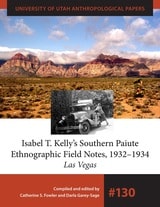
Isabel T. Kelly's Southern Paiute Ethnographic Field Notes, 1932-1934
Compiled and Edited by Catherine S. Fowler and Darla Garey-Sage
University of Utah Press, 2016
University of Utah Anthropological Paper No. 130
This publication presents the first volume (Las Vegas) of the early ethnographic field work of anthropologist Isabel T. Kelly. From 1932 to 1934, Kelly interviewed thirty Southern Paiute people from southeastern California, southern Nevada, and southern Utah about “the old ways.” During this time, she filled thirty-one notebooks, made several maps, took roughly fifty photographs, collected nearly 300 ethnobotanical specimens, purchased and shipped over 400 ethnographic artifacts to museums, and traveled more than 7,000 miles. Her notes comprise the most extensive primary ethnographic documentation of Southern Paiute/Chemehuevi lifeways of the middle to late nineteenth and early twentieth centuries existing today.
Although Kelly intended to publish these notes, she was unable to before her death. Fowler and Garey-Sage have now synthesized the first set of these handwritten field notes and sketches, providing commentary and illustrations to put them in context for the modern reader. Kelly’s data, most of which could not be gathered anew today, are offered here for the use of generations to come.
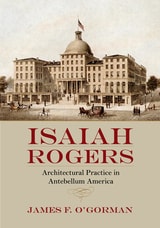
Isaiah Rogers
Architectural Practice in Antebellum AmericaJames F. O'Gorman
University of Massachusetts Press, 2015
When Isaiah Rogers died in 1869, the Cincinnati Daily Times noted that “in his profession he was, perhaps, better known than any other person in the country.” Yet until now there has been no study that fully examines his remarkable, influential, and instructive career. Based largely on Rogers's own diary, this book tells his story and adds much to our understanding of architectural practice in the United States before the Civil War.
In 1944 the distinguished historian Talbot Hamlin wrote of New York's Merchant Exchange (1836–42) that the building had “been so grandly conceived, so simply and directly planned, and so beautifully detailed . . . [that] the whole was welded inextricably into one powerful organic conception that shows Rogers as a great architect in the fullest sense of the word.” Rogers's Tremont House in Boston has been called the world's first modern hotel; it spawned many progeny, from his first Astor House in New York to his Burnet House in Cincinnati and beyond.
Rogers designed buildings from Maine to Georgia and from Boston to Chicago to New Orleans, supervising their construction while traveling widely to procure materials and workmen for the job. He finished his career as Architect of the Treasury Department during the Civil War. In this richly illustrated volume, James F. O'Gorman offers a deft portrait of an energetic practitioner at a key time in architectural history, the period before the founding of the American Institute of Architects in 1857.
Ishtyle
Accenting Gay Indian NightlifeKareem Khubchandani
University of Michigan Press, 2020
Islam In Urban America
Sunni Muslims In ChicagoGarbi Schmidt
Temple University Press, 2004
Islam Observed
Religious Development in Morocco and IndonesiaClifford Geertz
University of Chicago Press, 1971
Mr. Geertz begins his argument by outlining the problem conceptually and providing an overview of the two countries. He then traces the evolution of their classical religious styles which, with disparate settings and unique histories, produced strikingly different spiritual climates. So in Morocco, the Islamic conception of life came to mean activism, moralism, and intense individuality, while in Indonesia the same concept emphasized aestheticism, inwardness, and the radical dissolution of personality. In order to assess the significance of these interesting developments, Mr. Geertz sets forth a series of theoretical observations concerning the social role of religion.
Islam and Anarchism
Relationships and ResonancesMohamed Abdou
Pluto Press, 2021
Discourse around Muslims and Islam all too often lapses into a false dichotomy of Orientalist and fundamentalist tropes. A popular reimagining of Islam is urgently needed. Yet it is a perhaps unexpected political philosophical tradition that has the most to offer in this pursuit: anarchism.
Islam and Anarchism is a highly original and interdisciplinary work, which simultaneously disrupts two commonly held beliefs - that Islam is necessarily authoritarian and capitalist; and that anarchism is necessarily anti-religious and anti-spiritual. Deeply rooted in key Islamic concepts and textual sources, and drawing on radical Indigenous, Islamic anarchistic and social movement discourses, Abdou proposes 'Anarcha-Islam'.
Constructing a decolonial, non-authoritarian and non-capitalist Islamic anarchism, Islam and Anarchism philosophically and theologically challenges the classist, sexist, racist, ageist, queerphobic and ableist inequalities in both post- and neo-colonial societies like Egypt, and settler-colonial societies such as Canada and the USA.
Islam and Me
Narrating a DiasporaShirin Ramzanali Fazel
Rutgers University Press, 2023
In Islam and Me, Fazel tells her story and shares the experiences of other Muslim women living in Italy, revealing the wide variety of Muslim identities and the common prejudices they encounter. Looking at Italian school textbooks, newspapers, and TV programs, she invites us to change the way Muslim immigrants, and especially women, are depicted in both news reports and scholarly research. Islam and Me is a meditation on our multireligious, multiethnic, and multilingual reality, as well as an exploration of how we might reimagine national culture and identity so that they become more diverse, inclusive, and anti-racist.
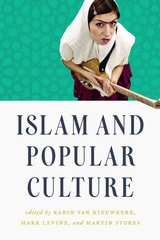
Islam and Popular Culture
Edited by Karin van Nieuwkerk, Mark LeVine, and Martin Stokes
University of Texas Press, 2016
Popular culture serves as a fresh and revealing window on contemporary developments in the Muslim world because it is a site where many important and controversial issues are explored and debated. Aesthetic expression has become intertwined with politics and religion due to the uprisings of the “Arab Spring,” while, at the same time, Islamist authorities are showing increasingly accommodating and populist attitudes toward popular culture. Not simply a “westernizing” or “secularizing” force, as some have asserted, popular culture now plays a growing role in defining what it means to be Muslim.
With well-structured chapters that explain key concepts clearly, Islam and Popular Culture addresses new trends and developments that merge popular arts and Islam. Its eighteen case studies by eminent scholars cover a wide range of topics, such as lifestyle, dress, revolutionary street theater, graffiti, popular music, poetry, television drama, visual culture, and dance throughout the Muslim world from Indonesia, Africa, and the Middle East to Europe. The first comprehensive overview of this important subject, Islam and Popular Culture offers essential new ways of understanding the diverse religious discourses and pious ethics expressed in popular art productions, the cultural politics of states and movements, and the global flows of popular culture in the Muslim world.
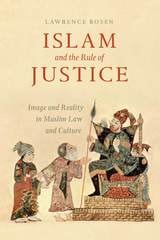
Islam and the Rule of Justice
Image and Reality in Muslim Law and CultureLawrence Rosen
University of Chicago Press, 2018
With Islam and the Rule of Justice, Lawrence Rosen analyzes a number of these misperceptions. Drawing on specific cases, he explores the application of Islamic law to the treatment of women (who win most of their cases), the relations between Muslims and Jews (which frequently involve close personal and financial ties), and the structure of widespread corruption (which played a key role in prompting the Arab Spring). From these case studie the role of informal mechanisms in the resolution of local disputes. The author also provides a close reading of the trial of Zacarias Moussaoui, who was charged in an American court with helping to carry out the 9/11 attacks, using insights into how Islamic justice works to explain the defendant’s actions during the trial. The book closes with an examination of how Islamic cultural concepts may come to bear on the constitutional structure and legal reforms many Muslim countries have been undertaking.
Islam in the Digital Age
E-Jihad, Online Fatwas and Cyber Islamic EnvironmentsGary R. Bunt
Pluto Press, 2003
The Internet is an increasingly important source of information for many people in the Muslim world. Many Muslims in majority and minority contexts rely on the Internet -- including websites and e-mail -- as a primary source of news, information and communication about Islam. As a result, a new media culture is emerging which is having a significant impact on areas of global Muslim consciousness. Post-September 11th, this phenomenon has grown more rapidly than ever.
Gary R. Bunt provides a fascinating account of the issues at stake, identifying two radical new concepts:
Firstly, the emergence of e-jihad ('Electronic Jihad') originating from diverse Muslim perspectives -- this is described in its many forms relating to the different definitions of 'jihad', including on-line activism (ranging from promoting militaristic activities to hacking, to co-ordinating peaceful protests) and Muslim expression post 9/11.
Secondly, he discusses religious authority on the Internet -- including the concept of on-line fatwas and their influence in diverse settings, and the complexities of conflicting notions of religious authority.
Islamic Activists
The Anti-Enlightenment DemocratsDeina Ali Abdelkader
Pluto Press, 2011
In the hysteria surrounding Political Islam, it is difficult to find analysis that doesn't feel the need to justify the existence of Islamic leaders or react to the West's fear of 'extremists'. In Islamic Activists, Deina Ali Abdelkader shows us what Islamic leaders and activists believe and what they think about just governance.
Explaining and comparing Islamist ideas, including those about leadership, justice and minority rights, Abdelkader explains how these have been represented in the writings of important historical and contemporary Islamists. In doing so, Abdelkader reveals that democracy is not the sole preserve of those who support Enlightenment values, offering the reader a chance to understand the populist non-violent side of Islamic activism. This includes an examination of the ideas of the leaders of the populist Islamist movements in Egypt, Tunisia and Morocco.
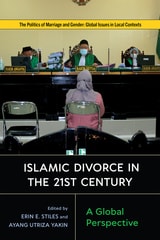
Islamic Divorce in the Twenty-First Century
A Global PerspectiveErin E. Stiles
Rutgers University Press, 2022

Islamically Integrated Psychotherapy
Uniting Faith and Professional PracticeCarrie York Al-Karam
Templeton Press, 2018
Integrating the Islamic faith with modern psychotherapy is at the forefront of the spiritually integrated psychotherapy movement. To bring this work to wider attention and to promote its continuation, Dr. Carrie York Al-Karam has brought together the present volume of nine essays, each of which is written by a Muslim clinician who practices Islamically integrated psychotherapy (IIP)—a modern approach that unites the teachings, principles, and interventions of the faith with Western therapeutic approaches.
As delineated in the Introduction, IIP has emerged from a variety of domains including the psychology of religion and spirituality, multicultural psychology and counseling, transpersonal psychology, Muslim Mental Health, and Islamic Psychology. The individual chapters then describe a variety of ways IIP is practiced by Muslim clinicians in their service provision with Muslim clients.
The contributors discuss a wide range of topics, such as how Islam can be viewed as a system for psychological wellbeing, or a “science of the soul”; what marital counseling can look like from an Islamically-integrated perspective; Prophet Mohammed as a psycho-spiritual exemplar in a new approach called The HEART Method; the use of Quranic stories in family therapy; as well as using Islamic teachings when working with Muslim children and adolescents.
A description of the various approaches is supplemented with discussions of their theoretical underpinnings as well as research-based recommendations for advancing clinical application. What emerges is a vital resource for Muslim and non-Muslim clinicians alike as well as the lay Muslim reader wanting to know more about how the Islamic faith and psychotherapy are engaging with each other in a modern clinical context.
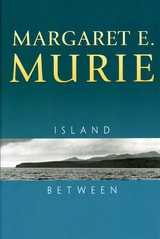
Island Between
Margaret E. Murie with Illustrations by Olaus J. Murie
University of Alaska Press, 2008
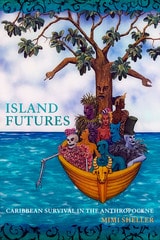
Island Futures
Caribbean Survival in the AnthropoceneMimi Sheller
Duke University Press, 2020
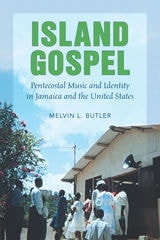
Island Gospel
Pentecostal Music and Identity in Jamaica and the United StatesMelvin L. Butler
University of Illinois Press, 2019
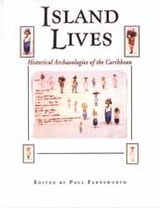
Island Lives
Historical Archaeologies of the CaribbeanEdited by Paul Farnsworth
University of Alabama Press, 2001
Historical archaeology and the making of Caribbean cultures and nations.
Long before the founding of Jamestown in 1607, there were Spanish forts, bustling towns, sugar plantations, and sea trade flourishing in the Caribbean. While richer nations, particularly the United States, may view the Caribbean today as merely a place for sun and fun, the island colonies were at one time far more important and lucrative to their European empire countries than their North American counterparts. From the 15th to the 19th centuries, as competing colonial powers vied with each other for military and economic advantage in the Western Hemisphere, events in the Caribbean directly influenced the American mainland.
This is one rationale for the close study of historical archaeology in the Caribbean. Another is the growing recognition of how archaeological research can support the defining of national identities for the islands, many of them young independent states struggling to establish themselves economically and politically. By looking at cases in the French West Indies, specifically on Guadeloupe, in the Dutch Antilles and Aruba, in the British Bahamas, on Montserrat and St. Eustatius, on Barbados, and the within the U.S. Virgin Islands, the contributors to Island Lives have produced a broad overview of Caribbean historical archaeology.
Island Lives makes clear that historical archaeology in the Caribbean will continue to grow and diversify due to the interest Caribbean peoples have in recording, preserving, and promoting their culture and heritage; the value it adds to their "heritage tourism"; and the connection it has to African American history and archaeology. In addition, the contributors point to the future by suggesting different trajectories that historical archaeology and its practitioners may take in the Caribbean arena. In so doing, they elucidate the problems and issues faced worldwide by researchers working in colonial and post-colonial societies.
Island Paradox
Puerto Rico in the 1990sFrancisco Rivera-Batiz
Russell Sage Foundation, 1996
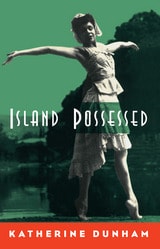
Island Possessed
Katherine Dunham
University of Chicago Press, 1994
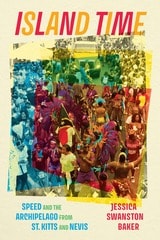
Island Time
Speed and the Archipelago from St. Kitts and NevisJessica Swanston Baker
University of Chicago Press, 2024
In Island Time, ethnomusicologist Jessica Swanston Baker examines wylers, a musical form from St. Kitts and Nevis that is characterized by speed. Baker argues that this speed becomes a useful and highly subjective metric for measuring the relationship between Caribbean aspirations and the promises of economic modernity; women’s bodily autonomy and the nationalist fantasies that would seek to curb that autonomy; and the material realities of Kittitian-Nevisian youth living in the disillusionment following postcolonial independence. She traces the wider Caribbean musical, cultural, and media-based resonances of wylers, posing an alternative model to scholarship on Caribbean music that has tended to privilege the big islands—Trinidad, Jamaica, and Haiti—thus neglecting not only the unique cultural worlds of smaller nations but also the unbounded nature of musical exchange in the region. The archipelago emerges as a useful model for apprehending the relationality across scales that governs the temporal and spatial logics that undergird Caribbean performance. The archipelago and its speeds ultimately emerge as a meaningful medium for postcolonial, postmodern world-making.
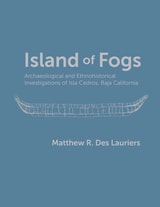
Island of Fogs
Archaeological and Ethnohistorical Investigations of Isla Cedros, Baja CaliforniaMatthew R Des Lauriers
University of Utah Press, 2010
Located off the west coast of the Mexican state of Baja California, Isla Cedros—Island of Fogs—is site to some of the most extensive and remarkable archeological discoveries on the continent. Two sites dated to before 12,000 cal BP have been excavated, as well as portions of two large village sites dated to the last one thousand years. Among the artifacts discovered are the earliest fishhooks found on the continent.
Drawing on ten years of his own historical, ethnographic, and archaeological research, Matthew Des Lauriers uses Isla Cedros to form hypotheses regarding the ecological, economic, and social nature of island societies. Des Lauriers uses a comparative framework in order to examine both the development and evolution of social structures among Pacific coast maritime hunter-gatherers as well as to track patterns of change.
Because it examines the issue of whether human populations can intensively harvest natural resources without causing ecological collapse, Island of Fogs provides a relevant historical counterpart to modern discussions of ecological change and alternative models for sustainable development.
Winner of the Society for American Archaeology Book Award.
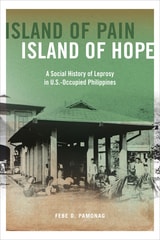
Island of Pain, Island of Hope
A Social History of Leprosy in U.S.-Occupied PhilippinesFebe D. Pamonag
University of Illinois Press, 2026
As Pamonag shows, Filipinos responded in many ways to the Segregation Law. Some resisted arrest and confinement. Others negotiated or complied because of family needs, fear, gender, class, and economic pressure. Rare archival documents reconstruct life inside Culion’s communities, where people fought for better food and living conditions, and used the courts to challenge their confinement and assert their rights. Pamonag also highlights previously untapped accounts that reveal how women navigated the stigma of the disease and the gendered restrictions imposed on them.
A new chapter in the history of public health, Island of Pain, Island of Hope shows the courageous and creative ways Filipinos coped with life under colonial rule.
Islanders in the Empire
Filipino and Puerto Rican Laborers in Hawai'iJoAnna Poblete
University of Illinois Press, 2014
JoAnna Poblete's Islanders in the Empire: Filipino and Puerto Rican Laborers in Hawai'i takes an in-depth look at how the two groups fared in a third new colony, Hawai'i. Using plantation documents, missionary records, government documents, and oral histories, Poblete analyzes how the workers interacted with Hawaiian government structures and businesses, how U.S. policies for colonial workers differed from those for citizens or foreigners, and how policies aided corporate and imperial interests.
A rare tandem study of two groups at work on foreign soil, Islanders in the Empire offers a new perspective on American imperialism and labor issues of the era.