Results by title
28167 books match the query 'History' and 997 start with i
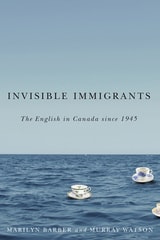
Invisible Immigrants
The English in Canada since 1945Marilyn Barber
University of Manitoba Press, 2015
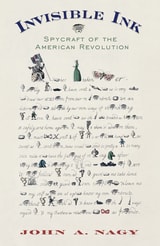
Invisible Ink
Spycraft of the American RevolutionJohn A. Nagy
Westholme Publishing, 2010
The Critical Role of Espionage During the War of Independence and the Techniques Spies Used
During the American Revolution, espionage was critical to the successes and failures of both Continental and British efforts, and those employed in cloakand- dagger operations always risked death. While the most notorious episode of spying during the war—the Benedict Arnold affair—was a failure, most intelligence operations succeeded. Spycraft was no more wholly embraced than by the American commander-in-chief, George Washington. Washington relied on a vast spy network and personally designed sophisticated battle plan deceptions and counterintelligence efforts, some surprisingly modern in form. In Invisible Ink: Spycraft of the American Revolution, award-winning author John A. Nagy briefly traces the history of spy techniques from ancient China through Elizabethan England before embarking on the various techniques used by spies on both sides of the war to exchange secret information. These methods included dictionary codes, diplomatic ciphers, dead drops, hidden compartments (such as a hollowed-out bullet or a woman’s garter), and even musical notation, as well as efforts of counterintelligence, including “Black Chambers,” where postal correspondence was read by cryptologists. Throughout, the author provides examples of the various codes and ciphers employed, many of which have not been previously described. In addition, the author analyzes some of the key spy rings operating during the war, most notably the Culper ring that provided information to Washington from inside British-controlled New York City. Based on nearly two decades of primary research, including the author’s discovery of previously unrecognized spies and methods, Invisible Ink is a major contribution to the history of conflict and technology.
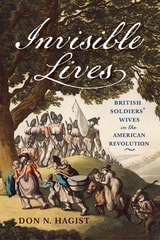
Invisible Lives
British Soldiers' Wives in the American RevolutionDon N. Hagist
Westholme Publishing, 2026
She was stabbed by her drunken husband on a storm-tossed ship in the North Atlantic. She forgave him before she died—and history never recorded her first name. Mrs. Whitlow, wife of a British soldier, is just one of the thousands of women who followed their husbands to war during the American Revolution. These women lived in the barracks and camps and endured the hardships of garrisons and campaigns in an unfamiliar and often hostile land. They faced the challenges with fortitude, proving themselves resourceful, industrious, and intrepid, but their involvement in the conflict that founded the United States has been largely lost to history. Incidents and brief mentions abound in the military writings and iconography of the era, but stories of individual lives are nearly nonexistent, which has caused this large population to be almost entirely overlooked.
Combining archival research with deeply human storytelling, Invisible Lives: British Soldiers’ Wives in the American Revolution by Don N. Hagist brings together, for the first time, the myriad glimpses of these wives to tell the larger story of how they lived, worked, suffered, and survived as women in a foreign war. Drawing on court martial proceedings, muster rolls, marriage licenses, newspaper notices, and rare surviving letters, this meticulously researched work reconstructs the lives of women who were present in every theater of the Revolutionary War. What emerges is a portrait of remarkable resilience. These women crossed oceans, survived sieges, nursed the wounded, and raised children in the chaos of an eighteenth-century war. These many moments come together to provide a more complete and invaluable picture of British soldiers’ wives and their place in the army and the surrounding society. For readers of women’s history, military history, and the American Revolution, this is an overdue and deeply moving reckoning with the lives history had left behind.
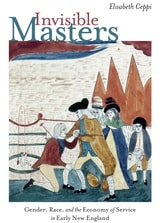
Invisible Masters
Gender, Race, and the Economy of Service in Early New EnglandElisabeth Ceppi
Dartmouth College Press, 2018
Invisible Walls and To Remember is to Heal
A German Family under the Nuremberg LawsIngeborg Hecht
Northwestern University Press, 1999
In Invisible Walls, Hecht writes of what it was like to live under these circumstances, sharing heartbreaking details of her personal life, including the loss of her daughter's father on the Russian front; the death of her own father after his deportation in 1944; and her fears of perishing coupled with the shame of faring better than most of her family and friends. This new volume adds the first translation of part of Hecht's second book, To Remember is to Heal, a collection of vignettes of encounters and experiences that resulted from the publication of the first.

Invisible
The Dangerous Allure of the UnseenPhilip Ball
University of Chicago Press, 2015
In this lively look at a timeless idea, Ball provides the first comprehensive history of our fascination with the unseen. This sweeping narrative moves from medieval spell books to the latest nanotechnology, from fairy tales to telecommunications, from camouflage to ghosts to the dawn of nuclear physics and the discovery of dark energy. Along the way, Invisible tells little-known stories about medieval priests who blamed their misdeeds on spirits; the Cock Lane ghost, which intrigued both Samuel Johnson and Charles Dickens; the attempts by Victorian scientist William Crookes to detect forces using tiny windmills; novelist Edward Bulwer-Lytton’s belief that he was unseen when in his dressing gown; and military efforts to enlist magicians to hide tanks and ships during WWII. Bringing in such voices as Plato and Shakespeare, Ball provides not only a scientific history but a cultural one—showing how our simultaneous desire for and suspicion of the invisible has fueled invention and the imagination for centuries.
In this unusual and clever book, Ball shows that our fantasies about being unseen—and seeing the unseen—reveal surprising truths about who we are.
Invited to Witness
Solidarity Tourism across Occupied PalestineJennifer Lynn Kelly
Duke University Press, 2023

Inwardness and Existence
Subjectivity in/and Hegel, Heidegger, Marx, and FreudWalter A. Davis
University of Wisconsin Press, 1989

Inwardness and Theater in the English Renaissance
Katharine Eisaman Maus
University of Chicago Press, 1995
Reading works by Kyd, Marlowe, Shakespeare, Jonson, and Milton in conjuction with sectarian polemics, gynecological treatises, and accounts of criminal prosecutions, Maus delineates unexplored connections among religious, legal, sexual, and theatrical ideas of inward truth. She reveals what was at stake—ethically, politically, epistemologically, and theologically—when a writer in early modern England appealed to the difference between external show and interior authenticity. Challenging the recent tendency to see early modern selfhood as defined in wholly public terms, Maus argues that Renaissance dramatists continually payed homage to aspects of inner life they felt could never be manifested onstage.
Ionel Bratianu
RomaniaKeith Hitchins
Haus Publishing, 2011
Ionesco's Imperatives
The Politics of CultureRosette C. Lamont
University of Michigan Press, 1993
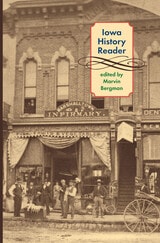
Iowa History Reader
Marvin Bergman
University of Iowa Press, 1996
Marvin Bergman has drawn upon his years of editing the Annals of Iowa to gather contributors who cross disciplines, model the craft of writing a historical essay, cover more than one significant topic, and above all interpret history rather than recite it. In his preface to this new printing, he calls attention to publications that begin to fill the gaps noted in the 1996 edition.
Rather than survey the basic facts, the essayists engage readers in the actual making of Iowa’s history by trying to understand the meaning of its past. By providing comprehensive accounts of topics in Iowa history that embrace the broader historiographical issues in American history, such as the nature of Progressivism and Populism, the debate over whether women’s expanded roles in wartime carried over to postwar periods, and the place of quantification in history, the essayists contribute substantially to debates at the national level at the same time that they interpret Iowa’s distinctive culture.
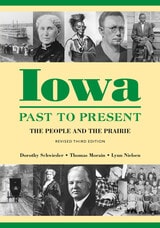
Iowa Past to Present
The People and the Prairie, Revised Third EditionDorothy Schwieder
University of Iowa Press, 2011
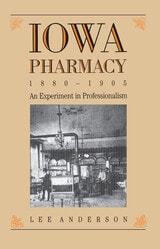
Iowa Pharmacy, 1880-1905
Experiment In ProfessionalismLee Anderson
University of Iowa Press, 1989
Popular culture remembers the settling of the Midwest as a golden era of unbounded opportunity, a time when every farm was a family farm and every farmer glowed with health. Pioneers in nineteenth-century Iowa, however, had to battle a formidable host of diseases during this golden era—malaria was endemic, smallpox and dysentery occurred in widespread epidemics, and typhoid, cholera, scarlet fever, and diphtheria had their seasons. Physicians in the growing Hawkeye State had little of the status and skill they command today, and herbalists, hydropaths, eclectics, Thomsonians, and homeopaths competed with purveyors of home remedies and patent medicines for their services.
The druggists of pioneer Iowa were artisan producers who compounded and prescribed botanical and chemical medicines, sold a variety of other merchandise from perfumes to paints, and dispensed the secret concoctions known as patent medicines, guaranteed to cure any condition, however alarming. In this compelling study, Lee Anderson tells the story of these early pharmacists and their hard-fought quest to legitimize their profession. While he confronts the politics of professionalism and the purpose of the pharmaceutical science and education, he also illuminates the mutual role of physicians and pharmacists in frontier health care.
With skill and humor, Anderson recreates an exciting time in midwestern history and provides insights into national issues of professionalism in medicine. His study will appeal to scholars in the history of medicine, pharmacy, and professionalism and to everyone interested in the history of the Midwest.

Iowa Place Names Of Indian Origin
Virgil J. Vogel
University of Iowa Press, 1983
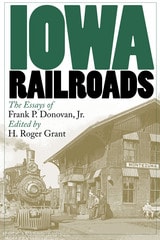
Iowa Railroads
The Essays of Frank P. Donovan, Jr.H. Roger Grant
University of Iowa Press, 2000
What began as a study of the Minneapolis & St. Louis Railway stretched into more than a dozen contributions on Hawkeye state railroad topics. By 1969 Donovan had examined Iowa's “Little Three”: Chicago Great Western, Illinois Central, and Minneapolis & St. Paul as well as the state's “Big Four”: Chicago & North Western; Chicago, Burlington & Quincy; Chicago, Milwaukee, St. Paul & Pacific; and Chicago, Rock Island & Pacific. In addition to these seven core carriers, Donovan covered the state's less prominent railroads: Atchison, Topeka & Santa Fe; Great Northern; and Union Pacific and Wabash. Moreover, he contributed an issue on Iowa's principal interurbans, most of which survived into the 1950s as electric-powered freight-only short lines. In uniting Donovan's articles into a single volume, Iowa Railroads provides the most complete history of Iowa's rail heritage.

Iowa State Parks
A Century of Stewardship, 1920-2020Rebecca Conard, Angela Corio, and Jim Scheffler
University of Iowa Press, 2020
The photo essays at the heart of this book feature the artistry of well-known nature photographers such as Carl Kurtz, Brian Gibbs, Don Poggensee, and Larry Stone. The images help tell the stories of Iowa’s state parks, recreation areas, preserves, and forests. A historical overview sets the stage, followed by essays on key aspects of our park system.
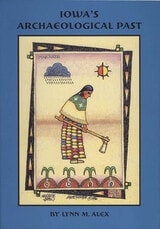
Iowa's Archaeological Past
Lynn M. Alex
University of Iowa Press, 2000
The core of this book—which includes many historic photographs and maps as well as numerous new maps and drawings and a generous selection of color photos—explores in detail what archaeologists have learned from studying the state's material remains and their contexts. Examining the projectile points, potsherds, and patterns that make up the archaeological record, Alex describes the nature of the earliest settlements in Iowa, the development of farming cultures, the role of the environment and environmental change, geomorphology and the burial of sites, interaction among native societies, tribal affiliation of early historic groups, and the arrival and impact of Euro-Americans. In a final chapter, she examines the question of stewardship and the protection of Iowa's many archaeological resources.
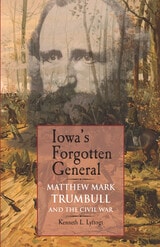
Iowa's Forgotten General
Matthew Mark Trumbull and the Civil WarKenneth L. Lyftogt
University of Iowa Press, 2005
Matthew Mark Trumbull was a Londoner who immigrated at the age of twenty. Within ten years of his arrival in America, he had become a lawyer in Butler County, Iowa; two years later a member of the state legislature; and two years after that a captain in the Union Army. By the end of the Civil War, he was a brevet brigadier general, and in his later years he was an author and lecturer. Kenneth Lyftogt’s biography details the amazing life of this remarkable man, also shedding light on the histories of the Third Iowa Volunteer Infantry and the Ninth Iowa Volunteer Cavalry.
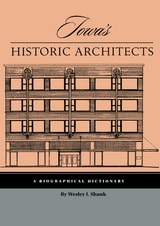
Iowa's Historic Architects
A Biographical DictionaryWesley I. Shank
University of Iowa Press, 1998
Among the prominent Iowa architects of the late nineteenth and early twentieth centuries were a remarkable few who had little training in architecture; their natural talents and their capacity for hard work made up for their lack of experience. Beginning in 1927, however, an Iowa architect had to meet state requirements of experience and training in order to practice. Shank includes an introduction to the history of the profession in Iowa: the development of professional education and training, the founding of professional societies and their roles, the different personalities and talents of the architects, the demography of architectural offices in the state, and the relative importance of Iowa architects both statewide and nationally.

Iowa
The Middle LandDorothy Schwieder
University of Iowa Press, 1996
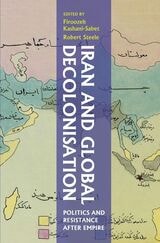
Iran and Global Decolonisation
Politics and Resistance After EmpireEdited by Robert Steele and Firoozeh Kashani-Sabet
Gingko, 2023
How did Iran’s unique position in the world affect and define its treatment of decolonization? During the final decades of Pahlavi rule in the late 1970s, the country sought to establish close relationships with newly independent counterparts in the Global South. Most scholarly work focused on this period is centered around the Cold War and Iran's relations with the United States, Russia, and Europe. Little attention has been paid to how the country interacted with other regions, such as Africa, Asia, and the Americas. Adding to an important and growing body of literature that discusses the profound and lasting impact of decolonization, Iran and Global Decolonisation contributes to the theoretical debates around the re-shaping of the world brought about by the end of an empire. It considers not only the impact of global decolonization on movements and ideas within Iran but also how Iran’s own experiences of imperialism shaped how these ideas were received and developed.

Iran on the Brink
Rising Workers and Threats of WarAndreas Malm and Shora Esmailian
Pluto Press, 2007
The authors offer a unique portrait of the social upheaval, why it is happening and where it may take the country. Following the fall of reformism, the rise of Ahmadinejad and the recent outbursts of ethnic violence, this book provides rare insights into the inner contradictions of the Islamic Republic.
The second part of the book deals with the international issues facing Iran - in particular the nuclear question, Iran's oil reserves and the serious threat of invasion. It is a sobering account of the realities of life in Iran, and the threat that war poses to the democratic aspirations of the Iranian people.
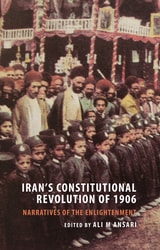
Iran's Constitutional Revolution of 1906 and Narratives of the Enlightenment
Edited by Ali Ansari
Gingko, 2016
As the authors show, this period was one of unprecedented debate within Iran’s burgeoning press. Many different groups fought to shape the course of the Revolution, which opened up seemingly boundless possibilities for the country’s future and affected nearly every segment of its society. Exploring themes such as the role of women, the use of photography, and the uniqueness of the Revolution as an Iranian experience, the authors tell a story of immense transition, as the old order of the Shah subsided and was replaced by new institutions, new forms of expression, and a new social and political order.
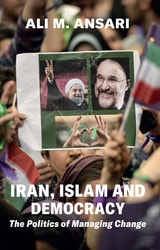
Iran, Islam and Democracy
The Politics of Managing ChangeAli M. Ansari
Gingko, 2019
Iran
From Religious Dispute to RevolutionMichael M. J. Fischer
University of Wisconsin Press, 2003
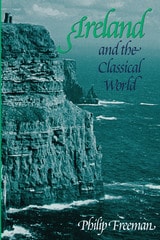
Ireland and the Classical World
By Philip Freeman
University of Texas Press, 2000
On the boundary of what the ancient Greeks and Romans considered the habitable world, Ireland was a land of myth and mystery in classical times. Classical authors frequently portrayed its people as savages—even as cannibals and devotees of incest—and evinced occasional uncertainty as to the island's shape, size, and actual location. Unlike neighboring Britain, Ireland never knew Roman occupation, yet literary and archaeological evidence prove that Iuverna was more than simply terra incognita in classical antiquity.
In this book, Philip Freeman explores the relations between ancient Ireland and the classical world through a comprehensive survey of all Greek and Latin literary sources that mention Ireland. He analyzes passages (given in both the original language and English) from over thirty authors, including Julius Caesar, Strabo, Tacitus, Ptolemy, and St. Jerome. To amplify the literary sources, he also briefly reviews the archaeological and linguistic evidence for contact between Ireland and the Mediterranean world.
Freeman's analysis of all these sources reveals that Ireland was known to the Greeks and Romans for hundreds of years and that Mediterranean goods and even travelers found their way to Ireland, while the Irish at least occasionally visited, traded, and raided in Roman lands. Everyone interested in ancient Irish history or Classics, whether scholar or enthusiast, will learn much from this pioneering book.
Ireland in the World Order
A History of Uneven DevelopmentMaurice Coakley
Pluto Press, 2012
Ireland in the World Order examines Ireland’s development from the medieval to the modern era, comparing its unique trajectory with that of England, Scotland and Wales.
Maurice Coakley focuses on key elements that contributed to Ireland’s development, examining its bloody and violent incorporation into the British state, its refusal to embrace the Protestant Reformation and failure to industrialise in the 19th century. Coakley considers the crucial question of why Ireland’s national identity has come to rest on a mass movement for independence.
Cutting through many of the myths – imperialist and nationalist – which have obscured the real reasons for Ireland's course of development, Ireland in the World Order provides a new perspective for students and academics of Irish history.
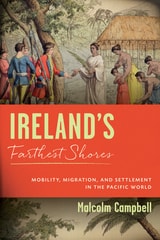
Ireland's Farthest Shores
Mobility, Migration, and Settlement in the Pacific WorldMalcolm Campbell
University of Wisconsin Press, 2022
Malcolm Campbell examines the rich history of Irish experiences on land and at sea, offering new perspectives on migration and mobility in the Pacific world and of the Irish role in the establishment and maintenance of the British Empire. This volume investigates the extensive transnational connections that developed among Irish immigrants and their descendants across this vast and unique oceanic space, ties that illuminate how the Irish participated in the making of the Pacific world and how the Pacific world made them.
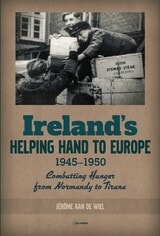
Ireland's Helping Hand to Europe
Combatting Hunger from Normandy to Tirana, 1945–1950Jérôme aan de Wiel
Central European University Press, 2021
Post-war Marshall Plan aid to Europe and indeed Ireland is well documented, but practically nothing is known about simultaneous Irish aid to Europe. This book provides a full record of the aid – mainly food but also clothes, blankets, medicines, etc. – that Ireland donated to continental Europe, including France, the Netherlands, Hungary, the Balkans, Italy, and zones of occupied Germany.
Starting with Ireland’s neutral wartime record, often wrongly presented as pro-German when Ireland in fact unofficially favoured the western Allies, Jerome aan de Wiel explains why Éamon de Valera’s government sent humanitarian aid to the devastated continent. His book analyses the logistics of collection and distribution of supplies sent abroad as far as the Greek islands.
Despite some alleged Cold-War hijacking of Irish relief – and this humanitarianism was not above the politics of that East-West confrontation – it became mostly a story of hope, generosity and European Christian solidarity. Rich archival records from Ireland and the European beneficiary countries, as well as contemporary local and national newspapers across Europe, allow the author to measure and describe not only the official but also the popular response to Irish relief schemes. This work is illustrated with contemporary photographs and some key graphs and tables that show the extent of the aid programme.
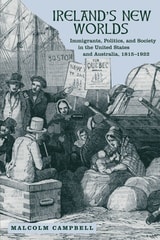
Ireland's New Worlds
Immigrants, Politics, and Society in the United States and Australia, 1815–1922Malcolm Campbell
University of Wisconsin Press, 2007
Ireland’s New Worlds is the first book to compare Irish immigrants in the United States and Australia. In a profound challenge to the national histories that frame most accounts of the Irish diaspora, Malcolm Campbell highlights the ways that economic, social, and cultural conditions shaped distinct experiences for Irish immigrants in each country, and sometimes in different parts of the same country. From differences in the level of hostility that Irish immigrants faced to the contrasting economies of the United States and Australia, Campbell finds that there was much more to the experiences of Irish immigrants than their essential “Irishness.” America’s Irish, for example, were primarily drawn into the population of unskilled laborers congregating in cities, while Australia’s Irish, like their fellow colonialists, were more likely to engage in farming. Campbell shows how local conditions intersected with immigrants’ Irish backgrounds and traditions to create surprisingly varied experiences in Ireland’s new worlds.
“Well conceived and thoroughly researched . . . . This clearly written, thought-provoking work fulfills the considerable ambitions of comparative migration studies.”—Choice
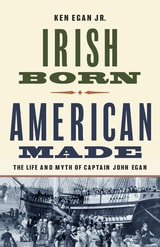
Irish Born, American Made
The Life and Myth of Captain John EganKen Egan Jr.
University of Wisconsin Press, 2026
Born to poverty in the Irish county of Tipperary, John Egan participated in some of the most dramatic events of the nineteenth century, including mass migration to the United States during a catastrophic famine, the “opening” of Japan via gunboat diplomacy, Sherman’s March to the Sea, and homesteading in the Upper Midwest. In Irish Born, American Made, his great-grandson examines the processes by which a scorned British subject became a proud American citizen.
Although Egan’s life was filled with epic drama, the author does not shy away from unsavory truths, such as his ancestor’s doubts about the virtues of abolition or his enthusiastic participation in settling land appropriated from Indigenous peoples. Equally, Egan recognizes the real hardships his ancestor faced in assimilating to American society, from the prejudices of the ascendant Know-Nothing movement to the condescending caricatures of Irish soldiers by his Union compatriots during and after the Civil War. The result is both a moving reminder of the hardships of immigration and a timely reckoning with the imperfections of our forebears.

Irish Drama in Poland
Staging and Reception, 1900-2000Barry Keane
Intellect Books, 2016
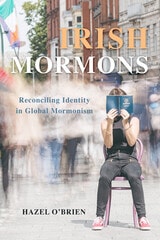
Irish Mormons
Reconciling Identity in Global MormonismHazel O'Brien
University of Illinois Press, 2023
Examining the Latter-day Saint experience against one nation’s rapid social and religious changes, Irish Mormons blends participant observation and interviews with analysis to offer a rare view of the Latter-day Saints in contemporary Ireland.
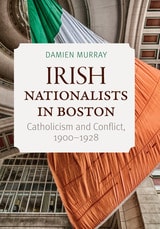
Irish Nationalists in Boston
Catholicism and Conflict, 1900-1928Damien Murray
Catholic University of America Press, 2018
For a brief period after World War I, Irish-American nationalism in Boston became a vehicle for the promotion of wider democratic reform. Though the movement was unable to survive the disagreements surrounding the Anglo-Irish Treaty of 1921, it had been a source of ethnic unity that enabled Boston’s Irish community to negotiate the challenges of the postwar years including the anti-socialist Red Scare and the divisions caused by the Boston Police Strike in the fall of 1919. Furthermore, Boston’s Irish nationalists drew heavily on Catholic Church teachings such that Irish ethnicity came to be more clearly identified with the advocacy of both cultural pluralism and the rights of immigrant and working families in Boston and America.
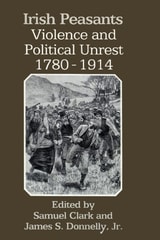
Irish Peasants
Violence and Political Unrest, 1780–1914Samuel Clark
University of Wisconsin Press, 1983
"The strength of this volume cannot be conveyed by an itemisation of its contents; for what it provides is an incisive commentary on the newly-recognised landmarks of Irish agrarian history in the modern period. . . . The importance, even indispensability, of this achievement is compounded by exemplary editing."—Roy Foster, London Times Literary Supplement
"As a whole, the volume demonstrates the wealth, complexity, and sophistication of Irish rural studies. The book is essential reading for anyone involved in modern Irish history. It will also serve as an excellent introduction to this rich field for scholars of other peasant communities and all interested in problems of economic and political developments."—American Historical Review
"A milestone in the evolution of Irish social history. There is a remarkable consistency of style and standard in the essays. . . . This is truly history from the grassroots."—Timothy P. O'Neill, Studia Hibernica
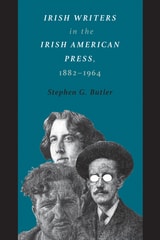
Irish Writers in the Irish American Press, 1882-1964
Stephen G. Butler
University of Massachusetts Press, 2018
Irish Writers in the Irish American Press spans the period from Oscar Wilde's 1882 American lecture tour to the months following JFK's assassination and covers the century in which Irish American identity was shaped by immigration, religion, politics, and economic advancement. Through a close engagement with Irish American periodicals, Butler offers a more nuanced understanding of the connections between Irish literary studies and Irish American culture during this period.
Irish in Michigan
Seamus P. Metress
Michigan State University Press, 2006
Irish immigration to the United States can be divided into five general periods, from 1640 to the present: the colonial, prestarvation, great starvation, post-starvation, and post- independence periods. Immigration to the Great Lakes region and, more specifically, to Michigan was differentially influenced during each of these times. The oppressive historical roots of the Irish in both Ireland and nineteenth century America are important to understand in gaining an appreciation for their concern with socioeconomic status.
The Irish first entered the Great Lakes by way of the Ohio River and Appalachian passes, spreading north along the expanding frontier. After the War of 1812, the Irish were heavily represented in frontier military garrisons. Many Irish moved into the Detroit metropolitan area as well as to farming areas throughout Michigan. In the 1840s, a number of Irish began fishing in the waters off Beaver Island, Mackinac Island, Bay City, Saginaw, and Alpena. From 1853 to 1854, Irish emigrants from the Great Starvation dug the Ste. Marie Canal while others dug canals in Grand Rapids and Saginaw.
Irish nationalism in both Michigan and the United States has been closely linked with the labor movement in which Irish Americans were among the earliest organizers and leaders. Irish American nationalism forced the Irish regardless of their local Irish origins to assume a larger Irish identity. Irish Americans have a long history of involvement in the struggle for Irish Freedom dating from the 1840s.
As Patrick Ford, editor of Irish World has said, America led the Irish from the "littleness of countyism into a broad feeling of nationalism."
Irish in Wisconsin
David G. Holmes
Wisconsin Historical Society Press, 2004
Irish on the Move
Performing Mobility in American Variety TheatreMichelle Granshaw
University of Iowa Press, 2019
A little over a century ago, the Irish in America were the targets of intense xenophobic anxiety. Much of that anxiety centered on their mobility, whether that was traveling across the ocean to the U.S., searching for employment in urban centers, mixing with other ethnic groups, or forming communities of their own. Granshaw argues that American variety theatre, a precursor to vaudeville, was a crucial battleground for these anxieties, as it appealed to both the fears and the fantasies that accompanied the rapid economic and social changes of the Gilded Age.
Irish-American Autobiography
James Silas Rogers
Catholic University of America Press, 2016
Irma
A Chicago Woman's Story, 1871-1966Ellen Fitzsimmons Steinberg
University of Iowa Press, 2004
Irma’s journals and diaries were private accounts in which she chronicled the rhythm of her days and the shape of her life. She recorded her thoughts and short quotations from her reading, jotted down her own poems and short stories, constructed dinner-party menus, and wrote biographical sketches of her family. Interspersed among the records of what she did when and with whom are a number of lengthy reflections on Chicago history, her early life, religious beliefs, education, her aspirations, disappointments, sorrows, and successes. She documented her family’s activities during the Chicago Fire, the city’s rebuilding, early educational curricula in the city’s schools, what it was like to participate in the suffrage movement and vote for the first time, the effect of the Great Depression on the middle class, and World War II as seen from her perspective.
In each chapter, Ellen Steinberg has set Irma’s contemporary entries and later memoirs against the context of the Chicago history that Irma knew so well. Irma’s story will fascinate those interested in diaries and autobiography, women’s history, and Chicago history. From a plethora of rich source materials—including over half a million words of Irma’s writings alone—Steinberg has created a seamless, fascinating narrative about a Chicago woman who, although “nobody famous” (in her words), lived a vital life in a vibrant city.
Iron Fist
Artillery and Air Power in the Indonesian War of Independence, 1945-1949Azarja Harmanny
Amsterdam University Press, 2026
Iron Horse Imperialism
The Southern Pacific of Mexico, 1880-1951Daniel Lewis
University of Arizona Press, 2008
Iron Valley
The Transformation of the Iron Industry in Ohio's Mahoning Valley, 1802–1913Clayton J. Ruminski
The Ohio State University Press, 2017
Youngstown, Ohio, and the surrounding Mahoning Valley supplied the iron that helped transform the United States into an industrial powerhouse in the nineteenth century. The story of the Mahoning Valley’s unorthodox rise from mid-scale iron producer to twentieth-century “Steel Valley” is a tale of innovation, stagnation, and, above all, extreme change. Located halfway between Pittsburgh and Cleveland, the Mahoning Valley became a major supplier of pig iron to America’s biggest industrial regions. For much of the nineteenth century, outside consumers relied on the Valley’s pig iron, but this reliance nurtured a reluctance on the part of Youngstown iron companies to diversify or expand their production.
In Iron Valley: The Transformation of the Iron Industry in Ohio’s Mahoning Valley, 1802–1913, Clayton J. Ruminski argues that Youngstown-area iron manufacturers were content to let others in the industry innovate, and only modernized when market conditions forced them to do so. Desperate to find new markets, some Youngstown iron manufacturers eventually looked toward steel and endured a rapid, but successful, industrial transformation that temporarily kept their old enterprises afloat in a rapidly evolving industry. Richly illustrated with rare photographs of Mahoning Valley ironmasters, mills, furnaces, and workers, Iron Valley sheds light on a previously underrepresented and vital region that built industrial America.
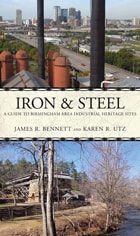
Iron and Steel
A Driving Guide to the Birmingham Area Industrial HeritageJames R. Bennett and Karen R. Utz
University of Alabama Press, 2010
This guidebook of historic iron-production sites is designed to give the reader a factual and illuminating look at the people and events that shaped Birmingham into one of America’s leading steel centers. Iron & Steel is heavily illustrated with both color and historical black-and-white photographs. It can be used while visiting parks or read as a coherent volume before or after a visit.
The book contains chapters devoted to the larger preserved sites open to the public, such as Sloss Furnaces National Historic Landmark and Tannehill Ironworks Historical State Park. It also highlights lesser-known, yet still accessible, sites such as Blocton Coke Ovens Park. The work provides easy-to-follow maps for every site as well as driving directions to the more remote locations, giving visitors easy access to all the notable iron and steel sites in Jefferson, Shelby, Tuscaloosa, and Bibb counties. Each chapter also includes a variety of historical information, with accompanying photographs, in order to present the reader with a detailed and comprehensive account of the Birmingham Iron and Steel District.
Featured sites include: Tannehill Ironworks Historical State Park; Shelby Ironworks Park; Billy Gould Coke Ovens Park; Brierfield Ironworks Historical State Park; Oxmoor Furnace Site; Irondale Furnace Park; Helena Rolling Mill Site; Red Mountain Park, Iron Ore Mines; Lewisburg Coke Ovens Park; Sloss Furnaces National Historic Landmark; Ruffner Mountain Nature Center; Blocton Coke Ovens Park; and Vulcan Park and Museum.
Iron in the Pines
The Story of New Jersey's Ghost Towns and Bog IronPierce, Arthur
Rutgers University Press, 1966
With warmth and accuracy, Arthur D. Pierce tells the story of the years when iron was king, and around it rose a rustic feudal economy. There were glass factories, paper mills, cotton mills, and brickmaking establishments. Here, too, were men who made those years exciting: Benedict Arnold and his first step toward treason; Charles Read, who dreamed of an empire and died in exile; Revolutionary heroes and heroines, privateers, and rogues. The author's vivid pictures of day-to-day life in the old iron communities are based upon careful research. This book proves that the human drama of documented history belies any notion that fiction is stranger than truth.
Iroquois Culture History in the Niagara Frontier Area of New York State
Marian E. White
University of Michigan Press, 1961
Irrationalism
Lukacs and the Marxist View of ReasonTom Rockmore
Temple University Press, 1991
This is the first detailed study, following the recent collapse of political Marxism in Eastern Europe, of twentieth-century Hungarian philosopher Georg Lukács and his position as the leading proponent of the Marxist theory of reason. Lukács's History and Class Consciousness has been called one of the three most influential philosophical works of this century, and he, the outstanding Marxist philosopher. Marxism has long suffered relative neglect in philosophical discussion as a result of its own invidious distinction between itself and the supposed irrationality of what it regards as bourgeois philosophy.
Tom Rockmore offers a uniquely detailed philosophical analysis of Lukács's entire position as a theory of reason, based on the distinction between reason and unreason, or irrationalism. The author gives special emphasis to Lukács's connection to German neo-Kantianism, particularly Lask, and on his last, unfinished work.
Rockmore begins with an account of the roots of Lukács's Marxism, followed by an in-depth analysis of his often mentioned, but still incompletely understood, seminal essay "Reification and the Class Consciousness of the Proletariat." He then traces the evolution and later demise of the distinction between reason and irrationalism in Lukács's final thought. The author thus makes available for the first time in English a strictly philosophical discussion of Georg Lukács's Marxist phase and brings consideration of his thought into the wider philosophical discussion.
Irrigation and the Cuicatec Ecosystem
A Study of Agriculture and Civilization in North Central OaxacaJoseph W. Hopkins III
University of Michigan Press, 1984