Results by title
3576 books match the query 'American' and 115 start with i

In a Closet Hidden
The Life and Work of Mary E. Wilkins FreemanLeah Blatt Glasser
University of Massachusetts Press, 1996
The first literary biography of a much-neglected American writer, this book explores the multiple tensions at the core of Mary E. Wilkins Freeman's life and work. A prolific short story writer and novelist, Freeman (1852–1930) developed a reputation as a local colorist who depicted the peculiarities of her native New England. Yet as Leah Blatt Glasser shows, Freeman was one of the first American authors to write extensively about the relationships women form outside of marriage and motherhood, the role of work in women's lives, the complexity of women's sexuality, and the interior lives of women who rebel rather than conform to patriarchal strictures.
In a Closet Hidden traces Freeman's evolution as a writer, showing how her own inner conflicts repeatedly found expression in her art. As Glasser demonstrates, Freeman's work examined the competing claims of creativity and convention, self-fulfillment and self-sacrifice, spinsterhood and marriage, lesbianism and heterosexuality.
In an Invisible Glass Case Which Is Also a Frame
Julia Guez
Four Way Books, 2019

In the Belly
David Gewanter
University of Chicago Press, 1996

In the Company of Books
Literature and Its "Classes" in Nineteenth-Century AmericaSarah Wadsworth
University of Massachusetts Press, 2006
With sections focusing on segmentation by age, gender, and cultural status, In the Company of Books analyzes the ways authors and publishers carved up the field of literary production into a multitude of distinct submarkets, differentiated their products, and targeted specific groups of readers in order to guide their book-buying decisions. Combining innovative approaches to canonical authors such as Nathaniel Hawthorne, Louisa May Alcott, Mark Twain, and Henry James with engaging investigations into the careers of many lesser-known literary figures, Sarah Wadsworth reveals how American writers responded to—and contributed to—this diverse, and diversified, market.
In the Company of Books contends that specialized editorial and marketing tactics, in concert with the narrative strategies of authors and the reading practices of the book-buying public, transformed the literary landscape, leading to new roles for the book in American culture, the innovation of literary genres, and new relationships between books and readers. Both an exploration of a fragmented print culture through the lens of nineteenth-century American literature and an analysis of nineteenth-century American literature from the perspective of this subdivided marketplace, this wide-ranging study offers fresh insight into the impact of market forces on the development of American literature.
In the Human Zoo
Jennifer Perrine
University of Utah Press, 2011
Winner of the Agha Shahid Ali Poetry Prize

In the Kingdom of the Ditch
Todd Davis
Michigan State University Press, 2013
In the Master's Eye
Representations of Women, Blacks, and Poor Whites in Antebellum Southern LiteratureSusan J. Tracy
University of Massachusetts Press, 1995
This book explores the way in which literature can be used to reinforce social power. Through rigorous readings of a series of antebellum plantation novels, Susan J. Tracy shows how the narrative strategies employed by proslavery Southern writers served to justify and perpetuate the oppression of women, blacks, and poor whites.
Tracy focuses on the historical romances of six authors: George Tucker, James Ewell Heath, William Alexander Caruthers, John Pendleton Kennedy, Nathaniel Beverley Tucker, and William Gilmore Simms. Using variations on a recurring plot—in which a young planter/hero rescues a planter's daughter from an “enemy” of her class—each of these novelists reinforced an idealized vision of a Southern civilization based on male superiority, white supremacy, and class inequality. It is a world in which white men are represented as the natural leaders of loyal and dependent women, grateful and docile slaves, and inferior poor whites. According to Tracy, the interweaving of these themes reveals the extent to which the Southern defense of slavery in the years leading up to the Civil War was an argument not only about race relations but about gender and class relations as well.
In the Neighborhood
Women's Publication in Early AmericaCaroline Wigginton
University of Massachusetts Press, 2016
Winner of the 2018 Early American Literature Book Prize
In this compelling and original book, Caroline Wigginton reshapes our understanding of early American literary history. Overturning long-standing connections between the male-dominated print culture of pamphlets, broadsides, and newspapers and the transformative ideas that instigated the American Revolution, Wigginton explores how women's “relational publications”—circulated texts, objects, and performances—transformed their public and intimate worlds. She argues that Native, black, and white women's interpersonal "publications" revolutionized the dynamics of power and connection in public and private spaces, whether those spaces were Quaker meeting houses, Creek talwas, trading posts, burial grounds, or the women's own "neighborhoods."
Informed by deep and rich archival research, Wigginton's case studies explore specific instances of “relational publication.” The book begins with a pairing of examples—the statement a grieving Lenape mother made through a wampum belt and the political affiliations created when a salon hostess shared her poetry. Subsequent chapters trace a history of women's publication practice, including a Creek woman's diplomatic and legal procession-spectacles in the colonial Southeast, a black mother's expression of protest in Newport, Rhode Island, and the resulting evangelical revival, Phillis Wheatley's elegies that refigured neighborhoods of enslaved and free Bostonians, and a Quaker woman's pious and political commonplace book in Revolutionary Philadelphia.
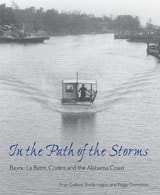
In the Path of the Storms
Bayou La Batre, Coden, and the Alabama CoastFrye Gaillard
University of Alabama Press, 2008
A Powerful Portrait of Resilience, Heritage, and Change on Alabama's Gulf Coast.
The Gulf Coast villages of Bayou La Batre and Coden are two of Alabama’s most distinctive, with roots going back to the French settlements of the 18th century. For generations, the proud inhabitants of these communities have extracted their modest livings from the sea, sustained by a lesson handed down over time— that providing for the needs of one’s family is the only true measure of success. But the world has changed drastically for them. A global economy of higher gas prices and cheap imported seafood has threatened the lifeblood of the area. And in recent years a rash of hurricanes, culminating with Hurricane Katrina, has battered the hopes and dreams of these Bayou towns.
But they have known hard times and massive changes before. In the 1970s, refugees from Vietnam, Cambodia, and Laos flooded into the area and within a few years made up a third of the local population. Three Buddhist temples soon took their places among the Catholic, Baptist, and Pentecostal churches that predominated, and for a time the different ethnic groups coexisted in a kind of uneasy peace. But now they are learning to pull together in an uncertain struggle to rebuild their communities.
In the Path of the Storms is a powerful portrait in words and photographs of a unique and unforgettable place. It is a story of tradition, and forces of change, and the epic struggle of these Gulf Coast communities to survive and thrive.
In the Tree Where the Double Sex Sleeps
Rob Schlegel
University of Iowa Press, 2019
In the Work of Their Hands Is Their Prayer
Cultural Narrative and Redemption on the American Frontiers, 1830-1930Joel Daehnke
Ohio University Press, 2003
Westward expansion on the North American continent by European settlers generated a flurry of writings on the frontier experience over the course of a hundred years. Asserting that the dominant ideology of America’s Manifest Destiny embodied a tense, often contradictory union of Christian and secular republican views of social progress, In the Work of Their Hands Is Their Prayer investigates the ambivalence of the frontier as it was inscribed with redemptive, historical significance by a host of frontier writers.
Enlisting canonical and noncanonical sources, Joel Daehnke examines the manner in which the imagery of the human figure at work and play in the frontier landscape participated in the nationalist, “civilizing” project of westward expansion. While he acknowledges the growing secularization of American life, Professor Daehnke surveys the continuing claims of the Christian redemptive scheme as a powerful symbolic domain for these writers’ meditations on social progress and the potential for human perfectibility in the landscapes of the West.
Whether discussing the Edenic imagery of women’s gardens, the advocacy of an ethics of land use, or the affairs of fortune in the mining districts of Nevada, In the Work of Their Hands Is Their Prayer presents an enlightening reexamination of an American ideology of progress and its enduring fascination with mission, Manifest Destiny, and the ends of history.
In the Work of Their Hands Is Their Prayer is a welcome addition to the extended library of critical attention to the ideology, history, and literary traditions of the American frontier.
Incarnate Grace
Moira Linehan
Southern Illinois University Press, 2015
In her collection Incarnate Grace, poet Moira Linehan explores, questions, and ultimately celebrates her attempt to live in the temple of the present.
After learning she has breast cancer, the poet struggles to live an examined life. Alienated and estranged from her own body, she turns her cancer into “these binoculars, / this new way of looking,” and uses it as a way of fixing herself firmly within the moment. As she travels Ireland and the Pacific Northwest, her busy mind moves from the knot in her breast to the knots in her knitting to the illuminated knots of The Book of Kells to the tossing, knotted surface of the sea; from the margins of her surgery—clean but not ideal—to the margins of illuminated manuscripts. She links the mundane to the mythic, intertwining connections between scripture and nature, storms and loss, winter and light, breast cancer and embroidery. As she returns to her home on a small pond in Massachusetts, she takes with her the fruits of her travels: the incarnate grace of the ordinary.
Vivid and compelling, Incarnate Grace finds beauty in the worst of circumstances and redemption in the fabric of daily life.
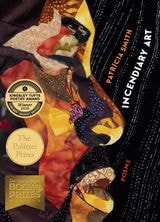
Incendiary Art
PoemsPatricia Smith
Northwestern University Press, 2017
From National Book Award winner Patricia Smith
One of the most magnetic and esteemed poets in today’s literary landscape, Patricia Smith fearlessly confronts the tyranny against the black male body and the tenacious grief of mothers in her compelling new collection, Incendiary Art. She writes an exhaustive lament for mothers of the "dark magicians," and revisits the devastating murder of Emmett Till. These dynamic sequences serve as a backdrop for present-day racial calamities and calls for resistance. Smith embraces elaborate and eloquent language— "her gorgeous fallen son a horrid hidden / rot. Her tiny hand starts crushing roses—one by one / by one she wrecks the casket’s spray. It’s how she / mourns—a mother, still, despite the roar of thorns"— as she sharpens her unerring focus on incidents of national mayhem and mourning. Smith envisions, reenvisions, and ultimately reinvents the role of witness with an incendiary fusion of forms, including prose poems, ghazals, sestinas, and sonnets. With poems impossible to turn away from, one of America’s most electrifying writers reveals what is frightening, and what is revelatory, about history.
Winner, 2017 Los Angeles Times Book Prize
Finalist, 2018 Pulitzer Prize for Poetry
Winner, NAACP Image Award for Outstanding Literary Work in the Poetry category
Winner, 2018 Kingsley Tufts Poetry Award
Winner, 2018 BCALA Best Poetry Award
Winner, Abel Meeropol Award for Social Justice
Finalist, Neustadt International Prize for Literature
Winner, 2021 Ruth Lilly Poetry Prize
Inclined to Speak
An Anthology of Contemporary Arab American PoetryHayan Charara
University of Arkansas Press, 2008
Incontinence
Susan Hahn
University of Chicago Press, 1993
"Stitching together tropes about writing and technique, as well as hunting and the loss of sexual innocence, [Hahn] marks and exploits the body with surgical precision in order to explore the peripheries of the personal lyric. She wants to take poetry to the most tangible and sensual extremes. It's often uncomfortable, and yet as often results in a poetry of generous, piercing honesty, as if (to rewrite Bradford) it's by the body we are 'plainly told.'"—David Baker, Poetry
"Incontinence has an enormous, almost epic sweep."—Chicago Sun-Times

Indian Giving
Economies of Power in Indian-White ExchangesDavid Murray
University of Massachusetts Press, 2000

Indian Nation
Native American Literature and Nineteenth-Century NationalismsCheryl Walker
Duke University Press, 1997
Walker examines the rhetoric and writings of nineteenth-century Native Americans, including William Apess, Black Hawk, George Copway, John Rollin Ridge, and Sarah Winnemucca. Demonstrating with unique detail how these authors worked to transform venerable myths and icons of American identity, Indian Nation chronicles Native American participation in the forming of an American nationalism in both published texts and speeches that were delivered throughout the United States. Pottawattomie Chief Simon Pokagon’s "The Red Man’s Rebuke," an important document of Indian oratory, is published here in its entirety for the first time since 1893.
By looking at this writing through the lens of the best theoretical work on nationality, postcoloniality, and the subaltern, Walker creates a new and encompassing picture of the relationship between Native Americans and whites. She shows that, contrary to previous studies, America in the nineteenth century was intercultural in significant ways.
Indian Summer
Musings on the Gift of LifeSam Pickering
University of Missouri Press, 2005
Returning to Nova Scotia every summer contributes to the illusion of smooth continuance, each summer not the first thread in a new fabric but another button on a cardigan, perhaps looser than buttons below but still familiar and comfortable. Every summer the songs of white-throated sparrows bounce from scrub like novelty tunes from the fifties. Early in the morning ravens grind woodenly. . . . No matter how slowly I jog, on the headland butterflies spring from my feet in clumps, first azures and orange crescents, then wood nymphs, and finally over the lowlands near the Beaver River outlet cabbage whites spiraling, dizzy with mating.
Indian Summer is the newest collection of personal essays by Sam Pickering. In typical Pickering fashion, he seeks to capture the gift of living. He brings to the page again his family, students, and a wealth of country characters who live in places that exist only in his imagination and who wander through the stories he tells.

Indirect Light
Malachi Black
Four Way Books, 2024
Reliving the overdoses of beloved friends, Malachi Black closes this book’s opening poem with a resuscitating command: “Doctor, / turn back. One of us lives.” Indirect Light is a testament to and apologia for this assertion of vitality, each eponymous poem an elegy dedicated to one of Black’s dearly departed. Though this book mourns an irretrievable past, it wages war against amnesia, refusing to let death erase the vibrancy of their lives. These poems preserve “the breath we left beside us on the train tracks,” “the watery inscriptions of nearby dogwood branches / dipped in shade,” “our bookbags’ mouths / pouting open on our laps,” “our street-scabbed bodies / briefly tinseled in the sun.”
Insofar as this collection returns to friends and kin to honor them by the indirect light of memory, it also seeks to memorialize the author’s personal experience of adolescence and addiction amidst the opioid epidemic. It is a lament for all that’s lost and a paean to the near misses and the just enough: a dim glow you can see by, a cup of coffee passed during NA, a prayer during detox to “be // as empty / as the sky” if floating means survival.

Individual and Community
Variations on a Theme in American FictionKenneth H. Baldwin and David Kirby, eds.
Duke University Press, 1975
The essays are intended to point to the continuity of an important theme in American fiction and to offer insight into the variety of philosophical and literary strategies utilized in significant works of significant authors in dealing with the question of the individual and the community.

Individualism and Its Discontents
Appropriations of Emerson, 1880-1950Charles E. Mitchell
University of Massachusetts Press, 1997
The work of Ralph Waldo Emerson has long been synonymous with the American ideals of self-reliance and individualism. Like those ideals, it has come to mean different things, at different times, to different people. Emerson has been identified as the source of both the best and worst in the American intellectual tradition, his authority invoked by back-to-the-landers and industrial capitalists, the philosopher Nietzsche, as well as the promoters of Nike footwear.
This book explores the intertwined history of Emerson and individualism. Charles E. Mitchell begins by examining those who regarded Emersonian individualism with ambivalence or hostility, focusing on the comments of such diverse figures as Henry James, Sr., Oliver Wendell Holmes, Van Wyck Brooks, and H.L. Mencken. He then offers an alternative view as reflected in the work of William James, John Dewey, W.E.B. Du Bois, and William Carlos Williams. Each of these figures embraced Emerson’s claim for the sanctity of the individual and wove it into a social vision that sought to reconcile the paradox at the heart of American life: a simultaneous devotion to the community and the individual, tradition and innovation, order and freedom.
While indirectly answering Emerson’s more fervent critics, James, Dewey, Du Bois, and Williams also constructed a vibrant tradition of their own, one that offers guidance as Americans continue to struggle with these competing claims.
Individuality Incorporated
Indians and the Multicultural ModernJoel Pfister
Duke University Press, 2004
Indonesian Notebook
A Sourcebook on Richard Wright and the Bandung ConferenceBrian Russell Roberts and Keith Foulcher, editors
Duke University Press, 2016
Industrial Poetics
Demo Tracks for a Mobile CultureJoe Amato
University of Iowa Press, 2006
Through a dizzying array of references to subjects ranging from engineering to poetry, on-the-job experiences in academia and industry, conflicts between working-class and intellectual labor, the privatization of universities, and the contradictions of the modern environment, Joe Amato’s Industrial Poetics mounts a boisterous call for poetry communities to be less invested in artistic self-absorption and more concerned about social responsibility.
As Amato focuses on the challenges faced by American poets in creating a poetry that speaks to a public engineered into complacency by those industrial technologies, practices, and patterns of thought that we cannot seem to do without, he brings readers face to face with the conflicting realities of U.S. intellectual, academic, and poetic culture.
Formally adventurous and rhetorically lively, Industrial Poetics is best compared with the intellectually exploratory, speculative, risky, polemical work of other contemporary poet-critics including Kathleen Fraser, Joan Retallack, Bruce Andrews, Susan Howe, and Allen Grossman. Amato uses an exhilarating range of structural and rhetorical strategies: conventionally developed argument, abruptly juxtaposed aphorisms, personal narrative, manifesto-like polemic, and documentary reportage. With a critic’s sharply analytical mind, a poet’s verve, and a working-class intellectual’s sense of social justice, Amato addresses the many nonliterary institutions and environments in which poetry is inextricably embedded.
By connecting poetry to industry in a lively demonstration against the platitudes and habitudes of the twentieth century, Amato argues for a reenergized and socially forceful poetics—an industrial poetics, rough edges and all. Jed Rasula writes, “I can't say I pay much attention to talk radio, but this is what I imagine it might be like if the deejay were really smart, enviably well read, yet somehow retained the snarling moxie of the AM format.”
Industry and the Creative Mind
The Eccentric Writer in American Literature and Entertainment, 1790-1860Sandra Tomc
University of Michigan Press, 2012
Industry and the Creative Mind takes a radically new look at the figure of the eccentric, alienated writer in American literature and entertainment from 1790 to 1860. Traditional scholarship takes for granted that the eccentric writer, modeled by such Romantic beings as Lord Byron and brought to life for American audiences by the gloomy person of Edgar Allan Poe, was a figure of rebellion against the excesses of modern commercial culture and industrial life. By contrast, Industry and the Creative Mind argues that in the United States myths of writerly moodiness, alienation, and irresponsibility predated the development of a commercial arts and entertainment industry and instead of forming a site of rebellion from this industry formed a bedrock for its development. Looking at the careers of a number of early American writers---Joseph Dennie, Nathaniel Parker Willis, Edgar Allan Poe, Fanny Fern, as well as a host of now forgotten souls who peopled the twilight worlds of hack fiction and industrial literature---this book traces the way in which early nineteenth-century American arts and entertainment systems incorporated writerly eccentricity in their "logical" economic workings, placing the mad, rebellious writer at the center of the industry's productivity and success.
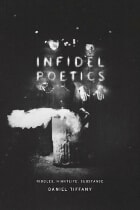
Infidel Poetics
Riddles, Nightlife, SubstanceDaniel Tiffany
University of Chicago Press, 2009
Poetry has long been regarded as the least accessible of literary genres. But how much does the obscurity that confounds readers of a poem differ from, say, the slang that seduces listeners of hip-hop? Infidel Poetics examines not only the shared incomprensibilities of poetry and slang, but poetry's genetic relation to the spectacle of underground culture.
Charting connections between vernacular poetry, lyric obscurity, and types of social relations—networks of darkened streets in preindustrial cities, the historical underworld of taverns and clubs, the subcultures of the avant-garde—Daniel Tiffany shows that obscurity in poetry has functioned for hundreds of years as a medium of alternative societies. For example, he discovers in the submerged tradition of canting poetry and its eccentric genres—thieves’ carols, drinking songs, beggars’ chants—a genealogy of modern nightlife, but also a visible underworld of social and verbal substance, a demimonde for sale.
Ranging from Anglo-Saxon riddles to Emily Dickinson, from the icy logos of Parmenides to the monadology of Leibniz, from Mother Goose to Mallarmé, Infidel Poetics offers an exhilarating account of the subversive power of obscurity in word, substance, and deed.
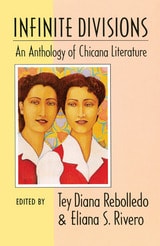
Infinite Divisions
An Anthology of Chicana LiteratureTey Diana Rebolledo
University of Arizona Press, 1993
Through poetry, fiction, drama, essay, and other forms, this landmark volume showcases the talents of more than fifty authors, including Gloria E. Anzaldúa, Ana Castillo, Lorna Dee Cervantes, Denise Chávez, Sandra Cisneros, Pat Mora, Cherríe Moraga, and María Helena Viramontes.

Infinity Pool
Jonathan Thirkield
University of Chicago Press, 2024
Diving through illusions and phantoms of virtual realms and into the human desire for boundless possibility, Infinity Pool charts the ways technologies have become embedded in our minds, bodies, and lives. Immersed in a world of data streams, neural nets, spider algorithms, and electronic terminals, Jonathan Thirkield’s poems plumb the dissonances and shrinking distances between ourselves and digital technologies, imagining what becomes of the fragile machinery of the human body amid a rapidly transforming world.
Thirkield turns to language as a mediator and explores infinity as a mathematical concept, a multiverse conceit, and a driver of the computational imagination. Traveling across the full spectrum of digital experience—from satellites crossing the edges of our solar system to microscopic bytes that operate beneath our perception—this collection is a testament to the future we imagine ourselves to be living through and to what happens when our escapist desires give way to the realities of birth, loss, parenthood, and sickness.
Through lyrical, narrative, and formal mutations, these poems cut through a decade of exponential technological growth, landing in the reality of our corporeal experiences: the isolation of chronic illness, the daunting journeys of children growing up today, and the hope that we can remain connected to each other no matter how tenuous the ties.

Influenza and Inequality
One Town's Tragic Response to the Great Epidemic of 1918Patricia J. Fanning
University of Massachusetts Press, 2010
By 1918, Norwood was a small, ethnically diverse, industrialized, and stratified community. Ink, printing, and tanning factories were owned by wealthy families who lived privileged lives. These industries attracted immigrant laborers who made their homes in several ethnic neighborhoods and endured prejudice and discrimination at the hands of native residents. When the epidemic struck, the immigrant neighborhoods were most affected; a fact that played a significant role in the town's response—with tragic results.
This close analysis of one town's struggle illuminates how even well-intentioned elite groups may adopt and implement strategies that can exacerbate rather than relieve a medical crisis. It is a cautionary tale that demonstrates how social behavior can be a fundamental predictor of the epidemic curve, a community's response to crisis, and the consequences of those actions.
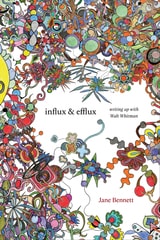
Influx and Efflux
Writing Up with Walt WhitmanJane Bennett
Duke University Press, 2020
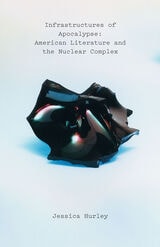
Infrastructures of Apocalypse
American Literature and the Nuclear ComplexJessica Hurley
University of Minnesota Press, 2020
A new approach to the vast nuclear infrastructure and the apocalypses it produces, focusing on Black, queer, Indigenous, and Asian American literatures
Since 1945, America has spent more resources on nuclear technology than any other national project. Although it requires a massive infrastructure that touches society on myriad levels, nuclear technology has typically been discussed in a limited, top-down fashion that clusters around powerful men. In Infrastructures of Apocalypse, Jessica Hurley turns this conventional wisdom on its head, offering a new approach that focuses on neglected authors and Black, queer, Indigenous, and Asian American perspectives.
Exchanging the usual white, male “nuclear canon” for authors that include James Baldwin, Leslie Marmon Silko, and Ruth Ozeki, Infrastructures of Apocalypse delivers a fresh literary history of post-1945 America that focuses on apocalypse from below. Here Hurley critiques the racialized urban spaces of civil defense and reads nuclear waste as a colonial weapon. Uniting these diverse lines of inquiry is Hurley’s belief that apocalyptic thinking is not the opposite of engagement but rather a productive way of imagining radically new forms of engagement.
Infrastructures of Apocalypse offers futurelessness as a place from which we can construct a livable world. It fills a blind spot in scholarship on American literature of the nuclear age, while also offering provocative, surprising new readings of such well-known works as Atlas Shrugged, Infinite Jest, and Angels in America. Infrastructures of Apocalypse is a revelation for readers interested in nuclear issues, decolonial literature, speculative fiction, and American studies.
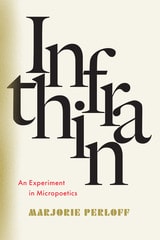
Infrathin
An Experiment in MicropoeticsMarjorie Perloff
University of Chicago Press, 2021
The “infrathin” was Marcel Duchamp’s playful name for the most minute shade of difference: that between the report of a gunshot and the appearance of the bullet hole, or between two objects in a series made from the same mold. “Eat” is not the same thing as “ate.” The poetic, Marjorie Perloff suggests, can best be understood as the language of infrathin. For in poetry, whether in verse or prose, words and phrases that are seemingly unrelated in ordinary discourse are realigned by means of sound, visual layout, etymology, grammar, and construction so as to “make it new.”
In her revisionist “micropoetics,” Perloff draws primarily on major modernist poets from Stein and Yeats to Beckett, suggesting that the usual emphasis on what this or that poem is “about,” does not do justice to its infrathin possibilities. From Goethe’s eight-line “Wanderer’s Night Song” to Eliot’s Four Quartets, to the minimalist lyric of Rae Armantrout, Infrathin is designed to challenge our current habits of reading and to answer the central question: what is it that makes poetry poetry?

Inheriting The Land
Contemporary Voices from the MidwestMark Vinz
University of Minnesota Press, 1993
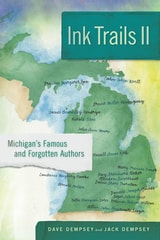
Ink Trails II
Michigan's Famous and Forgotten AuthorsDave Dempsey
Michigan State University Press, 2016
Exploring the hidden treasures of otherwise forgotten authors while also acknowledging the Michigan-set stories of giants like Hemingway, Dave and Jack Dempsey delve into the state’s literary heritage, as robust, diverse, and inexhaustible as the natural beauty of the place that nurtured it. This second volume of “ink trails” continues to tell the story of the remarkable writers, powerful words, and sublime nature of Michigan in the same well-researched and entertaining prose as the first.

Ink Trails
Michigan's Famous and Forgotten AuthorsDave Dempsey
Michigan State University Press, 2012
Long revered as the birthplace of many of the nation’s best-known authors, Michigan has also served as inspiration to countless others. In this entertaining and well-researched book—the first of its kind—the secrets, legends, and myths surrounding some of Michigan’s literary luminaries are explored. Which Michigan poet inspired a state law requiring teachers to assign at least one of his compositions to all students? Which young author emerged from the University of Michigan with a bestselling novel derided by some critics as “vulgar”? And from what Michigan city did Arthur Miller, Robert Frost, and Jane Kenyon draw vital inspiration? The answers to these questions and more are revealed in this rich literary history that highlights the diversity of those whose impact on letters has been indelible and distinctly Michiganian.

Inland
Pamela Alexander
University of Iowa Press, 1997
Despite this variety, Inland has an emerging organization that suggests a kind of plot. The family is left behind in the way that families of origin always are, revealed fully only in perspective: “foghorns / in the harbor, two different pitches / at different intervals / repeating so often I didn't hear them / and their accidental harmonies / until I'd left town.” Shifting toward the subject of new relationships, in her diatribe against a past (and passing) lover Alexander gives a new twist to the fact that this subject has been fair game for poets for centuries: “...you could say hello, you canoe-footed fur-faced / musk ox, pockets full of cheese and acorns / and live fish and four-headed winds and sky...”
James Merrill, praising Alexander's first book, called it “a wonderful achievement. Her language is now simple, now playful, now extremely poignant.” This is an apt description of Inland as well, a book that shows Alexander in witty yet serious engagement with the world. The longest poem here, “Swallowing the Anchor” (the title is the sailors' term for giving up the sea), is also the most directly personal. It closes the section of the book in which the poet comes to terms with losses, including the death of the loved one. She does this with grace—and her wit is not jokes, her poignancy is not sentimentality.
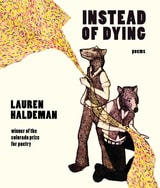
Instead of Dying
Lauren Haldeman
University Press of Colorado, 2017
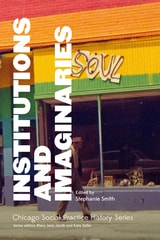
Institutions and Imaginaries
Edited by Stephanie Smith
School of the Art Institute of Chicago, 2014
This volume focuses on how artists and others have worked with, within, and sometimes in opposition to large Chicago institutions, such as public schools, universities, libraries, archives, museums, and other civic bodies. Drawing from a broad range of interdisciplinary sources, it explores the far-reaching effect of socially motivated art on urban life. It grounds recent history within a longer arc of civic self-fashioning, from the Columbian Exposition of 1893 to Jane Addams's Hull House to John Dewey's legacy in arts education. The collection also examines the relationship between the city’s image and the types of artistic work that flourish within its boundaries and resonate far beyond them.
Institutions and Imaginaries is part of the new Chicago Social Practice History series, edited by Mary Jane Jacob and Kate Zeller in the Department of Exhibitions and Exhibition Studies at the School of the Art Institute of Chicago (SAIC).
Institutions of Reading
The Social Life of Libraries in the United StatesThomas Augst
University of Massachusetts Press, 2007
Tracing the evolution of the library as a modern institution from the late eighteenth century to the digital era, this book explores the diverse practices by which Americans have shared reading matter for instruction, edification, and pleasure. Writing from a rich variety of perspectives, the contributors raise important questions about the material forms and social shapes of American culture. What is a library? How have libraries fostered communities of readers and influenced the practice of reading in particular communities? How did the development of modern libraries alter the boundaries of individual and social experience, and define new kinds of public culture? To what extent have libraries served as commercial enterprises, as centers of power, and as places of empowerment for African Americans, women, and immigrants? Institutions of Reading offers at once a social history of literacy and leisure, an intellectual history of institutional and technological innovations that facilitated the mass distribution and consumption of printed books and periodicals, and a cultural history of the symbolic meanings and practical uses of reading in American life. In addition to the editors, contributors include Elizabeth Amann, Michael Baenen, James Green, Elizabeth McHenry, Barbara Mitchell, Christine Pawley, Janice Radway, James Raven, Karin Roffman, and Roy Rosenzweig.
Instructions, Abject & Fuming
Julianna Baggott
Southern Illinois University Press, 2017
Alongside her cultural commentary, the speaker frankly confronts love and sex, as well as the beauty and brutality of having children. Still other poems reflect questions and considerations of faith: the speaker ponders St. Thomas in a pet store and imagines Jesus explaining to God how it feels to have a body.
Baggott’s use of obsolete Old English words subverts common language and creates new ways of interrogating the world around us. There is heartache on these pages, but Baggott also offers humor, such as a complaint about a lover’s eating habits or an extended discourse on a baby’s rattle. Baggott’s latest proves to be a rollicking book sui generis.

Instruments of the True Measure
PoemsLaura Da'
University of Arizona Press, 2018
Surveying and geography underpin the collection, but even as Da’ investigates these signifiers of measurement, she pushes the reader to interrogate their function within the stark atrocities of American history. Da’ laments this harsh dichotomy, observing that America’s mathematical point of beginning is located in the heart of her tribe’s homeland: “I do not have the Shawnee words to describe this place; the notation that is available to me is 40°38´32.61´´ N 80°31´9.76´´ W.”

Intensive Care
More Poetry and Prose by NursesCortney & Judy Davis & Schaefer
University of Iowa Press, 2003
Interior States
Institutional Consciousness and the Inner Life of Democracy in the Antebellum United StatesChristopher Castiglia
Duke University Press, 2008
In the late eighteenth century and early nineteenth, as discourses of interiority gained prominence, so did powerful counter-narratives. Castiglia reveals the flamboyant pages of antebellum popular fiction to be an archive of unruly democratic aspirations. Through close readings of works by Maria Monk and George Lippard, Walt Whitman and Timothy Shay Arthur, Hannah Webster Foster and Hannah Crafts, and Nathaniel Hawthorne and Herman Melville, Castiglia highlights a refusal to be reformed or self-contained. In antebellum authors’ representations of nervousness, desire, appetite, fantasy, and imagination, he finds democratic strivings that refused to disappear. Taking inspiration from those writers and turning to the present, Castiglia advocates a humanism-without-humans that, denied the adjudicative power of interiority, promises to release democracy from its inner life and to return it to the public sphere where U.S. citizens may yet create unprecedented possibilities for social action.
Interpreting the Self
Two Hundred Years of American AutobiographyDiane Bjorklund
University of Chicago Press, 1998
"A refreshingly welcome approach to this intriguing topic. . . . [Bjorklund's] extensive and systematic approach to her source material is impressive and enriches our understanding of this essential subject."—Virginia Quarterly Review
"Bjorklund studies both famous and obscure writers, and her clear prose style and copious quotations provide insight into the many aspects of the changing American self." —Library Journal
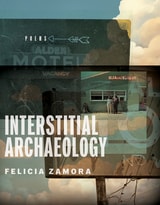
Interstitial Archaeology
Felicia Zamora
University of Wisconsin Press, 2025
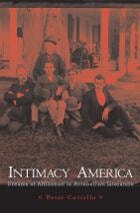
Intimacy in America
Dreams of Affiliation in Antebellum LiteraturePeter Coviello
University of Minnesota Press, 2005

Intricate Relations
Sexual and Economic Desire in American Fiction, 1789-1814Karen A. Weyler
University of Iowa Press, 2005
Intricate Relations charts the development of the novel in and beyond the early republic in relation to these two thematic and intricately connected centers: sexuality and economics. By reading fiction written by Americans between 1789 and 1814 alongside medical theory, political and economic tracts, and pedagogical literature of all kinds, Karen Weyler recreates and illuminates the larger, sometimes opaque, cultural context in which novels were written, published, and read.
In 1799, the novelist Charles Brockden Brown used the evocative phrase “intricate relations” to describe the complex imbrication of sexual and economic relations in the early republic. Exploring these relationships, he argued, is the chief job of the “moral historian,” a label that most novelists of the era embraced. In a republic anxious about burgeoning individualism in the 1790s and the first two decades of the nineteenth century, the novel foregrounded sexual and economic desires and explored ways to regulate the manner in which they were expressed and gratified.
In Intricate Relations, Weyler argues that understanding how these issues underlie the novel as a genre is fundamental to understanding both the novels themselves and their role in American literary culture. Situating fiction amid other popular genres illuminates how novelists such as Charles Brockden Brown, Hannah Foster, Samuel Relf, Susanna Rowson, Rebecca Rush, and Sally Wood synthesized and iterated many of the concerns expressed in other forms of public discourse, a strategy that helped legitimate their chosen genre and make it a viable venue for discussion in the decades following the revolution.
Weyler’s passionate and persuasive study offers new insights into the civic role of fiction in the early republic and will be of great interest to literary theorists and scholars in women’s and American studies.
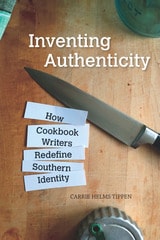
Inventing Authenticity
How Cookbook Writers Redefine Southern IdentityCarrie Helms Tippen
University of Arkansas Press, 2018
Tippen discusses the act of cooking as a way to perform—and therefore reinforce—the identity associated with a recipe, and the complexities inherent in attempts to portray the foodways of a region marked by a sometimes distasteful history. Inventing Authenticity meets this challenge head-on, delving into problems of cultural appropriation and representations of race, thorny questions about authorship, and more. The commonplace but deceptively complex southern cookbook can sustain our sense of where we come from and who we are—or who we think we are.
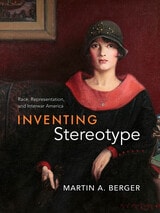
Inventing Stereotype
Race, Representation, and Interwar AmericaMartin A. Berger
University of Chicago Press, 2025
Upending a century of scholarly and popular thinking about stereotype, Martin A. Berger traces our current understanding of it to the 1920s, when American journalist and public intellectual Walter Lippmann borrowed the term from printmaking techniques and defined it as a shared mental picture that simplified a person, event, group, or thing so it could be easily grasped. Berger uncovers stereotype’s intellectual debts to philosophy, psychology, political science, and, in particular, art history and interwar racial theories.
Inventing Stereotype analyzes a series of plays, novels, and paintings from the 1920s and 1930s that sparked fierce debate about whether they employed racial stereotypes in the depiction of Black, Jewish, and other characters. Through careful attention to audience responses—parsed by race, political leanings, religion, and class—the book illustrates how artistic depictions are categorized as either stereotyped or not, relative to current representational norms, rather than to their success in conveying the authentic identities of individuals or racial groups.
Inventing the Addict
Drugs, Race, and Sexuality in Nineteenth-Century British and American LiteratureSusan Zieger
University of Massachusetts Press, 2008
The notion of addiction has always conjured first-person stories, often beginning with an insidious seduction, followed by compulsion and despair, culminating in recovery and tentative hope for the future. We are all familiar with this form of individual life arrative, Susan Zieger observes, but we know far less about its history. “Addict” was not an available identity until the end of the nineteenth century, when a modernizing medical establishment and burgeoning culture of consumption updated the figure of the sinful drunkard popularized by the temperance movement.
In Inventing the Addict, Zieger tells the story of how the addict, a person uniquely torn between disease and desire, emerged from a variety of earlier figures such as drunkards, opium-eating scholars, vicious slave masters, dissipated New Women, and queer doctors. Drawing on a broad range of literary and cultural material, including canonical novels such as Uncle Tom's Cabin, The Strange Case of Dr. Jekyll and Mr. Hyde, and Dracula, she traces the evolution of the concept of addiction through a series of recurrent metaphors: exile, self-enslavement, disease, and vampirism. She shows how addiction took on multiple meanings beyond its common association with intoxication or specific habit-forming substances—it was an abiding desire akin to both sexual attraction and commodity fetishism, a disease that strangely failed to meet the requirements of pathology, and the citizen's ironic refusal to fulfill the promise of freedom.
Nor was addiction an ideologically neutral idea. As Zieger demonstrates, it took form over time through specific, shifting intersections of gender, race, class, and sexuality, reflecting the role of social power in the construction of meaning.