Results by title
3369 books match the query 'Cultural & Social' and 136 start with i
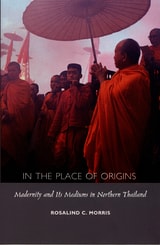
In the Place of Origins
Modernity and Its Mediums in Northern ThailandRosalind C. Morris
Duke University Press, 2000
Through her careful examination of the transformations of spirit mediumship wrought by the mass media, Morris takes readers into the world of the northern Thai past to discover the anticipations of future histories. In this process, she finds new objects for anthropological inquiry, including romantic love and epistolary poetry. She then turns her eye toward the relationships between commodification and prosaic form and photography and the discourses of gendered and national identity. Attending to these issues as they manifest themselves in the practices of mediums, Morris describes both the mundane activities of spirit mediums and the grand ambitions to political authority that are embodied in the increasingly spectacular forms of possession that are becoming so popular with both tourists and local culture brokers. In the Place of Origins traverses this ground with accounts of right-wing militarism and ritual revival during the 70s, and of the democracy movement of 1992, when a global mass media was galvanized by images of military repression and the spectacle of traditional ritual power in cursing. Finally, considering the claims that mediums make to magical power in the face of both AIDS and the Asian economic crisis, Morris reveals the potency of extrajudicial forms of power and violence in the late modern era.
This provocative study will interest anthropologists, historians, Asianists, and those involved in gender, performance, media, and literary studies.
In the Shadow of Marriage
Gender and Justice in an African CommunityAnne M. O. Griffiths
University of Chicago Press, 1997
Griffiths's analysis is based on careful observation of how people actually experience the law as well as the more standard tools of statutes and cases familiar to Western legal scholars. She explains how women's access to law is determined by social relations over which they have little control. In this powerful feminist critique of law and anthropology, Griffiths shows how law and custom are inseparable for Kwena women. Both colonial common law and customary law pose comparable and constant challenges to Kwena women's attempts to improve their positions in society.
In the Shadow of Tungurahua
Disaster Politics in Highland EcuadorA.J. Faas
Rutgers University Press, 2023
In the Shadow of the Palms
More-Than-Human Becomings in West PapuaSophie Chao
Duke University Press, 2022

In the Shadows of State and Capital
The United Fruit Company, Popular Struggle, and Agrarian Restructuring in Ecuador, 1900-1995Steve Striffler
Duke University Press, 2002
In the Shadows of State and Capital tells the story of how Ecuadorian peasants gained, and then lost, control of the banana industry. Providing an ethnographic history of the emergence of subcontracting within Latin American agriculture and of the central role played by class conflict in this process, Steve Striffler looks at the quintessential form of twentieth-century U.S. imperialism in the region—the banana industry and, in particular, the United Fruit Company (Chiquita). He argues that, even within this highly stratified industry, popular struggle has contributed greatly to processes of capitalist transformation and historical change.
Striffler traces the entrance of United Fruit into Ecuador during the 1930s, its worker-induced departure in the 1960s, the troubled process through which contract farming emerged during the last half of the twentieth century, and the continuing struggles of those involved. To explore the influence of both peasant activism and state power on the withdrawal of multinational corporations from banana production, Striffler draws on state and popular archives, United Fruit documents, and extensive oral testimony from workers, peasants, political activists, plantation owners, United Fruit administrators, and state bureaucrats. Through an innovative melding of history and anthropology, he demonstrates that, although peasant-workers helped dismantle the foreign-owned plantation, they were unable to determine the broad contours through which the subsequent system of production—contract farming—emerged and transformed agrarian landscapes throughout Latin America.
By revealing the banana industry’s impact on processes of state formation in Latin America, In the Shadows of State and Capital will interest historians, anthropologists, and political scientists, as well as scholars of globalization and agrarian studies.
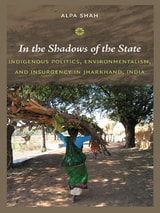
In the Shadows of the State
Indigenous Politics, Environmentalism, and Insurgency in Jharkhand, IndiaAlpa Shah
Duke University Press, 2010
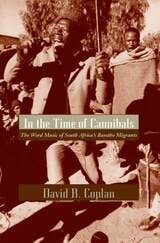
In the Time of Cannibals
The Word Music of South Africa's Basotho MigrantsDavid B. Coplan
University of Chicago Press, 1994
Coplan discusses every aspect of the Basotho musical literature, taking into account historical conditions, political dynamics, and social forces as well as the styles, artistry, and occasions of performance. He engages the postmodern challenge to decolonize our representation of the ethnographic subject and demonstrates how performance formulates local knowledge and communicates its shared understandings.
Complete with transcriptions of full male and female performances, this book develops a theoretical and methodological framework crucial to anyone seeking to understand the relationship between orality and literacy in the context of performance. This work is an important contribution to South African studies, to ethnomusicology and anthropology, and to performance studies in general.
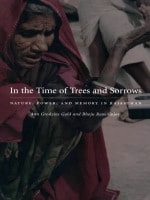
In the Time of Trees and Sorrows
Nature, Power, and Memory in RajasthanAnn Grodzins Gold and Bhoju Ram Gujar
Duke University Press, 2002
Based on testimonies from the 1990s, this book stands as a polyvocal account of the radical political and environmental changes the region and its people have faced in the twentieth century. Not just the story of modernity from the perspective of a rural village, these interviews and author commentaries narrate this small rural community’s relatively sudden transformation from subjection to a local despot and to a remote colonial power to citizenship in a modern postcolonial democracy. Unlike other recent studies of Rajasthan, the current study gives voice exclusively to former subjects who endured the double oppression of colonial and regional rulers. Gold and Gujar thus place subjective subaltern experiences of daily routines, manifestations of power relations, and sweeping changes to the environment (after the fall of kings) that turned lush forests into a barren landscape on equal footing with historical “fact” and archival sources. Ambiguous, complex, and culturally laden as it is in Western thought, the concept of nature is queried in this ethnographic text. For persons in Sawar the environment is not only a means of sustenance, its deterioration is linked to human morality and to power, both royal and divine. The framing questions of this South Asian history revealed through memories are: what was it like in the time of kings and what happened to the trees?

Inauthentic
The Anxiety over Culture and IdentityVincent J. Cheng
Rutgers University Press, 2004
Modern and contemporary cultures are increasingly marked by an anxiety over a perceived loss of authentic cultural identity. In this book, Vincent J. Cheng examines why we still cling to notions of authenticity in an increasingly globalized world that has exploded notions of authentic essences and absolute differences.
Who is “authentic” and who is “other” in a given culture? Who can speak for the “other?” What do we mean by authenticity? These are critical questions that today’s world––brought closer together and yet pulled farther apart by globalism and neocolonialism––has been unable to answer. Inauthentic compellingly probes these issues through revealing case studies on the pursuit of authenticity and identity.
Each chapter explores the ways in which we construct “authenticity” in order to replace seemingly vacated identities, including: the place of minorities in academia; mixed-race dynamics; the popularity of Irish culture in America; the Good Friday agreement in Northern Ireland; Jewish American identity; the status of Jewish America in relation to Israel and Palestine; the cultural problems of international adoptions; and the rapidly changing nature of the Asian American population in the United States.
Inauthentic combines the scholarly and the personal, informed argument and human interest. It will undoubtedly appeal to academic scholars, as well as to a broader reading audience.
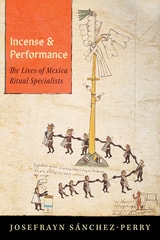
Incense and Performance
The Lives of Mexica Ritual SpecialistsSánchez-Perry, Josefrayn
University of Arizona Press, 2026
At the time of the conquest of Mexico, the anonymous authors of the Anales de Tlatelolco (1560s) recorded the deaths of two Mexica ritual specialists. During the tumultuous events of the times, Quauhnochtli (a telpochcalli specialist) and Quauhcoatl (a calmecac specialist) died protecting the temple of Huitzilopochtli and his bundled embodiement in the neighborhood of Huitznahuac.
Scholar Josefrayn Sánchez-Perry reconstructs the lives and labors of the two specialists, articulated through Nahuatl-language texts, material culture from neighborhood and temple spaces, and the academic study of religion. The book expands on known theories on Mexica ritual specialists by providing new insights about telpochcalli and calmecac duties, their interrelated educational models, and the collective practices that brought people, animals, flora, specialists, and teteo (more-than-human forces) together. The book demonstrates that telpochcalli and calmecac specialists shared the ritual responsibilities of collective and elective practices.
Giving care to teteo, giving life, and giving offerings were balanced with giving war, giving council, and giving music and dance. As Quauhnochtli and Quauhcoatl ensured the safety of the bundled Huitzilopochtli, they characterized how a Mexica ritual specialist lived and what they did.
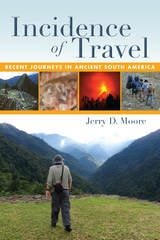
Incidence of Travel
Recent Journeys in Ancient South AmericaJerry D. Moore
University Press of Colorado, 2017
In Incidence of Travel, archaeologist Jerry Moore draws on his personal experiences and historical and archaeological studies throughout South America to explore and understand the ways traditional peoples created cultural landscapes in the region. Using new narrative structures, Moore introduces readers to numerous archaeological sites and remains, describing what it is like to be in the field and sparking further reflection on what these places might have been like in the past.
From the snow-capped mountains of Colombia to the arid deserts of Peru and Chile, ancient peoples of South America built cities, formed earthen mounds, created rock art, and measured the cosmos—literally inscribing their presence and passage throughout the continent. Including experiences ranging from the terrifying to the amusing, Moore’s travels intersect with the material traces of traditional cultures. He refers to this intersection as "the incidence of travel." Braiding the tales of his own journeys with explanations of the places he visits through archaeological, anthropological, and historical contexts, Moore conveys the marvelous and intriguing complexities of prehistoric and historic peoples of South America and the ways they marked their presence on the land.
Combining travel narrative and archaeology in a series of essays—accounts of discoveries, mishaps of travel, and encounters with modern people living in ancient places—Incidence of Travel will engage any general reader, student, or scholar with interest in archaeology, anthropology, Latin American history, or storytelling.
Incommunicable
Toward Communicative Justice in Health and MedicineCharles L. Briggs
Duke University Press, 2024

Indelible Inequalities in Latin America
Insights from History, Politics, and CulturePaul Gootenberg and Luis Reygadas, eds.
Duke University Press, 2010
Contributors
Jeanine Anderson
Javier Auyero
Odette Casamayor
Christina Ewig
Paul Gootenberg
Margaret Gray
Eric Hershberg
Lucio Renno
Luis Reygadas
Indian Assimilation in the Franciscan Area of Nueva Vizcaya
William B. Griffen
University of Arizona Press, 1979

Indian Shakers
A Messianic Cult of the Pacific NorthwestH. G. Barnett
Southern Illinois University Press, 1972
A thorough anthropological study of a distinct religious cult of the Indian tribes of the Pacific Northwest. The book traces the Shaker cult’s development, its ceremonies, ritual elements, faiths, and doctrine.
Indians and Anthropologists
Vine Deloria, Jr., and the Critique of AnthropologyThomas Biolsi
University of Arizona Press, 1997
CONTENTS
Introduction: What's Changed, What Hasn't, Thomas Biolsi & Larry J. Zimmerman
Part One--Deloria Writes Back
Vine Deloria, Jr., in American Historiography, Herbert T. Hoover
Growing Up on Deloria: The Impact of His Work on a New Generation of Anthropologists, Elizabeth S. Grobsmith
Educating an Anthro: The Influence of Vine Deloria, Jr., Murray L. Wax
Part Two--Archaeology and American Indians
Why Have Archaeologists Thought That the Real Indians Were Dead and What Can We Do about It?, Randall H. McGuire
Anthropology and Responses to the Reburial Issue, Larry J. Zimmerman
Part Three-Ethnography and Colonialism
Here Come the Anthros, Cecil King
Beyond Ethics: Science, Friendship and Privacy, Marilyn Bentz
The Anthropological Construction of Indians: Haviland Scudder Mekeel and the Search for the Primitive in Lakota Country, Thomas Biolsi
Informant as Critic: Conducting Research on a Dispute between Iroquoianist Scholars and Traditional Iroquois, Gail Landsman
The End of Anthropology (at Hopi)?, Peter Whiteley
Conclusion: Anthros, Indians and Planetary Reality, Vine Deloria, Jr.
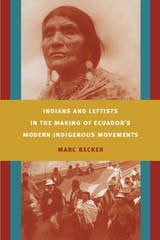
Indians and Leftists in the Making of Ecuador's Modern Indigenous Movements
Marc Becker
Duke University Press, 2008
Becker explains how rural laborers and urban activists worked together in Ecuador, merging ethnic and class-based struggles for social justice. Socialists were often the first to defend Indigenous languages, cultures, and social organizations. They introduced rural activists to new tactics, including demonstrations and strikes. Drawing on leftist influences, Indigenous peoples became adept at reacting to immediate, local forms of exploitation while at the same time addressing broader underlying structural inequities. Through an examination of strike activity in the 1930s, the establishment of a national-level Ecuadorian Federation of Indians in 1944, and agitation for agrarian reform in the 1960s, Becker shows that the history of Indigenous mobilizations in Ecuador is longer and deeper than many contemporary observers have recognized.

Indifference
On the Praxis of Interspecies BeingNaisargi N. Davé
Duke University Press, 2023
Indigenism
Ethnic Politics In BrazilAlcida Rita Ramos
University of Wisconsin Press, 1998
Based on her more than thirty years of fieldwork and activism on behalf of the Yanomami Indians, Ramos explains the complex ideology called indigenism. She evaluates its meaning through the relations of Brazilian Indians with religious and lay institutions, non-governmental organizations, official agencies such as the National Indian Foundation as well as the very discipline of anthropology. Ramos not only examines the imagery created by Brazilians of European descent—members of the Catholic church, government officials, the army and the state agency for Indian affairs—she also scrutinizes Indians' own self portrayals used in defending their ethnic rights against the Brazilian state.
Ramos’ thoughtful and complete analysis of the relation between indigenous people of Brazil and the state will be of great interest to lawmakers and political theorists, environmental and civil rights activists, developmental specialists and policymakers, and those concerned with human rights in Latin America.
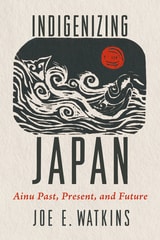
Indigenizing Japan
Ainu Past, Present, and FutureJoe E. Watkins
University of Arizona Press, 2025
Relaying the deep history of the islands of Japan, Watkins tells the archaeological story from the earliest arrivals some 40,000 years ago to 16,000 years ago when local cultures began utilizing pottery and stone tools. About 2,300 years ago, another group of people immigrated from the Korean peninsula into the Japanese archipelago, bringing wet rice agriculture with them. They intermarried with the people who were there, forming the basis of the contemporary Japanese majority culture. As the Japanese state developed on the central Islands of Honshu, Ryukyu, and Shikoku, the people of Hokkaido continued developing along a different trajectory with minimal interaction with the mainland until colonization in the mid-nineteenth century, when the people known as the Ainu came under Japanese governmental policy.
Watkins’s insightful analysis highlights the Ainu’s enduring spirit and their resurgence as part of the global Indigenous movement. Key events such as the 1997 Nibutani Dam case and the 2007 recognition of the Ainu as Japan’s Indigenous people are explored in depth, showcasing the Ainu’s ongoing fight for cultural preservation and self-determination. By situating the Ainu’s experiences within broader global colonial histories, Indigenizing Japan underscores the shared struggles and resilience of Indigenous communities worldwide.
Indigenous Alliance Making
Histories of Agency in Colonial Lowland South AmericaJames Andrew Whitaker and Mark Harris
University of Arizona Press, 2025
During the colonial and postcolonial eras, local people in lowland South America experienced exploitation from outsiders. But as new kinds of societies emerged from engagements between outside and Indigenous communities, Indigenous Amazonians formed strategic alliances to defend livelihoods, territory, and symbolic values, as well as to curb exploitation, predation, and threats.
The contributors in Indigenous Alliance Making bring together historical analyses with anthropological investigations to explore the organizational patterns, goals, and strategies through which Indigenous people have intentionally created various alliances, partnerships, and similar relations with outsiders in lowland South America. Emphasizing class, ethnicity, gender, and race, the chapters bring new dimensions to understanding a vital but understudied region.
Through missions, war, and broader conflict, as well as marriage and kinship, local people aimed to maintain control even as personal and collective transformations unfolded. This volume explores the formation of diverse historical relations across regional societies within past and contemporary contexts and contributes to a growing historiographical turn among anthropologists and historians that foregrounds agency in past and present understandings of Indigenous peoples’ engagements with others in lowland South America.
Contributors
Marta Amoroso
Elisa Frühauf Garcia
Mark Harris
Kris Lane
Camila Loureiro Dias
Cecilia McCallum
Gary Van Valen
Aparecida Vilaça
James Andrew Whitaker
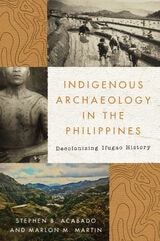
Indigenous Archaeology in the Philippines
Decolonizing Ifugao HistoryStephen B. Acabado and Marlon M. Martin
University of Arizona Press, 2022
Indigenous Archaeology in the Philippines highlights how collaborative archaeology and knowledge co-production among the Ifugao, an Indigenous group in the Philippines, contested (and continue to contest) enduring colonial tropes. Stephen B. Acabado and Marlon M. Martin explain how the Ifugao made decisions that benefited them, including formulating strategies by which they took part in the colonial enterprise, exploiting the colonial economic opportunities to strengthen their sociopolitical organization, and co-opting the new economic system. The archaeological record shows that the Ifugao successfully resisted the Spanish conquest and later accommodated American empire building.
This book illustrates how descendant communities can take control of their history and heritage through active collaboration with archaeologists. Drawing on the Philippine Cordilleran experiences, the authors demonstrate how changing historical narratives help empower peoples who are traditionally ignored in national histories.

Indigenous Collections
Transformations in Stewardship and Conservation PracticesEllen Pearlstein
J. Paul Getty Trust, The, 0
A critical survey of the values, challenges, implications, history, and future of conserving Indigenous collections globally.
Once the exclusive realm of non-Indigenous curators and conservators, the care of Indigenous works in museums is now largely carried out either in collaboration with or by community members—a significant change from the colonial origins of museum collections and conservation practice.
This volume brings together over 100 readings—by Indigenous and non-Indigenous authors from around the world—that trace the development of the conservation of Indigenous collections. The writers provide a wide range of expertise, from archaeology and ethnography to law, and include community leaders, anthropologists, and art historians, as well as conservators and curators.
The book begins with an examination of the changes in terminology that reflect trust and respect, Indigenous care practices that predate the emergence of museums, and the impact of policy and legislation on Indigenous art and artifacts. Other readings explore the challenges associated with managing large, complex collections and the changes that resulted from addressing them: the development of specialized technical approaches, the incorporation of intangible heritage in conservation agendas, and a broadening view of what conservation means and how to practice it. Indigenous Collections concludes by looking at new approaches to museums—managed by or jointly with the people most closely connected to the holdings—and to the future, through innovations in conservation education.
Indigenous Communalism
Belonging, Healthy Communities, and Decolonizing the CollectiveCarolyn Smith-Morris
Rutgers University Press, 2020
Told in vibrant detail, the narrative of the book conveys the importance of communalism as a value system present in all human groups and one at the center of Indigenous survival. Carolyn Smith-Morris draws on her work among the Akimel O'odham and the Wiradjuri to show how communal work and culture help these communities form distinctive Indigenous bonds. The results are not only a rich study of Indigenous relational lifeways, but a serious inquiry to the continuing acculturative atmosphere that Indigenous communities struggle to resist. Recognizing both positive and negative sides to the issue, she asks whether there is a global Indigenous communalism. And if so, what lessons does it teach about healthy communities, the universal human need for belonging, and the potential for the collective to do good?
Indigenous Cultural and Environmental Heritage
Social Action and Solidarity for Indigenous RightsEdited by Paulette Steeves and Ranjan Datta
University of Arizona Press, 2027
This volume brings together a powerful chorus of Indigenous scholars and settler allies to illuminate the enduring connections between cultural heritage, environmental stewardship, and Indigenous sovereignty. With cases from communities across the Americas, Asia, Africa, and the Arctic, this interdisciplinary volume centers Indigenous knowledge systems and lived experiences. Contributors challenge colonial narratives that have long obscured or erased Indigenous histories, practices, and rights. Contributors also demonstrate how cultural and environmental heritage functions not only as a site of memory but also as a vital framework for resilience, governance, and sustainable futures.
From land-based knowledge and oral traditions to climate adaptation and sacred ecological stewardship, the essays highlight Indigenous-led pathways toward justice and renewal in the face of ongoing environmental and cultural dispossession. Urgent and forward-looking, this volume offers essential insights for scholars, students, and practitioners committed to centering Indigenous voices, supporting community-led action, and reimagining more just and inclusive approaches to heritage and environmental care.
Contributors
Ranjan Datta
Tom Dooley
Esther Jónsdóttir
Matias Kachepa Elisa
Jean Kayira
Malidadi Langa
Makoto Mochida
Paul Edward Montgomery Ramirez
Jairo Saw Munduruku
Rani Muthukrishnan
George Nicholas
Sandra Oseguera
Masaki Sashima
Yuka Shichiza
William Singer III
Rajmoni Singha
Paulette Steeves
Patiphol Yodsurang
Indigenous Media in Mexico
Culture, Community, and the StateErica Cusi Wortham
Duke University Press, 2013
Drawing on her in-depth ethnographic research among indigenous mediamakers in Mexico, Wortham traces their shifting relationship with Mexican cultural agencies; situates their work within a broader, hemispheric network of indigenous media producers; and complicates the notion of a unified, homogeneous indigenous identity. Her analysis of projects from community-based media initiatives in Oaxaca to the transnational Chiapas Media Project highlights variations in cultural identity and autonomy based on specific histories of marginalization, accommodation, and resistance.
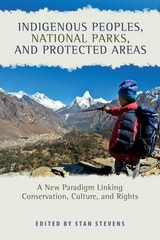
Indigenous Peoples, National Parks, and Protected Areas
A New Paradigm Linking Conservation, Culture, and RightsEdited by Stan Stevens
University of Arizona Press, 2014
Indigenous Peoples, National Parks, and Protected Areas integrates wide-ranging, multidisciplinary intellectual perspectives with detailed analyses of new kinds of protected areas in diverse parts of the world. Eleven geographers and anthropologists contribute nine substantive fieldwork-based case studies. Their contributions offer insights into experience with new conservation approaches in an array of countries, including Australia, Canada, Guatemala, Honduras, Nepal, Nicaragua, Peru, South Africa, and the United States.
This book breaks new ground with its in-depth exploration of changes in conservation policies and practices—and their profound ramifications for Indigenous peoples, protected areas, and social reconciliation.
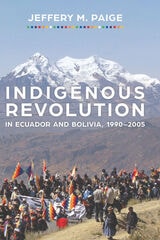
Indigenous Revolution in Ecuador and Bolivia, 1990–2005
Jeffery M. Paige
University of Arizona Press, 2020
Uprisings by indigenous peoples of Ecuador and Bolivia between 1990 and 2005 overthrew the five-hundred-year-old racial and class order inherited from the Spanish Empire. It started in Ecuador with the Great Indigenous Uprising, which was fought for cultural and economic rights. A few years later massive indigenous mobilizations began in Bolivia, culminating in 2005 with the election of Evo Morales, the first indigenous president.
Jeffrey M. Paige, an internationally recognized authority on the sociology of revolutionary movements, interviewed forty-five indigenous leaders who were actively involved in the uprisings. The leaders recount how peaceful protest and electoral democracy paved the path to power. Through the interviews, we learn how new ideologies of indigenous socialism drew on the deep commonalities between the communal dreams of their ancestors and the modern ideology of democratic socialism. This new discourse spoke to the people most oppressed by both withering racism and neoliberal capitalism.
Emphasizing mutual respect among ethnic groups (including the dominant Hispanic group), the new revolutionary dynamic proposes a communal worldview similar to but more inclusive than Western socialism because it adds indigenous cultures and nature in a spiritual whole. Although absent in the major revolutions of the past century, the themes of indigenous revolution—democracy, indigeneity, spirituality, community, and ecology—are critically important.
Paige’s interviews present the powerful personal experiences and emotional intensity of the revolutionary leadership. They share the stories of mass mobilization, elections, and indigenous socialism that created a new form of twenty-first-century revolution with far-reaching applications beyond the Andes.
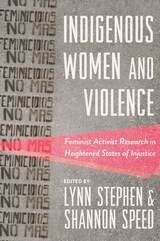
Indigenous Women and Violence
Feminist Activist Research in Heightened States of InjusticeEdited by Lynn Stephen and Shannon Speed
University of Arizona Press, 2021
Indigenous Women and Violence is built on engaging case studies that highlight the individual and collective struggles that Indigenous women face from the racial and gendered oppression that structures their lives. Gendered violence has always been a part of the genocidal and assimilationist projects of settler colonialism, and it remains so today. These structures—and the forms of violence inherent to them—are driving criminalization and victimization of Indigenous men and women, leading to escalating levels of assassination, incarceration, or transnational displacement of Indigenous people, and especially Indigenous women.
This volume brings together the potent ethnographic research of eight scholars who have dedicated their careers to illuminating the ways in which Indigenous women have challenged communities, states, legal systems, and social movements to promote gender justice. The chapters in this book are engaged, feminist, collaborative, and activism focused, conveying powerful messages about the resilience and resistance of Indigenous women in the face of violence and systemic oppression.
Contributors: R. Aída Hernández-Castillo, Morna Macleod, Mariana Mora, María Teresa Sierra, Shannon Speed, Lynn Stephen, Margo Tamez, Irma Alicia Velásquez Nimatuj
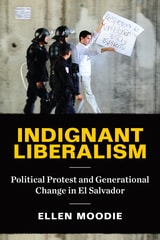
Indignant Liberalism
Political Protest and Generational Change in El SalvadorEllen Moodie
University of Texas Press, 2026
Documenting the rise and disillusionment of El Salvador’s postwar activists in the face of populist authoritarian politics.
The conclusion of El Salvador’s long civil war, in 1992, was supposed to bring about equality and political freedom. Leftist insurgents laid down arms, and the government formally embraced liberal ideals. Yet today, El Salvador is ruled by an authoritarian president who was reelected via unconstitutional means. What went wrong?
Anthropologist and journalist Ellen Moodie embedded with indignados—young middle-class protestors, demanding that the government live up to its liberal commitments—to better understand the course of political change since the civil war. Yet the “post-postwar” generation is only the latest demographic disappointed with liberalism in practice. Moodie examines a nineteenth-century “racial liberalism” that saw descendants of colonists “civilizing” Indigenous people while dispossessing them of lands and mobilizing them for labor. Today, the failure to make good on the promises of postwar liberalism has inspired robust support for strongman Nayib Bukele. Moodie argues that El Salvador’s case, though inflected by local concerns, is not unique. Rather, it is another stark demonstration of how liberalism’s imaginary social contract gives rise to populist authoritarianism.
Infected Kin
Orphan Care and AIDS in LesothoEllen Block
Rutgers University Press, 2019
Supplementary instructor resources (https://www.csbsju.edu/sociology/faculty/anthropology-teaching-resources/infected-kin-teaching-resources)

Infertile Environments
Epigenetic Toxicology and the Reproductive Health of Chinese MenJanelle Lamoreaux
Duke University Press, 2023

Infinite Repertoire
On Dance and Urban Possibility in Postsocialist GuineaAdrienne J. Cohen
University of Chicago Press, 2021
Infrastructure, Environment, and Life in the Anthropocene
Kregg Hetherington, editor
Duke University Press, 2019
Contributors. Nikhil Anand, Andrea Ballestero, Bruce Braun, Ashley Carse, Gastón R. Gordillo, Kregg Hetherington, Casper Bruun Jensen, Joseph Masco, Shaylih Muehlmann, Natasha Myers, Stephanie Wakefield, Austin Zeiderman
Inheritance of Loss
China, Japan, and the Political Economy of Redemption after EmpireYukiko Koga
University of Chicago Press, 2016
Inheritance of Loss chronicles these sites of colonial inheritance––tourist destinations, corporate zones, and mustard gas exposure sites––to illustrate attempts by ordinary Chinese and Japanese to reckon with their shared yet contested pasts. In her explorations of everyday life, Koga directs us to see how the violence and injustice that occurred after the demise of the Japanese Empire compound the losses that later generations must account for, and inevitably inherit.
Inheriting Possibility
Social Reproduction and Quantification in EducationEzekiel J. Dixon-Román
University of Minnesota Press, 2017
How has the dominant social scientific paradigm limited our understanding of the impact of inherited economic resources, social privilege, and sociocultural practices on multigenerational inequality? In what ways might multiple forces of social difference haunt quantitative measurements of ability such as the SAT? Building on new materialist philosophy, Inheriting Possibility rethinks methods of quantification and theories of social reproduction in education, demonstrating that test performance results and parenting practices convey the impact of materially and historically contingent patterns of differential possibility.
Ezekiel J. Dixon-Román explores the dualism of nature and culture that has undergirded theories of inheritance, social reproduction, and human learning and development. Research and debate on the reproduction of power relations have rested on a premise that nature is made up of fixed universals on which the creative, intellective, and discursive play of culture are based. Drawing on recent work in the physical and biological sciences, Dixon-Román argues that nature is culture. He contends that by assuming a rigid nature/culture binary, we ultimately limit our understanding of how power relations are reproduced.
Through innovative analyses of empirical data and cultural artifacts, Dixon-Román boldly reconsiders how we conceptualize the processes of inheritance and approach social inquiry in order to profoundly sharpen understanding and address the reproducing forces of inequality.
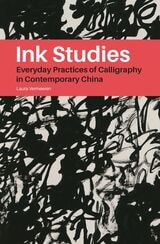
Ink Studies
Everyday Practices of Calligraphy in Contemporary ChinaLaura Vermeeren
National University of Singapore Press, 2025
As handwriting fades in the digital age, calligraphy in China is caught between tradition and reinvention. Ink Studies deconstructs this paradox, determining how calligraphy is not simply an ancient art form, but more so a site of ongoing cultural negotiation. Laura Vermeeren investigates how calligraphy moves through five distinct visual and social fields, shaping and being shaped by its practitioners. While often framed as an act of repetition and tied to centuries of disciplined copying, calligraphy also emerges here as a force of creativity—one that is actively mobilized in contemporary China, whether through state-sponsored initiatives or the aesthetics of modern design.
Uniting contemporary art and media history, Ink Studies provides vital perspectives on how China’s past is continually reimagined in the present, portraying calligraphy’s enduring relevance in an era of rapid technological change.

Inner Speech and the Dialogical Self
Norbert Wiley
Temple University Press, 2016
Inner speech, also known as self-talk, is distinct from ordinary language. It has several functions and structures, from everyday thinking and self-regulation to stream of consciousness and daydreaming. Inner Speech and the Dialogical Self provides a comprehensive analysis of this internal conversation that people have with themselves to think about problems, clarify goals, and guide their way through life.
Norbert Wiley shrewdly emphasizes the semiotic and dialogical features of the inner speech, rather than the biological and neurological issues. He also examines people who lack control of their inner speech—such as some autistics and many emotionally disturbed people who use trial and error rather than self-control—to show the power and effectiveness of inner speech.
Inner Speech and the Dialogical Self takes a humanistic social theorist approach to its topic. Wiley acknowledges the contributions of inner speech theorists, Lev Vygotsky and Mikhail Bakhtin, and addresses the classical pragmatism of Charles Sanders Peirce, John Dewey, William James, and George Herbert Mead to show the range and depth of this largely unexplored field.
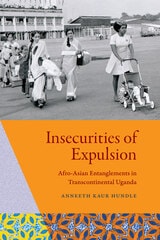
Insecurities of Expulsion
Afro-Asian Entanglements in Transcontinental UgandaAnneeth Kaur Hundle
Duke University Press, 2025
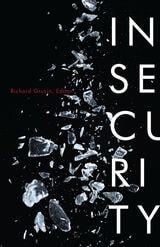
Insecurity
Richard Grusin
University of Minnesota Press, 2022
Investigating insecurity as the predominant logic of life in the present moment
Challenging several key concepts of the twenty-first century, including precarity, securitization, and resilience, this collection explores the concept of insecurity as a predominant logic governing recent cultural, economic, political, and social life in the West. The essays illuminate how attempts to make human and nonhuman systems secure and resilient end up having the opposite effect, making insecurity the default state of life today.
Unique in its wide disciplinary breadth and variety of topics and methodological approaches—from intellectual history and cultural critique to case studies, qualitative ethnography, and personal narrative—Insecurity is written predominantly from the viewpoint of the United States. The contributors’ analyses include the securitization of nongovernmental aid to Palestine, Bangladeshi climate refugees, and the privatization of U.S. military forces; the history of the concept of insecurity and the securitization of finance; racialized urban development in Augusta, Georgia; Amazon’s Mechanical Turk and the consequences of the Marie Kondo method; and the intricate politics of sexual harassment in the U.S. academy.
Contributors: Neel Ahuja, U of California, Santa Cruz; Aneesh Aneesh, U of Wisconsin, Milwaukee; Lisa Bhungalia, Kent State U; Jennifer Doyle, U of California, Riverside; Annie McClanahan, U of California, Irvine; Andrea Miller, Florida Atlantic U; Mark Neocleous, Brunel U London; A. Naomi Paik, U of Illinois, Chicago; Maureen Ryan, U of South Carolina; Saskia Sassen, Columbia U.
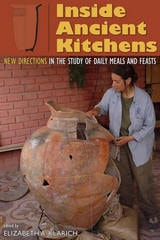
Inside Ancient Kitchens
New Directions in the Study of Daily Meals and FeastsElizabeth A. Klarich
University Press of Colorado, 2010
Inside the Circle
Queer Culture and Activism in Northwest ChinaCasey James Miller
Rutgers University Press, 2023
Inside the Eagle's Head
An American Indian CollegeAngelle A. Khachadoorian
University of Alabama Press, 2010
Where tradition meets bureaucracy—Native students redefine education on their own terms.
Inside the Eagle’s Head offers a compelling and deeply human portrait of the Southwestern Indian Polytechnic Institute (SIPI), a federally operated college serving Native American students from across the United States. In it, anthropologist Angelle Khachadoorian draws on years of teaching experience and extensive student interviews to illuminate the challenges and successes of life at SIPI. Far more than an institutional history, this book captures the voices of students navigating a complex educational landscape shaped by federal oversight, tribal identity, and personal ambition.
Through vivid metaphors—SIPI as a family, a prison, a reservation—students articulate their struggles and resilience within a system that is at once empowering and restrictive. Khachadoorian’s analysis reveals how SIPI’s hybrid nature—part community college, part BIA legacy—creates both opportunities and obstacles for its students. With empathy and insight, she explores how young Native Americans forge identity, community, and purpose in a setting few outsiders understand. Inside the Eagle’s Head is essential reading for educators, policymakers, and anyone interested in the intersection of Indigenous education, federal institutions, and student agency. It is a powerful testament to the transformative potential of listening to students’ stories.
Insurgent Encounters
Transnational Activism, Ethnography, and the PoliticalJeffrey S. Juris and Alex Khasnabish, eds.
Duke University Press, 2013
Contributors. Giuseppe Caruso, Maribel Casas-Cortés, Janet Conway, Stéphane Couture, Vinci Daro, Manisha Desai, Sylvia Escárcega, David Hess, Jeffrey S. Juris, Alex Khasnabish, Lorenzo Mosca, Michal Osterweil, Geoffrey Pleyers, Dana E. Powell, Paul Routledge, M. K. Sterpka, Tish Stringer

Intellectual Life in America
A HistoryLewis Perry
University of Chicago Press, 1989
Looking at the changing reputation of the intellect itself, Perry examines many forms of anti-intellectualism, showing that some of these were encouraged by intellectuals as surely as by their antagonists. This work is interpretative, critical, and highly provocative, and it provides what is all too often missing in the study of intellectuals—a sense of historical orientation.
Intercultural Utopias
Public Intellectuals, Cultural Experimentation, and Ethnic Pluralism in ColombiaJoanne Rappaport
Duke University Press, 2005
Intercultural Utopias centers on southwestern Colombia’s Cauca region, a culturally and linguistically heterogeneous area well known for its history of indigenous mobilization and its pluralist approach to ethnic politics. Rappaport interweaves the stories of individuals with an analysis of the history of the Regional Indigenous Council of Cauca and other indigenous organizations. She presents insights into the movement and the intercultural relationships that characterize it from the varying perspectives of regional indigenous activists, nonindigenous urban intellectuals dedicated to the fight for indigenous rights, anthropologists, local teachers, shamans, and native politicians.
Intermediaries, Interpreters, and Clerks
African Employees in the Making of Colonial AfricaEdited by Benjamin N. Lawrance, Emily Lynn Osborn, and Richard L. Roberts
University of Wisconsin Press, 2006
By uncovering the role of such men (and a few women) in the construction, function, and legal apparatus of colonial states, the essays in this volume highlight a new perspective. They offer important insights on hegemony, collaboration, and resistance, structures and changes in colonial rule, the role of language and education, the production of knowledge and expertise in colonial settings, and the impact of colonization in dividing African societies by gender, race, status, and class.
Intermediate Elites in Pre-Columbian States and Empires
Edited by Christina M. Elson and R. Alan Covey
University of Arizona Press, 2006
This is the first volume to consider how individuals subordinate to imperial rulers helped to shape specific forms of state and imperial organization. Taking a broader scope than previous studies, it is one of the few works to systematically address these issues in both Mesoamerica and the Central Andes. It considers how these individuals influenced the long-term development of the largest civilizations of the ancient Americas, opening a new window on the role of intermediate elites in the rise and fall of ancient states and empires worldwide.
The authors demonstrate how such evidence as settlement patterns, architecture, decorative items, and burial patterns reflect the roles of intermediate elites in their respective societies, arguing that they were influential actors whose interests were highly significant in shaping the specific forms of state and imperial organization. Their emphasis on provincial elites particularly shifts examination of early states away from royal capitals and imperial courts, explaining how local elites and royal bureaucrats had significant impact on the development and organization of premodern states.
Together, these papers demonstrate that intricate networks of intermediate elites bound these ancient societies together—and that competition between individuals and groups contributed to their decline and eventual collapse. By addressing current theoretical concerns with agency, resistance to state domination, and the co-option of local leadership by imperial administrators, it offers valuable new insight into the utility of studying intermediate elites.
International Surrogacy as Disruptive Industry in Southeast Asia
Whittaker, Andrea
Rutgers University Press, 2019
In International Surrogacy as Disruptive Industry in Southeast Asia, Andrea Whittaker traces the development of this industry and its movement across Southeast Asia following a sequence of governmental bans in India, Nepal, Thailand, and Cambodia. Through a case study of the industry in Thailand, the book offers a nuanced and sympathetic examination of the industry from the perspectives of the people involved in it: surrogates, intended parents, and facilitators. The industry offers intended parents the opportunity to form much desired families, but also creates vulnerabilities for all people involved. These vulnerabilities became evident in cases of trafficking, exploitation, and criminality that emerged in southeast Asia, leading to greater scrutiny on the industry as a whole. Yet the trade continues in new flexible hybrid forms, involving the circulation of reproductive gametes, embryos, surrogates, and ova donors across international borders to circumvent regulations. The book demonstrates the need for new forms of regulation to protect those involved in international surrogacy arrangements.
Intersecting Journeys
The Anthropology of Pilgrimage and TourismEdited by Ellen Badone and Sharon R. Roseman
University of Illinois Press, 2004