Results by title
944 books match the query 'Indians of North America' and 64 start with i
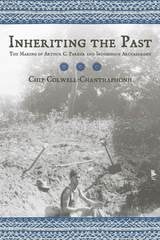
Inheriting the Past
The Making of Arthur C. Parker and Indigenous ArchaeologyChip Colwell-Chanthaphonh
University of Arizona Press, 2009
In Inheriting the Past, Chip Colwell-Chanthaphonh examines Parker’s winding career path and asks why it has taken generations for Native peoples to follow in his footsteps. Closely tracing Parker’s life through extensive archival research, Colwell-Chanthaphonh explores how Parker crafted a professional identity and negotiated dilemmas arising from questions of privilege, ownership, authorship, and public participation. How Parker, as well as the discipline more broadly, chose to address the conflict between Native American rights and the pursuit of scientific discovery ultimately helped form archaeology’s moral community.
Parker’s rise in archaeology just as the field was taking shape demonstrates that Native Americans could have found a place in the scholarly pursuit of the past years ago and altered its trajectory. Instead, it has taken more than a century to articulate the promise of an Indigenous archaeology—an archaeological practice carried out by, for, and with Native peoples. As the current generation of researchers explores new possibilities of inclusiveness, Parker’s struggles and successes serve as a singular reference point to reflect on archaeology’s history and its future.
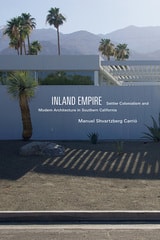
Inland Empire
Settler Colonialism and Modern Architecture in Southern CaliforniaManuel Shvartzberg Carrió
Duke University Press, 2026
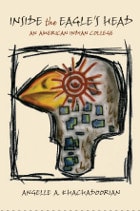
Inside the Eagle's Head
An American Indian CollegeAngelle A. Khachadoorian
University of Alabama Press, 2010
Where tradition meets bureaucracy—Native students redefine education on their own terms.
Inside the Eagle’s Head offers a compelling and deeply human portrait of the Southwestern Indian Polytechnic Institute (SIPI), a federally operated college serving Native American students from across the United States. In it, anthropologist Angelle Khachadoorian draws on years of teaching experience and extensive student interviews to illuminate the challenges and successes of life at SIPI. Far more than an institutional history, this book captures the voices of students navigating a complex educational landscape shaped by federal oversight, tribal identity, and personal ambition.
Through vivid metaphors—SIPI as a family, a prison, a reservation—students articulate their struggles and resilience within a system that is at once empowering and restrictive. Khachadoorian’s analysis reveals how SIPI’s hybrid nature—part community college, part BIA legacy—creates both opportunities and obstacles for its students. With empathy and insight, she explores how young Native Americans forge identity, community, and purpose in a setting few outsiders understand. Inside the Eagle’s Head is essential reading for educators, policymakers, and anyone interested in the intersection of Indigenous education, federal institutions, and student agency. It is a powerful testament to the transformative potential of listening to students’ stories.
Inter/Nationalism
Decolonizing Native America and PalestineSteven Salaita
University of Minnesota Press, 2016
“The age of transnational humanities has arrived.” According to Steven Salaita, the seemingly disparate fields of Palestinian Studses and American Indian studies have more in common than one may think. In Inter/Nationalism, Salaita argues that American Indian and Indigenous studies must be more central to the scholarship and activism focusing on Palestine.
Salaita offers a fascinating inside account of the Boycott, Divestment, and Sanctions (BDS) movement—which, among other things, aims to end Israel’s occupation of Palestinian land. In doing so, he emphasizes BDS’s significant potential as an organizing entity as well as its importance in the creation of intellectual and political communities that put Natives and other colonized peoples such as Palestinians into conversation. His discussion includes readings of a wide range of Native poetry that invokes Palestine as a theme or symbol; the speeches of U.S. President Andrew Jackson and early Zionist thinker Ze’ev Jabotinsky; and the discourses of “shared values” between the United States and Israel.
Inter/Nationalism seeks to lay conceptual ground between American Indian and Indigenous studies and Palestinian studies through concepts of settler colonialism, indigeneity, and state violence. By establishing Palestine as an indigenous nation under colonial occupation, this book draws crucial connections between the scholarship and activism of Indigenous America and Palestine.
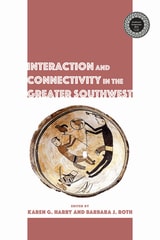
Interaction and Connectivity in the Greater Southwest
Karen Harry
University Press of Colorado, 2018
The book observes social interactions’ role in the diffusion of ideas and material culture; the way different social units, especially households, interacted within and between communities; and the importance of interaction and interconnectivity in understanding the archaeology of the Southwest’s northern periphery. Chapters demonstrate a movement away from strictly economic-driven models of social connectivity and interaction and illustrate that members of social groups lived in dynamic situations that did not always have clear-cut and unwavering boundaries. Social connectivity and interaction were often fluid, changing over time.
Interaction and Connectivity in the Greater Southwest is an impressive collection of established and up-and-coming Southwestern archaeologists collaborating to strengthen the theoretical underpinnings of the discipline. It will be of interest to professional and academic archaeologists, as well as researchers with interests in diffusion, identity, cultural transmission, borders, large-scale interaction, or social organization.
Contributors:
Richard V. N. Ahlstrom, James R. Allison, Jean H. Ballagh, Catherine M. Cameron, Richard Ciolek-Torello, John G. Douglass, Suzanne L. Eckert, Hayward H. Franklin, Patricia A. Gilman, Dennis A. Gilpin, William M. Graves, Kelley A. Hays-Gilpin, Lindsay D. Johansson, Eric Eugene Klucas, Phillip O. Leckman, Myles R. Miller, Barbara J. Mills, Matthew A. Peeples, David A. Phillips Jr., Katie Richards, Heidi Roberts, Thomas R. Rocek, Tammy Stone, Richard K. Talbot, Marc Thompson, David T. Unruh, John A. Ware, Kristina C. Wyckoff
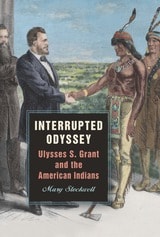
Interrupted Odyssey
Ulysses S. Grant and the American IndiansMary Stockwell
Southern Illinois University Press, 2018
In the late 1860s, before becoming president, Grant collaborated with Ely Parker, a Seneca Indian who became his first commissioner of Indian affairs, on a plan to rescue the tribes from certain destruction. Grant hoped to save the Indians from extermination by moving them to reservations, where they would be guarded by the U.S. Army, and welcoming them into the nation as American citizens. By so doing, he would restore the executive branch’s traditional authority over Indian policy that had been upended by Jackson.
In Interrupted Odyssey, Stockwell rejects the common claim in previous Grant scholarship that he handed the reservations over to Christian missionaries as part of his original policy. In part because Grant’s plan ended political patronage, Congress overturned his policy by disallowing Army officers from serving in civil posts, abandoning the treaty system, and making the new Board of Indian Commissioners the supervisors of the Indian service. Only after Congress banned Army officers from the Indian service did Grant place missionaries in charge of the reservations, and only after the board falsely accused Parker of fraud before Congress did Grant lose faith in his original policy.
Stockwell explores in depth the ousting of Parker, revealing the deep-seated prejudices that fueled opposition to him, and details Grant’s stunned disappointment when the Modoc murdered his peace commissioners and several tribes—the Comanche, Kiowa, Cheyenne, and Sioux—rose up against his plans for them.
Though his dreams were interrupted through the opposition of Congress, reformers, and the tribes themselves, Grant set his country firmly toward making Indians full participants in the national experience. In setting Grant’s contributions against the wider story of the American Indians, Stockwell’s bold, thoughtful reappraisal reverses the general dismissal of Grant’s approach to the Indians as a complete failure and highlights the courage of his policies during a time of great prejudice.

Intimate
An American Family Photo AlbumPaisley Rekdal
Tupelo Press, 2012
Invasion of Indian Country in the Twentieth Century
American Capitalism and Tribal Natural ResourcesDonald Fixico
University Press of Colorado, 1998
In The Invasion of Indian Country in the 20th Century, Donald Fixico details the course of this struggle, providing a wealth of information on the resources possessed by individual tribes and the way in which they were systematically defrauded and stripped of these resources. Fixico contends that federal policies originally devised to protect Indian interests ironically worked against the Indian nations as the tribes employed new tactics with the Council of Energy Resources Tribes, using the law in courts and applying aggressive business leadership to combat the capitalist invasion by mainstream America.
Fixico's analysis of this war being waged throughout the century and today serves as an indispensable reference tool for anyone interested in Native American history and current government policy with regard to Indian lands.
Invasion of Indian Country in the Twentieth Century
American Capitalism and Tribal Natural Resources, Second EditionDonald Fixico
University Press of Colorado, 2012

Iowa Place Names Of Indian Origin
Virgil J. Vogel
University of Iowa Press, 1983
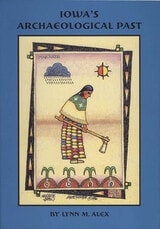
Iowa's Archaeological Past
Lynn M. Alex
University of Iowa Press, 2000
The core of this book—which includes many historic photographs and maps as well as numerous new maps and drawings and a generous selection of color photos—explores in detail what archaeologists have learned from studying the state's material remains and their contexts. Examining the projectile points, potsherds, and patterns that make up the archaeological record, Alex describes the nature of the earliest settlements in Iowa, the development of farming cultures, the role of the environment and environmental change, geomorphology and the burial of sites, interaction among native societies, tribal affiliation of early historic groups, and the arrival and impact of Euro-Americans. In a final chapter, she examines the question of stewardship and the protection of Iowa's many archaeological resources.
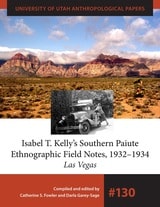
Isabel T. Kelly's Southern Paiute Ethnographic Field Notes, 1932-1934
Compiled and Edited by Catherine S. Fowler and Darla Garey-Sage
University of Utah Press, 2016
University of Utah Anthropological Paper No. 130
This publication presents the first volume (Las Vegas) of the early ethnographic field work of anthropologist Isabel T. Kelly. From 1932 to 1934, Kelly interviewed thirty Southern Paiute people from southeastern California, southern Nevada, and southern Utah about “the old ways.” During this time, she filled thirty-one notebooks, made several maps, took roughly fifty photographs, collected nearly 300 ethnobotanical specimens, purchased and shipped over 400 ethnographic artifacts to museums, and traveled more than 7,000 miles. Her notes comprise the most extensive primary ethnographic documentation of Southern Paiute/Chemehuevi lifeways of the middle to late nineteenth and early twentieth centuries existing today.
Although Kelly intended to publish these notes, she was unable to before her death. Fowler and Garey-Sage have now synthesized the first set of these handwritten field notes and sketches, providing commentary and illustrations to put them in context for the modern reader. Kelly’s data, most of which could not be gathered anew today, are offered here for the use of generations to come.
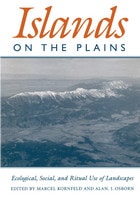
Islands On The Plains
Ecological, Social, and Ritual Use of LandscapesEdited by Marcel Kornfeld and Alan J. Osborn
University of Utah Press, 2003
Scattered throughout the Great Plains are many isolated areas of varying size and ecology, quite distinct from the surrounding grasslands. Such spaces can be uplands like the Black Hills, low hills like the Nebraska Sand Hills, or linear areas such as shallow river valleys and deeply incised canyons. While the notion of “islands” is not a new one among ecologists, its application in Plains archaeology is.
The contributors to this volume seek to illustrate the different ways that the spatial, structural, and temporal nature of islands conditioned the behavior and adaptation of past Plains peoples. This as a first step toward a more detailed analysis of habitat variation and its effects on Plains cultural dynamics and evolution. Although the emphasis is on ecology, several chapters also address social and ideological islands in the form of sacred sites and special hunting grounds.

Itch Like Crazy
Wendy Rose
University of Arizona Press, 2002
In her latest work, Rose returns to these major motifs while exploring a new dimension: using poetry as a tool to delve into the buried secrets of family history—and all of American history as well. Confronting questions of personal history that itch like crazy—the irritations that drive human existence—she acknowledges and pays tribute to her Indian and European ancestors without hiding her anger with American society.
Rose's poems are strong political and social statements that have a distinctly narrative flavor. Here are Europeans who first set foot on America's shores while Taino Indians greeted them as if they were visiting neighbors; Hopi and Miwok "Clan Mothers, grand-daughters, all those the missionaries erased"; and European forebears who as settlers pushed their way relentlessly west. Through her vivid imagery, she speaks to and for these ancestors with a sense of loss and an itching caused by the biases provoked by ethnic chauvinism.
Itch Like Crazy is a finely crafted literary work that is also a manifesto addressing contacts and conflicts in the history of Indian-white relations. By presenting another view of U.S. history and its impact on the Native Americans who are her ancestors, it offers a new appreciation of the issue of "tribal identity" that too often faces Native peoples of the Americas—and is too often misunderstood by Euro-American society.