Results by title
328 books match the query 'Islam' and 63 start with i
Islamic Africa 4.2
Scott Reese
Northwestern University Press, 2013
Islamic Africa promotes interaction between scholars of Islam and Africa across all continents and across historical periods. We welcome papers on any aspect of Islam and Muslim life pertaining to Africa and/or Africans from the humanities and the social sciences, especially those originating from the African continent.
Islamic Africa 5.1
Scott Reese
Northwestern University Press, 2014
Islamic Africa promotes interaction between scholars of Islam and Africa across all continents and across historical periods. We welcome papers on any aspect of Islam and Muslim life pertaining to Africa and/or Africans from the humanities and the social sciences, especially those originating from the African continent.
Islamic Africa 5.2
Scott Reese
Northwestern University Press, 2014
Islamic Africa promotes interaction between scholars of Islam and Africa across all continents and across historical periods. We welcome papers on any aspect of Islam and Muslim life pertaining to Africa and/or Africans from the humanities and the social sciences, especially those originating from the African continent.
Islamic Divorce in the Twenty-First Century
A Global PerspectiveErin E. Stiles
Rutgers University Press, 2022
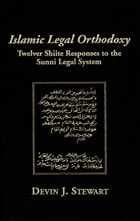
Islamic Legal Orthodoxy
Devin J Stewart
University of Utah Press, 2007
One of the most far-reaching developments in the history of Islam was the rise of the four classic Sunni schools of law between the ninth and eleventh centuries CE. Consolidation of these schools went hand in hand with the establishment of jurists’ dominance over religious discourse and social institutions. Orthodoxy came to be defined as the consensus (ijma’) of the Sunni jurists. Devin Stewart argues that it is to the margins of the emerging system that investigators must look to understand its historical dynamics. The development of Twelve Shi’ite jurisprudence in relation and reaction to the Sunni schools is particularly informative.
In Islamic Legal Orthodoxy, Stewart explores the process by which Shi’ite jurists participated in the mainstream of Islamic jurisprudence and were influenced by Sunni legal doctrines. He identifies three main reactions to Sunni legal definitions of othodoxy and the concept of consensus on which it was based. The Akhbaris rejected Sunni legal consensus and juristic authority for a scripture-based system; many Shi’ite outwardly accepted the ground rules of Sunni legal consensus and joined the Shafi’i school of jurisprudence; a third option was to adopt the concept of consensus to create a “fifth,” Shi’ite, legal system.
The development of the Sunni legal system effectively set the ground rules for the marginal sect’s negotiation of their identity with respect to Islamic legal orthodoxy. Accordingly, Shi’ite jurists developed a legal institution that is structurally similar to the four Sunni madhhabs and even today serves as means to position themselves in the Muslim world. Stewart points to an underlying tension in Shi’ite intellectual history between assimilationist and nativist impulses in the debate over consensus, dissmulation (taqiyyah) and the lives of certain Shi’ite scholars who lived and studies among Sunnis.
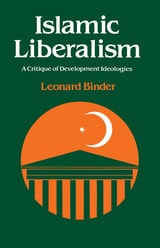
Islamic Liberalism
A Critique of Development IdeologiesLeonard Binder
University of Chicago Press, 1988
The Islamic political community presents special problems to the development of an indigenous liberalism. That community is conceived of as divinely ordained, and its notions of the good are to be derived from scriptural revelation, not arrived at through rational discourse. Liberal politics would seem to stand little chance of surviving in such an atmosphere, let alone thriving.
Binder responds to the challenge of Edward Said's critique of Orientalism, of a range of neo-Marxian development theorists, of Sayyid Qutb's fundamentalist vision, of Samir Amin's vision of Egypt's role in the Arab awakening, of Tariq al-Bishri's new populism, of Zaki Najib Mahmud's pragmatism, and the structuralism of Arkoun and Laroui. The deconstruction of these varied texts produces a number of persuasive hermeneutical conclusions that are sequentially woven together in a critical argument that refocuses our attention on the central question of political freedom and democracy. In the course of constructing this argument, Binder reopens the dialogue between Western modernity and Islamic authenticity and reveals the surprising extent to which there is a convergent interest in liberal, democratic, civil society. Finally, in a concluding chapter, he addresses the prospects for liberalism in the three major bourgeois states of Islam—Egypt, Turkey, and Iran.

Islamic Modernism, Nationalism, and Fundamentalism
Episode and DiscourseMansoor Moaddel
University of Chicago Press, 2005
An ambitious comparative historical analysis of ideological production in the Islamic world from the mid-1800s to the present, Mansoor Moaddel's Islamic Modernism, Nationalism, and Fundamentalism provides a unique perspective for understanding the social conditions of these discourses. Moaddel characterizes these movements in terms of a sequence of cultural episodes characterized by ideological debates and religious disputations, each ending with a revolution or military coup. Understanding how the leaders of these movements formulated their discourses is, for Moaddel, the key to understanding Middle Eastern history. This premise allows him to unlock for readers the historical process that started with Islamic modernism and ended with fundamentalism.
Islamic Reform and Political Change in Northern Nigeria
Roman Loimeier
Northwestern University Press, 2011
Loimeier's careful scholarship combines astute readings of the work of previous scholars--both published and unpublished--with archival material and the findings of his own fieldwork in Nigeria. His work fills a substantial gap in contemporary Nigerian studies. This book provides invaluable and essential reading for serious students of Nigerian politics and of Islamic movements in Africa.

Islamic Spain, 1250 to 1500
L. P. Harvey
University of Chicago Press, 1990
"Harvey not only examines the politics of the Nasrids, but also the Islamic communities in the Christian kingdoms of the peninsula. This innovative approach breaks new ground, enables the reader to appreciate the situation of all Spanish Muslims and is fully vindicated. . . . An absorbing and thoroughly informed narrative."—Richard Hitchcock, Times Higher Education Supplement
"L. P. Harvey has produced a beautifully written account of an enthralling subject."—Peter Linehan, The Observer
Islamically Integrated Psychotherapy
Uniting Faith and Professional PracticeCarrie York Al-Karam
Templeton Press, 2018
Integrating the Islamic faith with modern psychotherapy is at the forefront of the spiritually integrated psychotherapy movement. To bring this work to wider attention and to promote its continuation, Dr. Carrie York Al-Karam has brought together the present volume of nine essays, each of which is written by a Muslim clinician who practices Islamically integrated psychotherapy (IIP)—a modern approach that unites the teachings, principles, and interventions of the faith with Western therapeutic approaches.
As delineated in the Introduction, IIP has emerged from a variety of domains including the psychology of religion and spirituality, multicultural psychology and counseling, transpersonal psychology, Muslim Mental Health, and Islamic Psychology. The individual chapters then describe a variety of ways IIP is practiced by Muslim clinicians in their service provision with Muslim clients.
The contributors discuss a wide range of topics, such as how Islam can be viewed as a system for psychological wellbeing, or a “science of the soul”; what marital counseling can look like from an Islamically-integrated perspective; Prophet Mohammed as a psycho-spiritual exemplar in a new approach called The HEART Method; the use of Quranic stories in family therapy; as well as using Islamic teachings when working with Muslim children and adolescents.
A description of the various approaches is supplemented with discussions of their theoretical underpinnings as well as research-based recommendations for advancing clinical application. What emerges is a vital resource for Muslim and non-Muslim clinicians alike as well as the lay Muslim reader wanting to know more about how the Islamic faith and psychotherapy are engaging with each other in a modern clinical context.
Islamism and Modernism
The Changing Discourse in IranBy Farhang Rajaee
University of Texas Press, 2007
While many previous books have probed the causes of Iran's Islamic Revolution of 1979, few have focused on the power of religion in shaping a national identity over the decades leading up to it. Islamism and Modernism captures the metamorphosis of the Islamic movement in Iran, from encounters with Great Britain and the United States in the 1920s through twenty-first-century struggles between those seeking to reform Islam's role and those who take a hardline defensive stance.
Capturing the views of four generations of Muslim activists, Farhang Rajahee describes how the extremism of the 1960s brought more confidence to concerned Islam-minded Iranians and radicalized the Muslim world while Islamic alternatives to modernity were presented. Subsequent ideologies gave rise to the revolution, which in turn has fed a restructuring of Islam as a faith rather than as an ideology.
Presenting thought-provoking discussions of religious thinkers such as Ha'eri, Burujerdi, Bazargan, and Shari'ati, along with contemporaries such as Kadivar, Soroush, and Shabestari, the author sheds rare light on the voices fueling contemporary Islamic thinking in Iran. A comprehensive study of these interwoven aspects of politics, religion, society, and identity, Islamism and Modernism offers crucial new insight into the aftermath of the Iranian Constitutional Revolution fought one hundred years ago—and its ramifications for the newest generation to face the crossroads of modernity and Islamic discourse in modern Iran today.
Islamism in the Shadow of al-Qaeda
By François Burgat
University of Texas Press, 2008
A renowned authority on Islamic movements, François Burgat lived for eighteen years in the Arab world, including his time as director of the French Center for Archaeology and Social Sciences at Yemen. He also dedicated many months to fieldwork in North Africa. Bringing Burgat's decades of expertise to the complex dialogues that have marked the post-9/11 world, Islamism in the Shadow of al-Qaeda delivers much-needed clarity and historical perspective.
In Burgat's eyes, most of the West's political and media rhetoric has only fueled al-Qaeda's case, revealing a woeful lack of comprehension regarding the violent authoritarianism that divides the Middle East and creates a breeding ground for terrorism. Islamism in the Shadow of al-Qaeda provides a primer of the three eras of political Islam, from the 1928 founding of the Muslim Brothers to the rise of post-colonial dictatorships and the current radicalization of "Generation al-Qaeda." Offering a new roadmap for stability, Burgat bridges the ideologies—political, religious, and cultural—that must be traversed if the deadly sectarianism is to be superseded.
Islamists in a Zionist Coalition
The Political and Religious OriginsUriya Shavit
Rutgers University Press, 2025