Results by title
1993 books match the query 'Latin America' and 80 start with i
Indigenous Movements, Self-Representation, and the State in Latin America
Edited by Kay B. Warren and Jean E. Jackson
University of Texas Press, 2003
Throughout Latin America, indigenous peoples are responding to state violence and pro-democracy social movements by asserting their rights to a greater measure of cultural autonomy and self-determination. This volume's rich case studies of movements in Colombia, Guatemala, and Brazil weigh the degree of success achieved by indigenous leaders in influencing national agendas when governments display highly ambivalent attitudes about strengthening ethnic diversity.
The contributors to this volume are leading anthropologists and indigenous activists from the United States and Latin America. They address the double binds of indigenous organizing and "working within the system" as well as the flexibility of political tactics used to achieve cultural goals outside the scope of state politics. The contributors answer questions about who speaks for indigenous communities, how indigenous movements relate to the popular left, and how conflicts between the national indigenous leadership and local communities play out in specific cultural and political contexts. The volume sheds new light on the realities of asymmetrical power relations and on the ways in which indigenous communities and their representatives employ Western constructions of subjectivity, alterity, and authentic versus counterfeit identity, as well as how they manipulate bureaucratic structures, international organizations, and the mass media to advance goals that involve distinctive visions of an indigenous future.
Indigenous Revolution in Ecuador and Bolivia, 1990–2005
Jeffery M. Paige
University of Arizona Press, 2020
Uprisings by indigenous peoples of Ecuador and Bolivia between 1990 and 2005 overthrew the five-hundred-year-old racial and class order inherited from the Spanish Empire. It started in Ecuador with the Great Indigenous Uprising, which was fought for cultural and economic rights. A few years later massive indigenous mobilizations began in Bolivia, culminating in 2005 with the election of Evo Morales, the first indigenous president.
Jeffrey M. Paige, an internationally recognized authority on the sociology of revolutionary movements, interviewed forty-five indigenous leaders who were actively involved in the uprisings. The leaders recount how peaceful protest and electoral democracy paved the path to power. Through the interviews, we learn how new ideologies of indigenous socialism drew on the deep commonalities between the communal dreams of their ancestors and the modern ideology of democratic socialism. This new discourse spoke to the people most oppressed by both withering racism and neoliberal capitalism.
Emphasizing mutual respect among ethnic groups (including the dominant Hispanic group), the new revolutionary dynamic proposes a communal worldview similar to but more inclusive than Western socialism because it adds indigenous cultures and nature in a spiritual whole. Although absent in the major revolutions of the past century, the themes of indigenous revolution—democracy, indigeneity, spirituality, community, and ecology—are critically important.
Paige’s interviews present the powerful personal experiences and emotional intensity of the revolutionary leadership. They share the stories of mass mobilization, elections, and indigenous socialism that created a new form of twenty-first-century revolution with far-reaching applications beyond the Andes.
Indigenous Struggle at the Heart of Brazil
State Policy, Frontier Expansion, and the Xavante Indians, 1937–1988Seth Garfield
Duke University Press, 2001
Garfield explains how state officials, eager to promote capital accumulation, social harmony, and national security on the western front, sought to delimit indigenous reserves and assimilate native peoples. Yet he also shows that state efforts to celebrate Indians as primordial Brazilians and nationalist icons simultaneously served to underscore and redefine ethnic difference. Garfield explores how various other social actors—elites, missionaries, military officials, intellectuals, international critics, and the Indians themselves—strove to remold this multifaceted project. Paying particular attention to the Xavante’s methods of engaging state power after experience with exile, territorial loss, and violence in the “white” world, Garfield describes how they emerged under military rule not as the patriotic Brazilians heralded by state propagandists but as a highly politicized ethnic group clamoring for its constitutional land rights and social entitlements.
Indigenous Struggle at the Heart of Brazil will interest not only historians and anthropologists but also those studying nationbuilding, Brazil, Latin America, comparative frontiers, race, and ethnicity.
Indigenous Visual Cultures in Latin America
Seeing, Being, and MeaningEdited by Tamara L. Bray and Carolyn Dean
University of Texas Press, 2026
Reframing the study of Indigenous visual cultures, this volume explores how images and objects generate affect and relation in non-Western contexts, foregrounding alternative modes of material engagement and meaning-making.
While traditional approaches to Indigenous visual cultures have often centered on iconography and representation, this volume turns toward other ways that images and objects act in the world. Indigenous Visual Cultures in Latin America explores how material productions function not merely as signs that point elsewhere but as agents that help shape relationships, environments, and affective experience.
Spanning Mesoamerica, the Andes, and Amazonia from 1500 BCE to the present, the chapters examine how meaning may reside in materials themselves; how making is a form of exchange between maker and matter; and how visual forms participate in configuring relations among humans, ancestors, deities, and place. These works are not passive containers of meaning, but charged presences—generative forces within ongoing worlds. Attuned to Indigenous ways of knowing and being, the volume invites readers to think beyond the frame, beyond the image, and beyond representation itself.

Indigenous Writings from the Convent
Negotiating Ethnic Autonomy in Colonial MexicoMónica Díaz
University of Arizona Press, 2010
While colonial sources that refer to indigenous women are not scant, documents in which women emerge as agents who actively participate in shaping their own identity are rare. Looking at this minority agency—or subaltern voice—in various religious discourses exposes some central themes. It shows that an indigenous identity recast in Catholic terms was able to be effectively recorded and that the religious participation of these women at a time when indigenous parishes were increasingly secularized lent cohesion to that identity.
Indigenous Writings from the Convent examines ways in which indigenous women participated in one of the most prominent institutions in colonial times—the Catholic Church—and what they made of their experience with convent life. This book will appeal to scholars of literary criticism, women’s studies, and colonial history, and to anyone interested in the ways that class, race, and gender intersected in the colonial world.
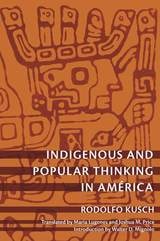
Indigenous and Popular Thinking in América
Rodolfo Kusch
Duke University Press, 2010
Indigenous and Popular Thinking in América is a record of Kusch's attempt to immerse himself in the indigenous ways of knowing and being. At first glance, his methodology resembles ethnography. He speaks with and observes indigenous people and mestizos in Peru, Bolivia, and Argentina. He questions them about their agricultural practices and economic decisions; he observes rituals; he asks women in the market the meaning of indigenous talismans; he interviews shamans; he describes the spatial arrangement and the contents of shrines, altars, and temples; and he reproduces diagrams of archaeological sites, which he then interprets at length. Yet he does not present a "them" to a putative "us." Instead, he offers an inroad to a way of thinking and being that does not follow the logic or fit into the categories of Western social science and philosophy. In his introduction, Walter D. Mignolo discusses Kusch's work and its relation to that of other twentieth-century intellectuals, Argentine history, and contemporary scholarship on the subaltern and decoloniality.

Industry, the State, and Public Policy in Mexico
By Dale Story
University of Texas Press, 1986
The industrialization process in Mexico began before that of any other nation in Latin America except Argentina, with the most rapid expansion of new industrial firms occurring in the 1930s and 1940s, and import substitution in capital goods evident as early as the late 1930s. Though Mexico’s trade relations have always been dependent on the United States, successive Mexican presidents in the postwar period attempted to control the penetration of foreign capital into Mexican markets.
In Industry, the State, and Public Policy in Mexico, Dale Story, recognizing the significance of the Mexican industrial sector, analyzes the political and economic role of industrial entrepreneurs in postwar Mexico. He uses two original data sets—industrial production data for 1929–1983 and a survey of the political attitudes of leaders of the two most important industrial organizations in Mexico—to address two major theoretical arguments relating to Latin American development: the meaning of late and dependent development and the nature of the authoritarian state. Story accepts the general relevance of these themes to Mexico but asserts that the country is an important variant of both.
With regard to the authoritarian thesis, the Mexican authoritarian state has demonstrated some crucial distinctions, especially between popular and elite sectors. The incorporation of the popular sector groups has closely fit the characteristics of authoritarianism, but the elite sectors have operated fairly independently of state controls, and the government has employed incentives or inducements to try to win their cooperation.
In short, industrialists have performed important functions, not only in accumulating capital and organizing economic enterprises but also by bringing together the forces of social change. Industrial entrepreneurs have emerged as a major force influencing the politics of growth, and the public policy arena has become a primary focus of attention for industrialists since the end of World War II.
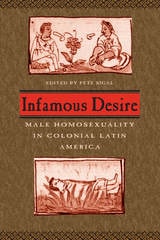
Infamous Desire
Male Homosexuality in Colonial Latin AmericaEdited by Pete Sigal
University of Chicago Press, 2003
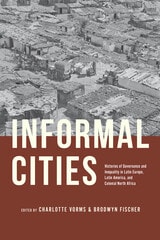
Informal Cities
Histories of Governance and Inequality in Latin Europe, Latin America, and Colonial North AfricaEdited by Charlotte Vorms and Brodwyn Fischer
University of Chicago Press, 2025
An empirically rich reconstruction of how informality became an intrinsic part of urban life across three continents.
Over a quarter of the world’s urban population lives in informal settlements. While informality as a concept has been widely debated, we still know very little about the phenomenon’s urban history or how that history has shaped the evolution of world cities. Spotlighting the historical processes that have created and sustained urban informality for more than a century, editors Charlotte Vorms and Brodwyn Fischer and this volume’s contributors reveal informality as an intrinsic feature of urbanity, shaping not only cities across the globe but also deeper processes of state formation, socioeconomic stratification, and political struggle.
The volume brings together case studies spanning more than a hundred years, drawn from Latin America (Brazil, Chile, Venezuela, and Mexico), Northern Africa (Morocco and Algeria), and Latin Europe (France, Spain, and Italy). Together, they show that informality is neither a contemporary crisis nor a predicament unique to the Global South. Topics include the origins of informal settlements and their relationship with law and institutional power; grassroots efforts to legitimize shantytown communities; mass social movements for rights to the city; the role that shantytown removal campaigns played in populist politics, fascism, and colonialism; and the ways that informality perpetuated racial and ethnic inequalities. Informal Cities is an indispensable guide to the complex and fraught terrain of urban informality in its many historical guises.
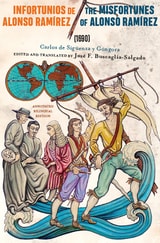
Infortunios de Alonso Ramirez / The Misfortunes of Alonso Ramirez (1690)
Annotated Bilingual EditionBuscaglia-Salgado, José F
Rutgers University Press, 2018
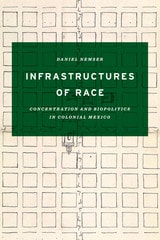
Infrastructures of Race
Concentration and Biopolitics in Colonial MexicoBy Daniel Nemser
University of Texas Press, 2017
Winner, Humanities Book Prize, Mexico Section of the Latin American Studies Association, 2018
Many scholars believe that the modern concentration camp was born during the Cuban war for independence when Spanish authorities ordered civilians living in rural areas to report to the nearest city with a garrison of Spanish troops. But the practice of spatial concentration—gathering people and things in specific ways, at specific places, and for specific purposes—has a history in Latin America that reaches back to the conquest. In this paradigm-setting book, Daniel Nemser argues that concentration projects, often tied to urbanization, laid an enduring, material groundwork, or infrastructure, for the emergence and consolidation of new forms of racial identity and theories of race.
Infrastructures of Race traces the use of concentration as a technique for colonial governance by examining four case studies from Mexico under Spanish rule: centralized towns, disciplinary institutions, segregated neighborhoods, and general collections. Nemser shows how the colonial state used concentration in its attempts to build a new spatial and social order, and he explains why the technique flourished in the colonies. Although the designs for concentration were sometimes contested and short-lived, Nemser demonstrates that they provided a material foundation for ongoing processes of racialization. This finding, which challenges conventional histories of race and mestizaje (racial mixing), promises to deepen our understanding of the way race emerges from spatial politics and techniques of population management.
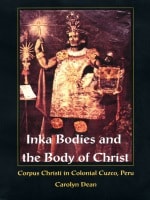
Inka Bodies and the Body of Christ
Corpus Christi in Colonial Cuzco, PeruCarolyn Dean
Duke University Press, 1999
As Dean clearly illustrates, the central rite of the festival—the taking of the Eucharist—symbolized both the acceptance of Christ and the power of the colonizers over the colonized. The most remarkable of Andean celebrants were those who appeared costumed as the vanquished Inka kings of Peru’s pagan past. Despite the subjugation of the indigenous population, Dean shows how these and other Andean nobles used the occasion of Corpus Christi as an opportunity to construct new identities through tinkuy, a native term used to describe the conjoining of opposites. By mediating the chasms between the Andean region and Europe, pagans and Christians, and the past and the present, these Andean elites negotiated a new sense of themselves. Dean moves beyond the colonial period to examine how these hybrid forms of Inka identity are still evident in the festive life of modern Cuzco.
Inka Bodies and the Body of Christ offers the first in-depth analysis of the culture and paintings of colonial Cuzco. This volume will be welcomed by historians of Peruvian culture, art, and politics. It will also interest those engaged in performance studies, religion, and postcolonial and Latin American studies.
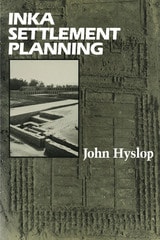
Inka Settlement Planning
By John Hyslop
University of Texas Press, 1990
Before the Spanish conquest in the sixteenth century A.D., the Inka Empire stretched along the Pacific side of South America, all the way from Ecuador to northwest Argentina. Though today many Inka researchers focus on the imperial capital of Cuzco, Peru, and surrounding areas, ruins of Inka settlements abound throughout the vast territory of the former empire and offer many clues about how the empire was organized, managed, and defended. These outlying settlements, as well as those in the Cuzco area, form the basis for John Hyslop's detailed study Inka Settlement Planning.
Using extensive aerial photography and detailed site maps, Hyslop studies the design of several dozen settlements spread throughout the empire. In addition to describing their architecture and physical infrastructure, he gives special emphasis to the symbolic aspects of each site's design. Hyslop speculates that the settlement plans incorporate much iconography expressive of Inka ideas about the state, the cosmos, and relationships to non-Inka peoples—iconography perhaps only partially related to the activities that took place within the sites. And he argues that Inka planning concepts applied not only to buildings but also to natural features (stone outcrops, water sources, and horizons) and specialized landscaping (terracing).
Of interest to a wide readership in archaeology, architecture, urbanization, empire building, and Andean travel, Inka Settlement Planning charts one of Native America's greatest achievements.

Inside Abstraction
Interpreting Inka Visual CultureCarolyn Dean
University of Texas Press, 2025
2026 PROSE Award for Art History And Criticism, Association of American Publishers
Illuminating the abstract art of the Inka, what it conveys about Inka values, and its relationship to those who view it.
Inka visual culture is unusual in its tendency toward abstraction. Public stonework, vessels used at state feasts, garments worn by the imperial elite—these objects announcing status and power are adorned with geometric designs that refuse figuration. After searching in vain for hidden referents, many scholars have largely given up the search for meaning.
Inside Abstraction develops a novel interpretation. Eminent art historian Carolyn Dean proposes that Inka geometries are neither ornamental nor coded depictions of other objects. Rather, Dean shows that in the Andean world, the designs were functionally self-aware, possessing perspectives of their own, quite literally looking back at and addressing viewers directly. Further, Dean contends that these agent-abstractions were teachers, conveying particular messages concerning social hierarchy: the relations among geometries and colors instructed viewers as to their own proper social relations. Inka designs thereby served imperial aims by wordlessly communicating the state’s values and demands for submission. Extensively illustrated and rigorously argued, Inside Abstraction is a dramatic step forward in our understanding of Inka art and political order.
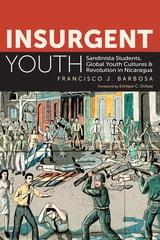
Insurgent Youth
Sandinista Students, Global Youth Cultures, and Revolution in NicaraguaFrancisco J. Barbosa
University Press of Colorado, 2026
This history of the Sandinista student movement is a window into the cultural milieu that produced a revolution where it seemed least likely to occur: among the youth of a country under the firm grip of a US-backed dictatorship whose power was secured by one of the best armed and most highly trained military forces in the region. By examining the articulation of political, gendered, and age-specific identities within the revolutionary process, Insurgent Youth sheds light on the everyday struggles of young Nicaraguans.
In the early 1970s a new emphasis on personal freedom and pleasure, under the influence of a global counterculture, challenged Sandinista gender ideology, especially masculinity, from within. This shift transformed the social world of Nicaraguan youth in general and Sandinista students in particular, eventually affecting the character of clandestine struggle and debates over revolutionary praxis within the Sandinista National Liberation Front (FSLN). Insurgent Youthshows how this new youth identity, which included the classic 1960s triumvirate of “sex, drugs, and rock ‘n’ roll,” constituted a social vernacular among young Nicaraguans of all classes—a common language and array of social practices that ultimately aided FSLN recruitment efforts among working-class youth. At the same time, this new identity posed a danger to the movement in that it embodied a tacit questioning of both mainstream and Sandinista notions of gender and the political, bringing threatening class and ideological contradictions present within the movement to the surface.
Insurgent Youth places what was happening in Nicaragua into the context of the worldwide student movement, challenging patriarchy and colonialism in Latin America and across the globe. This deep dive into the Nicaraguan revolution and the youth culture surrounding it provides a unique perspective on, and understanding of, modern Latin American history.
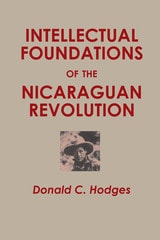
Intellectual Foundations of the Nicaraguan Revolution
By Donald C. Hodges
University of Texas Press, 1986
In this critical study of the thought of Augusto Cesar Sandino and his followers, Donald C. Hodges has discovered a coherent ideological thread and political program, which he succeeds in tracing to Mexican and Spanish sources. Sandino's strong religious inclination in combination with his anarchosyndicalist political ideology established him as a religious seer and moral reformer as well as a political thinker and is the prototype of the curious blend of Marxism and Christianity of the late twentieth-century Nicaraguan government, the Frente Sandinista de Liberación Nacional.
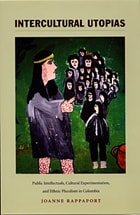
Intercultural Utopias
Public Intellectuals, Cultural Experimentation, and Ethnic Pluralism in ColombiaJoanne Rappaport
Duke University Press, 2005
Intercultural Utopias centers on southwestern Colombia’s Cauca region, a culturally and linguistically heterogeneous area well known for its history of indigenous mobilization and its pluralist approach to ethnic politics. Rappaport interweaves the stories of individuals with an analysis of the history of the Regional Indigenous Council of Cauca and other indigenous organizations. She presents insights into the movement and the intercultural relationships that characterize it from the varying perspectives of regional indigenous activists, nonindigenous urban intellectuals dedicated to the fight for indigenous rights, anthropologists, local teachers, shamans, and native politicians.
Intermediate Elites in Pre-Columbian States and Empires
Edited by Christina M. Elson and R. Alan Covey
University of Arizona Press, 2006
This is the first volume to consider how individuals subordinate to imperial rulers helped to shape specific forms of state and imperial organization. Taking a broader scope than previous studies, it is one of the few works to systematically address these issues in both Mesoamerica and the Central Andes. It considers how these individuals influenced the long-term development of the largest civilizations of the ancient Americas, opening a new window on the role of intermediate elites in the rise and fall of ancient states and empires worldwide.
The authors demonstrate how such evidence as settlement patterns, architecture, decorative items, and burial patterns reflect the roles of intermediate elites in their respective societies, arguing that they were influential actors whose interests were highly significant in shaping the specific forms of state and imperial organization. Their emphasis on provincial elites particularly shifts examination of early states away from royal capitals and imperial courts, explaining how local elites and royal bureaucrats had significant impact on the development and organization of premodern states.
Together, these papers demonstrate that intricate networks of intermediate elites bound these ancient societies together—and that competition between individuals and groups contributed to their decline and eventual collapse. By addressing current theoretical concerns with agency, resistance to state domination, and the co-option of local leadership by imperial administrators, it offers valuable new insight into the utility of studying intermediate elites.
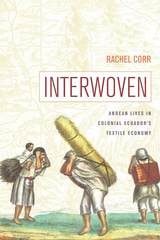
Interwoven
Andean Lives in Colonial Ecuador’s Textile EconomyRachel Corr
University of Arizona Press, 2018
Interwoven is the untold story of indigenous people’s historical experience in colonial Ecuador’s textile economy. It focuses on the lives of Native Andean families in Pelileo, a town dominated by one of Quito’s largest and longest-lasting textile mills. Quito’s textile industry developed as a secondary market to supply cloth to mining centers in the Andes; thus, the experience of indigenous people in Pelileo is linked to the history of mining in Bolivia and Peru.
Although much has been written about colonial Quito’s textile economy, Rachel Corr provides a unique perspective by putting indigenous voices at the center of that history. Telling the stories of Andean families of Pelileo, she traces their varied responses to historical pressures over three hundred years; the responses range from everyday acts to the historical transformation of culture through ethnogenesis. These stories of ordinary Andean men and women provide insight into the lived experience of the people who formed the backbone of Quito’s textile industry.

Intimate Activism
The Struggle for Sexual Rights in Postrevolutionary NicaraguaCymene Howe
Duke University Press, 2013

Intimate Enemies
Landowners, Power, and Violence in ChiapasAaron Bobrow-Strain
Duke University Press, 2007
Weaving together ethnography, archival research, and cultural history, Bobrow-Strain argues that prior to the upheavals of 1994 landowners were already squeezed between increasingly organized indigenous activism and declining political and economic support from the Mexican state. He demonstrates that indigenous mobilizations that began in 1994 challenged not just the economy of estate agriculture but also landowners’ understandings of progress, masculinity, ethnicity, and indigenous docility. By scrutinizing the elites’ responses to land invasions in relation to the cultural politics of race, class, and gender, Bobrow-Strain provides timely insights into policy debates surrounding the recent global resurgence of peasant land reform movements. At the same time, he rethinks key theoretical frameworks that have long guided the study of agrarian politics by engaging political economy and critical human geography’s insights into the production of space. Describing how a carefully defended world of racial privilege, political dominance, and landed monopoly came unglued, Intimate Enemies is a remarkable account of how power works in the countryside.
Intimate Indigeneities
Race, Sex, and History in the Small Spaces of Andean LifeAndrew Canessa
Duke University Press, 2012
Into the Archive
Writing and Power in Colonial PeruKathryn Burns
Duke University Press, 2010
Kathryn Burns argues that the archive itself must be historicized. Using the case of colonial Cuzco, she examines the practices that shaped document-making. Notaries were businessmen, selling clients a product that conformed to local “custom” as well as Spanish templates. Clients, for their part, were knowledgeable consumers, with strategies of their own for getting what they wanted. In this inside story of the early modern archive, Burns offers a wealth of possibilities for seeing sources in fresh perspective.
Invasion and Transformation
Interdisciplinary Perspectives on the Conquest of MexicoRebecca P. Brienen
University Press of Colorado, 2020
Was Moteuczoma really as weak as history portrayed him? As Susan D. Gillespie instead suggests in "Blaming Moteuczoma," the representation of Moteuczoma as a scapegoat for the Aztec defeat can be understood as a product of indigenous resistance and accommodation following the imposition of Spanish colonialism. Chapters address the various roles (real and imagined) of Moteuczoma, Cortés, and Malinche in the fall of the Aztecs; the representation of history in colonial art; and the complex cultural transformations that actually took place.
Including full-color reproductions of seventeenth-century paintings of the Conquest, Invasion and Transformation will appeal to scholars and students of Latin American history and anthropology, art history, colonial literature, and transatlantic studies. Contributors include Rebecca P. Brienen, Louise M. Burkhart, Ximena Chávez Balderas, Constance Cortez, Viviana Diáz Balsera, Martha Few, Susan D. Gillespie, Margaret A. Jackson, Diana Magaloni Kerpel, Matthew Restall, Michael Schreffler.
Inventing Indigenism
Francisco Laso's Image of Modern PeruNatalia Majluf
University of Texas Press, 2021
2023 ALAA Book Award, Association for Latin American Art/Arvey Foundation
A fascinating account of the modern reinvention of the image of the Indian in nineteenth-century literature and visual culture, seen through the work of Peruvian painter Francisco Laso.
One of the outstanding painters of the nineteenth century, Francisco Laso (1823–1869) set out to give visual form to modern Peru. His solemn and still paintings of indigenous subjects were part of a larger project, spurred by writers and intellectuals actively crafting a nation in the aftermath of independence from Spain. In this book, at once an innovative account of modern indigenism and the first major monograph on Laso, Natalia Majluf explores the rise of the image of the Indian in literature and visual culture. Reading Laso’s works through a broad range of sources, Majluf traces a decisive break in a long history of representations of indigenous peoples that began with the Spanish conquest. She ties this transformation to the modern concept of culture, which redefined both the artistic field and the notion of indigeneity. As an abstraction produced through indigenist discourse, an icon of authenticity, and a densely racialized cultural construct, the Indian would emerge as a central symbol of modern Andean nationalisms.
Inventing Indigenism brings the work and influence of this extraordinary painter to the forefront as it offers a broad perspective on the dynamics of art and visual culture in nineteenth-century Latin America.
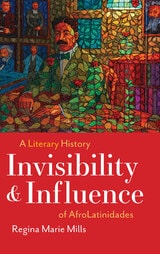
Invisibility and Influence
A Literary History of AfroLatinidadesRegina Marie Mills
University of Texas Press, 2024
2026 Honorable Mention, Latinx Studies Section, Social Sciences Category, Latin American Studies Association (LASA)
A rich literary study of AfroLatinx life writing, this book traces how AfroLatinxs have challenged their erasure in the United States and Latin America over the last century.
Invisibility and Influence demonstrates how a century of AfroLatinx writers in the United States shaped life writing, including memoir, collective autobiography, and other formats, through depictions of a wide range of “Afro-Latinidades.” Using a woman-of-color feminist approach, Regina Marie Mills examines the work of writers and creators often excluded from Latinx literary criticism. She explores the tensions writers experienced in being viewed by others as only either Latinx or Black, rather than as part of their own distinctive communities. Beginning with Arturo (Arthur) Schomburg, who contributed to wider conversations about autobiographical technique, Invisibility and Influence examines a breadth of writers, including Jesús Colón; members of the Young Lords; Piri Thomas; Lukumi santera and scholar Marta Moreno Vega; and Black Mexican American poet Ariana Brown. Mills traces how these writers confront the distorted visions of AfroLatinxs in the United States, Latin America, and the Caribbean, and how they created and expressed AfroLatinx spirituality, politics, and self-identity, often amidst violence. Mapping how AfroLatinx writers create their own literary history, Mills reveals how AfroLatinx life writing shapes and complicates discourses on race and colorism in the Western Hemisphere.
Dialogues in AfroLatinidad Podcast:https://www.youtube.com/watch?v=FIhF-pdeW3A
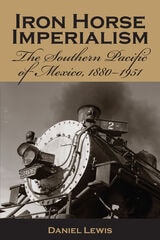
Iron Horse Imperialism
The Southern Pacific of Mexico, 1880-1951Daniel Lewis
University of Arizona Press, 2008

Irrigation and the Cuicatec Ecosystem
A Study of Agriculture and Civilization in North Central OaxacaJoseph W. Hopkins III
University of Michigan Press, 1984
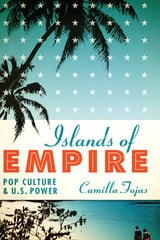
Islands of Empire
Pop Culture and U.S. PowerBy Camilla Fojas
University of Texas Press, 2014
Camilla Fojas explores a broad range of popular culture media—film, television, journalism, advertisements, travel writing, and literature—with an eye toward how the United States as an empire imagined its own military and economic projects. Impressive in its scope, Islands of Empire looks to Cuba, Guam, Hawai‘i, Puerto Rico, and the Philippines, asking how popular narratives about these island outposts expressed the attitudes of the continent throughout the twentieth century. Through deep textual readings of Bataan, Victory at Sea, They Were Expendable, and Back to Bataan (Philippines); No Man Is an Island and Max Havoc: Curse of the Dragon (Guam); Cuba, Havana, and Dirty Dancing: Havana Nights (Cuba); Blue Hawaii, Gidget Goes Hawaiian, and Paradise, Hawaiian Style (Hawai‘i); and West Side Story, Fame, and El Cantante (Puerto Rico), Fojas demonstrates how popular texts are inseparable from U.S. imperialist ideology.
Drawing on an impressive array of archival evidence to provide historical context, Islands of Empire reveals the role of popular culture in creating and maintaining U.S. imperialism. Fojas’s textual readings deftly move from location to location, exploring each island’s relationship to the United States and its complementary role in popular culture. Tracing each outpost’s varied and even contradictory political status, Fojas demonstrates that these works of popular culture mirror each location’s shifting alignment to the U.S. empire, from coveted object to possession to enemy state.
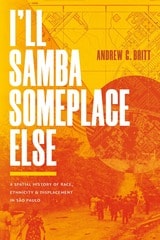
I’ll Samba Someplace Else
A Spatial History of Race, Ethnicity, and Displacement in São PauloAndrew G. Britt
Duke University Press, 2026