Results by title
2335 books match the query 'Modern' and 73 start with i
Intimate Relations
Social Reform and the Late Nineteenth-Century South Asian NovelKrupa Shandilya
Northwestern University Press, 2017
Intimate Subjects
Touch and Tangibility in Britain's Cerebral AgeSimeon Koole
University of Chicago Press, 2024
When, where, and who gets to touch and be touched, and who decides? What do we learn through touch? How does touch bring us closer together or push us apart? These are urgent contemporary questions, but they have their origins in late nineteenth- and early twentieth-century Britain, when new urban encounters compelled intense discussion of what touch was, and why it mattered. In this vividly written book, Simeon Koole excavates the history of these concerns and reveals how they continue to shape ideas about “touch” in the present.
Intimate Subjects takes us to the bustling railway stations, shady massage parlors, all-night coffee stalls, and other shared spaces where passengers, customers, vagrants, and others came into contact, leading to new understandings of touch. We travel in crammed subway cars, where strangers negotiated the boundaries of personal space. We visit tea shops where waitresses made difficult choices about autonomy and consent. We enter classrooms in which teachers wondered whether blind children could truly grasp the world and labs in which neurologists experimented on themselves and others to unlock the secrets of touch. We tiptoe through London’s ink-black fogs, in which disoriented travelers became newly conscious of their bodies and feared being accosted by criminals. Across myriad forgotten encounters such as these, Koole shows, touch remade what it meant to be embodied—as well as the meanings of disability, personal boundaries, and scientific knowledge.
With imagination and verve, Intimate Subjects offers a new way of theorizing the body and the senses, as well as a new way of thinking about embodiment and vulnerability today.

Intimate Subjects
Touch and Tangibility in Britain's Cerebral AgeSimeon Koole
University of Chicago Press, 2024
This is an auto-narrated audiobook version of this book.
The queer recluse, the shambling farmer, the clannish hill folk—white rural populations have long disturbed the American imagination, alternately revered as moral, healthy, and hardworking, and feared as antisocial or socially uncouth. In Peculiar Places, Ryan Lee Cartwright examines the deep archive of these contrary formations, mapping racialized queer and disability histories of white social nonconformity across the rural twentieth-century United States.
Sensationalized accounts of white rural communities’ aberrant sexualities, racial intermingling, gender transgressions, and anomalous bodies and minds, which proliferated from the turn of the century, created a national view of the perversity of white rural poverty for the American public. Cartwright contends that these accounts, extracted and estranged from their own ambivalent forum of community gossip, must be read in kind: through a racialized, materialist queercrip optic of the deeply familiar and mundane. Taking in popular science, documentary photography, news media, documentaries, and horror films, Peculiar Places orients itself at the intersections of disability studies, queer studies, and gender studies to illuminate a racialized landscape both profoundly ordinary and familiar.

Invented Skins
Epidermal Readings in Brazilian Art and LiteratureEduardo Jorge De Oliveira
Diaphanes, 2023
Skin is unique to each individual. Acting as a record, it details aspects of a person and a collective memory. Each skin possesses a sensitivity that touches and it is touched by the world. It mediates temperature fluctuations and is marked by cuts, accidents, and its own history. Skin marks us in the world, giving us the outline of individuals. Invented Skins focuses on the skin to consider the social dimension of texts and images throughout cultural memory, showing that skin is a biological reality that occupies a physical and psychic space but also unfolds in the imagination.
Inventing Modern Adolescence
The Children of Immigrants in Turn-of-the-Century AmericaSarah E. Chinn
Rutgers University Press, 2008
Inventing Philosophy's Other
Phenomenology in AmericaJonathan Strassfeld
University of Chicago Press, 2022
Phenomenology and so-called “continental philosophy” receive scant attention in most American philosophy departments, despite their foundational influence on intellectual movements such as existentialism, post-structuralism, and deconstruction. In Inventing Philosophy’s Other, Jonathan Strassfeld explores this absence, revealing how everyday institutional practices played a determinative role in the development of twentieth-century academic discourse.
Conventional wisdom holds that phenomenology’s absence from the philosophical mainstream in the United States reflects its obscurity or even irrelevance to America’s philosophical traditions. Strassfeld refutes this story as he traces phenomenology’s reception in America, delivering the first systematic historical study of the movement in the United States. He examines the lives and works of Marjorie Grene, Alfred Schütz, Hubert Dreyfus, and Iris Marion Young, among others, while also providing a fresh introduction to phenomenological philosophy.
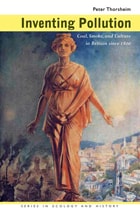
Inventing Pollution
Coal, Smoke, and Culture in Britain since 1800Peter Thorsheim
Ohio University Press, 2006
Britain's supremacy in the nineteenth century depended in large part on its vast deposits of coal. This coal not only powered steam engines in factories, ships, and railway locomotives but also warmed homes and cooked food. As coal consumption skyrocketed, the air in Britain's cities and towns became filled with ever-greater and denser clouds of smoke.
In this far-reaching study, Peter Thorsheim explains that, for much of the nineteenth century, few people in Britain even considered coal smoke to be pollution. To them, pollution meant miasma: invisible gases generated by decomposing plant and animal matter. Far from viewing coal smoke as pollution, most people considered smoke to be a valuable disinfectant, for its carbon and sulfur were thought capable of rendering miasma harmless.
Inventing Pollution examines the radically new understanding of pollution that emerged in the late nineteenth century, one that centered not on organic decay but on coal combustion. This change, as Peter Thorsheim argues, gave birth to the smoke-abatement movement and to new ways of thinking about the relationships among humanity, technology, and the environment.
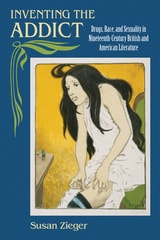
Inventing the Addict
Drugs, Race, and Sexuality in Nineteenth-Century British and American LiteratureSusan Zieger
University of Massachusetts Press, 2008
The notion of addiction has always conjured first-person stories, often beginning with an insidious seduction, followed by compulsion and despair, culminating in recovery and tentative hope for the future. We are all familiar with this form of individual life arrative, Susan Zieger observes, but we know far less about its history. “Addict” was not an available identity until the end of the nineteenth century, when a modernizing medical establishment and burgeoning culture of consumption updated the figure of the sinful drunkard popularized by the temperance movement.
In Inventing the Addict, Zieger tells the story of how the addict, a person uniquely torn between disease and desire, emerged from a variety of earlier figures such as drunkards, opium-eating scholars, vicious slave masters, dissipated New Women, and queer doctors. Drawing on a broad range of literary and cultural material, including canonical novels such as Uncle Tom's Cabin, The Strange Case of Dr. Jekyll and Mr. Hyde, and Dracula, she traces the evolution of the concept of addiction through a series of recurrent metaphors: exile, self-enslavement, disease, and vampirism. She shows how addiction took on multiple meanings beyond its common association with intoxication or specific habit-forming substances—it was an abiding desire akin to both sexual attraction and commodity fetishism, a disease that strangely failed to meet the requirements of pathology, and the citizen's ironic refusal to fulfill the promise of freedom.
Nor was addiction an ideologically neutral idea. As Zieger demonstrates, it took form over time through specific, shifting intersections of gender, race, class, and sexuality, reflecting the role of social power in the construction of meaning.
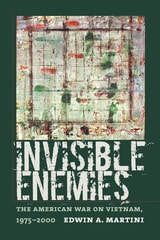
Invisible Enemies
The American War on Vietnam, 1975-2000Edwin A. Martini
University of Massachusetts Press, 2007
Beginning where most histories of the Vietnam War end, Invisible Enemies examines the relationship between the United States and Vietnam following the American pullout in 1975. Drawing on a broad range of sources, from White House documents and congressional hearings to comic books and feature films, Edwin Martini shows how the United States continued to wage war on Vietnam “by other means” for another twenty-five years. In addition to imposing an extensive program of economic sanctions, the United States opposed Vietnam's membership in the United Nations, supported the Cambodians, including the Khmer Rouge, in their decade-long war with the Vietnamese, and insisted that Vietnam provide a “full accounting” of American MIAs before diplomatic relations could be established. According to Martini, such policies not only worked against some of the stated goals of U.S. foreign policy, they were also in opposition to the corporate economic interests that ultimately played a key role in normalizing relations between the two nations in the late 1990s.
Martini reinforces his assessment of American diplomacy with an analysis of the “cultural front”—the movies, myths, memorials, and other phenomena that supported continuing hostility toward Vietnam while silencing opposing views of the war and its legacies. He thus demonstrates that the “American War on Vietnam” was as much a battle for the cultural memory of the war within the United States as it was a lengthy economic, political, and diplomatic campaign to punish a former adversary.
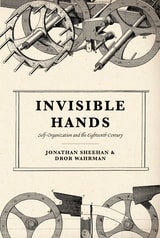
Invisible Hands
Self-Organization and the Eighteenth CenturyJonathan Sheehan and Dror Wahrman
University of Chicago Press, 2015
Why is the world orderly, and how does this order come to be? Human beings inhabit a multitude of apparently ordered systems—natural, social, political, economic, cognitive, and others—whose origins and purposes are often obscure. In the eighteenth century, older certainties about such orders, rooted in either divine providence or the mechanical operations of nature, began to fall away. In their place arose a new appreciation for the complexity of things, a new recognition of the world’s disorder and randomness, new doubts about simple relations of cause and effect—but with them also a new ability to imagine the world’s orders, whether natural or manmade, as self-organizing. If large systems are left to their own devices, eighteenth-century Europeans increasingly came to believe, order will emerge on its own without any need for external design or direction.
In Invisible Hands, Jonathan Sheehan and Dror Wahrman trace the many appearances of the language of self-organization in the eighteenth-century West. Across an array of domains, including religion, society, philosophy, science, politics, economy, and law, they show how and why this way of thinking came into the public view, then grew in prominence and arrived at the threshold of the nineteenth century in versatile, multifarious, and often surprising forms. Offering a new synthesis of intellectual and cultural developments, Invisible Hands is a landmark contribution to the history of the Enlightenment and eighteenth-century culture.
Involuntary Confessions of the Flesh in Early Modern France
Nora Martin Peterson
University of Delaware Press, 2017
Involuntary Confessions of the Flesh in Early Modern France was inspired by the observation that small slips of the flesh (involuntary confessions of the flesh) are omnipresent in early modern texts of many kinds. These slips (which bear similarities to what we would today call the Freudian slip) disrupt and destabilize readings of body, self, and text—three categories whose mutual boundaries this book seeks to soften—but also, in their very messiness, participate in defining them. Involuntary Confessions capitalizes on the uncertainty of such volatile moments, arguing that it is instability itself that provides the tools to navigate and understand the complexity of the early modern world. Rather than locate the body within any one discourse (Foucauldian, psychoanalytic), this book argues that slips of the flesh create a liminal space not exactly outside of discourse, but not necessarily subject to it, either. Involuntary confessions of the flesh reveal the perpetual and urgent challenge of early modern thinkers to textually confront and define the often tenuous relationship between the body and the self. By eluding and frustrating attempts to contain it, the early modern body reveals that truth is as much about surfaces as it is about interior depth, and that the self is fruitfully perpetuated by the conflict that proceeds from seemingly irreconcilable narratives.
Interdisciplinary in its scope, Involuntary Confessions of the Flesh in Early Modern France pairs major French literary works of the sixteenth and seventeenth centuries (by Marguerite de Navarre, Montaigne, Madame de Lafayette) with cultural documents (confession manuals, legal documents about the application of torture, and courtly handbooks). It is the first study of its kind to bring these discourses into thematic (rather than linear or chronological) dialog. In so doing, it emphasizes the shared struggle of many different early modern conversations to come to terms with the body’s volatility.
Published by University of Delaware Press. Distributed worldwide by Rutgers University Press.
Iran and Global Decolonisation
Politics and Resistance After EmpireEdited by Robert Steele and Firoozeh Kashani-Sabet
Gingko, 2023
How did Iran’s unique position in the world affect and define its treatment of decolonization? During the final decades of Pahlavi rule in the late 1970s, the country sought to establish close relationships with newly independent counterparts in the Global South. Most scholarly work focused on this period is centered around the Cold War and Iran's relations with the United States, Russia, and Europe. Little attention has been paid to how the country interacted with other regions, such as Africa, Asia, and the Americas. Adding to an important and growing body of literature that discusses the profound and lasting impact of decolonization, Iran and Global Decolonisation contributes to the theoretical debates around the re-shaping of the world brought about by the end of an empire. It considers not only the impact of global decolonization on movements and ideas within Iran but also how Iran’s own experiences of imperialism shaped how these ideas were received and developed.

Iris Murdoch and the Search for Human Goodness
Edited by Maria Antonaccio and William Schweiker
University of Chicago Press, 1996
Inspired by Murdoch's tenacious wrestling with basic questions of human existence, these essays not only clarify her thoughts on human goodness, but also move beyond the academy to reflect on how we can and ought to undertake the human adventure in our daily lives.
Contributors are Charles Taylor, Martha Nussbaum, David Tracy, Cora Diamond, Maria Antonaccio, Elizabeth Dipple, Franklin I. Gamwell, Stanley Hauerwas, and William Schweiker. This volume also includes "Metaphysics and Ethics," a classic essay by Iris Murdoch.
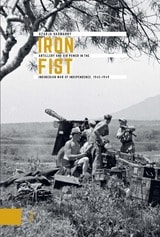
Iron Fist
Artillery and Air Power in the Indonesian War of Independence, 1945-1949Azarja Harmanny
Amsterdam University Press, 2026

Is It Painful To Think
Conversations with Arne NaessDavid Rothenberg
University of Minnesota Press, 1992

Isaiah Berlin
A CelebrationEdited by Edna Ullmann-Margalit and Avishai Margalit
University of Chicago Press, 1991
"Some [essays], like Joseph Brodsky's tribute, are touchingly personal. Others, like G. A. Cohen's 'Isaiah's Marx, and Mine,' mingle personal reminiscences with a more theoretical look at Berlin's ideas. . . . The volume is a fitting tribute to a thinker famed for his erudition, eclecticism, and clarity of style."—Merle Rubin, The Christian Science Monitor
"One of the many merits of this rich and rewarding collection is the sense-very imperfectly conveyed here-it transmits of the tone of Berlin's writings and conversation, of the multiplicity of his interests and the variety of his achievements. . . . The essays testify to the character of Berlin's mind as a luminous prism, in which the cultural traditions of Russia, England and Judaism are marvelously refracted."—John Gray, Times Literary Supplement
"[T]he collection testifies to the learning and profundity of Berlin's thought and, by way both of reminiscence and influence, to the charm and gaity of its expression."—Anthony Quinton, The Times of London
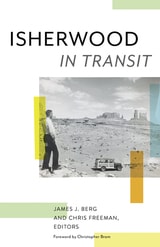
Isherwood in Transit
James J. Berg
University of Minnesota Press, 2020
New perspectives on Christopher Isherwood as a searching and transnational writer
“Perhaps I had traveled too much, left my heart in too many places,” muses the narrator of Christopher Isherwood’s novel Prater Violet (1945), which he wrote in his adopted home of Los Angeles after years of dislocation and desperation. In Isherwood in Transit, James J.Berg and Chris Freeman bring together diverse Isherwood scholars to understand the challenges this writer faced as a consequence of his travel.
Based on a conference at the Huntington Library, where Isherwood’s recently opened papers are held, Isherwood in Transit considers the writer not as an English, continental, or American writer but as a transnational one, whose identity, politics, and beliefs were constantly transformed by global connections and engagements arising from journeys to Germany, Japan, China, and Argentina; his migration to the United States; and his conversion to Vedanta Hinduism in the 1940s.
Approaching Isherwood’s rootlessness and restlessness from various perspectives, these essays show that long after he made a new home in California and became an American citizen, Christopher Isherwood remained unsettled, although his wanderings became spiritual and personal rather than geographic.
Contributors: Barrie Jean Borich, DePaul U; Jamie Carr, Niagara U; Robert L. Caserio, Penn State U, University Park; Lisa Colletta, American U of Rome; Lois Cucullu, U of Minnesota; Jaime Harker, U of Mississippi; Carola M. Kaplan, California State U, Pomona; Calvin W. Keogh, Central European U, Budapest; Victor Marsh; Wendy Moffat, Dickinson College; Xenobe Purvis; Bidhan Roy, California State U, Los Angeles; Katharine Stevenson, U of Texas at Austin; Edmund White.
Israel
A HistoryAnita Shapira
Brandeis University Press, 2014
It All Began in Nuremberg
Between History and MemoryRita Thalmann
University of Michigan Press, 2015
It Seemed Like Nothing Happened
America in the 1970sPeter N. Carroll
Rutgers University Press, 1990
"This is the single best book on the 1970s." -- Leo Ribuffo, George Washington University
It Will Yet Be Heard
A Polish Rabbi's Witness of the Shoah and SurvivalIsaac Bashevis Singer
Rutgers University Press, 2019
Rabbi Thorne composed his memoir under extraordinary conditions, confined to a small underground bunker below a Polish peasant’s pigsty. But, It Will Yet Be Heard is remarkable not only for the story of its composition, but also for its moral clarity and complexity. A deeply religious man, Rabbi Thorne bore witness to forced labor camps, human degradation, and the murders of entire communities. And once he emerged from hiding, he grappled not only with survivor’s guilt, but also with the lingering antisemitism and anti-Jewish violence in Poland even after the war ended. Harrowing, moving, and deeply insightful, Rabbi Thorne’s firsthand account offers a rediscovered perspective on the twentieth century’s greatest tragedy.
Italian Workers of the World
Labor Migration and the Formation of Multiethnic StatesEdited by Donna R. Gabaccia and Fraser M. Ottanelli
University of Illinois Press, 2001
In Italian Workers of the World, a distinguished roster of contributors examines how the reception of immigrants in their new countries shaped their sense of national identity and shaped the multiethnic states where they settled. Argentina and Brazil welcomed Italian migrants as a civilizing influence, and these immigrant workers played an instrumental part in establishing and leading movements committed to labor internationalism. In the United States, by contrast, the American Federation of Labor's hostility to socialism, internationalism, and unskilled laborers fueled distrust and xenophobia that steered Italian immigrants into ethnically mixed unions like radical Industrial Workers of the World. Essays also focus on specific topics ranging from the work of republican Garibaldians in South America to antifascist currents among Italian migrants in France and the United States, and from a 1912 textile strike in Lawrence, Massachusetts, to Mussolini's invasion of Ethiopia.
Contributors: Antonio Bechelloni, Fernando J. Devoto, Pietro Rinaldo Fanesi, Donna R. Gabaccia, Mirta Zaida Lobato, Fraser M. Ottanelli, Carina Frid de Silberstein, Michael Miller Topp, Angelo Trento, Nadia Venturini, and Elisabetta Vezzosi
Izzy
A Biography of I. F. StoneRobert C. Cottrell
Rutgers University Press, 2020