Results by title
3258 books match the query 'Performing Arts' and 103 start with i
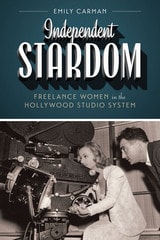
Independent Stardom
Freelance Women in the Hollywood Studio SystemBy Emily Carman
University of Texas Press, 2015
Bringing to light an often-ignored aspect of Hollywood studio system history, this book focuses on female stars who broke the mold of a male-dominated, often manipulative industry to dictate the path of their own careers through freelancing.
Runner-up, Richard Wall Memorial Award, Theatre Library Association, 2016
During the heyday of Hollywood’s studio system, stars were carefully cultivated and promoted, but at the price of their independence. This familiar narrative of Hollywood stardom receives a long-overdue shakeup in Emily Carman’s new book. Far from passive victims of coercive seven-year contracts, a number of classic Hollywood’s best-known actresses worked on a freelance basis within the restrictive studio system. In leveraging their stardom to play an active role in shaping their careers, female stars including Irene Dunne, Janet Gaynor, Miriam Hopkins, Carole Lombard, and Barbara Stanwyck challenged Hollywood’s patriarchal structure.
Through extensive, original archival research, Independent Stardom uncovers this hidden history of women’s labor and celebrity in studio-era Hollywood. Carman weaves a compelling narrative that reveals the risks these women took in deciding to work autonomously. Additionally, she looks at actresses of color, such as Anna May Wong and Lupe Vélez, whose careers suffered from the enforced independence that resulted from being denied long-term studio contracts. Tracing the freelance phenomenon among American motion picture talent in the 1930s, Independent Stardom rethinks standard histories of Hollywood to recognize female stars as creative artists, sophisticated businesswomen, and active players in the then (as now) male-dominated film industry.

Indian Stereotypes in TV Science Fiction
First Nations' Voices Speak OutBy Sierra S. Adare
University of Texas Press, 2005
According to an early 1990s study, 95 percent of what college students know about Native Americans was acquired through the media, leading to widespread misunderstandings of First Nations peoples. Sierra Adare contends that negative "Indian" stereotypes do physical, mental, emotional, and financial harm to First Nations individuals.
At its core, this book is a social study whose purpose is to explore the responses of First Nations peoples to representative "Indian" stereotypes portrayed within the TV science fiction genre. Participants in Adare's study viewed episodes from My Favorite Martian, Star Trek, Star Trek: Voyager, Quantum Leap, The Adventures of Superman, and Star Trek: The Next Generation. Reactions by viewers range from optimism to a deep-rooted sadness. The strongest responses came after viewing a Superman episode's depiction of an "evil medicine man" who uses a ceremonial pipe to kill a warrior. The significance of First Nations peoples' responses and reactions are both surprising and profound. After publication of "Indian" Stereotypes in TV Science Fiction, ignorance can no longer be used as an excuse for Hollywood's irresponsible depiction of First Nations peoples' culture, traditions, elders, religious beliefs, and sacred objects.
Indie Cinema Online
Sarah E.S. Sinwell
Rutgers University Press, 2020
Indie, Inc.
Miramax and the Transformation of Hollywood in the 1990sBy Alisa Perren
University of Texas Press, 2012
During the 1990s, films such as sex, lies, and videotape, The Crying Game, Pulp Fiction, Good Will Hunting, and Shakespeare in Love earned substantial sums at the box office along with extensive critical acclaim. A disproportionate number of these hits came from one company: Miramax. Indie, Inc. surveys Miramax’s evolution from independent producer-distributor to studio subsidiary, chronicling how one company transformed not just the independent film world but the film and media industries more broadly. As Alisa Perren illustrates, Miramax’s activities had an impact on everything from film festival practices to marketing strategies, talent development to awards campaigning.
Case studies of key films, including The Piano, Kids, Scream, The English Patient, and Life Is Beautiful, reveal how Miramax went beyond influencing Hollywood business practices and motion picture aesthetics to shaping popular and critical discourses about cinema during the 1990s. Indie, Inc. does what other books about contemporary low-budget cinema have not—it transcends discussions of “American indies” to look at the range of Miramax-released genre films, foreign-language films, and English-language imports released over the course of the decade. The book illustrates that what both the press and scholars have typically represented as the “rise of the American independent” was in fact part of a larger reconfiguration of the media industries toward niche-oriented products.
Indigenous Ecocinema
Decolonizing Media EnvironmentsSalma Monani
West Virginia University Press, 2024
This absorbing text is the first book-length exploration foregrounding the environmental dimensions of cinema made by Indigenous peoples, including a particularly fascinating discussion on how Indigenous cinema’s ecological entanglements are a crucial and complementary aspect of its agenda of decolonialism.
Indirect Subjects
Nollywood's Local AddressMatthew H. Brown
Duke University Press, 2021
Indiscreet Fantasies
Iberian Queer CinemaAndrés Lema-Hincapié
Bucknell University Press, 2021
Published by Bucknell University Press. Distributed worldwide by Rutgers University Press.
Infected Empires
Decolonizing ZombiesPatricia Saldarriaga
Rutgers University Press, 2022
Studying films from around the world, including Latin America, Asia, Africa, the US, and Europe, Infected Empires presents a vision of a global zombie that points toward a posthuman and feminist future.
Given the current moment—polarized populations, increasing climate fears, and decline of supranational institutions in favor of a rising tide of nationalisms—it is easy to understand the proliferation of apocalyptic and dystopian elements in popular culture. Infected Empires examines one of the most popular figures in contemporary apocalyptic film: the zombie. This harbinger of apocalypse reveals bloody truths about the human condition, the wounds of history, and methods of contending with them.
Infected Empires considers parallels in the zombie genre to historical and current events on different political, theological and philosophical levels, and proposes that the zombie can be read as a figure of decolonization and an allegory of resistance to oppressive structures that racialize, marginalize, disable, and dispose of bodies.
Infinite Repertoire
On Dance and Urban Possibility in Postsocialist GuineaAdrienne J. Cohen
University of Chicago Press, 2021

Infinity (Stage)
Spencer Golub
University of Michigan Press, 2001

Infrastructure in Dystopian and Post-apocalyptic Film, 1968–2021
Christian Long
Intellect Books, 2024
Dystopian and post-apocalyptic movies from 1968 to 2021 usually conclude with optimism, giving the audience a window into what is possible in the face of social dysfunction. The infrastructure that peeks through at the edges of the frame surfaces some of the concrete ways in which dystopian and post-apocalyptic survivors have made do with their damaged and destroyed worlds. In this book, Christian B. Long argues that if the happy endings so common to mass-audience films do not provide an all-encompassing vision of a better world, the presence of infrastructure, whether old or retrofitted or new, offers a starting point for the continued work of building toward the future.
Film imaginings of energy, transportation, water, waste, and their combination in the food system reveal what might be essential infrastructure on which to build the new post-dystopian and post-apocalyptic communities. We can look to dystopian and post-apocalyptic movies for a sense of where we might begin.
Inhabiting the Impossible
Dance and Experimentation in Puerto RicoSusan Homar and nibia pastrana santiago, Editors
University of Michigan Press, 2023
Inherent Vice
Bootleg Histories of Videotape and CopyrightLucas Hilderbrand
Duke University Press, 2009
Videotape not only radically changed how audiences accessed the content they wanted and loved but also altered how they watched it. Hilderbrand develops an aesthetic theory of analog video, an “aesthetics of access” most boldly embodied by bootleg videos. He contends that the medium specificity of videotape becomes most apparent through repeated duplication, wear, and technical failure; video’s visible and audible degeneration signals its uses for legal transgressions and illicit pleasures. Bringing formal and cultural analysis into dialogue with industrial history and case law, Hilderbrand examines four decades of often overlooked histories of video recording, including the first network news archive, the underground circulation of Superstar: The Karen Carpenter Story, a feminist tape-sharing network, and the phenomenally popular website YouTube. This book reveals the creative uses of videotape that have made essential content more accessible and expanded our understanding of copyright law. It is a politically provocative, unabashedly nostalgic ode to analog.
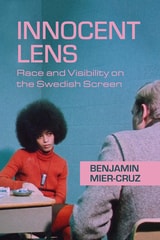
Innocent Lens
Race and Visibility on the Swedish ScreenBenjamin Mier-Cruz
University of Wisconsin Press, 2027
Sweden, like other Nordic countries, prides itself on being “colorblind” or immune to the kinds of racism found in, for example, the United States. In the 1960s and 1970s, white Swedish documentarians, in the fashion of early anthropologists, recorded racial tensions amid the US civil rights movement. More recently, in the twenty-first century, short films produced by Swedes of color have tackled racism and bigotry within Sweden.
Benjamin Mier-Cruz offers a comparative study of these two periods of Swedish documentary filmmaking. “Racially innocent” white documentarians of the mid-twentieth century developed an “aesthetics of altruism” predicated on Sweden’s assumed racial equalitarianism—a notion that their documentaries in turn helped create and maintain. In contemporary films, on the other hand, Swedes of color use the same filmic format to challenge not only their predecessors’ reductionist, pseudo-anthropological presentations but also Sweden’s purportedly colorblind ideology. Mier-Cruz’s close readings of films from both eras demonstrate the possibilities and limitations of the documentary form and the ways in which it is motivated by politics and activism.
Innovation in Ethnographic Film
From Innocence to Self-Consciousness, 1955-1985Peter Loizos
University of Chicago Press, 1993
Loizos begins by reviewing works of John Marshall and Timothy Asch in the 1950s and moves through those of Jean Rouch, Robert Gardner, and many more recent filmmakers. He reveals a steady course of innovations along four dimensions: production technology, subject matter, strategies of argument, and ethnographic authentication. His analyses of individual films address questions of realism, authenticity, genre, authorial and subjective voice, and representation of the films' creators as well as their subjects.
Innovation in Ethnographic Film, as a systematic and iluminating review of developments in ethnographic film, will be an important resource for the growing number of anthropologists and other scholars who use such films as tools for research and teaching.
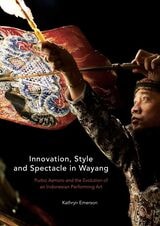
Innovation, Style and Spectacle in Wayang
Purbo Asmoro and the Evolution of an Indonesian Performing ArtKathryn Emerson
National University of Singapore Press, 2022
Wayang, the traditional puppet theater form of Java, fascinates and endures thanks to the many ways it works as a medium—bearing the weight of Javanese culture and tradition as a key component of rites of passage, as a medium of ritual and spiritual practice, as public spectacle, and as entertainment of the broadest sort, performed live, broadcast, or streamed. Over the past forty years, the form has been subject to a great deal of experimentation and innovation, pulled in many directions within an ever-changing media landscape. In this book, Kathryn Anne Emerson outlines both significant contributions by a number of key figures and the social and political influences propelling such innovations. She also describes deeper and more lasting changes in wayang, based on what the art form's most accomplished practitioners have to say about it. At the core of the book is one pivotal figure, Purbo Asmoro of the Indonesian Institute of the Arts in Surakarta, who, Emerson argues, has taken the individual and singular innovations of the era and integrated them into a new system of performance practice, one that has shaped the key Surakarta school of performance. Grounded in an unprecedented, decades-long participatory research project involving hundreds of interlocutors, the book is beautifully illustrated and will be of considerable interest in Indonesian studies.
Inside the Mouse
Work and Play at Disney WorldProject on Disney
Duke University Press, 1995
Turning away from the programmed entertainment that Disney presents, the authors take a peek behind the scenes of everyday experience at Disney World. In their consideration of the park as both private corporate enterprise and public urban environment, the authors focus on questions concerning the production and consumption of leisure. Featuring over fifty photographs and interviews with workers that strip "cast members" of their cartoon costumes, this captivating work illustrates the high-pressure dynamics of the typical family vacation as well as a tour of Disney World that looks beyond the controlled facade of themed attractions.
As projects like EuroDisney and the proposed Disney America test the strength of the Disney cultural monolith, Inside the Mouse provides a timely assessment of the serious business of supplying pleasure in contemporary U.S. culture. Written for the general reader interested in the many worlds of Disney, this engrossing volume will also find fans among students and scholars of cultural studies.
Insights in Applied Theatre
The Early Days and OnwardsEdited by John O'Toole, Penny Bundy, and Peter O'Connor
Intellect Books, 2023
Insights in Applied Theatre offers an inside look into the advent of applied theater and its development as an area of practice and research. Much more than an archive, the texts in this collection present vivid, pertinent voices and messages from the pioneers of applied theater. The nineteen articles chosen by the editors of Applied Theatre Research represent key themes and elements from the start of the practice. The articles—many of which were influential in their own time—have much to say to the contemporary scene. They have been arranged in sections according to key themes and issues discovered, investigated, and stumbled across by the trailblazing writers in the collection. A vital new contribution to the field, the book raises questions about the contested issues of power, partnerships, and voice in applied theater.
Institutional Theatrics
Performing Arts Policy in Post-Wall BerlinBrandon Woolf
Northwestern University Press, 2021
2022 Outstanding Book Award Finalist from the Association for Theater in Higher Education (ATHE)
In a city struggling to determine just how neoliberal it can afford to be, what kinds of performing arts practices and institutions are necessary—and why?
Since the fall of the Berlin Wall, political and economic agendas in the reunified German capital have worked to dismantle long-standing traditions of state‑subsidized theater even as the city has redefined itself as a global arts epicenter. Institutional Theatrics charts the ways theater artists have responded to these shifts and crises both on- and offstage, offering a method for rethinking the theater as a vital public institution.
What is the future of the German theater, grounded historically in large ensembles, extensive repertoires, and auteur directors? Examining the restructuring of Berlin’s theatrical landscape and most prominent performance venues, Brandon Woolf argues that cultural policy is not simply the delegation and distribution of funds. Instead, policy should be thought of as an artistic practice of institutional imagination. Woolf demonstrates how performance can critique its patron institutions in order to transform the relations between the stage and the state, between the theater and the infrastructures of its support. Bold, nuanced, and rigorously documented, Institutional Theatrics offers new insights about art, its administration, and the forces that influence cultural production.
Integrative Alexander Technique Practice for Performing Artists
Onstage SynergyCathy Madden
Intellect Books, 2014
Interactive Cinema
The Ambiguous Ethics of Media ParticipationMarina Hassapopoulou
University of Minnesota Press, 2024
Connecting interactive cinema to media ethics and global citizenship
Interactive Cinema explores various cinematic practices that work to transform what is often seen as a primarily receptive activity into a participatory, multimedia experience. Surveying a multitude of unorthodox approaches throughout the history of motion pictures, Marina Hassapopoulou offers insight into a range of largely ephemeral and site-specific projects that consciously assimilate viewers into their production.
Analyzing examples of early cinema, Hollywood B movies, museum and gallery installations, virtual-reality experiments, and experimental web-based works, Hassapopoulou travels across numerous platforms, highlighting a diverse array of strategies that attempt to unsettle the allegedly passive spectatorship of traditional cinema. Through an exploration of these radically inventive approaches to the medium, many of which emerged out of sociopolitical crises and periods of historical transition, she works to expand notions of interactivity by considering it in both technological and phenomenological terms.
Deliberately revising and expanding Eurocentric scholarship to propose a much broader, transnational scope, the book emphasizes the ethical dimensions of interactive media and their links to larger considerations around community building, citizenship, and democracy. By combining cutting-edge theory with updated conventional film studies methodologies, Interactive Cinema presses at the conceptual limits of cinema and offers an essential road map to the rapidly evolving landscape of contemporary media.
Interchangeable Parts
Acting, Industry, and Technology in US TheaterVictor Holtcamp
University of Michigan Press, 2019
Victor Holtcamp explores the invocations of scientific and industrial rhetoric and philosophy in the founding of the first schools of acting, and echoes of that rhetoric in playwriting, production, and the cinema, as Hollywood in particular embraced this industrially infected model of acting. In their divergent approaches to performance, the major US acting teachers (Lee Strasberg, Stella Adler, and Sanford Meisner) demonstrated strong rhetorical affinities for the language of industry, illustrating the pervasive presence of these industrial roots. The book narrates the story of how actors learned to learn to act, and what that process, for both stage and screen, owed to the interchangeable parts and mass production revolutions.
Interface Frictions
How Digital Debility Reshapes Our BodiesNeta Alexander
Duke University Press, 2025
Intermedialities
Political Theory and Cinematic ExperienceDavide Panagia
Northwestern University Press, 2024
Shining new light on our understanding of cinema’s ways of political thinking, Intermedialities: Political Theory and Cinematic Experience puts modern political theory in conversation with the philosophy of film. Davide Panagia argues that there are no natural laws of association that can guarantee a template for democratic participation, as democracy is predicated not on stabilizing foundations but rather on the formation of expansive collectivities and institutions that are responsive to alterability. Instead, democracy requires a relational ontology, one that he elucidates by turning to philosophers of film like Stanley Cavell, Gilles Deleuze, Miriam Hansen, and Jean-Luc Godard—all of whom have articulated a political aesthetic of cinematic experience that is at once aspectual and compositional. Panagia reads these thinkers alongside a countertradition of modern political thought, represented by David Hume, Ludwig Wittgenstein, and Gilbert Simondon. His articulation of cinematic experience thus allows for a political aesthetic that is rooted in the migratory realities of undetermined relations.
International Women Stage Directors
Edited by Anne Fliotsos and Wendy Vierow
University of Illinois Press, 2013
A fascinating study of women in the arts, International Women Stage Directors is a comprehensive examination of women directors in twenty-four diverse countries. Organized by country, chapters provide historical context and emphasize how social, political, religious, and economic factors have impacted women's rise in the theatre, particularly in terms of gender equity. Contributors tell the stories of their home country's pioneering women directors and profile the most influential women directors practicing today, examining their career paths, artistry, and major achievements.
Contributors are Ileana Azor, Dalia Basiouny, Kate Bredeson, Mirenka Cechová, Marié-Heleen Coetzee, May Farnsworth, Anne Fliotsos, Laura Ginters, Iris Hsin-chun Tuan, Maria Ignatieva, Adam J. Ledger, Roberta Levitow, Jiangyue Li, Lliane Loots, Diana Manole, Karin Maresh, Gordon McCall, Erin B. Mee, Ursula Neuerburg-Denzer, Claire Pamment, Magda Romanska, Avra Sidiropoulou, Margaretta Swigert-Gacheru, Alessandra Vannucci, Wendy Vierow, Vessela S. Warner, and Brenda Werth.
Interpreting The Theatrical Past
Historiography Of PerformanceThomas Postlewait
University of Iowa Press, 1989
Interrogating Postfeminism
Gender and the Politics of Popular CultureYvonne Tasker and Diane Negra, eds.
Duke University Press, 2007
Essays by feminist film, media, and literature scholars based in the United States and United Kingdom provide an array of perspectives on the social and political implications of post-feminism. Examining magazines, mainstream and independent cinema, popular music, and broadcast genres from primetime drama to reality television, contributors consider how postfeminism informs self-fashioning through makeovers and cosmetic surgery, the “metrosexual” male, the “black chick flick,” and more. Interrogating Postfeminism demonstrates not only the viability of, but also the necessity for, a powerful feminist critique of contemporary popular culture.
Contributors. Sarah Banet-Weiser, Steven Cohan, Lisa Coulthard, Anna Feigenbaum, Suzanne Leonard, Angela McRobbie, Diane Negra, Sarah Projansky, Martin Roberts, Hannah E. Sanders, Kimberly Springer, Yvonne Tasker, Sadie Wearing
Intimate Inequalities
Performing Migrant Domestic WorkElla Parry-Davies
Northwestern University Press, 2025
Intimate inequalities exist where the embodied and the everyday rub up against transnational structures of power. Ella Parry-Davies conducted collaborative research with migrant domestic workers from the Philippines living in the UK and Lebanon, where migration is regulated by employer sponsorship systems, to explore how they negotiate the intimacy of the family home and the attendant inequalities of laboring within it. Intimate Inequalities: Performing Migrant Domestic Work brings these conditions into focus while articulating a methodological inquiry into the dynamics of collaborative performance research. Parry-Davies examines site-specific soundwalks, recorded and coedited with domestic workers, which steer the book between church choirs in Beirut and activist gatherings in London, and from urban performances in Lebanon’s 2019 revolution to mutual aid organizing amid COVID-19 in the UK. Breaking with prevalent depictions of migrant domestic workers as voiceless and victimized, Intimate Inequalities mobilizes performance as both an analytic lens and a practical methodology, amplifying its subjects’ expertise while reckoning with the intimate yet unequal dynamics of research itself.
Intimations
The Cinema of Wojciech HasAnnette Insdorf
Northwestern University Press, 2017
Wojciech Has’s films are still less known outside of his native Poland than those of his countrymen Andrzej Wajda, Krzysztof Zanussi, and Krzysztof Kieslowski. Yet thanks to his singular vision, many critics rank Has among the masters of world cinema. Some of his movies have developed a cult following, notably The Saragossa Manuscript, the favorite film of the Grateful Dead’s Jerry Garcia, which has been praised by directors such as Luis Buñuel, Francis Ford Coppola, and Roman Polanski.
Has’s films reveal the inner lives of his characters, which he portrays by giving free rein to his own wildly creative imagination. In addition toThe Saragossa Manuscript, his diverse and innovative filmography includes The Hourglass Sanatorium, a vividly surreal depiction of Hassidic life in Poland between the world wars; The Noose, a stark poetic drama about a lucid alcoholic who knows he will not be able to kick the habit; and How to Be Loved, in which an actress remembers her wartime past.
Has made disparate but formally striking movies infused with European strains of existentialism and the avant-garde. With many of his films being restored and rereleased, new generations of film lovers are discovering his artistic genius. Intimations: The Cinema of Wojciech Has is the definitive guide in English to his work.
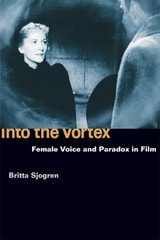
Into the Vortex
Female Voice and Paradox in FilmBritta Sjogren
University of Illinois Press, 2010
Sjogren focuses on a rash of 1940s Hollywood films in which the female voice bears a marked formal presence to demonstrate the ways that the feminine is expressed and difference is sustained. She argues that these films capitalize on particular particular psychoanalytic, narratological and discursive contradictions to bring out and express difference, rather than to contain or close it down. Exploring the vigorous dynamic engendered by contradiction and paradox, Sjogren charts a way out of the pessimistic, monolithic view of patriarchy and cinema's representation of women's voices.
Intransigent Imaginaries
Black Ambivalence in Media and CultureJerome P. Dent, Jr.
Rutgers University Press, 2027
Intransigent Imaginaries: Black Ambivalence in Media and Culture examines why Blackness continues to function as antagonism in fantasy, science fiction, and horror, even in contemporary films and television created by Black artists and celebrated for their progressive politics. Drawing on Afropessimism, psychoanalysis, and genre theory, Jerome P. Dent, Jr. argues that genre itself organizes desire, threat, and narrative closure in ways that consistently position Blackness as danger, excess, or containment. Rather than focusing on whether representations are positive or negative, the book shifts attention to the narrative architectures and visual economies that make those images possible in the first place. Through close readings of works such as Get Out, Us, Nope, Black Panther, A Wrinkle in Time, and major science fiction franchises, Intransigent Imaginaries challenges dominant assumptions about progress, representation, and repair. Refusing the consolations of uplift, the book insists on analytic clarity, asking what criticism looks like when redemption is structurally foreclosed.
Invasion of the Body Snatchers
Don Siegel, directorLaValley, Al
Rutgers University Press, 1989
Invasion of the Mind Snatchers
Television's Conquest of America in the FiftiesEric Burns
Temple University Press, 2010
When the first television was demonstrated in 1927, a headline in The New York Times read, “Like a Photo Come to Life.” It was a momentous occasion. But the power of television wasn’t fully harnessed until the 1950s, when the medium was, as Eric Burns says, “At its most preoccupying, its most life-altering.” And Burns, a former NBC News correspondent who is an Emmy-winner for his broadcast writing, knows about the impact of television.
Invasion of the Mind Snatchers chronicles the influence of television that was watched daily by the baby boomer generation. As kids became spellbound by Howdy Doody and The Ed Sullivan Show, Burns reveals, they often acted out their favorite programs. Likewise, they purchased the merchandise being promoted by performers, and became fascinated by the personalities they saw on screen, often emulating their behavior. It was the first generation raised by TV and Burns looks at both the promise of broadcasting as espoused by the inventors, and how that promise was both redefined and lost by the corporations who helped to spread the technology.
Yet Burns also contextualizes the social, cultural, and political events that helped shape the Fifties—from Sputnik and the Rosenberg trial to Senator Joseph McCarthy’s Red Scare. In doing so, he charts the effect of television on politics, religion, race, and sex, and how the medium provided a persuasive message to the young, impressionable viewers.
Inventing Film Studies
Lee Grieveson and Haidee Wasson, eds.
Duke University Press, 2008
Inventing Film Studies shows how the study of cinema has developed in relation to a constellation of institutions, technologies, practices, individuals, films, books, government agencies, pedagogies, and theories. Contributors illuminate the connections between early cinema and the social sciences, between film programs and nation-building efforts, and between universities and U.S. avant-garde filmmakers. They analyze the evolution of film studies in relation to the Museum of Modern Art, the American Film Council movement of the 1940s and 1950s, the British Film Institute, influential journals, cinephilia, and technological innovations past and present. Taken together, the essays in this collection reveal the rich history and contemporary vitality of film studies.
Contributors: Charles R. Acland, Mark Lynn Anderson, Mark Betz, Zoë Druick, Lee Grieveson, Stephen Groening, Haden Guest, Amelie Hastie, Lynne Joyrich, Laura Mulvey, Dana Polan,
D. N. Rodowick, Philip Rosen, Alison Trope, Haidee Wasson, Patricia White, Sharon Willis,
Peter Wollen, Michael Zryd
Inventing Vietnam
The War in Film and Televisionedited by Michael Anderegg
Temple University Press, 1991
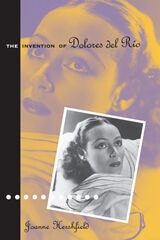
Invention Of Dolores Del Rio
Joanne Hershfield
University of Minnesota Press, 2000
Dolores del Río first came to Hollywood from Mexico in 1925 and within a year had become an international star for her role in Raoul Walsh's 1926 film What Price Glory. She would go on to work with Hollywood’s top directors, including John Ford and King Vidor, and star opposite such leading men as Henry Fonda, Fred Astaire, Orson Welles (with whom she had a scandalous affair), and Elvis Presley. Voted by Photoplay magazine in 1933 as having "the most perfect feminine figure in Hollywood," del Río was billed as one of cinema’s most "exotic" and "aristocratic" beauties. This image-carefully crafted by her producers, her studio publicists, and by del Río herself-reveals many fascinating insights into Hollywood’s evolving attitudes toward race and femininity.
In The Invention of Dolores del Río, Joanne Hershfield explores the intersection of ethnicity, gender, and stardom in American popular culture through the lens of del Río’s successful and unusually lengthy career, which lasted until the 1960s. Hershfield offers close readings of del Río’s films—discussing in detail the roles she played, her costumes and makeup, the music and mise-en-scène, advertising, publicity, and reviews—that provide a nuanced understanding of how Hollywood constructed del Río as an exotic commodity and blunted the inherent challenge her sexual and ethnic image posed to both prevailing standards of white femininity and widespread injunctions against miscegenation. Throughout this astute and imaginative case study, Hershfield looks at del Río’s Hollywood films in relation to shifting ideologies about nationality, gender, and race between the 1920s and 1960s, offering an important contribution to the debate surrounding Hollywood’s ability to both reflect the nation’s racial and sexual obsessions and influence its perceptions about ethnic and gender identity.
Invisible Country
Four Polish PlaysEdited and Translated by Teresa Murjas
Intellect Books, 2012
The late nineteenth and early twentieth century marked a tumultuous period in Poland’s history, with artists and writers working under difficult sociopolitical conditions. This book contains the first English- language translations of four plays by Polish writers in the modernist tradition: Snow by Stanislaw Przybyszewski, In a Small House by Tadeusz Rittner, Ashanti by Wlodzimierz Perzynski, and All the Same by Leopold Staff. Well-chosen and carefully annotated, these translations provide important insight into this underexplored area of Polish dramatic history and practice and facilitate greater understanding of its role in the development of European theater. Also included is a broad discussion of the characteristics of translation for the theater.
Inwardness and Theater in the English Renaissance
Katharine Eisaman Maus
University of Chicago Press, 1995
Reading works by Kyd, Marlowe, Shakespeare, Jonson, and Milton in conjuction with sectarian polemics, gynecological treatises, and accounts of criminal prosecutions, Maus delineates unexplored connections among religious, legal, sexual, and theatrical ideas of inward truth. She reveals what was at stake—ethically, politically, epistemologically, and theologically—when a writer in early modern England appealed to the difference between external show and interior authenticity. Challenging the recent tendency to see early modern selfhood as defined in wholly public terms, Maus argues that Renaissance dramatists continually payed homage to aspects of inner life they felt could never be manifested onstage.
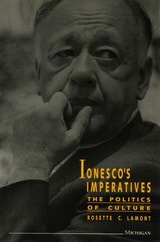
Ionesco's Imperatives
The Politics of CultureRosette C. Lamont
University of Michigan Press, 1993
Iranian Cinema and Globalization
National, Transnational, and Islamic DimensionsShahab Esfandiary
Intellect Books, 2012
Despite critical acclaim and a recent surge of popularity with Western audiences, Iranian cinema has been the subject of lamentably few academic studies—and those have by and large been limited to the films and filmmakers most visible on the international film circuit. Iranian Cinema and Globalization seeks to broaden readers’ exposure to other dimensions of Iranian cinema, including the works of the many prolific filmmakers whose films have received little outside attention despite being widely popular within Iran. Combining theories of globalization and national cinema with in-depth, interdisciplinary analyses of individual films, this volume expands the current literature on Iranian cinema with insights into the social, and religious political contexts involved.
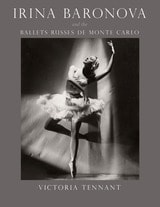
Irina Baronova and the Ballets Russes de Monte Carlo
Victoria Tennant
University of Chicago Press, 2014
Drawing on letters, correspondence, oral histories, and interviews, Baronova’s daughter, the actress Victoria Tennant, warmly recounts Baronova’s dramatic life, from her earliest aspirations to her grueling time on tour to her later years in Australia as a pioneer of the art. She begins with the Baronov family’s flight from Russia during the Revolution, which led them to Romania and later Paris, where at the age of thirteen, Baronova became a star, chosen by the legendary George Balanchine to join the Ballets Russes, where she danced the lead in Swan Lake. Tennant provides an intimate account of Baronova’s life as a dancer and rare behind-the-scenes stories of life on the road with the stars of the company. Spectacular photographs, a mix of archival images and family snapshots, offer many rare views of rehearsals, costumes, set designs, and the dancers themselves both at their most dazzling and in their most everyday.
The story of Irina Baronova is also the story of the rise of ballet in America thanks to the Ballets Russes, who brought the magisterial beauty and star power of dance to big cities and small towns alike. Irina Baronova and the Ballet Russes de Monte Carlo offers a unique perspective on this history, sure to be treasured by dance patrons and aspiring stars.
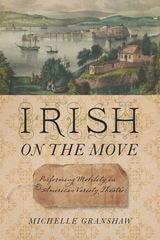
Irish on the Move
Performing Mobility in American Variety TheatreMichelle Granshaw
University of Iowa Press, 2019
A little over a century ago, the Irish in America were the targets of intense xenophobic anxiety. Much of that anxiety centered on their mobility, whether that was traveling across the ocean to the U.S., searching for employment in urban centers, mixing with other ethnic groups, or forming communities of their own. Granshaw argues that American variety theatre, a precursor to vaudeville, was a crucial battleground for these anxieties, as it appealed to both the fears and the fantasies that accompanied the rapid economic and social changes of the Gilded Age.
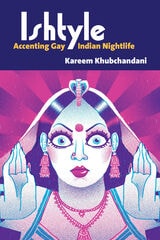
Ishtyle
Accenting Gay Indian NightlifeKareem Khubchandani
University of Michigan Press, 2020
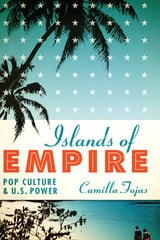
Islands of Empire
Pop Culture and U.S. PowerBy Camilla Fojas
University of Texas Press, 2014
Camilla Fojas explores a broad range of popular culture media—film, television, journalism, advertisements, travel writing, and literature—with an eye toward how the United States as an empire imagined its own military and economic projects. Impressive in its scope, Islands of Empire looks to Cuba, Guam, Hawai‘i, Puerto Rico, and the Philippines, asking how popular narratives about these island outposts expressed the attitudes of the continent throughout the twentieth century. Through deep textual readings of Bataan, Victory at Sea, They Were Expendable, and Back to Bataan (Philippines); No Man Is an Island and Max Havoc: Curse of the Dragon (Guam); Cuba, Havana, and Dirty Dancing: Havana Nights (Cuba); Blue Hawaii, Gidget Goes Hawaiian, and Paradise, Hawaiian Style (Hawai‘i); and West Side Story, Fame, and El Cantante (Puerto Rico), Fojas demonstrates how popular texts are inseparable from U.S. imperialist ideology.
Drawing on an impressive array of archival evidence to provide historical context, Islands of Empire reveals the role of popular culture in creating and maintaining U.S. imperialism. Fojas’s textual readings deftly move from location to location, exploring each island’s relationship to the United States and its complementary role in popular culture. Tracing each outpost’s varied and even contradictory political status, Fojas demonstrates that these works of popular culture mirror each location’s shifting alignment to the U.S. empire, from coveted object to possession to enemy state.
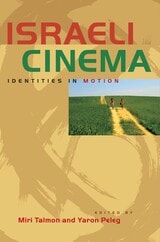
Israeli Cinema
Identities in MotionEdited by Miri Talmon and Yaron Peleg
University of Texas Press, 2011
With top billing at many film forums around the world, as well as a string of prestigious prizes, including consecutive nominations for the Best Foreign Film Oscar, Israeli films have become one of the most visible and promising cinemas in the first decade of the twenty-first century, an intriguing and vibrant site for the representation of Israeli realities. Yet two decades have passed since the last wide-ranging scholarly overview of Israeli cinema, creating a need for a new, state-of-the-art analysis of this exciting cinematic oeuvre.
The first anthology of its kind in English, Israeli Cinema: Identities in Motion presents a collection of specially commissioned articles in which leading Israeli film scholars examine Israeli cinema as a prism that refracts collective Israeli identities through the medium and art of motion pictures. The contributors address several broad themes: the nation imagined on film; war, conflict, and trauma; gender, sexuality, and ethnicity; religion and Judaism; discourses of place in the age of globalism; filming the Palestinian Other; and new cinematic discourses. The authors' illuminating readings of Israeli films reveal that Israeli cinema offers rare visual and narrative insights into the complex national, social, and multicultural Israeli universe, transcending the partial and superficial images of this culture in world media.
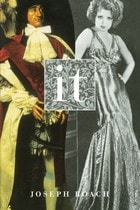
It
Joseph Roach
University of Michigan Press, 2011
A consumer’s guide to iconic celebrity and ageless glamour
“Strikingly original, wickedly witty, and thoroughly learned, Roach’s anatomy of abnormally interesting people and the vicarious pleasure we take in our modern equivalents to gods and royals will captivate its readers from the first page. I dare you to read just one chapter!”
—Felicity Nussbaum, University of California, Los Angeles
“It considers the effect that arises when spectacularly compelling performers and cultural fantasy converge, as in the outpouring of public grief over the death of Princess Diana. . . . An important work of cultural history, full of metaphysical wit . . . It gives us a fresh vocabulary for interpreting how after-images endure in cultural memory.”
—Andrew Sofer, Boston College
“Joseph Roach’s enormous erudition, sharp wit, engaging style, and gift for finding the most telling historical detail or literary quote are here delightfully applied to the intriguing subject of why certain historical and theatrical figures have possessed a special power to fascinate their public.”
—Marvin Carlson, Graduate Center, City University of New York
That mysterious characteristic “It”—“the easily perceived but hard-to-define quality possessed by abnormally interesting people”—is the subject of Joseph Roach’s engrossing new book, which crisscrosses centuries and continents with a deep playfulness that entertains while it enlightens.
Roach traces the origins of “It” back to the period following the Restoration, persuasively linking the sex appeal of today’s celebrity figures with the attraction of those who lived centuries before. The book includes guest appearances by King Charles II, Samuel Pepys, Flo Ziegfeld, Johnny Depp, Elinor Glyn, Clara Bow, the Second Duke of Buckingham, John Dryden, Michael Jackson, and Lady Diana, among others.

It's Alive!
The Science of B-Movie MonstersMichael LaBarbera
University of Chicago Press, 2013

It's All in the Delivery
Pregnancy in American Film and Television ComedyVictoria Sturtevant
University of Texas Press, 2024
2025 John G. Cawelti Award for the Best Textbook/Primer, Popular Culture Association/American Culture Association (PCA/ACA)
2025 Longlist, Kraszna-Krausz Moving Image Book Award
How changing depictions of pregnancy in comedy from the start of the twentieth century to the present show an evolution in attitudes toward women’s reproductive roles and rights.
Some of the most groundbreaking moments in American film and TV comedy have centered on pregnancy, from Lucille Ball’s real-life pregnancy on I Love Lucy, to the abortion plot on Maude; Murphy Brown’s controversial single motherhood; Arnold Schwarzenegger’s pregnancy in Junior; or the third-trimester stand-up special Ali Wong: Baby Cobra.
In the first book-length study of pregnancy in popular comedy, Victoria Sturtevant examines the slow evolution of pregnancy tropes during the years of the Production Code; the sexual revolution and changing norms around nonmarital pregnancy in the 1960s and ‘70s; and the emphasis on biological clocks, infertility, adoption, and abortion from the 1980s to now.
Across this history, popular media have offered polite evasions and sentimentality instead of real candor about the physical and social complexities of pregnancy. But comedy has often led the way in puncturing these clichés, pointing an irreverent and satiric lens at the messy and sometimes absurd work of gestation. Ultimately, Sturtevant argues that comedy can reveal the distortions and lies that treat pregnancy as simple and natural “women’s work,” misrepresentations that rest at the heart of contemporary attacks on reproductive rights in the US.
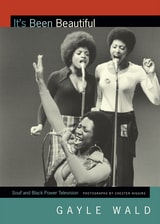
It's Been Beautiful
Soul! and Black Power TelevisionGayle Wald
Duke University Press, 2015
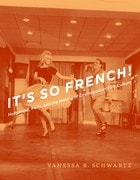
It's So French!
Hollywood, Paris, and the Making of Cosmopolitan Film CultureVanessa R. Schwartz
University of Chicago Press, 2007
Hollywood was once enamored with everything French and this infatuation blossomed in a wildly popular series of films including An American in Paris, Gigi,and Funny Face. Schwartz here examines the visual appeal of such films, and then broadens her analysis to explore their production and distribution, probing the profitable influences that Hollywood and Paris exerted on each other. This exchange moved beyond individual films with the sensational spectacle of the Cannes Film Festival and the meteoric career of Brigitte Bardot. And in turn, their success led to a new kind of film that celebrated internationalism and cultural hybridity. Ultimately, Schwartz uncovers an intriguing paradox: that the road to globalization was paved with nationalist clichés, and thus, films beloved for being so French were in fact the first signs of a nascent cosmopolitan culture.
Packed with an array of colorful film stills, publicity photographs, paparazzi shots, ads, and never before seen archival images, It’s So French! is an incisive account of the fertile collaboration between France and the United States that expanded the geographic horizons of both filmmaking and filmgoing, forever changing what the world saw and dreamed of when they went to the movies.