Results by title
3785 books match the query 'Poetry' and 144 start with i
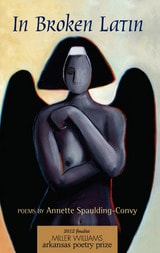
In Broken Latin
PoemsAnnette Spaulding-Convy
University of Arkansas Press, 2012
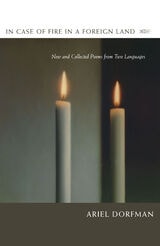
In Case of Fire in a Foreign Land
New and Collected Poems from Two LanguagesAriel Dorfman
Duke University Press, 2002
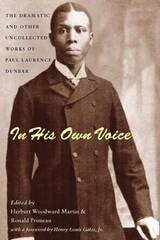
In His Own Voice
The Dramatic and Other Uncollected Works of Paul Laurence DunbarPaul Laurence Dunbar
Ohio University Press, 2002
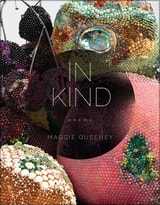
In Kind
Maggie Queeney
University of Iowa Press, 2023
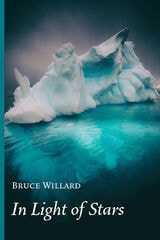
In Light of Stars
Bruce Willard
Four Way Books, 2021
Willard’s love of music combines with his love and respect for the natural world. Often rooted in, or coming out of, domestic encounters, the poems of this collection rise up (much like the clouds over his oft-traversed Rockies), as the speaker throws his attention to earth and sky, better to understand his own dynamic and shifting inner weather.
In Order to Talk with the Dead
Selected Poems of Jorge TeillierBy Jorge Teillier
University of Texas Press, 1993
"In order to talk with the dead
you have to know how to wait:
they are fearful
like the first steps of a child.
But if we are patient
one day they will answer us
with a poplar leaf trapped in a broken mirror,
with a flame that suddenly revives in the fireplace,
with a dark return of birds
before the glance of a girl
who waits motionless on the threshold."
—from "In Order to Talk with the Dead"
Reared in the rainy forests of Chile's "La Frontera" region which had nurtured Pablo Neruda a generation earlier, Jorge Teillier has become one of Chile's leading contemporary poets, whose work is widely read in Latin America and Europe along with the poetry of his well-known contemporaries Nicanor Parra and Enrique Lihn. This English-Spanish bilingual anthology now introduces English-speaking readers to Teillier, with a representative selection of his best work from all phases of his career.
Carolyne Wright has translated poems from the volumes Muertes y maravillas (1971), Para un pueblo fantasma (1978), and Cartas para reinas de otras primaveras (1985). Avoiding the bravura effects of some of his contemporaries, Teillier writes from a life lived directly and simply, returning time and again in his poetry to the timeless and mythic South of his boyhood, the "Land of Nevermore."
In Praise of Krishna
Songs from the BengaliEdward C. Dimock Jr. and Denise Levertov
University of Chicago Press, 1981
In Praise of the Impure
Poetry and the Ethical Imagination: Essays, 1980-1991Alan Shapiro
Northwestern University Press, 1993
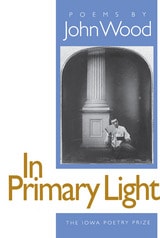
In Primary Light
John Wood
University of Iowa Press, 1994
John Wood is well known for his brilliant writing on the history of photography, but for many years he has also centered on his work as a poet, publishing in some of the very best magazines and gaining the deep admiration of many writers and poets. This book is testimony of his devotion to his craft – a fully realized, mature, and carefully constructed collection.
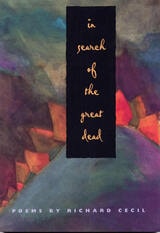
In Search of the Great Dead
Richard Cecil
Southern Illinois University Press, 1999
With grim humor and humorous grimness, In Search of the Great Dead engages the great themes of poetry: death and fame.
The title poem of this collection records Richard Cecil's quest for the tombs of the famous dead. At first the search leads him on a tour of famous European tombstones—the grave of Chateaubriand in St. Malo, the shared tomb of Gertrude Stein and Alice B. Toklas in Pere-Lachaise cemetery in Paris, Yeats's old Celtic cross in Sligo—but gradually it expands into areas where all the tombs have been erased by time or vandalism—the tombs of Seneca and Lucan, and all of the great dead poets whose names have been lost. These once famous, now unknown poets lead Cecil to consider those graveyards full of anonymous dead—the civil war soldiers buried under tiny stones with numbers instead of names inscribed on them. Are they more anonymous than the once famous, now forgotten "great" dead?
Though Cecil is wryly aware of his own obscurity, his poems are strangely optimistic and life-affirming. His reply to Emily Dickinson's question: "I'm Nobody—are you / Nobody, too?" is an enthusiastic yes! In Search of the Great Dead conveys the joy of being Nobody and the shy, almost buried hope that someday (after death), he might become Somebody.
In Time
Poets, Poems, and the RestC. K. Williams
University of Chicago Press, 2012
In a Beautiful Country
Kevin Prufer
Four Way Books, 2011

In a Cabin, in the Woods
Michael Krüger
Seagull Books, 2024
When the COVID-19 pandemic hit, Michael Krüger was suffering from severe shingles and just beginning treatment for leukemia. Because his immune system was so compromised that even a cough would have knocked him flat, he had to stay away from people. He retired to a wooden house near Lake Starnberg in Germany, and from there he dispatched his poetic messages. Krüger’s meditations from quarantine were printed for many months in the magazine of the Süddeutsche Zeitung and met with an enthusiastic response. In a Cabin, in the Woods collects fifty tableaux of nature, images of the immediate surroundings of a restricted life that also look beyond the horizon. At the same time, these poems look inward to explore transience, illness, and death. Humorous and melancholy, these are studies of the world made with the tiniest compass—meditations on nature and the nature of self that touch us all.
In a Fine Frenzy
Poets Respond to ShakespeareStarkey, David
University of Iowa Press, 2005
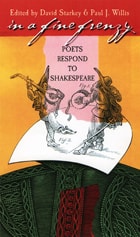
Showcasing poems by more than ninety contemporary American poets, In a Fine Frenzyreveals what Shakespeare’s poetic children have made of their inheritance. Particularly interested in Viola, Miranda, Prospero, Desdemona, Iago, Lear, Cordelia, Hamlet, Horatio, and Ophelia, the poets respond to the sonnets, the comedies, the tragedies, the romances, and, to a lesser degree, Shakespeare the man. In so doing they reveal the aspects of his work most currently captivating to modern writers.
Those who cherish Shakespeare’s mercurial wit will delight in the rapid shifts, from grief to hilarity, so characteristic of the bard himself. Comic poems about tragedies follow decidedly somber poems about comedies. Single poems contain multiple emotional twists and turns. Some pay homage; most interact directly with the original Shakespearean text. Collectively, they corroborate Ben Jonson's assertion that Shakespeare is “not of an age, but for all time.”
In an Angry Season
Lisa D. Chávez
University of Arizona Press, 2001
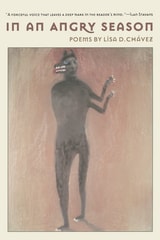
A white woman navigates her fear and uncertainty to learn the ways of the people she called savages, until she begins to dream “in Dakota, syllables sliding / on my tongue like tender pieces of meat.” An African man, on display as a cannibal at the World’s Columbian Exposition in 1893, sees into the future: “humiliations heaped up / as on overfilled plates . . . / . . . a country that casually / consumes its own.” A woman holds the gray-blue barrel of a gun in her mouth, “the taste familiar / as her own blood.”
With an unexcelled command of narrative verse, Lisa Chávez tells the stories of American lives across more than a century. Whether retelling nineteenth-century captivity narratives or depicting contemporary American women confronting addiction and despair, Chávez investigates issues of identity and self-definition in the face of an often harsh and unremitting history.
Her story-poems explore the ways in which people have been made captive—whether to racism or national policy, to bad marriages or alcoholism, to poverty or emotion—from the Inuit woman birthing a son among strangers to the wife now deranged by desire for another man: “He’s the smoky slow-burn of chipotle on the tongue. My golden idol. My gospel revival. He’s hashish sweet and languorous—my body’s one desire.”
In the end, Chávez shows us a New World of promise in which an alchemist’s assistant summons stories from stones by calling their names with “clicks of her tongue, / syllables of silver, turquoise, and jade,” and a Native woman discovers her true power in an Alaskan bar. Passionate and political, In an Angry Season is a work of startling depth and breadth—an American history in poetry—that asks us what it means to be civilized.
In an Invisible Glass Case Which Is Also a Frame
Julia Guez
Four Way Books, 2019
In the Absence of Clocks
Jacob Shores-Arguello
Southern Illinois University Press, 2012
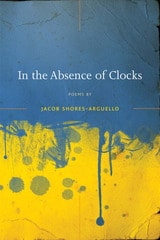
In the fascinating collection of poems, In the Absence of Clocks, poet Jacob Shores-Arguello takes readers on an illuminating voyage through Ukrainian life. Set during the turmoil of the 2004 Orange Revolution, when the country trembled in the wake of political corruption and public outrage, Shores-Arguello’s lyrics of a revolution provide a glimpse into a world at once foreign and familiar.
Throughout the collection are the iconic images and myriad juxtapositions of Ukrainian life. wolves howling in the snow and bakers pounding early-morning loaves of bread; farmlands and cities alike rocked by political transformation; gypsies and protesters; opulent images of Byzantium and the concrete ghosts of Chernobyl—all meet here at the crossroads of East and West, democracy and communism, reality and mythology. As the narrator travels across the Ukraine, he does much more than cross the distances between Horlivka and Odessa or Kiev and the Black Sea. As the tides of change swirl around him, they mirror his own search for a cultural identity and history.

In the Belly
David Gewanter
University of Chicago Press, 1996
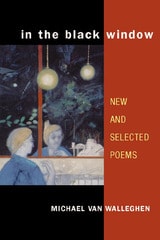
In the Black Window
NEW AND SELECTED POEMSMichael Van Walleghen
University of Illinois Press, 2004
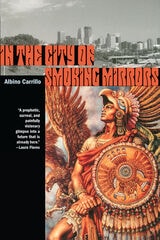
In the City of Smoking Mirrors
Albino Carrillo
University of Arizona Press, 2004
In the City of Smoking Mirrors relates H.'s adventures as he hovers between life and death, revisiting his homeland and ancestors. He issues letters and edicts—to the faithful, to his dead amigos—and chronicles his circumnavigation of the Land of the Dead and "what he saw there that made him write this book." In tantalizing verse that walks the edge of dream, Albino Carrillo takes readers on a lyrical exploration of a dark netherworld, a quest for hope in a universe overshadowed by impending doom—a place where "The demons you'll have to defeat on your inward journey / Are like so many little yellow hornets buzzing about / Window screens in summer, angry but looking / For anything sweet, any way out . . . ." Through the unforgettable persona of Huitzilopochtli, Carrillo shows us the transitory nature of our passions and wounds as he chisels a new headstone for our times.
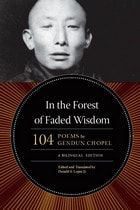
In the Forest of Faded Wisdom
104 Poems by Gendun Chopel, a Bilingual EditionGendun Chopel
University of Chicago Press, 2009
In a culture where poetry is considered the highest form of human language, Gendun Chopel is revered as Tibet’s greatest modern poet. Born in 1903 as British troops were preparing to invade his homeland, Gendun Chopel was identified at any early age as the incarnation of a famous lama and became a Buddhist monk, excelling in the debating courtyards of the great monasteries of Tibet. At the age of thirty-one, he gave up his monk’s vows and set off for India, where he would wander, often alone and impoverished, for over a decade. Returning to Tibet, he was arrested by the government of the young Dalai Lama on trumped-up charges of treason, emerging from prison three years later a broken man. He died in 1951 as troops of the People’s Liberation Army marched into Lhasa.
Throughout his life, from his childhood to his time in prison, Gendun Chopel wrote poetry that conveyed the events of his remarkable life. In the Forest of Faded Wisdom is the first comprehensive collection of his oeuvre in any language, assembling poems in both the original Tibetan and in English translation. A master of many forms of Tibetan verse, Gendun Chopel composed heartfelt hymns to the Buddha, pithy instructions for the practice of the dharma, stirring tributes to the Tibetan warrior-kings, cynical reflections on the ways of the world, and laments of a wanderer, forgotten in a foreign land. These poems exhibit the technical skill—wordplay, puns, the ability to evoke moods of pathos and irony—for which Gendun Chopel was known and reveal the poet to be a consummate craftsman, skilled in both Tibetan and Indian poetics. With a directness and force often at odds with the conventions of belles lettres, this is a poetry that is at once elegant and earthy. In the Forest of Faded Wisdom is a remarkable introduction to Tibet’s sophisticated poetic tradition and its most intriguing twentieth-century writer.
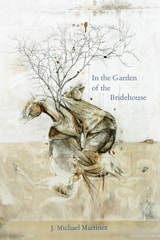
In the Garden of the Bridehouse
J. Michael Martinez
University of Arizona Press, 2014
Turning the page into a visual field, as in the deconstructed musical score telling the tale of La Llorona, In the Garden of the Bridehouse questions the line between visual art and poetry. The work employs the vernacular, the stylized language of theory, and the blank canvas of the page in its exploration of the known and unknowable.
Throughout the work, Martinez paradoxically exercises both a lyrical minimalism and a baroque poetic, uniting Mesoamerican preconquest imaginary with the sensuality of the Biblical Song of Songs, cultivating a lyrical space wherein contrasting potentials are—as one—realized in their shared promise.
In the Good Years
Laura Cresté
Four Way Books, 2025
In the Home of the Famous Dead
Collected PoemsJo McDougall
University of Arkansas Press, 2015
In the Human Zoo
Jennifer Perrine
University of Utah Press, 2011
Winner of the Agha Shahid Ali Poetry Prize
In the Kingdom of the Ditch
Todd Davis
Michigan State University Press, 2013
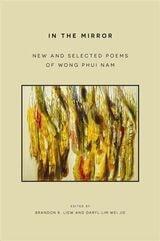
In the Mirror
New and Selected Poems of Wong Phui NamWong Phui Nam
National University of Singapore Press, 2025
The poetry of Wong Phui Nam is foundational to Malaysian literature in English. While his early work is often cited in this regard, this edited collection of his poetry and critical essays makes it clear that his lifelong trajectory as a poet and critic is of deep interest. In the Mirror by Wong Phui Nam is a critical exploration of Malaysia's fractured post-colonial identity and literary landscapes.
Like many of his English-speaking peers at the University of Malaya, by the 1960s, Wong became disillusioned with the stark contradictions of writing in a colonial language while striving to build or maintain a national literary tradition. In 1969, when Malaysia's national cultural policy firmly emphasized the primacy of the Bahasa Malaysian language over English, Wong proclaimed, "I no longer wanted to write, at least not in a language I was told was a colonial leftover."
Over the years, however, he returned to poetry in English, often publishing privately. He came to believe that English was the language “most capable of representing our predicament,” given the spiritual and cultural vacuums left by colonialism's great ruptures in the region, and the ongoing neocolonial structure of the state and economy. His work challenges the reader to confront the realities of cultural displacement and the complexities of a multi-ethnic society grappling with its past and future.
This collection includes both recent works as well as some of his earlier achievements, starting with How the Hills are Distant, and also includes a foreword linking Wong's work with contemporary literary work in the region. An afterword by Wong's contemporary, Singaporean literary pioneer Edwin Thumboo, completes the volume.
In the Shadow's Light
Yves Bonnefoy
University of Chicago Press, 1991
"Included here is a very helpful and touchingly personal interview with the poet. . . . For readers with no prior knowledge of Bonnefoy's work, this volume would be an excellent place to start."—Stephen Romer, Times Literary Supplement
In the Tree Where the Double Sex Sleeps
Rob Schlegel
University of Iowa Press, 2019
In the Voice of Others
Chinese Music Bureau PoetryJoseph R. Allen
University of Michigan Press, 1992
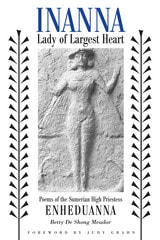
Inanna, Lady of Largest Heart
Poems of the Sumerian High Priestess EnheduannaBy Betty De Shong Meador
University of Texas Press, 2001
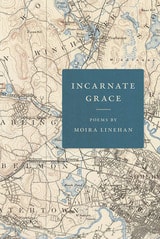
Incarnate Grace
Moira Linehan
Southern Illinois University Press, 2015
In her collection Incarnate Grace, poet Moira Linehan explores, questions, and ultimately celebrates her attempt to live in the temple of the present.
After learning she has breast cancer, the poet struggles to live an examined life. Alienated and estranged from her own body, she turns her cancer into “these binoculars, / this new way of looking,” and uses it as a way of fixing herself firmly within the moment. As she travels Ireland and the Pacific Northwest, her busy mind moves from the knot in her breast to the knots in her knitting to the illuminated knots of The Book of Kells to the tossing, knotted surface of the sea; from the margins of her surgery—clean but not ideal—to the margins of illuminated manuscripts. She links the mundane to the mythic, intertwining connections between scripture and nature, storms and loss, winter and light, breast cancer and embroidery. As she returns to her home on a small pond in Massachusetts, she takes with her the fruits of her travels: the incarnate grace of the ordinary.
Vivid and compelling, Incarnate Grace finds beauty in the worst of circumstances and redemption in the fabric of daily life.
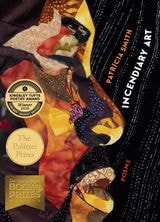
Incendiary Art
PoemsPatricia Smith
Northwestern University Press, 2017
From National Book Award winner Patricia Smith
One of the most magnetic and esteemed poets in today’s literary landscape, Patricia Smith fearlessly confronts the tyranny against the black male body and the tenacious grief of mothers in her compelling new collection, Incendiary Art. She writes an exhaustive lament for mothers of the "dark magicians," and revisits the devastating murder of Emmett Till. These dynamic sequences serve as a backdrop for present-day racial calamities and calls for resistance. Smith embraces elaborate and eloquent language— "her gorgeous fallen son a horrid hidden / rot. Her tiny hand starts crushing roses—one by one / by one she wrecks the casket’s spray. It’s how she / mourns—a mother, still, despite the roar of thorns"— as she sharpens her unerring focus on incidents of national mayhem and mourning. Smith envisions, reenvisions, and ultimately reinvents the role of witness with an incendiary fusion of forms, including prose poems, ghazals, sestinas, and sonnets. With poems impossible to turn away from, one of America’s most electrifying writers reveals what is frightening, and what is revelatory, about history.
Winner, 2017 Los Angeles Times Book Prize
Finalist, 2018 Pulitzer Prize for Poetry
Winner, NAACP Image Award for Outstanding Literary Work in the Poetry category
Winner, 2018 Kingsley Tufts Poetry Award
Winner, 2018 BCALA Best Poetry Award
Winner, Abel Meeropol Award for Social Justice
Finalist, Neustadt International Prize for Literature
Winner, 2021 Ruth Lilly Poetry Prize
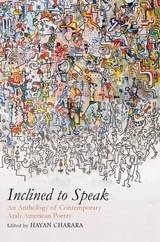
Inclined to Speak
An Anthology of Contemporary Arab American PoetryHayan Charara
University of Arkansas Press, 2008
Incomplete Knowledge
PoemsJeffrey Harrison
Four Way Books, 2006
Incontinence
Susan Hahn
University of Chicago Press, 1993
"Stitching together tropes about writing and technique, as well as hunting and the loss of sexual innocence, [Hahn] marks and exploits the body with surgical precision in order to explore the peripheries of the personal lyric. She wants to take poetry to the most tangible and sensual extremes. It's often uncomfortable, and yet as often results in a poetry of generous, piercing honesty, as if (to rewrite Bradford) it's by the body we are 'plainly told.'"—David Baker, Poetry
"Incontinence has an enormous, almost epic sweep."—Chicago Sun-Times
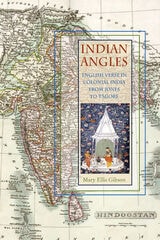
Indian Angles
English Verse in Colonial India from Jones to TagoreMary Ellis Gibson
Ohio University Press, 2011
A 2012 CHOICE “Outstanding Academic Title“
A new historical approach to Indian English literature
Mary Ellis Gibson shows that poetry, not fiction, was the dominant literary genre of Indian writing in English until 1860 and that poetry written in colonial situations can tell us as much or even more about figuration, multilingual literacies, and histories of nationalism than novels can. Gibson re-creates the historical webs of affiliation and resistance that were experienced by writers in colonial India—writers of British, Indian, and mixed ethnicities.
Advancing new theoretical and historical paradigms for reading colonial literatures, Indian Angles makes accessible many writers heretofore neglected or virtually unknown. Gibson recovers texts by British women, by nonelite British men, and by persons who would, in the nineteenth century, have been called Eurasian. Her work traces the mutually constitutive history of English-language poets from Sir William Jones to Toru Dutt and Rabindranath Tagore. Drawing on contemporary postcolonial theory, her work also provides new ways of thinking about British internal colonialism as its results were exported to South Asia.
In lucid and accessible prose, Gibson presents a new theoretical approach to colonial and postcolonial literatures.
Indifferent Cities
Ángel García
Tupelo Press, 2025
Through one state to another, from one country to the next Indifferent Cities traverses both distance and time to reconcile the most confounding reality of family: our people, sometimes, are the people we know least. Utilizing forms such as ekphrasis and epistolary, the collection sources photographs, postcards, and official documents as well as rumor, suspicion, and supposition to uncover the consequences, by choice or circumstance, of migration and immigration between Mexico and the United States across four generations.
Surveying the terrain of what one knows and does not know, what one inherits and disinherits, Indifferent Cities wrestles with every departure, each arrival, and the author’s inevitable return to determine where and to who he belongs.
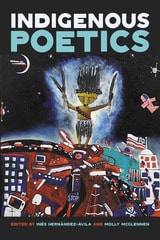
Indigenous Poetics
Inés Hernández-Ávila
Michigan State University Press, 2025

Indirect Light
Malachi Black
Four Way Books, 2024
Reliving the overdoses of beloved friends, Malachi Black closes this book’s opening poem with a resuscitating command: “Doctor, / turn back. One of us lives.” Indirect Light is a testament to and apologia for this assertion of vitality, each eponymous poem an elegy dedicated to one of Black’s dearly departed. Though this book mourns an irretrievable past, it wages war against amnesia, refusing to let death erase the vibrancy of their lives. These poems preserve “the breath we left beside us on the train tracks,” “the watery inscriptions of nearby dogwood branches / dipped in shade,” “our bookbags’ mouths / pouting open on our laps,” “our street-scabbed bodies / briefly tinseled in the sun.”
Insofar as this collection returns to friends and kin to honor them by the indirect light of memory, it also seeks to memorialize the author’s personal experience of adolescence and addiction amidst the opioid epidemic. It is a lament for all that’s lost and a paean to the near misses and the just enough: a dim glow you can see by, a cup of coffee passed during NA, a prayer during detox to “be // as empty / as the sky” if floating means survival.
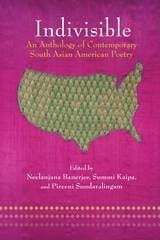
Indivisible
An Anthology of Contemporary South Asian American PoetryNeelanjana Banerjee
University of Arkansas Press, 2010
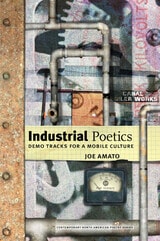
Industrial Poetics
Demo Tracks for a Mobile CultureJoe Amato
University of Iowa Press, 2006
Through a dizzying array of references to subjects ranging from engineering to poetry, on-the-job experiences in academia and industry, conflicts between working-class and intellectual labor, the privatization of universities, and the contradictions of the modern environment, Joe Amato’s Industrial Poetics mounts a boisterous call for poetry communities to be less invested in artistic self-absorption and more concerned about social responsibility.
As Amato focuses on the challenges faced by American poets in creating a poetry that speaks to a public engineered into complacency by those industrial technologies, practices, and patterns of thought that we cannot seem to do without, he brings readers face to face with the conflicting realities of U.S. intellectual, academic, and poetic culture.
Formally adventurous and rhetorically lively, Industrial Poetics is best compared with the intellectually exploratory, speculative, risky, polemical work of other contemporary poet-critics including Kathleen Fraser, Joan Retallack, Bruce Andrews, Susan Howe, and Allen Grossman. Amato uses an exhilarating range of structural and rhetorical strategies: conventionally developed argument, abruptly juxtaposed aphorisms, personal narrative, manifesto-like polemic, and documentary reportage. With a critic’s sharply analytical mind, a poet’s verve, and a working-class intellectual’s sense of social justice, Amato addresses the many nonliterary institutions and environments in which poetry is inextricably embedded.
By connecting poetry to industry in a lively demonstration against the platitudes and habitudes of the twentieth century, Amato argues for a reenergized and socially forceful poetics—an industrial poetics, rough edges and all. Jed Rasula writes, “I can't say I pay much attention to talk radio, but this is what I imagine it might be like if the deejay were really smart, enviably well read, yet somehow retained the snarling moxie of the AM format.”
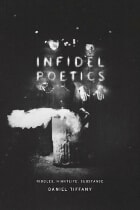
Infidel Poetics
Riddles, Nightlife, SubstanceDaniel Tiffany
University of Chicago Press, 2009
Poetry has long been regarded as the least accessible of literary genres. But how much does the obscurity that confounds readers of a poem differ from, say, the slang that seduces listeners of hip-hop? Infidel Poetics examines not only the shared incomprensibilities of poetry and slang, but poetry's genetic relation to the spectacle of underground culture.
Charting connections between vernacular poetry, lyric obscurity, and types of social relations—networks of darkened streets in preindustrial cities, the historical underworld of taverns and clubs, the subcultures of the avant-garde—Daniel Tiffany shows that obscurity in poetry has functioned for hundreds of years as a medium of alternative societies. For example, he discovers in the submerged tradition of canting poetry and its eccentric genres—thieves’ carols, drinking songs, beggars’ chants—a genealogy of modern nightlife, but also a visible underworld of social and verbal substance, a demimonde for sale.
Ranging from Anglo-Saxon riddles to Emily Dickinson, from the icy logos of Parmenides to the monadology of Leibniz, from Mother Goose to Mallarmé, Infidel Poetics offers an exhilarating account of the subversive power of obscurity in word, substance, and deed.
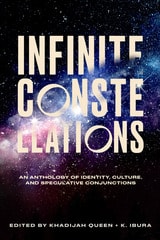
Infinite Constellations
An Anthology of Identity, Culture, and Speculative ConjunctionsEdited by Khadijah Queen and K. Ibura
University of Alabama Press, 2023
A galaxy of voices. A universe of belonging.
The innovative fictions in Infinite Constellations showcase the voices and visions of 30 remarkable writers, both new and established, from the global majority: Native American/First Nation writers, South Asian writers, East Asian writers, Black American writers, Latinx writers, and Caribbean and Middle Eastern writers. These are visions both familiar and strange, but always rooted in the mystery of human relationships, the deep honoring of memory, and the rootedness to place and the centering of culture.
The writers in this anthology mirror, instruct, bind and unbind, myth-make and myth-invert, transform and transmute, make us belly-laugh or hum our understanding, gasp or whisper gently, and remember that sometimes we need to holler and fight as we grieve. Any dangers herein, imagined or observed in poem and story, transport us: moving from latent to extant, then unleashed.
This work does not presume; it presents and blossoms, creating a constellation of appearances, a symphony of belonging.
“In collecting this work,” note editors Khadijah Queen and K. Ibura, “we felt humbled by the love threaded throughout the voices speaking to us in stories and poems that vault beyond expectation and settle in our consciousness as an expansion of what’s possible when we tend to one another with intention. We felt lifted, held aloft in these arrangements of language. We hope that as you read each story and poem, you will find the same sense of empowerment and celebration that we know has sustained us over countless generations, and in their beauty and humor and intelligence and complexity, continue to enrich us still.”
CONTRIBUTORS
George Abraham / Kenzie Allen / Shreya lla Anasuya / Thea Anderson / Wendy Chin-Tanner / Alton Melvar M. Depanas / Yohanca Delgado / Jennifer Elise Foerster / Aerik Francis / André O. Hoilette / Brian K. Hudson / K. Ibura / Pedro Iniguez / Ruth Ellen Kocher / Ra’Niqua Lee / Tonya Liburd / Kenji C. Liu / Shalewa Mackall / Lucien Darjeun Meadows / Melanie Merle / Juan J. Morales / Thirii Myo Kyaw Myint / Cindy Juyound Ok / Daniel José Older / Soham Patel / Lynn C. Pitts/ Khadijah Queen / Sheree Renée Thomas / Sarah Sophia Yanni / dg nanouk okpik / shakirah peterson
Infinity Diary
Cyril Wong
Seagull Books, 2020

Infinity Pool
Jonathan Thirkield
University of Chicago Press, 2024
Diving through illusions and phantoms of virtual realms and into the human desire for boundless possibility, Infinity Pool charts the ways technologies have become embedded in our minds, bodies, and lives. Immersed in a world of data streams, neural nets, spider algorithms, and electronic terminals, Jonathan Thirkield’s poems plumb the dissonances and shrinking distances between ourselves and digital technologies, imagining what becomes of the fragile machinery of the human body amid a rapidly transforming world.
Thirkield turns to language as a mediator and explores infinity as a mathematical concept, a multiverse conceit, and a driver of the computational imagination. Traveling across the full spectrum of digital experience—from satellites crossing the edges of our solar system to microscopic bytes that operate beneath our perception—this collection is a testament to the future we imagine ourselves to be living through and to what happens when our escapist desires give way to the realities of birth, loss, parenthood, and sickness.
Through lyrical, narrative, and formal mutations, these poems cut through a decade of exponential technological growth, landing in the reality of our corporeal experiences: the isolation of chronic illness, the daunting journeys of children growing up today, and the hope that we can remain connected to each other no matter how tenuous the ties.
Infrathin
An Experiment in MicropoeticsMarjorie Perloff
University of Chicago Press, 2021
The “infrathin” was Marcel Duchamp’s playful name for the most minute shade of difference: that between the report of a gunshot and the appearance of the bullet hole, or between two objects in a series made from the same mold. “Eat” is not the same thing as “ate.” The poetic, Marjorie Perloff suggests, can best be understood as the language of infrathin. For in poetry, whether in verse or prose, words and phrases that are seemingly unrelated in ordinary discourse are realigned by means of sound, visual layout, etymology, grammar, and construction so as to “make it new.”
In her revisionist “micropoetics,” Perloff draws primarily on major modernist poets from Stein and Yeats to Beckett, suggesting that the usual emphasis on what this or that poem is “about,” does not do justice to its infrathin possibilities. From Goethe’s eight-line “Wanderer’s Night Song” to Eliot’s Four Quartets, to the minimalist lyric of Rae Armantrout, Infrathin is designed to challenge our current habits of reading and to answer the central question: what is it that makes poetry poetry?
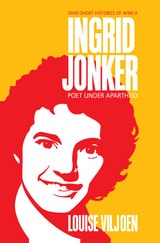
Ingrid Jonker
Poet under ApartheidLouise Viljoen
Ohio University Press, 2012
Nelson Mandela brought the poetry of Ingrid Jonker to the attention of South Africa and the wider world when he read her poem “Die kind” (The Child) at the opening of South Africa’s first democratic parliament on May 24, 1994. Though Jonker was already a significant figure in South African literary circles, Mandela’s reference contributed to a revival of interest in Jonker and her work that continues to this day.
Viljoen’s biography illuminates the brief and dramatic life of Jonker, who created a literary oeuvre—as searing in its intensity as it is brief—before taking her own life at the age of thirty-one. Jonker wrote against a background of escalating apartheid laws, violent repression of black political activists, and the banning of the African National Congress and the Pan Africanist Congress. Viljoen tells the story of Ingrid Jonker in the political and cultural context of her time, provides sensitive insights into her poetry, and considers the reasons for the enduring fascination with her life and death.
Her writings, her association with bohemian literary circles, and her identification with the oppressed brought her into conflict with her father, a politician in the white ruling party, and with other authority figures from her Afrikaner background. Her life and work demonstrate the difficulty and importance of artistic endeavor in a place of terrible conflict.

Inland
Pamela Alexander
University of Iowa Press, 1997
Despite this variety, Inland has an emerging organization that suggests a kind of plot. The family is left behind in the way that families of origin always are, revealed fully only in perspective: “foghorns / in the harbor, two different pitches / at different intervals / repeating so often I didn't hear them / and their accidental harmonies / until I'd left town.” Shifting toward the subject of new relationships, in her diatribe against a past (and passing) lover Alexander gives a new twist to the fact that this subject has been fair game for poets for centuries: “...you could say hello, you canoe-footed fur-faced / musk ox, pockets full of cheese and acorns / and live fish and four-headed winds and sky...”
James Merrill, praising Alexander's first book, called it “a wonderful achievement. Her language is now simple, now playful, now extremely poignant.” This is an apt description of Inland as well, a book that shows Alexander in witty yet serious engagement with the world. The longest poem here, “Swallowing the Anchor” (the title is the sailors' term for giving up the sea), is also the most directly personal. It closes the section of the book in which the poet comes to terms with losses, including the death of the loved one. She does this with grace—and her wit is not jokes, her poignancy is not sentimentality.

Innocent Eye
A Passionate Look at Contemporary ArtPatricia Rosoff
Tupelo Press, 2013