Results by title
1861 books match the query 'Social life and customs' and 74 start with i
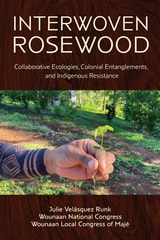
Interwoven Rosewood
Collaborative Ecologies, Colonial Entanglements, and Indigenous ResistanceJulie Velásquez Runk, the Wounaan National Congress, and the Wounaan Local Congress of Majé
University of Arizona Press, 2026
Interwoven Rosewood is a collaborative exploration of the global rosewood trade and its entanglements with Indigenous lifeways, colonial histories, and environmental crises. Co-authored by Julie Velásquez Runk and members of the Wounaan National Congress and its Local Congress of the Majé community, this book traces the story of cocobolo rosewood from Wounaan lands in Panama to international markets, revealing how centuries of settler colonialism and extractive capitalism continue to shape landscapes, livelihoods, and relationships. At its heart, the book is a meditation on well-being and belonging—how people live in relation to land, each other, and the more-than-human world.
Drawing on more than a decade of community-based research and six collaborative book workshops, the authors weave together first-person narratives, ecological analysis, historical context, and Indigenous knowledge. The result is a richly textured account that challenges dominant narratives of environmental degradation by centering Wounaan experiences of joy, resistance, and conviviality. The book’s structure reflects its method: interwoven chapters authored or spoken by Wounaan colleagues, grounded in consent protocols and shaped by ancestral storytelling traditions.
Accessibly written, Interwoven Rosewood is ideal for courses in environmental conservation, Indigenous studies, anthropology, Latin American studies, and political ecology. With its interdisciplinary reach and classroom-ready discussion questions, the book invites readers to reflect on the global forces behind environmental catastrophe—and the enduring power of Indigenous ways of knowing, being, and becoming.
Intimate Eating
Racialized Spaces and Radical FuturesAnita Mannur
Duke University Press, 2022
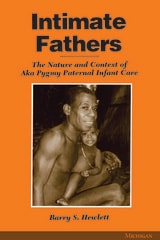
Intimate Fathers
The Nature and Context of Aka Pygmy Paternal Infant CareBarry S. Hewlett
University of Michigan Press, 1991
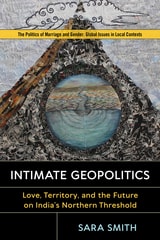
Intimate Geopolitics
Love, Territory, and the Future on India’s Northern ThresholdSara Smith
Rutgers University Press, 2020
2021 Foreword Indies Finalist - Politics and Social Sciences
Intimate Geopolitics begins with a love story set in the Himalayan region of Ladakh, in India’s Jammu and Kashmir State, but this is also a story about territory, and the ways that love, marriage, and young people are caught up in contemporary global processes. In Ladakh, children grow up to adopt a religious identity in part to be counted in the census, and to vote in elections. Religion, population, and voting blocs are implicitly tied to territorial sovereignty and marriage across religious boundaries becomes a geopolitical problem in an area that seeks to define insiders and outsiders in relation to borders and national identity. This book populates territory, a conventionally abstract rendering of space, with the stories of those who live through territorial struggle at marriage and birth ceremonies, in the kitchen and in the bazaar, in heartbreak and in joy. Intimate Geopolitics argues for the incorporation of the role of time–temporality–into our understanding of territory.
Intimate Inequalities
Millennials' Romantic Relationships in Contemporary TimesCristen Dalessandro
Rutgers University Press, 2021
Intimate Subjects
Touch and Tangibility in Britain's Cerebral AgeSimeon Koole
University of Chicago Press, 2024
When, where, and who gets to touch and be touched, and who decides? What do we learn through touch? How does touch bring us closer together or push us apart? These are urgent contemporary questions, but they have their origins in late nineteenth- and early twentieth-century Britain, when new urban encounters compelled intense discussion of what touch was, and why it mattered. In this vividly written book, Simeon Koole excavates the history of these concerns and reveals how they continue to shape ideas about “touch” in the present.
Intimate Subjects takes us to the bustling railway stations, shady massage parlors, all-night coffee stalls, and other shared spaces where passengers, customers, vagrants, and others came into contact, leading to new understandings of touch. We travel in crammed subway cars, where strangers negotiated the boundaries of personal space. We visit tea shops where waitresses made difficult choices about autonomy and consent. We enter classrooms in which teachers wondered whether blind children could truly grasp the world and labs in which neurologists experimented on themselves and others to unlock the secrets of touch. We tiptoe through London’s ink-black fogs, in which disoriented travelers became newly conscious of their bodies and feared being accosted by criminals. Across myriad forgotten encounters such as these, Koole shows, touch remade what it meant to be embodied—as well as the meanings of disability, personal boundaries, and scientific knowledge.
With imagination and verve, Intimate Subjects offers a new way of theorizing the body and the senses, as well as a new way of thinking about embodiment and vulnerability today.
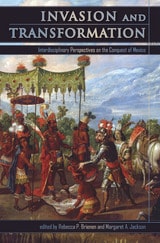
Invasion and Transformation
Interdisciplinary Perspectives on the Conquest of MexicoRebecca P. Brienen
University Press of Colorado, 2020
Was Moteuczoma really as weak as history portrayed him? As Susan D. Gillespie instead suggests in "Blaming Moteuczoma," the representation of Moteuczoma as a scapegoat for the Aztec defeat can be understood as a product of indigenous resistance and accommodation following the imposition of Spanish colonialism. Chapters address the various roles (real and imagined) of Moteuczoma, Cortés, and Malinche in the fall of the Aztecs; the representation of history in colonial art; and the complex cultural transformations that actually took place.
Including full-color reproductions of seventeenth-century paintings of the Conquest, Invasion and Transformation will appeal to scholars and students of Latin American history and anthropology, art history, colonial literature, and transatlantic studies. Contributors include Rebecca P. Brienen, Louise M. Burkhart, Ximena Chávez Balderas, Constance Cortez, Viviana Diáz Balsera, Martha Few, Susan D. Gillespie, Margaret A. Jackson, Diana Magaloni Kerpel, Matthew Restall, Michael Schreffler.
Inventing Authenticity
How Cookbook Writers Redefine Southern IdentityCarrie Helms Tippen
University of Arkansas Press, 2018
Tippen discusses the act of cooking as a way to perform—and therefore reinforce—the identity associated with a recipe, and the complexities inherent in attempts to portray the foodways of a region marked by a sometimes distasteful history. Inventing Authenticity meets this challenge head-on, delving into problems of cultural appropriation and representations of race, thorny questions about authorship, and more. The commonplace but deceptively complex southern cookbook can sustain our sense of where we come from and who we are—or who we think we are.
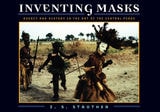
Inventing Masks
Agency and History in the Art of the Central PendeZ. S. Strother
University of Chicago Press, 1998
"Its presentation, its exceptionally lively style, the perfection of its illustrations make this a stunning book, perfectly fitting for the study of a performing art and its content is indeed seminal. . . . A breakthrough."—Jan Vansina, African Studies Review
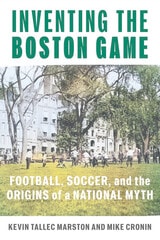
Inventing the Boston Game
Football, Soccer, and the Origins of a National MythKevin Tallec Marston and Mike Cronin
University of Massachusetts Press, 2024
Honorable Mention, 2025 North American Society for Sport History Book Award
On Boston Common stands a monument dedicated to the Oneida Football Club. It honors the site where, in the 1860s, sixteen boys played what was then called the “Boston game”—an early version of football in the United States. The boys were largely the sons of upper-class Boston Brahmins, and they lived through the transformative periods of the Civil War, Reconstruction, and the Gilded Age. Later as they grew old, in the 1920s, a handful of them orchestrated a series of commemorative events about their boyhood game. Benefitting from elite networks developed through the city’s social and educational institutions, including Harvard University, they donated artifacts (such as an oddly shaped, battered black ball) to museums, deposited self-penned histories into libraries and archives, and erected bronze and stone memorials, all to elevate themselves as the inventors of American football (and later, by extension, soccer). But was this origin story of what, by then, had become one of America’s favorite games as straightforward as they made it seem or a myth-making hoax?
In Inventing the Boston Game, Kevin Tallec Marston and Mike Cronin investigate the history of the Oneida Football Club and reveal what really happened. In a compelling, well told narrative that is informed by sports history, Boston history, and the study of memory, they posit that these men engaged in self-memorialization to reinforce their elite cultural status during a period of tremendous social and economic change, and particularly increased immigration. This exploration of the Club’s history provides fascinating insight into how and why origin stories are created in the first place.
Irma
A Chicago Woman's Story, 1871-1966Ellen Fitzsimmons Steinberg
University of Iowa Press, 2004
Irma’s journals and diaries were private accounts in which she chronicled the rhythm of her days and the shape of her life. She recorded her thoughts and short quotations from her reading, jotted down her own poems and short stories, constructed dinner-party menus, and wrote biographical sketches of her family. Interspersed among the records of what she did when and with whom are a number of lengthy reflections on Chicago history, her early life, religious beliefs, education, her aspirations, disappointments, sorrows, and successes. She documented her family’s activities during the Chicago Fire, the city’s rebuilding, early educational curricula in the city’s schools, what it was like to participate in the suffrage movement and vote for the first time, the effect of the Great Depression on the middle class, and World War II as seen from her perspective.
In each chapter, Ellen Steinberg has set Irma’s contemporary entries and later memoirs against the context of the Chicago history that Irma knew so well. Irma’s story will fascinate those interested in diaries and autobiography, women’s history, and Chicago history. From a plethora of rich source materials—including over half a million words of Irma’s writings alone—Steinberg has created a seamless, fascinating narrative about a Chicago woman who, although “nobody famous” (in her words), lived a vital life in a vibrant city.
Is It Good for the Jews?
More Stories from the Old Country and the NewAdam Biro
University of Chicago Press, 2009
“Jewish stories,” writes Adam Biro, “resemble every people’s stories.” Yet at the same time there is no better way to understand the soul, history, millennial suffering, or, crucially, the joys of the Jewish people than through such tales—“There’s nothing,” writes Biro, “more revelatory of the Jewish being.”
With Is It Good for the Jews? Biro offers a sequel to his acclaimed collection of stories Two Jews on a Train. Through twenty-nine tales—some new, some old, but all finely wrought and rich in humor—Biro spins stories of characters coping with the vicissitudes and reverses of daily life, while simultaneously painting a poignant portrait of a world of unassimilated Jewish life that has largely been lost to the years. From rabbis competing to see who is the most humble, to the father who uses suicide threats to pressure his children into visiting, to three men berated by the Almighty himself for playing poker, Biro populates his stories with memorable characters and absurd—yet familiar—situations, all related with a dry wit and spry prose style redolent of the long tradition of Jewish storytelling.
A collection simultaneously of foibles and fables, adversity and affection, Is It Good for the Jews? reminds us that if in the beginning was the word, then we can surely be forgiven for expecting a punch line to follow one of these days.
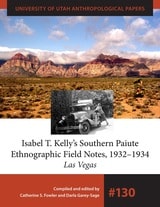
Isabel T. Kelly's Southern Paiute Ethnographic Field Notes, 1932-1934
Compiled and Edited by Catherine S. Fowler and Darla Garey-Sage
University of Utah Press, 2016
University of Utah Anthropological Paper No. 130
This publication presents the first volume (Las Vegas) of the early ethnographic field work of anthropologist Isabel T. Kelly. From 1932 to 1934, Kelly interviewed thirty Southern Paiute people from southeastern California, southern Nevada, and southern Utah about “the old ways.” During this time, she filled thirty-one notebooks, made several maps, took roughly fifty photographs, collected nearly 300 ethnobotanical specimens, purchased and shipped over 400 ethnographic artifacts to museums, and traveled more than 7,000 miles. Her notes comprise the most extensive primary ethnographic documentation of Southern Paiute/Chemehuevi lifeways of the middle to late nineteenth and early twentieth centuries existing today.
Although Kelly intended to publish these notes, she was unable to before her death. Fowler and Garey-Sage have now synthesized the first set of these handwritten field notes and sketches, providing commentary and illustrations to put them in context for the modern reader. Kelly’s data, most of which could not be gathered anew today, are offered here for the use of generations to come.

Ishtyle
Accenting Gay Indian NightlifeKareem Khubchandani
University of Michigan Press, 2020
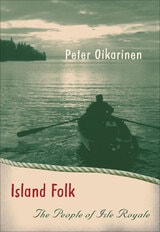
Island Folk
The People of Isle RoyalePeter Oikarinen
University of Minnesota Press, 2008
The history of a working fishing community comes alive in this collection of stories from the people who made a life on Isle Royale. In Island Folk, candid photographs illuminate the dramatic and sometimes life-and-death experiences of the unique individuals who chose to live in this beautiful and isolated setting.
In this lively and charming book, find out how moose actually make their way to Isle Royale or what amount of food is necessary to survive a winter. Hear about the ships that sank in the tricky waters surrounding the island and the raw beauty of the landscape from those who know it intimately.
Recalled memories, honestly shared, tell a familiar tale of the ongoing transformation of the island from a quiet working fishing village to a national park haven for tourists who travel by boat or seaplane to experience a vanishing way of life.
Peter Oikarinen is a freelance writer and photographer who lives on Lake Superior on Michigan’s Keeweenaw Peninsula. He is the author of Armour: A Lake Superior Fisherman.
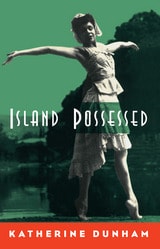
Island Possessed
Katherine Dunham
University of Chicago Press, 1994
Islands at the Crossroads
Migration, Seafaring, and Interaction in the CaribbeanL. Antonio Curet
University of Alabama Press, 2011
Isolarion
A Different Oxford JourneyJames Attlee
University of Chicago Press, 2007
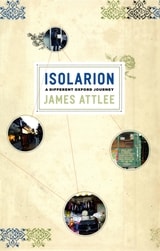
Through the centuries, people from all walks of life have heard the siren call of a pilgrimage, the lure to journey away from the familiar in search of understanding. But is a pilgrimage even possible these days for city-dwellers enmeshed in the pressures of work and family life? Or is there a way to be a pilgrim without leaving one’s life behind? James Attlee answers these questions with Isolarion, a thoughtful, streetwise, and personal account of his pilgrimage to a place he thought he already knew—the Cowley Road in Oxford, right outside his door.
Isolarion takes its title from a type of fifteenth-century map that isolates an area in order to present it in detail, and that’s what Attlee, sharp-eyed and armed with tape recorder and notebook, provides for Cowley Road. The former site of a leper hospital, a workhouse, and a medieval well said to have miraculous healing powers, Cowley Road has little to do with the dreaming spires of the tourist’s or student’s Oxford. What Attlee presents instead is a thoroughly modern, impressively cosmopolitan, and utterly organic collection of shops, restaurants, pubs, and religious establishments teeming with life and reflecting the multicultural makeup of the surrounding neighborhood.
From a sojourn in a sensory-deprivation tank to a furtive visit to an unmarked pornography emporium, Attlee investigates every aspect of the Cowley Road’s appealingly eclectic culture, where halal shops jostle with craft jewelers and reggae clubs pulsate alongside quiet churchyards. But the very diversity that is, for Attlee, the essence of Cowley Road’s appeal is under attack from well-meaning city planners and predatory developers. His pilgrimage is thus invested with melancholy: will the messy glories of the Cowley Road be lost to creeping homogenization?
Drawing inspiration from sources ranging from Robert Burton’s The Anatomy of Melancholy to contemporary art, Attlee is a charming and companionable guide who revels in the extraordinary embedded in the everyday. Isolarion is at once a road movie, a quixotic stand against uniformity, and a rousing hymn in praise of the complex, invigorating nature of the twenty-first-century city.
It Wasn't All Dancing and Other Stories
Mary Ward Brown
University of Alabama Press, 2001
This eagerly anticipated second volume of short stories is offered by nationally acclaimed writer Mary Ward Brown, often referred to as the “first lady” of Alabama letters
With the 11 stories in this long-awaited collection, Mary Ward Brown once again offers her devoted fans a palette of new literary pleasures. The hallmarks of her style, so finely wrought in the award-winning Tongues of Flame (1986)—the fully realized characters, her deep sensitivity, a defining sense of place and time—are back in all their richness to involve and enchant the reader.
All but one of the stories are set in Alabama. They deal with dramatic turning points in the lives of characters who happen to be southerners, many jaxtaposed between Old South sensibility and manners and New South modernity and expectations. Among these is a new widow who is not consoled by well-meaning, proselytizing Christians; a middle-aged waitress in love with the town “catch”; a bedridden belle dependent upon her black nurse; a “special” young man in a newspaper shop; a young faculty wife who attempts generosity with a lower-class neighbor; and a lawyer caught in the dilemma of race issues. Through their diverse voices, Brown proves herself a graceful and gifted storyteller who writes with an authoritative pen, inventing and inhabiting the worlds of her set of characters with insight, compassion, and wit.
Most of the stories in It Wasn't All Dancing have appeared previously in prominent national magazines and literary journals, including the Atlantic Monthly, Grand Street, and Threepenny Review. This fine collection should appeal to a wide audience among writers, literature scholars, and general readers alike.
It's All Done Gone
Arkansas Photographs from the Farm Security Administration Collection, 1935-1943Patsy Watkins
University of Arkansas Press, 2018
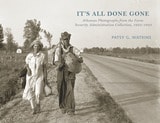
Of the roughly one thousand FSA photographs taken in Arkansas, approximately two hundred have been selected for inclusion in this volume. Portraying workers picking cotton for five cents an hour, families evicted from homes for their connection with the Southern Tenant Farmers Union, and the effects of flood and drought that cruelly exacerbated the impact of economic disaster, these remarkable black-and-white images from Ben Shahn, Arthur Rothstein, Dorothea Lange, Walker Evans, Russell Lee, and other acclaimed photographers illustrate the extreme hardships that so many Arkansans endured throughout this era.
These powerful photographs continue to resonate, providing a glimpse of life in Arkansas that will captivate readers as they connect to a shared past.
It's Good to Be Black
Ruby Berkley Goodwin
Southern Illinois University Press, 1953
From the preface by Carmen Kenya Wadley:
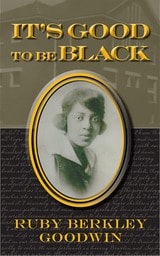
“Is it good to be black? To Ruby Berkley Goodwin it was....The black she writes about has nothing to do with skin color, but it does have a great deal to do with self images, values, spiritual strength, and most of all love. Unlike the contradicting definitions of blackness we see reflected in today's crime statistics, movies, television, newspapers, political speeches, advertisements, and sociological reports, Ruby Berkley Goodwin's definition of blackness is simple and to the point: black is good. It's Good to be Black is more than the story (history) of a black family living in Du Quoin, Illinois, during the early 1900s; it is a reaffirmation for all of us who know in our hearts that there is still good in the world and that some of that good is black.”

It's a Living
Work and Life in Vietnam TodayEdited by Gerard Sasges
National University of Singapore Press, 2013
Based on frank and freewheeling interviews conducted by students, the book engages a broad range of Vietnamese, both living in Vietnam and abroad, on their feelings about work, life and getting ahead. By providing a ground-level view of the texture of daily working life in the midst of rapid and unsettling change, the book reveals Vietnam today as a place where ordinary people are leveraging whatever assets they have, not just to survive, but to make a better life for themselves.
Iñupiat of the Sii
Historical Ethnography and Arctic ChallengesWanni W. Anderson
University of Alaska Press, 2024
This fascinating book records, preserves, and contributes to the knowledge of the history and cultural lifeways of the Siilaviŋmiut people using contextual and ethnographic writing styles that apply community-based, lived-experience, and sense-of-place approaches. The authors, who have remained in contact with Selawikers since the original research period, center Iñupiaq elders’ and local Iñupiaq historians’ continued commitments to historical knowledge about the past, their ancestors, and their vast repertoire of traditional cultural and environmental knowledge. They portray the particularity of Iñupiaq life as it was lived, sensed, and felt by Selawikers themselves and as experienced by researchers. Quoted observations, conversations, and comments eloquently acknowledge Iñupiaq insiders’ narrative voices.
Providing one of only a few ethnographic reviews of an Alaska Native village, Iñupiat of the Sii will appeal to general readers interested in learning about Iñupiaq lifeways and the experiences of anthropologists in the field. It will also be useful to instructors teaching college-level students how anthropological field research should be conducted, analyzed, and reported.
I’ll Tell You a Tale
An AnthologyBy J. Frank Dobie
University of Texas Press, 1981
I'll Tell You a Tale is a garland of some of Frank Dobie's best writing, put together by Isabel Gaddis, one of his former students at the University of Texas. The tales included are those the author himself liked best, and he even rewrote some of them especially for this anthology. Ben Carlton Mead has contributed 32 original line drawings to illustrate the stories.
These tales spring from the soil and folklore of our land; but more than this, they make the readers contemporary with the times, filling us with the wonder of something past and yet still with us. They are arranged topically into sections whose titles speak for them: "The Longhorn Breed," "Mustangs and Mustangers," "The Saga of the Saddle," "Characters and Happenings of Long Ago," "Animals of the Wild," "In Realms of Gold," and "Ironies."