Results by title
4416 books match the query 'Anthropology' and 171 start with i
Infected Kin
Orphan Care and AIDS in LesothoEllen Block
Rutgers University Press, 2019
Supplementary instructor resources (https://www.csbsju.edu/sociology/faculty/anthropology-teaching-resources/infected-kin-teaching-resources)

Infertile Environments
Epigenetic Toxicology and the Reproductive Health of Chinese MenJanelle Lamoreaux
Duke University Press, 2023
Infinite Repertoire
On Dance and Urban Possibility in Postsocialist GuineaAdrienne J. Cohen
University of Chicago Press, 2021

Influenza and Inequality
One Town's Tragic Response to the Great Epidemic of 1918Patricia J. Fanning
University of Massachusetts Press, 2010
By 1918, Norwood was a small, ethnically diverse, industrialized, and stratified community. Ink, printing, and tanning factories were owned by wealthy families who lived privileged lives. These industries attracted immigrant laborers who made their homes in several ethnic neighborhoods and endured prejudice and discrimination at the hands of native residents. When the epidemic struck, the immigrant neighborhoods were most affected; a fact that played a significant role in the town's response—with tragic results.
This close analysis of one town's struggle illuminates how even well-intentioned elite groups may adopt and implement strategies that can exacerbate rather than relieve a medical crisis. It is a cautionary tale that demonstrates how social behavior can be a fundamental predictor of the epidemic curve, a community's response to crisis, and the consequences of those actions.
Infrastructure, Environment, and Life in the Anthropocene
Kregg Hetherington, editor
Duke University Press, 2019
Contributors. Nikhil Anand, Andrea Ballestero, Bruce Braun, Ashley Carse, Gastón R. Gordillo, Kregg Hetherington, Casper Bruun Jensen, Joseph Masco, Shaylih Muehlmann, Natasha Myers, Stephanie Wakefield, Austin Zeiderman
Inheritance of Loss
China, Japan, and the Political Economy of Redemption after EmpireYukiko Koga
University of Chicago Press, 2016
Inheritance of Loss chronicles these sites of colonial inheritance––tourist destinations, corporate zones, and mustard gas exposure sites––to illustrate attempts by ordinary Chinese and Japanese to reckon with their shared yet contested pasts. In her explorations of everyday life, Koga directs us to see how the violence and injustice that occurred after the demise of the Japanese Empire compound the losses that later generations must account for, and inevitably inherit.
Inheriting Possibility
Social Reproduction and Quantification in EducationEzekiel J. Dixon-Román
University of Minnesota Press, 2017
How has the dominant social scientific paradigm limited our understanding of the impact of inherited economic resources, social privilege, and sociocultural practices on multigenerational inequality? In what ways might multiple forces of social difference haunt quantitative measurements of ability such as the SAT? Building on new materialist philosophy, Inheriting Possibility rethinks methods of quantification and theories of social reproduction in education, demonstrating that test performance results and parenting practices convey the impact of materially and historically contingent patterns of differential possibility.
Ezekiel J. Dixon-Román explores the dualism of nature and culture that has undergirded theories of inheritance, social reproduction, and human learning and development. Research and debate on the reproduction of power relations have rested on a premise that nature is made up of fixed universals on which the creative, intellective, and discursive play of culture are based. Drawing on recent work in the physical and biological sciences, Dixon-Román argues that nature is culture. He contends that by assuming a rigid nature/culture binary, we ultimately limit our understanding of how power relations are reproduced.
Through innovative analyses of empirical data and cultural artifacts, Dixon-Román boldly reconsiders how we conceptualize the processes of inheritance and approach social inquiry in order to profoundly sharpen understanding and address the reproducing forces of inequality.
Ink Studies
Everyday Practices of Calligraphy in Contemporary ChinaLaura Vermeeren
National University of Singapore Press, 2025
As handwriting fades in the digital age, calligraphy in China is caught between tradition and reinvention. Ink Studies deconstructs this paradox, determining how calligraphy is not simply an ancient art form, but more so a site of ongoing cultural negotiation. Laura Vermeeren investigates how calligraphy moves through five distinct visual and social fields, shaping and being shaped by its practitioners. While often framed as an act of repetition and tied to centuries of disciplined copying, calligraphy also emerges here as a force of creativity—one that is actively mobilized in contemporary China, whether through state-sponsored initiatives or the aesthetics of modern design.
Uniting contemporary art and media history, Ink Studies provides vital perspectives on how China’s past is continually reimagined in the present, portraying calligraphy’s enduring relevance in an era of rapid technological change.

Inner Speech and the Dialogical Self
Norbert Wiley
Temple University Press, 2016
Inner speech, also known as self-talk, is distinct from ordinary language. It has several functions and structures, from everyday thinking and self-regulation to stream of consciousness and daydreaming. Inner Speech and the Dialogical Self provides a comprehensive analysis of this internal conversation that people have with themselves to think about problems, clarify goals, and guide their way through life.
Norbert Wiley shrewdly emphasizes the semiotic and dialogical features of the inner speech, rather than the biological and neurological issues. He also examines people who lack control of their inner speech—such as some autistics and many emotionally disturbed people who use trial and error rather than self-control—to show the power and effectiveness of inner speech.
Inner Speech and the Dialogical Self takes a humanistic social theorist approach to its topic. Wiley acknowledges the contributions of inner speech theorists, Lev Vygotsky and Mikhail Bakhtin, and addresses the classical pragmatism of Charles Sanders Peirce, John Dewey, William James, and George Herbert Mead to show the range and depth of this largely unexplored field.
Innovation in Ethnographic Film
From Innocence to Self-Consciousness, 1955-1985Peter Loizos
University of Chicago Press, 1993
Loizos begins by reviewing works of John Marshall and Timothy Asch in the 1950s and moves through those of Jean Rouch, Robert Gardner, and many more recent filmmakers. He reveals a steady course of innovations along four dimensions: production technology, subject matter, strategies of argument, and ethnographic authentication. His analyses of individual films address questions of realism, authenticity, genre, authorial and subjective voice, and representation of the films' creators as well as their subjects.
Innovation in Ethnographic Film, as a systematic and iluminating review of developments in ethnographic film, will be an important resource for the growing number of anthropologists and other scholars who use such films as tools for research and teaching.
Insecurities of Expulsion
Afro-Asian Entanglements in Transcontinental UgandaAnneeth Kaur Hundle
Duke University Press, 2025
Insecurity
Richard Grusin
University of Minnesota Press, 2022
Investigating insecurity as the predominant logic of life in the present moment
Challenging several key concepts of the twenty-first century, including precarity, securitization, and resilience, this collection explores the concept of insecurity as a predominant logic governing recent cultural, economic, political, and social life in the West. The essays illuminate how attempts to make human and nonhuman systems secure and resilient end up having the opposite effect, making insecurity the default state of life today.
Unique in its wide disciplinary breadth and variety of topics and methodological approaches—from intellectual history and cultural critique to case studies, qualitative ethnography, and personal narrative—Insecurity is written predominantly from the viewpoint of the United States. The contributors’ analyses include the securitization of nongovernmental aid to Palestine, Bangladeshi climate refugees, and the privatization of U.S. military forces; the history of the concept of insecurity and the securitization of finance; racialized urban development in Augusta, Georgia; Amazon’s Mechanical Turk and the consequences of the Marie Kondo method; and the intricate politics of sexual harassment in the U.S. academy.
Contributors: Neel Ahuja, U of California, Santa Cruz; Aneesh Aneesh, U of Wisconsin, Milwaukee; Lisa Bhungalia, Kent State U; Jennifer Doyle, U of California, Riverside; Annie McClanahan, U of California, Irvine; Andrea Miller, Florida Atlantic U; Mark Neocleous, Brunel U London; A. Naomi Paik, U of Illinois, Chicago; Maureen Ryan, U of South Carolina; Saskia Sassen, Columbia U.
Inside Ancient Kitchens
New Directions in the Study of Daily Meals and FeastsElizabeth A. Klarich
University Press of Colorado, 2010
Inside Science
Stories from the Field in Human and Animal ScienceRobert E. Kohler
University of Chicago Press, 2019
Resident observing takes place across a range of sciences, from anthropology and sociology to primatology, wildlife ecology, and beyond. What makes it special, Kohler argues, is the direct access it affords scientists to the contexts in which their subjects live and act. These scientists understand their subjects not by keeping their distance but by living among them and engaging with them in ways large and small. This approach also demonstrates how science and everyday life—often assumed to be different and separate ways of knowing—are in fact overlapping aspects of the human experience. This story-driven exploration is perfect for historians, sociologists, and philosophers who want to know how scientists go about making robust knowledge of nature and society.
Inside the Circle
Queer Culture and Activism in Northwest ChinaCasey James Miller
Rutgers University Press, 2023
Inside the Eagle's Head
An American Indian CollegeAngelle A. Khachadoorian
University of Alabama Press, 2010
Where tradition meets bureaucracy—Native students redefine education on their own terms.
Inside the Eagle’s Head offers a compelling and deeply human portrait of the Southwestern Indian Polytechnic Institute (SIPI), a federally operated college serving Native American students from across the United States. In it, anthropologist Angelle Khachadoorian draws on years of teaching experience and extensive student interviews to illuminate the challenges and successes of life at SIPI. Far more than an institutional history, this book captures the voices of students navigating a complex educational landscape shaped by federal oversight, tribal identity, and personal ambition.
Through vivid metaphors—SIPI as a family, a prison, a reservation—students articulate their struggles and resilience within a system that is at once empowering and restrictive. Khachadoorian’s analysis reveals how SIPI’s hybrid nature—part community college, part BIA legacy—creates both opportunities and obstacles for its students. With empathy and insight, she explores how young Native Americans forge identity, community, and purpose in a setting few outsiders understand. Inside the Eagle’s Head is essential reading for educators, policymakers, and anyone interested in the intersection of Indigenous education, federal institutions, and student agency. It is a powerful testament to the transformative potential of listening to students’ stories.
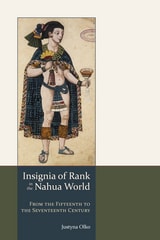
Insignia of Rank in the Nahua World
From the Fifteenth to the Seventeenth CenturyJustyna Olko
University Press of Colorado, 2014
This significant work reconstructs the repertory of insignia of rank and the contexts and symbolic meanings of their use, along with their original terminology, among the Nahuatl-speaking communities of Mesoamerica from the fifteenth through the seventeenth centuries. Attributes of rank carried profound symbolic meaning, encoding subtle messages about political and social status, ethnic and gender identity, regional origin, individual and community history, and claims to privilege.
Olko engages with and builds upon extensive worldwide scholarship and skillfully illuminates this complex topic, creating a vital contribution to the fields of pre-Columbian and colonial Mexican studies. It is the first book to integrate pre- and post-contact perspectives, uniting concepts and epochs usually studied separately. A wealth of illustrations accompanies the contextual analysis and provides essential depth to this critical work. Insignia of Rank in the Nahua World substantially expands and elaborates on the themes of Olko's Turquoise Diadems and Staffs of Office, originally published in Poland and never released in North America.
Insurgent Encounters
Transnational Activism, Ethnography, and the PoliticalJeffrey S. Juris and Alex Khasnabish, eds.
Duke University Press, 2013
Contributors. Giuseppe Caruso, Maribel Casas-Cortés, Janet Conway, Stéphane Couture, Vinci Daro, Manisha Desai, Sylvia Escárcega, David Hess, Jeffrey S. Juris, Alex Khasnabish, Lorenzo Mosca, Michal Osterweil, Geoffrey Pleyers, Dana E. Powell, Paul Routledge, M. K. Sterpka, Tish Stringer

Intellectual Life in America
A HistoryLewis Perry
University of Chicago Press, 1989
Looking at the changing reputation of the intellect itself, Perry examines many forms of anti-intellectualism, showing that some of these were encouraged by intellectuals as surely as by their antagonists. This work is interpretative, critical, and highly provocative, and it provides what is all too often missing in the study of intellectuals—a sense of historical orientation.
Intercultural Utopias
Public Intellectuals, Cultural Experimentation, and Ethnic Pluralism in ColombiaJoanne Rappaport
Duke University Press, 2005
Intercultural Utopias centers on southwestern Colombia’s Cauca region, a culturally and linguistically heterogeneous area well known for its history of indigenous mobilization and its pluralist approach to ethnic politics. Rappaport interweaves the stories of individuals with an analysis of the history of the Regional Indigenous Council of Cauca and other indigenous organizations. She presents insights into the movement and the intercultural relationships that characterize it from the varying perspectives of regional indigenous activists, nonindigenous urban intellectuals dedicated to the fight for indigenous rights, anthropologists, local teachers, shamans, and native politicians.
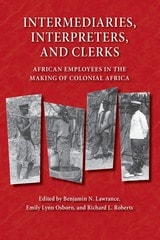
Intermediaries, Interpreters, and Clerks
African Employees in the Making of Colonial AfricaEdited by Benjamin N. Lawrance, Emily Lynn Osborn, and Richard L. Roberts
University of Wisconsin Press, 2006
By uncovering the role of such men (and a few women) in the construction, function, and legal apparatus of colonial states, the essays in this volume highlight a new perspective. They offer important insights on hegemony, collaboration, and resistance, structures and changes in colonial rule, the role of language and education, the production of knowledge and expertise in colonial settings, and the impact of colonization in dividing African societies by gender, race, status, and class.
Intermediate Elites in Pre-Columbian States and Empires
Edited by Christina M. Elson and R. Alan Covey
University of Arizona Press, 2006
This is the first volume to consider how individuals subordinate to imperial rulers helped to shape specific forms of state and imperial organization. Taking a broader scope than previous studies, it is one of the few works to systematically address these issues in both Mesoamerica and the Central Andes. It considers how these individuals influenced the long-term development of the largest civilizations of the ancient Americas, opening a new window on the role of intermediate elites in the rise and fall of ancient states and empires worldwide.
The authors demonstrate how such evidence as settlement patterns, architecture, decorative items, and burial patterns reflect the roles of intermediate elites in their respective societies, arguing that they were influential actors whose interests were highly significant in shaping the specific forms of state and imperial organization. Their emphasis on provincial elites particularly shifts examination of early states away from royal capitals and imperial courts, explaining how local elites and royal bureaucrats had significant impact on the development and organization of premodern states.
Together, these papers demonstrate that intricate networks of intermediate elites bound these ancient societies together—and that competition between individuals and groups contributed to their decline and eventual collapse. By addressing current theoretical concerns with agency, resistance to state domination, and the co-option of local leadership by imperial administrators, it offers valuable new insight into the utility of studying intermediate elites.

International Surrogacy as Disruptive Industry in Southeast Asia
Whittaker, Andrea
Rutgers University Press, 2019
In International Surrogacy as Disruptive Industry in Southeast Asia, Andrea Whittaker traces the development of this industry and its movement across Southeast Asia following a sequence of governmental bans in India, Nepal, Thailand, and Cambodia. Through a case study of the industry in Thailand, the book offers a nuanced and sympathetic examination of the industry from the perspectives of the people involved in it: surrogates, intended parents, and facilitators. The industry offers intended parents the opportunity to form much desired families, but also creates vulnerabilities for all people involved. These vulnerabilities became evident in cases of trafficking, exploitation, and criminality that emerged in southeast Asia, leading to greater scrutiny on the industry as a whole. Yet the trade continues in new flexible hybrid forms, involving the circulation of reproductive gametes, embryos, surrogates, and ova donors across international borders to circumvent regulations. The book demonstrates the need for new forms of regulation to protect those involved in international surrogacy arrangements.
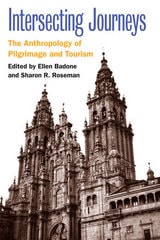
Intersecting Journeys
The Anthropology of Pilgrimage and TourismEdited by Ellen Badone and Sharon R. Roseman
University of Illinois Press, 2004

Intersex and Identity
The Contested SelfSharon E. Preves
Rutgers University Press, 2003
Approximately one in every two thousand infants born in America each year is sexually ambiguous in such a way that doctors cannot immediately determine the child’s sex. Some children’s chromosomal sexuality contradicts their sexual characteristics. Others have the physical traits of both sexes, or of neither. Is surgical intervention or sex assignment of intersexed children necessary for their physical and psychological health, as the medical and mental health communities largely assume? Should parents raise sexually ambiguous children as one gender or another and keep them ignorant of their medical history?
Drawing upon life history interviews with adults who were treated for intersexuality as children, Sharon E. Preves explores how such individuals experience and cope with being labeled sexual deviants in a society that demands sexual conformity. Preves frames their stories within a sociological discussion of gender, the history of intersex medicalization, the recent political mobilization of intersexed adults, and the implications of their activism on identity negotiation, medical practice, and cultural norms. By demonstrating how intersexed people manage and create their own identities, often in conflict with their medical diagnosis, Preves argues that medical intervention into intersexuality often creates, rather than mitigates, the stigma these people suffer.
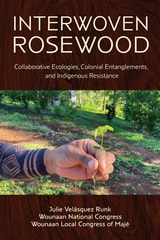
Interwoven Rosewood
Collaborative Ecologies, Colonial Entanglements, and Indigenous ResistanceJulie Velásquez Runk, the Wounaan National Congress, and the Wounaan Local Congress of Majé
University of Arizona Press, 2026
Interwoven Rosewood is a collaborative exploration of the global rosewood trade and its entanglements with Indigenous lifeways, colonial histories, and environmental crises. Co-authored by Julie Velásquez Runk and members of the Wounaan National Congress and its Local Congress of the Majé community, this book traces the story of cocobolo rosewood from Wounaan lands in Panama to international markets, revealing how centuries of settler colonialism and extractive capitalism continue to shape landscapes, livelihoods, and relationships. At its heart, the book is a meditation on well-being and belonging—how people live in relation to land, each other, and the more-than-human world.
Drawing on more than a decade of community-based research and six collaborative book workshops, the authors weave together first-person narratives, ecological analysis, historical context, and Indigenous knowledge. The result is a richly textured account that challenges dominant narratives of environmental degradation by centering Wounaan experiences of joy, resistance, and conviviality. The book’s structure reflects its method: interwoven chapters authored or spoken by Wounaan colleagues, grounded in consent protocols and shaped by ancestral storytelling traditions.
Accessibly written, Interwoven Rosewood is ideal for courses in environmental conservation, Indigenous studies, anthropology, Latin American studies, and political ecology. With its interdisciplinary reach and classroom-ready discussion questions, the book invites readers to reflect on the global forces behind environmental catastrophe—and the enduring power of Indigenous ways of knowing, being, and becoming.
Interwoven
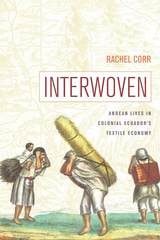
Andean Lives in Colonial Ecuador’s Textile EconomyRachel Corr
University of Arizona Press, 2018
Interwoven is the untold story of indigenous people’s historical experience in colonial Ecuador’s textile economy. It focuses on the lives of Native Andean families in Pelileo, a town dominated by one of Quito’s largest and longest-lasting textile mills. Quito’s textile industry developed as a secondary market to supply cloth to mining centers in the Andes; thus, the experience of indigenous people in Pelileo is linked to the history of mining in Bolivia and Peru.
Although much has been written about colonial Quito’s textile economy, Rachel Corr provides a unique perspective by putting indigenous voices at the center of that history. Telling the stories of Andean families of Pelileo, she traces their varied responses to historical pressures over three hundred years; the responses range from everyday acts to the historical transformation of culture through ethnogenesis. These stories of ordinary Andean men and women provide insight into the lived experience of the people who formed the backbone of Quito’s textile industry.

Intimate Activism
The Struggle for Sexual Rights in Postrevolutionary NicaraguaCymene Howe
Duke University Press, 2013
Intimate Connections
Love and Marriage in Pakistan’s High MountainsAnna-Maria Walter
Rutgers University Press, 2022

Intimate Disconnections
Divorce and the Romance of Independence in Contemporary JapanAllison Alexy
University of Chicago Press, 2020
Relating the intensely personal stories from people experiencing different stages of divorce, Alexy provides a rich ethnography of Japan while also speaking more broadly to contemporary visions of love and marriage during an era in which neoliberal values are prompting wide-ranging transformations in homes across the globe.

Intimate Distance
Andean Music in JapanMichelle Bigenho
Duke University Press, 2012
Bolivians and Japanese involved in these musical practices often express narratives of intimacy and racial belonging that reference shared but unspecified indigenous ancestors. Along with revealing the story of Bolivian music's route to Japan and interpreting the transnational staging of indigenous worlds, Bigenho examines these stories of closeness, thereby unsettling the East-West binary that often structures many discussions of cultural difference and exotic fantasy.

Intimate Fathers
The Nature and Context of Aka Pygmy Paternal Infant CareBarry S. Hewlett
University of Michigan Press, 1991
Intimate Geopolitics
Love, Territory, and the Future on India’s Northern ThresholdSara Smith
Rutgers University Press, 2020
2021 Foreword Indies Finalist - Politics and Social Sciences
Intimate Geopolitics begins with a love story set in the Himalayan region of Ladakh, in India’s Jammu and Kashmir State, but this is also a story about territory, and the ways that love, marriage, and young people are caught up in contemporary global processes. In Ladakh, children grow up to adopt a religious identity in part to be counted in the census, and to vote in elections. Religion, population, and voting blocs are implicitly tied to territorial sovereignty and marriage across religious boundaries becomes a geopolitical problem in an area that seeks to define insiders and outsiders in relation to borders and national identity. This book populates territory, a conventionally abstract rendering of space, with the stories of those who live through territorial struggle at marriage and birth ceremonies, in the kitchen and in the bazaar, in heartbreak and in joy. Intimate Geopolitics argues for the incorporation of the role of time–temporality–into our understanding of territory.
Intimate Indigeneities
Race, Sex, and History in the Small Spaces of Andean LifeAndrew Canessa
Duke University Press, 2012

Intimate Inequalities
Performing Migrant Domestic WorkElla Parry-Davies
Northwestern University Press, 2025
Intimate inequalities exist where the embodied and the everyday rub up against transnational structures of power. Ella Parry-Davies conducted collaborative research with migrant domestic workers from the Philippines living in the UK and Lebanon, where migration is regulated by employer sponsorship systems, to explore how they negotiate the intimacy of the family home and the attendant inequalities of laboring within it. Intimate Inequalities: Performing Migrant Domestic Work brings these conditions into focus while articulating a methodological inquiry into the dynamics of collaborative performance research. Parry-Davies examines site-specific soundwalks, recorded and coedited with domestic workers, which steer the book between church choirs in Beirut and activist gatherings in London, and from urban performances in Lebanon’s 2019 revolution to mutual aid organizing amid COVID-19 in the UK. Breaking with prevalent depictions of migrant domestic workers as voiceless and victimized, Intimate Inequalities mobilizes performance as both an analytic lens and a practical methodology, amplifying its subjects’ expertise while reckoning with the intimate yet unequal dynamics of research itself.

Intimate Strangers
Shin Issei Women and Contemporary Japanese American Community, 1980-2020Toyota, Tritia
Temple University Press, 2023
Intimate Strangers charts the experiences of shin Issei lives: their existence in Japan prior to migration, their motivations for moving to the United States, their settlement, and their growing awareness of their place in American society. Toyota chronicles how these resilient young women became active agents in circumventing social restrictions to fashion new lives of meaning. The Nikkei community (Americans of Japanese ancestry who were born in the United States) has been transformed by the inclusion of shin Issei, and Toyota describes the tensions around intergroup negotiations over race, identity, and the possibility of common belonging.
Intimate Strangers is a perceptive study of migration and community incorporation enacted around cultural differences and processes.
Into the Archive
Writing and Power in Colonial PeruKathryn Burns
Duke University Press, 2010
Kathryn Burns argues that the archive itself must be historicized. Using the case of colonial Cuzco, she examines the practices that shaped document-making. Notaries were businessmen, selling clients a product that conformed to local “custom” as well as Spanish templates. Clients, for their part, were knowledgeable consumers, with strategies of their own for getting what they wanted. In this inside story of the early modern archive, Burns offers a wealth of possibilities for seeing sources in fresh perspective.
Into the Loop
An Ethnography of Compulsive RepetitionSamuele Collu
Duke University Press, 2026

Intoxication
An Ethnography of Effervescent RevelrySébastien Tutenges
Rutgers University Press, 2023
For two decades, Sébastien Tutenges has conducted research in bars, nightclubs, festivals, drug dens, nightlife resorts, and underground dance parties in a quest to answer a fundamental question: Why do people across cultures gather regularly to intoxicate themselves?
Vivid and at times deeply personal, this book offers new insights into a wide variety of intoxicating experiences, from the intimate feeling of connection among concertgoers to the adrenaline-fueled rush of a fight, to the thrill of jumping off a balcony into a swimming pool. Tutenges shows what it means and feels to move beyond the ordinary into altered states in which the transgressive, spectacular, and unexpected take place.
He argues that the primary aim of group intoxication is the religious experience that Émile Durkheim calls collective effervescence, the essence of which is a sense of connecting with other people and being part of a larger whole. This experience is empowering and emboldening and may lead to crime and deviance, but it is at the same time vital to our humanity because it strengthens social bonds and solidarity.
The book fills important gaps in Durkheim’s social theory and contributes to current debates in micro-sociology as well as cultural criminology and cultural sociology. Here, for the first time, readers will discover a detailed account of collective effervescence in contemporary society that includes: an explanation of what collective effervescence is; a description of the conditions that generate collective effervescence; a typology of the varieties of collective effervescence; a discussion of how collective effervescence manifests in the realm of nightlife, politics, sports, and religion; and an analysis of how commercial forces amplify and capitalize on the universal human need for intoxication.
This book is also freely available online as an open access digital edition.
Download the open access ebook here. (https://www.rutgersuniversitypress.org/media/wysiwyg/documents/intoxication.pdf)
Intrasite Spatial Analysis of Mobile and Semisedentary Peoples
Analytical Approaches to Reconstructing Occupation HistoryEdited by Amy E. Clark and Joseph A. M. Gingerich
University of Utah Press, 2022
This volume includes studies that span archaeological and ethnographic contexts, from highly mobile Paleoindian foragers to semi-sedentary preagriculturalists of the Epipaleolithic and modern pastoralists in Mongolia. The authors hold that commonalities in human behavior lead to similar patterns in the organization and maintenance of space by people. They present a series of ideas and approaches to make it easier to recognize universals in human behaviors, which allow archaeologists to better compare intrasite spatial patterns. The book creates a baseline for new intrasite spatial analyses in the twenty-first century.

Introduction to Sacramental Theology
Signs of Christ in the FleshJose Granados
Catholic University of America Press, 2021
Introduction to Sociocultural Anthropology
Adaptations, Structures, MeaningsDavid Haines
University Press of Colorado, 2017
An Introduction to Sociocultural Anthropology exposes students to the cultural detail and personal experiences that lie in the anthropological record and extends their anthropological understanding to contemporary issues.
The book is divided into three parts that focus on the main themes of the discipline: ecological adaptations, structural arrangements, and interpretive meanings. Each chapter provides an overview of a particular topic and then presents two case examples that illuminate the range of variation in traditional and contemporary societies. New case examples include herders’ climate change adaptations in the Arctic, matrilineal Muslims in Indonesia, Google’s AI winning the Asian game Go, mass migration in China, cross-cultural differences in the use of social media, and the North American response to the Syrian refugee crisis. Instructors will also have digital access to all the book’s illustrations for class review.
Covering the full range of sociocultural anthropology in a compact approach, this revised and updated edition of Cultural Anthropology: Adaptations, Structures, Meanings is a holistic, accessible, and socially relevant guide to the discipline for students at all levels.
Inuit Youth
Growth and Change in the Canadian ArcticRichard G. Condon
Rutgers University Press, 1988

Inventing Authenticity
How Cookbook Writers Redefine Southern IdentityCarrie Helms Tippen
University of Arkansas Press, 2018
Tippen discusses the act of cooking as a way to perform—and therefore reinforce—the identity associated with a recipe, and the complexities inherent in attempts to portray the foodways of a region marked by a sometimes distasteful history. Inventing Authenticity meets this challenge head-on, delving into problems of cultural appropriation and representations of race, thorny questions about authorship, and more. The commonplace but deceptively complex southern cookbook can sustain our sense of where we come from and who we are—or who we think we are.
Inventing Writing
Prophets, Shamans, and the Transmission of Ritual Discourse in North American Indigenous Cultures, 1600–1900Pierre Déléage
HAU, 2026
Why have humans repeatedly devoted immense intellectual energy to inventing writing? In world history, writing was independently created four times—by the Sumerians, Egyptians, Chinese, and Mayans. These traditions developed universal scripts, systems of symbols theoretically capable of recording any utterance in the spoken language. On this basis, a long-standing scholarly view has held that the origins of writing are inseparable from the rise of states and bureaucracies.
However, this book turns our attention to another trajectory. Between 1700 and 1900, prophets and shamans in Native American societies devised “bounded” forms of writing. Unlike universal scripts, these were not intended to capture the entirety of speech. Instead, they served a precise function: to ensure the faithful transmission of ritual discourses within ceremonial frameworks. Their principles of notation differed profoundly from those of the great phonographic traditions.
Pierre Déléage’s analysis not only illuminates these overlooked episodes in the history of writing but also advances a methodological shift: rather than treating selective scripts as “failed” or “incomplete,” he interprets them on their own terms. In doing so, he opens up a broader framework for understanding writing as a diverse cultural practice, one that can emerge outside of state power, bureaucracy, or universal phonographic systems.
Now published in English translation, Inventing Writing makes the work of a leading French scholar available to new readers. It offers a groundbreaking perspective: writing does not emerge only as a universal technology of language, but also as a bounded tool shaped by ritual, institution, and culture.

Invisibility by Design
Women and Labor in Japan's Digital EconomyGabriella Lukács
Duke University Press, 2020
Invitations to Love
Literacy, Love Letters, and Social Change in NepalLaura M. Ahearn
University of Michigan Press, 2001
The love-letter correspondences examined by Ahearn also provide a deeper understanding of the social effects of literacy. While the acquisition of literary skills may open up new opportunities for some individuals, such skills can also impose new constraints, expectations, and disappointments. The increase in female literacy rates in Junigau in the 1990s made possible the emergence of new courtship practices and facilitated self-initiated marriages, but it also reinforced certain gender ideologies and undercut some avenues to social power, especially for women.
Scholars, and students in such fields as anthropology, women's studies, linguistics, development studies, and South Asian studies will find this book ethnographically rich and theoretically insightful.

Irony in Action
Anthropology, Practice, and the Moral ImaginationEdited by James Fernandez and Mary Taylor Huber
University of Chicago Press, 2001
The first group of essays explores the limits to irony's liberating qualities from the constrained use of irony in congressional hearings to its reactive presence amid widening disparities of wealth despite decades of world development. The second section presents irony's more positive dimensions through an array of examples such as the use of irony by Chinese writers and Irish humorists. Framed by the editors' theoretical introduction to the issues posed by irony and responses to the essays by two literary scholars, Irony in Action is a timely contribution in the contemporary reinvention of anthropology.

Irrevocable
A Philosophy of MortalityAlphonso Lingis
University of Chicago Press, 2018
Whether describing religious art and ritual, suffering, war and disease, the pleasures of love, the wonders of nature, archaeological findings, surfing, volcanoes, or jellyfish, Lingis writes with equal measures of rigor and abandon about the vicissitudes of our practices and beliefs. Knowing that birth, the essential encounters in our lives, crippling diseases and accidents, and even death are all determined by chance, how do we recognize and understand such chance? After facing tragedies, what makes it possible to live on while recognizing our irrevocable losses?
Lingis’s investigations are accompanied by his own vivid photographs from around the world. Balancing the local and the global, and ranging across vast expanses of culture and time, Irrevocable sounds the depths of both our passions and our impassioned bodies and minds.
Isabel T. Kelly's Southern Paiute Ethnographic Field Notes, 1932-1934
Compiled and Edited by Catherine S. Fowler and Darla Garey-Sage
University of Utah Press, 2016
University of Utah Anthropological Paper No. 130
This publication presents the first volume (Las Vegas) of the early ethnographic field work of anthropologist Isabel T. Kelly. From 1932 to 1934, Kelly interviewed thirty Southern Paiute people from southeastern California, southern Nevada, and southern Utah about “the old ways.” During this time, she filled thirty-one notebooks, made several maps, took roughly fifty photographs, collected nearly 300 ethnobotanical specimens, purchased and shipped over 400 ethnographic artifacts to museums, and traveled more than 7,000 miles. Her notes comprise the most extensive primary ethnographic documentation of Southern Paiute/Chemehuevi lifeways of the middle to late nineteenth and early twentieth centuries existing today.
Although Kelly intended to publish these notes, she was unable to before her death. Fowler and Garey-Sage have now synthesized the first set of these handwritten field notes and sketches, providing commentary and illustrations to put them in context for the modern reader. Kelly’s data, most of which could not be gathered anew today, are offered here for the use of generations to come.