4127 books match the query 'Science' and 154 start with i
cover of International Journal of Plant Sciences, volume 186 number 6 (November 2025)

International Journal of Plant Sciences, volume 186 number 6 (November 2025)

The University of Chicago Press

University of Chicago Press Journals, 2025
This is volume 186 issue 6 of International Journal of Plant Sciences. Since 1875, the International Journal of Plant Sciences (IJPS) has presented high-quality, original, peer-reviewed research from laboratories around the world and in all areas of the plant sciences. Topics covered include genetics and genomics, developmental and cell biology, biochemistry and physiology, morphology and anatomy, systematics, evolution, paleobotany, plant-microbe interactions, and ecology. IJPS welcomes research articles that describe novel results and new perspectives on topics of interest to the international community of plant scientists. The journal also features reviews and special issues in growing areas of the field.
[more]
cover of International Journal of Plant Sciences, volume 187 number 1 (January 2026)

International Journal of Plant Sciences, volume 187 number 1 (January 2026)

The University of Chicago Press

University of Chicago Press Journals, 2026
This is volume 187 issue 1 of International Journal of Plant Sciences. Since 1875, the International Journal of Plant Sciences (IJPS) has presented high-quality, original, peer-reviewed research from laboratories around the world and in all areas of the plant sciences. Topics covered include genetics and genomics, developmental and cell biology, biochemistry and physiology, morphology and anatomy, systematics, evolution, paleobotany, plant-microbe interactions, and ecology. IJPS welcomes research articles that describe novel results and new perspectives on topics of interest to the international community of plant scientists. The journal also features reviews and special issues in growing areas of the field.
[more]
cover of International Journal of Plant Sciences, volume 187 number 2 (March 2026)

International Journal of Plant Sciences, volume 187 number 2 (March 2026)

The University of Chicago Press

University of Chicago Press Journals, 2026
This is volume 187 issue 2 of International Journal of Plant Sciences. Since 1875, the International Journal of Plant Sciences (IJPS) has presented high-quality, original, peer-reviewed research from laboratories around the world and in all areas of the plant sciences. Topics covered include genetics and genomics, developmental and cell biology, biochemistry and physiology, morphology and anatomy, systematics, evolution, paleobotany, plant-microbe interactions, and ecology. IJPS welcomes research articles that describe novel results and new perspectives on topics of interest to the international community of plant scientists. The journal also features reviews and special issues in growing areas of the field.
[more]
cover of International Journal of Plant Sciences, volume 187 number 3 (May 2026)

International Journal of Plant Sciences, volume 187 number 3 (May 2026)

The University of Chicago Press

University of Chicago Press Journals, 2026
This is volume 187 issue 3 of International Journal of Plant Sciences. Since 1875, the International Journal of Plant Sciences (IJPS) has presented high-quality, original, peer-reviewed research from laboratories around the world and in all areas of the plant sciences. Topics covered include genetics and genomics, developmental and cell biology, biochemistry and physiology, morphology and anatomy, systematics, evolution, paleobotany, plant-microbe interactions, and ecology. IJPS welcomes research articles that describe novel results and new perspectives on topics of interest to the international community of plant scientists. The journal also features reviews and special issues in growing areas of the field.
[more]
cover of International Journal of Plant Sciences, volume 187 number 4 (July 2026)

International Journal of Plant Sciences, volume 187 number 4 (July 2026)

The University of Chicago Press

University of Chicago Press Journals, 2026
This is volume 187 issue 4 of International Journal of Plant Sciences. Since 1875, the International Journal of Plant Sciences (IJPS) has presented high-quality, original, peer-reviewed research from laboratories around the world and in all areas of the plant sciences. Topics covered include genetics and genomics, developmental and cell biology, biochemistry and physiology, morphology and anatomy, systematics, evolution, paleobotany, plant-microbe interactions, and ecology. IJPS welcomes research articles that describe novel results and new perspectives on topics of interest to the international community of plant scientists. The journal also features reviews and special issues in growing areas of the field.
[more]
cover of International Journal of Plant Sciences, volume 187 number 5 (September 2026)

International Journal of Plant Sciences, volume 187 number 5 (September 2026)

The University of Chicago Press

University of Chicago Press Journals, 2026
This is volume 187 issue 5 of International Journal of Plant Sciences. Since 1875, the International Journal of Plant Sciences (IJPS) has presented high-quality, original, peer-reviewed research from laboratories around the world and in all areas of the plant sciences. Topics covered include genetics and genomics, developmental and cell biology, biochemistry and physiology, morphology and anatomy, systematics, evolution, paleobotany, plant-microbe interactions, and ecology. IJPS welcomes research articles that describe novel results and new perspectives on topics of interest to the international community of plant scientists. The journal also features reviews and special issues in growing areas of the field.
[more]
cover of International Law, Sustainable Development and Water Management

International Law, Sustainable Development and Water Management

Antoinette Hildering

Eburon Academic Publishers, 2005

Water covers about three-fourths of the earth's surface. Still, over one billion people do not have access to clean drinking water—a problem that many governments across the globe seem unable to redress. International Law, Sustainable Development and Water Management explores the political issues inherent in global water management, analysing water as a social, economic, and ecological good, and then applying the principles of international law to resource development policies. Antoinette Hildering's proposed framework for change, "Guardianship Over Water," offers policymakers practical guidelines for water management at a local, national, and international level.
[more]
cover of Into Africa

Into Africa

Craig Packer

University of Chicago Press, 1994

Craig Packer takes us into Africa for a journey of fifty-two days in the fall of 1991. But this is more than a tour of magnificent animals in an exotic, faraway place. A field biologist since 1972, Packer began his work studying primates at Gombe and then the lions of the Serengeti and the Ngorongoro Crater with his wife and colleague Anne Pusey. Here, he introduces us to the real world of fieldwork—initiating assistants to lion research in the Serengeti, helping a doctoral student collect data, collaborating with Jane Goodall on primate research.

As in the works of George Schaller and Cynthia Moss, Packer transports us to life in the field. He is addicted to this land—to the beauty of a male lion striding across the Serengeti plains, to the calls of a baboon troop through the rain forests of Gombe—and to understanding the animals that inhabit it. Through his vivid narration, we feel the dust and the bumps of the Arusha Road, smell the rosemary in the air at lunchtime on a Serengeti verandah, and hear the lyrics of the Grateful Dead playing off bootlegged tapes.

Into Africa also explores the social lives of the animals and the threats to their survival. Packer grapples with questions he has passionately tried to answer for more than two decades. Why do female lions raise their young in crèches? Why do male baboons move from troop to troop while male chimps band together? How can humans and animals continue to coexist in a world of diminishing resources? Immediate demands—logistical nightmares, political upheavals, physical exhaustion—yield to the larger inescapable issues of the interdependence of the land, the animals, and the people who inhabit it.

[more]
cover of Into the Cool: Energy Flow, Thermodynamics, and Life

Into the Cool

Energy Flow, Thermodynamics, and Life

Eric D. Schneider and Dorion Sagan

University of Chicago Press, 2005

Scientists, theologians, and philosophers have all sought to answer the questions of why we are here and where we are going. Finding this natural basis of life has proved elusive, but in the eloquent and creative Into the Cool, Eric D. Schneider and Dorion Sagan look for answers in a surprising place: the second law of thermodynamics. This second law refers to energy's inevitable tendency to change from being concentrated in one place to becoming spread out over time. In this scientific tour de force, Schneider and Sagan show how the second law is behind evolution, ecology,economics, and even life's origin.

Working from the precept that "nature abhors a gradient," Into the Cool details how complex systems emerge, enlarge, and reproduce in a world tending toward disorder. From hurricanes here to life on other worlds, from human evolution to the systems humans have created, this pervasive pull toward equilibrium governs life at its molecular base and at its peak in the elaborate structures of living complex systems. Schneider and Sagan organize their argument in a highly accessible manner, moving from descriptions of the basic physics behind energy flow to the organization of complex systems to the role of energy in life to the final section, which applies their concept of energy flow to politics, economics, and even human health.

A book that needs to be grappled with by all those who wonder at the organizing principles of existence, Into the Cool will appeal to both humanists and scientists. If Charles Darwin shook the world by showing the common ancestry of all life, so Into the Cool has a similar power to disturb—and delight—by showing the common roots in energy flow of all complex, organized, and naturally functioning systems.
“Whether one is considering the difference between heat and cold or between inflated prices and market values, Schneider and Sagan argue, we can apply insights from thermodynamics and entropy to understand how systems tend toward equilibrium. The result is an impressive work that ranges across disciplinary boundaries and draws from disparate literatures without blinking.”—Publishers Weekly

[more]
cover of Into the Night

Into the Night

Rick Adams

University Press of Colorado, 2013

This entertaining collection of essays from professional scientists and naturalists provides an enlightening look at the lives of field biologists with a passion for the hidden world of nocturnal wildlife. Into the Night explores the harrowing, fascinating, amusing, and largely unheard personal experiences of scientists willing to forsake the safety of daylight to document the natural history of these uniquely adapted animals.

Contributors tell of confronting North American bears, cougars, and rattlesnakes; suffering red ctenid spider bites in the tropical rain forest; swimming through layers of feeding-frenzied hammerhead sharks in the Galapagos; evading the wrath of African bull elephants in South Africa; and delighting in the curious and gentle nature of foxes and unconditional acceptance by a family of owls. They describe “fire in the sky” across a treeless tundra, a sea ablaze with bioluminescent algae, nighttime earthquakes on the Pacific Rim, and hurricanes and erupting volcanoes on a Caribbean island.

Into the Night reveals rare and unexpected insights into nocturnal field research, illuminating experiences, discoveries, and challenges faced by intrepid biologists studying nature’s nightly marvels across the globe. This volume will be of interest to scientists and general readers alike.

[more]
cover of Intoxicated Ways of Knowing: The Untold Story of Intoxicants and the Biological Subject in Nineteenth-Century Germany

Intoxicated Ways of Knowing

The Untold Story of Intoxicants and the Biological Subject in Nineteenth-Century Germany

Matthew Perkins-McVey

University of Chicago Press, 2026

Argues that intoxication was fundamental to German physiological, psychological, and psychiatric research during the nineteenth century.
 
Intoxicating substances can be found lurking in every corner of modern life, and Matthew Perkins-McVey’s pathbreaking book offers the untold story of how they were implicated in shifting perceptions of embodiment found in the emerging sciences of the body and mind in late-nineteenth-century Germany. Their use in this experimental context gave rise to a dynamic conception of the subject within the scientific, psychological, philosophical, and sociological milieu of the era. The history of the modern biological subject, Perkins-McVey argues, turns on “intoxicated ways of knowing.”
 
Intoxicated Ways of Knowing identifies the state of intoxication as a tacit form of thinking and knowing with the body. Intoxicants force us to feel, intervening directly in our perceptional awareness, and, Perkins-McVey contends, they bring latent conceptual associations into the foreground of conscious thought, engendering new ways of knowing the world. The book unfurls how intoxicants affected nineteenth-century German science and how, ultimately, the connection between mental life and intoxication is taken up in the works of Friedrich Nietzsche, Max Weber, and Sigmund Freud, bringing the biological subject out of the lab and into the worlds of philosophy, psychoanalysis, sociology, and politics.
[more]
cover of Invasive Exotic Species in the Sonoran Region

Invasive Exotic Species in the Sonoran Region

Edited by Barbara Tellman

University of Arizona Press, 2002

All over the planet, organisms of many species are appearing outside of their natural habitats—often carried by that particularly peripatetic species Homo sapiens. This book marks the first comprehensive attempt to address problems posed by expanding populations of exotic plant and animal species in the Sonoran Desert and adjacent grasslands and riparian areas. It describes the arrival and spread of non-native species as diverse as rats and saltcedar, covering both their impacts and the management of those impacts. It is estimated that as much as 60 percent of the vegetative cover of the Sonoita Creek-Patagonia Reserve, the first Nature Conservancy area designated in Arizona, is dominated by exotic plants, and that introduced fish pose a recurrent threat to the native fish of that area. Meanwhile at the Grand Canyon, invasives such as tamarisk, red brome, carp, and catfish are pervasive either in the Colorado River or in the patches of desert scrub along its shores. Throughout the Sonoran Desert and adjacent areas, from islands in the Sea of Cortés to desert grasslands, some six hundred species of non-native plants and animals have become established, with bullfrogs and Mediterranean grasses now common where they once never existed.

The book brings together contributors from academia, government, and nonprofit organizations, including such experts as Gary Paul Nabhan, Richard Mack, and Alberto Búrquez-Montijo. They review historic and even prehistoric origins of non-native species—not only exotic plants, amphibians, and mammals but also insects, fish, and birds. They then examine significant problems in each major subregion and ecosystem and discuss control efforts. The volume contains the first compiled list of more than 500 naturalized exotic species in the Sonoran region. Invasive species issues are rapidly emerging as major environmental concerns both locally and worldwide. This book assists professionals—ecologists, conservation biologists, and policy makers—involved in invasive species control in the Southwest and will be a rich resource for all concerned with protecting native species and their habitats.
[more]
cover of Invasive Plants of the Upper Midwest: An Illustrated Guide to Their Identification and Control

Invasive Plants of the Upper Midwest

An Illustrated Guide to Their Identification and Control

Elizabeth J. Czarapata

University of Wisconsin Press, 2005

    Invasive Plants of the Upper Midwest is an informative, colorful, comprehensive guide to invasive species that are currently endangering native habitats in the region. It will be an essential resource for land managers, nature lovers, property owners, farmers, landscapers, educators, botanists, foresters, and gardeners.
    Invasive plants are a growing threat to ecosystems everywhere. Often originating in distant climes, they spread to woodlands, wetlands, prairies, roadsides, and backyards that lack the biological controls which kept these plant populations in check in their homelands.
    Invasive Plants of the Upper Midwest includes more than 250 color photos that will help anyone identify problem trees, shrubs, vines, grasses, sedges, and herbaceous plants (including aquatic invaders). The text offers further details of plant identification; manual, mechanical, biological, and chemical control techniques; information and advice about herbicides; and suggestions for related ecological restoration and community education efforts. Also included are literature references, a glossary, a matrix of existing and potential invasive species in the Upper Midwest, an index with both scientific and common plant names, advice on state agencies to contact with invasive plant questions, and other helpful resources.
    The information in this book has been carefully reviewed by staffs of the Wisconsin Department of Natural Resources Bureau of Endangered Resources and the University of Wisconsin-Madison Arboretum and other invasive plant experts.
[more]
cover of Invasive Species in a Globalized World: Ecological, Social, and Legal Perspectives on Policy

Invasive Species in a Globalized World

Ecological, Social, and Legal Perspectives on Policy

Edited by Reuben P. Keller, Marc W. Cadotte, and Glenn Sandiford

University of Chicago Press, 2014

Over the past several decades, the field of invasion biology has rapidly expanded as global trade and the spread of human populations have increasingly carried animal and plant species across natural barriers that have kept them ecologically separated for millions of years. Because some of these nonnative species thrive in their new homes and harm environments, economies, and human health, the prevention and management of invasive species has become a major policy goal from local to international levels.

Yet even though ecological research has led to public conversation and policy recommendations, those recommendations have frequently been ignored, and the efforts to counter invasive species have been largely unsuccessful. Recognizing the need to engage experts across the life, social, and legal sciences as well as the humanities, the editors of this volume have drawn together a wide variety of ecologists, historians, economists, legal scholars, policy makers, and communications scholars, to facilitate a dialogue among these disciplines and understand fully the invasive species phenomenon. Aided by case studies of well-known invasives such as the cane toad of Australia and the emerald ash borer, Asian carp, and sea lampreys that threaten US ecosystems, Invasive Species in a Globalized World offers strategies for developing and implementing anti-invasive policies designed to stop their introduction and spread, and to limit their effects.

[more]
cover of Inventing Chemistry: Herman Boerhaave and the Reform of the Chemical Arts

Inventing Chemistry

Herman Boerhaave and the Reform of the Chemical Arts

John C. Powers

University of Chicago Press, 2012
In Inventing Chemistry, historian John C. Powers turns his attention to Herman Boerhaave (1668–1738), a Dutch medical and chemical professor whose work reached a wide, educated audience and became the template for chemical knowledge in the eighteenth century. The primary focus of this study is Boerhaave’s educational philosophy, and Powers traces its development from Boerhaave’s early days as a student in Leiden through his publication of the Elementa chemiae in 1732. Powers reveals how Boerhaave restructured and reinterpreted various practices from diverse chemical traditions (including craft chemistry, Paracelsian medical chemistry, and alchemy), shaping them into a chemical course that conformed to the pedagogical and philosophical norms of Leiden University’s medical faculty. In doing so, Boerhaave gave his chemistry a coherent organizational structure and philosophical foundation and thus transformed an artisanal practice into an academic discipline. Inventing Chemistry is essential reading for historians of chemistry, medicine, and academic life.
[more]
cover of Inventing Global Ecology: Tracking the Biodiversity Ideal in India, 1947–1997

Inventing Global Ecology

Tracking the Biodiversity Ideal in India, 1947–1997

Michael L. Lewis

Ohio University Press, 2004

Blue jeans, MTV, Coca-Cola, and… ecology? We don't often think of conservation sciences as a U.S. export, but in the second half of the twentieth century an astounding array of scientists and ideas flowed out from the United States into the world, preaching the gospel of conservation-oriented ecology.

Inventing Global Ecology grapples with how we should understand the development of global ecology in the twentieth century—a science that is held responsible for, literally, saving the world. Is the spread of ecology throughout the globe a subtle form of cultural imperialism, as some claim? Or is it a manifestation of an increasingly globalized world, where ideas, people, and things move about with greater freedom than ever before?

Using India as the case study, Professor Michael Lewis considers the development of conservation policies and conservation sciences since the end of World War II and the role of United States scientists, ideas, and institutions in this process. Was India subject to a subtle form of Americanization, or did Indian ecologists develop their own agenda, their own science, and their own way of understanding (and saving) the natural world? Does nationality even matter when doing ecology?

This readable narrative will carry you through the first fifty years of independent India, from the meadows of the Himalayan Mountains to the rainforests of southern India, from Gandhi and Nehru to Project Tiger. Of equal interest to the general reader, to scientists, and to scholars of history and globalization, Inventing Global Ecology combines ethnographic fieldwork and oral history conducted in India and the United States, as well as traditional archival research.
[more]
cover of Inventing Pollution: Coal, Smoke, and Culture in Britain since 1800

Inventing Pollution

Coal, Smoke, and Culture in Britain since 1800

Peter Thorsheim

Ohio University Press, 2006

Britain's supremacy in the nineteenth century depended in large part on its vast deposits of coal. This coal not only powered steam engines in factories, ships, and railway locomotives but also warmed homes and cooked food. As coal consumption skyrocketed, the air in Britain's cities and towns became filled with ever-greater and denser clouds of smoke.

In this far-reaching study, Peter Thorsheim explains that, for much of the nineteenth century, few people in Britain even considered coal smoke to be pollution. To them, pollution meant miasma: invisible gases generated by decomposing plant and animal matter. Far from viewing coal smoke as pollution, most people considered smoke to be a valuable disinfectant, for its carbon and sulfur were thought capable of rendering miasma harmless.

Inventing Pollution examines the radically new understanding of pollution that emerged in the late nineteenth century, one that centered not on organic decay but on coal combustion. This change, as Peter Thorsheim argues, gave birth to the smoke-abatement movement and to new ways of thinking about the relationships among humanity, technology, and the environment.

[more]
cover of Inventing the Thrifty Gene: The Science of Settler Colonialism

Inventing the Thrifty Gene

The Science of Settler Colonialism

Travis Hay

University of Manitoba Press, 2021
[more]
cover of Invention Of Modern Science

Invention Of Modern Science

Isabelle Stengers

University of Minnesota Press, 2000
[more]
[more]
cover of Invisible Hands: Self-Organization and the Eighteenth Century

Invisible Hands

Self-Organization and the Eighteenth Century

Jonathan Sheehan and Dror Wahrman

University of Chicago Press, 2015

A synthesis of eighteenth-century intellectual and cultural developments that offers an original explanation of how Enlightenment thought grappled with the problem of divine agency.

Why is the world orderly, and how does this order come to be? Human beings inhabit a multitude of apparently ordered systems—natural, social, political, economic, cognitive, and others—whose origins and purposes are often obscure. In the eighteenth century, older certainties about such orders, rooted in either divine providence or the mechanical operations of nature, began to fall away. In their place arose a new appreciation for the complexity of things, a new recognition of the world’s disorder and randomness, new doubts about simple relations of cause and effect—but with them also a new ability to imagine the world’s orders, whether natural or manmade, as self-organizing. If large systems are left to their own devices, eighteenth-century Europeans increasingly came to believe, order will emerge on its own without any need for external design or direction.

In Invisible Hands, Jonathan Sheehan and Dror Wahrman trace the many appearances of the language of self-organization in the eighteenth-century West. Across an array of domains, including religion, society, philosophy, science, politics, economy, and law, they show how and why this way of thinking came into the public view, then grew in prominence and arrived at the threshold of the nineteenth century in versatile, multifarious, and often surprising forms. Offering a new synthesis of intellectual and cultural developments, Invisible Hands is a landmark contribution to the history of the Enlightenment and eighteenth-century culture.

[more]
cover of Invisible: The Dangerous Allure of the Unseen

Invisible

The Dangerous Allure of the Unseen

Philip Ball

University of Chicago Press, 2015

If offered the chance—by cloak, spell, or superpower—to be invisible, who wouldn’t want to give it a try? We are drawn to the idea of stealthy voyeurism and the ability to conceal our own acts, but as desirable as it may seem, invisibility is also dangerous. It is not just an optical phenomenon, but a condition full of ethical questions. As esteemed science writer Philip Ball reveals in this book, the story of invisibility is not so much a matter of how it might be achieved but of why we want it and what we would do with it.

In this lively look at a timeless idea, Ball provides the first comprehensive history of our fascination with the unseen. This sweeping narrative moves from medieval spell books to the latest nanotechnology, from fairy tales to telecommunications, from camouflage to ghosts to the dawn of nuclear physics and the discovery of dark energy.  Along the way, Invisible tells little-known stories about medieval priests who blamed their misdeeds on spirits; the Cock Lane ghost, which intrigued both Samuel Johnson and Charles Dickens; the attempts by Victorian scientist William Crookes to detect forces using tiny windmills; novelist Edward Bulwer-Lytton’s belief that he was unseen when in his dressing gown; and military efforts to enlist magicians to hide tanks and ships during WWII.  Bringing in such voices as Plato and Shakespeare, Ball provides not only a scientific history but a cultural one—showing how our simultaneous desire for and suspicion of the invisible has fueled invention and the imagination for centuries.

In this unusual and clever book, Ball shows that our fantasies about being unseen—and seeing the unseen—reveal surprising truths about who we are.
[more]
cover of Ionospheric Radio

Ionospheric Radio

Kenneth Davies

The Institution of Engineering and Technology, 1990
Ionospheric Radio replaces an earlier publication Ionospheric Propogation and is aimed at professional scientists, engineers, and students who need an intermediate-level reference and/or text. Students of aeronomy and radio wave propogation are introduced to basic wave theory in absorbing, anisotropic and dispersive media, and to the physics of production, loss and movement of plasma in the ionosphere in the presence of the geomagnetic field. Various radio techniques are described, and applications to the interpretation of ionospheric structures and dynamics are presented. The application of ionospheric data to radio communications problems includes the use of numerical and physical models and prediction techniques, and methods for calculating signal strengths are presented. Topics include Earth-space propagation, ionospheric modification, ionospheric disturbances, propagation by scattering from plasma irregularities, topside sounding, and propagation on frequencies from the extremely low to the super high. Reference lists are extensive and a section of questions tests the reader's understanding of the material.
[more]
cover of Iowa's Geological Past: Three Billion Years Of Change

Iowa's Geological Past

Three Billion Years Of Change

Wayne I. Anderson

University of Iowa Press, 1998

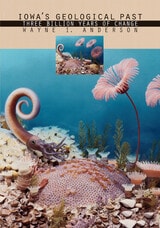
Iowa's rock record is the product of more than three billion years of geological processes. The state endured multiple episodes of continental glaciation during the Pleistocene Ice Age, and the last glacier retreated from Iowa a mere (geologically speaking) twelve thousand years ago. Prior to that, dozens of seas came and went, leaving behind limestone beds with rich fossil records. Lush coal swamps, salty lagoons, briny basins, enormous alluvial plains, ancient rifts, and rugged Precambrian mountain belts all left their mark. In Iowa's Geological Past, Wayne Anderson gives us an up-to-date and well-informed account of the state's vast geological history from the Precambrian through the end of the Great Ice Age.

Anderson takes us on a journey backward into time to explore Iowa's rock-and-sediment record. In the distant past, prehistoric Iowa was covered with shallow seas; coniferous forests flourished in areas beyond the continental glaciers; and a wide variety of animals existed, including mastodon, mammoth, musk ox, giant beaver, camel, and giant sloth.

The presence of humans can be traced back to the Paleo-Indian interval, 9,500 to 7,500 years ago. Iowa in Paleozoic time experienced numerous coastal plain and shallow marine environments. Early in the Precambrian, Iowa was part of ancient mountain belts in which granite and other rocks were formed well below the earth's surface.

The hills and valleys of the Hawkeye State are not everlasting when viewed from the perspective of geologic time. Overall, Iowa's geologic column records an extraordinary transformation over more than three billion years. Wayne Anderson's profusely illustrated volume provides a comprehensive and accessible survey of the state's remarkable geological past.

[more]
cover of Iowa's Minerals: Their Occurance, Origins, Industries and Lore

Iowa's Minerals

Their Occurance, Origins, Industries and Lore

Paul Garvin

University of Iowa Press, 1998
[more]
cover of Is Anyone Listening?: What Animals Are Saying to Each Other and to Us

Is Anyone Listening?

What Animals Are Saying to Each Other and to Us

Denise L. Herzing

University of Chicago Press, 2024

From a leading researcher on dolphin communication, a deep dive into the many ways animal species communicate with their kin, their neighboring species, and us. 
 
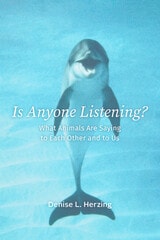
If you could pose one question to a dolphin, what would it be? And what might a dolphin ask you? For forty years, researcher and author Denise L. Herzing has investigated these and related questions of marine mammal communication. With the assistance of a friendly community of Atlantic spotted dolphins in the Bahamas, Herzing studies two-way communication between different dolphin species and between humans and dolphins using a variety of cutting-edge experiments. But the dolphins are not the only ones talking, and in this wide-ranging and accessible book, Herzing explores the astonishing realities of interspecies communication, a skill that humans currently lack.
 
Is Anyone Listening? connects research on dolphin communication to findings from Jane Goodall on chimpanzees, Dian Fossey on mountain gorillas, Cynthia Moss on African elephants, and others driving today’s exploration of possible animal languages. Although humans have long attempted to crack animal communication codes, only now do we have the advanced machine-learning tools to help. As Herzing reveals, researchers are finding fascinating hints of language in nonhuman species, including linguistic structures, vowel equivalents, and complex repeated sequences. By looking at the many ways animals use and manipulate signals, we see that we’ve only just begun to appreciate the diversity of animal intelligence and the complicated and subtle aspects of animal communication.
 
Considering dolphins and other nonhuman animals as colleagues instead of research subjects, Herzing asks us to meet animals as both speakers and listeners, as mutually curious beings, and to listen to what they are saying.
[more]
cover of Is Progress Speeding Up: Multiplying Multitudes Of Blessings

Is Progress Speeding Up

Multiplying Multitudes Of Blessings

John Marks Templeton

Templeton Press, 1998

This book is a thought-provoking view of the progress of humankind in the last century. In spite of the pessimism that prevails in the media, people are better fed, better clothed, better housed, and better educated than at any previous time.

The facts within the book provide documentation for a positive outlook toward our nutrition and health, living standards and working conditions, political and economic freedoms, educational facilities, ability to communicate, ease of movement, increasing leisure, and, most important, our ability to get along with one another and with our Creator. The statistics, charts, and photographs that illustrate this book enhance the reassuring and uplifting view of the state of the world and where it is going.

“His analysis gives us a refreshing balance to the negative, sometimes cynical, views in the media that tend to portray the worst rather than the best in human civilization.” —Jimmy Carter

“After reading Sir John Templeton's latest book, I believe more than ever that we are living in the most exciting time in history. Despite the challenges we face, his demonstration of mankind's progress gives all of us great hopes and high expectations for our next century and the new millennium.” —Jack Kemp, former HUD secretary, director of Empower America

[more]
cover of Is Ultimate Reality Unlimited Love?

Is Ultimate Reality Unlimited Love?

Stephen G. Post

Templeton Press, 2014
This book draws from previously unpublished letters and interviews with physicists, theologians, and Sir John’s close associates and family to present Sir John’s ideas on pure unlimited love. Post, who was in dialogue with Sir John for fifteen years on this topic and who had founded the Institute for Research on Unlimited Love (www.unlimitedloveinstitute.com), addresses how John Templeton arrived at his philosophy as a youth growing up in Tennessee. Post also shares how classical Presbyterian ideas came to synergize in his mind with the more Eastern influences of American transcendentalism and the Unity School of Christianity and ponders if Sir John truly believed that science and spirituality might fully converge on the same view of Ultimate Reality with their very different ways of knowing. Is Ultimate Reality Unlimited Love? presents Sir John’s hope for spiritual progress with the eventual convergence of ultimate reality and unlimited love.
[more]
cover of Isis, volume 112 number 4 (December 2021)

Isis, volume 112 number 4 (December 2021)

The University of Chicago Press

University of Chicago Press Journals, 2021

This is volume 112 issue 4 of Isis. Since its inception in 1912, Isis has featured scholarly articles, research notes, and commentary on the history of science, medicine, and technology and their cultural influences. Review essays and book reviews on new contributions to the discipline are also included. An official publication of the History of Science Society, Isis is the oldest English-language journal in the field.
[more]
cover of Isis, volume 113 number 1 (March 2022)

Isis, volume 113 number 1 (March 2022)

The University of Chicago Press

University of Chicago Press Journals, 2022

This is volume 113 issue 1 of Isis. Since its inception in 1912, Isis has featured scholarly articles, research notes, and commentary on the history of science, medicine, and technology and their cultural influences. Review essays and book reviews on new contributions to the discipline are also included. An official publication of the History of Science Society, Isis is the oldest English-language journal in the field.
[more]
cover of Isis, volume 113 number 2 (June 2022)

Isis, volume 113 number 2 (June 2022)

The University of Chicago Press

University of Chicago Press Journals, 2022
This is volume 113 issue 2 of Isis. Since its inception in 1912, Isis has featured scholarly articles, research notes, and commentary on the history of science, medicine, and technology and their cultural influences. Review essays and book reviews on new contributions to the discipline are also included. An official publication of the History of Science Society, Isis is the oldest English-language journal in the field.
[more]
cover of Isis, volume 113 number 3 (September 2022)

Isis, volume 113 number 3 (September 2022)

The University of Chicago Press

University of Chicago Press Journals, 2022
This is volume 113 issue 3 of Isis. Since its inception in 1912, Isis has featured scholarly articles, research notes, and commentary on the history of science, medicine, and technology and their cultural influences. Review essays and book reviews on new contributions to the discipline are also included. An official publication of the History of Science Society, Isis is the oldest English-language journal in the field.
[more]
cover of Isis, volume 113 number 4 (December 2022)

Isis, volume 113 number 4 (December 2022)

The University of Chicago Press

University of Chicago Press Journals, 2022
This is volume 113 issue 4 of Isis. Since its inception in 1912, Isis has featured scholarly articles, research notes, and commentary on the history of science, medicine, and technology and their cultural influences. Review essays and book reviews on new contributions to the discipline are also included. An official publication of the History of Science Society, Isis is the oldest English-language journal in the field.
[more]
cover of Isis, volume 114 number 1 (March 2023)

Isis, volume 114 number 1 (March 2023)

The University of Chicago Press

University of Chicago Press Journals, 2023
This is volume 114 issue 1 of Isis. Since its inception in 1912, Isis has featured scholarly articles, research notes, and commentary on the history of science, medicine, and technology and their cultural influences. Review essays and book reviews on new contributions to the discipline are also included. An official publication of the History of Science Society, Isis is the oldest English-language journal in the field.
[more]
cover of Isis, volume 114 number 2 (June 2023)

Isis, volume 114 number 2 (June 2023)

The University of Chicago Press

University of Chicago Press Journals, 2023
This is volume 114 issue 2 of Isis. Since its inception in 1912, Isis has featured scholarly articles, research notes, and commentary on the history of science, medicine, and technology and their cultural influences. Review essays and book reviews on new contributions to the discipline are also included. An official publication of the History of Science Society, Isis is the oldest English-language journal in the field.
[more]
cover of Isis, volume 114 number 3 (September 2023)

Isis, volume 114 number 3 (September 2023)

The University of Chicago Press

University of Chicago Press Journals, 2023

This is volume 114 issue 3 of Isis. Since its inception in 1912, Isis has featured scholarly articles, research notes, and commentary on the history of science, medicine, and technology and their cultural influences. Review essays and book reviews on new contributions to the discipline are also included. An official publication of the History of Science Society, Isis is the oldest English-language journal in the field.
[more]
cover of Isis, volume 114 number 4 (December 2023)

Isis, volume 114 number 4 (December 2023)

The University of Chicago Press

University of Chicago Press Journals, 2023
This is volume 114 issue 4 of Isis. Since its inception in 1912, Isis has featured scholarly articles, research notes, and commentary on the history of science, medicine, and technology and their cultural influences. Review essays and book reviews on new contributions to the discipline are also included. An official publication of the History of Science Society, Isis is the oldest English-language journal in the field.
[more]
cover of Isis, volume 115 number 1 (March 2024)

Isis, volume 115 number 1 (March 2024)

The University of Chicago Press

University of Chicago Press Journals, 2024
This is volume 115 issue 1 of Isis. Since its inception in 1912, Isis has featured scholarly articles, research notes, and commentary on the history of science, medicine, and technology and their cultural influences. Review essays and book reviews on new contributions to the discipline are also included. An official publication of the History of Science Society, Isis is the oldest English-language journal in the field.
[more]
cover of Isis, volume 115 number 2 (June 2024)

Isis, volume 115 number 2 (June 2024)

The University of Chicago Press

University of Chicago Press Journals, 2024
This is volume 115 issue 2 of Isis. Since its inception in 1912, Isis has featured scholarly articles, research notes, and commentary on the history of science, medicine, and technology and their cultural influences. Review essays and book reviews on new contributions to the discipline are also included. An official publication of the History of Science Society, Isis is the oldest English-language journal in the field.
[more]
cover of Isis, volume 115 number 3 (September 2024)

Isis, volume 115 number 3 (September 2024)

The University of Chicago Press

University of Chicago Press Journals, 2024

This is volume 115 issue 3 of Isis. Since its inception in 1912, Isis has featured scholarly articles, research notes, and commentary on the history of science, medicine, and technology and their cultural influences. Review essays and book reviews on new contributions to the discipline are also included. An official publication of the History of Science Society, Isis is the oldest English-language journal in the field.
[more]
cover of Isis, volume 115 number 4 (December 2024)

Isis, volume 115 number 4 (December 2024)

The University of Chicago Press

University of Chicago Press Journals, 2024
This is volume 115 issue 4 of Isis. Since its inception in 1912, Isis has featured scholarly articles, research notes, and commentary on the history of science, medicine, and technology and their cultural influences. Review essays and book reviews on new contributions to the discipline are also included. An official publication of the History of Science Society, Isis is the oldest English-language journal in the field.
[more]
cover of Isis, volume 116 number 1 (March 2025)

Isis, volume 116 number 1 (March 2025)

The University of Chicago Press

University of Chicago Press Journals, 2025
This is volume 116 issue 1 of Isis. Since its inception in 1912, Isis has featured scholarly articles, research notes, and commentary on the history of science, medicine, and technology and their cultural influences. Review essays and book reviews on new contributions to the discipline are also included. An official publication of the History of Science Society, Isis is the oldest English-language journal in the field.
[more]
cover of Isis, volume 116 number 2 (June 2025)

Isis, volume 116 number 2 (June 2025)

The University of Chicago Press

University of Chicago Press Journals, 2025
This is volume 116 issue 2 of Isis. Since its inception in 1912, Isis has featured scholarly articles, research notes, and commentary on the history of science, medicine, and technology and their cultural influences. Review essays and book reviews on new contributions to the discipline are also included. An official publication of the History of Science Society, Isis is the oldest English-language journal in the field.
[more]
cover of Isis, volume 116 number 3 (September 2025)

Isis, volume 116 number 3 (September 2025)

The University of Chicago Press

University of Chicago Press Journals, 2025
This is volume 116 issue 3 of Isis. Since its inception in 1912, Isis has featured scholarly articles, research notes, and commentary on the history of science, medicine, and technology and their cultural influences. Review essays and book reviews on new contributions to the discipline are also included. An official publication of the History of Science Society, Isis is the oldest English-language journal in the field.
[more]
cover of Isis, volume 116 number 4 (December 2025)

Isis, volume 116 number 4 (December 2025)

The University of Chicago Press

University of Chicago Press Journals, 2025
This is volume 116 issue 4 of Isis. Since its inception in 1912, Isis has featured scholarly articles, research notes, and commentary on the history of science, medicine, and technology and their cultural influences. Review essays and book reviews on new contributions to the discipline are also included. An official publication of the History of Science Society, Isis is the oldest English-language journal in the field.
[more]
cover of Isis, volume 117 number 1 (March 2026)

Isis, volume 117 number 1 (March 2026)

The University of Chicago Press

University of Chicago Press Journals, 2026
This is volume 117 issue 1 of Isis. Since its inception in 1912, Isis has featured scholarly articles, research notes, and commentary on the history of science, medicine, and technology and their cultural influences. Review essays and book reviews on new contributions to the discipline are also included. An official publication of the History of Science Society, Isis is the oldest English-language journal in the field.
[more]
cover of Isis, volume 117 number 2 (June 2026)

Isis, volume 117 number 2 (June 2026)

The University of Chicago Press

University of Chicago Press Journals, 2026

This is volume 117 issue 2 of Isis. Since its inception in 1912, Isis has featured scholarly articles, research notes, and commentary on the history of science, medicine, and technology and their cultural influences. Review essays and book reviews on new contributions to the discipline are also included. An official publication of the History of Science Society, Isis is the oldest English-language journal in the field.
[more]
cover of Isis, volume 117 number 3 (September 2026)

Isis, volume 117 number 3 (September 2026)

The University of Chicago Press

University of Chicago Press Journals, 2026
This is volume 117 issue 3 of Isis. Since its inception in 1912, Isis has featured scholarly articles, research notes, and commentary on the history of science, medicine, and technology and their cultural influences. Review essays and book reviews on new contributions to the discipline are also included. An official publication of the History of Science Society, Isis is the oldest English-language journal in the field.
[more]
cover of Island Bats: Evolution, Ecology, and Conservation

Island Bats

Evolution, Ecology, and Conservation

Edited by Theodore H. Fleming and Paul A. Racey

University of Chicago Press, 2010

The second largest order of mammals, Chiroptera comprises more than one thousand species of bats. Because of their mobility, bats are often the only native mammals on isolated oceanic islands, where more than half of all bat species live. These island bats represent an evolutionarily distinctive and ecologically significant part of the earth’s biological diversity.

Island Bats is the first book to focus solely on the evolution, ecology, and conservation of bats living in the world’s island ecosystems. Among other topics, the contributors to this volume examine how the earth’s history has affected the evolution of island bats, investigate how bat populations are affected by volcanic eruptions and hurricanes, and explore the threat of extinction from human disturbance. Geographically diverse, the volume includes studies of the islands of the Caribbean, the Western Indian Ocean, Micronesia, Indonesia, the Philippines, and New Zealand.

With its wealth of information from long-term studies, Island Bats provides timely and valuable information about how this fauna has evolved and how it can be conserved. 

[more]
cover of Island Life: Or, the Phenomena and Causes of Insular Faunas and Floras, Including a Revision and Attempted Solution of the Problem of Geological Climates

Island Life

Or, the Phenomena and Causes of Insular Faunas and Floras, Including a Revision and Attempted Solution of the Problem of Geological Climates

Alfred Russel Wallace

University of Chicago Press, 2013

Alfred Russel Wallace is best known as the codiscoverer, with Charles Darwin, of natural selection, but he was also history’s foremost tropical naturalist and the father of biogeography, the modern study of the geographical basis of biological diversity. Island Life has long been considered one of his most important works. In it he extends studies on the influence of the glacial epochs on organismal distribution patterns and the characteristics of island biogeography, a topic as vibrant and actively studied today as it was in 1880. The book includes history’s first theory of continental glaciation based on a combination of geographical and astronomical causes, a discussion of island classification, and a survey of worldwide island faunas and floras.
           
The year 2013 will mark the centennial of Wallace’s death and will see a host of symposia and reflections on Wallace’s contributions to evolution and natural history. This reissue of the first edition of Island Life, with a foreword by David Quammen and an extensive commentary by Lawrence R. Heaney, who has spent over three decades studying island biogeography in Southeast Asia, makes this essential and foundational reference available and accessible once again.
[more]