Results by title
8812 books match the query 'Political Science' and 348 start with i

Indian Water in the New West
Thomas R. McGuire
University of Arizona Press, 1993

Indiana Political Heroes
Geoff Paddock
Indiana Historical Society Press, 2008
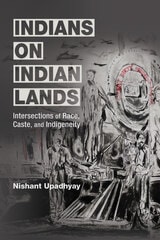
Indians on Indian Lands
Intersections of Race, Caste, and IndigeneityNishant Upadhyay
University of Illinois Press, 2024
Winner of a NWSA/University of Illinois Press First Book Prize
Nishant Upadhyay unravels Indian diasporic complicity in its ongoing colonialist relationship with Indigenous peoples, lands, and nations in Canada. Upadhyay examines the interwoven and simultaneous areas of dominant Indian caste complicity in processes of settler colonialism, antiblackness, capitalism, brahminical supremacy, Hindu nationalism, and heteropatriarchy. Resource extraction in British Columbia in the 1970s–90s and in present-day Alberta offer examples of spaces that illuminate the dispossession of Indigenous peoples and simultaneously reveal racialized, gendered, and casted labor formations. Upadhyay juxtaposes these extraction sites with examples of anticolonial activism and solidarities from Tkaronto. Analyzing silence on settler colonialism and brahminical caste supremacy, Upadhyay upends the idea of dominant caste Indian diasporas as racially victimized and shows that claiming victimhood denies a very real complicity in enforcing other power structures. Exploring stories of quotidian proximity and intimacy between Indigenous and South Asian communities, Upadhyay offers meditations on anticolonial and anti-casteist ways of knowledge production, ethical relationalities, and solidarities.Groundbreaking and ambitious, Indians on Indian Lands presents the case for holding Indian diasporas accountable for acts of violence within a colonial settler nation.
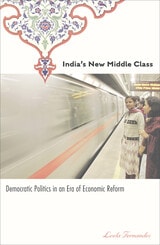
India’s New Middle Class
Democratic Politics in an Era of Economic ReformLeela Fernandes
University of Minnesota Press, 2006
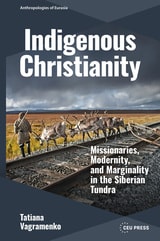
Indigenous Christianity
Missionaries, Modernity, and Marginality in the Siberian TundraTatiana Vagramenko
Central European University Press, 2026
Nenets nomads, long shaped by Russian colonialism and Soviet modernization, experienced sweeping conversions in the mid-1990s, culminating in the creation of a tundra church tied to a radical evangelical movement. Amid Putin’s tightening control—when indigenous peoples and minority faiths faced renewed surveillance and harassment—the book follows Nenets and missionaries whose encounters across the tundra sparked tensions between converts and non-converts, faith and state. Through stories of hope, loss, and resilience, it reveals how global evangelical Christianity intersects with local traditions, reshaping kinship, belonging, and modernity in the Siberian tundra.
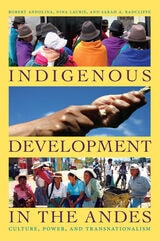
Indigenous Development in the Andes
Culture, Power, and TransnationalismRobert Andolina, Nina Laurie, and Sarah A. Radcliffe
Duke University Press, 2009
The authors argue that this reconfiguration of development policy and practice permits Ecuadorian and Bolivian indigenous groups to renegotiate their relationship to development as subjects who contribute and participate. Yet it also recasts indigenous peoples and their cultures as objects of intervention and largely fails to address fundamental concerns of indigenous movements, including racism, national inequalities, and international dependencies. Andean indigenous peoples are less marginalized, but they face ongoing dilemmas of identity and agency as their fields of action cross national boundaries and overlap with powerful institutions. Focusing on the encounters of indigenous peoples with international development as they negotiate issues related to land, water, professionalization, and gender, Indigenous Development in the Andes offers a comprehensive analysis of the diverse consequences of neoliberal development, and it underscores crucial questions about globalization, governance, cultural identity, and social movements.

Indigenous Environmental Justice
Edited by Karen Jarratt-Snider and Marianne O. Nielsen
University of Arizona Press, 2020
With focused essays on important topics such as the uranium mining on Navajo and Hopi lands, the Dakota Access Pipeline dispute on the Standing Rock Indian Reservation, environmental cleanup efforts in Alaska, and many other pertinent examples, this volume offers a timely view of the environmental devastation that occurs in Indian Country. It also serves to emphasize the importance of self-determination and sovereignty in victories of Indigenous environmental justice.
The book explores the ongoing effects of colonization and emphasizes Native American tribes as governments rather than ethnic minorities. Combining elements of legal issues, human rights issues, and sovereignty issues, Indigenous Environmental Justice creates a clear example of community resilience in the face of corporate greed and state indifference.

Indigenous Health and Justice
Edited by Karen Jarratt-Snider and Marianne O. Nielsen
University of Arizona Press, 2024

Indigenous Interfaces
Spaces, Technology, and Social Networks in Mexico and Central AmericaEdited by Jennifer Gómez Menjívar and Gloria Elizabeth Chacón; Foreword by Arturo Arias
University of Arizona Press, 2019
Indigenous Interfaces provides the first thorough examination of indigeneity at the interface of cyberspace. Correspondingly, it examines the impact of new media on the struggles for self-determination that Indigenous peoples undergo in Mexico and Central America. The volume’s contributors highlight the fresh approaches that Mesoamerica’s Indigenous peoples have given to new media—from YouTubing Maya rock music to hashtagging in Zapotec. Together, they argue that these cyberspatial activities both maintain tradition and ensure its continuity. Without considering the implications of new technologies, Indigenous Interfaces argues, twenty-first-century indigeneity in Mexico and Central America cannot be successfully documented, evaluated, and comprehended.
Indigenous Interfaces rejects the myth that indigeneity and information technology are incompatible through its compelling analysis of the relationships between Indigenous peoples and new media. The volume illustrates how Indigenous peoples are selectively and strategically choosing to interface with cybertechnology, highlights Indigenous interpretations of new media, and brings to center Indigenous communities who are resetting modes of communication and redirecting the flow of information. It convincingly argues that interfacing with traditional technologies simultaneously with new media gives Indigenous peoples an edge on the claim to autonomous and sovereign ways of being Indigenous in the twenty-first century.
Contributors
Arturo Arias
Debra A. Castillo
Gloria Elizabeth Chacón
Adam W. Coon
Emiliana Cruz
Tajëëw Díaz Robles
Mauricio Espinoza
Alicia Ivonne Estrada
Jennifer Gómez Menjívar
Sue P. Haglund
Brook Danielle Lillehaugen
Paul Joseph López Oro
Rita M. Palacios
Gabriela Spears-Rico
Paul Worley

Indigenous Knowledge and the Environment in Africa and North America
David M. Gordon
Ohio University Press, 2012
Indigenous knowledge has become a catchphrase in global struggles for environmental justice. Yet indigenous knowledges are often viewed, incorrectly, as pure and primordial cultural artifacts. This collection draws from African and North American cases to argue that the forms of knowledge identified as “indigenous” resulted from strategies to control environmental resources during and after colonial encounters.
At times indigenous knowledges represented a “middle ground” of intellectual exchanges between colonizers and colonized; elsewhere, indigenous knowledges were defined through conflict and struggle. The authors demonstrate how people claimed that their hybrid forms of knowledge were communal, religious, and traditional, as opposed to individualist, secular, and scientific, which they associated with European colonialism.
Indigenous Knowledge and the Environment offers comparative and transnational insights that disturb romantic views of unchanging indigenous knowledges in harmony with the environment. The result is a book that informs and complicates how indigenous knowledges can and should relate to environmental policy-making.
Contributors: David Bernstein, Derick Fay, Andrew H. Fisher, Karen Flint, David M. Gordon, Paul Kelton, Shepard Krech III, Joshua Reid, Parker Shipton, Lance van Sittert, Jacob Tropp, James L. A. Webb, Jr., Marsha Weisiger
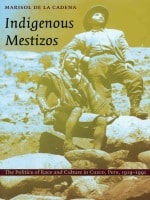
Indigenous Mestizos
The Politics of Race and Culture in Cuzco, Peru, 1919-1991Marisol de la Cadena
Duke University Press, 2000
De la Cadena’s ethnographically and historically rich study examines how indigenous citizens of the city of Cuzco have been conceived by others as well as how they have viewed themselves and places these conceptions within the struggle for political identity and representation. Demonstrating that the terms Indian and mestizo are complex, ambivalent, and influenced by social, legal, and political changes, she provides close readings of everyday concepts such as marketplace identity, religious ritual, grassroots dance, and popular culture, as well as of such common terms as respect, decency, and education. She shows how Indian has come to mean an indigenous person without economic and educational means—one who is illiterate, impoverished, and rural. Mestizo, on the other hand, has come to refer to an urban, usually literate, and economically successful person claiming indigenous heritage and participating in indigenous cultural practices. De la Cadena argues that this version of de-Indianization—which, rather than assimilation, is a complex political negotiation for a dignified identity—does not cancel the economic and political equalities of racism in Peru, although it has made room for some people to reclaim a decolonized Andean cultural heritage.
This highly original synthesis of diverse theoretical arguments brought to bear on a series of case studies will be of interest to scholars of cultural anthropology, postcolonialism, race and ethnicity, gender studies, and history, in addition to Latin Americanists.
Indigenous Movements, Self-Representation, and the State in Latin America
Edited by Kay B. Warren and Jean E. Jackson
University of Texas Press, 2003
Throughout Latin America, indigenous peoples are responding to state violence and pro-democracy social movements by asserting their rights to a greater measure of cultural autonomy and self-determination. This volume's rich case studies of movements in Colombia, Guatemala, and Brazil weigh the degree of success achieved by indigenous leaders in influencing national agendas when governments display highly ambivalent attitudes about strengthening ethnic diversity.
The contributors to this volume are leading anthropologists and indigenous activists from the United States and Latin America. They address the double binds of indigenous organizing and "working within the system" as well as the flexibility of political tactics used to achieve cultural goals outside the scope of state politics. The contributors answer questions about who speaks for indigenous communities, how indigenous movements relate to the popular left, and how conflicts between the national indigenous leadership and local communities play out in specific cultural and political contexts. The volume sheds new light on the realities of asymmetrical power relations and on the ways in which indigenous communities and their representatives employ Western constructions of subjectivity, alterity, and authentic versus counterfeit identity, as well as how they manipulate bureaucratic structures, international organizations, and the mass media to advance goals that involve distinctive visions of an indigenous future.
Indigenous Peoples and Borders
Sheryl Lightfoot and Elsa Stamatopoulou, editors
Duke University Press, 2024
Contributors. Tone Bleie, Andrea Carmen, Jacqueline Gillis, Rauna Kuokkanen, Elifuraha Laltaika, Sheryl Lightfoot, David Bruce MacDonald, Toa Elisa Maldonado Ruiz, Binalakshmi “Bina” Nepram, Melissa Z. Patel, Manoel B. do Prado Junior, Hana Shams Ahmed, Elsa Stamatopoulou, Liubov Suliandziga, Rodion Sulyandziga, Yifat Susskind, Erika M. Yamada

Indigenous Political Ecology
Clint Carroll
University of Minnesota Press, 2027
Advancing Indigenous and allied voices to address urgent environmental questions at the crossroads of Indigenous and settler state sovereignty
Authored by a group of majority Indigenous scholars from across Canada and the United States, this collection enacts a radical intervention into colonial impulses in traditional political ecology scholarship and its examination of state power in environmental conflicts. Centering the human–nature relationality of Indigenous cosmologies, this book confronts the terms by which land and water degradation, climate change, and other disastrous effects of extractive capitalism are understood.
Drawing on family histories, storytelling, autoethnography, and community-grounded research, Indigenous Political Ecology showcases a deeply self-reflexive examination of intergenerational struggles over land rights and attempts to resist settler colonial dynamics, including struggles over knowledge itself. Contributors recount the fraught history of Bears Ears National Monument, decades of Seminole-led efforts to restore the Everglades ecosystem, the creation of land education programs advancing Cherokee sovereignty, the impact of mining development on Mushkegowuk homelands in the Ring of Fire, and many other ongoing stories in which the “ecological” and “political” are being redefined.
Through its collectively led efforts and transdisciplinary approach, Indigenous Political Ecology models a new type of environmental scholarship that considers its modes of production integral to its contributors’ broader ethical and political commitments. Rooted in Indigenous sovereignty and self-determination, this groundbreaking volume sets forth a powerful blueprint for a more just and sustainable path through the field of political ecology.
Contributors: Nicholas A. Brown, Jessica R. Catellino, Andrew Curley, Michelle Daigle, Jean Dennison, Ashley Nichole Lewis, Beth Rose Middleton Manning, Teresa Montoya, Dana E. Powell, Kyle Powys Whyte, Jen Rose Smith, Lisa Wilson.
Retail e-book files for this title are screen-reader friendly with images accompanied by short alt text and/or extended descriptions.
Indigenous Reparations and Settler Colonial Reckoning
Re-Braiding Rights and Redress in CanadaPauline Wakeham
University of Minnesota Press, 2026
How Indigenous communities are transforming the idea and practice of reparations through their laws and leadership
In recent decades, a growing number of Indigenous groups across Canada have initiated movements for colonial reparations. Too often, the settler state has responded by attempting to enfold their work into a narrative of reconciliation that consigns colonialism to “sad chapters” of history. In this book, Pauline Wakeham calls attention to the ways that Indigenous reparations movements exceed state reconciliatory frameworks and prompt a deeper reckoning with the enduring structures of settler colonialism.
To expose and redress colonial injustices, Indigenous reparations movements draw upon long local traditions of political organizing as well as transformations on the global stage since World War II. As international law formulated new instruments regarding gross human rights violations, atrocity crimes, and the reparative obligations of states, colonized peoples across the world have sought to mobilize these mechanisms in their struggles for decolonization and reparations. While international law has provided strategic tools for this work, the colonial foundations of the field continue to limit how it conceptualizes and shapes access to justice. Indigenous Reparations and Settler Colonial Reckoning traces the specific implications for Indigenous nations whose land is occupied by settler states—nations whose legal orders remain subordinated to both settler “domestic” and international legal systems.
Amid this complex multijurisdictional terrain, how are Indigenous peoples carving out space to articulate their own visions of justice? To answer this question, Wakeham learns from the Inuit-led Qikiqtani Truth Commission as well as reparations movements for residential schools and the High Arctic Relocations of 1953 and 1955. These movements offer powerful lessons about the importance of centering Indigenous leadership and laws in redress processes, thereby connecting reparations to the living enactment of Indigenous rights.
Retail e-book files for this title are screen-reader friendly with images accompanied by short alt text and/or extended descriptions.
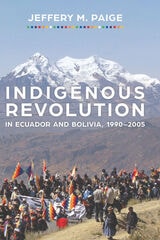
Indigenous Revolution in Ecuador and Bolivia, 1990–2005
Jeffery M. Paige
University of Arizona Press, 2020
Uprisings by indigenous peoples of Ecuador and Bolivia between 1990 and 2005 overthrew the five-hundred-year-old racial and class order inherited from the Spanish Empire. It started in Ecuador with the Great Indigenous Uprising, which was fought for cultural and economic rights. A few years later massive indigenous mobilizations began in Bolivia, culminating in 2005 with the election of Evo Morales, the first indigenous president.
Jeffrey M. Paige, an internationally recognized authority on the sociology of revolutionary movements, interviewed forty-five indigenous leaders who were actively involved in the uprisings. The leaders recount how peaceful protest and electoral democracy paved the path to power. Through the interviews, we learn how new ideologies of indigenous socialism drew on the deep commonalities between the communal dreams of their ancestors and the modern ideology of democratic socialism. This new discourse spoke to the people most oppressed by both withering racism and neoliberal capitalism.
Emphasizing mutual respect among ethnic groups (including the dominant Hispanic group), the new revolutionary dynamic proposes a communal worldview similar to but more inclusive than Western socialism because it adds indigenous cultures and nature in a spiritual whole. Although absent in the major revolutions of the past century, the themes of indigenous revolution—democracy, indigeneity, spirituality, community, and ecology—are critically important.
Paige’s interviews present the powerful personal experiences and emotional intensity of the revolutionary leadership. They share the stories of mass mobilization, elections, and indigenous socialism that created a new form of twenty-first-century revolution with far-reaching applications beyond the Andes.
Indigenous Women and Work
From Labor to ActivismEdited by Carol Williams
University of Illinois Press, 2012

Individual Freedoms and State Security in the African Context
The Case of ZimbabweJohn Hatchard
Ohio University Press, 1993
In 1980 the ZANU/PF government of Robert Mugabe came to power after an extended war of liberation. They inherited a cluster of emergency laws similar to those available to the authorities in South Africa. It was also the beginning of the cynical South African state policy of destabilization of the frontline states. This led to a dangerous period of insurrection in Mashonaland and increased activity by Renamo.
Dr. Hatchard uses the case of Zimbabwe to ask questions about the use of authority in contemporary African states. He examines:
1. Whether and in what circumstances the declaration and retention of a state of emergency is justified;
2.The scope of emergency regulations and their impact on individual freedoms;
3.What safeguards are necessary in order to protect those freedoms during a state of emergency.
The relationship is studied from a political as well as a legal perspective. Dr. Hatchard examines the role law has played, is playing and may play. The author concludes that, even if the state of emergency is justified, this does not necessitate the curtailment of the exercise of individual freedoms.
There are many comparisons with the rest of Africa. The book is of practical importance for members of the judiciary, legal practitioners, politicians and human rights organizations. The difficult questions it poses make stimulating teaching material for students of the Third World who want to understand the reality of the exercise of power in fragile situations.

Individual and Social Responsibility
Child Care, Education, Medical Care, and Long-Term Care in AmericaEdited by Victor R. Fuchs
University of Chicago Press, 1995
Four in-depth studies of human-service sectors—child care, education, medical care, and long-term care for the elderly—are followed by six cross-sector studies that stimulate new ways of thinking about human services through the application of economic theory, institutional analysis, and the history of social policy.
The contributors include Kenneth J. Arrow, Martin Feldstein, Victor Fuchs, Alan M. Garber, Eric A. Hanushek, Christopher Jencks, Seymour Martin Lipset, Glenn Loury, Roger G. Noll, Paul M. Romer, Amartya Sen, and Theda Skocpol.
This timely study sheds important light on the tension between individual and social responsibility, and will appeal to economists and other social scientists and policymakers concerned with social policy issues.
Individualism and Economic Order
F. A. Hayek
University of Chicago Press, 1948
In this collection of writings, Nobel laureate Friedrich A. Hayek discusses topics from moral philosophy and the methods of the social sciences to economic theory as different aspects of the same central issue: free markets versus socialist planned economies. First published in the 1930s and 40s, these essays continue to illuminate the problems faced by developing and formerly socialist countries.
F. A. Hayek, recipient of the Medal of Freedom in 1991 and winner of the Nobel Memorial Prize in Economics in 1974, taught at the University of Chicago, the University of London, and the University of Freiburg. Among his other works published by the University of Chicago Press is The Road to Serfdom, now available in a special fiftieth anniversary edition.

Indonesia
Archipelago of FearAndre Vltchek
Pluto Press, 2012
Indonesia: Archipelago of Fear is a fascinating and at times unsettling journey into the world's most populous Muslim nation as it struggles to emerge from decades of dictatorship and the plunder of its natural resources.
Andre Vltchek brings together more than a decade of investigative journalism in and around Indonesia to chart the recent history of the country, from the revolution which overthrew General Suharto's genocidal dictatorship in 1998 to the present day. He covers the full breadth of the country from Islamic Aceh to mostly Catholic East Timor.
Tracing Indonesia's current problems back to Suharto's coup and the genocide of 1965 – and the support given by the West to Suharto – Vltchek provides an intimate and deeply humane insight into the hopes and fears of Indonesia's people.
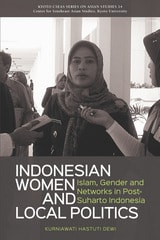
Indonesian Women and Local Politics
Islam, Gender and Networks in Post-Suharto IndonesiaKurniawati Hastuti Dewi
National University of Singapore Press, 2015

Industry, the State, and Public Policy in Mexico
By Dale Story
University of Texas Press, 1986
The industrialization process in Mexico began before that of any other nation in Latin America except Argentina, with the most rapid expansion of new industrial firms occurring in the 1930s and 1940s, and import substitution in capital goods evident as early as the late 1930s. Though Mexico’s trade relations have always been dependent on the United States, successive Mexican presidents in the postwar period attempted to control the penetration of foreign capital into Mexican markets.
In Industry, the State, and Public Policy in Mexico, Dale Story, recognizing the significance of the Mexican industrial sector, analyzes the political and economic role of industrial entrepreneurs in postwar Mexico. He uses two original data sets—industrial production data for 1929–1983 and a survey of the political attitudes of leaders of the two most important industrial organizations in Mexico—to address two major theoretical arguments relating to Latin American development: the meaning of late and dependent development and the nature of the authoritarian state. Story accepts the general relevance of these themes to Mexico but asserts that the country is an important variant of both.
With regard to the authoritarian thesis, the Mexican authoritarian state has demonstrated some crucial distinctions, especially between popular and elite sectors. The incorporation of the popular sector groups has closely fit the characteristics of authoritarianism, but the elite sectors have operated fairly independently of state controls, and the government has employed incentives or inducements to try to win their cooperation.
In short, industrialists have performed important functions, not only in accumulating capital and organizing economic enterprises but also by bringing together the forces of social change. Industrial entrepreneurs have emerged as a major force influencing the politics of growth, and the public policy arena has become a primary focus of attention for industrialists since the end of World War II.
Inequality and American Democracy
What We Know and What We Need to LearnLawrence R. Jacobs
Russell Sage Foundation, 2005
Inequality and the Global Economic Crisis
Douglas Dowd
Pluto Press, 2009
Inequality, per se, has been with us for millennia. With the creation, growth and deepening of Capitalism across the globe, inequalities take on new dimensions, unknown in previous eras. As Capitalism has spread its wings across the globe over the last 200 or so years, so inequalities have deepened and widened, both inside Nation Sates, between nation States. These inequalities are of income, wealth and of power.
This book, written by the widely respected economic historian Douglas Dowd at the age of 90, is notable for his own experience and vivid memory, of the 1929-31 recession. Since the 1980s, and the predominance of the present neo-liberal ideology, all of the inequalities that the book presents have grown rapidly. Written as a critique of the counter-productivity of growing economic inequality and vindicated by the present world banking crisis, Dowd presents a strong argument against capitalist expansion, exploitation and oligarchic rule.
Dowd's conclusions, that the globalization and growth of the financial sector will impact painfully upon hundreds of millions of people, unknown to most of us in our lifetime, Dowd's book deals with these issues from the unique perspective of inequality. Presenting both a history of the current crisis and an overview of it's, Inequality will appeal to both a broad general readership, and provides an extremely useful reference point for students of political economy, economic history, contemporary economics and global politics.

Inequality, Crime, and Resistance in New York City
Timothy P. R. Weaver
Temple University Press, 2025
Weaver brings these clashes to the fore by showing how New York City politics has been shaped by these conflicting orders. He examines the transformation of the city’s political economy in the aftermath of the 1975 fiscal crisis through neoliberal real estate development and privatization, the conservative rise of law-and-order politics in the 1970s to 1990s, and the efforts of the city’s egalitarians to respond to each of these shifts through social movements such as Occupy and Black Lives Matter.
Inequality, Crime, and Resistance in New York City belies glib assumptions about the city’s liberal character. Weaver reveals the metropolis not as a homogenous political whole, but as a site in which the victories and defeats of rival political forces change the terms of local citizenship for the millions of residents who call the city home.
In the series Political Lessons from American Cities

Inferno in Chechnya
The Russian-Chechen Wars, the Al Qaeda Myth, and the Boston Marathon BombingsBrian Glyn Williams
University Press of New England, 2015

Inflation and Disinflation
The Israeli ExperimentLeonardo Leiderman
University of Chicago Press, 1993
Even though standard economic models predict that output will drop and unemployment will rise during disinflation, Israel saw a boom in private consumption and large increases in real wages that lasted for about three years. To understand how the effects of Israeli disinflation policies defied typical expectations, Leiderman investigates how monetary fiscal policy determined Israel's runaway inflation and how the country brought its economy abruptly under control. He finds that rates of inflation and consumption depend on the public's expectations about future fiscal adjustments and that foreign trade shocks do not inevitably lead to a long-term rise in the inflation rate. His illumination of international trade and domestic policies, past and present, will interest academic economists and policymakers alike.

Influx and Efflux
Writing Up with Walt WhitmanJane Bennett
Duke University Press, 2020
Informal Work in Europe, ca. 1870–1970
Sibylle Marti
Central European University Press, 2026
Information Brokers
Political Socialization in Latino Immigrant FamiliesRoberto F. Carlos
University of Chicago Press, 2026
An insightful rethinking of political socialization within Latino immigrant households.
Conventional wisdom tells us that children are passive recipients of political lessons from their parents, with caregivers being the ones who mold the developing behavior and beliefs of the children under their roof. Roberto F. Carlos challenges this preconception by revealing how Latino children, especially those with immigrant parents, often become key sources of political information and guidance in their families. As migrant parents navigate unfamiliar institutions and customs in the United States, they often turn to their children to broker information about everything from daily life to civic engagement. These roles not only place unique responsibilities on children but also create new pathways for them to shape the political behavior of their parents. Moreover, by taking on these roles, children learn the skills that can make them effective advocates later in life, even as they face resource disadvantages that normally correlate with reduced political participation and sense of political efficacy.
Drawing on six original surveys, multiple experiments, and in-depth interviews, including the accounts of youth helping protect their families from deportation, InformationBrokers shows how these dynamics influence both immigrant parents and their children in politically consequential ways. With the Latino population now over 64 million, Information Brokers offers vital insight into the political incorporation of America’s largest ethnic group.
Information Politics
Liberation and Exploitation in the Digital SocietyTim Jordan
Pluto Press, 2015
The first of Pluto Press’s new Digital Barricades series, focusing on ground-breaking critical explorations of resistance within the digital world, Information Politics explores the exploitations both facilitated by, and contested through, increases in information flows; the embedding of information technologies in daily life; and the intersection of network and control protocols. Anyone hoping to get to grips with the rapidly changing terrain of digital culture and conflict should start here.

Information and Democratic Processes
Edited by John A. Ferejohn and James H. Kuklinski
University of Illinois Press, 1990
The golden democratic tradition of an informed and involved electorate freely and rationally choosing its public officials seems to be at odds with American political reality. Thus the questions: On what basis do people vote and form opinions? How does the lack of information at the individual level affect system performance?
In this collection twenty-six distinguished political scientists discuss, debate, and define the relationship between information and the democracy it supposedly serves. The contributors address both the empirical and normative aspects of governing in the United States, employing psychological, sociological, and economic perspectives.

Information and Elections
R. Michael Alvarez
University of Michigan Press, 1998
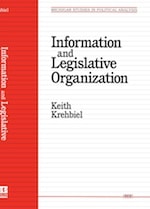
Information and Legislative Organization
Keith Krehbiel
University of Michigan Press, 1992
In this controversial book, Keith Krehbiel investigates and casts doubt upon a view of Congress held by many academics, journalists, and members of the lay public: that Congress is organized primarily to facilitate logrolling or "gains from trade" between legislators. The author puts forward an alternative "informational" theory that, unlike previous formal theories, highlights institutional needs and individual incentives for acquiring policy expertise. Using games with incomplete information, Krehbiel derives a set of unique and testable predictions about the organization of legislatures -- including the composition of committees and the procedures under which legislation is considered.
Krehbiel's creative illustrations and nonmathematical presentation of formal theories make this book accessible to a diverse set of readers. The political relevance and testability of games with incomplete information will be appreciated by game theorists and economists, while the book's findings make it essential reading for political scientists who study American politics, political institutions, or democratic legislatures.
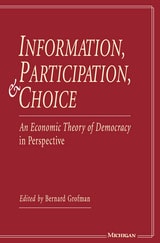
Information, Participation, and Choice
An Economic Theory of Democracy in PerspectiveBernard Grofman, Editor
University of Michigan Press, 1993
Anthony Downs's An Economic Theory of Democracy is one of the handful of books that reshaped political science in the post-World War II period. Information, Participation, and Choice traces the influence of Downs's ideas on subsequent research on voters, candidates, and parties in the United States and elsewhere. Since their publication in 1957, Downs's seminal ideas -- tweedledum and tweedledee politics and the "rationality" of political ignorance and nonparticipation on the part of voters--have shaped an ongoing debate about how politics actually work. The debate pits a public-choice model inspired by microeconomic precepts against a traditional textbook model that presumes a responsible, informed, and civic-minded citizenry and a set of elected officials motivated by concern for the public interest and policy convictions. The essays comprising Information, Participation, and Choice, by leading political scientists and economists, provide both a summary of Downs's key theoretical insights and an empirical examination of how well models inspired by Downs accurately describe U.S. political competition for Congress and the presidency.

Informing a Nation
The Newspaper Presidency of Thomas JeffersonMel Laracey
University of Michigan Press, 2021

Infrastructural Attachments
Austerity, Sovereignty, and Expertise in KenyaEmma Park
Duke University Press, 2024

Ingenious Citizenship
Recrafting Democracy for Social ChangeCharles T. Lee
Duke University Press, 2016

Inherited Empire in East European Architectural Conservation
Appropriating Ottoman, Habsburg and Russian/Soviet PastCosmin Minea
Central European University Press, 2026

Inhuman Power
Artificial Intelligence and the Future of CapitalismNick Dyer-Witheford, Atle Mikkola Kjosen, and James Steinhoff
Pluto Press, 2019
Inhuman Power explores the relationship between Marxist theory and AI through three approaches, each using the lens of a different Marxist theoretical concept. While the idea of widespread AI tends to be celebrated as much as questioned, a deeper analysis of its reach and potential produces a more complex and disturbing picture than has been identified. Inhuman Power argues that on its current trajectory, AI is likely to render humanity obsolete and that the only way to prevent it is a communist revolution.
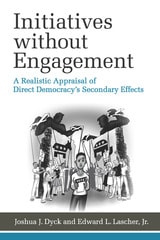
Initiatives without Engagement
A Realistic Appraisal of Direct Democracy’s Secondary EffectsJoshua J. Dyck and Edward L. Lascher, Jr.
University of Michigan Press, 2019
When political scientists began to systematically examine whether the state ballot initiative process had spillover consequences, they found the initiative process had a positive impact on civic engagement. Recent scholarship casts doubt on these conclusions, determining the ballot initiative process did not make people believe they could influence the political process, trust the government, or be more knowledgeable about politics in general. However, in some circumstances, it got them to show up at the polls, and increased interest groups’ participation in the political arena. In Initiatives without Engagement, Dyck and Lascher develop and test a theory that can explain the evidence that the ballot initiative process fails to provide the civic benefits commonly claimed for it, and the evidence that it increases political participation. This theory argues that the basic function of direct democracy is to create more conflict in society.

Inner Worlds
Interiority and Capitalist Modernity in JapanRichard M Reitan
University of Michigan Press, 2026
Inner Worlds examines the emergence and operation of representations of interiority—consciousness, “folk mind,” “spirit”—in Japan from its industrial revolution to the rise of fascism during the interwar period. These representations functioned to reproduce the capitalist system by containing its excesses. Thus, poverty in the 1880s was ostensibly the result of defects in one’s innate mental character. A degenerate “crowd mind” explained the strikes and riots of the early twentieth century. State subversion during the 1930s supposedly reflected an attenuated “folk spirit.” By locating the roots of capitalism’s excesses not within the socioeconomic order itself but within a defective interiority, ideologies of interiority operated to contain disruptions to Japan’s socioeconomic order, conceal its defects, and sustain the capitalist system. Inner Worlds reveals how interiority was constituted in ways consistent with both the demands of the emerging capitalist order of the late nineteenth century and the conditions that coalesced to form a fascist conjecture in the 1930s.
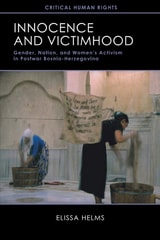
Innocence and Victimhood
Gender, Nation, and Women’s Activism in Postwar Bosnia-HerzegovinaElissa Helms
University of Wisconsin Press, 2013

Innovation and Public Policy
Austan Goolsbee and Benjamin F. Jones
University of Chicago Press, 2021
In advanced economies like the United States, innovation has long been recognized as a central force for increasing economic prosperity and human welfare. Today, the US government promotes innovation through various mechanisms, including tax credits for private-sector research, grant support for basic and applied research, and institutions like the Small Business Innovation Research Program of the National Science Foundation. Drawing on the latest empirical and conceptual research, Innovation and Public Policy surveys the key components of innovation policy and the social returns to innovation investment. It examines mechanisms that can advance the pace of invention and innovative activity, including expanding the research workforce through schooling and immigration policy and funding basic research. It also considers scientific grant systems for funding basic research, including those at institutions like the National Institutes of Health and the National Science Foundation, and investigates the role of entrepreneurship policy and of other institutions that promote an environment conducive to scientific breakthroughs.

Inscrutable Eating
Asian Appetites and the Rhetorics of Racial ConsumptionJennifer Lin LeMesurier
The Ohio State University Press, 2023
“You are what you eat,” but what if you’re seen as a rat eater, bat lover, or MSG user? In Inscrutable Eating, Jennifer Lin LeMesurier considers how everyday assumptions about Asian food influence the perception of Asian and Asian American identity within the US racial landscape, demonstrating that beliefs about how certain people eat are inseparable from attitudes that support hierarchies around race, gender, and sexuality. Drawing on rhetorical theory, affect theory, and Asian American studies, LeMesurier analyzes messages in US popular culture about Asian eating to develop the concept of gut orientations: rhetorically dominant ways of interacting with food that scale upward to feelings of desire and disgust toward social groups. Looking at examples from fears around MSG to uproar over wet markets as the source of COVID-19, she argues that these “gut” reactions establish certain racial views as common-sense truths rather than cultural biases, reinforcing dominant norms about what belongs on whose plate, or who belongs at what table. In demystifying marginalizing discourse around food and eating, LeMesurier shows how exposing the tacit, felt ideas of consumption is necessary to contest broader forms of discrimination.
Insecure Majorities
Congress and the Perpetual CampaignFrances E. Lee
University of Chicago Press, 2016
With Insecure Majorities, Frances E. Lee offers a controversial new perspective on the rise of congressional party conflict, showing how the shift in competitive circumstances has had a profound impact on how Democrats and Republicans interact. For nearly half a century, Democrats were the majority party, usually maintaining control of the presidency, the House, and the Senate. Republicans did not stand much chance of winning majority status, and Democrats could not conceive of losing it. Under such uncompetitive conditions, scant collective action was exerted by either party toward building or preserving a majority. Beginning in the 1980s, that changed, and most elections since have offered the prospect of a change of party control. Lee shows, through an impressive range of interviews and analysis, how competition for control of the government drives members of both parties to participate in actions that promote their own party’s image and undercut that of the opposition, including the perpetual hunt for issues that can score political points by putting the opposing party on the wrong side of public opinion. More often than not, this strategy stands in the way of productive bipartisan cooperation—and it is also unlikely to change as long as control of the government remains within reach for both parties.

Insecurity
Richard Grusin
University of Minnesota Press, 2022
Investigating insecurity as the predominant logic of life in the present moment
Challenging several key concepts of the twenty-first century, including precarity, securitization, and resilience, this collection explores the concept of insecurity as a predominant logic governing recent cultural, economic, political, and social life in the West. The essays illuminate how attempts to make human and nonhuman systems secure and resilient end up having the opposite effect, making insecurity the default state of life today.
Unique in its wide disciplinary breadth and variety of topics and methodological approaches—from intellectual history and cultural critique to case studies, qualitative ethnography, and personal narrative—Insecurity is written predominantly from the viewpoint of the United States. The contributors’ analyses include the securitization of nongovernmental aid to Palestine, Bangladeshi climate refugees, and the privatization of U.S. military forces; the history of the concept of insecurity and the securitization of finance; racialized urban development in Augusta, Georgia; Amazon’s Mechanical Turk and the consequences of the Marie Kondo method; and the intricate politics of sexual harassment in the U.S. academy.
Contributors: Neel Ahuja, U of California, Santa Cruz; Aneesh Aneesh, U of Wisconsin, Milwaukee; Lisa Bhungalia, Kent State U; Jennifer Doyle, U of California, Riverside; Annie McClanahan, U of California, Irvine; Andrea Miller, Florida Atlantic U; Mark Neocleous, Brunel U London; A. Naomi Paik, U of Illinois, Chicago; Maureen Ryan, U of South Carolina; Saskia Sassen, Columbia U.

Inside Agitators
Australian Femocrats and the StateHester Eisenstein
Temple University Press, 1996
Inside Al-Qaeda and the Taliban
Beyond Bin Laden and 9/11Syed Saleem Shahzad
Pluto Press, 2011
President Obama may have delivered on his campaign promise to kill Osama bin Laden, but as an Al-Qaeda strategist bin Laden has been dead for years. This book introduces and examines the new generation of Al-Qaeda leaders who have been behind the most recent attacks.
Investigative journalist Syed Saleem Shahzad dedicated his life to revealing the strategies and inner workings of Al-Qaeda and the Taliban. He had access to top-level commanders in both movements, as well as within the ISI, Pakistan's intelligence service. Shahzad's work was praised by US Secretary of State Hillary Clinton for 'bringing to light the troubles extremism poses to Pakistan's stability.' Inside Al-Qaeda and the Taliban explains the wider aims of both organisations and provides an essential analysis of major terrorist incidents, including the 2008 Mumbai attacks.
In May 2011, Shahzad was abducted and killed in Pakistan, days after writing an article suggesting that insiders in the Pakistani navy had colluded with Al-Qaeda in an attack on a naval air station. This book is a testament to his fearless reporting and analytical rigour. It will provide readers worldwide with an invaluable introduction to a new phase of the ongoing struggle against terrorism which threatens lives in so many countries.