Results by title
22279 books match the query 'Social Science' and 851 start with i
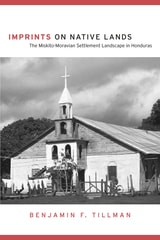
Imprints on Native Lands
The Miskito-Moravian Settlement Landscape in HondurasBenjamin F. Tillman
University of Arizona Press, 2011
Much like the Spanish and English attempts before them, German colonizing efforts in the region never completely took hold. Still, as Benjamin Tillman shows, for the region’s indigenous inhabitants, the Miskito people, the arrival of the Moravian missionaries marked the beginning of an important cultural interface.
Imprints on Native Lands documents Moravian contributions to the Miskito settlement landscape in sixty four villages of eastern Honduras through field observations of material culture, interviews with village residents, and research in primary sources in the Moravian Church archives. Tillman employs the resulting data to map a hierarchy of Moravian centers, illustrating spatially varying degrees of Moravian influence on the Miskito settlement landscape.
Tillman reinforces Miskito claims to ancestral lands by identifying and mapping their created ethnic landscape, as well as supporting earlier efforts at land-use mapping in the region. This book has broad implications, providing a methodology that will be of help to those with an interest in geography, anthropology, or Latin American studies, and to anyone interested in documenting and strengthening indigenous land claims.

Imprisoned Minds
Lost Boys, Trapped Men, and Solutions from Within the PrisonErik S. Maloney
Rutgers University Press, 2025
Imprisoning America
The Social Effects of Mass IncarcerationMary Pattillo
Russell Sage Foundation, 2004

Imprisonment in America
Choosing the FutureMichael Sherman and Gordon J. Hawkins
University of Chicago Press, 1983
"This is a serious and enlightened and concerned attempt to fuse liberal and conservative attitudes and values to achieve a breakthrough in American penal policy."—Congressional Staff Journal

Improper Advances
Rape and Heterosexual Conflict in Ontario, 1880-1929Karen Dubinsky
University of Chicago Press, 1993
Karen Dubinsky relies on criminal case files, a revealing but largely untapped source for social historians, to retell individual stories of sexual danger—crimes such as rape, abortion, seduction, murder, and infanticide. Her research supports many feminist analyses of sexual violence: that crimes are expressions of power, that courts are prejudiced by the victim's background, and that most assaults occur within the victims' homes and communities.
Dubinsky distinguishes herself from most feminist scholars, however, by refusing to view women solely as victims and sex as a tool of oppression. She finds that these women actively sought and took pleasure in sexuality, but they distinguished between wanted and unwanted sexual encounters and attempted to punish coercive sex despite obstacles in the court system and the community.
Confronting a number of key theoretical and historiographic controversies, including recent debates over sexuality in feminist theory and politics, she challenges current thinking on the history of women, gender, and sexuality.

Improper Influence
Campaign Finance Law, Political Interest Groups, and the Problem of EqualityThomas Gais
University of Michigan Press, 1998

Improper Names
Collective Pseudonyms from the Luddites to AnonymousMarco Deseriis
University of Minnesota Press, 2015
Improper Names offers a genealogy and theory of the “improper name,” which author Marco Deseriis defines as the adoption of the same pseudonym by organized collectives, affinity groups, and individual authors. Although such names are often invented to pursue a specific social or political agenda, they are soon appropriated for different and sometimes diverging purposes. This book examines the tension arising from struggles for control of a pseudonym’s symbolic power.
Deseriis provides five fascinating and widely varying case studies. Ned Ludd was the legendary and eponymous leader of the English Luddites, textile workers who threatened the destruction of industrial machinery and then advanced a variety of economic and political demands. Alan Smithee—an alias coined by Hollywood film directors in 1969 in order to disown films that were recut by producers—became a contested signature and was therefore no longer effective to signal prevarication to Hollywood insiders. Monty Cantsin was an “open pop star” created by U.S. and Canadian artists in the late 1970s to critique bourgeois notions of authorship, but its communal character was compromised by excessive identification with individual users of the name. The Italian media activists calling themselves Luther Blissett, aware of the Cantsin experience, implemented measures to prevent individuals from assuming the alias, which was used to author media pranks, sell apocryphal manuscripts to publishers, fabricate artists and artworks, and author best-selling novels. The longest chapter here is devoted to the contemporary “hacktivist” group known as Anonymous, which protests censorship and restricted access to information and information technologies.
After delving into a rich philosophical debate on community among those who have nothing in common, the book concludes with a reflection on how the politics of improper names affects present-day anticapitalist social movements such as Occupy and 15-M.
Improvisational Poetry from the Basque Country
Gorka Aulestia
University of Nevada Press, 1995
Foreword by William A. Douglass Translated by Lisa Corcostegui and Linda White.Improvisational Poetry from the Basque Country introduces the Basque bertsolari to the English-speaking world and provides an understanding of an interesting cultural phenomenon—the artist in Basque society who is capable of improvising verse on any subject spontaneously and setting it to music. The tradition is at least several centuries old and runs the gamut from amateurish efforts to periodic national championship competitions. These competitions draw thousands of listeners and pack theaters while many other thousands tune their radios to the broadcasts of the performances. Aulestia takes a scholarly and in-depth look at the art of the bertsolari. In a fascinating text, the author examines the history of a tradition that is truly unique and completely Basque. He introduces and analyzes the performing styles of great bertsolariak, including Xabier Amuriza and Jon Azpillaga. From the bertsolari’s roots in the old Basque Country to the social phenomenon it is today, Aulestia’s look at the improvisational oral literature of the Basques is an essential addition to their written history.

Improvised Adolescence
Somali Bantu Teenage Refugees in AmericaSandra Grady
University of Wisconsin Press, 2015
Improvised Adolescence explores how teenagers from southern Somalia, who spent much of their childhood in East African refugee camps, are adapting to resettlement in the American Midwest. The collapse of the Somali state in 1991, and subsequent chaos in the Horn of Africa, disrupted the lives of these young people educationally, culturally, and developmentally. Folklorist Sandra Grady has intermittently observed the lifeworld of these teens—their homes, their entertainment choices, their interaction with classmates and teachers at school, and their plans for the future—for more than seven years to understand the cultural tools they’ve used in their journey from this disrupted childhood. They negotiate two sets of cultural expectations: in the resettled Somali Bantu community, traditional rites of passage continue to mark the change from child to adult; in the surrounding U.S. culture, an unfamiliar in-between category—“adolescent”—delays adulthood. Offering analysis that is both engaging and theoretically grounded, Grady tracks the emergence in this immigrant community of an improvised adolescence.
Best books for public & secondary school libraries from university presses, American Library Association

Improvising Across Abilities
Pauline Oliveros and the Adaptive Use Musical InstrumentThe AUMI Editorial Collective
University of Michigan Press, 2024
This book, which contains wisdom from many who have been affected by their work with the instrument and the people who use it, is a representation of how music and extemporized performance have touched the lives and minds of scholars and families alike. Not only has AUMI provided the opportunity to grow in listening to others who may speak differently (or not at all), but it has been used as an avenue for a diverse set of people to build friendships with others whom they may have never otherwise even glanced at in the street. By providing a space for every person who comes across AUMI to perform, listen, improvise, and collaborate, the continuing development of this instrument contributes to a world in which every person is heard, welcomed, and celebrated.

Improvising Medicine
An African Oncology Ward in an Emerging Cancer EpidemicJulie Livingston
Duke University Press, 2012
Improvising Theory
Process and Temporality in Ethnographic FieldworkAllaine Cerwonka and Liisa H. Malkki
University of Chicago Press, 2007
Scholars have long recognized that ethnographic method is bound up with the construction of theory in ways that are difficult to teach. The reason, Allaine Cerwonka and Liisa H. Malkki argue, is that ethnographic theorization is essentially improvisatory in nature, conducted in real time and in necessarily unpredictable social situations. In a unique account of, and critical reflection on, the process of theoretical improvisation in ethnographic research, they demonstrate how both objects of analysis, and our ways of knowing and explaining them, are created and discovered in the give and take of real life, in all its unpredictability and immediacy.
Improvising Theory centers on the year-long correspondence between Cerwonka, then a graduate student in political science conducting research in Australia, and her anthropologist mentor, Malkki. Through regular e-mail exchanges, Malkki attempted to teach Cerwonka, then new to the discipline, the basic tools and subtle intuition needed for anthropological fieldwork. The result is a strikingly original dissection of the processual ethics and politics of method in ethnography.

Impure Migration
Jews and Sex Work in Golden Age ArgentinaMir Yarfitz
Rutgers University Press, 2019
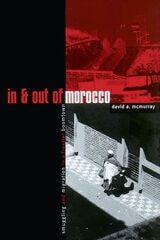
In And Out Of Morocco
Smuggling and Migration in a Frontier BoomtownDavid Mcmurray
University of Minnesota Press, 2001
A revealing inquiry into how global culture is lived locally.
Every summer for almost forty years, tens of thousands of Moroccan emigrants from as far away as Norway and Germany descend on the duty-free smugglers’ cove/migrant frontier boomtown of Nador, Morocco. David McMurray investigates the local effects of the multiple linkages between Nador and international commodity circuits, and analyzes the profound effect on everyday life of the free flow of bodies, ideas, and commodities into and out of the region.
Combining immigration and population statistics with street-level ethnography, In and Out of Morocco covers a wide range of topics, including the origin and nature of immigrant nostalgia, the historical evolution of the music of migration in the region, and the influence of migrant wealth on social distinctions in Nador. Groundbreaking in its attention to the performative aspects of life in a smuggling border zone, the book also analyzes the way in which both migration and smuggling have affected local structures of feeling by contributing to the spread of hyperconsumption. The result is a rare and revealing inquiry into how the global culture is lived locally.
In Changing Times
Gay Men and Lesbians Encounter HIV/AIDSEdited by Martin P. Levine, Peter M. Nardi, and John H. Gagnon
University of Chicago Press, 1997
The distinguished contributors to this volume discuss the ways HIV/AIDS has changed collective and individual identities, as well as lives, of gay men and lesbians, and how these alterations have changed our perceptions of the epidemic. They cover such topics as the impact of the epidemic on small towns, cultural barriers to AIDS prevention, gay youth and intergenerational relations, and the roles of lesbians in AIDS organizations. This collection provides compelling insights into the new communities among gay men and lesbians and the new kinds of identities and relationships that are emerging from the social and cultural ferment engendered by HIV/AIDS.
Contributors include Barry D. Adam, Lourdes Arguelles, Rafael Miguel Diaz, John H. Gagnon, Gilbert Herdt, Gregory M. Herek, Nan D. Hunter, Peter M. Nardi, John L. Peterson, Anne Rivero, Gayle S. Rubin, Beth E. Schneider, and Nancy E. Stoller.

In Common Cause
The “Conservative” Frances Trollope and the “Radical” Frances WrightSusan S. Kissel
University of Wisconsin Press, 1993

In Darkness and Secrecy
The Anthropology of Assault Sorcery and Witchcraft in AmazoniaNeil L. Whitehead and Robin Wright, eds.
Duke University Press, 2004
These essays, by leading anthropologists of South American shamanism, consider assault sorcery as it is practiced in parts of Brazil, Guyana, Venezuela, and Peru. They analyze the social and political dynamics of witchcraft and sorcery and their relation to cosmology, mythology, ritual, and other forms of symbolic violence and aggression in each society studied. They also discuss the relations of witchcraft and sorcery to interethnic contact and the ways that shamanic power may be co-opted by the state. In Darkness and Secrecy includes reflections on the ethical and practical implications of ethnographic investigation of violent cultural practices.
Contributors. Dominique Buchillet, Carlos Fausto, Michael Heckenberger, Elsje Lagrou, E. Jean Langdon, George Mentore, Donald Pollock, Fernando Santos-Granero, Pamela J. Stewart, Andrew Strathern, Márnio Teixeira-Pinto, Silvia Vidal, Neil L. Whitehead, Johannes Wilbert, Robin Wright

In Defense of Disciplines
Interdisciplinarity and Specialization in the Research UniversityJerry A. Jacobs
University of Chicago Press, 2014
Drawing on diverse sources of data, Jacobs offers a new theory of liberal arts disciplines such as biology, economics, and history that identifies the organizational sources of their dynamism and breadth. Illustrating his thesis with a wide range of case studies including the diffusion of ideas between fields, the creation of interdisciplinary scholarly journals, and the rise of new fields that spin off from existing ones, Jacobs turns many of the criticisms of disciplines on their heads to mount a powerful defense of the enduring value of liberal arts disciplines. This will become one of the anchors of the case against interdisciplinarity for years to come.

In Defense of Honor
Sexual Morality, Modernity, and Nation in Early-Twentieth-Century BrazilSueann Caulfield
Duke University Press, 2000
While some Brazilian elites used the issue of sexual purity to boast of their country’s moral superiority, others claimed that the veneration of such concepts as virginity actually frustrated efforts at modernization. Moreover, although individuals of all social classes invoked values they considered “traditional,” such as the confinement of women’s sexuality within marriage, these values were at odds with social practices—such as premarital sex, cohabitation, divorce, and female-headed households—that had been common throughout Brazil’s history. The persistence of these practices, together with post-World War I changes in both official and popular moral ideals, presented formidable obstacles to the Estado Novo’s renewed drive to define and enforce public morality and private family values in the late 1930s.
With sophisticated theoretical underpinnings, In Defense of Honor is written in a clear and lively manner, making it accessible to students and scholars in a variety of disciplines, including Brazilian and Latin American studies, gender studies, and legal history.

In Defense of Justice
Joseph Kurihara and the Japanese American Struggle for EqualityEileen H. Tamura
University of Illinois Press, 2013

In Defense of La Raza
The Los Angeles Mexican Consulate and the Mexican Community, 1929 to 1936Francisco E. Balderrama
University of Arizona Press, 1982
Los Angeles’s consulate was confronted with the country’s largest concentration of Mexican Americans, for whom the consuls often assumed a position of community leadership. Whether helping the unemployed secure repatriation and relief or intervening in labor disputes, consuls uniquely adapted their roles in international diplomacy to the demands of local affairs.

In Defense of Negativity
Attack Ads in Presidential CampaignsJohn G. Geer
University of Chicago Press, 2006
In Defense of Negativity, Geer’s study of negative advertising in presidential campaigns from 1960 to 2004, asserts that the proliferating attack ads are far more likely than positive ads to focus on salient political issues, rather than politicians’ personal characteristics. Accordingly, the ads enrich the democratic process, providing voters with relevant and substantial information before they head to the polls.
An important and timely contribution to American political discourse, In Defense of Negativity concludes that if we want campaigns to grapple with relevant issues and address real problems, negative ads just might be the solution.

In Defense of Sovereignty
Protecting the Oneida Nation's Inherent Right to Self-DeterminationRebecca M. Webster
University of Wisconsin Press, 2023
As in so many conflicts between Indigenous nations and local municipalities, the media narrative about the Oneida Nation’s battle for sovereignty has been dominated by the local government’s standpoint. In Defense of Sovereignty offers another perspective, that of a nation citizen directly involved in the litigation, augmented by contributions from historians, attorneys, and a retired nation employee. It makes an important contribution to public debates about the inherent right of Indigenous nations to continue to exist and exercise self-governance within their territories without being challenged at every turn.
In Defense of Youth
A Study of the Role of Counsel in American Juvenile CourtsWilliam Vaughn Stapleton
Russell Sage Foundation, 1972

In Divided Unity
Haudenosaunee Reclamation at Grand RiverTheresa McCarthy
University of Arizona Press, 2016
In February 2006, the Six Nations occupation of a 132-acre construction site in Caledonia, Ontario, reignited a 200-year-long struggle to reclaim land and rights in the Grand River region. Framed by this ongoing reclamation, In Divided Unity explores community-based initiatives that promote Haudenosaunee traditionalism and languages at Six Nations of the Grand River as crucial enactments of sovereignty both historically and in the present.
Drawing from Haudenosaunee oral traditions, languages, and community-based theorists, In Divided Unity engages the intersecting themes of knowledge production and resistance against the backdrop of the complicated dynamics of the Six Nations community, which has the largest population of all First Nations in Canada. Comprising the Mohawk, Oneida, Onondaga, Cayuga, Seneca, and Tuscarora nations, citizens of the Six Nations Confederacy collectively refer to themselves as Haudenosaunee, which means “we build the house.”
Theresa McCarthy critiques settler colonial narratives of Haudenosaunee decline used to rationalize land theft and political subjugation. In particular, McCarthy illustrates that current efforts to discredit the reclamation continue to draw on the flawed characterizations of Haudenosaunee tradition, factionalism, and “failed” self-government popularized by conventional scholarship about the Iroquois. Countering these narratives of decline and failure, McCarthy argues that the 2006 reclamation ushered in an era of profound intellectual and political resurgence at Six Nations, propelled by the contributions of Haudenosaunee women.
Centering Haudenosaunee intellectual traditions, In Divided Unity provides an important new model for community-based activism and scholarship. Through the active practice and adaptation of ancient teachings and philosophies, McCarthy shows that the Grand River Haudenosaunee are continuing to successfully meet the challenges of reclaiming their land, political autonomy, and control of their future.

In Dylan Town
A Fan's LifeDavid Gaines
University of Iowa Press, 2015
Gaines’s personal journey toward creating such communities of passionate knowledge encompasses his own coming of age and marriages, fatherhood, and teaching. As a devoted fan who is also a professor of American literature, questions about teaching and learning are central to his experience. When asked, “Why Dylan?” he says, “He’s the writer I care about the most. He’s been the way into the best and longest running conversations I have ever had.” Talking with students, exchanging Dylan trivia with fellow fans, or cheering on fan-musicians doing Dylan covers during the Dylan Days festival, Gaines shows that, for many people, being a fan of popular culture couples serious critical and creative engagement with heartfelt commitment. Here, largely unheralded, the ideal of liberal education is realized every day.

In Essentials, Unity
An Economic History of the Grange MovementJenny Bourne
Ohio University Press, 2017
The Patrons of Husbandry—or the Grange—is the longest-lived US agricultural society and, since its founding shortly after the Civil War, has had immeasurable influence on social change as enacted by ordinary Americans. The Grange sought to relieve the struggles of small farmers by encouraging collaboration. Pathbreaking for its inclusion of women, the Grange is also well known for its association with Gilded Age laws aimed at curbing the monopoly power of railroads.
In Essentials, Unity takes as its focus Grange founder Oliver Kelley and his home organization in Minnesota. Jenny Bourne draws upon numerous historical records to present a lively picture of a fraternal organization devoted to improving the lot of farmers but whose legacies extend far beyond agriculture. From struggles over minimum wage, birth control, and environmental regulation to the conflicts surrounding the Affordable Care Act, and from lunch-counter sit-ins to Occupy Wall Street, the Grange has shaped the very notion of collective action and how it is deployed even today. As this compact book so effectively illustrates, the history of the Patrons of Husbandry exposes the classic tension between the desires for achieving overall economic success and determining how the spoils are split.

In Favor of Deceit
A Study of Tricksters in an Amazonian SocietyEllen B. Basso
University of Arizona Press, 1988
Ellen Basso's new study of these stories considers their relationship to other kinds of Kalapalo activities involving deception and features a unique collection of South American Indian narratives translated directly from performances by master storytellers in their original Carib language. Combining an ethnopoetic, performance-focused approach to storytelling with an action-oriented psychology, Basso arrives at an ethnographic understanding of Kalapalo trickster myths and Kalapalo ideas about deception.
The commentary on the translations considers matters of theme, discourse, narrative progression, and performance context. The dialogical, interactive nature of Kalapalo storytelling, the development of characters through their conversations with one another, and the many ways storytelling and ordinary life enrich one another are examined to reveal the complex psychology of trickster myths and the special tricksterish quality of day-to-day Kalapalo behavior.

In Her Father's Eyes
A Childhood Extinguished by the HolocaustBéla Weichherz, Edited by Daniel H. Magilow
Rutgers University Press, 2008
In Her Father's Eyes is a moving tale about Jewish life and a father's profound love for his only child. By bridging prewar and wartime periods, the diary also provides a rich context for understanding the history from which the Holocaust emerged.
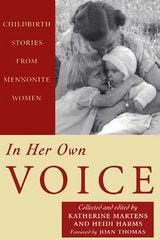
In Her Own Voice
Childbirth Stories from Mennonite WomenKatherine Martens
University of Manitoba Press, 1997

In Her Own Words
Conversations with Composers in the United StatesJennifer Kelly
University of Illinois Press, 2014
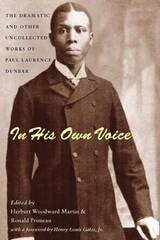
In His Own Voice
The Dramatic and Other Uncollected Works of Paul Laurence DunbarPaul Laurence Dunbar
Ohio University Press, 2002

In Honor of Fadime
Murder and ShameUnni Wikan
University of Chicago Press, 2008
Unni Wikan narrates Fadime’s heartbreaking story through her own eloquent words, along with the testimonies of her father, mother, and two sisters. What unfolds is a tale of courage and betrayal, loyalty and love, power and humiliation, and a nearly unfathomable clash of cultures. Despite enduring years of threats over her emancipated life, Fadime advocated compassion for her killer to the end, believing him to be trapped by an unyielding code of honor. Wikan puts this shocking event in context by analyzing similar honor killings throughout Europe, Canada, and the United States. She also examines the concept of honor in historical and cross-cultural depth, concluding that Islam itself is not to blame—indeed, honor killings occur across religious and ethnic traditions—but rather the way that many cultures have resolutely linked honor with violence.
In Honor of Fadime holds profound and timely insights into conservative Kurdish culture, but ultimately the heart of this powerful book is Fadime’s courageous and tragic story—and Wikan’s telling of it is riveting.

In Hush to Harbor
Black Sanctuary from Slavery to Trump's AmericaLa-Toya L. Scott
Rutgers University Press, 2026
Black communities in America have a long history of constructing sanctuaries amid oppression, from the secret hush harbors of slavery to the digital refuges created in response to the resurgence of white supremacist violence in the Trump era. These havens have offered places to grieve and to gather, to imagine freedom when the world denied it, and to practice care and resistance in the face of constant danger. They remind us that even in the darkest moments, Black people have made space to grieve, rest, heal, strategize, and imagine new futures.
In Hush to Harbor traces this enduring sanctuary-making through both historical memory and contemporary expression from the legacy of Freedmen’s Towns and Green Books for Motorists in the Jim Crow era as testaments to Black mobility and mutual protection to present-day digital activism and grassroots organizing that reimagine safety in the public sphere.
Blending literary criticism, cultural history, and ethnography, Scott demonstrates that sanctuary is not merely a place of retreat but a political and spiritual practice that calls forth a collective act of making space when none is offered. In Hush to Harbor offers not just a chronicle of survival but a blueprint for sustaining Black refuge in a time of urgent need, redefining what it means to be safe in a nation that has never guaranteed safety for Black life.

In Idi Amin’s Shadow
Women, Gender, and Militarism in UgandaAlicia C. Decker
Ohio University Press, 2014
Finalist for the 2015 Aidoo-Snyder Prize
In Idi Amin’s Shadow is a rich social history examining Ugandan women’s complex and sometimes paradoxical relationship to Amin’s military state. Based on more than one hundred interviews with women who survived the regime, as well as a wide range of primary sources, this book reveals how the violence of Amin’s militarism resulted in both opportunities and challenges for women. Some assumed positions of political power or became successful entrepreneurs, while others endured sexual assault or experienced the trauma of watching their brothers, husbands, or sons “disappeared” by the state’s security forces. In Idi Amin’s Shadow considers the crucial ways that gender informed and was informed by the ideology and practice of militarism in this period. By exploring this relationship, Alicia C. Decker offers a nuanced interpretation of Amin’s Uganda and the lives of the women who experienced and survived its violence.
Each chapter begins with the story of one woman whose experience illuminates some larger theme of the book. In this way, it becomes clear that the politics of military rule were highly relevant to women and gender relations, just as the politics of gender were central to militarism. By drawing upon critical security studies, feminist studies, and violence studies, Decker demonstrates that Amin’s dictatorship was far more complex and his rule much more strategic than most observers have ever imagined.

In Lady Liberty's Shadow
The Politics of Race and Immigration in New JerseyRobyn Magalit Rodriguez
Rutgers University Press, 2017
In Lady Liberty’s Shadow examines popular white perceptions of danger represented by immigrants and their children, as well the specter that lurks at the edges of suburbs in the shape of black and Latino urban underclasses and the ever more nebulous hazard of (presumed-Islamic) terrorism that threatening to undermine “life as we know it.” Robyn Magalit Rodriguez explores the impact of anti-immigrant municipal ordinances on a range of immigrant groups living in varied suburban communities, from undocumented Latinos in predominantly white suburbs to long-established Asian immigrants in “majority-minority” suburbs. The “American Dream” that suburban life is supposed to represent is shown to rest on a racialized, segregated social order meant to be enjoyed only by whites. Although it is a case study of New Jersey, In Lady Liberty’s Shadow offers crucial insights that can shed fresh light on the national immigration debate.
For more information, go to: https://www.facebook.com/inlibertysshadow
In Levittown’s Shadow
Poverty in America's Wealthiest Postwar SuburbTim Keogh
University of Chicago Press, 2023
Highlights how low-wage residents have struggled to live and work in a place usually thought of as affluent: suburbia.
There is a familiar narrative about American suburbs: after 1945, white residents left cities for leafy, affluent subdivisions and the prosperity they seemed to embody. In Levittown’s Shadow tells us there’s more to this story, offering an eye-opening account of diverse, poor residents living and working in those same neighborhoods. Tim Keogh shows how public policies produced both suburban plenty and deprivation—and why ignoring suburban poverty doomed efforts to reduce inequality.
Keogh focuses on the suburbs of Long Island, home to Levittown, often considered the archetypal suburb. Here military contracts subsidized well-paid employment welding airplanes or filing paperwork, while weak labor laws impoverished suburbanites who mowed lawns, built houses, scrubbed kitchen floors, and stocked supermarket shelves. Federal mortgage programs helped some families buy orderly single-family homes and enter the middle class but also underwrote landlord efforts to cram poor families into suburban attics, basements, and sheds. Keogh explores how policymakers ignored suburban inequality, addressing housing segregation between cities and suburbs rather than suburbanites’ demands for decent jobs, housing, and schools.
By turning our attention to the suburban poor, Keogh reveals poverty wasn’t just an urban problem but a suburban one, too. In Levittown’s Shadow deepens our understanding of suburbia’s history—and points us toward more effective ways to combat poverty today.
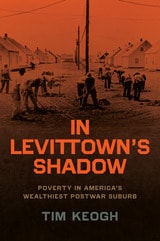
In Levittown’s Shadow
Poverty in America’s Wealthiest Postwar SuburbTim Keogh
University of Chicago Press, 2023
There is a familiar narrative about American suburbs: after 1945, white residents left cities for leafy, affluent subdivisions and the prosperity they seemed to embody. In Levittown’s Shadow tells us there’s more to this story, offering an eye-opening account of diverse, poor residents living and working in those same neighborhoods. Tim Keogh shows how public policies produced both suburban plenty and deprivation—and why ignoring suburban poverty doomed efforts to reduce inequality.
Keogh focuses on the suburbs of Long Island, home to Levittown, often considered the archetypal suburb. Here military contracts subsidized well-paid employment welding airplanes or filing paperwork, while weak labor laws impoverished suburbanites who mowed lawns, built houses, scrubbed kitchen floors, and stocked supermarket shelves. Federal mortgage programs helped some families buy orderly single-family homes and enter the middle class but also underwrote landlord efforts to cram poor families into suburban attics, basements, and sheds. Keogh explores how policymakers ignored suburban inequality, addressing housing segregation between cities and suburbs rather than suburbanites’ demands for decent jobs, housing, and schools.
By turning our attention to the suburban poor, Keogh reveals poverty wasn’t just an urban problem but a suburban one, too. In Levittown’s Shadow deepens our understanding of suburbia’s history—and points us toward more effective ways to combat poverty today.

In Lincoln's Shadow
The 1908 Race Riot in Springfield, IllinoisRoberta Senechal de la Roche
Southern Illinois University Press, 2008
Winner of the Gustavus Myers Center Award for the Study of Human Rights in the United States!
Winner of the Illinois State Historical Society Superior Achievement Award!
This detailed case study of the 1908 race riot in Springfield, Illinois, which began only a few blocks from Abraham Lincoln’s family home, explores the social origins of rioting by whites against the city’s African American community after a white woman alleged that a black man had raped her. Over two days rioters wrecked black-owned businesses, burned neighborhoods to the ground, killed two black men, and injured many others.
Author Roberta Senechal de la Roche draws from a wide range of sources to describe the riot, identify the rioters and their victims, and challenge previous interpretations that attribute rioting to interracial competition for jobs, housing, or political influence. Written in a direct and clear style, In Lincoln’s Shadow documents a violent explosion of racial hatred that shocked the nation and reveals the complexity of white racial attitudes in the early twentieth century.

In My Father’s Arms
A Son’s Story of Sexual AbuseWalter A. de Milly III
University of Wisconsin Press, 2012
Tragically, Walter's deeply troubled father would launch his family on a perilous journey into darkness. To the outside world, this man is a prominent businessman, a dignified Presbyterian, and a faithful husband; to Walter, he is an overwhelming, handsome monster. Whenever the two are together, young Walter becomes a sexual plaything for his father; father and son outings are turned into soul-obliterating nightmares.
Walter eventually becomes a successful businessman only to be stricken by another catastrophe: his father, at the age of seventy, is caught molesting a young boy. Walter is asked to confront his father. Walter convenes his family, and in a private conference with a psychiatrist, the father agrees to be surgically castrated.
De Milly's portraits of his relationships with his father and mother, and the confrontation that leads to his father's bizarre and irreversible voluntary "cure," are certain to be remembered long after the reader has set aside this powerful contribution to the literature of incest survival.

In My Heart
Sofonia Machabe Mofokeng
Seagull Books, 2021
Elsewhere Texts, edited by Gayatri Chakraborty Spivak and Hosam Aboul-Ela, presents radical new engagements with non-European literary cultures. This volume, the latest in this ambitious series, is a brilliant collection of essays originally written in Sesotho by Sophonia Machabe Mofokeng. Often confined to the role of “native informants” in the nineteenth and twentieth centuries, writers working in African languages laid the foundation for the politics and poetics of decolonization and are legendary among their own communities of readers, though their work remains little known elsewhere. In My Heart belongs to this tradition of colonial renegades. Writing in the 1950s during the cataclysmic events of apartheid that were transforming life in South Africa, Mofokeng offers a series of meditations that provide his readers with a Sesotho worldview outside the categories authorized by colonial knowledge. In My Heart, expertly translated by Nhlanhla Maake, introduces a significant African thinker’s influential work to a global readership.

In Oceania
Visions, Artifacts, HistoriesNicholas Thomas
Duke University Press, 1997
In Oceania documents and analyzes the "rhetorical artifacts" of explorers, missionaries, fiction and travel writers, and the people of the Pacific themselves to illustrate how Oceanic identities have been represented over time. Not content with conventional methods of anthropology or history, Thomas draws on postcolonial theory and literary analysis in extraordinarily wide-ranging analyses of texts, visual images, and historical processes. He demonstrates how cultures of the Pacific Islands have dealt with colonialist ventures, modernity, and the debate about the recuperation of histories and traditions. The picture Thomas paints of Oceania, however, is not one of a group of societies stripped of meaning, but one that shows how the interactions between indigenous cultures and European influences have created entirely new identities.

In Order to Live Untroubled
Inuit of the Central Artic 1550 to 1940Renee Fossett
University of Manitoba Press, 2001

In Permanent Crisis
Ethnicity in Contemporary European Media and CinemaIpek A. Celik
University of Michigan Press, 2015

In Place/Out of Place
Geography, Ideology, and TransgressionTim Cresswell
University of Minnesota Press, 1996
In Place/Out of Place was first published in 1996. Minnesota Archive Editions uses digital technology to make long-unavailable books once again accessible, and are published unaltered from the original University of Minnesota Press editions.
What is the relationship between place and behavior? In this fascinating volume, Tim Cresswell examines this question via "transgressive acts" that are judged as inappropriate not only because they are committed by marginalized groups but also because of where they occur.
In Place/Out of Place seeks to illustrate the ways in which the idea of geographical deviance is used as an ideological tool to maintain an established order. Cresswell looks at graffiti in New York City, the attempts by various "hippie" groups to hold a free festival at Stonehenge during the summer solstices of 1984–86, and the Greenham Common Women's Peace Camp in Berkshire, England. In each of the cases described, the groups involved were designated as out of place both by the media and by politicians, whose descriptions included an array of images such as dirt, disease, madness, and foreignness.
Cresswell argues that space and place are key factors in the definition of deviance and, conversely, that space and place are used to construct notions of order and propriety. In addition, whereas ideological concepts being expressed about what is good, just, and appropriate often are delineated geographically, the transgression of these delineations reveals the normally hidden relationships between place and ideology-in other words, the "out-of-place" serves to highlight and define the "in-place." By looking at the transgressions of the marginalized, Cresswell argues, we can gain a novel perspective on the "normal" and "taken-for-granted" expectations of everyday life. The book concludes with a consideration of the possibility of a "politics of transgression," arguing for a link between the challenging of spatial boundaries and the possibility of social transformation.
Tim Cresswell is currently lecturer in geography at the University of Wales.
In Plenty and in Time of Need
Popular Culture and the Remapping of Barbadian IdentityLia T. Bascomb
Rutgers University Press, 2020
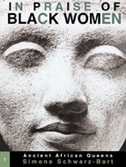
In Praise of Black Women, Volume 1
Ancient African QueensSimone Schwarz-Bart with Andre Schwarz-Bart
University of Wisconsin Press, 2001
Volume 1: Ancient African Queens weaves together oral tradition, folk legends and stories, songs and poems, historical accounts, and travelers’ tales from Egypt to southern Africa, from prehistory to the nineteenth century. These women rulers, warriors, and heroines include Amanirenas, the queen of Kush who battled Roman armies and defeated them at Aswan; Daurama, mother of the seven Hausa kingdoms; Amina Kulibali, founder of the Gabu dynasty in Senegal; Ana de Sousa Nzinga, who resisted the Portuguese conquest of Angola; Beatrice Kimpa Vita, a Kongo prophet burned at the stake by Christian missionaries; Nanda, mother of the famous warrior-king Shaka Zulu; and many others.
These extraordinary women's stories, narrated in the style of African oral tradition, are absorbing, informative, and accessible. The abundant illustrations, many of them rare archival images, depict the diversity among Black women and make this volume a unique treasure for every art lover, every school, and every family.

In Pursuit of German Memory
History, Television, and Politics after AuschwitzWulf Kansteiner
Ohio University Press, 2006
The collective memories of Nazism that developed in postwar Germany have helped define a new paradigm of memory politics. From Europe to South Africa and from Latin America to Iraq, scholars have studied the German case to learn how to overcome internal division and regain international recognition.
In Pursuit of German Memory: History, Television, and Politics after Auschwitz examines three arenas of German memory politics—professional historiography, national politics, and national public television—that have played key roles in the reinvention of the Nazi past in the last sixty years. Wulf Kansteiner shows that the interpretations of the past proposed by historians, politicians, and television producers reflect political and generational divisions and an extraordinary concern for Germany's image abroad. At the same time, each of these theaters of memory has developed its own dynamics and formats of historical reflection.
Kansteiner’s analysis of the German scene reveals a complex social geography of collective memory. In Pursuit of German Memory underscores the fact that German memories of Nazism, like many other collective memories, combine two seemingly contradictory qualities: They are highly mediated and part of a global exchange of images and story fragments but, at the same time, they can be reproduced only locally, in narrowly circumscribed networks of communication.

In Pursuit of Gold
Chinese American Miners and Merchants in the American WestSue Fawn Chung
University of Illinois Press, 2011
Both a history of an overlooked community and a well-rounded reassessment of prevailing assumptions about Chinese miners in the American West, In Pursuit of Gold brings to life in rich detail the world of turn-of-the-century mining towns in the Northwest. Sue Fawn Chung meticulously recreates the lives of Chinese immigrants, miners, merchants, and others who populated these towns and interacted amicably with their white and Native American neighbors, defying the common perception of nineteenth-century Chinese communities as insular enclaves subject to increasing prejudice and violence.
While most research has focused on Chinese miners in California, this book is the first extensive study of Chinese experiences in the towns of John Day in Oregon and Tuscarora, Island Mountain, and Gold Creek in Nevada. Chung illustrates the relationships between miners and merchants within the communities and in the larger context of immigration, arguing that the leaders of the Chinese and non-Chinese communities worked together to create economic interdependence and to short-circuit many of the hostilities and tensions that plagued other mining towns.
Peppered with fascinating details about these communities from the intricacies of Chinese gambling games to the techniques of hydraulic mining, In Pursuit of Gold draws on a wealth of historical materials, including immigration records, census manuscripts, legal documents, newspapers, memoirs, and manuscript collections. Chung supplements this historical research with invaluable first-hand observations of artifacts that she experienced in archaeological digs and restoration efforts at several of the sites of the former booming mining towns.
In clear, analytical prose, Chung expertly characterizes the movement of Chinese miners into Oregon and Nevada, the heyday of their mining efforts in the region, and the decline of the communities due to changes in the mining industry. Highlighting the positive experiences and friendships many of the immigrants had in these relatively isolated mining communities, In Pursuit of Gold also suggests comparisons with the Chinese diaspora in other locations such as British Columbia and South Africa.
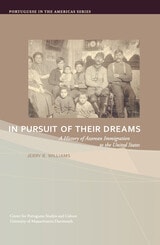
In Pursuit of Their Dreams
A History of Azorean Immigration to the United StatesJerry R. Williams
Tagus Press, 2007
Jerry Williams' history of Azorean immigration to the United States offers us valuable insight into the experience and culture of Portuguese immigrants and their descendants. This account fills a major gap in American immigration history and gives us a comprehensive overview of how Portuguese-Americans—now numbering close to a million people—have come to constitute a vibrant and highly visible presence within southeastern New England, the areas around San Francisco and San Diego, Hawaii, and the New Jersey/New York metropolitan area. Even though Azorean immigrants all came from similar cultural and social backgrounds, Williams shows how regionally specific opportunity structures and social hierarchies have contributed to significant differences within the Portuguese-American experience.
Starting with the whaling routes that first connected the mid-Atlantic archipelago with the ports of call in New England and California in the early 1800s, Williams lays out the complex relationship between the Azores and the US that has continued into the present. We learn how particular patterns of poverty, overpopulation and social inequality in the Azores pushed large numbers of the islands' inhabitants to leave their homes in search of better opportunities for themselves and their children. He tells the story of how the early whalers who jumped ship in New Bedford, San Francisco, or Hawaii were followed by kin and fellow villagers who had heard of plentiful jobs in New England's textile mills, gold and land in California, or agricultural work on Hawaiian plantations. Williams' account allows us to understand the importance of family and community connections throughout the immigrants' arduous transition from peasant life to industrial society.