Results by title
8812 books match the query 'Political Science' and 348 start with i

Intergovernmental Relations in Review
William Anderson
University of Minnesota Press, 1960
Intergovernmental Relations in Social Welfare
Ruth Raup
University of Minnesota Press, 1952
Intergovernmental Relations in the American Administrative State
The Johnson PresidencyBy David M. Welborn and Jesse Burkhead
University of Texas Press, 1989
During the 1960s, President Lyndon Johnson and his administration substantially altered the structure of the American administrative state. Creating intergovernmental programs to forward the goal of the Great Society, they changed the contours of national-state-local relationships, and these changes largely have remained, despite the attempts of later administrations to reverse them. Intergovernmental Relations in the American Administrative State is the first comprehensive study of how and why these changes occurred.
Drawn from a wealth of primary material in the Lyndon Baines Johnson Library, the study probes the objectives of the president and other framers of new policies and programs, within the institutional and political context of the time. The authors give special attention to the inherent incongruities that arise when intergovernmental programs are used to address problems defined in national terms. In addition, they reveal how certain programs actually challenged the power of established national bureaucracies. They conclude with a thoughtful overview of the Johnson legacy in intergovernmental relations during subsequent administrations.
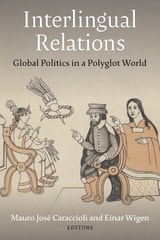
Interlingual Relations
Global Politics in a Polyglot WorldMauro J. Caraccioli and Einar Wigen, Editors.
University of Michigan Press, 2026
International politics is often conducted in two languages or more, and since no two languages are exactly the same, what is possible to say in one language may be impossible to say in another. Translation is at the heart of global politics, and interlingual relations traverse time, space, culture, and state borders. Interlingual Relations builds on emergent literature on translation in International Relations (IR) to propose a unique research agenda for scholars of global politics, offering multiple directions and sets of principles for sustained study.
The contributors use various methodologies to explore these interfaces and encounters in different sites, bringing together multiple subfields, approaches, and disciplinary paradigms across IR’s history. Together they offer a more truly global perspective on international affairs, going beyond the hegemony of English to demonstrate the interconnectedness between “high” politics and everyday life. They show the role of translation in global politics as one of world-making, whereby social roles, rules, and responsibilities establish the semblance of order despite not sounding or meaning the same to all actors. In establishing Interlingual Relations as a foundational part of IR, the book offers another key to studying global interactions and the high political stakes in the theories, methods, and ethics of translation.
Intermedialities
Political Theory and Cinematic ExperienceDavide Panagia
Northwestern University Press, 2024
Shining new light on our understanding of cinema’s ways of political thinking, Intermedialities: Political Theory and Cinematic Experience puts modern political theory in conversation with the philosophy of film. Davide Panagia argues that there are no natural laws of association that can guarantee a template for democratic participation, as democracy is predicated not on stabilizing foundations but rather on the formation of expansive collectivities and institutions that are responsive to alterability. Instead, democracy requires a relational ontology, one that he elucidates by turning to philosophers of film like Stanley Cavell, Gilles Deleuze, Miriam Hansen, and Jean-Luc Godard—all of whom have articulated a political aesthetic of cinematic experience that is at once aspectual and compositional. Panagia reads these thinkers alongside a countertradition of modern political thought, represented by David Hume, Ludwig Wittgenstein, and Gilbert Simondon. His articulation of cinematic experience thus allows for a political aesthetic that is rooted in the migratory realities of undetermined relations.
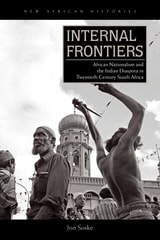
Internal Frontiers
African Nationalism and the Indian Diaspora in Twentieth-Century South AfricaJon Soske
Ohio University Press, 2017
In this ambitious new history of the antiapartheid struggle, Jon Soske places India and the Indian diaspora at the center of the African National Congress’s development of an inclusive philosophy of nationalism. In so doing, Soske combines intellectual, political, religious, urban, and gender history to tell a story that is global in reach while remaining grounded in the everyday materiality of life under apartheid.
Even as Indian independence provided black South African intellectuals with new models of conceptualizing sovereignty, debates over the place of the Indian diaspora in Africa (the “also-colonized other”) forced a reconsideration of the nation’s internal and external boundaries. In response to the traumas of Partition and the 1949 Durban Riots, a group of thinkers in the ANC, centered in the Indian Ocean city of Durban and led by ANC president and Nobel Peace Prize winner Albert Luthuli, developed a new philosophy of nationhood that affirmed South Africa’s simultaneously heterogeneous and fundamentally African character.
Internal Frontiers is a major contribution to postcolonial and Indian Ocean studies and charts new ways of writing about African nationalism.

International Development Policies
Perspectives for Industrial CountriesSidney Dell
Duke University Press, 1991
Tracing the fundamental changes of the last forty years in international development policies toward the Third World, Dell details the transformation from a policy of collective responsibility on the part of the international community to the current status, in which the commitment of governments of industrial countries to Third World development is greatly diluted. He examines the growing conflicts in world trade and analyzes the failure of the international economic community to develop a long-run strategy for dealing with the world debt crisis.
Other topics addressed include the future of the international monetary system, the viability of small countries, strategies for development of basic needs, and the prospects for foreign private investment.
International Organizations and Research Methods
An IntroductionFanny Badache, Leah R. Kimber and Lucile Maertens, Editors
University of Michigan Press, 2023
Scholars have studied international organizations (IOs) in many disciplines, thus generating important theoretical developments. Yet a proper assessment and a broad discussion of the methods used to research these organizations are lacking. Which methods are being used to study IOs and in what ways? Do we need a specific methodology applied to the case of IOs? What are the concrete methodological challenges when doing research on IOs? International Organizations and Research Methods: An Introduction compiles an inventory of the methods developed in the study of IOs under the five headings of Observing, Interviewing, Documenting, Measuring, and Combining. It does not reconcile diverging views on the purpose and meaning of IO scholarship, but creates a space for scholars and students embedded in different academic traditions to reflect on methodological choices and the way they impact knowledge production on IOs.
International Perspectives on Contemporary Democracy
Edited by Peter F. Nardulli
University of Illinois Press, 2007
Democracy enjoys unparalleled prestige at the beginning of the twenty-first century as a form of government. Some of the world's most prosperous nations are democracies, and an array of nations in Europe, Africa, and South America have adopted the system. This globalization has also met resistance and provoked concerns about international power exerted by institutions and elites that are beyond the control of existing democratic institutions. In this volume, leading scholars of democracy engage the key questions about how far and how fast democracy can spread, and how international agencies and international cooperation uneasily affect national democracies. At first glance, the efforts of intergovernmental organizations to intervene in a nation's governance seem anything but democratic to that nation. The contributors demonstrate why democracy has been so attractive and so successful, but are also candid about what limits it may reach, and why.
Contributors are Lisa Anderson, Larry Diamond, Zachary Elkins, John R. Freeman, Brian J. Gaines, James H. Kuklinski, Peter F. Nardulli, Melissa A. Orlie, Buddy Peyton, Paul J. Quirk, Wendy Rahn, Bruce Russett, and Beth Simmons.
International Political Earthquakes
Michael Brecher
University of Michigan Press, 2008
International Political Earthquakes is the masterwork of the preeminent scholar Michael Brecher. Brecher, who came of age before World War II, has witnessed more than seven decades of conflict and has spent his career studying the dynamics of relations among nations throughout the world.
When terrorism, ethnic conflict, military buildup, or other local tensions spark an international crisis, Brecher argues that the structure of global politics determines its potential to develop into open conflict. That conflict, in turn, may then generate worldwide political upheaval. Comparing international crises to earthquakes, Brecher proposes a scale analogous to the Richter scale to measure the severity and scope of the impact of a crisis on the landscape of international politics.
Brecher's conclusions about the causes of international conflict and its consequences for global stability make a convincing case for gradual, nonviolent approaches to crisis resolution.
Michael Brecher is R. B. Angus Professor of Political Science at McGill University.
International Propaganda
Its Legal and Diplomatic ControlL. John Martin
University of Minnesota Press, 1958
International Propaganda was first published in 1958. Minnesota Archive Editions uses digital technology to make long-unavailable books once again accessible, and are published unaltered from the original University of Minnesota Press editions.
As the principal weapon of the cold war, international propaganda is a matter of grave importance to anyone concerned with international relations. Here, in the first study of its kind, Dr. Martin analyzes the efforts and trends toward the control of such propaganda by means of international law, domestic law, and diplomacy. As a background for his study, he traces the development of international propaganda, discusses its definitions, and describes the propaganda activities of the three giants in the field - the United States, Great Britain, and the Soviet Union.
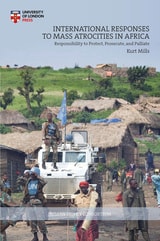
International Responses to Mass Atrocities in Africa
Responsibility to Protect, Prosecute, and PalliateKurt Mills
University of London Press, 2015
Parallel to this responsibility, two related responsibilities have developed: to prosecute those responsible for the crimes, and to provide humanitarian relief to the victims—what Kurt Mills in this book calls the “responsibility to palliate.” While this rhetoric of protection is well used by the international community, its application in practice has been erratic at best. In International Responses to Mass Atrocities in Africa, Mills develops a typology of responses to mass atrocities, considering four cases in Rwanda, the Democratic Republic of the Congo, Uganda, and Darfur. Putting the cases into historical context and analyzing them according to this typology, Mills investigates the limitations of these responses and calls for such responses to be implemented in a more timely and thoughtful manner. Mills provides critical analysis of the possibilities for the international community to respond to humanitarian crises in the future.
International Security in a World of Fragile States
Islamic States and Islamist OrganizationsS. Yaqub Ibrahimi
University of Michigan Press, 2022
Following the 9/11 attacks on New York and Washington, DC, there has been an increasing interest among scholars, students, and the interested public to study and learn about the Islamist-oriented terrorist organizations called Jihadi Salafi Groups (JSGs). Considering that these organizations emerged in highly fragile states, S. Yaqub Ibrahimi asks: how and why is state fragility linked to the emergence of JSGs?
Ibrahimi bases his study on three events: the establishment of al-Qaeda in Afghanistan in 1998, the rise of Islamic State in the post-Saddam Hussein Iraq, and the failed al-Qaeda effort to establish a base in Saudi Arabia in 2003. These case studies contain major aspects and features of the rise of JSGs and, together, explain the contribution of state fragility to the process of the formation and expansion of these terrorist organizations.
International Security in a World of Fragile States stands out as a pivotal work on the interconnection between the root causes of JSGs and state fragility conditions and their amalgamated role in the formation and evolution of these organizations. It contributes to IR and international security debates by developing a comprehensive but readily understandable narrative of the rise of JSGs in Islamic countries, and examining them in an analytical framework in which their root causes are categorized on individual, group, and international levels.
International Trotskyism, 1929-1985
A Documented Analysis of the MovementRobert J. Alexander
Duke University Press, 1991
Renowned scholar Robert J. Alexander has amassed, from disparate sources, an unprecedented amount of primary and secondary material to provide a documentary history of the origins, development, and nature of the Trotskyist movement around the world. Drawing on interviews and correspondence with Trotskyists, newspaper reports and pamphlets, historical writings including the annotated writings of Trotsky in both English and French, historical memoirs of Trotskyist leaders, and documents of the Fourth International, Alexander recounts the history of the movement since Trotsky’s exile from the Soviet Union in 1929.
Organized alphabetically in a double-column, country-by-country format this book charts the formation and growth of Trotskyism in more than sixty-five countries, providing biographic information about its most influential leaders, detailed accounts of Trotsky’s personal involvement in the development of the movement in each country, and thorough reports of its various factions and splits. Multiple chapters are reserved for countries where the movement was more active or fully developed and various chapters are organized around crucial thematic issues, such as the Fourth International. The chapters are followed by extensive name, organization, publication, and subject indexes, which provide optimal access to the wealth of information contained in the main body of the work.
Internationalism and Its Betrayal
Micheline R. IshayForeword by Craig Calhoun
University of Minnesota Press, 1995
Internationalism and Its Betrayal was first published in 1995. Minnesota Archive Editions uses digital technology to make long-unavailable books once again accessible, and are published unaltered from the original University of Minnesota Press editions.
A new world order, proclaimed Western leaders after the cold war, could extend liberal democracy and human rights around the globe. Yet the specter of nationalism once again haunts the world, threatening to extinguish the spirit of internationalism.
Although internationalism is typically understood to be diametrically opposed to nationalism, Micheline Ishay argues to the contrary, maintaining that internationalism often incorporates an individualist element that manifests itself as nationalism during critical periods such as war. For example, the new liberal internationalism invoked after the cold war is now revealing its limits-as reflected by the UN's inability to interfere promptly to stop ethnic and nationalist conflicts in Bosnia, Rwanda, and elsewhere.
Internationalism and Its Betrayal explores the tensions and contradictions between ideas of nationalism and internationalism, focusing on the major political thinkers from the early modern period into the nineteenth century. Ishay examines the writings of Vico, Grotius, Rousseau, Kant, Paine, Robespierre, Burke, Fichte, de Maistre, and Hegel. She speaks to an audience of individuals interested in the spread of democracy, students of human rights and international relations, historians of the French Revolution, and political theorists.
Internationalizing "International Communication"
Chin-Chuan Lee, editor
University of Michigan Press, 2015
Interpretations of Conflict
Ethics, Pacifism, and the Just-War TraditionRichard B. Miller
University of Chicago Press, 1991
Miller's study of the ethics of war could not be more timely.
Miller brings together the opposed traditions of pacifism and
just-war theory and puts them into a much-needed dialogue
on the ethics of war.
Beginning with the duty of nonviolence as a point of
convergence between the two rival traditions, Miller provides
an opportunity for pacifists and just-war theorists to refine
their views in a dialectical exchange over a set of ethical
and social questions. From the interface of these two long-
standing and seemingly incompatible traditions emerges a
surprisingly fruitful discussion over a common set of values,
problems, and interests: the presumption against harm, the
relation of justice and order, the ethics of civil
disobedience, the problem of self-righteousness in moral
discourse about war, the ethics of nuclear deterrence, and
the need for practical reasoning about the morality of war.
Miller pays critical attention to thinkers such as Augustine
and Thomas Aquinas, as well as to modern thinkers like H.
Richard Niebuhr, Paul Ramsey, Martin Luther King, Jr., James
Douglass, the Berrigans, William O'Brien, Michael Walzer, and
James Childress. He demonstrates how pacifism and just-war
tenets can be joined around both theoretical and practical
issues.
Interpretations of Conflict is a work of massive
scholarship and careful reasoning that should interest
philosophers, theologians, and religious ethicists alike. It
enhances our moral literacy about injury, suffering, and
killing, and offers a compelling dialectical approach to
ethics in a pluralistic society.
Richard B. Miller is assistant professor of religious
studies at Indiana University.
Interpretive Quantification
Methodological Explorations for Critical and Constructivist IRJ. Samuel Barkin and Laura Sjoberg, editors
University of Michigan Press, 2017
In Interpretive Quantification, ten highly regarded scholars in the field of International Relations apply quantitative methods and formal models to specific constructivist and critical research questions. In this way, each chapter serves not only as evidence that methods can productively be applied across paradigms, but also as a guide as to how this may be done. In sum, the contributors make a compelling case that when researchers cordon off particular methods for merely ideological reasons, they circumscribe their own paradigms and hinder their own research agenda.

Interrogating Cultural Studies
Theory, Politics and PracticeEdited by Paul Bowman
Pluto Press, 2003

Interrupting Genocide
A Model for Reconciliation and Social HealingJocelyn R. Barrett
University of Michigan Press, 2027
For decades, genocide education has focused primarily on prevention, identifying early warning signs and intervening before mass atrocities unfold. But when prevention fails, reconciliation becomes a post-genocide concern, leaving societies in a suspended state of trauma, mistrust, and fragmentation. Interrupting Genocide provides a practical framework to challenge that gap. Grounded in social identity theory and built from years of research and fieldwork, the Social Identity Model for Reconciliation reimagines reconciliation as a dynamic process that can begin during genocide, not as an after practice.
Drawing on powerful, real-life testimonies from survivors, former perpetrators, and second-generation youth from the Holocaust and the Rwandan Genocide, the book examines how identity, belonging, and group behavior contribute to violence as well as the possibility of repair. At its core, the book reveals how group dynamics such as dehumanization, polarization, and stigmatization evolve through conflict, and how targeted reconciliation strategies can disrupt these patterns in real time. From faith-based healing and intergroup dialogue to economic reintegration and grassroots community practices, the book offers practical pathways for rebuilding fractured social bonds. Accessible, deeply human, and urgent in its message, Interrupting Genocide provides theoretical insight and real-world tools to rethink how societies heal.
Intersectional Inequality
Race, Class, Test Scores, and PovertyCharles C. Ragin and Peer C. Fiss
University of Chicago Press, 2016
Ragin and Fiss begin by taking up the controversy regarding the relative importance of test scores versus socioeconomic background on life chances, a debate that has raged since the 1994 publication of Richard Herrnstein and Charles Murray’s TheBell Curve. In contrast to prior work, Ragin and Fiss bring an intersectional approach to the evidence, analyzing the different ways that advantages and disadvantages combine in their impact on life chances. Moving beyond controversy and fixed policy positions, the authors propose sophisticated new methods of analysis to underscore the importance of attending to configurations of race, gender, family background, educational achievement, and related conditions when addressing social inequality in America today.

Intersex and After, Volume 15
Iain Morland
Duke University Press, 0
In one essay, two prominent intersex activists reflect on their often controversial work on behalf of the Intersex Society of North America to achieve change in medical policy over the last ten years. Other essays explore the impact of the categorization of intersexuality as a “disorder of sex development” and of the treatment guidelines published in 2006 by the Consortium on the Management of Disorders of Sex Development. An essay by the issue’s guest editor takes a comprehensive look at the relationship between intersexuality and the study of gender and sexuality. The issue also includes a portfolio of photographs as well as a roundtable discussion that brings together intersex experts from medicine, law, psychology, and the humanities.
Contributors. Sarah M. Creighton, Alice D. Dreger, Ellen K. Feder, Julie A. Greenberg, April Herndon, Iain Morland, Katrina Roen, Vernon A. Rosario, Nikki Sullivan, Del LaGrace Volcano
Interspecies Politics
Nature, Borders, StatesRafi Youatt
University of Michigan Press, 2020
This book explores the ways that international politics is a form of interspecies politics, one that involves the interactions, ideas, and practices of multiple species, both human and nonhuman, to generate differences and create commonalities. While we frequently think of having an international politics “of” the environment, a deep and thoroughgoing anthropocentrism guides our idea of what political life can be, which prevents us from thinking about a politics “with” the environment. This anthropocentric assumption about politics drives both ecological degradation and deep forms of interhuman injustice and hierarchy.
Interspecies Politics challenges that assumption, arguing that a truly ecological account of interstate life requires us to think about politics as an activity that crosses species lines. It therefore explores a postanthropocentric account of international politics, focusing on a series of cases and interspecies practices in the American borderlands, ranging from the US-Mexico border in southern Texas, to Guantánamo Bay in Cuba, to Isle Royale, near the US-Canadian border. The book draws on international relations, environmental political theory, anthropology, and animal studies, to show how key international dimensions of states—sovereignty, territory, security, rights—are better understood as forms of interspecies assemblage that both generate new forms of multispecies inclusion, and structure forms of violence and hierarchy against human and nonhuman alike.
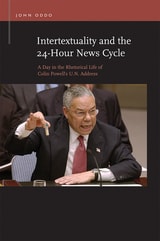
Intertextuality and the 24-Hour News Cycle
A Day in the Rhetorical Life of Colin Powell's U.N. AddressJohn Oddo
Michigan State University Press, 2014
Intervention Narratives
Afghanistan, the United States, and the Global War on TerrorPurnima Bose
Rutgers University Press, 2020
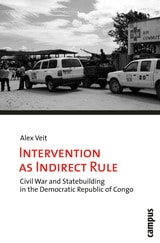
Intervention as Indirect Rule
Civil War and Statebuilding in the Democratic Republic of CongoAlex Veit
Campus Verlag, 2010
One of the largest peace-keeping missions currently being undertaken by the United Nations is in the Democratic Republic of Congo, where the UN is attempting to deal with the civil wars and other conflicts that have plagued the country since 1996. In Intervention as Indirect Rule, Alex Veit uses a close study of the district of Ituri, a major battlefield and a laboratory for international intervention, to explore the micropolitics of warfare and statebuilding. Combining detailed firsthand empirical data with a historically informed analysis, Veit shows the effect that contemporary humanitarian interventions have on state-society relations. He also pays particular, and much needed, attention to the question of why the very organizations that should be helping with international statebuilding efforts—local authorities and civil society groups—so often instead turn out to be corrupt or hostile. Ultimately Veit argues that international intervention tends inadvertently to replicate—or even amplify—historical structures of political inequality, rather than establishing a liberal form of statehood.
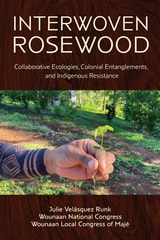
Interwoven Rosewood
Collaborative Ecologies, Colonial Entanglements, and Indigenous ResistanceJulie Velásquez Runk, the Wounaan National Congress, and the Wounaan Local Congress of Majé
University of Arizona Press, 2026
Interwoven Rosewood is a collaborative exploration of the global rosewood trade and its entanglements with Indigenous lifeways, colonial histories, and environmental crises. Co-authored by Julie Velásquez Runk and members of the Wounaan National Congress and its Local Congress of the Majé community, this book traces the story of cocobolo rosewood from Wounaan lands in Panama to international markets, revealing how centuries of settler colonialism and extractive capitalism continue to shape landscapes, livelihoods, and relationships. At its heart, the book is a meditation on well-being and belonging—how people live in relation to land, each other, and the more-than-human world.
Drawing on more than a decade of community-based research and six collaborative book workshops, the authors weave together first-person narratives, ecological analysis, historical context, and Indigenous knowledge. The result is a richly textured account that challenges dominant narratives of environmental degradation by centering Wounaan experiences of joy, resistance, and conviviality. The book’s structure reflects its method: interwoven chapters authored or spoken by Wounaan colleagues, grounded in consent protocols and shaped by ancestral storytelling traditions.
Accessibly written, Interwoven Rosewood is ideal for courses in environmental conservation, Indigenous studies, anthropology, Latin American studies, and political ecology. With its interdisciplinary reach and classroom-ready discussion questions, the book invites readers to reflect on the global forces behind environmental catastrophe—and the enduring power of Indigenous ways of knowing, being, and becoming.
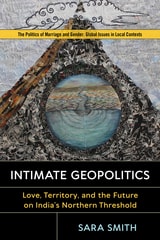
Intimate Geopolitics
Love, Territory, and the Future on India’s Northern ThresholdSara Smith
Rutgers University Press, 2020
2021 Foreword Indies Finalist - Politics and Social Sciences
Intimate Geopolitics begins with a love story set in the Himalayan region of Ladakh, in India’s Jammu and Kashmir State, but this is also a story about territory, and the ways that love, marriage, and young people are caught up in contemporary global processes. In Ladakh, children grow up to adopt a religious identity in part to be counted in the census, and to vote in elections. Religion, population, and voting blocs are implicitly tied to territorial sovereignty and marriage across religious boundaries becomes a geopolitical problem in an area that seeks to define insiders and outsiders in relation to borders and national identity. This book populates territory, a conventionally abstract rendering of space, with the stories of those who live through territorial struggle at marriage and birth ceremonies, in the kitchen and in the bazaar, in heartbreak and in joy. Intimate Geopolitics argues for the incorporation of the role of time–temporality–into our understanding of territory.

Intimate Radicals
East European Jewish Women and Progressive American DesiresAshley Walters
Rutgers University Press, 2027
In the early 1900s, a handful of unconventional couples emerged within the American radical Left. In Intimate Radicals, Ashley Walters tells the story of a group of young, East European Jewish women and white, Anglo-Saxon Protestant men— such as Jack London, Sinclair Lewis, and William English Walling, among other notable figures in American literature, domestic and international affairs, and early Hollywood—and how they imbued their romances with revolutionary principles. The relationships captivated the public and became a source of intrigue, largely driven by the growth of human-interest journalism. Through individual biographies, historical narrative, and literary analysis, Walters reveals the cultural and political contingencies of desire.
As Progressive Era radicals rebelled against the constraints of an earlier era, East European Jews—and Jewish women in particular— came to embody a new cosmopolitan ideal and European revolutionary spirit. Drawing on letters, newspapers, literature, and film, Walters shows how the public reception of these patrician-immigrant relationships lent credence to a new cultural mythology of Jewish womanhood. The men’s desire for East European Jewish women, she also points out, can be viewed as a form of “radical tourism,” in which men who enjoy a degree of privilege pursue an alluring Other in the hope of obtaining a more worldly identity.
This book is published with the support of the Jordan Schnitzer First Book Publication Award, administered by the Association for Jewish Studies.
Intimate States
Gender, Sexuality, and Governance in Modern US HistoryEdited by Margot Canaday, Nancy F. Cott, and Robert O. Self
University of Chicago Press, 2021
The last few decades have seen a surge of historical scholarship that analyzes state power and expands our understanding of governmental authority and the ways we experience it. At the same time, studies of the history of intimate life—marriage, sexuality, child-rearing, and family—also have blossomed. Yet these two literatures have not been considered together in a sustained way. This book, edited and introduced by three preeminent American historians, aims to close this gap, offering powerful analyses of the relationship between state power and intimate experience in the United States from the Civil War to the present.
The fourteen essays that make up Intimate States argue that “intimate governance”—the binding of private daily experience to the apparatus of the state—should be central to our understanding of modern American history. Our personal experiences have been controlled and arranged by the state in ways we often don’t even see, the authors and editors argue; correspondingly, contemporary government has been profoundly shaped by its approaches and responses to the contours of intimate life, and its power has become so deeply embedded into daily social life that it is largely indistinguishable from society itself. Intimate States makes a persuasive case that the state is always with us, even in our most seemingly private moments.
Into New Territory
American Historians and the Concept of US ImperialismJames G. Morgan
University of Wisconsin Press, 2014
Tracing the emergence of the concept of US imperialism, James G. Morgan shows how radical and revisionist scholars in the 1950s and 1960s first challenged the paradigm of denying an American empire. As the Vietnam War created a critical flashpoint, bringing the idea of American imperialism into the US mainstream, radical students of the New Left turned toward Marxist critiques, admiring revolutionaries like Che Guevara. Simultaneously, a small school of revisionist scholars, led by historian William Appleman Williams at the University of Wisconsin, put forward a progressive, nuanced critique of American empire grounded in psychology, economics, and broader historical context. It is this more sophisticated strand of thinking, Morgan argues, which demonstrated that empire can be an effective analytical framework for studying US foreign policy, thus convincing American scholars to engage with the subject seriously for the first time.
Intonations
A Social History of Music and Nation in Luanda, Angola, from 1945 to Recent TimesMarissa J. Moorman
Ohio University Press, 2008
Intonations tells the story of how Angola’s urban residents in the late colonial period (roughly 1945–74) used music to talk back to their colonial oppressors and, more importantly, to define what it meant to be Angolan and what they hoped to gain from independence. A compilation of Angolan music is included in CD format.
Marissa J. Moorman presents a social and cultural history of the relationship between Angolan culture and politics. She argues that it was in and through popular urban music, produced mainly in the musseques (urban shantytowns) of the capital city, Luanda, that Angolans forged the nation and developed expectations about nationalism. Through careful archival work and extensive interviews with musicians and those who attended performances in bars, community centers, and cinemas, Moorman explores the ways in which the urban poor imagined the nation.
The spread of radio technology and the establishment of a recording industry in the early 1970s reterritorialized an urban-produced sound and cultural ethos by transporting music throughout the country. When the formerly exiled independent movements returned to Angola in 1975, they found a population receptive to their nationalist message but with different expectations about the promises of independence. In producing and consuming music, Angolans formed a new image of independence and nationalist politics.

Inventing Authenticity
How Cookbook Writers Redefine Southern IdentityCarrie Helms Tippen
University of Arkansas Press, 2018
Tippen discusses the act of cooking as a way to perform—and therefore reinforce—the identity associated with a recipe, and the complexities inherent in attempts to portray the foodways of a region marked by a sometimes distasteful history. Inventing Authenticity meets this challenge head-on, delving into problems of cultural appropriation and representations of race, thorny questions about authorship, and more. The commonplace but deceptively complex southern cookbook can sustain our sense of where we come from and who we are—or who we think we are.

Inventing Congress
Origins and Establishment of the First Federal CongressKenneth R. Bowling
Ohio University Press, 1999
On March 4, 1789, New York City's church bells pealed, cannons fired, and flags snapped in the wind to celebrate the date set for the opening of the First Federal Congress. In many ways the establishment of Congress marked the culmination of the American Revolution as the ship of state was launched from the foundation of the legislative system outlined in Article I of the Constitution.
Inventing Congress presents the latest scholarship on the interrelated intellectual, institutional, cultural, and political antecedents of the formation of the First Federal Congress. The first section covers the origins of the body, ranging in discussion from the question of how the founders' understanding of classical Greek and Roman republican precedent shaped their thinking, to the political lessons learned during the Continental and Confederation Congresses.
The second section concerns itself with the establishment of the First Federal Congress, examining several heretofore little-treated aspects of the most important Congress in history, including its relationship to the press, morality, the arts and sciences, and economic philosophy.
Inventing Congress represents the papers from the first two conferences sponsored by the United States Capitol Historical Society in its series, “Perspectives on the History of Congress, 1789-1801.”
Inventing Global Ecology
Tracking the Biodiversity Ideal in India, 1947–1997Michael L. Lewis
Ohio University Press, 2004
Blue jeans, MTV, Coca-Cola, and… ecology? We don't often think of conservation sciences as a U.S. export, but in the second half of the twentieth century an astounding array of scientists and ideas flowed out from the United States into the world, preaching the gospel of conservation-oriented ecology.
Inventing Global Ecology grapples with how we should understand the development of global ecology in the twentieth century—a science that is held responsible for, literally, saving the world. Is the spread of ecology throughout the globe a subtle form of cultural imperialism, as some claim? Or is it a manifestation of an increasingly globalized world, where ideas, people, and things move about with greater freedom than ever before?
Using India as the case study, Professor Michael Lewis considers the development of conservation policies and conservation sciences since the end of World War II and the role of United States scientists, ideas, and institutions in this process. Was India subject to a subtle form of Americanization, or did Indian ecologists develop their own agenda, their own science, and their own way of understanding (and saving) the natural world? Does nationality even matter when doing ecology?
This readable narrative will carry you through the first fifty years of independent India, from the meadows of the Himalayan Mountains to the rainforests of southern India, from Gandhi and Nehru to Project Tiger. Of equal interest to the general reader, to scientists, and to scholars of history and globalization, Inventing Global Ecology combines ethnographic fieldwork and oral history conducted in India and the United States, as well as traditional archival research.
Inventing Pollution
Coal, Smoke, and Culture in Britain since 1800Peter Thorsheim
Ohio University Press, 2006
Britain's supremacy in the nineteenth century depended in large part on its vast deposits of coal. This coal not only powered steam engines in factories, ships, and railway locomotives but also warmed homes and cooked food. As coal consumption skyrocketed, the air in Britain's cities and towns became filled with ever-greater and denser clouds of smoke.
In this far-reaching study, Peter Thorsheim explains that, for much of the nineteenth century, few people in Britain even considered coal smoke to be pollution. To them, pollution meant miasma: invisible gases generated by decomposing plant and animal matter. Far from viewing coal smoke as pollution, most people considered smoke to be a valuable disinfectant, for its carbon and sulfur were thought capable of rendering miasma harmless.
Inventing Pollution examines the radically new understanding of pollution that emerged in the late nineteenth century, one that centered not on organic decay but on coal combustion. This change, as Peter Thorsheim argues, gave birth to the smoke-abatement movement and to new ways of thinking about the relationships among humanity, technology, and the environment.
Inventing Pollution
Coal, Smoke, and Culture in Britain since 1800Peter Thorsheim
Ohio University Press, 2017
Going as far back as the thirteenth century, Britons mined and burned coal. Britain’s supremacy in the nineteenth century depended in large part on its vast deposits of coal, which powered industry, warmed homes, and cooked food. As coal consumption skyrocketed, the air in Britain’s cities and towns filled with ever-greater and denser clouds of smoke. Yet, for much of the nineteenth century, few people in Britain even considered coal smoke to be pollution.
Inventing Pollution examines the radically new understanding of pollution that emerged in the late nineteenth century, one that centered not on organic decay but on coal combustion. This change, as Peter Thorsheim argues, gave birth to the smoke-abatement movement and to new ways of thinking about the relationships among humanity, technology, and the environment.
Even as coal production in Britain has plummeted in recent decades, it has surged in other countries. This reissue of Thorsheim’s far-reaching study includes a new preface that reveals the book’s relevance to the contentious national and international debates—which aren’t going away anytime soon—around coal, air pollution more generally, and the grave threat of human-induced climate change.
Inventing Times Square
Commerce and Culture at the Crossroads of the WorldWilliam R. Taylor
Russell Sage Foundation, 1991
Inventing the Ties That Bind
Imagined Relationships in Moral and Political LifeFrancesca Polletta
University of Chicago Press, 2020
Inventories and Surveys for Heritage Management
Lessons for the Digital AgeDavid Myers
J. Paul Getty Trust, The, 2024
A critical first step in the conservation of cultural heritage is to identify and understand the places we want to protect. Inventories and surveys are essential tools in this effort, and their use in managing national, regional, and local heritage is mandated in heritage-related legislation across the globe. Despite the widespread understanding of the importance of inventories and surveys, however, practical, up-to-date guidance on how they should be created, implemented, and maintained has been substantially lacking—until now.
This publication draws from the Getty Conservation Institute’s ongoing work with heritage inventories and on the Los Angeles Office of Historic Resources’ experience with SurveyLA. It provides technical advice, guidance, and lessons learned for employing inventories and surveys as tools for heritage conservation and management.
The free online edition of this open-access publication is available at www.getty.edu/publications/inventories-and-surveys. Also available are free PDF and EPUB downloads of the book.
Invested Interests
Capital, Culture, and the World BankBret Benjamin
University of Minnesota Press, 2007
Despite the World Bank’s profound impact on economic, political, and social conditions during the post–World War II era, cultural critics who rigorously theorize other institutions of colonialism and globalization have largely ignored the institution. Working to correct this blind spot, Bret Benjamin’s Invested Interests presents the first extended cultural analysis of the World Bank.
In Invested Interests, Benjamin contends that the World Bank has, from its inception, trafficked in culture. From the political context in which the Bank was chartered to its evolution into an interventionist development agency with vast, unchecked powers, Benjamin explores the Bank’s central role in the global dissemination of Fordist-Keynesianism, its conflicted support for nationalism and the nation-state, and its emerging awareness of the relationships between economics and culture. Benjamin argues that the Bank shapes, and is in turn shaped by, historical pressures of the age—most significantly the rise of third world national liberation movements. Reading a broad array of midcentury archival materials, Benjamin examines not only the Bank’s own growing attentiveness to cultural work but also its prominent place in the thinking of such anti-imperialist intellectuals as Aimé Césaire, Frantz Fanon, and Richard Wright.
Benjamin maps the Bank’s contemporary rhetorical maneuvering in the wake of ever-intensifying protests, offering close readings of the World Bank’s corporate literature, the activities of the antiglobalization World Social Forum, and the writings of prominent Bank critic Arundhati Roy, including her novel The God of Small Things.
Deftly investigating the World Bank’s ideological struggles over six decades, Invested Interests develops a conceptually and politically nuanced critique of the Bank as a cultural institution deeply enmeshed in the last century’s historical transformations of imperial power and anti-imperial struggle.
Bret Benjamin is associate professor of English and director of undergraduate studies at the University of Albany, SUNY.
Investing Wisely
Informed Approaches to Designing and Implementing Allocation Systems for Graduate AssistantshipsRoger B. Sidje, Joan M. Barth, Ellary A. Draper, Matthew J. Jenny, Daniel L. Riches, and Dean M. Townsley
University of Alabama Press, 2026
Investing in Graduate Education Through Data, Equity, and Purpose.
Investing Wisely: Informed Approaches to Designing and Implementing Allocation Systems for Graduate Assistantships tackles one of the most consequential and least understood challenges in higher education: how universities can distribute graduate assistantships fairly, strategically, and transparently. Drawing on a multiyear effort at the University of Alabama, the authors introduce DIASGA™ (Designing and Implementing Allocation Systems for Graduate Assistantships), a practical framework for aligning graduate funding with institutional priorities, departmental needs, and student success. Through real-world experience, the book demonstrates how institutions can move beyond inherited funding patterns and build adaptive systems capable of responding to changing academic realities.
The book proposes a distinctive blend of rigorous analysis and practical guidance. The authors reveal the hidden complexities behind graduate funding decisions, challenging simplistic allocation formulas based on enrollment or credit-hour production. Instead, they advocate a data-informed, collaborative process grounded in departmental expertise, institutional values, and continuous assessment. Featuring case studies, implementation strategies, funding models, committee structures, and lessons learned from both successes and setbacks, Investing Wisely offers an unusually candid account of organizational change and resource allocation in higher education.
This book will be invaluable to provosts, deans, graduate school leaders, department chairs, faculty administrators, and higher education policymakers. It will also appeal to scholars of university governance, institutional effectiveness, and academic planning who seek practical approaches to balancing equity, accountability, and strategic investment. Whether your institution is reconsidering graduate funding practices or simply striving to make better-informed decisions, Investing Wisely provides a thoughtful roadmap for investing in graduate education with clarity, fairness, and purpose.
This book is freely available in open access format thanks to TOME (Toward an Open Monograph Ecosystem) - a collaboration of the Association of American Universities, the Association of University Presses, and the Association of Research Libraries - and the generous support of Virginia Tech. This Open Access publication can be accessed by visiting the University of Alabama Libraries Repository at https://ir.ua.edu/handle/123456789/18409.
Investing in the Homeland
Migration, Social Ties, and Foreign FirmsBenjamin A.T. Graham
University of Michigan Press, 2019
Graham’s analysis draws on new data from face-to-face interviews with the managers of over 450 foreign firms operating in two developing countries: Georgia and the Philippines. Diaspora-owned and diaspora-managed firms are better connected than other foreign firms and they use social ties to resolve disputes and influence government policy. At the same time, Graham shows that diaspora-affiliated firms are no more socially responsible than their purely foreign peers—at root, they are profit-seeking enterprises, not development NGOs. Graham identifies implications for policymakers seeking to capture the development potential of diaspora investment and for managers of multinational firms who want to harness diasporans as a source of sustained competitive advantage.
Investment Citizenship
Rhetoric and Affect Beyond Late NeoliberalismBlake Abbott
Michigan State University Press, 2027
This book maps the development of a social and rhetorical phenomenon called investment citizenship: a mode of citizen-subjectivity articulated primarily through financial and affective investments. Investment citizenship is both a marker of personal identity and a complex, interwoven set of rhetorics, forces, actions, and assumptions that articulate the role of investment in social life. To that end, it examines three rhetorical couplets—investment and citizenship, financial investment and affective investment, to invest and to be invested—directly and through several cultural phenomena implicated by the emergence of investment rhetoric, such as US government policy, consumerism, ownership, education, and financial planning. Taken together, these couplets both extend and challenge late neoliberalism through the various invocations and implications of investment citizenship that reconfigure the relationship between the individual and society.
Investment in Women's Human Capital
Edited by T. Paul Schultz
University of Chicago Press, 1995
Section I considers the experiences of high-income countries, examining the limitations of industrialization for the advancement of women; returns to secondary education for women; and state control of women's education and labor market productivity through the design of tax systems and the public subsidy of children.
The remaining four sections investigate health, education, household structure and labor markets, and measurement issues in low-income countries, including the effect of technological change on transfers of wealth to and from children in India; women's and men's responses to the costs of medical care in Kenya; the effects of birth order and sex on educational attainment in Taiwan; wage returns to schooling in Indonesia and in Cote d'Ivoire; and the increasing prevalence of female-headed households and the correlates of gender differences in wages in Brazil.
Invisible Agents
Spirits in a Central African HistoryDavid M. Gordon
Ohio University Press, 2012
Invisible Agents shows how personal and deeply felt spiritual beliefs can inspire social movements and influence historical change. Conventional historiography concentrates on the secular, materialist, or moral sources of political agency. Instead, David M. Gordon argues, when people perceive spirits as exerting power in the visible world, these beliefs form the basis for individual and collective actions. Focusing on the history of the south-central African country of Zambia during the nineteenth and twentieth centuries, his analysis invites reflection on political and religious realms of action in other parts of the world, and complicates the post-Enlightenment divide of sacred and profane.
The book combines theoretical insights with attention to local detail and remarkable historical sweep, from oral narratives communicated across slave-trading routes during the nineteenth century, through the violent conflicts inspired by Christian and nationalist prophets during colonial times, and ending with the spirits of Pentecostal rebirth during the neoliberal order of the late twentieth century. To gain access to the details of historical change and personal spiritual beliefs across this long historical period, Gordon employs all the tools of the African historian. His own interviews and extensive fieldwork experience in Zambia provide texture and understanding to the narrative. He also critically interprets a diverse range of other sources, including oral traditions, fieldnotes of anthropologists, missionary writings and correspondence, unpublished state records, vernacular publications, and Zambian newspapers.
Invisible Agents will challenge scholars and students alike to think in new ways about the political imagination and the invisible sources of human action and historical change.
Invisible Enemies
The American War on Vietnam, 1975-2000Edwin A. Martini
University of Massachusetts Press, 2007
Beginning where most histories of the Vietnam War end, Invisible Enemies examines the relationship between the United States and Vietnam following the American pullout in 1975. Drawing on a broad range of sources, from White House documents and congressional hearings to comic books and feature films, Edwin Martini shows how the United States continued to wage war on Vietnam “by other means” for another twenty-five years. In addition to imposing an extensive program of economic sanctions, the United States opposed Vietnam's membership in the United Nations, supported the Cambodians, including the Khmer Rouge, in their decade-long war with the Vietnamese, and insisted that Vietnam provide a “full accounting” of American MIAs before diplomatic relations could be established. According to Martini, such policies not only worked against some of the stated goals of U.S. foreign policy, they were also in opposition to the corporate economic interests that ultimately played a key role in normalizing relations between the two nations in the late 1990s.
Martini reinforces his assessment of American diplomacy with an analysis of the “cultural front”—the movies, myths, memorials, and other phenomena that supported continuing hostility toward Vietnam while silencing opposing views of the war and its legacies. He thus demonstrates that the “American War on Vietnam” was as much a battle for the cultural memory of the war within the United States as it was a lengthy economic, political, and diplomatic campaign to punish a former adversary.
Invisible Giant
Cargill and Its Transnational StrategiesBrewster Kneen
Pluto Press, 2002
Transnational corporations straddle the globe, largely unseen by the public. Cargill, with its headquarters in the US, is the largest private corporation in North America, and possibly in the world. Cargill trades in food commodities and produces a great many of them: grains, flour, malt, corn, cotton, salt, vegetable oils, fruit juices, animal feeds, and meat. Among its most profitable activities is its trade in the global financial markets. There are few national economies unaffected by Cargill's activities, and few eaters in the north whose food does not pass through Cargill's hands at some point. Yet Cargill remains largely invisible to most people and accountable to no one outside the company.
This is the second edition of an explosive book that breaks the silence on the true extent of Cargill's power and influence worldwide -- its ability to shape national policies, and the implications of these strategies for all of us. Thoroughly revised and updated, Kneen's new book offers shocking new evidence of Cargill's activities since the book was first published in 1995. He examines how it has succeeded in eliminating competition by undertaking joint ventures with virtually all of its suppossed competitors. He shows how this massive corporation continues to aquire and divest, extending its grip even further in what amounts to almost total control of the global food system.
Invoking Hope
Theory and Utopia in Dark TimesPhillip E. Wegner
University of Minnesota Press, 2020
An appeal for the importance of theory, utopia, and close consideration of our contemporary dark times
What does any particular theory allow us to do? What is the value of doing so? And who benefits? In Invoking Hope, Phillip E. Wegner argues for the undiminished importance of the practices of theory, utopia, and a deep and critical reading of our current situation of what Bertolt Brecht refers to as finsteren Zeiten, or dark times.
Invoking Hope was written in response to three events that occurred in 2016: the five hundredth anniversary of the publication of Thomas More’s Utopia; the one hundredth anniversary of the founding text in theory, Ferdinand de Saussure’s Course in General Linguistics; and the rise of the right-wing populism that culminated in the election of Donald Trump. Wegner offers original readings of major interventions in theory alongside dazzling utopian imaginaries developed from classical Greece to our global present—from Theodor Adorno, Ernst Bloch, Alain Badiou, Jacques Derrida, Fredric Jameson, Sarah Ahmed, Susan Buck-Morss, and Jacques Lacan to such works as Plato’s Republic, W. E. B. Du Bois’s John Brown, Isak Dinesen’s “Babette’s Feast,” Kim Stanley Robinson’s 2312, and more. Wegner comments on an expansive array of modernist and contemporary literature, film, theory, and popular culture.
With Invoking Hope, Wegner provides an innovative lens for considering the rise of right-wing populism and the current crisis in democracy. He discusses challenges in the humanities and higher education and develops strategies of creative critical reading and hope against the grain of current trends in scholarship.
Iran on the Brink
Rising Workers and Threats of WarAndreas Malm and Shora Esmailian
Pluto Press, 2007
The authors offer a unique portrait of the social upheaval, why it is happening and where it may take the country. Following the fall of reformism, the rise of Ahmadinejad and the recent outbursts of ethnic violence, this book provides rare insights into the inner contradictions of the Islamic Republic.
The second part of the book deals with the international issues facing Iran - in particular the nuclear question, Iran's oil reserves and the serious threat of invasion. It is a sobering account of the realities of life in Iran, and the threat that war poses to the democratic aspirations of the Iranian people.