Results by title
18316 books match the query 'United states' and 636 start with i
Inside Lincoln's White House
The Complete Civil War Diary of John HayEdited by Michael Burlingame and John R. Turner Ettlinger
Southern Illinois University Press, 1999
On 18 April 1861, assistant presidential secretary John Hay recorded in his diary the report of several women that "some young Virginian long haired swaggering chivalrous of course. . . and half a dozen others including a daredevil guerrilla from Richmond named Ficklin would do a thing within forty eight hours that would ring through the world."
The women feared that the Virginian planned either to assassinate or to capture the president. Calling this a "harrowing communication," Hay continued his entry: "They went away and I went to the bedside of the Chief couché. I told him the yarn; he quietly grinned."
This is but one of the dramatic entries in Hay’s Civil War diary, presented here in a definitive edition by Michael Burlingame and John R. Turner Ettlinger. Justly deemed the most intimate record we will ever have of Abraham Lincoln in the White House, the Hay diary is, according to Burlingame and Ettlinger, "one of the richest deposits of high-grade ore for the smelters of Lincoln biographers and Civil War historians." While the Cabinet diaries of Salmon P. Chase, Edward Bates, and Gideon Welles also shed much light on Lincoln’s presidency, as does the diary of Senator Orville Hickman Browning, none of these diaries has the literary flair of Hay’s, which is, as Lincoln’s friend Horace White noted, as "breezy and sparkling as champagne." An aspiring poet, Hay recorded events in a scintillating style that the lawyer-politician diarists conspicuously lacked.
Burlingame and Ettlinger’s edition of the diary is the first to publish the complete text of all of Hay’s entries from 1861 through 1864. In 1939 Tyler Dennett published Lincoln and the Civil War in the Diaries and Letters of John Hay, which, as Civil War historian Allan Nevins observed, was "rather casually edited." This new edition is essential in part because Dennett omitted approximately 10 percent of Hay’s 1861–64 entries.
Not only did the Dennett edition omit important parts of the diaries, it also introduced some glaring errors. More than three decades ago, John R. Turner Ettlinger, then in charge of Special Collections at the Brown University Library, made a careful and literal transcript of the text of the diary, which involved deciphering Hay’s difficult and occasionally obscure writing. In particular, passages were restored that had been canceled, sometimes heavily, by the first editors for reasons of confidentiality and propriety. Ettlinger’s text forms the basis for the present edition, which also incorporates, with many additions and much updating by Burlingame, a body of notes providing a critical apparatus to the diary, identifying historical events and persons.
Inside Newark
Decline, Rebellion, and the Search for TransformationCurvin, Robert
Rutgers University Press, 2014
Based on historical records and revealing interviews with over one hundred residents and officials, Inside Newark traces Newark’s history from the 1950s, when the city was a thriving industrial center, to the era of Mayor Cory Booker. Along the way, Curvin covers the disturbances of July 1967, called a riot by the media and a rebellion by residents; the administration of Kenneth Gibson, the first black mayor of a large northeastern city; and the era of Sharpe James, who was found guilty of corruption. Curvin examines damaging housing and mortgage policies, the state takeover of the failing school system, the persistence of corruption and patronage, Newark’s shifting ethnic and racial composition, positive developments in housing and business complexes, and the reign of ambitious mayor Cory Booker.
Inside Newark reveals a central weakness that continues to plague Newark—that throughout this history, elected officials have not risen to the challenges they have faced. Curvin calls on those in positions of influence to work for the social and economic improvement of all groups and concludes with suggestions for change, focusing on education reform, civic participation, financial management, partnerships with agencies and business, improving Newark’s City Council, and limiting the term of the mayor. If Newark’s leadership can encompass these changes, Newark will have a chance at a true turnaround.

Inside Pitch and More
Baseball's Business and the Public TrustGENE A. BUDIG
West Virginia University Press, 2004
The Inside Pitch and More: Baseball’s Business and the Public Trust, written by former American League President Gene Budig, investigates the human and corporate sides of our nation’s pastime. Throughout the course of this book, the author systematically engages the myriad concerns of Major League Baseball, past, present, and future.
In The Inside Pitch and More, baseball’s economic prosperity is examined, as well as issues that hinder and threaten that perpetuity. Lately, baseball has been increasingly menaced by the popularity of other athletic venues - basketball, football, etc. Budig goes through the proposed methods of revitalizing the game of baseball. He emphasizes the need for a reevaluation of the relationship between the sport and its fan base so that the baseball will resume its role as America’s favorite pastime.
Based on his six years as president of the American League, Budig has composed a fascinating book, which is written to be enjoyed by the casual baseball fan as well as the serious student of this sport or sports management in general. The book is unique in that it is the first work to really dissect the sport of baseball by a retired high-ranking official with a wealth of information on the subject.

Inside Science
Stories from the Field in Human and Animal ScienceRobert E. Kohler
University of Chicago Press, 2019
Resident observing takes place across a range of sciences, from anthropology and sociology to primatology, wildlife ecology, and beyond. What makes it special, Kohler argues, is the direct access it affords scientists to the contexts in which their subjects live and act. These scientists understand their subjects not by keeping their distance but by living among them and engaging with them in ways large and small. This approach also demonstrates how science and everyday life—often assumed to be different and separate ways of knowing—are in fact overlapping aspects of the human experience. This story-driven exploration is perfect for historians, sociologists, and philosophers who want to know how scientists go about making robust knowledge of nature and society.

Inside Separate Worlds
Life Stories of Young Blacks, Jews, and LatinosDavid Schoem, Editor
University of Michigan Press, 1991
Inside a Class Action
The Holocaust and the Swiss BanksJane Schapiro
University of Wisconsin Press, 2003
On October 21, 1996, attorney Michael Hausfeld, with a team of lawyers, filed a class-action complaint against Union Bank of Switzerland, Swiss Bank Corporation, and Credit Suisse on behalf of Holocaust victims. The suit accused the banks of, among other things, acting as the chief financiers for Nazi Germany. Hausfeld wanted to use the suit to prove that the banks not only concealed and refused to return millions of dollars in dormant accounts, but that they acted as a conduit for looted assets and slave labor profits. Such behavior, he charged, violated the code of ethics known as customary international law. On August 12, 1998, the plaintiffs and banks reached a $1.25 billion settlement.
Through interviews with a wide range of people involved in the case and detailed research of documents and court transcripts, Jane Schapiro shows the ways that egos, personalities, and values clash in such a complex and emotionally charged case. Inside a Class Action provides an insider’s view of a major lawsuit from its inception to its conclusion, which will appeal to anyone interested in human rights, reparations, and international law.
Inside the Classroom (And Out)
How We Learn through FolkloreKenneth L. Untiedt
University of North Texas Press, 2005

Inside the Eagle's Head
An American Indian CollegeAngelle A. Khachadoorian
University of Alabama Press, 2010
Where tradition meets bureaucracy—Native students redefine education on their own terms.
Inside the Eagle’s Head offers a compelling and deeply human portrait of the Southwestern Indian Polytechnic Institute (SIPI), a federally operated college serving Native American students from across the United States. In it, anthropologist Angelle Khachadoorian draws on years of teaching experience and extensive student interviews to illuminate the challenges and successes of life at SIPI. Far more than an institutional history, this book captures the voices of students navigating a complex educational landscape shaped by federal oversight, tribal identity, and personal ambition.
Through vivid metaphors—SIPI as a family, a prison, a reservation—students articulate their struggles and resilience within a system that is at once empowering and restrictive. Khachadoorian’s analysis reveals how SIPI’s hybrid nature—part community college, part BIA legacy—creates both opportunities and obstacles for its students. With empathy and insight, she explores how young Native Americans forge identity, community, and purpose in a setting few outsiders understand. Inside the Eagle’s Head is essential reading for educators, policymakers, and anyone interested in the intersection of Indigenous education, federal institutions, and student agency. It is a powerful testament to the transformative potential of listening to students’ stories.
Inside the Klavern
The Secret History of a Ku Klux Klan of the 1920sEdited by David A. Horowitz
Southern Illinois University Press, 1999
Inside the Klavern is an annotated collection of the minutes of a thriving Ku Klux Klan in La Grande, Oregon, between 1922 and 1924. The most complete set of Klan minutes ever uncovered, these documents illustrate the inner workings of a Klan chapter of more than three hundred members at a time when the national membership reached into the millions and the Invisible Empire was at the peak of its power. Through an extensive introduction and conclusion as well as brief notes previewing each installment of the minutes, David A. Horowitz places these unique documents in historical perspective.
The La Grande minutes demonstrate Klan hostility to Roman Catholics, Jews, blacks, and "hyphenated" Americans. But they also explain how the chapter exercised requirements for admission, how officers were selected, and how Klansmen encountered difficulties enforcing the moral standards of their order. Because the Klan kligrapp (recording secretary) Harold R. Fosner recorded not only the official proceedings but also volunteered extemporaneous comments and gossip, readers get a genuine feeling for what it was like to attend the meetings. Through his own obvious excitement and commitment to the cause, Fosner re-creates the flavor, tone, and atmosphere of these meetings: "Tis beyond my power of expression to relate the harmony and fellowship which reigned supreme. . . . Suffice to say that these were the golden moments of our lives."
His evaluation of Klan propaganda, too, is telling: "The weekly newsletter from Atlanta, Georgia, contained a little book, the official message of our emperor, one Col. William Joseph Simmons, read before the most noble band of men ever assembled and for the noblest cause in the world. To my firm belief this book is the leading masterpiece of our day and age."
Horowitz concludes that "although it is tempting to judge Jazz Age Klansmen by the standards of later generations, the story provided by the minutes is a complex one—a chronicle of both compassion and complicity in cruelty, of positive social accomplishment and arbitrary and dysfunctional divisiveness."
Inside the Presidential Debates
Their Improbable Past and Promising FutureNewton N. Minow and Craig L. LaMay
University of Chicago Press, 2008

Inside the Spiral
The Passions of Robert SmithsonSuzaan Boettger
University of Minnesota Press, 2022
An expansive and revelatory study of Robert Smithson’s life and the hidden influences on his iconic creations
This first biography of the major American artist Robert Smithson, famous as the creator of the Spiral Jetty, deepens understanding of his art by addressing the potent forces in his life that were shrouded by his success, including his suppressed early history as a painter; his affiliation with Christianity, astrology, and alchemy; and his sexual fluidity. Integrating extensive investigation and acuity, Suzaan Boettger uncovers Smithson’s story and, with it, symbolic meanings across the span of his painted and drawn images, sculptures, essays, and earthworks up to the Spiral Jetty and beyond, to the circumstances leading to what became his final work, Amarillo Ramp.
While Smithson is widely known for his monumental earthwork at the edge of the Great Salt Lake, Inside the Spiral delves into the arc of his artistic production, recognizing it as a response to his family’s history of loss, which prompted his birth and shaped his strange intelligence. Smithson configured his personal conflicts within painterly depictions of Christ’s passion, the rhetoric of science fiction, imagery from occult systems, and the impersonal posture of conceptual sculpture. Aiming to achieve renown, he veiled his personal passions and transmuted his professional persona, becoming an acclaimed innovator and fierce voice in the New York art scene.
Featuring copious illustrations never before published of early work that eluded Smithson’s destruction, as well as photographs of Smithson and his wife, the noted sculptor Nancy Holt, and recollections from nearly all those who knew him throughout his life, Inside the Spiral offers unprecedented insight into the hidden impulses of one of modern art’s most enigmatic figures. With great sensitivity to the experiences of loss and existential strife that defined his distinct artistic language, this biographical analysis provides an expanded view of Smithson’s iconic art pilgrimage site and the experiences and works that brought him to its peculiar blood red water.
Inside the Teaching Machine
Rhetoric and the Globalization of the U.S. Public Research UniversityCatherine Chaput
University of Alabama Press, 2008
An incisive critique of the corporatized university, tracing the entanglement of academic missions with economic, political, and cultural systems.
Advocates of higher education have long contended that universities should operate above the crude material negotiations of economics and politics. Such arguments, ignore the historical reality that the American university system emerged through, and in service to, a capitalist political economy that unevenly combines corporate, state, and civil interests.
As the corporatization of U.S. universities becomes nearly impossible to deny, the common response from many academics has been a superior stand against the contamination of the professional ideal by tainted corporate interests. Inside the Teaching Machine proposes a correction to this view through the lens of historical materialism.
Chaput argues that the U.S. public research university has always been a vital component of the capitalist political economy. While conventional narratives of public higher education emphasize civic preparation and upward mobility, Chaput demonstrates that supposedly egalitarian policies like the Morrill Land-Grant Act and the G.I. Bill served the changing interests of capitalism much as education, creating a professional class that supports the capitalist political economy. Chaput also focuses on the relationship between American universities and globalization, showing how the trend toward professionalization contributes to the production of surplus value, and the ways that the American university model circulates outside the United States. Chaput concludes by advocating rhetorical strategies for the professional who opposes the capitalist logic of the global university system, proposing concrete options for engaging and redirecting globalization within the university system.

Inside, Outside, and Online
Building Your Library CommunityChrystie Hill
American Library Association, 2009

Inside/Outside
A Physician's Journey with Breast CancerJanet R. Gilsdorf, M.D.
University of Michigan Press, 2006
The medical system delivers cures, answers, and relief from pain to those who seek its help, but it can also offer misinformation, shattered expectations, horrible options, and inhumane consideration of the people it is supposed to serve. As Gilsdorf takes us on a journey across the terrifying landscape of cancer, she discovers that there are oases of unfathomable beauty to be found.
Inside/Outside is compelling, sometimes scary, reading as it puts us inside Gilsdorf’s skin. It ponders a vast array of profound choices most of us will be confronted with in our lives: thinking versus feeling, knowing versus not knowing, hanging on versus letting go, loving versus hating, and the immeasurable territories of life between the poles. Even as it touches on these universal human themes, ultimately Inside/Outside is a story of one person’s courage, hope, and survival in the face of terrifying odds.
Insider Histories of the Vietnam Era Underground Press, Part 1
Ken Wachsberger
Michigan State University Press, 2011
This enlightening book offers a collection of histories of underground papers from the Vietnam Era as written and told by key staff members of the time. Their stories (as well as those to be included in Part 2, forthcoming) represent a wide range of publications: counterculture, gay, lesbian, feminist, Puerto Rican, Native American, Black, socialist, Southern consciousness, prisoner's rights, New Age, rank-and-file, military, and more. The edition includes forewords by former Chicago Seed editor Abe Peck, radical attorney William M. Kunstler, and Markos Moulitsas, founder of the Daily Kos, along with an introductory essay by Ken Wachsberger.
Wachsberger notes that the underground press not only produce a few well-known papers but also was truly national and diverse in scope. His goal is to capture the essence of "the countercultural community."
A fundamental resource for anyone seeking a deeper understanding of a dramatic era in U.S. history.
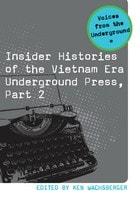
Insider Histories of the Vietnam Era Underground Press, Part 2
Ken Wachsberger
Michigan State University Press, 2011
This enlightening book offers a collection of histories of underground papers from the Vietnam Era as written and told by key staff members of the time. Their stories, building on those presented in Part 1, represent a wide range of publications: countercultural, gay, lesbian, feminist, Puerto Rican, Native American, Black, socialist, Southern consciousness, prisoners’ rights, New Age, rank-and-file, military, and more. Wachsberger notes that the underground press not only produced a few well-known papers but also was truly national and diverse in scope. His goal is to capture the essence of “the countercultural community.” This book will be a fundamental resource for anyone seeking a deeper understanding of a dramatic era in U.S. history, as well as offering a younger readership a glimpse into a generation of idealists who rose up to challenge and improve government and society.
Insiders, Outliers
Centering Adult Student Writers at an HBCUCollie Fulford
Rutgers University Press, 2025
Winner of the 2026 Outstanding Book Award in the Monograph category from the Conference on College Composition and Communication
Insiders, Outliers invites readers into the lives of adult HBCU students for whom college is one meaningful activity among many. Although adults over the age of twenty-four comprise a quarter of all undergraduates, they are institutionally segregated and only partially served by a US higher education system that remains organized around traditional-aged learners. Even as such students are regarded as a market for postsecondary institutions, they are routinely marginalized by institutional barriers. Students’ stories of their personal, professional, community, and academic writing experiences illuminate a critical need for more age-inclusive practices across academia. Their cases also offer new conceptual models of writing as an ethical and emotional practice that fuels changes for individuals and the people and institutions that they care about—including higher education. What adult students reveal about writing across their life domains has powerful implications for conceptualizing writing as a complex form of agency and for teaching writing across the curriculum.
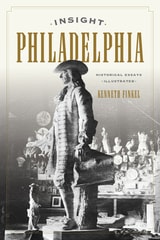
Insight Philadelphia
Historical Essays IllustratedFinkel, Kenneth
Rutgers University Press, 2018
Illustrated with scores of rare archival images, Insight Philadelphia will give readers a new appreciation for the people and places that make the City of Brotherly Love so unique.

Insights in the Economics of Aging
Edited by David A. Wise
University of Chicago Press, 2017
The contributions to Insights in the Economics of Aging uncover how financial, physical, and emotional well-being are integrally related. The authors consider the interactions between financial circumstances in later life, such as household savings and home ownership, physical circumstances such as health and disability, and emotional well-being, including happiness and mental health.
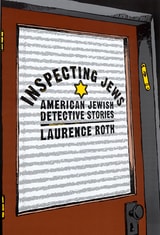
Inspecting Jews
American Jewish Detective StoriesRoth, Laurence
Rutgers University Press, 2003
Inthis book, Laurence Roth argues that the popular genre of Jewish detective stories offers new insights into the construction of ethnic and religious identity. Roth frames his study with the concept of “kosher hybridity” to look at the complex process of mediation between Jewish and American culture in which Jewish writers voice the desire to be both different from and yet the same as other Americans. He argues that the detective story, located at the intersection of narrative and popular culture in modern America, examines the need for order in a disorderly society, and thus offers a window into the negotiation of Jewish identity differing from that of literary fiction. The writers of these popular cultural texts, which are informed by contradiction and which thrive on intended and unintended ironies, formulate idioms for American Jewish identities that intentionally and unintentionally create social, ethnic, and religious syntheses in American Jewish life. Roth examines stories about American Jewish detectives—including Harry Kemelman’s Rabbi Small, Faye Kellerman’s Peter Decker and Rina Lazarus, Stuart Kaminsky’s Abe Lieberman, and Rochelle Krich’s Jessica Drake—not only as a genre of literature but also as a reflection of contemporary acculturation in the American Jewish popular arts.
Inspectors-General
Junkyard Dogs or Man's Best Friend?Mark Moore
Russell Sage Foundation, 1986
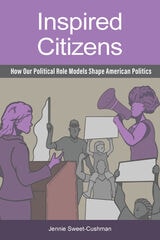
Inspired Citizens
How Our Political Role Models Shape American PoliticsJennie Sweet-Cushman
Temple University Press, 2024
Sweet-Cushman develops Inspired Citizenship Theory to show that political role models can have motivating effects on one’s political citizenship and may, in some case, insulate those who have been traditionally marginalized in American politics. Moreover, she asserts that citizens who have political role models possess very different political behaviors and attitudes than those who do not.
Inspired Citizens also considers the often-conflicting pressures and messages political role models project to citizens. Sweet-Cushman posits that role models inspire political action most effectively when they fulfill highly individualized expectations for role model identity, spurring deeper connection and a desire to emulate.
Inspired Citizens strengthens our understanding of what we should (and should not) look to political figures for in guiding democratic behaviors and inspiring productive citizenship.
Inspired Collaboration
Ideas for Discovering and Applying Your PotentialDorothy Stoltz
American Library Association, 2016
Inspired Thinking
Big Ideas to Enrich Yourself and Your CommunityDorothy Stoltz
American Library Association, 2020
Institutional Change in American Politics
The Case of Term LimitsEdited by Karl T. Kurtz, Bruce Cain, and Richard G. Niemi
University of Michigan Press, 2009
Legislative term limits adopted in the 1990s are in effect in fifteen states today. This reform is arguably the most significant institutional change in American government of recent decades. Most of the legislatures in these fifteen states have experienced a complete turnover of their membership; hundreds of experienced lawmakers have become ineligible for reelection, and their replacements must learn and perform their jobs in as few as six years.
Now that term limits have been in effect long enough for both their electoral and institutional effects to become apparent, their consequences can be gauged fully and with the benefit of hindsight. In the most comprehensive study of the subject, editors Kurtz, Cain, and Niemi and a team of experts offer their broad evaluation of the effects term limits have had on the national political landscape.
"The contributors to this excellent and comprehensive volume on legislative term limits come neither to praise the idea nor to bury it, but rather to speak dispassionately about its observed consequences. What they find is neither the horror story of inept legislators completely captive to strong governors and interest groups anticipated by the harshest critics, nor the idyll of renewed citizen democracy hypothesized by its more extreme advocates. Rather, effects have varied across states, mattering most in the states that were already most professionalized, but with countervailing factors mitigating against extreme consequences, such as a flight of former lower chamber members to the upper chamber that enhances legislative continuity. This book is must reading for anyone who wants to understand what happens to major institutional reforms after the dust has settled."
---Bernard Grofman, Professor of Political Science and Adjunct Professor of Economics, School of Social Sciences, University of California, Irvine
"A decade has passed since the first state legislators were term limited. The contributors to this volume, all well-regarded scholars, take full advantage of the distance afforded by this passage of time to explore new survey data on the institutional effects of term limits. Their book is the first major volume to exploit this superb opportunity."
---Peverill Squire, Professor, Department of Political Science, University of Iowa
Karl T. Kurtz is Director of the Trust for Representative Democracy at the National Conference of State Legislatures.
Bruce Cain is Heller Professor of Political Science and Director of the Institute of Governmental Studies at the University of California at Berkeley, and the Director of the University of California Washington Center.
Richard G. Niemi is Don Alonzo Watson Professor of Political Science at the University of Rochester.
Institutional Change, Discretion, and the Making of Modern Congress
An Economic InterpretationGlenn R. Parker
University of Michigan Press, 1992
Institutional Ethnography as Writing Studies Practice
Michelle LaFrance
University Press of Colorado, 2024

Institutions in American Society
Essays in Market, Political, and Social OrganizationsJohn E. Jackson, Editor
University of Michigan Press, 1990
Institutions of Reading
The Social Life of Libraries in the United StatesThomas Augst
University of Massachusetts Press, 2007
Tracing the evolution of the library as a modern institution from the late eighteenth century to the digital era, this book explores the diverse practices by which Americans have shared reading matter for instruction, edification, and pleasure. Writing from a rich variety of perspectives, the contributors raise important questions about the material forms and social shapes of American culture. What is a library? How have libraries fostered communities of readers and influenced the practice of reading in particular communities? How did the development of modern libraries alter the boundaries of individual and social experience, and define new kinds of public culture? To what extent have libraries served as commercial enterprises, as centers of power, and as places of empowerment for African Americans, women, and immigrants? Institutions of Reading offers at once a social history of literacy and leisure, an intellectual history of institutional and technological innovations that facilitated the mass distribution and consumption of printed books and periodicals, and a cultural history of the symbolic meanings and practical uses of reading in American life. In addition to the editors, contributors include Elizabeth Amann, Michael Baenen, James Green, Elizabeth McHenry, Barbara Mitchell, Christine Pawley, Janice Radway, James Raven, Karin Roffman, and Roy Rosenzweig.
Instructions for American Servicemen in Britain, 1942
Reproduced from the original typescript, War Department, Washington, DCEdited by the Bodleian Library
Bodleian Library Publishing, 2004
The guide was intended to alleviate the culture shock for soldiers taking their first trip to Great Britain, or, for that matter, abroad. The handbook is punctuated with endearingly nostalgic advice and refreshingly candid quips such as: "The British don't know how to make a good cup of coffee. You don't know how to make a good cup of tea. It's an even swap." By turns hilarious and poignant, many observations featured in the handbook remain relevant even today.
Reproduced in a style reminiscent of the era, Instructions for American Servicemen in Britain is a powerfully evocative war-time memento that offers a unique perspective on the longstanding American-British relationship and reveals amusingly incisive American perceptions of the British character and country.

Instructions for American Servicemen in France during World War II
United States Army
University of Chicago Press, 2008
As American soldiers fanned out from their beachhead in Normandy in June of 1944 and began the liberation of France, every soldier carried that reminder in his kit. A compact trove of knowledge and reassurance, Instructions for American Servicemen in France during World War II was issued to soldiers just before they embarked for France to help them understand both why they were going and what they’d find when they got there. After lying unseen in Army archives for decades, this remarkable guide is now available in a new facsimile edition that reproduces the full text and illustrations of the original along with a new introduction by Rick Atkinson setting the book in context.
Written in a straightforward, personal tone, the pamphlet is equal parts guidebook, cultural snapshot, and propaganda piece. A central aim is to dispel any prejudices American soldiers may have about the French—especially relating to their quick capitulation in 1940. Warning soldiers that the defeat “is a raw spot which the Nazis have been riding” since the occupation began, Instructions is careful to highlight France’s long historical role as a major U.S. ally. Following that is a brief, fascinating sketch of the French character (“The French are mentally quick;” “Rich or poor, they are economical”) and stark reminders of the deprivation the French have endured under occupation. Yet an air of reassuring confidence pervades the final section of the pamphlet, which reads like a straightforward tourists’ guide to Paris and the provinces—like a promise of better days to come once the soldiers complete their mission.
Written by anonymous War Department staffers to meet the urgent needs of the moment, with no thought of its historical value, Instructionsfor American Servicemen in France during World War II nevertheless brings to vivid life the closing years of World War II—when optimism was growing, but a long, demanding road still lay ahead.
Instrument of War
Music and the Making of America's SoldiersDavid Suisman
University of Chicago Press, 2024
An original history of music in the lives of American soldiers.
Since the Civil War, music has coursed through the United States military. Soldiers have sung while marching, listened to records and armed forces radio, and packed the seats at large-scale USO shows. The bugle call “reveille” has roused soldiers in the morning, and “taps” has marked the end of a long day. Whether the sounds come from brass instruments, weary and homesick singers, or a pair of heavily used earbuds, where there has been war, there has been music, too.
Instrument of War is a first-of-its-kind study of music in the lives of American soldiers. Although musical activity has been part of war since time immemorial, the significance of the U.S. military as a musical institution has generally gone unnoticed. Historian David Suisman traces how the U.S. military has used—and continues to use—music to train soldiers and regulate military life, and how soldiers themselves have turned to music to cope with war’s emotional and psychological realities. Opening our ears to these practices, Suisman reveals how music has enabled more than a century and a half of American war-making. Instrument of War unsettles assumptions about music as a force of uplift and beauty, demonstrating how it has also been entangled in large-scale state violence.
From chanting “Sound off!” in basic training to switching on a phonograph or radio or cueing up an iPod playlist during a patrol, the sound of music has long resonated in soldiers’ wartime experiences. Now we all can finally hear it.

Insult to Injury
Libel, Slander, and Invasions of PrivacyChrista Jones
University Press of Colorado, 2003

Insurance Era
Risk, Governance, and the Privatization of Security in Postwar AmericaCaley Horan
University of Chicago Press, 2021
Actuarial thinking is everywhere in contemporary America, an often unnoticed byproduct of the postwar insurance industry’s political and economic influence. Calculations of risk permeate our institutions, influencing how we understand and manage crime, education, medicine, finance, and other social issues. Caley Horan’s remarkable book charts the social and economic power of private insurers since 1945, arguing that these institutions’ actuarial practices played a crucial and unexplored role in insinuating the social, political, and economic frameworks of neoliberalism into everyday life.
Analyzing insurance marketing, consumption, investment, and regulation, Horan asserts that postwar America’s obsession with safety and security fueled the exponential expansion of the insurance industry and the growing importance of risk management in other fields. Horan shows that the rise and dissemination of neoliberal values did not happen on its own: they were the result of a project to unsocialize risk, shrinking the state’s commitment to providing support, and heaping burdens upon the people often least capable of bearing them. Insurance Era is a sharply researched and fiercely written account of how and why private insurance and its actuarial market logic came to be so deeply lodged in American visions of social welfare.
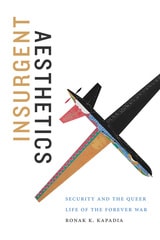
Insurgent Aesthetics
Security and the Queer Life of the Forever WarRonak K. Kapadia
Duke University Press, 2019
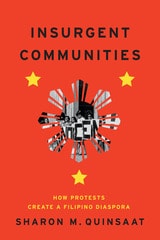
Insurgent Communities
How Protests Create a Filipino DiasporaSharon M. Quinsaat
University of Chicago Press, 2024
When people migrate and settle in other countries, do they automatically form a diaspora? In Insurgent Communities, Sharon M. Quinsaat explains the dynamic process through which a diaspora is strategically constructed. Quinsaat looks to Filipinos in the United States and the Netherlands—examining their resistance against the dictatorship of Ferdinand Marcos, their mobilization for migrants’ rights, and the construction of a collective memory of the Marcos regime—to argue that diasporas emerge through political activism. Social movements provide an essential space for addressing migrants’ diverse experiences and relationships with their homeland and its history. A significant contribution to the interdisciplinary field of migration and social movements studies, Insurgent Communities illuminates how people develop collective identities in times of social upheaval.
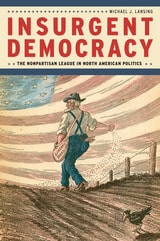
Insurgent Democracy
The Nonpartisan League in North American PoliticsMichael J. Lansing
University of Chicago Press, 2015
Michael J. Lansing aims to change that. Insurgent Democracy offers a new look at the Nonpartisan League and a new way to understand its rise and fall in the United States and Canada. Lansing argues that, rather than a spasm of populist rage that inevitably burned itself out, the story of the League is in fact an instructive example of how popular movements can create lasting change. Depicting the League as a transnational response to economic inequity, Lansing not only resurrects its story of citizen activism, but also allows us to see its potential to inform contemporary movements.
Insuring Inequality
Administrative Leadership in Social Security, 1935-54Jerry R. Cates
University of Michigan Press, 1983
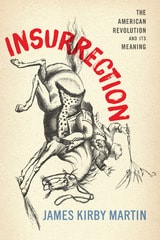
Insurrection
The American Revolution and Its MeaningJames Kirby Martin
Westholme Publishing, 2019
The Revolutionary generation believed they were living in dangerous, turbulent times. Their uprising against British imperial authority beginning in the 1760s represented an attempt to preserve their liberties in the face of what they perceived as a conspiracy from above, ultimately brought on by a tyrannical king and Parliament. The actual number of insurgents—we call them rebels or patriots—represented no more than 20 to 25 percent of the populace. Approximately the same number of persons refused to renounce their loyalty to the British Crown; and thousands of them joined British arms to crush the patriot insurrection. Not committed to supporting either side were large numbers of neutrals whose allegiance varied with their proximity to competing military forces. Once independence was secured, however, a great shift occurred. Some key Revolutionary leaders began to worry that the common people, if given too much political authority, would produce agitation from below that could destroy the delicate fabric of the newly established republic. Reckoning with this social and political disorder resulted in a series of constitutional settlements. What emerged was a more democratic system of government operating, at least theoretically, in the name of a sovereign people who had replaced the king and Parliament.
In Insurrection: The American Revolution and Its Meaning, award-winning historian James Kirby Martin discusses the causes, course, and consequences of the War for Independence. While interpretations of the Revolution and its short- and long-term meaning abound, Martin emphasizes that the insurrection against British monarchism led to more profound changes in human institutions and ideals than many of the Revolutionary leaders actually envisioned or wanted. Once unleashed, the genie of greater freedom and liberty for all could not be forced back into the bottle, no matter how much some persons would have desired.
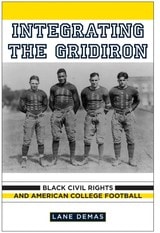
Integrating the Gridiron
Black Civil Rights and American College FootballDemas, Lane
Rutgers University Press, 2011
Integrating the Gridiron, the first book devoted to exploring the racial politics of college athletics, examines the history of African Americans on predominantly white college football teams from the nineteenth century through today. Lane Demas compares the acceptance and treatment of black student athletes by presenting compelling stories of those who integrated teams nationwide, and illuminates race relations in a number of regions, including the South, Midwest, West Coast, and Northeast. Focused case studies examine the University of California, Los Angeles in the late 1930s; integrated football in the Midwest and the 1951 Johnny Bright incident; the southern response to black players and the 1955 integration of the Sugar Bowl; and black protest in college football and the 1969 University of Wyoming "Black 14." Each of these issues drew national media attention and transcended the world of sports, revealing how fans—and non-fans—used college football to shape their understanding of the larger civil rights movement.
Integrating the Inner City
The Promise and Perils of Mixed-Income Public Housing TransformationRobert J. Chaskin and Mark L. Joseph
University of Chicago Press, 2015
In the most thorough examination of mixed-income public housing redevelopment to date, Robert J. Chaskin and Mark L. Joseph draw on five years of field research, in-depth interviews, and volumes of data to demonstrate that while considerable progress has been made in transforming the complexes physically, the integrationist goals of the policy have not been met. They provide a highly textured investigation into what it takes to design, finance, build, and populate a mixed-income development, and they illuminate the many challenges and limitations of the policy as a solution to urban poverty. Timely and relevant, Chaskin and Joseph’s findings raise concerns about the increased privatization of housing for the poor while providing a wide range of recommendations for a better way forward.
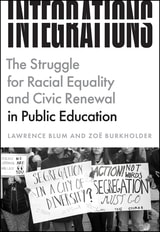
Integrations
The Struggle for Racial Equality and Civic Renewal in Public EducationLawrence Blum and Zoë Burkholder
University of Chicago Press, 2021
Integrations focuses on multiple marginalized groups in American schooling: African Americans, Native Americans, Latinxs, and Asian Americans. The authors show that in order to grapple with integration in a meaningful way, we must think of integration in the plural, both in its multiple histories and in the many possible definitions of and courses of action for integration. Ultimately, the authors show, integration cannot guarantee educational equality and justice, but it is an essential component of civic education that prepares students for life in our multiracial democracy.
Intellectual Freedom Manual
Trina Magi
American Library Association, 2015
Intellectual Freedom Manual
Trina Magi
American Library Association, 2021
The newest edition of the Intellectual Freedom Manual is more than simply an update of a foundational text that has served as a crucial resource for more than four decades. It is a living document that serves as the authoritative reference for day-to-day guidance on maintaining free and equal access to information for all people. Whether you’re developing or revising policies, on-boarding new staff or trustees, responding to challenges and controversies, or studying librarianship, you’ll find this an indispensable resource, with features such as
- ALA policy statements, approved by committees and Council, articulating core intellectual freedom principles and best practices;
- 8 new interpretations of the Library Bill of Rights, which address urgent issues like internet filtering, public performances, political activity, religion, and equity, diversity, and inclusion;
- “Issues at a Glance” sidebars which present key concepts, points of law, tips, and questions for reflection;
- expanded content about developing library policies that support intellectual freedom;
- updated information on censorship of library programs, displays, and databases;
- “Advocacy and Assistance,” a section offering concrete guidance when you’re called on to talk to the media or meet with legislators;
- Deeper Look essays which examine the laws related to library operations;
- advice on when to call the police, when not to, and how to handle personally identifiable information when they arrive; and
- an expanded glossary.
Intellectual Freedom Manual
American Library Association, 2006
Intellectual Freedom Manual
American Library Association, 2010
Intellectual Freedom Manual, Eleventh Edition
Erin Office for Intellectual Freedom
American Library Association, 2026
When someone faces a difficult intellectual freedom (IF) issue, they usually don’t have time to wade through dense text to find the answers they need. Designed as a real-world reference, OIF’s Intellectual Freedom Manual provides trusted, comprehensive guidance for every library worker, from the volunteer to the director, in plain language. Whether you’re developing or reviewing policies, on-boarding new staff or trustees, responding to challenges and controversies, or studying librarianship, you’ll find this a vital tool, with features such as
- contributions that center the voices of Black, Indigenous, and other People of Color (BIPOC) and LGBTQIA+ people, who are often targeted by censorship efforts;
- chapters that begin with an overview explaining the big ideas and offering reflection questions;
- an introduction to IF and why it matters, drawing on ALA's core IF documents and supported with adaptable policy worksheets;
- information and best practice guidance on key topics such as access, children and youth, censorship and internet filtering, collection development and management, copyright, meeting rooms and exhibit spaces, library programming, politics and religion, privacy, and visits and requests from law enforcement;
- stories from real people whose lives have been impacted by IF, showing how library policies shape culture, protect staff and users, and affect real people;
- concise breakdowns of IF issues from legal experts, helping you understand the laws and how they apply in real situations;
- practical advice on advocating for IF, getting help when challenges arise, lobbying, and working with your elected officials;
- a thorough index to help you quickly find the information you need; and
- a helpful glossary and selected bibliography of additional resources.
Intellectual Freedom Stories from a Shifting Landscape
Valerie Nye
American Library Association, 2020
Intellectual freedom is a complex concept that democracies and free societies around the world define in different ways but always strive to uphold. And ALA has long recognized the crucial role that libraries play in protecting this right. But what does it mean in practice? How do library workers handle the ethical conundrums that often accompany the commitment to defending it? Rather than merely laying out abstract policies and best practices, this important new collection gathers real-world stories of intellectual freedom in action to illuminate the difficulties, triumphs, and occasional setbacks of advocating for free and equal access to information for all people in a shifting landscape. Offering insight to LIS students and current practitioners on how we can advance the profession of librarianship while fighting censorship and other challenges, these personal narratives explore such formidable situations as
- presenting drag queen story times in rural America;
- a Black Lives Matter “die-in” at the undergraduate library of the University of Wisconsin-Madison;
- combating censorship at a prison library;
- hosting a moderated talk about threats to modern democracy that included a neo-Nazi spokesman;
- a provocative exhibition that triggered intimidating phone calls, emails, and a threat to burn down an art library;
- calls to eliminate non-Indigenous children’s literature from the collection of a tribal college library; and
- preserving patrons’ right to privacy in the face of an FBI subpoena.
Intellectual Freedom for Teens
A Practical Guide for Young Adult & School LibrariansKristin Fletcher-Spear
American Library Association, 2014
Intellectual Life in America
A HistoryLewis Perry
University of Chicago Press, 1989
Looking at the changing reputation of the intellect itself, Perry examines many forms of anti-intellectualism, showing that some of these were encouraged by intellectuals as surely as by their antagonists. This work is interpretative, critical, and highly provocative, and it provides what is all too often missing in the study of intellectuals—a sense of historical orientation.