Results by title
482 books match the query '17th Century' and 8 start with j

Jan Compagnie in the Straits of Malacca, 1641–1795
Mis Sea#96Dianne Lewis
Ohio University Press, 1995
In 1500 Malay Malacca was the queen city of the Malay Archipelago, one of the great trade centers of the world. Its rulers, said to be descendents of the ancient line of Srivijaya, dominated the lands east and west of the straits. The Portuguese, unable to compete in the marketplace, captured the town. They were followed a hundred years later by the Dutch who, lured in their turn by Malacca as symbol of the wealth and luxury of the east, were to rule this port city for more than a hundred and fifty years.
It proved to be, in many ways, an empty conquest. Portuguese and Dutch governments imposed restrictions on Malacca’s trade, driving it to the newer ports in the north and south. Moreover, by the time the Dutch finally secured the town, they had established their own port at Batavia, in Java. Dutch Malacca was, by 1701, “a place of little trade.” Why then did the Dutch maintain their occupation of the port? Lewis draws on the extensive correspondence of the Dutch East India Company to examine the role the Dutch played as Malacca’s rulers in the eighteenth-century Malay world, arguing that their presence, though generally too weak to secure their own interests, disrupted the traditional political and economic organization of the Malay polities, contributing significantly to the disarray that beset the Malay world at the beginning of the nineteenth century.
Jansenism
An International AnthologyShaun Blanchard
Catholic University of America Press, 2024
Jews and Gentiles in Early America
1654-1800William Pencak
University of Michigan Press, 2005
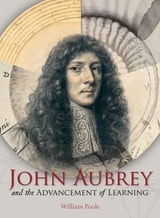
John Aubrey and the Advancement of Learning
William Poole
Bodleian Library Publishing, 2010
John Aubrey (1626–97) was one of the best-connected scholars and antiquaries in the great decades of the British scientific revolution. He is remembered as a pioneer historian and the father of English life-writing, whose Brief Lives remains a lasting portrait of a generation of eminent thinkers and nobles. But Aubrey’s intellectual interests were much broader. He was one of the first Fellows of the Royal Society, and he was acquainted with leading scientists of the generation of Robert Hooke and Isaac Newton. Aubrey championed Hooke’s geological theories, radical for the time, that proposed the organic origin of fossils. In addition, Aubrey was a keen mathematician and an early donor to the Ashmolean Museum of Art and Archaeology and the Bodleian Library. Extensively illustrated, John Aubrey and the Advancement of Learning presents all of Aubrey’s varied interests and pursuits in their intellectual milieu. Published to celebrate the 350th anniversary of the Royal Society, this is the first accessible and illustrated guide to Aubrey’s many diverse achievements as a biographer, natural philosopher and scientist, and antiquary.
John Donne, Body and Soul
Ramie Targoff
University of Chicago Press, 2008
For centuries readers have struggled to fuse the seemingly scattered pieces of Donne’s works into a complete image of the poet and priest. In John Donne, Body and Soul, Ramie Targoff offers a way to read Donne as a writer who returned again and again to a single great subject, one that connected to his deepest intellectual and emotional concerns.
Reappraising Donne’s oeuvre in pursuit of the struggles and commitments that connect his most disparate works, Targoff convincingly shows that Donne believed throughout his life in the mutual necessity of body and soul. In chapters that range from his earliest letters to his final sermon, Targoff reveals that Donne’s obsessive imagining of both the natural union and the inevitable division between body and soul is the most continuous and abiding subject of his writing.
“Ramie Targoff achieves the rare feat of taking early modern theology seriously, and of explaining why it matters. Her book transforms how we think about Donne.”—Helen Cooper, University of Cambridge
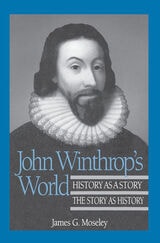
John Winthrop's World
History as a Story; The Story as HistoryJames G. Moseley
University of Wisconsin Press, 1992
In the first in-depth study of Winthrop since 1958, James G. Moseley provides a fascinating new look at this extraordinary man, paying careful attention to the connections between Winthrop’s political activity and his writing. Moseley first examines Winthrop as a writer, using the journal to analyze Winthrop as a man resolving challenges based as much on his acutely pragmatic intelligence as on his deeply felt religious convictions. Second, Moseley traces how historians have responded to Winthrop—how his famous journal has been read and misread by those who have filtered the man and his cultural context through many lenses.
By examining Winthrop’s ancestors and early life in England, especially the religious changes he experienced, Moseley removes the blinders of modernism, portraying Winthrop as never before. He shows how Winthrop’s successful struggle to accept the deaths of his first two wives led him away from moralistic views of Christianity, himself, and his world to more magnanimous views.
Arguing that writing was the medium through which Winthrop developed his capacity for leadership, Moseley shows how the journal enabled Winthrop to reflect objectively on his situation and to adjust his behavior. Winthrop was, Moseley suggests, not only a politician but a historian, and his interpretations of foundational events in American history in his journal are an invaluable resource for understanding the nature of leadership and the meaning of liberty in Puritan America.
Winthrop’s World is a very graceful, well-written, and engaging narrative that provides new insight into the Puritan way of life and into the man who provided a window between our world and his.
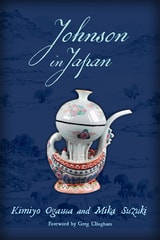
Johnson in Japan
Kimiyo Ogawa
Bucknell University Press, 2021
Published by Bucknell University Press. Distributed worldwide by Rutgers University Press.
Just Anger
Representing Women's Anger in Early Modern EnglandGwynne Kennedy
Southern Illinois University Press, 2000
The first scholar to investigate the subject of women’s anger in early modern England, Gwynne Kennedy analyzes portrayals of and attitudes toward women’s anger in printed texts by or purporting to be written by women during the period.
Kennedy draws from recent critical work on emotions by historians, literary scholars, philosophers, and psychologists as well as comparative studies of the emotions by cultural anthropologists. Kennedy also examines a number of male-authored works, including sermons, conduct literature, philosophy, rhetoric, and medicine. The focus of her work, however, is on representations of women’s anger in printed works signed with women’s names in late sixteenth- and early seventeenth-century England. She addresses the ways these writings conform to, conflict with, or appear to reconfigure prevailing beliefs about women’s anger.
Kennedy looks at such literary texts as Mary Wroth’s romance, The Countess of Montgomery’s Urania, the first fiction by an English woman; Elizabeth Cary’s play, The Tragedy of Mariam, the earliest extant play in English by a woman; and Aemilia Lanyer’s verse collection, Salve Deus Rex Judaeorum. She also discusses religious writings by Protestant martyr Anne Askew and Elizabeth Cary’s history of Edward II. Kennedy considers as well defenses of women’s nature authored by women (Rachel Speght and Aemilia Lanyer) or published under female pseudonyms (“Jane Anger,” “Ester Sowernam,” and “Constantia Munda”).
Kennedy demonstrates the importance of class and race as factors affecting anger’s legitimacy and its forms of expression. She shows how early modern assumptions about women’s anger can help to create or exaggerate other differences among women. Her close scrutiny of anger against female inferiority emphasizes the crucial role of emotions in the construction of self-worth and identity.