484 books match the query 'Biblical Studies' and 29 start with j
cover of Jairus’s Daughter and the Female Body in Mark

Jairus’s Daughter and the Female Body in Mark

Janine E. Luttick

SBL Press, 2023

Jairus’s Daughter and the Female Body in Mark demonstrates that ubiquitous and significant depictions of children in the literature and material culture of the first century CE shaped the mindsets of the Gospel of Mark’s original audience. Through a detailed analysis of the story of Jairus’s daughter in Mark 5 and of the archaeological remains depicting female children, Janine E. Luttick reveals how ancient hearers of this story encountered an image of a female child that communicated ideas of hope to Jesus’s followers and in turn how readers today can understand the authority of Jesus, the domestic structures of early Christianity, and the suffering and loss experienced by some early Christians.
[more]
cover of Jerome, Epistle 106 (On the Psalms)

Jerome, Epistle 106 (On the Psalms)

Michael Graves

SBL Press, 2022

A fresh interpretation of the nature, purpose, and date of Jerome’s Epistle 106

In this volume of the Writings from the Greco-Roman World series, Michael Graves offers the first accessible English translation and commentary on Jerome’s Epistle 106, an important work of patristic biblical interpretation. In his treatise Jerome discusses different textual and exegetical options according to various Greek and Latin copies of the Psalms with input from the Hebrew. Epistle 106 provides insightful commentary on the Gallican Psalter, Jerome’s translation of Origen’s hexaplaric edition. Jerome’s work offers a unique window into the complex textual state of the Psalter in the late fourth century and serves as an outstanding example of ancient philological scholarship on the Bible. Graves’s translation and commentary is an essential resource for scholars and students of patristic exegesis, biblical textual criticism, and late antique Christianity.
[more]
cover of Jerusalem the Center of the Universe: Its Archaeology and History (1800–100 BCE)

Jerusalem the Center of the Universe

Its Archaeology and History (1800–100 BCE)

Israel Finkelstein

SBL Press, 2024

Jerusalem is the center of the universe, the hub of the three great monotheistic religions, yet how did a city located on the desert fringe, in the semi-arid southern highlands of Israel with little tillable land achieve such dominance? To provide answers to this enduring riddle, Israel Finkelstein has collected twenty-four of his best articles and essays covering the Middle Bronze Age to the late Hellenistic period. With critical and well-informed care, he analyzes archaeological evidence that often stands in tension with the biblical text. Topics of particular interest include the archaeology of the tenth century BCE; Saul, David, and Solomon in the Bible and archaeology; the first expansion of the city in the ninth century; its full growth in the late eighth to seventh centuries; Jerusalem and Judah under the Assyrian Empire; the days of King Josiah; and transformations in the Persian-Hellenistic era. Short addenda update the reader on recent developments.
[more]
cover of Jesus Becoming Jesus, Volume 2: A Theological Interpretation of the Gospel of John: Prologue and the Book of Signs

Jesus Becoming Jesus, Volume 2

A Theological Interpretation of the Gospel of John: Prologue and the Book of Signs

Thomas G. Weinandy

Catholic University of America Press, 2021
Jesus Becoming Jesus, Volume 2: A Theological Interpretation of the Gospel of John: Prologue and the Book of Signs follows upon the first volume of this series entitled Jesus Becoming Jesus. The first volume was a theological interpretation of the Gospels of Matthew, Mark and Luke. Unlike many conventional biblical commentaries, Weinandy concentrates on the theological content contained within John’s Gospel. He does this in the light of the Church’s doctrinal and theological tradition, particularly in keeping with the Second Vatican Council’s Dogmatic Constitution, Dei Verbum. This is accomplished through a close reading of John’s Gospel, theologically interpreting each chapter of the Gospel sequentially. In so doing he also takes into account the Johannine corpus as a whole. He also relates John’s Gospel to relevant material found within the Synoptic Gospels, the Pauline Corpus and other New Testament writings. This original theological interpretation focuses primarily on the intertwining theological themes contained within John’s Gospel, specifically within the Prologue and the Book of Signs – light and darkness, the seven miracle-signs, the sacraments of baptism and the Eucharist, the seven “I Am” sayings, the contentious dialogues with the Jews, Jesus’ relationship to his Father as the Father’s incarnate Word and Son, etc. Within all of these interlocking themes one finds the importance of Jesus’ saving actions – the salvific works of his Father. The overarching theme of this book, as the title suggests, is that Jesus, being named Jesus, throughout his public ministry is enacting his name and so becoming who he is – YHWH-Saves. Weinandy offers a singular, vibrant, and luminous reading of John’s Gospel; one that reveals the Evangelist’s theological depth and doctrinal sophistication. In so doing, Weinandy makes manifest the particular beauty of the Gospel According to John.
[more]
cover of Jesus Becoming Jesus, Volume 3: A Theological Interpretation of the Gospel of John: The Book of Glory and the Passion and Resurrection

Jesus Becoming Jesus, Volume 3

A Theological Interpretation of the Gospel of John: The Book of Glory and the Passion and Resurrection

Thomas G. Weinandy

Catholic University of America Press, 2022
Jesus Becoming Jesus, Volume 3 follows upon the previous two volumes of this series entitled Jesus Becoming Jesus. Volume 1 was a theological interpretation of the Gospels of Matthew, Mark and Luke, and volume 2 was a theological interpretation of the Prologue and Book of Signs of John’s Gospel (chapters 1-12). Unlike many conventional biblical commentaries, Weinandy concentrates on the theological content contained within John’s Gospel. This is accomplished through a close reading of John’s Gospel, theologically interpreting each chapter of the Gospel sequentially. In so doing he also takes into account the Johannine corpus as a whole. He also relates John’s Gospel to relevant material found within the Synoptic Gospels, the Pauline Corpus and other New Testament writings. In this present volume, Weinandy’s original theological interpretation focuses first on the Evangelist’s narrative of the Last Supper, which includes Jesus’ washing of his disciples’ feet, followed upon his lengthy farewell address and his ensuing High Priestly Prayer (chapter 13-17). Although Jesus speaks of his leaving his disciples, yet their hearts should not be troubled, for he is going to prepare a place for them in his Father’s house, and he will also send them another Counselor, the Holy Spirit. The Holy Spirit will not only convict the world sin, but he will also empower the disciples to profess their faith in Jesus as the Father’s Son, even in the midst of persecution. All that Jesus tells his disciple in his final discourse, he then prays that his Father will accomplish through his forthcoming death and resurrection – above all that his disciples will share in the same oneness of love that he and his Father possess. Weinandy masterfully treats John’s Passion and Resurrection Narratives. He not only theologically interprets the uniqueness of the Evangelist’s narratives, but also how his narratives insect with the Synoptic accounts. Moreover, Weinandy’s theological reading of Jesus’ crucifixion and resurrection weaves together John’s soteriology, ecclesiology, and sacramentality – all of which are founded upon the Incarnation, that Jesus is the Father’s Spirit-filled incarnate Son. As the title suggests, Jesus, being named Jesus, in his death and resurrection, definitively enacts his name and so becoming who he is – YHWH-Saves.
[more]
cover of Jesus Being Jesus: A Theological Interpretation of the Acts of the Apostles, Volume 2: Chapters 15-28

Jesus Being Jesus

A Theological Interpretation of the Acts of the Apostles, Volume 2: Chapters 15-28

Thomas G. Weinandy

Catholic University of America Press, 2026
Luke was a Gentile and physician. Though not one of Jesus’ initial Jewish disciples, Luke was a traveling companion of Paul. As with the Old Testament and the Gospels, Luke provides the theological and ecclesial significance of the historical events he is narrating. In so doing, he accentuates what the risen and ascended Jesus is doing through the Holy Spirit by means of the nascent church, primarily through Peter and Paul. Although the book is entitled the Acts of the Apostles, the Holy Spirit is the primary actor throughout its entirety. Luke is traditionally believed to be the author of both the third Gospel as well as the Acts of the Apostles. As Luke, in his Gospel, first wrote “an orderly account for you, most excellent Theophilus, concerning the truth of the gospel,” so he now writes what has taken place after Jesus’ departure. Thus, the Acts of the Apostles is a continuation of a historical narrative. The Gospel contains what Jesus historically said and did until his Ascension into Heaven. Acts is the historical narrative of what followed upon Jesus’ ascension and the pouring out of the Holy Spirit at Pentecost that gave birth of the Church, and the first preaching of the Good News. If in Luke’s gospel account one finds Jesus becoming Jesus through his saving actions which culminate in his death and resurrection, in the Acts of the Apostles, one finds the risen Jesus being Jesus through the preaching and actions of the apostolic church. Jesus continues to enact his name, YHWH-Saves. In this second volume on Acts, such saving words and actions are particularly found within Paul’s preaching of the gospel in course of his missionary journeys.
[more]
cover of Jesus Being Jesus: A Theological Interpretation of the Acts of the Apostles: Volume 1: Chapters 1-14

Jesus Being Jesus

A Theological Interpretation of the Acts of the Apostles: Volume 1: Chapters 1-14

Thomas G. Weinandy

Catholic University of America Press, 2026
Luke was a Gentile and physician. Though not one of Jesus’ initial Jewish dis­ciples, Luke was a traveling companion of Paul. As with the Old Testament and the Gospels, Luke provides the theological and ecclesial significance of the historical events he is narrating. In so doing, he accentuates what the risen and ascended Jesus is doing through the Holy Spirit by means of the na­scent church, primarily through Peter and Paul. Although the book is entitled the Acts of the Apostles, the Holy Spirit is the primary actor throughout its entirety. Luke is traditionally believed to be the author of both the third Gospel as well as the Acts of the Apostles. As Luke, in his Gospel, first wrote “an or­derly account for you, most excellent Theophilus, concerning the truth of the gospel,” so he now writes what has taken place after Jesus’ departure. Thus, the Acts of the Apostles is a continuation of a historical narrative. The Gospel contains what Jesus historically said and did until his Ascension into Heaven. Acts is the historical narrative of what followed upon Jesus’ ascen­sion and the pouring out of the Holy Spirit at Pentecost that gave birth to the Church, and the first preaching of the Good News. If in Luke’s gospel account one finds Jesus becoming Jesus through his sav­ing actions which culminate in his death and resurrection, in the Acts of the Apostles, one finds the risen Jesus being Jesus through the preaching and actions of the apostolic church. Jesus continues to enact his name, YH­WH-Saves. Such saving words and actions are particularly within the evan­gelistic ministry of Peter and Paul.
[more]
cover of Jesus and Mary Reimagined in Early Christian Literature

Jesus and Mary Reimagined in Early Christian Literature

Vernon K. Robbins

SBL Press, 2015

Explore the diverse character of emerging Christian narratives

This book presents essays that show how prophetic and priestly emphases in Luke and Acts, and emphasis on Jesus’s existence prior to creation in the Gospel of John, are reworked in some second- and third-century Christian literature. Early Christians interpreted and expressed the storylines of Jesus, Mary, and other important figures in ways that created new images and stories. Contributors show the effect of including rhetography, the rhetoric of a text that prompts images and pictures in the mind of a hearer or reader, in interpretation of texts.

Features:

  • Readings that attempt to account for the development of richly creative and complicated early Christian traditions
  • Essays bridging New Testament studies and interpretation of Early Christian literature
  • Interpretations that integrate social and rhetorical interpretations
[more]
cover of Jesus the Central Jew: His Times and His People

Jesus the Central Jew

His Times and His People

André LaCocque

SBL Press, 2015

Not a Jew marginally, but centrally

In this book, LaCocque presents the case that Jesus was totally and unquestionably a Jew. He lived as a Jew, thought as a Jew, debated as a Jew, acted as a Jew and died as a Jew. He had no intention of creating a new religion; rather, he was a reformer of the Judaism of his day. True, his critique went far beyond an intellectual subversion. In fact, Jesus progressively thought of himself as the “Son of Man” inaugurating the advent of the Kingdom of God on earth.

Features:

  • Focused attention given to the historical Jesus and not Christianity or Christology
  • Addresses restricted sources, namely, the Synoptic Gospels
  • Close examination of Jesus’s way of thinking, teaching, and behaving

[more]
cover of Jesus, Son of Mary, in Muslim Thought

Jesus, Son of Mary, in Muslim Thought

S. R. Burge

SBL Press, 2026
Although Jesus is not considered the Son of God in Islam, he is still considered to be a prophet, a bringer of Scripture, a teacher and wise man, and one of the figures who will return before the last day, heralding the end of time. In this collection of essays, scholars explore the life of Jesus in Muslim sources and the variety of ways that he is represented and discussed in different genres of Muslim writing. Contributors include Halla Attallah, Helen Blatherwick, S. R. Burge, Ryann Elizabeth Craig, Maha El Kaisy-Friemuth, Abdulla Galadari, Fatih Harpci, Fitzroy Morrissey, and Rebecca Williams. Accessibly written for specialists and nonspecialists alike, this is an essential collection for those interested in a deeper understanding of the figure of Jesus in Islam.
[more]
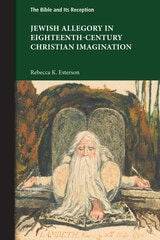
cover of Jewish Allegory in Eighteenth-Century Christian Imagination

Jewish Allegory in Eighteenth-Century Christian Imagination

Rebecca K. Esterson

SBL Press, 2023

Rebecca K. Esterson explores how Christian methods of biblical interpretation shifted during the eighteenth century, producing a rhetorical rejection of allegory while embracing literalism. Under the influence of Enlightenment concepts of human reason and advances in the experimental sciences, Christian interpreters began casting Jewish biblical interpretation as allegorical, while presenting Christian interpretation as literal. This shift in self-understanding allowed Christians to portray their own interpretations as scientifically, philosophically, and historically superior, resulting in a new way of othering the Jewish people. This study of biblical exegesis, theology, philosophy, and the arts in English, Swedish, and German contexts is an essential resource for scholars interested in biblical reception history and the history of Jewish-Christian relations.
[more]
cover of Jewish Biblical Exegesis from Islamic Lands: The Medieval Period

Jewish Biblical Exegesis from Islamic Lands

The Medieval Period

Meira Polliack

SBL Press, 2019

An accessible point of entry into the rich medieval religious landscape of Jewish biblical exegesis s

Medieval Judeo-Arabic translations of the Hebrew Bible and their commentaries provide a rich source for understanding a formative period in the intellectual, literary, and cultural history and heritage of Jews in Islamic lands. The carefully selected texts in this volume offer intriguing insight into Arabic translations and commentaries by Rabbanite and Karaite Jewish exegetes from the tenth to the twelfth centuries CE, arranged according to the three divisions of the Torah, the Former and Latter Prophets, and the Writings. Each text is embedded within an essay discussing its exegetical context, reception, and contribution.

Features:

  • Focus on underrepresented medieval Jewish commentators of the Eastern world
  • A list of additional resources, including major Judeo-Arabic commentators in the medieval period
  • Previously unpublished texts from the Cairo Geniza
[more]
cover of Jewish Fictional Letters from Hellenistic Egypt: The Epistle of Aristeas and Related Literature

Jewish Fictional Letters from Hellenistic Egypt

The Epistle of Aristeas and Related Literature

L. Michael White

SBL Press, 2017

The first Greek text of the Epistle of Aristeas published in more than a century

The Greek text Epistle of Aristeas is a Jewish work of the late Hellenistic period that recounts the origins of the Septuagint. Long recognized as a literary fiction, the Epistle of Aristeas has been variously dated from the third century BCE to the first century CE. As a result, its epistolary features, and especially those in which the putative author, Aristeas, addresses his brother and correspondent, Philocrates, have largely been ignored. In light of more recent scholarship on epistolary literature in the Greco-Roman world, however, this volume presents for the first time a complete Greek text and English Translation with introduction, notes, and commentary of the Epistle of Aristeas with key testimonia from Philo, Josephus, and Eusebius, as well as other related examples of Jewish fictional letters from the Apocrypha and Pseudepigrapha.

Features

  • Relevant excerpts from Eupolemus, 2 Maccabees, 3 Maccabees, and the Greek Additions to Esther with translations and introductions
  • A critical introduction to ancient Greek letter-writing
  • An outline of epistolary features in the text
[more]
cover of Jewish Temple Theology and the Mystery of the Cross: Atonement and the Two Goats of Yom Kippur

Jewish Temple Theology and the Mystery of the Cross

Atonement and the Two Goats of Yom Kippur

Richard J. Barry IV

Catholic University of America Press, 2023
On the Day of Atonement, two goats were brought before the high priest at the temple. One was chosen as the goat for the Lord, a spotless sacrifice, and the other was set aside for Azazel, doomed to bear sins into the wilderness. Jewish Temple Theology and the Mystery of the Cross shows how a theological appreciation for the two movements of Yom Kippur makes it possible to identify the paradox at the heart of Christian soteriology: in his single atoning act, Jesus Christ fulfills the work of both goats, without confusion, without division. Appreciation for this paradox helps illuminate many of the doctrinal debates in the history of Christian soteriology and offers a compelling way forward. Jewish Temple Theology and the Mystery of the Cross begins with a survey of biblical geography: first, a rich theological pilgrimage to Mount Zion, the home of beauty, goodness, and truth, and then to the surrounding desert, the wilderness of sin and sorrow. To appreciate the Yom Kippur liturgy, and to understand the priestly word “atonement,” one must be oriented by this cosmic stage. Drawing on the best modern historical-critical scholarship, this volume reveals the wonders hidden in Leviticus and shows how a sophisticated theological interpretation of this book leads to breakthroughs in our understanding of Christ’s saving work. Seeing the mystery of the cross from the perspective of the ancient Jewish scriptures has surprising results. For example, Richard Barry shows how Hans Urs von Balthasar’s controversial theology of Holy Saturday is a compelling development of Azazel-goat soteriology; it is not only biblically licit but is in some ways mandated by the logic of Yom Kippur. At the same time, David Bentley Hart is celebrated for the way he powerfully advances modern YHWH-goat soteriology, yet obedience to the logic of Yom Kippur also necessitates a nuanced biblical critique of his muscular universalism. How can Christ fulfill the seemingly contradictory movements of both goats in a single saving work? Grappling with that question, Jewish Temple Theology and the Mystery of the Cross seeks to draw nearer to the heart of the mystery of salvation.
[more]
cover of Job 1–21: Interpretation and Commentary

Job 1–21

Interpretation and Commentary

C. L. Seow

SBL Press, 2013

The Hebrew book of Job is an exquisite piece of literary art that many consider one of the most outstanding compositions in world literature. It is a poetic work of remarkable theological richness, passion, and honesty, yet it is an immensely difficult text to understand. C. L. Seow’s inaugural Illuminations commentary offers a literary-theological interpretation of Job written in an accessible style for a wide audience, a new translation, and detailed verse-by-verse commentary for a deeper dive into the complex linguistic and thematic issues. The commentary’s unique History of Consequences section draws attention to the reception history of Job in Jewish, Muslim, Christian, and Western secular interpretations found in writings and artistic representations. Seow reveals not only how interpreters throughout history have grappled with the human struggle to understand the reasons for suffering and the possibility of divine complicity in undeserved suffering but also why we continue to struggle with these ideas today.
[more]
cover of John Chrysostom on Paul: Praises and Problem Passages

John Chrysostom on Paul

Praises and Problem Passages

Margaret M. Mitchell

SBL Press, 2022

A readily accessible text and translation for scholars and students of Paul, ancient Christian history, and biblical reception.

In this new volume in the Writings from the Greco-Roman World series, Margaret M. Mitchell collects twenty-five of John Chrysostom's lesser-known sermons on Pauline passages as well as some that focus on Paul himself. Mitchell presents the Greek text and an original translation of each of these fascinating sermons in a fresh, engaging style that seeks to recapture the vibrancy and dynamism of the live oratory behind the homilies. Extensive notes to each homily evaluate how Chrysostom dealt with some of the ethical, theological, historical, political, and literary problems present in Paul's writings. Mitchell's work on Chrysostom offers a model for scholars to explore and understand how ancient Christian interpreters found in Paul’s letters a legacy that was as problematic as it was precious.
[more]
cover of John Chrysostom, Homilies on 1 and 2 Timothy

John Chrysostom, Homilies on 1 and 2 Timothy

Pauline Allen

SBL Press, 2026
Pauline Allen translates into modern English John Chrysostom’s Greek homilies on 1 and 2 Timothy. As with her other translations of Chrysostom’s homilies in the WGRW series, Allen provides an introduction that includes a brief overview of the homilist’s life and career, the themes of the homilies, and their probable context. These homilies on the letters to Timothy reveal Chrysostom’s thoughts on the spiritual, moral, social, and religious challenges he believed his own audience faced. While the homilist denounced Jewish law, women, and heretics, he praised a solitary monastic existence over life in an urban setting. Additionally, Chrysostom advocates that the virtue of mercy exhibited in almsgiving is the key to salvation. Allen’s notes and translation make this source for church history and theology accessible to students and scholars alike.
[more]
cover of John Chrysostom, Homilies on Colossians

John Chrysostom, Homilies on Colossians

Pauline Allen

SBL Press, 2021
Pauline Allen translates Frederick Field's text of John Chrysostom's twelve homilies on Paul's Letter to the Colossians. Chrysostom concentrates in part on the apparently prevalent angel worship in Colossae (in modern Turkey). These homilies provide many details about everyday life in the late Roman period, such as the position of slaves and their treatment as well as various aspects of raising healthy, educated children. The themes of conflict between pagans, Jews, and Christians in the community, as well as the distinction between rich and poor in late antiquity, run throughout the homilies. This latest text and translation volume from WGRW is an essential resource for scholars and students interested in the history of the church.
[more]
cover of John Chrysostom, Homilies on Philippians

John Chrysostom, Homilies on Philippians

Pauline Allen

SBL Press, 2013
This volume offers a translation of sixteen homilies by the most famous preacher in Christian antiquity, John Chrysostom. These homilies on Paul’s letter to the Philippians constitute the most comprehensive ancient surviving commentary on the letter in any language. The homilies have a direct and conversational style in which examples from daily life abound: children, the elderly, food, agriculture, seafaring, money, commerce, building, furniture, weather, illness, good health, animals, and slavery. Friendship themes, based on Paul’s relationship with the church at Philippi, and Christology also figure largely in these homilies. This volume, with Greek text and English translation on facing pages, situates Chrysostom’s homilies on Paul’s letter to the Philippians in their historical, homiletical, rhetorical, and liturgical contexts.
[more]
cover of John Chrysostom, Homilies on Titus and Philemon

John Chrysostom, Homilies on Titus and Philemon

Pauline Allen

SBL Press, 2024
In her latest volume on John Chrysostom, Pauline Allen translates into English nine homilies on two of Paul’s letters. Included in this collection are six homilies on Titus that deal with Chrysostom’s attitudes toward episcopal accountability, the household, marriage, and almsgiving. Three homilies on Philemon address the short letter’s inclusion in the canon, forgiveness, honor, the treatment of slaves, and God’s punishment. A thorough introduction that addresses the date, provenance, and content of these homilies makes this volume an essential source for scholars and students interested in the development of the church in the fourth to fifth centuries CE.
[more]
cover of John and Judaism: A Contested Relationship in Context

John and Judaism

A Contested Relationship in Context

R. Alan Culpepper

SBL Press, 2017

A window into early Judaism and Christianity

The Gospel of John was written during the period of the emergence of Christianity and its separation from Judaism and bears witness to their contested relationship. This volume contains eighteen cutting-edge essays written by an international group of scholars who interpret for students and general readers what the book tells us about first-century Judaism, the separation of the church from Judaism, and how John's anti-Jewish references are being interpreted today.

Features:

  • A debate over the process that led to the separation of the church from Judaism, and John's place in that process
  • A review of recent interpretations of John's anti-Jewish references
  • An assessment of the current status of Jewish Christian relations
[more]
cover of John, Jesus, and History, Volume 1: Critical Appraisals of Critical Views

John, Jesus, and History, Volume 1

Critical Appraisals of Critical Views

Paul N. Anderson

SBL Press, 2007

Over the last two centuries, many scholars have considered the Gospel of John off-limits for all quests for the historical Jesus. That stance, however, creates a new set of problems that need to be addressed thoughtfully. The essays in this book, reflecting the ongoing deliberations of an international group of Johannine and Jesus scholars, critically assess two primary assumptions of the prevalent view: the dehistoricization of John and the de-Johannification of Jesus. The approaches taken here are diverse, including cognitive-critical developments of Johannine memory, distinctive characteristics of the Johannine witness, new historicism, Johannine-Synoptic relations, and fresh analyses of Johannine traditional development. In addition to offering state-of-the-art reviews of Johannine studies and Jesus studies, this volume draws together an emerging consensus that sees the Gospel of John as an autonomous tradition with its own perspective, in dialogue with other traditions. Through this challenging of critical and traditional assumptions alike, new approaches to John’s age-old riddles emerge, and the ground is cleared for new and creative ways forward.
[more]
cover of John, Jesus, and History, Volume 2: Aspects of Historicity in the Fourth Gospel

John, Jesus, and History, Volume 2

Aspects of Historicity in the Fourth Gospel

Paul N. Anderson

SBL Press, 2009

This groundbreaking volume draws together an international group of leading biblical scholars to consider one of the most controversial religious topics in the modern era: Is the Gospel of John—the most theological and distinctive among the four canonical Gospels—historical or not? If not, why does John alone among the Gospels claim eyewitness connections to Jesus? If so, why is so much of John’s material unique to John? Using various methodologies and addressing key historical issues in John, these essays advance the critical inquiry into Gospel historiography and John’s place within it, leading to an impressive consensus and convergences along the way. The contributors are Paul N. Anderson; Mark Appold; Richard Bauckham; Helen K. Bond; Richard A. Burridge; James H. Charlesworth; Jaime Clark-Soles; Mary Coloe; R. Alan Culpepper; Craig A. Evans; Sean Freyne; Jeffrey Paul Garcia; Brian D. Johnson; Peter J. Judge; Felix Just, S.J.; Craig S. Keener; Edward W. Klink III; Craig R. Koester; Michael Labahn; Mark A. Matson; James F. McGrath; Susan Miller; Gail R. O’Day; Bas van Os; Tom Thatcher; Derek M. H. Tovey; Urban C. von Wahlde; and Ben Witherington III.
[more]
cover of John, Jesus, and History, Volume 3: Glimpses of Jesus Through the Johannine Lens

John, Jesus, and History, Volume 3

Glimpses of Jesus Through the Johannine Lens

Paul N. Anderson

SBL Press, 2016

A critical analysis of the historicity of the Gospel of John

Since it began in 2002, the John, Jesus, and History Project has assessed critically the modern disparaging of John's historicity and has found this bias wanting. In this third volume, an international group of experts demonstrate over two dozen ways in which John contributes to an enhanced historical understanding of Jesus and his ministry. This volume does not simply argue for a more inclusive quest for Jesus—one that embraces John instead of programmatically excluding it. It shows that such a quest has already indeed begun. Contributors include Paul N. Anderson, Jo-Ann A. Brant, Peder Borgen, Gary M. Burge, Warren Carter, R. Alan Culpepper, James D. G. Dunn, Robert T. Fortna, Jörg Frey, Steven A. Graham, Colin J. Humphreys, Craig Keener, Andreas Köstenberger, Tim Ling, William Loader, Linda McKinnish Bridges, James S. McLaren, Annette Merz, Wendy E. S. North, Benjamin E. Reynolds, Udo Schnelle, Donald Senior, C.P., Tom Thatcher, Michael Theobald, Jan van der Watt, Robert Webb, Stephen Witetscheck, and Jean Zumstein.

Features

  • A state-of-the-art analysis of John’s contributions to the quest for the historical Jesus, including evaluative responses by leading Jesus scholars
  • •An overview of paradigm shifts in Jesus scholarship and recent approaches to the Johannine riddles
  • Detailed charts that illuminates John's similarities and differences form the Synoptic Gospels as well as the gospel's contributions to the historical Jesus research
[more]
cover of John, Jesus, and History, Volume 4: Jesus Remembered in the Johannine Situation

John, Jesus, and History, Volume 4

Jesus Remembered in the Johannine Situation

Paul N. Anderson

SBL Press, 2024

John, Jesus, and History, Volume 4: Jesus Remembered in the Johannine Situation addresses the narrative development of the Johannine corpus over as many as seven decades. Contributors connect how Jesus is presented in the Fourth Gospel to how the memory of his ministry is developed in Palestine during the earliest period (30–70 CE), in Asia Minor in the later first century (70–100 CE), and in the main and alternative streams of post-Johannine early Christianity (100 CE and later). Contributors include Paul N. Anderson, Harold W. Attridge, Giovanni Bazzana, Jonathan Bernier, Sherri Brown, Rex D. Butler, Andrew J. Byers, Stephen C. Carlson, Warren Carter, Amber M. Dillon, Jonathan A. Draper, Musa W. Dube, Charles E. Hill, Karen L. King, Peter T. Lanfer, Kasper Bro Larsen, Ian N. Mills, Alicia D. Myers, Reinhard Pummer, Tuomas Rasimus, David Rensberger, Clare K. Rothschild, Geoffrey Smith, Travis D. Trost, Meredith J. C. Warren, Kenneth L. Waters Sr., and Lorne R. Zelyck. The collection pushes Johannine, Jesus, and early Christian history studies in new directions, raising possibilities for future research.
[more]
cover of John, Jesus, and History, Volume 5: Jesus Remembered within the Johannine Tradition

John, Jesus, and History, Volume 5

Jesus Remembered within the Johannine Tradition

Paul N. Anderson

SBL Press, 2026

Essays in this collection demonstrate that the Johannine account of Jesus deserves to be seen as a self-standing tradition rather than a collection of non-Johannine sources and the evangelist’s theologized perspective. Paul N. Anderson, N. Clayton Croy, Rachel L. Danley, James D. G. Dunn, Nicholas Elder, Douglas Estes, Charles A. Gieschen, Jeannine M. Hanger, Holly Hearon, Richard Horsley, Felix Just, S.J., Ahreum Kim, Amy Whisenand, Francisco Lozada Jr., William R. G. Loader, James F. McGrath, Christopher W. Skinner, Tom Thatcher, Marianne Meye Thompson, and Michael Zolondek demonstrate how the memory of Jesus in the Gospel of John developed from orality to literacy, perhaps in more than one edition. While John’s Christ hymn and other material were likely added later, contributors assert that this does not preclude that earlier memories were referenced within developing understandings of Jesus of Nazareth. The result is a unique Johannine tradition bridging firsthand reflections on Jesus’s ministry with the later needs of early Christianity.
[more]
cover of Jonah: Introduction and Commentary

Jonah

Introduction and Commentary

Amy Erickson

SBL Press, 2021

In Jonah: Introduction and Commentary, Amy Erickson reevaluates a range of interpretations of the book of Jonah to present her own fresh literary and theological understanding of the book’s complex themes and characterizations. Drawing on Christian, Jewish, and Islamic reception history of Jonah, including the story’s representations in the arts, literature, and pop culture, Erickson presents a History of Consequences section that spans centuries and crosses borders. Erickson’s translation and interpretation pave the way for pastors and scholars to read and utilize the book of Jonah as the provocative, richly allusive, and theologically robust text that it is. Each passage includes a commentary on linguistic and thematic challenges to interpretation and translation. Erickson’s innovative reading recovers the richness of meaning that belongs to this short but noteworthy book of the Bible.
[more]
cover of Judah in the Neo-Babylonian Period: The Archaeology of Desolation

Judah in the Neo-Babylonian Period

The Archaeology of Desolation

Avraham Faust

SBL Press, 2012

The Babylonian conquest of Jerusalem in 586 B.C.E. was a watershed event in the history of Judah, the end of the monarchy and the beginning of the exilic period, during which many of the biblical texts were probably written. The conquest left clear archaeological marks on many sites in Judah, including Jerusalem, and the Bible records it as a traumatic event for the population. Less clear is the situation in Judah following the conquest, that is, in the sixth century, a period with archaeological remains the nature and significance of which are disputed. The traditional view is that the land was decimated and the population devastated. In the last two decades, archaeologists arguing that the land was not empty and that the exile had little impact on Judah’s rural sector have challenged this view. This volume examines the archaeological reality of Judah in the sixth century in order to shed new light on the debate. By expanding research into new avenues and examining new data, as well as by applying new methods to older data, the author arrives at fresh insights that support the traditional view of sixth-century Judah as a land whose population, both urban and rural, was devastated and whose recovery took centuries.
[more]
cover of Judea under Roman Domination: The First Generation of Statelessness and Its Legacy

Judea under Roman Domination

The First Generation of Statelessness and Its Legacy

Nadav Sharon

SBL Press, 2017

Investigate a relatively neglected but momentous period in Judean history

Nadav Sharon closely examines a critical period in Judean history, which saw the end of the Hasmonean dynasty and the beginning of Roman domination of Judea leading up to the kingship of Herod (67-37 BCE). In this period renowned Roman figures such as Pompey the Great, Julius Caesar, Gaius Cassius (a conspirator against Caesar), and Mark Anthony, led the Roman Republic on the eve of its transformation into an Empire, each having his own dealings with—and holding sway over—Judea at different times. This volume explores the impact of the Roman conquest on the authors of the Dead Sea Scrolls, enhances the understanding of later Judean-Roman relations and the roots of the Great Revolt, and examines how this early period of Roman domination had on impact on later developments in Judean society and religion.

Features:

  • Part one dedicating to reconstructing Judean history from the death of Alexander to the reign of King Herod
  • Part two examining the effects of Roman domination on Judean society
  • Maps, illustrations, and appendices
[more]