Results by title
3369 books match the query 'Cultural & Social' and 29 start with j
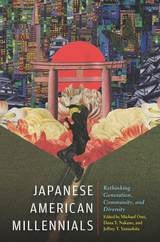
Japanese American Millennials
Rethinking Generation, Community, and DiversityMichael Omi
Temple University Press, 2019
Whereas most scholarship on Japanese Americans looks at historical case studies or the 1.5 generation assimilating, this pioneering anthology, Japanese American Millennials, captures theexperiences, perspectives, and aspirations of Asian Americans born between 1980 and 2000. The editors and contributors present multiple perspectives on who Japanese Americans are, how they think about notions of community and culture, and how they engage and negotiate multiple social identities.
The essays by scholars both in the United States and Japan draw upon the Japanese American millennial experience to examine how they find self-expression in Youth Basketball Leagues or Christian youth camps as well as how they grapple with being mixed-race, bicultural, or queer. Featuring compelling interviews and observations, Japanese American Millennials dislodges the dominant generational framework toaddress absences in the current literature and suggests how we might alternatively study Japanese Americans as a whole.

Japanese Brazilian Saudades
Diasporic Identities and Cultural ProductionIgnacio López-Calvo
University Press of Colorado, 2019
López-Calvo addresses the complex creation of Japanese Brazilian identities and the history of immigration, showing how the community has used writing as a form of reconciliation and affirmation of their competing identities as Japanese, Brazilian, and Japanese Brazilian. Japanese in Brazil have employed a twofold strategic, rhetorical engineering: the affirmation of ethno-cultural difference on the one hand, and the collective assertion of citizenship and belonging to the Brazilian nation on the other. López-Calvo also grapples with the community’s inclusion and exclusion in Brazilian history and literature, using the concept of “epistemicide” to refer to the government’s attempt to impose a Western value system, Brazilian culture, and Portuguese language on the Nikkeijin, while at the same time trying to destroy Japanese language and culture in Brazil by prohibiting Japanese language instruction in schools, Japanese-language publications, and even speaking Japanese in public.
Japanese Brazilian Saudades contributes to the literature criticizing the “cognitive injustice” that fails to acknowledge the value of the global South and non-Western ways of knowing and being in the world. With important implications for both Latin American studies and Nikkei studies, it expands discourses of race, ethnicity, nationality, and communal belonging through art and narrative.
Japanese Civilization
A Comparative ViewS. N. Eisenstadt
University of Chicago Press, 1996
Japanese Foodways, Past and Present
Edited by Eric C. Rath and Stephanie Assmann
University of Illinois Press, 2010

Japanese and Americans
Cultural Parallels and ParadoxesCharles Cleaver
University of Minnesota Press, 1976
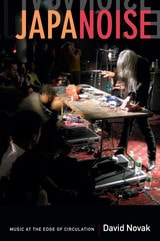
Japanoise
Music at the Edge of CirculationDavid Novak
Duke University Press, 2013
For its scattered listeners, Noise always seems to be new and to come from somewhere else: in North America, it was called "Japanoise." But does Noise really belong to Japan? Is it even music at all? And why has Noise become such a compelling metaphor for the complexities of globalization and participatory media at the turn of the millennium?
In Japanoise, David Novak draws on more than a decade of research in Japan and the United States to trace the "cultural feedback" that generates and sustains Noise. He provides a rich ethnographic account of live performances, the circulation of recordings, and the lives and creative practices of musicians and listeners. He explores the technologies of Noise and the productive distortions of its networks. Capturing the textures of feedback—its sonic and cultural layers and vibrations—Novak describes musical circulation through sound and listening, recording and performance, international exchange, and the social interpretations of media.

Jazz Cosmopolitanism in Accra
Five Musical Years in GhanaSteven Feld
Duke University Press, 2012

Jesus and the Gang
Youth Violence and Christianity in Urban HondurasJon Wolseth
University of Arizona Press, 2011
While only a small fraction of youths in a neighborhood are active members of a gang, most young men must learn the styles, ways of communicating, and local geography of gangs in order to survive. Due to the absence of gang prevention programs sponsored by the government or outside non-governmental organizations, Catholic and Pentecostal churches have developed their own ways to confront gang violence in their communities. Youths who participate in church organizations do so not only to alter and improve their communities but also to gain emotional and institutional support.
Offering firsthand accounts of these youths and how they make use of religious discourse, narrative practices, or the inscription of tattooed images and words on the body to navigate dangerous social settings, Jesus and the Gang is an unflinching look at how these young men turn away from perpetuating the cycle of violence and how Christianity serves a society where belonging is surviving.
This book will appeal to readers with an interest in Latin American studies, urban anthropology, and youth studies. With its focus on the lives of young men and women, it’s also a compelling read for anyone interested in the plight of urban youth trying to escape the gang life.

Jesus in America and Other Stories from the Field
Claudia Gould
Utah State University Press, 2009
Drawing on ethnographic field work she conducted among Christians in her home state of North Carolina, Claudia Gould crafts stories that lay open the human heart and social complications of fundamentalist belief. These stories and the compelling characters who inhabit them draw us into the complex essence of religious experience among southern American Christians.
Jewish Budapest
Monuments, Rites, HistoryGéza Komoróczy
Central European University Press, 1999
Jewish Cuisine in Hungary
A Cultural History with 83 Authentic RecipesAndrás Koerner
Central European University Press, 2020
Winner of the 2019 National Jewish Book Award in the category of Food Writing & Cookbooks.
The author refuses to accept that the world of pre-Shoah Hungarian Jewry and its cuisine should disappear almost without a trace and feels compelled to reconstruct its culinary culture. His book―with a preface by Barbara Kirshenblatt-Gimblett―presents eating habits not as isolated acts, divorced from their social and religious contexts, but as an organic part of a way of life.
According to Kirshenblatt-Gimblett: “While cookbooks abound, there is no other study that can compare with this book. It is simply the most comprehensive account of a Jewish food culture to date.” Indeed, no comparable study exists about the Jewish cuisine of any country, or―for that matter―about Hungarian cuisine. It describes the extraordinary diversity that characterized the world of Hungarian Jews, in which what could or could not be eaten was determined not only by absolute rules, but also by dietary traditions of particular religious movements or particular communities.
Ten chapters cover the culinary culture and eating habits of Hungarian Jewry up to the 1940s, ranging from kashrut (the system of keeping the kitchen kosher) through the history of cookbooks, the food traditions of weekdays and holidays, the diversity of households, and descriptions of food and hospitality industries to the history of some typical dishes. Although this book is primarily a cultural history and not a cookbook, it includes 83 recipes, as well as nearly 200 fascinating pictures of daily life and documents.i

Jewish Families
Boyarin, Jonathan
Rutgers University Press, 2013
Jonathan Boyarin explores a wide range of scholarship in Jewish studies to argue instead that Jewish family forms and ideologies have varied greatly throughout the times and places where Jewish families have found themselves. He considers a range of family configurations from biblical times to the twenty-first century, including strictly Orthodox communities and new forms of family, including same-sex parents. The book shows the vast canvas of history and culture as well as the social pressures and strategies that have helped shape Jewish families, and suggests productive ways to think about possible futures for Jewish family forms.

Jewish Life in Austria and Germany Since 1945
Identity and Communal ReconstructionSusanne Cohen-Weisz
Central European University Press, 2016
Jewish Life in Belarus
The Final Decade of the Stalin Regime, 1944-1953Leonid Smilovitsky
Central European University Press, 2014
Jewish Roots in Southern Soil
A New HistoryEdited by Marcie Ferris and Mark I. Greenberg
Brandeis University Press, 2006
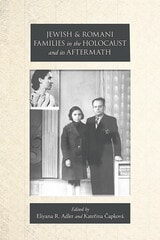
Jewish and Romani Families in the Holocaust and its Aftermath
Eliyana R. Adler
Rutgers University Press, 2021
In this work, scholars from the United States, Israel, and across Europe bring a variety of backgrounds and disciplines to their study of the Holocaust and its aftermath from the family perspective. Drawing on research from Belarus to Great Britain, and examining both Jewish and Romani families, they demonstrate the importance of recognizing how people continued to function within family units—broadly defined—throughout the war and afterward.
Jews and Other Differences
The New Jewish Cultural StudiesJonathan Boyarin
University of Minnesota Press, 1997
Journey without End
Migration from the Global South through the AmericasRob Curran and Andrew Nelson
Vanderbilt University Press, 2022
The book begins with Kidane, an Eritrean migrant who has left his pregnant wife behind to make the four-year trip to North America; it then picks up the natural disaster–riddled voyage of Roshan and Kamala Dhakal from Nepal to Ecuador; and it continues to the trials of Cameroonian exile Jane Mtebe, who becomes trapped in a bizarre beachside resort town on the edge of the Darién Gap—the gateway from South to Central America.
Journey without End follows these migrants as their fitful voyages put them in a semi-permanent state of legal and existential liminality. Mercurial policy creates profit opportunities that transform migration bottlenecks—Quito's tourist district, a Colombian beachside resort, Panama's Darién Gap, and a Mexican border town—into spontaneous migration-oriented spaces rife with racial, gender, and class exploitation. Throughout this struggle, migrant solidarity allows for occasional glimpses of subaltern cosmopolitanism and the possibility of mobile futures.
Journeys into the Invisible
Shamanic Technologies of the ImaginationCharles Stépanoff
HAU, 2025
Charles Stépanoff draws on ethnographic literature and his fieldwork in Siberia to reveal the immense contribution to the scope of human imagination made by shamans and the cognitive techniques they developed over the centuries.
Northern Shamans travel in mind in ways that appear mysterious to Westerners, but which rely on the human capacity of imagination. They perceive themselves simultaneously in two types of space—one visible, the other invisible—putting them in contact and establishing links with non-human beings in their surroundings. Shamans share their experience of mind travel with their patients, families, or the wider community, allowing them to participate in their odyssey through the invisible. Stépanoff offers an anthropological reflection on the relationships between our uses of the imagination, our relationships with the environment, and the emergence of social hierarchies.
This work will appeal to anthropologists as well as to anyone interested in learning about the power of imagination from the masters of the invisible, the shamans of the Far North.
Journeys of Love
Kashmiris, Music, and the Poetics of MigrationThomas Hodgson
University of Chicago Press, 2025
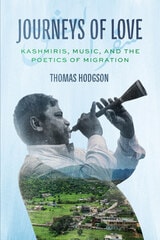
In Journeys of Love, ethnomusicologist Thomas Hodgson offers a sensitive corrective to harmful portrayals of immigrants—specifically, Pakistanis living in England—as a self-segregating group prohibited from making music, a stereotype that has often resulted in violent Islamophobia. He argues that, in practice, these migrants—many of whom come from the Mirpur area of Azad Kashmir—occupy rich musical worlds, full of poetic metaphors, that are central to surviving migration and its attendant losses.
Hodgson shows how Mirpuris in England, as well as those who remain in Pakistan, carry on traditions of reciting a collection of poetry by the nineteenth-century Sufi saint Mian Muhammad Bakhsh, translated by Hodgson here as Journeys of Love. With its themes of remaining true to one’s home, the oppressed being saved, having patience, and keeping faith in God, this work has become the story of movement and displacement in its narrative arc, as well as through the way it provides spiritual and ethical frameworks for settling in new lands. These hidden poetics of migration transform across generations as young Mirpuris develop new expressions of the connections across continents. These poetics reveal the connections between Kashmir’s rural village life and urban centers abroad, offering a sensitive and illuminating portrait of migration and multiculturalism in Britain and beyond.

Journeys with Flies
Edwin N. Wilmsen
University of Chicago Press, 1999
Combining biography, poetry, and anthropology, Wilmsen vividly portrays the intense realities of life in the Kalahari and carries the reader across space and time as events in the present trigger emotions and memories. Images of apartheid, for example, evoke memories of Wilmsen's childhood in the segregated South. Poems, journal entries, and moving accounts of deepening personal relationships all intertwine as Wilmsen conveys the experiences he shares with his "subjects" in spite of vast differences in their backgrounds—extreme thirst under the desert sun, grief over the death of a child, and the constant irritation of ubiquitous flies.
"Our understanding of other peoples," he writes, "lies not in themselves or in anything that they do but in our experience of them. Experience that is lived partly in their world and partly in a shell of our world that we wear when we meet them."
Sophisticated, lyrical, and passionately written, Journeys with Flies will inspire all those who travel to places far from home.
Juan Gregorio Palechor
The Story of My LifeMyriam Jimeno Translated by Andy Klatt
Duke University Press, 2014
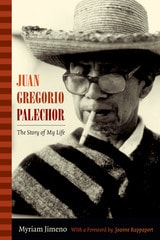
Palechor's lively memoir is complemented by Jimeno's reflections on autobiography as an anthropological tool and on the oppressive social and political conditions faced by Colombia's indigenous peoples. A faithful and fluent transcription of Palechor's life story, this work is a uniquely valuable resource for understanding the contemporary indigenous rights movements in Colombia.
Judges and the Cities
Interpreting Local AutonomyGordon L. Clark
University of Chicago Press, 1985
As concrete examples, Clark analyzes four court disputes in depth, showing that the concept of local autonomy has very different meanings and implications in each of them. These cases—Boston's defense of resident-preference hiring policies, conflict over urban land-use zoning in Toronto, a Chicago's suburb's fight against a sewage treatment plant, and the evolution of the City of Denver's power since 1900—demonstrate that legal reasoning is not impervious to other kinds of reasoning, and the solutions provided by the courts are not unique. To ground his explorations, Clark investigates both liberalism and structuralism, showing that both are inadequate bases for determining social policy. He mounts provocative critiques of the works of de Tocqueville, Nozick, Tiebout, and Posner on the one hand and Castells and Poulantzas on the other.
This ambitious and important work will command the interest of geographers, political scientists, economists, sociologists, and legal scholars.
Jugaad Time
Ecologies of Everyday Hacking in IndiaAmit S. Rai
Duke University Press, 2019
Jungle Laboratories
Mexican Peasants, National Projects, and the Making of the PillGabriela Soto Laveaga
Duke University Press, 2009
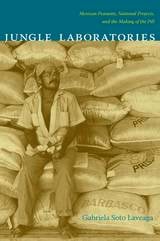
Soto Laveaga traces the political, economic, and scientific development of the global barbasco industry from its emergence in the 1940s, through its appropriation by a populist Mexican state in 1970, to its obsolescence in the mid-1990s. She focuses primarily on the rural southern region of Tuxtepec, Oaxaca, where the yam grew most freely and where scientists relied on local, indigenous knowledge to cultivate and harvest the plant. Rural Mexicans, at first unaware of the pharmaceutical and financial value of barbasco, later acquired and deployed scientific knowledge to negotiate with pharmaceutical companies, lobby the Mexican government, and ultimately transform how urban Mexicans perceived them. By illuminating how the yam made its way from the jungles of Mexico, to domestic and foreign scientific laboratories where it was transformed into pills, to the medicine cabinets of millions of women across the globe, Jungle Laboratories urges us to recognize the ways that Mexican peasants attained social and political legitimacy in the twentieth century, and positions Latin America as a major producer of scientific knowledge.

Just Words
Law, Language, and PowerJohn M. Conley and William M. O'Barr
University of Chicago Press, 1998
Conley and O'Barr show how the microdynamics of the legal process and the largest questions of justice can be fruitfully explored through the field of linguistics. Each chapter covers a language-based approach to a different area of the law, from the cross-examinations of victims and witnesses to the inequities of divorce mediation. Combining analysis of common legal events with a broad range of scholarship on language and law, Just Words seeks the reality of power in the everyday practice and application of the law. As the only study of its type, the book is the definitive treatment of the topic that will be welcomed by students and specialists alike.
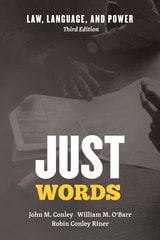
Just Words
Law, Language, and Power, Third EditionJohn M. Conley, William M. O'Barr, and Robin Conley Riner
University of Chicago Press, 2019
John M. Conley, William M. O'Barr, and Robin Conley Riner show how the microdynamics of the legal process and the largest questions of justice can be fruitfully explored through the field of linguistics. Each chapter covers a language-based approach to a different area of the law, from the cross-examinations of victims and witnesses to the inequities of divorce mediation. Combining analysis of common legal events with a broad range of scholarship on language and law, Just Words seeks the reality of power in the everyday practice and application of the law. As the only study of its type, the book is the definitive treatment of the topic and will be welcomed by students and specialists alike. This third edition brings this essential text up to date with new chapters on nonverbal, or “multimodal,” communication in legal settings and law, language, and race.
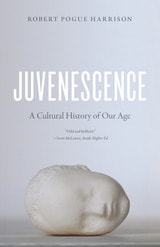
Juvenescence
A Cultural History of Our AgeRobert Pogue Harrison
University of Chicago Press, 2014
Like all of Robert Pogue Harrison's books, Juvenescence ranges brilliantly across cultures and history, tracing the ways that the spirits of youth and age have inflected each other from antiquity to the present. Drawing on the scientific concept of neotony, or the retention of juvenile characteristics through adulthood, and extending it into the cultural realm, Harrison argues that youth is essential for culture’s innovative drive and flashes of genius. At the same time, however, youth—which Harrison sees as more protracted than ever—is a luxury that requires the stability and wisdom of our elders and the institutions. “While genius liberates the novelties of the future,” Harrison writes, “wisdom inherits the legacies of the past, renewing them in the process of handing them down.”
A heady, deeply learned excursion, rich with ideas and insights, Juvenescence could only have been written by Robert Pogue Harrison. No reader who has wondered at our culture's obsession with youth should miss it.