Results by title
744 books match the query 'Culture' and 7 start with j

JAPANimals
History and Culture in Japan’s Animal LifeGregory M. Pflugfelder and Brett L. Walker, Editors
University of Michigan Press, 2005

Japanese American Midwives
Culture, Community, and Health Politics, 1880-1950Susan L. Smith
University of Illinois Press, 2005
In the late nineteenth century, Japan's modernizing quest for empire transformed midwifery into a new woman's profession. With the rise of Japanese immigration to the United States, Japanese midwives (sanba) served as cultural brokers as well as birth attendants for Issei women. They actively participated in the creation of Japanese American community and culture as preservers of Japanese birthing customs and agents of cultural change.
Japanese American Midwives reveals the dynamic relationship between this welfare state and the history of women and health. Susan L. Smith blends midwives' individual stories with astute analysis to demonstrate the impossibility of clearly separating domestic policy from foreign policy, public health from racial politics, medical care from women's caregiving, and the history of women and health from national and international politics. By setting the history of Japanese American midwives in this larger context, Smith reveals little-known ethnic, racial, and regional aspects of women's history and the history of medicine.

Jazz in the Time of the Novel
The Temporal Politics of American Race and CultureBruce Evan Barnhart
University of Alabama Press, 2013
WINNER OF THE ELIZABETH AGEE PRIZE IN AMERICAN LITERATURE
Jazz in the Time of the Novel argues that a culture’s understanding of the concept of time plays a central role in its economic, social, and aesthetic affairs and that a culture arrives at its conception of time through its artistic practices.
Bruce Barnhart, in Jazz in the Time of the Novel, shows that American culture of the first three decades of the twentieth century was shaped by the kindred rhythms and movements of two particular art forms: jazz and fiction. At the beginning of the twentieth century, widespread changes in America’s social, demographic, and economic norms threatened longstanding faith in a unified and inevitable movement towards a better future. As Barnhart shows both jazz and novels of the period address these temporal uncertainties, inserting themselves into arguments about the proper unfolding of an affirmative American future. Barnhart proposes that these two aesthetic forms can be viewed as co-participants in an ongoing discussion about the way in which the future should be imagined and experienced—a discussion symptomatic of the broader exchanges taking place within the many trajectories comprising early twentieth-century American culture.
This book includes in-depth approaches to numerous examples of jazz and the novel, including performances by James P. Johnson, Louis Armstrong, Bessie Smith, Duke Ellington, and Ethel Waters, and novels by James Weldon Johnson, F. Scott Fitzgerald, Ernest Hemingway, Gertrude Stein, and Nella Larsen, among others. In addition to the details of specific musical and literary works, Jazz in the Time of the Novel offers careful consideration as to how these works impact their social context.

Jewish Scholarship and Culture in Nineteenth-Century Germany
Between History and FaithNils Roemer
University of Wisconsin Press, 2005
German Jews were fully assimilated and secularized in the nineteenth century—or so it is commonly assumed. In Jewish Scholarship and Culture in the Nineteenth Century, Nils Roemer challenges this assumption, finding that religious sentiments, concepts, and rhetoric found expression through a newly emerging theological historicism at the center of modern German Jewish culture.
Modern German Jewish identity developed during the struggle for emancipation, debates about religious and cultural renewal, and battles against anti-Semitism. A key component of this identity was historical memory, which Jewish scholars had begun to infuse with theological perspectives beginning in the 1850s. After German reunification in the early 1870s, Jewish intellectuals reevaluated their enthusiastic embrace of liberalism and secularism. Without abandoning the ideal of tolerance, they asserted a right to cultural religious difference for themselves--an ideal they held to even more tightly in the face of growing anti-Semitism. This newly re-theologized Jewish history, Roemer argues, helped German Jews fend off anti-Semitic attacks by strengthening their own sense of their culture and tradition.

Jewish Women in Pre-State Israel
Life History, Politics, and CultureEdited by Ruth Kark, Margalit Shilo, and Galit Hasan-Rokem
Brandeis University Press, 2009
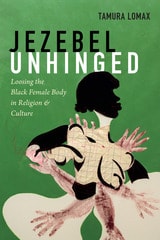
Jezebel Unhinged
Loosing the Black Female Body in Religion and CultureTamura Lomax
Duke University Press, 2018

Just Assassins
The Culture of Terrorism in RussiaEdited and with an introduction by Anthony Anemone
Northwestern University Press, 2010
Just Assassins examines terrorism as it’s manifested in Russian culture past and present, with essays devoted to Russian literature, film, and theater; historical narrative; and even amateur memoir, songs, and poetry posted on the Internet. Along with editor Anthony Anemone’s introduction, these essays chart the evolution of modern political terrorism in Russia, from the Decembrist uprising to the horrific school siege in Beslan in 2004, showing how Russia’s cultural engagement with its legacy of terrorism speaks to the wider world.